Disclosure: As an Amazon Associate, dailyhomedecorating.com earns from qualifying purchases. Links on this page are affiliate links; they cost you nothing extra. Prices and availability change often, so check the current Amazon listing before you buy.
So, is a makeup mirror worth it, or is it a prettier version of the mirror already on your bathroom wall? The honest answer to whether is a makeup mirror worth it for you depends on three things you can assess in one morning: how much detail work your routine actually contains, how bad your current light is, and whether your eyes are starting to ask for help. This article works through the value case, the costs nobody mentions, and the people for whom the answer flips to a clear no.
Short answer. Worth it if you do any close work — liner, brows, lashes, lenses, precise shaving — or your bathroom light comes from a single overhead source, or you wear glasses you must remove to do eye makeup. Not worth it if your routine is a two-minute tint-and-go in front of a well-lit bathroom mirror you already love. In between, it is worth it at the entry or mid tier and hard to justify at the premium tier.
Key Takeaways
- The value is concentrated in three jobs: magnification, honest frontal light, and a reflection at your working distance.
- The real costs are counter space, one more object to clean and charge, and the discipline of the final plain-view check.
- Glasses-wearers and anyone in a dim, windowless bathroom get the clearest return.
- A tint-and-go routine in good light gains almost nothing — spend elsewhere.
- Tier discipline matters more than the yes itself: most of the value arrives by the mid tier.
In this guide
Is A Makeup Mirror Worth It: What You Actually Get
Strip away the marketing and a makeup mirror delivers four concrete goods. The first is proximity: a reflection at the distance your hands actually work, instead of a face leaned over a sink toward a wall. Posture improves, and with it steadiness — liner drawn from a stable seat is simply better liner. The second is magnification on demand, the difference between guessing at a brow shape and seeing it. The third is controlled light: even, frontal, and, in good models, neutral in colour, which converts foundation matching from a daily gamble into a repeatable act. The fourth is consistency — the same reflection, at the same distance, in the same light, every morning — and consistency is what turns makeup from an art of luck into a skill that improves. None of these goods is glamorous. All four are the kind of unglamorous that quietly upgrades every day it is used.
For anyone whose eyesight is changing — and that is most adults eventually — a makeup mirror is not vanity equipment, it is an accessibility tool. Magnification restores the close view that glasses complicate, because glasses must come off to apply eye makeup and the bare eye may not focus at mirror distance. This is the strongest, least frivolous case for a magnified mirror, and it argues for choosing strength by testing rather than by maximising: the goal is a comfortable working distance with your chin up and shoulders down, not the largest possible image at nose-to-glass range. Good light matters doubly here, since eyes need more light for the same clarity as the years pass. A mirror chosen on these terms stops being a beauty purchase and becomes part of how the morning works.
Consistency beats intensity. A modest light that is the same every single morning teaches you your own face: you learn exactly how much blush reads correctly under it, and that knowledge transfers to daylight. A very bright light in a dark room does the opposite, shrinking your pupils and making colours look weaker than they are, so you add more. This is the quiet argument for dimmable mirrors and against judging any mirror under showroom conditions. It is also why placement matters as much as the product: a mirror used facing a window gets free, honest daylight half the day and needs its own light mainly at the edges of the day, while a mirror in an internal bathroom depends on its built-in light for every judgement it helps you make.
The Real Costs Beyond Money
Money is the smallest cost. The real ledger starts with space: a tabletop mirror claims the most valuable square of counter in the house, a tri-fold claims more when open, and even a wall-mounted design claims wall and swing room. Then there is upkeep — glass that shows every splash and fingerprint, a charge to remember if it is rechargeable, batteries if it is not. There is a learning cost too, small but real: the first week with magnification tempts over-work, and the discipline of the flip-and-verify rhythm has to be learned before the mirror’s judgements can be trusted. And there is an honesty cost nobody warns about: a good magnified mirror shows your skin as it is, at a range nobody else ever sees it. Most people make peace with that in a week and are glad of the information. A few find it genuinely distressing, and for them the kind purchase is a plain, well-lit mirror instead.
Who It Pays Off For
The detail worker. If your routine includes wings, waterlines, individual lashes, brow shaping or contact lenses, the mirror pays for itself in rescued mornings within a month; you are buying precision instruments’ worth of control at furniture prices. The glasses-wearer. As the vision section above explains, you are the strongest case in the category — the mirror restores a working view that your glasses interrupt, and no bathroom mirror at sink distance can do that job. The badly lit. Renters and owners of windowless bathrooms with a single overhead light are buying their way out of the worst makeup light in the house; a lighted mirror is a renovation that requires no landlord’s permission and no electrician, provided it plugs in or recharges rather than hardwiring. For all three profiles the value is not subtle, and it repeats daily.
Who Should Skip It
Skip it if your routine is genuinely minimal — tinted moisturiser, mascara, out the door — and your existing mirror stands in decent light; you would be buying magnification you never flip to and light you do not need. Skip it if counter space is so scarce that the mirror would live in a cupboard, because a mirror in a cupboard delivers none of its value and all of its guilt. Skip the premium tier, specifically, if your motivation is the look of the object; buy decor proudly as decor, but do not let a beautiful mirror smuggle itself in as a tool purchase. And skip the strong-magnification models if you know yourself to be self-critical at close range — the plain mirror in kind light is a complete routine for millions of people, and no article’s verdict outranks your own peace of mind.
Strengths and Trade-Offs of Owning One
Strengths. Precision on demand for every close task. Light that tells the truth about colour, so fewer daylight surprises. A repeatable working position that improves technique over time. Trade-offs. Counter or wall space permanently committed. One more surface to keep clean and, for lighted models, one more charge or cord to manage. A standing temptation to over-work detail that only the plain-view check keeps honest. Weighed together, the strengths are functional and daily while the trade-offs are logistical and minor — which is why the verdict lands positive for most routines that contain any detail at all, and why the exceptions are about routine and temperament rather than about the mirrors themselves.
Alternatives to Consider
The honest alternatives deserve their paragraph. A plain, generously sized bathroom mirror paired with better room lighting — frontal sconces at face height rather than a single overhead source — covers the overall-view half of the job beautifully, though any hardwired lighting change is an electrician’s work and a bigger project than a mirror. A simple handheld magnifying mirror covers occasional detail work for almost nothing and lives in a drawer. A phone camera, used knowingly, is a passable final check. The examples below show the mirror formats people most often weigh against those alternatives; while listing verification is pending they appear in prose, without links.

Zadro Dual Sided Vanity Mirror
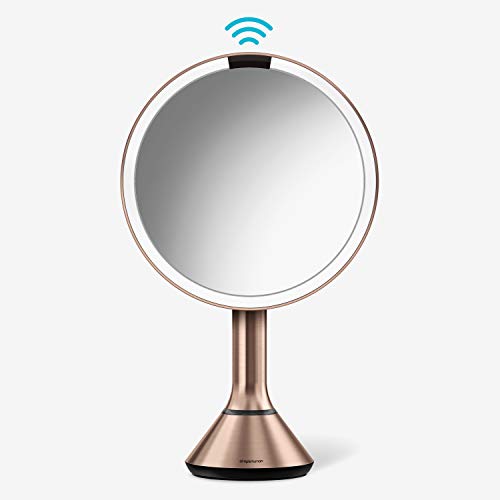
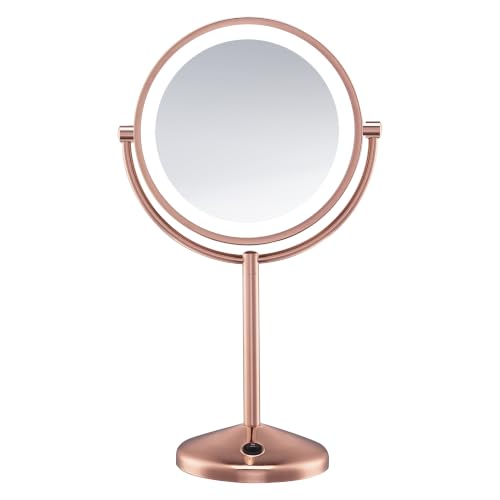
The Zadro Dual Sided Vanity Mirror is a dual-sided vanity mirror from a brand that has specialised in magnification mirrors for decades, typically finished in polished metal tones and aimed at a permanent dressing-table spot rather than travel. Zadro’s long focus on magnification shows in the details that matter: a flip mechanism that feels deliberate and glass chosen for close work. It suits someone who knows magnification is their main event and wants a mirror that treats it that way, in a finish that sits comfortably on a grown-up dressing table. Positioning: mid tier, priced by tier rather than by gimmick — check the current listing for the live figure. Best for: readers of this guide whose routine matches that shape. Not suited for: anyone whose space or habits contradict the format, however good the glass.
Fancii Mila LED Lighted Vanity Mirror
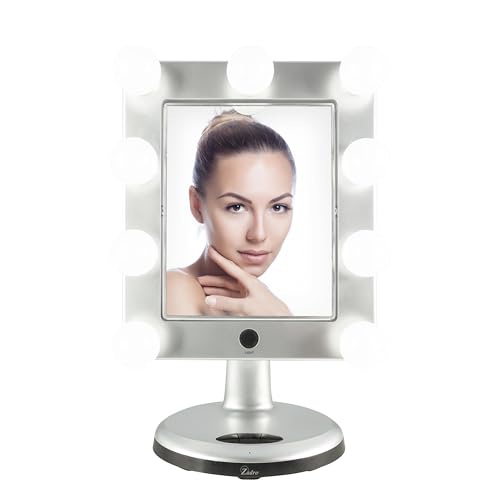
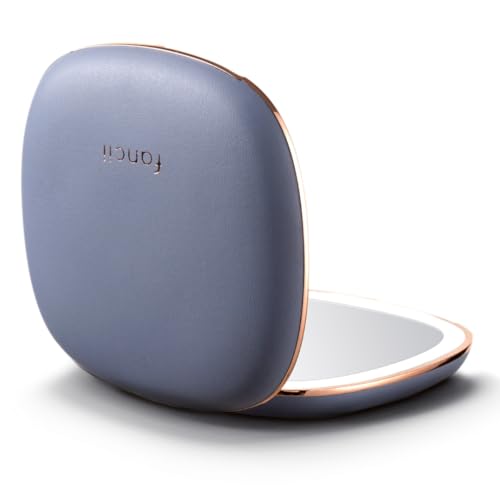
The Fancii Mila LED Lighted Vanity Mirror is a rechargeable LED vanity mirror from a beauty-tools brand known for portable, design-led mirrors, with touch controls and a clean, cord-free silhouette once charged. Rechargeable mirrors live or die by habit: if you are happy topping up a charge the way you charge a phone, this format is the most flexible in the category. Its portability also makes it the natural travel upgrade for anyone whose hotel bathrooms keep disappointing them. Positioning: mid tier, priced by tier rather than by gimmick — check the current listing for the live figure. Best for: readers of this guide whose routine matches that shape. Not suited for: anyone whose space or habits contradict the format, however good the glass.
KEDSUM Trifold Lighted Makeup Mirror
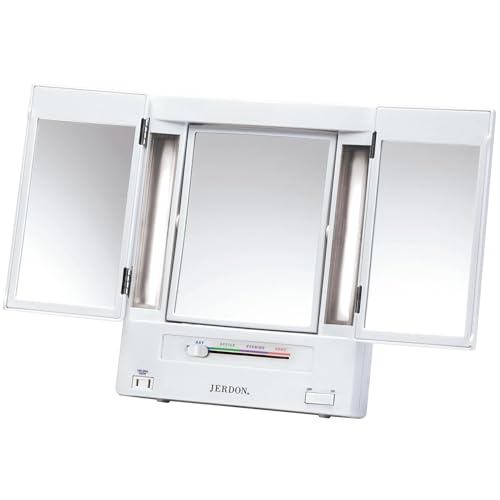
The KEDSUM Trifold Lighted Makeup Mirror is a folding three-panel lighted mirror that opens out to show your face and both profiles at once, then closes flat enough for a drawer, popular with shared bathrooms and smaller vanities. The tri-fold format is the value play for angles: open the panels and your profile, your parting and the back of an updo all become visible without a second mirror or a doorway shuffle. Closed, it nearly disappears. For shared bathrooms and small counters, that disappearing act is the feature. Positioning: entry tier, priced by tier rather than by gimmick — check the current listing for the live figure. Best for: readers of this guide whose routine matches that shape. Not suited for: anyone whose space or habits contradict the format, however good the glass.
How to Get the Most Value If You Buy
Technique adapts alongside equipment. Work in short passes — apply on the magnified side, verify on the plain side, step back for the whole-face view — rather than completing an entire face at close range. Keep one hand free to steady the other for liner and mascara. Sit rather than stand where you can, because a seated, repeatable distance keeps a magnified image in its focus band without effort. And if you wear progressives or bifocals, test the mirror with the glasses you will actually remove and replace during the routine, since the transitions are where smudges and lopsided lines sneak in. The mirror is half the system; the rhythm of using it is the other half.
Then protect the purchase’s value with placement and care: mount or set it at true eye level, route any cord dry and clear of the sink, keep its light on the neutral setting as your home base, and clean it the gentle way so the glass and finish age slowly. Value in this category is mostly behaviour — the mirror supplies the reflection, and you supply the rhythm, the position and the final daylight check by a window before you leave. Bought at the right tier and used with that rhythm, the mirror’s cost per morning falls to nearly nothing within the first year, which is the real arithmetic behind the verdict.
The Decision Checklist
- Do you do close work — liner, brows, lashes, lenses, precise shaving — at least a few times a week?
- Is your current makeup light a single overhead source or otherwise shadowy?
- Do you remove glasses to do eye makeup and then struggle to see?
- Is there a permanent home for it — counter, wall or drawer — at eye level?
- Will you honestly do the plain-view final check instead of trusting magnification?
- Can the tier you are eyeing be justified by daily use rather than by looks?
Four or more yes answers: buy, at the tier your friction justifies. Two or three: buy entry or mid and let a season of use argue for more. Fewer than two: your current mirror is fine, and the money is better spent on the light in the room or the products themselves. For the full feature-by-feature walk-through, continue to the makeup mirror buying guide; for the balanced ledger, see makeup mirror pros and cons.
Sequence matters at the mirror. Skincare first, while the plain view judges hydration and redness honestly. Base next, still on the plain side, because quantity decisions belong to the life-size view. Detail after — eyes, brows, lips — on the magnified side, in passes, with flips between. Powder and setting last, judged at arm’s length, because that is the distance the day will see. A mirror that supports this sequence with an easy flip and honest light is doing quiet choreography work. A mirror that fights it — stiff hinge, warm-only light, a base that wanders — adds seconds of friction to every transition, and friction at transitions is where routines quietly fall apart.
Evenings invert the problem. Makeup applied in bright bathroom light for a dim venue will read stronger than intended under candlelight and restaurant warmth, while makeup applied in cosy lamplight may vanish under street lighting on the way. The mirror cannot solve the venue, but a colour-setting preview — apply in neutral, glance in warm — narrows the surprise. This is a small discipline with an outsized effect on photographs, which are, in the end, where most makeup is ultimately judged by its wearer.
Children and teenagers enter the picture too, usually at the stage of first routines — skincare, braces checks, early makeup experiments. A household mirror at a sensible height with moderate magnification serves those years gracefully, and the safety rules scale with it: stable bases over tippy stands, mounts checked as part of household routine, and nothing heavy hung where anyone sleeps beneath it. The mirror that serves a household rather than a person should be bought a size up in sturdiness and a step down in specialisation, because its users will span more heights, eyes and habits than any single routine predicts.
Skin looks different under every light it meets, and a good routine plans for the translation. Makeup applied for an office day should survive cool overhead light; makeup for an evening venue will live in warm dimness, where heavier definition reads as normal. Mirrors with multiple colour settings let you preview those translations at the vanity instead of discovering them in photographs. Use the settings as destinations, not as home: apply in neutral, preview in the venue’s setting, adjust only what the preview proves needs adjusting. The users who look consistently right in every room are rarely using different products — they are using the same products with a translation step built into the mirror routine.
The One-Week Test Before You Decide
If the verdict is still genuinely undecided, borrow the decision from your own routine before spending. For one week, perform your makeup seated, at a fixed distance from the best mirror you already own, under the most frontal light you can arrange, and finish with a check at a window. Note, honestly, what still frustrates you: if the answer is detail you cannot see, that is magnification asking to be bought. If it is colour that shifts outdoors, that is light asking. If nothing frustrates you — if the week feels like your routine already working — then the category has nothing to sell you, and the worth-it answer for your household is no, arrived at by experiment rather than by article. Decisions made this way stick, because they were measured against mornings rather than against marketing.
Worth It, Priced in Mornings
Run the arithmetic the way the category deserves: not price against features, but price against mornings. A mirror used on two hundred and fifty mornings a year, kept for five years, is used well over a thousand times; even a premium tier divides into a trivial sum per use, and an entry mirror into nearly nothing. Against that, weigh the mornings it rescues — the liner fixed before the meeting rather than after the photograph, the foundation caught at the jawline at home rather than at the office. Value judgements in this category go wrong when they compare mirrors to each other instead of comparing each mirror to the thousand mornings. By that measure the mid tier is where worth-it peaks for most households: nearly all of the function, none of the indulgence, and a cost per morning that rounds to zero.
Picture the weekday morning the mirror actually serves. The alarm has done its worst, the light outside is either absent or unhelpful, and there are twenty minutes between the shower and the door. This is not the tutorial’s morning; nobody is blending for an audience of cameras. The mirror’s job in this morning is triage: even out the base, wake the eyes, make the brows agree, check the whole at life size, leave. A mirror that serves triage well — quick to its angle, honest in its light, flip ready — is worth more than a beautiful one that must be fetched, unfolded, plugged and persuaded. When you evaluate any design, run this morning against it in your imagination, because this morning, repeated two hundred times a year, is the product you are actually buying.
Picture instead the slow Saturday version: nowhere to be until evening, hair to do properly, the full routine with time to enjoy it. This morning asks different things — angles for the hair, patience for the detail, light that stays pleasant company for an hour. The tri-folds and generous tabletops come into their own here, and the small compromises of footprint stop mattering because time has replaced space as the abundant resource. A household’s mirror must serve both mornings, which is why versatility — the flip, the fold, the dimmer — keeps beating specialisation in real homes, and why reviews that judge only the Saturday mirror or only the weekday mirror each miss half the truth.
Different rooms make different mirrors right. The main bathroom prizes steam tolerance, compact footprints and mounts that survive humidity and haste. The bedroom vanity prizes looks, size and the seated ritual, and forgives a cord along a skirting board that a bathroom never would. The guest room prizes legibility — a mirror a visitor understands in three seconds — and the drawer or shelf that hides it between visits. The hallway or dressing corner, increasingly where routines migrate in small homes, prizes slimness and borrowed light. When a mirror disappoints, it is worth asking whether it is a bad mirror or a good mirror in the wrong room, because the second problem is solved by a move rather than a purchase, and households routinely own the right mirror in the wrong place for years before noticing.
The camera has become the mirror’s second audience, and it is a stricter one. Photographs flatten, exaggerate contrast and report colour with a literalism the eye forgives, which is why a face that passed the mirror can fail the front camera an hour later. The mirror routine that anticipates photography adds two habits: a final check at the distance a photograph is usually taken — arm’s length, not nose-close — and a glance under the brightest light available, since flash and daylight both behave like auditors. None of this argues for heavier makeup; it argues for verified makeup, blended at the edges where cameras hunt for lines. A mirror with honest light narrows the gap between the face you approved and the face the camera returns, and for anyone whose work or celebrations live partly in photographs, that narrowing is a core feature, not a bonus.
Mirrors are among the safest secondhand purchases in the home, because their virtues are inspectable and their failures announce themselves. Glass can be tested on the spot with a straight edge and a white card; hinges and arms confess their condition to one working of the mechanism; finishes show their history honestly. The cautions are electrical and structural: a secondhand lighted mirror deserves a careful look at its cord, plug and charging port, and any sign of heat damage or amateur repair ends the negotiation; a secondhand wall mirror deserves new fixings rather than trust in whatever screws arrive in the bag, and its mount in your home should be planned as fresh work into your studs or your anchors. Bought with those two cautions, a used mirror is the category’s quiet bargain — yesterday’s premium tier at tomorrow’s entry price.
Ergonomics sounds like office vocabulary until you have done a full routine standing on one foot, leaning over a sink, neck craned toward a wall. The seated vanity is the ergonomic answer the category keeps rediscovering: a chair at the right height, elbows supported, the mirror at eye level, both hands free and steady. Steadiness is not a comfort luxury — it is the mechanical basis of every clean line you draw, because a hand attached to a strained body trembles at exactly the frequencies eyeliner punishes. If your space allows only standing, the swing-arm mirror is the ergonomic compromise, floating the glass out to meet you so the lean shrinks to a tilt. Judge every setup by a simple test: at the end of the routine, do your neck and shoulders feel like they were present? If they feel like they were working, the setup — not your technique — is the first thing to fix.
Professional makeup artists, who work on other people’s faces under deadline, organise their mirrors by principles worth stealing. Their light is ruthless about neutrality, because a face that must survive photography cannot be built on flattery. Their working distance is fixed and repeatable, often marked by habit into the furniture itself. They check the work at multiple distances — close for detail, arm’s length for quantity, across the room for the whole effect — because each distance reveals a different class of error. And they distrust any single mirror’s verdict, cross-checking against the room’s light before declaring a face finished. A home routine that borrows even two of these habits — the fixed distance and the multi-distance check — gains most of what the professional’s setup provides, at no cost beyond attention.
The Resale and Hand-Me-Down Test
One underused measure of worth: what happens to the object when you are done with it. A good makeup mirror passes down and across — to a teenager setting up a first desk, to a guest room, to a sibling’s first flat — because glass, honestly made, does not expire and the need it serves recurs in every household. Purchases that survive their first owner carry a kind of value no feature list captures, and mirrors score unusually well by this measure: they are among the few beauty-adjacent objects that are genuinely household infrastructure. A mirror you can imagine handing on is almost always worth its tier; a mirror you can imagine binning within the year is telling you its own verdict in advance, whatever the reviews say.
Worth It for the Household’s Other Faces
The value case quietly widens when the mirror is shared. The partner who shaves precisely, the teenager learning skincare, the grandparent whose visits involve a magnified check of medication labels at the same vanity — a household mirror amortises across faces, not just across mornings. This is the argument that most often converts the sceptical second adult in a purchase debate, and it happens to be true: measured per user rather than per owner, the mid-tier mirror in a busy bathroom is one of the cheapest optical instruments a home can own. If your household has more than one face with close work in its week, the worth-it question has effectively already been answered; what remains is only the format negotiation, and that belongs to the choosing guide.
Bathrooms are hostile environments for optics. Steam condenses on cool glass, moisture hunts the edges of the silvering, and the daily cycle of fog and dry repeats for years. A mirror that lives over a sink should be chosen and treated with that climate in mind: sealed edges, finishes that shrug off humidity, and ventilation doing its share — an extractor fan or an open door after showers slows the ageing of everything in the room, mirrors included. The fog itself has workarounds, from warming the room before a shower to the simple patience of doing makeup after the air clears, and many routines migrate to a bedroom vanity for exactly this reason. None of this is a reason to fear a bathroom mirror; it is a reason to buy one built for the climate it will actually live in.
Shape is partly taste and partly optics. Round and oval mirrors soften a room and centre the face pleasingly, which is why they dominate dressing tables; their working area concentrates in the middle, so a round mirror needs a little more diameter than a rectangular one to give the same usable width at the edges. Rectangular mirrors maximise usable area for their footprint and suit shared use and hair work, where width at the edges is real working space. Frameless designs disappear into modern rooms and clean easily; framed designs protect the glass edges — the most vulnerable part of any mirror — and carry the room’s style. There is no optical champion here, only honest trade-offs between area, protection and looks, and the right answer is the one whose compromises you will never notice because they match your habits.
Travel exposes what a home mirror quietly provides: light that exists, at a height that works, in a room you control. Hotel bathrooms offer none of these reliably, which is why frequent travellers develop mirror opinions out of proportion to the object’s size. A folding travel mirror with its own light and moderate magnification is insurance against the worst-lit bathroom in the itinerary, and it earns its luggage space on business trips and event travel where the face is part of the work. At home, the same folding design often becomes the second mirror — the guest room’s, the teenager’s, the one that lives in a drawer. Judged as insurance rather than equipment, travel mirrors should be bought for protection and battery manners first and optical ambition second.
The mirror’s neighbourhood decides whether the station works. Crowded counters push products into the mirror’s swing, tilt and light; a mirror hemmed in by bottles gets its glass splashed, its base knocked and its owner quietly annoyed. Give the station a border — a tray that defines the working set, storage behind or beside for the reserves — and the mirror’s sightlines stay clean. Vertical thinking helps small spaces: the wall above a vanity can hold the mirror while the surface holds only today’s tools. Cable discipline belongs to the same paragraph: a cord with a planned, dry route looks intentional and stays safe, while a cord improvised daily across a wet counter is an accident rehearsing. Organisation is not tidiness for its own sake; it is what lets the optical instrument do its job unobstructed.
Mirrors are among the safest secondhand purchases in the home, because their virtues are inspectable and their failures announce themselves. Glass can be tested on the spot with a straight edge and a white card; hinges and arms confess their condition to one working of the mechanism; finishes show their history honestly. The cautions are electrical and structural: a secondhand lighted mirror deserves a careful look at its cord, plug and charging port, and any sign of heat damage or amateur repair ends the negotiation; a secondhand wall mirror deserves new fixings rather than trust in whatever screws arrive in the bag, and its mount in your home should be planned as fresh work into your studs or your anchors. Bought with those two cautions, a used mirror is the category’s quiet bargain — yesterday’s premium tier at tomorrow’s entry price.
There is a final, quieter worth-it argument that rarely appears in buying advice: the mirror as a small daily courtesy to yourself. Most household spending improves spaces; very little of it improves a repeated private moment. The seated minute at a good mirror — lit honestly, unhurried, everything within reach — is one of the few upgrades that is experienced, not merely owned, and experienced at the exact hinge of the day when mood is set. Households dismiss this as indulgence because it cannot be photographed for guests, and then spend freely on objects that are seen monthly. If the arithmetic sections of this article left you balanced on the fence, let this be the honest tiebreaker: a tool used daily, at the day’s most impressionable moment, is worth buying well — and a routine that contains no detail, in a room already kind, remains the one true exception.
Consider, too, what the mirror replaces. For many households the honest comparison is not mirror versus no mirror; it is mirror versus the accumulated workarounds — the phone torch propped on the sink, the routine migrated to whichever room currently has light, the magnifying compact fished from a drawer with one hand while the other holds a liner. Workarounds are free the way a dripping tap is free: the cost is paid in minutes, posture and small daily irritations rather than in money, and it is paid forever. A purchase that retires three workarounds at once should be valued against all three, and by that accounting even households lukewarm on the category’s headline features often find the verdict has quietly become yes.
And if the answer, after all of this, is no — let it be a clean no. Keep the good plain mirror, improve the room’s light if it needs it, and revisit the question when something actually changes: new glasses, a new home, a new routine, a bathroom renovation that moves the walls. Worth-it verdicts are snapshots of a household at a moment, not life sentences, and the category will be there, mature and patient, if the moment changes. The only genuinely wrong answer is the unexamined one — the mirror bought on a whim and abandoned, or refused on a prejudice and missed daily. This article’s whole purpose was to make sure yours is neither.
There is one more constituency worth naming before the verdict closes: the household that hosts. Parents whose adult children visit, hosts whose guest room gets real use, anyone whose spare bathroom serves people they love a few weekends a year — for them a decent mirror is part of the quiet infrastructure of welcome, like a reading light and a hook for a towel. Its worth is not measured in the owner’s mornings at all, and it does not need to be large: a simple, legible, well-lit mirror in the guest space says the room was thought about. If your household hosts often, add that quiet value to the ledger’s credit side; it is real, it recurs, and it is exactly the kind of worth that feature lists never capture and guests never forget to notice. Combined with even occasional use by the household itself, it tips many a borderline household from maybe to yes — not because the mirror changed, but because the accounting finally included everyone it serves.
A useful final probe is to ask what you currently do on your worst-light mornings — the pre-dawn starts, the winter weeks, the days the bathroom bulb has blown and been replaced with whatever was in the drawer. If the honest answer involves squinting, relocating or simply hoping, the mirror’s value in your household is not hypothetical; it is the difference between those mornings and ordinary ones, multiplied by every dark month of the year. Households rarely regret buying for their worst mornings. They regret buying for their best ones and discovering the purchase only performs there.
Worth, in the end, is a prediction about your own future behaviour — and the mirror is an unusually safe prediction, because the behaviour it serves is one you already perform every day, in worse conditions than it offers.
That is the whole case, stated once.
Earning Its Keep: The Long View on Owning a Makeup Mirror
Whether a makeup mirror is worth it is rarely settled on the day it arrives, so this section judges value across ordinary weeks of ownership: how often it is used, what it replaces, what it costs in space and upkeep, and the point at which it has quietly paid for its place in the home.
Start With Your Space and Your Routine
Equally, list what your old makeup mirror did well, because replacements sometimes quietly lose a virtue you relied on, such as a size, a shape or a simplicity the new model has redesigned away. When you compare delivery options for a makeup mirror, factor in where the item will be left and who will move it to its final spot, since the last few metres are where damage and strained backs happen. The best makeup mirror for a rented home may differ from the best for an owned one, because fixings, marks and alterations carry different consequences in each case. Write down the three tasks you will do most often with the makeup mirror and score each shortlisted option against those tasks alone, ignoring features you are unlikely to touch.
A makeup mirror earns its place when it removes a recurring irritation, and the clearest sign of value is noticing, a month later, that a small daily frustration has simply stopped happening. Colour and finish samples in listings are taken under controlled light, so expect the makeup mirror to look different at home and favour options that sit comfortably with the tones already in the room. Apply the same checks to each shortlisted example, whether that is the Zadro Dual Sided Vanity Mirror; the Fancii Mila LED Lighted Vanity Mirror; the KEDSUM Trifold Lighted Makeup Mirror, because consistent testing is what makes the differences between models visible. Storage is part of ownership, so decide now where the makeup mirror, its accessories and its seasonal extras will go when they are not in use, and measure that space too.
Households with children or pets put different demands on a makeup mirror than the listing photographs suggest, so judge edges, stability and cleanability against your real household, not a styled one. Think about the end of the makeup mirror’s life with you as well, including whether it could move to another room, be passed on, or be stored without damage when your needs change. Keep a short note of the questions each listing leaves unanswered, and treat a seller who answers them clearly as a better prospect than one who repeats general claims. Start by writing down the job the makeup mirror has to do in your home, in one plain sentence, before you look at another listing, because a clear job statement turns a long shortlist into a short one.
When Small Problems Appear
Small problems are easiest to solve in order: check position first, then adjustment, then cleaning, and only then conclude that the makeup mirror itself is at fault. Count the hidden costs of owning the makeup mirror as part of the worth question: the space it occupies, the accessories it needs, the cleaning it demands and the storage it takes when idle. Check the dimensions given in the listing against your own measurements rather than relying on the room name in a photograph, since staged photos routinely make Beauty & Personal Care pieces look smaller than they are. If you shop with someone else, agree the must-haves together before looking, so that the makeup mirror you choose is a shared decision rather than one person’s compromise discovered later.
If the makeup mirror will be seen every day, its proportions matter as much as its function, so hold the listing dimensions up against a familiar piece nearby to judge the visual weight honestly. Where the makeup mirror meets the floor, the wall or another surface, check what protects both sides, because scuffs and marks in those contact zones are the most common early complaint. Dust, moisture, sunlight and heat each age Beauty & Personal Care items in different ways, so match the finish and material of the makeup mirror to the conditions of the room or outdoor spot it will occupy. Compare how each option handles the in-between moments, such as being half full, partly open, moved aside or used in a hurry, because daily life happens mostly in those moments.
When something about the makeup mirror starts to annoy you, note whether the cause is the product itself, its position, or the way it is being used, since each cause has a different and usually cheaper fix.
A Short Decision Checklist
- What your current arrangement does badly that the makeup mirror must fix
- Delivery path, from the door to the final position
- The one feature you will not compromise on
- Assembly needs, tools required and whether help is needed
- What your current arrangement does well that the makeup mirror must not lose
- The main job the makeup mirror must do, written in one sentence
- Where the makeup mirror and its accessories will be stored when not in use
- Who will use the makeup mirror most, and any limits they have
Taken together, these checks take only a little time, yet they answer the questions that decide whether the makeup mirror suits your home, your household and your routine, and they do so before money changes hands rather than after.
Frequently Asked Questions
Why does my makeup look different in daylight than in my mirror?
Because light is an ingredient in every colour judgement, and your mirror’s light differs from the sun’s. Warm bathroom light flatters skin and hides mismatches; step outside and foundation lines, blush strength and undertone errors announce themselves. A neutral, daylight-leaning mirror light narrows that gap, which is its entire purpose. The practical routine: apply under your mirror’s most neutral setting, then do a final check near a window before leaving. If the two disagree, believe the window and adjust the mirror habit — the daylight check is the one the world will grade.
Is a makeup mirror better than a regular bathroom mirror?
For detail work, yes; for an overall check, they are equals. A bathroom mirror shows the whole face at life size and remains the honest final judge, but it fixes you at sink distance under whatever light the room happens to have. A makeup mirror moves the reflection to you, adds magnification for close tasks and, in lighted versions, brings its own even light. Most good routines use both: detail at the makeup mirror, verdict at the bathroom mirror before leaving.
Can a lighted mirror replace good bathroom lighting?
It can compensate for it, which for renters and old bathrooms amounts to nearly the same thing. A lighted mirror puts even, frontal light exactly where makeup decisions happen, bypassing the overhead shadows that make ordinary bathroom lighting so treacherous. It will not light the whole room for cleaning or bathing, and it should not be asked to. Think of it as task lighting for your face. If you are renovating anyway, plan both: decent general light plus a mirror whose own light you control. Until then, the mirror is the cheaper renovation.
How long should a makeup mirror last?
A well-made one should last many years — glass and hinges have no natural expiry. What ages mirrors is environment and handling: steam creeping into unsealed edges, abrasive cleaning, knocks to the frame, and, in lighted models, batteries and charging habits. A mirror kept in a dry bedroom typically outlasts the same mirror over a steamy sink. Buy sealed edges, metal where parts move, and a finish suited to your room’s humidity, then clean gently and keep mounts checked. Treated that way, a makeup mirror is closer to furniture than to a consumable.
Is a makeup mirror a good gift?
It is one of the safer beauty gifts because it improves a routine without presuming anything about skin, shade or taste. Choose versatile over extreme: a double-sided tabletop with gentle magnification and decent light suits almost everyone, while very strong magnification is a personal, eyesight-specific choice best left to the recipient. Rechargeable designs gift well because they need no outlet planning. If the recipient rents, avoid wall-mounted gifts that demand drilling. Include the receipt mindset — a mirror is a daily object, and the right one is the one that fits their counter, not your guess.
Can two people share one makeup mirror?
Yes, if adjustability does the diplomatic work. Different heights want a tilting or height-adjustable design; different eyesight wants moderate magnification rather than one person’s strong prescription-like strength; different schedules want a mirror that moves or folds so the counter resets between users. A double-sided tabletop on a shared dressing table usually negotiates all of this gracefully. Wall-mounted mirrors share less well unless the mount height suits both users standing. When in doubt, choose the design that adjusts, because the users are not going to.