Disclosure: As an Amazon Associate, dailyhomedecorating.com earns from qualifying purchases. Links on this page are affiliate links; they cost you nothing extra. Prices and availability change often, so check the current Amazon listing before you buy.
Good leaf blower reviews should do more than rank machines — they should tell you which blower fits which garden, and why. This round-up reviews the leading types and the representative models our readers ask about most, in prose while verification of current listings is completed: the premium cordless flagships, the quiet specialists, the platform bargains, the corded lightweights and the combination machines that vacuum and mulch. Read it as a matching exercise. Somewhere in these reviews is the machine whose strengths align with your ground and whose weaknesses you will never meet — and finding it matters more than finding the machine with the biggest numbers.
Key Takeaways
- There is no single best leaf blower — there are best matches: premium cordless for larger gardens, quiet cordless for close neighbours, corded for small plots, combinations for collectors.
- Platform is destiny in cordless: the blower that shares your existing batteries is usually the right review winner for your household, whatever the spec sheets say.
- Judge machines by sustained airflow, working weight with battery fitted, and noise — the three figures that predict owner satisfaction.
- Every model reviewed here assumes the same operating rules: eye and hearing protection, nozzle never pointed at people, pets or vehicles, and dust kept down.
- Variable speed control appears in every recommendation in this round-up; single-speed machines were not considered, because technique requires it.
- Tier follows ground: overspending on capacity your garden cannot use is the most common reviewing regret we encounter.
Short verdicts, before the detail. Best overall for most gardens: a premium mainstream cordless machine of the EGO Power+ LB6504 type. Best for quiet streets: Ryobi’s Whisper Series design. Best for existing tool-platform households: Milwaukee’s M18 FUEL blower. Best for small plots and tight budgets: a light corded machine of the Toro PowerJet F700 type. Best for collectors and composters: a three-in-one of the BLACK+DECKER BEBL7000 type. Best for heavy fall on large ground: the high-capacity EGO Power+ LB7654 class. The reviews below earn each of those verdicts — and our single-class deep dive, the leaf blower review, explains the category logic behind them.
In this guide
What Leaf Blowers Are and Where They Fit
A leaf blower is a focused machine: a motor and fan driving air through a shaped tube to move leaves, clippings and light debris from where they fall to where you want them. The family divides by power source — cordless battery, corded electric, petrol — and by format, overwhelmingly handheld for home use, with backpack machines serving long sessions on large ground. In the garden’s division of labour, the blower is the moving tool: it clears lawns and hard surfaces, herds material to destinations, and leaves the finishing — gathering piles, working beds — to the rake, the tarp and, in combination models, its own vacuum mode. Its modern context is electrification: battery platforms have made cordless the default for most homes, corded machines persist as the light specialists of small plots, and petrol has settled at the heavy end. Every review below should be read against your own ground first and the machine second; a blower that is perfect on an acre is a burden in a courtyard, and the reverse is equally true.
Design, Build and Setup Across the Round-Up
Common design ground first. All the machines reviewed here use the class’s standard grammar — motor and fan in a housing, a side or rear intake near the operator, a tapered tube, and a nozzle that shapes the stream — and all the recommended ones share the features that reviewing experience says matter: brushless motors in the serious cordless models, variable speed that can be feathered, firmly seating tool-free tubes, and controls reachable without regripping. Build quality in this class is generally honest at every tier; what changes with money is sustained output, battery capacity, noise engineering and refinement rather than basic integrity. Setup is minutes for every type: charge and click for cordless, tube and a GFCI-protected outlet with an outdoor-rated cord for corded, fuel and ritual for petrol. One design fact deserves repetition in every review we publish: the intake sits close to the body, so hair, scarves and loose clothing must be kept clear of it while the machine runs. The specification translation is also common ground — volume (CFM) clears, speed (MPH) loosens, working weight includes the battery, and sustained figures outrank boost figures — and it is applied consistently through the individual reviews that follow.
Performance in Real Use: The Round-Up’s Test Regimes
Lawn Clearing
Across the round-up, lawn work separates machines by sustained volume and by how gracefully they deliver it. The premium cordless models keep a moving front of leaves rolling across distance without the operator hurrying; mid-tier machines do the same work at a calmer pace; compact and corded models clear small lawns perfectly well and simply ask for more passes on larger ones. Technique compresses these differences — edges first, low nozzle, slow arcs — but it cannot erase them, and on a big lawn in deep fall the flagship machines earn their tier in saved time and composure. Every model here finishes lawns the same way, though: piles consolidated gently, then gathered by tarp, bag or vacuum, because no blower is a collection tool.
Hard Surfaces
Drives, patios and paths are the great leveller and the class’s showcase. Even the lightest corded machine in this round-up clears hard surfaces to a finish a broom cannot approach, and the differences between models narrow to speed of coverage and finesse at edges. Concentrator nozzles and featherable triggers matter more here than raw output. Wet leaves on stone — the safety-critical job — reward the machines with a genuine boost reserve, used in short, close bursts. For households whose ground is mostly hard surface, this regime is the review that counts, and it flatters almost every machine in the line-up.
Beds, Gravel and Delicate Ground
Delicate work is where reviewing must be honest about the operator’s share. All these machines can scatter mulch and gravel at full power; all of them, at low speed with distance and a shallow angle, can lift leaves off beds with real delicacy. The combination machine reviewed below holds a genuine edge here because its vacuum mode gathers without disturbing the surface at all. Gardeners whose plots are mostly beds and gravel should weight this regime above all others — and should read the technique guidance in our guide on how to use a leaf blower as part of any of these products’ manuals.
Sustained and Heavy Work
Long sessions and heavy, wet fall expose the logistics under the performance. High-capacity cordless systems with battery rotation cope impressively; single-battery mainstream setups impose natural breaks that many gardeners quietly welcome; petrol — represented in this round-up by class rather than a single reviewed model — remains the endurance benchmark at the cost of noise and upkeep. Weight and balance dominate this regime: over an hour, a well-balanced machine of moderate output outperforms a heavier powerhouse in leaves actually cleared, because the operator is the battery that runs out first.
Leaf Blower Reviews: The Models in Detail

EGO Power+ LB6504 Cordless Leaf Blower — Best Overall
The LB6504 earns the top verdict in these leaf blower reviews by being the machine with the fewest apologies: strong sustained cordless output, a turbo reserve deployed correctly on wet patches, variable control fine enough for beds, and a battery platform that can plausibly run an entire garden’s tools. In lawn and hard-surface regimes it performs with composure; in sustained work it asks only for a second battery on larger ground. Trade-offs are its premium tier and the working weight of its larger packs, which smaller operators should test in the hand. Best for: medium-to-large gardens, platform households, buyers purchasing once for the long term. Not suited for: tiny plots or minimal budgets. Owners cross-shopping this tier should also weigh the value question in our leaf blower is worth it analysis.

EGO Power+ LB7654 Cordless Leaf Blower — Best for Large Gardens
The LB7654 is the LB6504’s bigger sibling, reviewed for the ground where the smaller machine’s headroom runs out: deeper fall, longer runs, larger areas cleared in single sessions. Its extra sustained output is real and, on the right property, decisive; everywhere else it is capacity without an audience. Trade-offs follow the same logic — more size, more weight with large packs, a higher tier — which is why this review recommends it strictly by acreage and leaf load rather than by enthusiasm. Best for: large suburban and semi-wooded plots with heavy autumn fall. Not suited for: ordinary gardens, where its sibling is the smarter purchase.
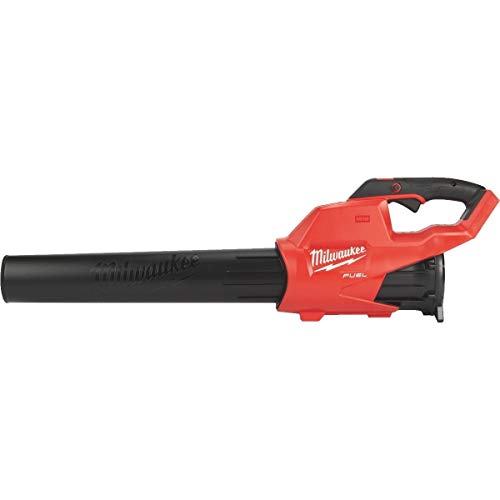
Milwaukee M18 FUEL Cordless Leaf Blower — Best for Platform Owners
Milwaukee’s entry is the review panel’s favourite example of platform economics: for the large population of households whose workshops already run on M18 batteries, this compact, densely built blower arrives almost as an accessory, and performs like a professional tool — particularly sharp on hard surfaces and tidy-up work. Judged as a standalone purchase with batteries to buy, its tier is harder to defend; judged as an addition to an existing system, it may be the best-value machine in this entire round-up. Best for: M18 households and hard-surface-heavy properties. Not suited for: acreage demanding maximum sustained volume.

Ryobi 40V HP Brushless Whisper Series Leaf Blower — Best for Quiet
The Whisper Series reviews well because it solves the category’s most-cited problem — noise — without ceasing to be a full-strength garden tool on a widely available platform. In close-set housing its civility is not a luxury; it is what makes the little-and-often pattern, the pattern that actually keeps gardens tidy, socially possible at reasonable hours. Output is tuned for real work rather than headline competition, and buyers chasing maximum figures should look elsewhere in this round-up; buyers chasing a machine the street will never resent have found it. Best for: terraces, semis, early risers, frequent short sessions. Not suited for: maximum-output rural clearing.
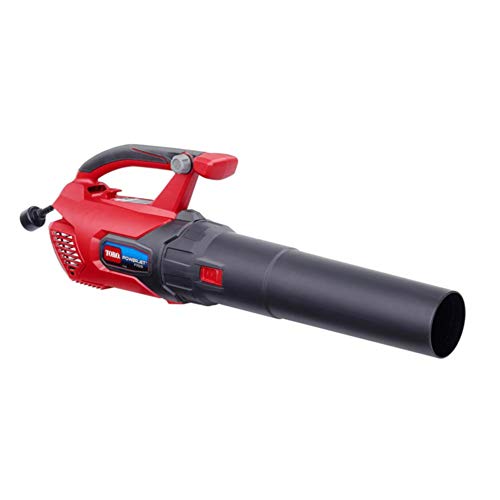
Toro PowerJet F700 Corded Leaf Blower — Best Budget and Lightest
The PowerJet F700 is this round-up’s reminder that the oldest format still wins its home ground outright. Light in the hand, simple to the point of elegance, free of batteries, fuel and charging forever, and sitting in the entry-to-mid tier, it covers small gardens, drives and patios with an ease that heavier machines cannot imitate. Its single trade-off is the tether: an outdoor-rated extension cord, a GFCI-protected outlet, and ground within comfortable reach. Within that radius, this review struggles to justify spending more. Best for: small plots near the house, lighter-strength operators, minimalists. Not suited for: large or awkward gardens.
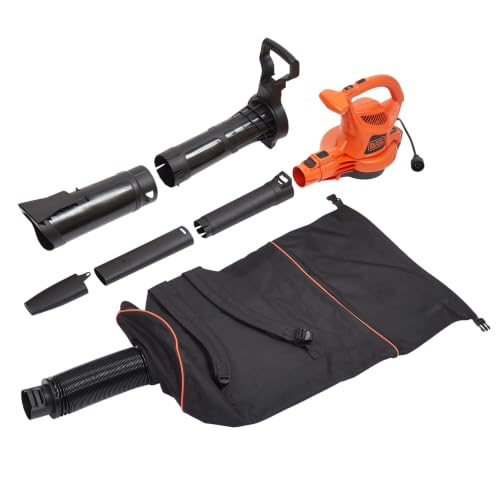
BLACK+DECKER BEBL7000 Leaf Blower Vacuum Mulcher — Best for Collectors
The BEBL7000 is reviewed as a system rather than a blower: blow to gather, vacuum to collect, mulch to shrink — one corded machine performing the whole leaf workflow for gardeners who compost or bag. On beds and gravel its vacuum mode is the best tool in this round-up outright. As a pure blower it trails dedicated machines at similar tiers, and conversion between modes costs a few minutes each way, which high-volume lawn clearers will feel. For its intended household, neither point matters beside the workflow it completes. Best for: collectors, composters, small-to-medium plots with beds and gravel. Not suited for: fast clearing of large open lawns. Combination alternatives are compared further in our best leaf blower vacuums guide.
Strengths and Trade-Offs of the Current Generation
Across all six reviews, the generation’s strengths repeat: instant, reliable starting; variable control that makes technique possible; sustained output sufficient for most gardens from battery power alone; and build quality that promises long service with two-minute maintenance habits. The trade-offs repeat just as faithfully: noise that demands protection and considerate hours from every type; dust that demands eye protection, dampened ground on dry days and a nozzle never pointed at people, pets or vehicles; and power logistics — ageing batteries, tethering cords, or petrol’s upkeep — that each household must choose in the form it minds least. No machine in this round-up escapes the trade-offs; the good ones merely price them honestly. The coldest-eyed version of this ledger is maintained in our leaf blower pros and cons page.
How the Reviewed Machines Compare
Set against the rake and tarp, every machine here wins on speed and reach and loses on silence — for light fall, buy none of them. Set against each other: the EGO pair divide by acreage, with the LB6504 the default and the LB7654 the escalation; the Milwaukee wins wherever its batteries already live; the Ryobi wins wherever neighbours are close; the Toro wins wherever a cord can reach and lightness rules; the BLACK+DECKER wins wherever leaves are gathered rather than herded. Set against professional services, all of them win on arithmetic within a season or two for most properties. The comparison that matters is never machine against machine in the abstract — it is machine against your audit, which is why our staged guide on how to choose a leaf blower remains the recommended first read before any purchase from this page.
Who Should Buy Which — and Who Should Skip the Category
Buy the LB6504 pattern if you have a medium-to-large garden and want one premium machine for the long term. Buy the LB7654 pattern if your ground and leaf fall genuinely outrun it. Buy the Milwaukee if M18 batteries already live in your garage. Buy the Ryobi Whisper if your street is close and your sessions are frequent. Buy the Toro if your plot is small, near the house, and your priorities are lightness and simplicity. Buy the BEBL7000 if you collect and compost. Skip the category — honourably — if your leaf fall is a light scatter on a small plot, your leaves land on welcoming beds, or noise friction in your setting is unavoidable; a rake, a tarp and the rest of the autumn kit will serve you better. The pre-buy checklist is short: audit the ground, choose the family, commit to a platform, require variable speed, test the working weight, budget the protection, and confirm the storage.
Setup, Care and Maintenance Essentials
Every machine in this round-up shares the same ownership rhythm. Set up deliberately once: tubes seated fully, batteries charged and their care guidance read, cords inspected and paired with a GFCI-protected outlet where relevant. Operate by the standing rules — impact-rated eye protection and hearing protection on, intake clear of clothing and hair, bystanders and pets out of the area, dust dampened on very dry ground, hours kept neighbourly. After sessions, spend two minutes: clear intake and tube, check the machine over, store dry and off the ground with its protection. Batteries stored per the maker’s guidance, cords checked before use, and an annual once-over complete a regime that should give any of these machines many seasons of service — the same small-habit philosophy that applies across the whole garden shed.
Final Verdict
These leaf blower reviews converge on a single conclusion: the category is in excellent health, and the buyer’s task is matching, not hunting. The premium cordless machines are genuinely superb; the quiet and platform specialists solve real problems elegantly; the humble corded lightweight remains unbeatable on its own ground; and the combination machine completes a workflow nothing else touches. Choose by ground, platform, weight and noise — in that order — wear the protection, learn the low slow arc, and any machine reviewed here will repay its tier across many autumns.
How These Reviews Were Compiled
A word on method, because round-up reviews are only as good as their criteria. The machines here were assessed against the regimes that decide ownership in practice — lawn clearing, hard-surface finishing, delicate ground, and sustained heavy work — rather than against laboratory numbers alone, and the verdicts weight the properties owners live with: sustained airflow over boost figures, working weight with battery fitted over bare-tool claims, and real-world noise over any single published figure. Tier judgements are qualitative by design; this page publishes no prices, because prices move and fit does not. Products are presented in prose while verification of current listings is completed, and no machine earns a link or a ranking here that its garden fit has not earned first.
Two biases are declared openly. First, these reviews favour the mainstream: the gardens most readers actually own are suburban in scale, and verdicts are calibrated there before they are extended to acreage or courtyards. Second, they favour platforms and longevity over novelty: a machine that shares batteries with your existing tools and will still have spares available in five years starts every comparison with an advantage that a marginally stronger newcomer must overcome. Readers whose gardens or values differ should adjust the verdicts accordingly — the reasoning is shown precisely so that it can be re-run with different weights.
Head-to-Head: The Comparisons Readers Actually Ask For
Premium cordless against premium cordless — the EGO LB6504 pattern against the Milwaukee M18 FUEL pattern — resolves less on output, where both are ample for suburban ground, than on ecosystem and emphasis: EGO’s is a garden-first platform with the blower as a flagship citizen, Milwaukee’s is a tool-first platform where the blower is a superbly built extension of a workshop system. Households choose by which shed they already live in, and both choices review well. The LB7654 enters only when the LB6504’s headroom is honestly outgrown; buying it ‘just in case’ is the one verdict in this section we argue against, because its extra size and weight are paid on every session for capacity used on a few.
Quiet cordless against standard cordless — the Ryobi Whisper pattern against the mainstream — is a values comparison disguised as a product one. The mainstream machine typically offers the stronger headline figures; the quiet machine offers the stronger life: earlier hours, closer neighbours, pleasanter sessions, and the little-and-often rhythm that keeps gardens genuinely tidy. In streets where houses stand close, these reviews side with quiet more often than spec-led round-ups do, because a machine’s social licence determines its working hours, and working hours determine results. On open ground with distance from neighbours, the mainstream case reasserts itself, and the Whisper’s premium for civility buys less.
Corded against cordless at the small end — the Toro PowerJet F700 pattern against compact battery models — is the comparison where reviewers most often mislead by omission. Spec-led pieces crown the cordless for freedom and forget to mention that the corded machine is lighter, simpler, cheaper to own forever and entirely sufficient within its radius; experience-led pieces return the compliment by forgetting how quickly a cord becomes the whole job on awkward ground. The honest verdict is geometric: pace your plot, and if the cord reaches everywhere without crossing your working path, the corded machine is not the budget compromise — it is arguably the best tool for that garden, full stop.
Combination against dedicated — the BLACK+DECKER BEBL7000 pattern against pure blowers — turns on what happens to leaves after they move. If the answer is ‘into bags and the compost system’, the combination’s workflow advantage is decisive and its modest blowing deficit irrelevant; if the answer is ‘into piles at the fence’, the dedicated blower’s airflow and simplicity win and the vacuum hardware is dead weight. These reviews therefore refuse a universal winner in this pairing and regard any round-up that names one with suspicion.
Ownership Notes: What the First Season Teaches
Across the machines in this round-up, first-season owners converge on the same lessons, and a reviews page does its readers a service by printing them in advance. Lesson one: the second battery, on any cordless platform serving a medium or large garden, is not an accessory but the completion of the product — sessions stop being rationed, and the machine’s real capability appears. Lesson two: storage placement governs use; a blower hung by the door with its protection comes out for five-minute jobs that a blower buried in the shed never performs, and five-minute jobs are where gardens are actually kept. Lesson three: technique repays study out of all proportion — one careful reading of a proper method guide, plus a session of deliberate practice at low speed, visibly outperforms a tier upgrade.
Lesson four concerns the street: owners who begin considerately — reasonable hours, dust dampened, a word with the closest neighbours before the first big clearance — report that the blower becomes a non-event socially, while owners who begin with a dawn marathon in a dry week spend seasons living it down. Lesson five is about expectations of the category itself: no machine in these reviews gathers, finishes corners or exercises judgment, and owners who bought a partner for the rake are content, while owners who bought a replacement for gardening sometimes are not. Buy any machine here with those five lessons priced in, and the reviews above should hold for you as they have for the owners they summarise.
A Note on Long-Term Satisfaction, Model by Model
Round-ups usually end at purchase; owners live afterwards, so these reviews close the loop with the satisfaction pattern each type tends to produce. Premium cordless owners — the LB6504 and LB7654 pattern — report the deepest long-term contentment when the machine was matched to the ground, and the sharpest buyer’s remorse when it was not: an oversized flagship on a small plot is a daily reminder of money spent on unused headroom, while the same machine on the right acreage becomes invisible infrastructure. The variable is never the machine; it is the match, which is why this page has insisted on audits over adjectives from its first paragraph.
Platform owners — the Milwaukee pattern — report a distinctive satisfaction curve: modest excitement at purchase, growing appreciation as the battery pool proves itself across tools and seasons. Quiet-model owners — the Ryobi Whisper pattern — report the social dividend most strongly: neighbours who comment, sessions at hours that would otherwise be unthinkable, and a machine that gets used in the little-and-often rhythm that keeps gardens best. Corded owners — the Toro pattern — report the purest satisfaction of all when the tether fits, a decade of nothing going wrong; and combination owners — the BEBL7000 pattern — divide cleanly into composters, who are devoted, and everyone else, who drift back to a dedicated blower. Read your own household in those patterns before you read the verdicts, and the right review on this page will feel less like a ranking and more like a recognition.
Second Opinions: Where These Reviews Might Be Wrong for You
Every round-up embeds assumptions, and honest reviewing names them so readers can correct for them. These reviews assume a garden of roughly suburban scale, an operator of ordinary strength, neighbours within earshot, and a household that values its weekends — assumptions that fit most readers and misfit some in instructive ways. If your property is rural and large, upgrade every endurance judgement here by a class and treat the quiet models’ civility as a luxury rather than a core virtue. If your strength is limited, invert the weight judgements into vetoes: any machine whose working weight you cannot hold at arm’s length in the shop is not a candidate, whatever its badge on this page says. If your plot is a courtyard, invert the whole round-up and start from the corded lightweight, which the mainstream framing of these reviews structurally undervalues.
These reviews also assume buying new into a supported platform. A reader offered a sound used machine, or holding a discontinued platform with healthy batteries, should re-run the verdicts with ownership costs transformed — several mid-table machines become winners when their price is a favour or a fraction of new. And readers in regions with local rules on blower use or noise should let those rules edit the shortlist before preference does: the best-reviewed machine you may not operate at your hours is not, for you, the best machine. Reviews are maps drawn from one vantage; the territory is your garden, and where map and territory disagree, believe the territory.
The Round-Up’s Final Word
Six machines were reviewed here, and the page’s real conclusion is that the contest was never among them. It is between each machine and a garden — yours — with its own trees, surfaces, distances, bodies and neighbours, and every verdict above is written to be re-scored against that garden before a penny moves. Do the audit, name the family, honour the platform, test the weight, respect the noise, buy the protection, and learn the technique: the machine that survives that process will not merely review well. It will disappear into a decade of tidy autumns, which is the highest verdict any garden tool can earn.
Reader Questions This Round-Up Keeps Answering
Certain questions arrive after every round-up we publish, and answering them here saves readers a search. Will a premium cordless machine clear wet leaves from a full-size lawn in one battery? In standard mode with sensible technique, a large pack covers a typical suburban session; deep, soaked fall on a big lawn is the honest case for the second battery, which is why these reviews treat it as part of the product for larger gardens rather than an accessory. Is the quiet model worth it if my neighbours are not close? Its civility also serves the operator — pleasanter sessions, earlier hours by your own choice — but if distance already solves the social problem, the mainstream machines’ headroom is the better spend. Can one machine really serve a whole garden’s surfaces? Yes, provided it has variable speed and both nozzle shapes; the surfaces differ, and the machine that adapts its air to them is the machine these reviews keep selecting.
Does the combination machine’s vacuum mode replace a garden vacuum entirely? For leaves on beds, gravel and hard corners, effectively yes — that is its home ground and it is excellent there. For general lawn gathering at volume, a tarp and a rake remain faster, which is why the combination is reviewed as a collector’s system rather than a universal one. And the perennial last question — which single machine should a reader with no platform, a medium garden and close neighbours buy — has the round-up’s most considered answer: the quiet-leaning mainstream cordless pattern, because it is the only profile that concedes nothing the garden needs while buying peace on every axis the household lives with. Rankings end; matching endures, and it has been the method of this page from its first verdict to this final answer.
If Your Budget Forces One Compromise
Round-ups assume the reader can reach the recommended tier; readers who cannot deserve direct advice about where to compromise, because the category punishes the wrong compromise and forgives the right one completely. Compromise on capacity before anything else: a smaller machine on a platform you own, worked a little longer, delivers the same garden as its bigger sibling at a slower tempo, and tempo is the cheapest thing to spend. Compromise on newness second: a sound used machine from a living platform, its batteries honestly assessed, is a better purchase than a new machine on an orphan system at the same money. Compromise on features third — cruise control and extra nozzles are refinements that technique can live without for a season and add later where the platform allows.
Never compromise on the three things these reviews have treated as structural: variable speed, because without it technique itself is compromised on every delicate surface you own; the protection, because its absence converts a garden tool into a standing risk for the price of a modest dinner; and the power arrangement’s safety — the sound cord, the GFCI-protected outlet, the battery routine kept properly — because those are the terms on which electricity forgives its users. A reader who holds those three lines can compromise everywhere else with a clear conscience and will still end up, as this round-up has argued from its first page, with a machine that fits — and fit, in this category, is the whole of the law.
And if the budget will not stretch even to the right compromise, these reviews say plainly what spec-led round-ups never do: wait. A season with the rake while the platform fund builds produces a better decade than a wrong machine bought now, and the leaves — this is their great virtue as an adversary — will still be there, in identical abundance, when the right machine arrives to meet them.
What Changed Our Minds During These Reviews
Round-ups should record their surprises, because surprises are where reviewing earns its keep. Three verdicts moved during the compilation of this page. The corded machine’s rose: expected to be filed as the budget footnote, the PowerJet F700 pattern instead forced a fuller respect — within its radius it is not the cheap version of the experience but arguably its purest form, and these reviews now say so without the usual throat-clearing. The quiet machine’s rose further: civility, initially scored as a soft benefit, proved in regime after regime to be a working property that changes when and how often the tool is used, and therefore what gardens actually look like. And the flagship’s fell, slightly and instructively: not because it disappointed, but because the mid-tier’s competence kept narrowing the ground on which its premium is spent, until the honest verdict became the conditional one printed above — magnificent where the garden presents the bill, surplus where it does not.
A fourth surprise belongs to no machine: the operator kept winning. Again and again in these comparisons, the difference attributed to hardware at first sight resolved, on a second session, into technique — the arc, the order, the feathered trigger — and the round-up’s rankings compressed accordingly. Readers should take that as the most practical sentence on the page: whatever you buy from this list, an hour invested in method will outperform the next tier up, and it is the only upgrade in the entire category that is free.
The Shortlist, One Last Time
For readers who have scrolled — as readers do — for the distilled answer, here it is with its conditions attached, because in this category the conditions are the answer. Medium-to-large garden, no platform yet: the EGO Power+ LB6504 pattern, bought as a kit, with a second battery planned. Same garden, heavier fall: its LB7654 sibling. A garage already running on Milwaukee M18: the M18 FUEL blower, and no further deliberation is required. Close neighbours or early hours: the Ryobi Whisper pattern, whose civility will repay its tier in goodwill within a month. Small plot near the house: the Toro PowerJet F700 pattern, the lightest and simplest honest machine in these reviews. Leaves gathered for compost, beds and gravel to clear: the BLACK+DECKER BEBL7000 pattern, bought as a system rather than a blower. No leaf load to speak of: none of the above, and congratulations on the simplest verdict of all.
Every line of that shortlist carries the same footnotes, and they are repeated here because footnotes are where ownership is decided: variable speed or nothing; protection bought with the machine and worn at every session; the power arrangement kept safe — GFCI-protected outlet and a sound outdoor-rated cord for the corded, batteries charged and stored per the maker’s guidance for the cordless; the nozzle never pointed at people, pets or vehicles; dusty ground dampened rather than exported; hours kept neighbourly; and technique — destinations, edges first, the low slow arc — learned once and used always. A purchase that honours the footnotes will hold up under any re-reading of these reviews, in any season, which is all a round-up can honestly promise.
One closing observation from the round-up as a whole: the machines reviewed here do not compete in a vacuum, because the households buying them are simultaneously equipping the rest of the autumn garden — and the blower that fits a household’s platform, storage and habits tends to arrive alongside the same logic applied to everything else on the bench, from trimming kit to the watering equipment surveyed in our guide to the best garden hoses. Consistency of system is the quiet theme under every verdict on this page: one battery family, one storage wall, one maintenance rhythm, one set of safety habits. Readers who build that consistency deliberately will find that the individual rankings matter less with every season — the system carries the garden, and the blower, whichever badge it wears from the shortlist above, simply does its share of the carrying, autumn after autumn, without drama.
After the Boxes Are Gone: Long-Term Ownership Notes From Leaf blower Reviews
Most leaf blower coverage stops at unboxing, yet almost everything that decides owner satisfaction happens afterwards. The first evening tells you about finish and first impressions; the third month tells you about durability, upkeep and whether the design still suits the way your household actually behaves. This section looks at the ownership phase in detail — the settling-in period, the first signs of wear worth watching for, and the small habits that separate owners who stay pleased from owners who start browsing replacements. If you are weighing EGO Power+ LB6504 Cordless Leaf Blower, EGO Power+ LB7654 Cordless Leaf Blower or any similar design, treat the points below as the questions a good long-term review should answer.
The Settling-In Period: What Changes in the First Weeks
New materials and mechanisms relax. Fabrics soften, joints settle, finishes lose their showroom sharpness, and moving parts either bed in smoothly or start to complain. With a leaf blower, use the first fortnight deliberately: operate everything daily, check fixings once after the first week, and keep a mental note of any sound, wobble or resistance that was not there on day one. Changes that stabilise after a small adjustment are normal settling; changes that keep progressing are early warnings, and they are far easier to raise with a seller while the purchase is recent.
Wear Worth Watching, and Wear Worth Ignoring
Not all wear is failure. Honest materials in the garden & lawn category develop a patina — slight softening of edges, gentle colour shifts where hands and light fall — and most owners come to like it. The wear that matters is functional: looseness that returns after tightening, surfaces that mark from ordinary use rather than accidents, parts that need persuading, and finishes that fail at edges and corners first. Check those high-contact zones on any leaf blower you already own, and look for honest close-up photographs of exactly those zones when you judge a replacement.
A simple ownership routine keeps a leaf blower performing the way the early reviews promised:
- Once a month, spend two minutes checking fixings, feet, seals or moving parts — whichever your leaf blower relies on — and correct small changes before they compound.
- Clean little and often with the mildest method that works, rather than rarely and aggressively, and always test any new cleaner on a hidden patch first.
- Rotate, rest or reposition the leaf blower if one side takes all the light, heat or traffic, so wear spreads evenly instead of concentrating.
- Keep the manual, spare parts and any touch-up materials together in one labelled place; the day you need them is never the day you want to search.
- Photograph the leaf blower once a year from the same spot; comparing pictures is the most reliable way to notice slow change you would otherwise miss.
Notice which parts are replaceable and which are not; a leaf blower whose wear parts can be swapped cheaply often outlasts a sealed design twice its price in spirit, if not in years. Consider the leaf blower from the perspective of the person who cleans around it, because designs that trap dust, block access or demand special products quietly tax every week of ownership. Think about noise, light and heat as neighbours of the leaf blower, not afterthoughts, since a choice that performs well but disturbs the room around it rarely stays popular for long. Remember that guests experience your leaf blower without instructions, so anything that needs explaining, warning or demonstrating is worth simplifying before it is worth defending. Plan for the leaf blower to be moved at least twice in its life — for cleaning, redecorating or a change of room — and favour designs that forgive being shifted, tilted or carried. Look at the edges and undersides when you judge build quality, because those are the places makers save money first and the places owners discover last. Ask how the leaf blower behaves on your worst floor, wall or surface rather than your best one, since homes are uneven and listings are photographed in perfect rooms. Keep the receipt, delivery note and a photograph of the label together, because warranty conversations go smoothly when dates and model details are at hand. If two people in the household disagree about the leaf blower, let the person who will use or maintain it most have the deciding vote on practical questions. Beware of buying for the household you hope to become; the leaf blower that serves the household you already are will be used this week, not someday. A tape measure, a spirit level and ten patient minutes prevent more leaf blower regrets than any amount of comparison shopping after the fact. When a listing is vague about a dimension, material or included part that matters to you, treat the vagueness itself as information and look for a clearer seller. Photograph your room at the time of day you will use the leaf blower most, and compare candidates against that light rather than against bright midday photographs.
Ownership rewards attention in small doses. A leaf blower that is checked monthly and cleaned gently will usually outlast a neglected premium model, and it will certainly stay pleasanter to live with. Judge any review — including the detailed assessments earlier in this guide — by whether it helps you through this long middle phase of ownership, because that phase, not the unboxing, is where the money is really spent.
Frequently Asked Questions
Which leaf blower is best overall for most homes?
A premium mainstream cordless machine of the EGO Power+ LB6504 type is the safest single recommendation: strong sustained output, fine variable control, a turbo reserve for wet patches and a broad battery platform. It is not the right answer for everyone — small plots are better served by a light corded machine, M18 households by Milwaukee’s blower, and quiet streets by Ryobi’s Whisper design — but as a default for the typical medium-to-large suburban garden, it is where these reviews land.
Are expensive leaf blowers noticeably better than budget ones?
On the ground that justifies them, yes: sustained output late in a session, larger battery ecosystems, quieter engineering and refinement you feel across an hour. On a small plot, no: a budget corded machine delivers nearly all the result there is to have, and the premium difference buys numbers the garden never requests. The reviewing error is comparing tiers without reference to ground. Match the tier to the acreage and leaf load, and both budget and premium machines review well; mismatch them, and both disappoint.
Cordless, corded or petrol — which type reviews best?
Cordless reviews best for the largest number of households: convenience, low maintenance, no tether and output that now covers most gardens completely. Corded reviews best on small plots within reach of an outdoor socket, where its lightness and simplicity are unbeatable at its tier. Petrol reviews best only at the heavy end — large, wooded properties with long sessions — where its endurance outweighs its noise and upkeep. Type is a property of your ground, not a league table.
What should I look for first when reading leaf blower reviews?
Whether the reviewer matched the machine to a garden like yours. Then the working figures: sustained air volume rather than boost headlines, working weight with the battery fitted, and honest noise discussion. Check that variable speed is present, that platform and battery costs are counted, and that the review mentions protection and operating discipline — reviews that skip safety are skipping part of the product. Treat any headline score, wherever you meet one, as weather rather than climate: it changes constantly and says little about fit.
Do I need a separate vacuum or mulcher as well as a blower?
Only if gathering is central to your routine — composting at volume, bagging for collection, or clearing beds and gravel where blowing disturbs the surface. A combination machine like the BEBL7000 reviewed above folds all three functions into one purchase and suits collectors well. Most households find a dedicated blower plus a rake and tarp completes the workflow without the extra mechanism, cost and cleaning. Decide by what happens to your leaves after they move, not before.
Related Guides
Complete the picture with the leaf blower buying guide, the value verdict in leaf blower is worth it, and the seasonal companions among the best compost spreaders for putting gathered leaves to work.