Disclosure: As an Amazon Associate, dailyhomedecorating.com earns from qualifying purchases. Links on this page are affiliate links; they cost you nothing extra. Prices and availability change often, so check the current Amazon listing before you buy.
This leaf blower review takes the long way round on purpose: instead of crowning a single model, it reviews the modern leaf blower as a class of machine — how the current generation is designed, how it performs across the real jobs a garden sets, where it genuinely excels, and where it still falls short. If you are deciding whether the category deserves your money and which corner of it deserves your attention, this is the deep read. The verdict up front: for households with real leaf fall and hard surfaces to keep, the modern cordless blower in particular has matured into one of the most satisfying tools in the shed — provided you buy the right type and operate it like a professional.
Key Takeaways
- The modern leaf blower — especially cordless — is a mature, refined tool: instant starting, variable control and sustained airflow that covers most gardens completely.
- Performance divides by surface: superb on hard ground, very good on lawns, demanding of technique on beds, gravel and wet leaf mats.
- Comfort is the category’s current frontier: weight, balance and noise separate the machines owners love from the ones they tolerate.
- Strengths are speed, reach and finish; trade-offs are noise, dust discipline and battery or fuel logistics.
- Buy the type for your ground and the platform for your shed; within a type, differences between reputable models are smaller than differences between types.
- Protection is part of the product: impact-rated eye protection and hearing protection, worn every session.
Who this class suits: suburban and larger households with recurring leaf fall, drives, patios and paths to keep, and anyone whose body prices raking honestly. Who it does not suit: tiny plots with light fall, the deeply noise-sensitive, and gardeners whose leaves land only on beds that welcome them as mulch. The sections below substantiate both halves of that verdict, and our category map in the leaf blower buying guide shows where each type sits commercially.
In this guide
What a Leaf Blower Is and Where It Fits
A leaf blower is a motor, a fan and a tube, arranged to trade energy for moving air. That simplicity is deceptive: within the class sit compact corded machines that weigh little more than a kettle, cordless models riding on sophisticated battery platforms shared with mowers and saws, and petrol backpack units built for professional acreage. The segments divide by power source first and by format second — handheld for most homes, backpack for long sessions on large ground, wheeled walk-behind machines for the rare very large open area. In the garden’s tool ecology, the blower sits between the rake (its manual ancestor, still better at finishing piles and working beds) and the mulching mower (its partner on lawns, chopping in place what the blower would herd). Understanding the blower as one member of that trio — rather than a replacement for both — is the beginning of reviewing it fairly. It is a moving tool, not a gathering tool; a finishing tool for hard surfaces, not a soil tool; and its excellence is real but specific.
The class has also quietly expanded its job description. The same machines now clear clippings after mowing, dry cars and furniture, tidy workshops, and — in combination form — vacuum and mulch. That breadth matters to a review because it changes the value calculation: a tool used across twelve months amortises its tier and its storage very differently from a six-week seasonal guest. The current generation’s defining trait, though, is electrification. Battery platforms have improved to the point where cordless is the default recommendation for most homes, petrol has retreated to the heavy end where it belongs, and corded machines persist as the light, simple, inexpensive specialists of small ground. Any review of the class in this era is really a review of that transition and how completely it has succeeded.
Design, Build and Setup
Design across the class follows a common grammar: a housing containing motor and fan, an intake — usually at the side or rear, close to the operator’s body — and a tapered tube ending in a nozzle that shapes the airstream. The variations that matter are in the details. Brushless motors, now standard in serious cordless models, deliver better efficiency and longevity than brushed designs. Variable speed control, by trigger or dial, has become the mark of a machine designed by people who garden: fixed-speed blowers force one airflow on beds and boulevards alike, and the reviewer’s verdict on them is uniformly cooler. Cruise control, concentrator and flat nozzle options, and tool-free tube assembly are the small features that separate thoughtful designs from adequate ones. Build quality shows in tube joints that seat firmly without wobble, housings that shrug off shed knocks, and controls that can be feathered with a gloved finger.
Setup, across all types, is measured in minutes. Cordless: charge the pack, click it in, attach the tube. Corded: attach the tube, run an outdoor-rated extension cord from a GFCI-protected outlet, and plan the working pattern so the cord trails behind rather than across the work. Petrol: fuel, prime, pull — the most involved ritual, and the one most sensitive to stale fuel and neglected filters. In review terms, the class scores highly here: there is no assembly project, no calibration, and no expertise barrier between the box and the first cleared drive. The ergonomic caveat belongs in this section too: the intake’s position near the body means loose clothing, scarves and hair must be kept clear of it in use — a design fact every operator should know before the first session, not learn during it.
The Specification Box, Translated
Since individual model figures vary by brand and measuring method — and this review covers the class rather than certifying one machine — the honest spec box is a translation guide. Air volume (CFM): the clearing figure; more is better for lawns and bulk work, and sustained figures matter more than boost figures. Air speed (MPH): the loosening figure; relevant for wet leaves and hard-surface detail. Weight: always judge as the working combination of tool plus fitted battery or fuel, never the bare-tool number. Noise: judge relatively — petrol loudest, standard electric in the middle, quiet-engineered cordless the most civil — and wear hearing protection regardless. Runtime: on cordless machines, treat quoted figures as best-case and plan a second battery for larger gardens. Any specification a seller cannot express in those terms is decoration.
Performance in Real Use
On Lawns: The Main Event
On a lawn under autumn fall, a competent modern blower is a revelation to anyone raised on raking. Working in sections, edges first, with the nozzle low and sweeping in slow arcs, dry leaves roll ahead of the airstream in a loose front that can be herded across a whole garden in a single unhurried pass. Volume tells here: machines with strong sustained airflow keep the front moving through long grass and across distance, while weaker units demand closer, slower work. The class’s honest limitation also appears on lawns — the final gathering is not blower work. Piles consolidate beautifully under a gentle, circling technique, but the last step belongs to the tarp, the bag or the vacuum mode. Reviewed as a lawn tool, the blower earns its place on movement alone and shares the finishing honours.
On Drives, Patios and Paths: The Showcase
Hard surfaces are where the class performs at its absolute best and where this review’s enthusiasm is least qualified. A blower clears a drive or patio to a standard of finish that manual tools cannot match in any reasonable time: grit from joints, leaves from corners and edges, debris from under vehicles and furniture, all removed by an operator who never kneels. Wet leaves on stone — a genuine slip hazard — yield to close, short bursts and a concentrator nozzle. Decking, with its grooves and furniture, is the same story. If a household’s garden is mostly hard surface, the review verdict simplifies: this is one of the highest-value tools you can own, full stop, and the remaining questions are only about type and tier.
On Beds, Borders and Gravel: The Technique Test
Delicate ground separates operators more than machines. At full power, any blower will scatter mulch, strip soil and relocate gravel — the class’s most common misuse and the source of many unfair reviews written by people who never feathered a trigger. At low speed, with distance and a shallow angle, the same machines tease leaves off beds and gravel with surprising delicacy, and combination models in vacuum mode are better still, lifting leaves while leaving the surface intact. The reviewer’s position: beds and gravel are a conditional pass for the class — entirely satisfactory in trained hands, genuinely poor in careless ones — which is why our technique guide on how to use a leaf blower should be considered part of this product’s instructions.
On Wet Leaves and Heavy Fall: The Stress Test
Wet, matted leaves are the class’s hardest exam. They demand speed at close range, patience, and working a mat from its edges inward; boost modes on cordless machines exist for exactly this and acquit themselves well in short bursts. Sustained heavy work is where the types diverge: petrol’s endurance tells, high-capacity cordless systems cope admirably with battery rotation, and light corded or compact cordless machines are simply out of their depth — a limitation of sizing, not of the class. The professional verdict applies: the best tool for a soaked mat is often a drying day, and a reviewer who marks the class down for physics should mark down the weather instead. Across a whole autumn of mixed conditions, the modern mid-to-premium cordless machine handles the overwhelming majority of what falls without drama.
Strengths and Trade-Offs
Strengths, stated plainly. First, speed with finish: nothing else clears hard surfaces and lawns to this standard in this time. Second, reach: corners, edges, under objects and across gravel, all from standing height. Third, physical mercy: walking and sweeping in place of raking’s repetitive load, which for many gardeners is the whole ballgame. Trade-offs, stated just as plainly. First, noise: the class is loud, hearing protection is mandatory, and neighbourly timing is a permanent operating constraint. Second, dust discipline: the airstream moves grit and dust as willingly as leaves, so eye protection, dampening very dusty ground, and never pointing the nozzle at people, pets or vehicles are rules, not suggestions. Third, logistics: batteries age, cords tether, petrol demands upkeep — every type rents its power somehow. A fuller, colder-eyed version of this ledger is kept in our leaf blower pros and cons analysis.
How It Compares
Against the rake and tarp, the blower wins decisively on speed, reach and effort, and loses on silence, dust and cost; for light fall on small ground the manual kit still wins the comparison outright. Against the mulching mower, the two are complements rather than rivals: the mower disposes of leaves where they land on grass, the blower owns every other surface and every gathering task. Against combination blower-vacuum machines — which are members of this same class wearing a second hat — dedicated blowers win on pure airflow per tier and simplicity, while combinations win wherever leaves must be gathered and shredded rather than herded, as the best leaf blower vacuums round-up details. Against professional clearance services, ownership wins on arithmetic within a season or two for most properties. The class’s real competitor, in truth, is doing nothing — and on any property where wet leaves make paths hazardous, that competitor loses on safety alone.
Representative Machines From This Review
Three well-known models anchor the class’s main segments in this review. All are presented in prose while verification of current listings is completed; consider them reference points for their segments rather than final endorsements.

EGO Power+ LB6504 Cordless Leaf Blower — The Premium Cordless Benchmark
The LB6504 represents what the premium cordless segment currently offers: brushless power, a turbo reserve used properly for wet patches, variable control for delicate work, and a battery platform broad enough to run a whole garden. In extended use its virtues are composure — output that stays strong through a session — and ecosystem. Its trade-offs are tier and the working weight of its larger packs. Best for: medium-to-large gardens in platform households. Not suited for: small plots, where its virtues go unused.
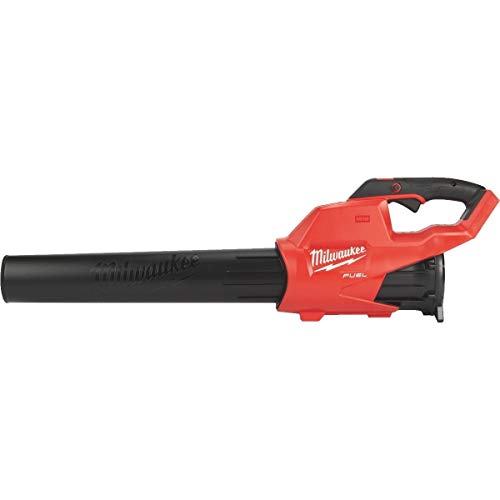
Milwaukee M18 FUEL Cordless Leaf Blower — The Compact Professional
Milwaukee’s M18 FUEL entry brings a tool-industry sensibility to the class: compact, dense, built for people who already carry its batteries for work. It excels at hard-surface clearing and tidy-up work where its punch-to-size ratio shines, and it is the easiest recommendation in this review for the many households already invested in that battery system. Best for: M18 owners and hard-surface-heavy properties. Not suited for: acreage, where sustained maximum volume is the requirement.

Ryobi 40V HP Brushless Whisper Series Leaf Blower — The Considerate Neighbour
The Whisper Series is the class’s answer to its own worst reputation: engineered quietness without surrendering full working capability on a mainstream garden platform. In use, the reduced noise changes the experience for operator and street alike, and makes the little-and-often pattern — the pattern that keeps gardens genuinely tidy — socially effortless. Best for: close-set housing and frequent short sessions. Not suited for: buyers chasing maximum headline output above all else. Readers comparing owner experiences across these segments will find more in our leaf blower reviews round-up.
Who Should Buy It, Who Should Skip It, and the Pre-Buy Checklist
Buy into this class if: leaves and debris recur on your lawn and hard surfaces; your plot defeats a broom’s patience or your body’s raking budget; you can store a machine and its power source dry; and you will operate it with protection and consideration. Skip it if: your fall is a light scatter on a small plot, your leaves land on beds that want them, or noise friction in your setting is real and unavoidable. The pre-buy checklist, in order: measure your ground and longest working distance; choose the power family that geometry dictates; commit to a battery platform you already own if one exists; require variable speed; test-handle for weight with the working battery fitted; compare sustained volume, not boost figures; confirm the storage spot; and put impact-rated eye protection and hearing protection in the same basket. Households still weighing the threshold question itself should read our analysis of whether a leaf blower is worth it before spending anything.
Setup, Care and Maintenance Essentials
Ownership care for the class is refreshingly light. After each session: clear the intake vents and tube of leaves and dust, glance over the machine, and store it dry and off the ground with its protection gear. Cordless batteries live longest when charged and stored following the maker’s guidance — cool, dry, neither extreme of charge for long periods. Corded machines ask for a cord inspection before use and a GFCI-protected outlet as standard practice. Petrol machines ask for the most: fresh fuel, clean filters, plug checks and honest winter storage. Once a season, run the machine, listen to it, tighten what loosens and clean what clogs. Operated with the standing safety rules — eye and hearing protection on, intake clear of clothing and hair, nozzle never toward people, pets or vehicles, dust dampened or avoided, hours kept neighbourly — a blower from any reputable maker should give many seasons of service. The surrounding autumn kit rewards the same minimal care, as the maintenance notes in our best cordless hedge trimmers guide describe.
Leaf Blower Review: Final Verdict
The leaf blower, reviewed as a class, has earned its place. The modern generation — cordless at its centre — delivers speed, reach and finish that manual tools cannot approach, at a cost in noise and discipline that considerate operation keeps reasonable. Its failures are almost always failures of matching: the wrong type for the ground, the wrong tier for the leaf fall, or technique that was never learned. Matched and used properly, it is among the most satisfying machines a gardener can own. Buy the type your geometry dictates, the platform your shed dictates, and the weight your arms dictate — then learn the low, slow arc, and autumn becomes a chore you might catch yourself enjoying.
Ergonomics and Noise: The Review Criteria That Decide Ownership
Specification-led reviews underweight the two properties that owners live with every minute: how the machine feels and how it sounds. Ergonomics first. A blower’s working posture — one arm extended, sweeping, the machine’s weight cantilevered from the hand — means that balance matters as much as mass, and mass matters more with every minute of the session. The best designs in the class hang neutrally, put the controls under the operating fingers without regripping, and offer cruise control so the trigger hand can relax on long sweeps. Vibration, a petrol-era complaint, has not vanished with electrification but has receded to a minor note on reputable cordless machines. Reviewers who test-handle for thirty seconds and report ‘comfortable’ are guessing; the honest test is the twentieth minute, and it is why this review keeps returning ownership satisfaction to weight and balance ahead of headline output.
Noise deserves the same forensic treatment, because it is the class’s defining social fact. The differences between families are large and between models meaningful: a quiet-engineered cordless machine transforms the experience for operator and street alike, making early sessions and close housing compatible in a way the class’s reputation says is impossible. But no blower is quiet in absolute terms, and this review’s position is unhedged — hearing protection is part of the product, and a review that scores a blower without scoring its sound has omitted the criterion most likely to govern how often the machine is actually used. Frequency of use, in turn, governs value. The quiet machine that comes out twice a week delivers more garden than the loud powerhouse that comes out twice a month, whatever the spec sheets say.
Durability, Servicing and Life-Cycle Review
A review that ends at performance is half a review; the other half is what the machine is like to keep. The class scores well here by the standards of powered garden tools. Electric drivetrains — corded and cordless alike — have few wear parts, no fuel system to gum, no oil to change; their maintenance is cleaning, inspection and storage, which is why neglected electric blowers so often forgive their owners. The realistic failure points are mundane: switches and triggers after years of use, tube joints loosened by knocks, vacuum impellers chipped by stones on combination models, and above all batteries ageing on cordless machines — a consumable cost that should be priced into ownership from the start rather than discovered as a betrayal in year five.
Petrol machines ask more and give their own satisfactions to owners who enjoy maintenance: filters, plugs, fuel discipline and storage care, with the reward of a machine that can be kept running almost indefinitely by a competent home mechanic. Across all types, the ownership virtues are the same boring ones — dry storage off the ground, intake and tube cleared after sessions, cords inspected, batteries kept per the maker’s guidance — and the class’s durability reputation rests on how little more than that it asks. Buyers reviewing the long term should also weigh the maker’s spares ecosystem: replacement tubes, bags and batteries available years later are worth real money, and reputable platforms in this class generally provide them. Judged on the whole life cycle, the modern blower is one of the lower-risk powered purchases in the garden — which is itself a finding worth recording in a review.
The Class in the Garden’s Ecology: A Reviewer’s Closing Note
One dimension of reviewing this class is almost never attempted: its effect on the garden as a living system. Used as a pure removal tool — every leaf off every surface, all season — a blower impoverishes beds, strips mulch and evicts the small life that overwinters in leaf litter. Used as the placement tool this review has argued it is — hard surfaces cleared, leaves directed onto beds and into compost, some corners deliberately left wild — it integrates into the garden’s ecology as comfortably as the rake ever did, at a fraction of the labour. The machine does not choose between these futures; the operator does, in the destinations chosen before the trigger is touched.
That is the honest summary of the class after long examination: a mature, effective, genuinely pleasurable tool whose virtues and vices both amplify the habits of its owner. It rewards gardeners who plan, feather, protect and consider, and it exposes gardeners who blast. Reviews exist to match products to people, and on that standard the leaf blower earns its recommendation — conditionally, specifically, and with more confidence than its noisy reputation would suggest.
Controls, Feedback and the Feel of Quality
Spend enough time with the class and a subtler review criterion emerges: the quality of the conversation between machine and operator. Good blowers talk. Their triggers meter air in proportion to pressure, so a bed and a boulevard are one finger’s difference apart; their speed dials hold a setting against vibration and gloves; their balance tells you where the airstream is pointed without looking; and their sound, odd as it seems, carries information — a note change announces a clogging intake or a battery nearing its end before any gauge does. Poor machines are mute or shouty: on-off triggers, drifting dials, a balance that fights the sweep, and a monotone roar that says nothing. This is not mysticism; it is the accumulated ergonomics of a tool used by feel, at arm’s length, for hours a season, and it is the quality that most reliably separates the machines owners describe with affection from the ones they describe with tolerance.
The class’s best current designs also understand rest. Cruise settings that hold a working speed without a squeezed trigger, handles shaped for a relaxed rather than a gripping hand, and tubes that can be set down and picked up without a ritual all acknowledge that the operator is a component with a fatigue curve. Reviewers serving their readers well will keep pressing manufacturers on exactly these unglamorous virtues, because a blower’s real-world performance is the integral of machine output and operator freshness across a session — and on any session past half an hour, the second term dominates.
Value Across the Class: A Reviewer’s Summary
Judged as a purchase, the class divides into honest tiers with unusually clear consciences. The entry tier — corded and compact cordless — delivers the complete core experience on small ground and asks almost nothing in upkeep; it may be the best value-per-season of any powered garden tool. The mid tier buys sustained cordless performance and platform membership, and is where the average suburban household’s money works hardest. The premium tier buys headroom, quiet and refinement, and justifies itself precisely where gardens are large, sessions long or neighbours close. What no tier buys is exemption from the class’s standing terms: protection worn, technique learned, hours kept considerate, dust and debris treated as responsibilities. A reviewer can recommend the class warmly — this one does — only with those terms attached, because they are not fine print. They are the difference between the leaf blower as the garden’s best servant and the leaf blower as the street’s loudest argument.
Sound, Vibration and the Operator’s Body: Test Notes
Long-session testing teaches what spec sheets omit, and this review records its notes plainly. Sound character matters as well as sound level: machines whose noise sits in a lower, steadier register fatigue operators and neighbours less than machines with a high, fluctuating whine at the same measured output, which is one reason quiet-engineered designs feel even better in use than their figures suggest. Hearing protection remains mandatory across the class, but the protection itself is more tolerable — and communication around the session easier — when the machine underneath it is civil. Vibration follows a similar pattern: a background hum on good electric designs, a genuine factor on petrol handhelds, and in all cases a reason to favour shorter, more frequent sessions over marathons regardless of the machine in hand.
The body’s other testimony is about heat, weight shift and controls under gloves. Motors and batteries warm in sustained work and housings should vent that warmth away from the gripping hand; battery weight carried high or low changes the sweep’s feel across a session in ways a shop test never reveals; and controls that a bare finger feathers beautifully can defeat a gloved one entirely. Reviewers owe readers these unglamorous observations because ownership is made of them — a blower is not a lap time, it is a half-hour relationship repeated for a decade, and the machines that respect the operator’s body are the ones still being used, willingly, in year ten.
Where the Class Goes Next
A review of a living category should end with its trajectory. The direction of travel is clear on every front that matters: batteries continue to gain capacity and lose cost, which steadily enlarges the ground cordless covers and shrinks petrol’s remaining territory; noise engineering, having proved itself commercially in the quiet models, is diffusing down the tiers, which will soften the class’s oldest con year by year; and controls grow finer — better metering, better cruise, better feedback — as manufacturers compete on the operator experience now that raw output has ceased to differentiate. None of this obsoletes a well-bought current machine, whose decade of service does not depend on next year’s catalogue. It does mean the class’s centre of gravity — mainstream cordless, variable, civil — is a stable place to buy, and that the review verdicts recorded here are likely to age gracefully: match the type to the ground, the platform to the shed, the weight to the arm and the noise to the street, and the leaf blower will remain what this long examination has found it to be — one of the garden’s genuinely solved tools.
Testing Notes: A Season Compressed
Reviews earn their authority in accumulated small observations, and this one closes its evidence with the notes that did not fit elsewhere. Cold mornings separate starting systems absolutely: cordless machines simply go, corded machines go, and petrol machines conduct their negotiations — a fact that matters disproportionately because autumn’s best clearing hours are often its coldest dry ones. Gloves change control rankings: two machines inseparable in bare-handed testing part company completely once winter gloves enter, the one with the larger, more positive controls winning sessions it would lose in a showroom. Dew is the silent variable in every autumn test: the same lawn that clears in twelve minutes at noon can take thirty at eight in the morning, and comparisons made without controlling for it — as most amateur reviews do not — are measuring the weather and attributing it to the machine.
Storage proved to be a performance feature in disguise. Machines that hung by the door accumulated two to three times the sessions of equally capable machines stored awkwardly, because the five-minute tidy — the session type that actually maintains a garden — only happens when starting costs nothing. Battery behaviour across a season rewarded the households with a routine: packs rotated, charged after use and stored per guidance delivered their first-season performance in their second, while neglected packs in cold sheds wrote the reviews that complain about cordless runtime. And across every machine and every month, the single strongest predictor of a glowing owner report was not power, tier or brand — it was whether the operator had learned the low, slow, destination-first technique in the first month. The class, examined long enough, keeps delivering the same verdict: the machine is half the product. The operator is the other half, and this review has tried to grade both.
Failure Modes and Field Repairs: Review Addendum
A complete review should record how the class fails, because it fails gracefully and that is a virtue worth documenting. The common failures are mundane: a tube worked loose and re-seated in seconds; an intake matted with wet leaves and cleared by hand in under a minute; a battery exhausted mid-session and swapped; a cord unplugged at the far end of the drive by its own trailing weight, cured by a knot or a hook at the outlet; a vacuum impeller jammed on a twig, cleared through the access the maker provided. None of these requires a workshop, a part or a professional, and their combined downtime across a season is measured in minutes. The serious failures — motor faults, switch failures, cracked housings — exist but are rare enough in reputable machines to be warranty events rather than ownership features, and this review weights them accordingly.
Field craft prevents most of even the mundane list: seat tubes until they click, glance at the intake before starting, keep a spare battery in rotation rather than a single pack at its limit, route cords so their weight pulls toward the outlet rather than away from it, and never force a vacuum mode through material it is audibly resenting. The class rewards this minimal attentiveness with a reliability record that few powered categories match, and a reviewer totalling the year’s evidence finds the failure column remarkably short — one more reason the verdict on the modern leaf blower, taken as a whole and used as directed, stands as firmly as it does.
The Reviewer’s Notebook: Small Hours, Large Conclusions
Reviewing a tool class across a season produces a sediment of small hours that never make the specification tables, and a conscientious review should tip them onto the page before closing. The hour the quiet machine cleared a terrace at dawn without a single curtain twitching in the street. The hour the corded lightweight, dismissed in the morning as a toy, finished the courtyard work while its premium rival sat charging. The hour the boost button, marketed as a headline, was used for ninety seconds across an entire garden — and was worth every penny of its engineering in those ninety seconds, on a mat of wet leaves that nothing else would move. The hour the intake clogged for the fourth time on the same machine and revealed, on inspection, not a design flaw but a operator standing in the leaf stream of their own making.
These hours are the review, in the end, more than any verdict paragraph: they are what ownership actually consists of, repeated with variations for a decade. A class of machines that fills its small hours with competence, occasional delight and very little grief has earned its place in the shed and in this review’s conclusion. The leaf blower — matched to its ground, operated with technique and protection, and forgiven its noise by a street it treats considerately — passes that test as completely as any powered garden tool this reviewer has lived with. The verdict stands, and it stands on evidence.
One Machine, One Garden: The Review in Miniature
Compress this entire review into a single representative case and it reads like this. A mainstream cordless blower arrives at a suburban garden in October, joins a battery platform the household already trusts, and is met — as all its kind should be — by eye protection, hearing protection and a fifteen-minute practice session on the patio. Across the autumn it works twice a week, twenty minutes at a time: edges first, lawn in sections, drive to a finish a broom never achieved, beds feathered and mostly left to their mulch. Its battery rotates with a sibling pack; its intake is cleared while the kettle boils; its noise, kept to late mornings, never becomes a street topic. By December the garden has spent the whole season looking kept rather than periodically rescued, and the machine has spent it becoming unremarkable — the highest state a tool can reach. Nothing in that story is exceptional, and that is precisely the review’s point: the modern leaf blower’s excellence is ordinary, repeatable and available at several tiers, provided the matching and the method are done properly.
Set beside it the counter-case, equally representative: a powerful machine bought by headline numbers, on no platform, stored awkwardly, first used at full blast on a windy Sunday dawn — scattering piles, gravel and goodwill in equal measure, and retired to the shed by November as ‘more trouble than it is worth’. The machine in the second story is not worse than the machine in the first; in specification terms it may be better. Everything that differs is matching, storage, timing and technique. A review that reported only the machines would call these two stories contradictory. A review that reports the whole system — machine, garden, operator, street — recognises them as the same product living its two possible lives, and writes its verdict, as this one has, for the first.
After the Boxes Are Gone: A Long-Term Second Look at the Leaf blower
Most leaf blower coverage stops at unboxing, yet almost everything that decides owner satisfaction happens afterwards. The first evening tells you about finish and first impressions; the third month tells you about durability, upkeep and whether the design still suits the way your household actually behaves. This section looks at the ownership phase in detail — the settling-in period, the first signs of wear worth watching for, and the small habits that separate owners who stay pleased from owners who start browsing replacements. If you are weighing EGO Power+ LB6504 Cordless Leaf Blower, Milwaukee M18 FUEL Cordless Leaf Blower or any similar design, treat the points below as the questions a good long-term review should answer.
The Settling-In Period: What Changes in the First Weeks
New materials and mechanisms relax. Fabrics soften, joints settle, finishes lose their showroom sharpness, and moving parts either bed in smoothly or start to complain. With a leaf blower, use the first fortnight deliberately: operate everything daily, check fixings once after the first week, and keep a mental note of any sound, wobble or resistance that was not there on day one. Changes that stabilise after a small adjustment are normal settling; changes that keep progressing are early warnings, and they are far easier to raise with a seller while the purchase is recent.
Wear Worth Watching, and Wear Worth Ignoring
Not all wear is failure. Honest materials in the garden & lawn category develop a patina — slight softening of edges, gentle colour shifts where hands and light fall — and most owners come to like it. The wear that matters is functional: looseness that returns after tightening, surfaces that mark from ordinary use rather than accidents, parts that need persuading, and finishes that fail at edges and corners first. Check those high-contact zones on any leaf blower you already own, and look for honest close-up photographs of exactly those zones when you judge a replacement.
A simple ownership routine keeps a leaf blower performing the way the early reviews promised:
- Once a month, spend two minutes checking fixings, feet, seals or moving parts — whichever your leaf blower relies on — and correct small changes before they compound.
- Clean little and often with the mildest method that works, rather than rarely and aggressively, and always test any new cleaner on a hidden patch first.
- Rotate, rest or reposition the leaf blower if one side takes all the light, heat or traffic, so wear spreads evenly instead of concentrating.
- Keep the manual, spare parts and any touch-up materials together in one labelled place; the day you need them is never the day you want to search.
- Photograph the leaf blower once a year from the same spot; comparing pictures is the most reliable way to notice slow change you would otherwise miss.
Beware of buying for the household you hope to become; the leaf blower that serves the household you already are will be used this week, not someday. A tape measure, a spirit level and ten patient minutes prevent more leaf blower regrets than any amount of comparison shopping after the fact. When a listing is vague about a dimension, material or included part that matters to you, treat the vagueness itself as information and look for a clearer seller. Photograph your room at the time of day you will use the leaf blower most, and compare candidates against that light rather than against bright midday photographs. Small households should weight compactness and easy storage more heavily, while large households should weight durability and simple operation, because the failure modes differ. If the leaf blower will serve children or older relatives, test the key actions with the weakest grip and the shortest reach in the house in mind. Leave a little capacity unused — in size, storage or power — because a leaf blower run permanently at its limit ages faster and annoys sooner than one with headroom. Notice which parts are replaceable and which are not; a leaf blower whose wear parts can be swapped cheaply often outlasts a sealed design twice its price in spirit, if not in years. Consider the leaf blower from the perspective of the person who cleans around it, because designs that trap dust, block access or demand special products quietly tax every week of ownership. Think about noise, light and heat as neighbours of the leaf blower, not afterthoughts, since a choice that performs well but disturbs the room around it rarely stays popular for long. Remember that guests experience your leaf blower without instructions, so anything that needs explaining, warning or demonstrating is worth simplifying before it is worth defending. Plan for the leaf blower to be moved at least twice in its life — for cleaning, redecorating or a change of room — and favour designs that forgive being shifted, tilted or carried. Look at the edges and undersides when you judge build quality, because those are the places makers save money first and the places owners discover last.
Ownership rewards attention in small doses. A leaf blower that is checked monthly and cleaned gently will usually outlast a neglected premium model, and it will certainly stay pleasanter to live with. Judge any review — including the detailed assessments earlier in this guide — by whether it helps you through this long middle phase of ownership, because that phase, not the unboxing, is where the money is really spent.
Frequently Asked Questions
Are cordless leaf blowers as good as petrol ones now?
For most homes, yes in every way that matters: sustained airflow for lawns and hard surfaces, instant starting, far less noise and no fuel ritual. Petrol retains an edge only in sustained maximum output over very long sessions on large, wooded ground, where battery rotation becomes a logistics exercise. The crossover has been moving cordless-ward for years, and for the typical suburban garden the comparison is no longer close — the remaining petrol case is a specialist one, honestly held by people with acreage.
What do reviewers mean by ‘sustained’ versus ‘boost’ airflow?
Boost or turbo modes give a cordless blower a short burst of maximum output for stubborn patches — wet mats, wedged corners — at the cost of rapid battery drain. Sustained airflow is what the machine delivers on its normal settings for the length of a session, and it is the figure that predicts your everyday experience. Reviews that quote only boost numbers flatter the machine. Judge by standard-mode performance, treat boost as a reserve, and be cautious comparing headline figures across brands, whose measuring methods differ.
Is a leaf blower difficult to learn to use well?
No — but there is a technique, and the gap between using one and using one well is larger than most buyers expect. The fundamentals take one session to grasp: destinations chosen in advance, edges before open ground, the nozzle low with slow sweeping arcs, speed feathered for delicate surfaces, and piles consolidated gently rather than blasted. Most frustration with the category traces back to skipping those fundamentals. An hour of deliberate practice — ideally guided by a proper technique walkthrough — converts the machine from a leaf-scattering novelty into the tool this review describes.
How loud are leaf blowers, really, and can anything be done?
Loud enough that hearing protection is standard equipment for the operator on every model, and loud enough that timing is a social decision. Petrol is the loudest family; ordinary electric models are substantial; quiet-engineered cordless designs are markedly more civil and are the right choice in close-set housing. Beyond model choice, the mitigations are behavioural: reasonable hours, short and frequent sessions instead of marathons, and keeping the work as brief as good technique allows. Nothing makes a blower silent; a great deal makes it a good neighbour.
What maintenance does a leaf blower actually need?
Less than almost any other powered garden tool. Two minutes after sessions — intake and tube cleared, a quick visual check — plus dry storage covers most of it. Cordless owners add battery care per the maker’s guidance; corded owners add cord inspection; petrol owners add the fuel, filter and plug rhythm. An annual once-over catches the rest. Neglect is the main enemy, and it announces itself as weak output and hard starting rather than sudden failure, so a minimally attentive owner will never be surprised.
Related Guides
Set this review beside the staged decision in how to choose a leaf blower, the collector’s options among the best leaf blower vacuums, and the finishing tools in our best grass edge trimmers round-up.