Disclosure: As an Amazon Associate, dailyhomedecorating.com earns from qualifying purchases. Links on this page are affiliate links; they cost you nothing extra. Prices and availability change often, so check the current Amazon listing before you buy.
Learning how to use pressure washer equipment properly is the difference between a satisfying afternoon that leaves the patio bright and the driveway honest, and an expensive lesson involving etched concrete, shredded decking or a trip to urgent care. This how to use pressure washer guide walks the whole job in order: what you need, the safety rules that are not negotiable, a step-by-step method for the surfaces most homes actually have, the mistakes that cause nearly all damage, and the storage routine that keeps the machine ready for next time. The keyword skill is not strength — the machine supplies that — it is judgement about distance, pattern and patience.
Key Takeaways
- Safety is the first step, not a footnote: GFCI outlet only, eye and foot protection, never aim at people or pets, never work from a ladder.
- Start wide and far away; move closer or narrower only in small, tested steps.
- Detergent first at low pressure, dwell, then wash top-down with a moving, overlapping fan.
- Suspect lead paint or asbestos siding means stop — professional remediation only.
- Gas models are outdoor-only because of carbon monoxide; keep the lance away from meters and fixtures.
The short version of the whole process: prepare the area, connect water before power, purge the air, soap at low pressure, wash with a wide moving fan from the top down, rinse everything including the plants, then drain, depressurise and store the machine dry. Every section below expands one part of that sentence into the detail that keeps you out of trouble. If you are still choosing a machine, our pressure washer buying guide and the hands-on pressure washer review will help you pick the right tier before technique even matters.
In this guide
Safety First: Read This Before You Touch the Trigger
Never point the wand at people or pets — not as a joke, not for a second, not even at a distance. A pressure washer jet can cause a high-pressure injection injury, driving water and debris deep under the skin through a wound that may look like a tiny pinprick at first. Injection injuries are surgical emergencies: if the jet breaks skin on you or anyone nearby, stop work and seek urgent medical care, and tell the clinician it was a high-pressure injection injury so it is treated with the seriousness it requires.
Plug an electric pressure washer into a GFCI-protected outlet only. You are deliberately mixing water and electricity outdoors, and a ground-fault circuit interrupter is the device that cuts power fast if current leaks where it should not. Test the GFCI before each session using its test button, never defeat it with an adapter, and keep every connection off wet ground where the manual tells you to. If the GFCI trips repeatedly, stop and have the outlet or the machine checked rather than resetting it and carrying on.
Wear eye protection and closed footwear every session. The jet ricochets grit, sand, loose paint chips and small stones back at the operator, and bare feet or sandals offer no defence against a wandering jet or a dropped lance. Long trousers, sturdy shoes and snug eye protection are the minimum; hearing protection is sensible around a gas engine running at working pace for an hour.
Never use a pressure washer while standing on a ladder. The trigger kick and the reaction force of the jet can push you off balance exactly when both hands are busy, and a fall with a live lance in your hands adds a second injury to the first. Wash what you can reach from the ground with an extension lance, and leave genuinely high work — upper-storey siding, high gutters, roofs — to professionals with proper access equipment.
If you suspect lead paint or asbestos-containing siding or panels, stop: that is professional remediation work only. Older homes can carry lead paint on exterior woodwork and asbestos in some siding and roofing products, and pressure washing suspect surfaces blasts hazardous material into the air, the soil and your flower beds. Never pressure-wash a surface you suspect contains lead or asbestos. Have it assessed and handled by licensed remediation professionals using containment methods designed for the hazard.
Keep the lance well away from electrical fixtures, outdoor sockets, meters, service cables and light fittings. Water driven at pressure finds its way into enclosures that shrug off rain, and it can damage a meter or fitting and create a shock hazard in the process. Work around fixtures, never at them, and shield or avoid anything electrical on the wall you are cleaning. Finally, a gas pressure washer produces carbon monoxide and is for outdoor use only — never run one in a garage, shed, porch enclosure or near an open window or vent that could draw exhaust indoors, even with the door open.
What You Need
The machine itself is only part of the kit. You need a reliable outdoor water supply and a hose in good condition — our roundup of garden hoses covers the lengths and fittings that behave — plus the nozzle set that came with the washer, a detergent suitable for the surface, a stiff brush for pre-treating stubborn patches, and a bucket. Eye protection and closed, sturdy footwear are mandatory, not optional extras. Long trousers are strongly recommended, and hearing protection is worthwhile around gas engines.
Optional but genuinely useful: an extension lance for ground-level reach under eaves, a surface cleaner attachment for large flat areas like driveways, which spreads the work across a spinning bar inside a hood and dramatically reduces striping, and a hose reel — see garden hose reels — because wrestling a kinked supply hose is how people rush and skip steps. Keep a nozzle cleaning pin with the kit; a distorted fan pattern mid-job is usually a partially blocked tip.
Before any of it, read the manual for your specific machine. Connection order, detergent pickup method, pump protection and storage routines vary between models in ways that matter, and the manual is the authority over any general guide, including this one. Check the inlet filter is clean, the high-pressure hose has no cuts or bulges, and every O-ring you can see is intact. A two-minute inspection prevents the two classic session-killers: a machine that will not build pressure and a joint that sprays sideways.
How to Use Pressure Washer Equipment, Step by Step
Step One: Prepare the Area
Move furniture, pots, toys and vehicles out of the splash zone or cover what cannot move. Close windows and doors on the wall you are washing. Identify every electrical fixture, outdoor socket, meter, vent and cable in the work area and plan your passes to keep the lance away from them. Wet down delicate plants near the work, or cover them, and decide your walking route so you are never backing over the high-pressure hose or the power cord. This unglamorous step is where careful operators separate themselves: almost every accident and most damage is set up before the trigger is ever pulled.
Step Two: Connect Water First, Then Power or Fuel
Attach the supply hose to the machine’s inlet with the filter in place, and connect the high-pressure hose between pump and gun, hand-tight plus a confident nudge — not cheater-bar force. Turn the water on fully and squeeze the trigger with the machine still off, letting water flow through until the stream is steady and free of sputtering air. Only then plug an electric model into a GFCI-protected outlet, or start a gas engine outdoors following its manual. Pumps are cooled and lubricated by the water moving through them; running one dry, even briefly, is a reliable way to shorten its life.
Step Three: Choose the Nozzle and Test a Patch
Fit the widest fan nozzle first. Quick-connect tips swap in seconds: pull the collar, seat the tip, tug to confirm it is locked — an unseated tip can be ejected by pressure, which is dangerous and embarrassing in equal measure. Start the jet on an inconspicuous test patch at a generous distance, and adjust in small steps: closer for more bite on durable surfaces, further away or wider for anything delicate. The test patch is not wasted time; it is the calibration that protects every square metre after it.
Step Four: Apply Detergent at Low Pressure
Switch to the soap nozzle or detergent setting, which draws solution at low pressure. Work from the bottom of the surface upward so detergent does not streak down over dry grime, coating evenly. Then wait: dwell time is where cleaning actually happens, as the solution loosens algae, grease and traffic film. Keep the surface wet during the dwell — re-mist if sun and wind are drying it — and never let detergent dry on paint, glass or hot stone. While you wait, pre-scrub genuinely stubborn spots with the brush; thirty seconds of bristle saves minutes of risky close-range jetting.
Step Five: Wash With a Moving, Overlapping Fan
Swap back to your washing nozzle and work from the top down, so dirty water runs over surface you have yet to clean rather than over finished work. Hold the lance at a consistent distance and a slight angle, sweep in long overlapping passes, and keep moving — a stationary jet carves, a moving fan cleans. On vertical surfaces, rinse sections in the same top-down rhythm. On flat ground, push the dirty water toward drainage rather than into corners and door thresholds, and watch where the runoff goes: you are responsible for the detergent leaving your driveway too.
Step Six: Rinse, Inspect and Touch Up Honestly
Give the whole area a final broad rinse, including surrounding paths, plants and anything that caught overspray. Then inspect while the surface is wet but judge it knowing wet surfaces flatter themselves — concrete and wood both look cleaner and darker wet than they will dry. Resist chasing the last stubborn stain with an ever-closer jet. Rust marks, deep oil in porous concrete and paint spots are chemistry problems; treat them with the appropriate remover and method, or accept them. More force is rarely the right answer.
Step Seven: Shut Down and Depressurise
Switch the machine off, turn off the water, and squeeze the trigger until all pressure leaves the system — a pressurised gun left in the sun or knocked off a bench is a hazard. Disconnect hoses, drain them, and wipe the machine down. If you used detergent, run clean water through the pickup line as the manual directs so residue does not gum the system before the next job. This shutdown ritual takes three minutes and is the difference between a machine that starts next spring and one that becomes a garage monument.
Technique: The Habits That Separate Clean From Damaged
Good pressure washing is mostly patience arranged in the right order. Survey the area first: move pots, furniture and vehicles out of the splash zone, cover delicate plants or rinse them before and after, close windows and doors, and identify every electrical fixture, meter and vent you must keep the lance away from. Connect the water supply and run it through the machine with the trigger open until the stream runs steady and air-free before you start the motor or engine, because pumps hate running dry or gulping air.
Apply detergent at low pressure with the soap nozzle or setting, working from the bottom of a wall or panel upward so the solution does not run down in streaks over dry, dirty surface. Give it dwell time — a few unhurried minutes while you keep the surface wet — and never let detergent dry on paintwork, glass or hot stone. Then rinse and wash from the top down with your chosen fan pattern, overlapping each pass by a comfortable margin, keeping the lance at a consistent distance and angle, and never parking the jet in one spot while you think. Movement is protection: a moving fan cleans, a stationary jet carves.
Work in sections small enough that detergent dwell, washing and rinsing stay in rhythm, and step back often to judge the whole panel rather than chasing individual spots into over-cleaned patches. Finish with a broad rinse of the surrounding area, sidewalks and plants, because the dirt you removed has settled somewhere nearby. If a deposit survives honest technique — rust staining, deep oil in porous concrete, paint overspray — treat it as a chemistry or specialist problem, not as an invitation to move the jet closer until something gives.
Matching the Jet to the Surface
Most pressure-washing damage is not caused by weak machines or strong machines; it is caused by the wrong nozzle, held too close, on the wrong surface. The working rule is to start wide, start far away, and only move closer or narrower in small steps while watching a test patch in an inconspicuous corner. A wide fan pattern spreads force over more area and is the safe default for rinsing, soaping and delicate work; narrower patterns concentrate force for stubborn deposits on hard, durable surfaces like plain concrete.
Concrete, Stone and Brick
Hard masonry is the pressure washer’s home ground. Work in overlapping passes, keep the lance moving, and hold a steady distance so the fan paints an even stripe rather than etching lines into the surface. On older or crumbling mortar, soften your approach: blasting soft joints out of a brick wall creates a repointing bill that dwarfs the satisfaction of clean bricks. Pre-treat oily or algae-darkened patches with a suitable detergent and dwell time, because chemistry loosens what force would otherwise have to tear off.
Wood Decking and Fences
Wood demands respect. Too narrow a jet, too close, will fur the grain, raise splinters and carve visible tracks that no stain will hide. Use a wide fan, keep your distance, move with the grain in long, even strokes, and let the wood dry fully before judging the result — wet wood always looks cleaner and darker than it will once dry. Weathered grey decking can be brightened considerably, but agree your expectations first: you are removing surface grime and oxidation, not planing the boards back to new timber.
Siding, Paintwork and Render
Wash siding from the bottom up with detergent and rinse from the top down, angling the jet downward so you do not drive water up behind laps and into the wall. Never aim upward under siding edges, into vents, or at window and door seals at close range. Painted surfaces that are flaking need care rather than force — and if the paint predates modern lead restrictions, stop entirely: suspect lead paint is a professional remediation job, never a pressure-washing job. On render and stucco, keep distance generous; aggressive jetting can pit and scar the finish.
Vehicles, Bikes and Garden Furniture
For cars and motorcycles, the pressure washer is a rinsing and pre-wash tool: wide fan, generous distance, no close-range jetting at badges, seals, stone chips or tyre sidewalls, and never at engine bays or electrical connectors. Garden furniture benefits from a gentle fan and a soft brush on ingrained grime; woven and fabric items should be tested in a hidden spot first. Patio cushions and outdoor textiles are usually better served by hand washing — see our notes on cleaning patio furniture cushions — than by any jet at all.
Troubleshooting and Common Mistakes
The most common mistake is starting too close with too narrow a nozzle, usually from impatience. The second is washing upward under siding laps and driving water into the wall. The third is forgetting that the machine is still dangerous during pauses: set the gun down safely, engage any trigger lock, and never hand a live lance to a helper or a curious teenager. If the machine pulses or will not build pressure, check the simple causes first — kinked supply hose, clogged inlet filter, air still in the lines, a partially blocked nozzle — before assuming pump failure. Parts and pump questions are covered in our guide to pressure washer pumps.
Stripes on a driveway mean your passes were uneven in distance or speed; a surface cleaner attachment, or slower and more deliberate overlapping, fixes it. Furring on decking means you were too close or too narrow — stop, widen, retreat, and accept that raised grain may need light sanding once dry. White residue on brick after drying is often mineral or mortar bloom loosened by washing; a gentle re-rinse usually settles it. A GFCI that trips repeatedly is information, not an inconvenience: stop and have the outlet or machine checked.
Gear That Helps With This Guide
You do not need a fleet, but the right machine tier makes the technique above far easier to execute well. These are prose-only recommendations — check the current Amazon listing for the latest bundle before buying.

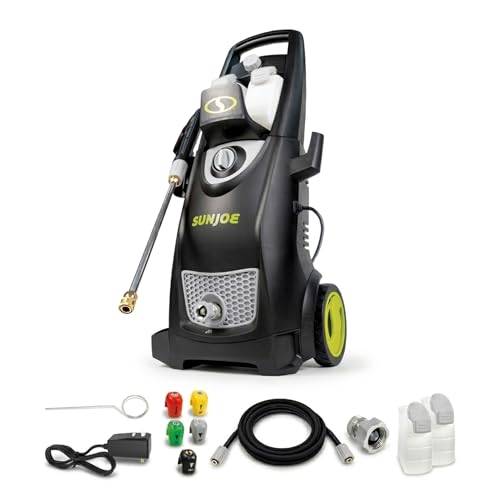
Sun Joe SPX3000
The Sun Joe SPX3000 is the machine many first-time buyers meet first, and its appeal is straightforward: an electric pressure washer in the entry tier that covers the classic homeowner jobs — patio slabs, deck boards, garden furniture, bicycles, muddy boots and the family car — without the fuel, oil and pull-start routine of a gas model. Its quick-connect nozzle set is the heart of its usefulness, because swapping tips is how you move from a wide, gentle fan for rinsing to a narrower jet for lifting grime from concrete joints, and the colour-coded tips make that swap a seconds-long job rather than a fiddle.
For learning the ropes, its quick-connect nozzle discipline teaches the core skill of this whole guide: matching pattern to surface, one deliberate swap at a time.
Best for: households whose jobs match its entry tier positioning and who will use it season after season. Not suited for: anyone whose real cleaning list is far heavier — or far lighter — than that brief, or who cannot follow the safety routine at the top of this page. Treat it as prose-only guidance for now: check the current Amazon listing for the latest configuration, included nozzles and accessories before you buy, because bundles change.
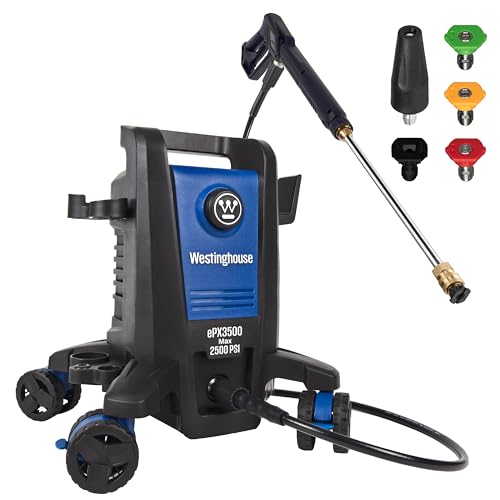
Westinghouse ePX3500
The Westinghouse ePX3500 is an electric pressure washer in the mid tier that emphasises compact storage and quick deployment: a hand-carry-friendly form, onboard accessory storage and a setup routine that gets you from garage to washing with minimal fuss. It fits households with smaller outdoor spaces — a terrace, a short drive, a balcony-adjacent patio, bicycles and outdoor furniture — where a big framed machine would be more tool than the jobs require, and where being easy to lift out and put away decides whether the machine gets used often or gathers dust.
Its compact, quick-to-deploy character suits the short, frequent jobs — a terrace refresh, muddy bikes, a small patio — where following the full setup and shutdown ritual still matters but should not feel like a production.
Best for: households whose jobs match its mid tier positioning and who will use it season after season. Not suited for: anyone whose real cleaning list is far heavier — or far lighter — than that brief, or who cannot follow the safety routine at the top of this page. Treat it as prose-only guidance for now: check the current Amazon listing for the latest configuration, included nozzles and accessories before you buy, because bundles change.
Greenworks GPW2700
The Greenworks GPW2700 is an electric model in the mid tier from a brand many households already know from garden tools, and it suits buyers who want a capable all-rounder for siding, stone, decking and vehicle washing. Its detergent system and nozzle selection cover the two halves of most cleaning jobs — applying soap at low pressure, then rinsing and lifting dirt with the right fan pattern — and its upright design stores neatly against a garage wall between sessions, which matters more over years of ownership than most buyers expect.
As a mid-tier all-rounder it covers the detergent-and-rinse rhythm this guide teaches across siding, stone and decking without asking you to manage an engine.
Best for: households whose jobs match its mid tier positioning and who will use it season after season. Not suited for: anyone whose real cleaning list is far heavier — or far lighter — than that brief, or who cannot follow the safety routine at the top of this page. Treat it as prose-only guidance for now: check the current Amazon listing for the latest configuration, included nozzles and accessories before you buy, because bundles change.
For a fuller comparison of the current field, read our pressure washer reviews and weigh the honest downsides in pressure washer pros and cons before deciding. If you are weighing ownership itself, is a pressure washer worth it runs the numbers in time and effort rather than money.
Care, Storage and Keeping It Working
A pressure washer that is put away wet, dirty and pressurised will punish you at the next session. Release the pressure after every use by switching off and squeezing the trigger until the jet dies away, disconnect and drain the hoses, and wipe down the machine before it goes back to its corner. Check the inlet filter regularly — a clogged filter starves the pump and shortens its life — and inspect O-rings on connections, replacing any that are nicked or flattened so joints seal without heroic tightening.
Before winter or any long storage, follow the manual’s pump-protection routine so residual water cannot freeze and crack internal parts; a machine stored in an unheated shed is exactly the machine at risk. Coil the high-pressure hose in large, relaxed loops rather than tight kinks, because kinked hose remembers its damage and leaks follow. Gas models add engine care: fresh fuel practices, oil checks, and running the engine dry or stabilising fuel for storage as the manual directs. Replacement pumps and parts are a whole topic of their own — our guide to pressure washer pumps explains what wears and what can be swapped.
Keep nozzles clean and organised; a partially blocked tip distorts the fan and tempts you closer to the surface to compensate, which is how damage happens. A nozzle cleaning pin and a rinse after detergent use keep patterns true. Store the lance and gun where they will not be knocked or stepped on, and keep the whole kit together — machine, hose, gun, tips and manual — so the next job starts with washing, not with a treasure hunt around the garage.
Understanding Nozzles: The Real Controls of the Machine
New owners fixate on the machine; experienced owners fixate on the tips. The nozzle decides the shape of the jet, and the shape decides everything: how much force lands on each square centimetre, how wide a stripe you paint with each pass, and whether the surface is cleaned or carved. A wide fan spreads the same energy across a broad band, which is why it rinses cars and soaps walls safely. Narrow the fan and the same energy concentrates, which is why narrow tips belong on durable surfaces, at respectful distances, for stubborn deposits — and why the narrowest spot jets are the ones that write permanent signatures into wood and soft concrete.
Work through the set methodically on any new surface. Begin with the widest fan at the greatest distance you would plausibly use, and read the result after a single pass: if grime lifts and the surface is unmarked, you have found your working combination. If grime stays, step one notch closer or one notch narrower, and test again. This staircase discipline feels slow for the first ten minutes of ownership and saves every surface for the rest of it. The corollary matters just as much: when you move to a softer surface mid-session — from concrete path to wooden gate — reset the staircase. Yesterday’s perfect setting for the driveway is today’s damage setting for the deck.
Adjustable and multi-pattern nozzles trade this clarity for convenience, and they have their place for light work, but the fixed, colour-coded quick-connect set teaches better habits because each swap is a conscious decision. Keep the set together, keep the orifices clean with the pin provided, and replace any tip whose fan has gone ragged: a distorted pattern cleans unevenly and tempts you closer to compensate, which is exactly the wrong direction. Treat nozzles as consumable precision parts, not as lifetime fittings, and the machine’s behaviour stays predictable year after year.
Worked Examples: Three Common Jobs, Start to Finish
The Green Patio
Sweep first; loose grit under a jet becomes shrapnel. Move the furniture, cover the border plants, and identify the outdoor socket you must keep the lance away from. Connect water, purge air, plug into the GFCI outlet, and fit the soap nozzle. Coat the slabs bottom-up across the whole patio, give the detergent its dwell while you scrub the worst joints with the brush, then swap to the wide fan and wash in overlapping passes, pushing the dirty water toward the drain rather than the flower beds. Rinse furniture separately with the gentlest fan, rinse the plants, and judge the result only once the slabs have dried to their honest colour.
The Weathered Deck
Test patch first, in the corner behind the planter, with the widest fan at full respectful distance. Work along the boards, with the grain, in long even strokes, never stopping mid-board. Accept brightening rather than demanding new timber, and let the deck dry completely — days, not hours — before any oil or stain goes near it. If a previous operator has left jet tracks in the wood, gentle washing will not remove them; light sanding after drying is the honest remedy, and the lesson is why the test patch exists.
The Family Car
Rinse loose grit with the widest fan at generous distance, apply car shampoo by the machine’s detergent system or by bucket, wash by hand with a mitt, and rinse again the same gentle way. Keep the jet off badges, seals, chips and tyres’ sidewalls, and never open the bonnet. Finish by rinsing the driveway film you have just created, because the job is not done until the ground is as clean as the car. Total machine time is short; most of a good car wash is still hand work, and pretending otherwise is how paint gets hurt.
A Seasonal Rhythm for Pressure Washing
Ownership works best as a rhythm rather than a series of emergencies. In spring, wash the winter off: siding that carried a season of dust and algae, paths made slippery by months of damp shade, the patio where the outdoor season will actually happen. Spring is also inspection season — a clean wall shows its failed sealant and tired paint honestly, early enough to fix both in warm weather. Take the machine out of storage properly: check the inlet filter, inspect the hose for winter damage, run water through before power, and confirm the GFCI still tests and resets as it should.
Summer washing is about upkeep and events: a quick patio refresh before guests, bikes and bins as needed, the barbecue area kept civilised. Work in the cooler parts of the day, because detergent dries fast on hot stone and a dried detergent film is its own cleaning problem. Keep surfaces wet during dwell, rinse plants generously, and remember that bare feet season is exactly when the closed-footwear rule feels most annoying and matters most — ricocheting grit does not respect holidays.
Autumn is the safety wash: steps, paths and decking cleared of the leaf-stain and algae film that turns treacherous with the first frosts, gutters’ ground-level splash zones cleaned, outdoor furniture washed before it is stored under cover. Winter, for most households, is storage season: drain everything, depressurise, protect the pump exactly as the manual directs, coil hoses in relaxed loops, and store the kit somewhere frost cannot reach the water still hiding inside it. A machine wintered properly starts the spring rhythm without drama; a machine wintered wet often does not start at all.
Your First Session, Planned Properly
Choose the easiest honest job for the debut: a plain concrete path or a section of patio, in dry weather, with time in hand. Lay out the full kit before connecting anything. Run the complete ritual slowly — area prepared, fixtures noted, water connected and purged, GFCI tested, eye protection and closed shoes on — and treat the slowness as the lesson rather than a delay to it. Calibrate on the test patch, wash a modest area completely including its rinse, then stop and inspect the dried result before continuing. Most first-session damage in this category happens in hour two, when confidence has outrun calibration; a planned pause is the antidote.
End the session with the full shutdown ritual even though everything is new and clean: depressurise, drain, wipe, coil, store. Habits formed on the easy first day are the habits that survive the rushed tenth session, and in pressure washing the ritual is not bureaucracy around the work — it is the part of the work that keeps people, pumps and surfaces intact. Then make a note of what you learned: the working distance for your concrete, the nozzle that suited your path, the spots that need chemistry next time. The second session starts from knowledge instead of hope.
Surface by Surface: The Extended Notes
Block Paving and Pavers
Jointed paving cleans beautifully and complains specifically: the jet that lifts algae from the blocks will also lift the kiln-dried sand from the joints if you work narrow, close or at an angle that digs. Use a wide fan, keep the lance more upright and further away than instinct suggests, and budget time afterwards to brush fresh jointing sand back in once everything is dry. Skipping the re-sanding leaves joints open to weeds and the blocks free to rock — a small finishing job that separates a wash from a restoration.
Tarmac and Asphalt
Tarmac is softer than it looks, especially on warm days, and it scars under concentrated jets. Wide fan, generous distance, constant movement, and never chase oil spots with force — oil on tarmac is a solvent problem, and aggressive jetting spreads it while chewing the surface. Moss on shaded tarmac lifts well with detergent dwell and patience. If the drive is already breaking up, washing will reveal and slightly accelerate the truth; that is information, not damage, but set expectations accordingly.
Composite Decking
Composite boards tolerate washing well within their makers’ guidance and punish improvisation: too close a jet can raise the surface texture and void sympathies you would rather keep. Wide fan, the greatest distance that still cleans, detergent made for composites, and a soft brush for the board grooves. Because composites vary, the board manufacturer’s care guidance outranks any general guide — read it before the first wash, not after the first mark.
Vinyl and Fibre-Cement Siding
Both wash well with the standard method — bottom-up detergent, top-down rinse, downward angle — and both share the same vulnerability: water driven upward behind laps. Vinyl adds a cold-weather caution, since cold panels are more brittle; fibre-cement adds weight to the never-jet-damaged-panels rule, because a cracked board washed hard becomes a water inlet. Work around, never at, vents, fixtures and the meter, as the safety section insists.
Conservatories, Glass and Frames
Glass wants the gentlest version of everything: wide fan, distance, low-pressure detergent application and a thorough rinse, with seals and vents treated as no-jet zones. Polycarbonate roofing panels scratch and cloud under aggressive treatment and are usually better served by a soft brush, hose and suitable cleaner from the ground with an extending brush. If reaching a surface safely requires a ladder, the correct pressure-washing decision is not to pressure wash it — hire the work out with proper access equipment.
Knowing When to Stop
The final technique is restraint. Stop when the surface is clean rather than when your arms are tired of imperfection: the last few percent of staining usually belongs to chemistry, age or the material itself, and chasing it with the jet converts a good result into damage with remarkable speed. Stop when weather turns — wind that carries spray toward people, plants or property, or rain that makes footing treacherous. Stop when you are tired, because fatigue degrades distance judgement before it degrades enthusiasm, and the final panel of a long session is statistically where the day’s only mistake lives. A job finished at ninety-five percent with every surface intact is a triumph; a job pushed to a hundred with one etched stripe is a story you will tell against yourself for years. Wash again another day if you must. The machine will be in the garage, drained, depressurised and ready — because you stopped properly, in every sense.
Technique in Practice: Getting More From Your Pressure Washer Without Fighting It
Technique matters more with a pressure washer than most instructions admit, because the same product can feel clumsy or effortless depending on the order you do things in and the setup you repeat each time. Start by standardising your starting position: the pressure washer in the same place, at the same setting, height or configuration each time, so that any change in results tells you something about the job rather than about a forgotten adjustment. If you want a concrete listing check, take a name already shortlisted in this guide, such as Sun Joe SPX3000, Westinghouse ePX3500 and Greenworks GPW2700, and verify that exact pressure washer listing against the measurements and compatibility questions above, field by field, rather than trusting the headline description alone. Photograph your setup once the pressure washer is working well — the position, settings, arrangement or layout you settled on — so that after a move, a deep clean or a seasonal break you can recreate the arrangement that worked instead of rediscovering it.
If someone else in the household shares the pressure washer, agree the same basic sequence together, because two conflicting techniques — different settings, storage spots or cleaning habits — will make even a good product seem inconsistent from one use to the next. Read the manual’s warnings page for the pressure washer even if you read nothing else, because that page is a compressed list of every way the product has ever been misused, and it tells you exactly which of your own habits needs adjusting. Think about who else will use the pressure washer and what they will do differently: shorter reach, less patience, stronger habits, no interest in the manual, and a tendency to leave things wherever they were last set down. If a problem with the pressure washer repeats in the same spot or the same stage of the job, treat the pattern as the clue — patterns point to setup, surface or technique, while random problems point more often to the individual unit.
Seasonal thinking helps more than expected: a pressure washer bought in one season will meet different light, humidity, mud, heat, guests and routines in another, so judge its size, storage and upkeep against the hardest season it will face. Slow down at the difficult part rather than speeding up, because most pressure washer tasks fail at the moment of impatience — the forced fit, the skipped check, the extra load — and a ten-second pause at that moment prevents most of the damage and most of the rework. Watch for edge cases in your own home: the pet that investigates everything, the child who treats every new object as furniture, the guest who uses force where you use familiarity, and the weather, light or season that changes how a pressure washer behaves. Share the checklist result with anyone who shares the space, since a pressure washer chosen by one person and resented by another rarely survives, however sensible the purchase looked on paper.
Keep a short note of what you adjusted on the pressure washer during the first month, even just a line on your phone, since those notes turn vague impressions into a setup you can repeat, share or troubleshoot months later. Measure before anything else, and measure the pressure washer in its working state rather than its packed or folded state, because handles extend, lids open, cords trail, doors swing and users stand somewhere, and all of that belongs in the measurement. Check the floor, wall, ground or surface the pressure washer will meet, since level, texture, moisture and finish decide more about everyday performance in garden & lawn settings than most shoppers expect when they are comparing listings on a screen. Work in one direction and finish each zone completely before moving on, since a pressure washer used in scattered passes tends to leave the edges, corners and transitions half-done, and those leftovers are usually what people later blame on the product.
When something about the pressure washer disappoints, change one variable at a time — position, setting, timing, load, accessory or technique — and give the change a fair trial, because changing three things at once leaves you with a better or worse result and no idea why. Test the pressure washer in the first week under deliberately ordinary conditions rather than saving it for a special occasion, so that any problem surfaces while returning, exchanging or adjusting your setup is still simple. Build a tiny finishing ritual: a quick inspection of the result, a wipe, empty, coil, cover or reset of the pressure washer as appropriate, and a note of anything that felt different, so the next session starts from a known state instead of a mystery.
Frequently Asked Questions
Can a pressure washer damage my home’s surfaces?
Yes, and the damage is usually technique damage rather than machine damage. A narrow jet held close will etch concrete, fur decking, strip paint and drive water behind siding. Start with a wide fan at a generous distance, test an inconspicuous patch, and move closer only in small steps while the surface tolerates it. Keep the lance moving at all times, never park the jet in one spot, and keep it away from electrical fixtures, meters, seals and vents. If a surface is suspect — old flaking paint that might contain lead, or siding that might contain asbestos — do not wash it at all; that is professional remediation work.
What should I never do with a pressure washer?
Never point the wand at people or pets, because a high-pressure injection injury can occur through a wound that looks trivial and still needs urgent surgical care. Never use one from a ladder, never plug an electric model into anything but a GFCI-protected outlet, never run a gas model indoors or in any enclosed space because of carbon monoxide, and never aim at electrical fixtures, meters or service cables. Never wash surfaces you suspect contain lead paint or asbestos. Wear eye protection and closed footwear for every session, without exceptions for quick jobs.
Electric or gas: which suits a typical home?
Electric suits most typical homes: it starts instantly, runs quietly by comparison, needs no fuel or oil routine, and covers patios, decking, siding, furniture and vehicles comfortably. Gas earns its keep on large properties, long driveways and heavy, frequent work far from an outlet, at the cost of engine maintenance, more noise and strict outdoor-only use because of carbon monoxide. Be honest about your real cleaning list. Most households overbuy power and underbuy convenience, then use the machine less because setting it up feels like an event.
Do I need detergent, or is water enough?
Water alone handles loose dirt, dust, pollen and fresh mud well. Detergent earns its place on algae, mildew staining, greasy driveways and traffic film, because it loosens the bond between grime and surface so a gentler jet can lift it. Apply detergent at low pressure, let it dwell while keeping the surface wet, and rinse thoroughly. Use products intended for pressure washers and for the surface you are cleaning, follow their dilution guidance, and protect nearby plants by wetting them before and rinsing them after the job.
How often should a home be pressure washed?
Most homes benefit from an annual wash of siding, paths and patio areas, with spot cleaning as needed after storms, pollen season or algae growth in shaded, damp corners. Over-washing has real costs: it wears paint and sealants, worries mortar and deck finishes, and wastes water. Judge by condition rather than calendar — green algae film, slippery steps and grey, gritty concrete are honest signals, while a surface that merely looks less than brand new usually is not asking for a jet. Always re-check safety basics each session, however routine the job feels.
Can I pressure wash a car safely?
Yes, with a rinsing mindset rather than a blasting mindset. Use a wide fan, keep a generous distance, and treat the washer as a pre-wash and rinse tool alongside a bucket, wash mitt and suitable car shampoo. Keep the jet away from badges, trim seals, stone chips, tyre sidewalls and anything electrical, and never open the bonnet to wash an engine bay with one. If you would not hold your hand comfortably in front of the fan at your working distance, the car should not be there either. When in doubt, the garden hose and a good nozzle are the gentler tool.
Related Guides
Keep building the routine: pair this guide with a tidy hose setup from garden hose reels, a sprayer for pre-treating algae from garden sprayers, and outdoor storage for the kit in deck boxes for cushions.