Disclosure: As an Amazon Associate, dailyhomedecorating.com earns from qualifying purchases. Links on this page are affiliate links; they cost you nothing extra. Prices and availability change often, so check the current Amazon listing before you buy.
Learning how to choose a leaf blower sounds simple until you stand in front of a wall of machines that all promise hurricane power in different numbers. This guide slows the decision down into a sequence you can actually follow: first understand what your yard asks of a blower, then match the power source, the airflow figures, the weight and the noise to that reality. By the end you will know exactly which specifications matter for your property, which ones are marketing decoration, and which type of blower will still feel like the right purchase three autumns from now.
Key Takeaways
- Start with your yard, not the shelf: leaf load, surface types and the longest distance from an outlet or charging spot decide more than any headline number.
- Air volume (CFM) moves piles; air speed (MPH) loosens wet, matted leaves. For most homes, volume is the figure that predicts day-to-day satisfaction.
- Cordless battery blowers suit most suburban yards, corded electric models are the lightest and simplest for small plots near the house, and petrol machines still earn their place on large, heavily wooded land.
- Weight and balance matter more with every minute of use. A blower that feels fine for thirty seconds in a shop can feel very different at minute twenty.
- Noise is a real feature, not a footnote: quieter models let you work earlier, later and on better terms with your neighbours.
- Whatever you choose, plan on eye and hearing protection from the first session, and never point the nozzle at people, pets or vehicles.
The short answer to how to choose a leaf blower is this: pick the power source that fits your property size and storage habits, then choose the highest air volume you can comfortably hold and control, in the quietest package your budget tier allows. Everything else — cruise control, vacuum kits, turbo buttons — is refinement. The steps below walk through that logic in the order experienced gardeners actually use it, and the worked examples near the end show the reasoning applied to three very different homes. If you want the wider category picture alongside these steps, our companion piece, the leaf blower buying guide, covers the model landscape in more depth.
In this guide
What You Need to Know Before Comparing Models
A leaf blower does one job — it pushes air through a tube fast enough to move leaves, grass clippings and light debris where you want them. The differences between models are differences in how that air is produced, how long the machine can sustain it, how much of your body the work costs you, and how much noise the neighbourhood absorbs in the process. Understanding those four axes first makes every specification sheet easier to read, because you will know which numbers describe the axis you care about and which are noise.
The Three Power Sources, Honestly Described
Cordless battery blowers are now the default choice for most households, and for good reason. They start instantly, need almost no maintenance, store on a shelf or wall hook, and produce no exhaust at the point of use. Their limits are runtime and sustained output: a battery holds a finite amount of energy, so very long sessions on big properties may mean a second battery or a mid-job recharge. If you already own cordless garden or workshop tools from one brand, staying on that battery platform is often the single smartest financial move, because the batteries you own are the most expensive part of the system.
Corded electric blowers are the quiet achievers of the category. They are typically the lightest machines available, they run as long as you need with no refuelling or recharging, and they ask almost nothing in maintenance. Their obvious constraint is the cord: your working radius is set by your extension lead and the position of your outdoor sockets, and dragging a cable around trees, furniture and wet ground is a genuine annoyance on larger or awkwardly shaped plots. For a small garden, a courtyard or a patio-and-driveway routine close to the house, though, a corded model can be the most sensible purchase in the whole category — provided you pair it with an outdoor-rated extension cord and a GFCI-protected outlet, as the safety section below explains.
Petrol blowers remain the heavy artillery. They deliver sustained high output with no cord and no battery anxiety, refuel in a minute, and shrug off the kind of deep, wet leaf fall that buries a wooded acre. The costs are noise, exhaust fumes, vibration, heavier weight, and a maintenance rhythm of fuel mixing or separate oil, spark plugs, air filters and winter storage care. For most suburban gardens they are more machine than the work justifies; for rural properties and professional-length sessions they still make a rational case. This guide covers all three families because the right answer depends entirely on your ground, but the worked examples will show how rarely the average home genuinely needs petrol.
CFM and MPH: The Two Numbers That Matter
Every blower is described by two airflow figures. CFM — cubic feet per minute — measures the volume of air the machine moves. MPH measures the speed of that air at the nozzle. Think of the difference as a wide river versus a narrow jet from a hose: volume is what carries a big pile of dry leaves across a lawn, while speed is what prises a single wet leaf off damp tarmac. Beginners tend to shop by MPH because the number looks dramatic, but experienced users shop by CFM first, because most real clearing work is about moving bulk material across open ground. A balanced machine offers healthy figures for both; a machine with extreme speed but modest volume feels fierce on a driveway spot-test and disappointing on a leaf-covered lawn.
Two cautions about these numbers. First, there is no single enforced measuring standard across every brand and power type, so treat figures as comparisons within a brand’s own range more than as laboratory truth across brands. Second, the figures that matter are the ones the machine can sustain, not a brief turbo burst. Many cordless models quote their best numbers in a boost mode that drains the battery quickly; that is fine for shifting one stubborn patch of wet leaves, but your everyday experience will be the standard settings. Judge a blower by its ordinary working output and treat boost as a reserve, the way you would judge a car by its cruising comfort rather than its top speed.
Handheld, Backpack and Walk-Behind Formats
Most home blowers are handheld: one hand on the handle, the tube sweeping in arcs in front of you. They are the most manoeuvrable format and the easiest to store. Backpack blowers move the motor and fuel or battery weight onto your shoulders and hips, which transforms comfort on long sessions and larger properties, at the cost of bulk, price tier and storage space. Walk-behind wheeled blowers are specialist machines for very large, open areas such as long drives and big lawns; few households need one. For the typical reader of this guide, the real choice is handheld, with backpack as the upgrade path if your sessions regularly run long or your leaf fall is heavy. Whichever format you pick, keep the air intake vents clear of loose clothing and hair while the machine runs — a point the safety section returns to.
How to Choose a Leaf Blower in 7 Steps
Step 1: Audit Your Yard Before You Look at a Single Model
Walk your property with a notebook, ideally in autumn when the evidence is on the ground. Note the total area you actually clear — lawn, drive, paths, patio, decking, gravel — and where leaves collect: against fences, in corners, under shrubs, on steps. Note the trees: a couple of ornamental trees produce a decorative scattering; mature oaks, maples or a hedge line produce a deep, recurring carpet that may arrive wet and stay matted. Note surfaces, because blowers behave differently on each: dry leaves glide off tarmac, hide in gravel, stick to wet decking and tangle into long grass. Finally note the longest run from your house to the farthest corner, which decides whether a cord is even possible and how much battery runtime you truly need. This audit takes ten minutes and eliminates half the catalogue immediately, which is exactly what a good first step should do.
Step 2: Choose the Power Source That Fits the Audit
Now match power source to evidence. Small plot, modest leaf fall, outdoor socket within easy reach of everything: corded electric is a serious candidate, and the money saved can go on a better extension lead and storage. Typical suburban garden, sessions under an hour, a mix of lawn and hard surfaces: cordless battery is the sweet spot, especially if you already own batteries from a garden tool platform. Large or wooded property, deep leaf fall, long sessions, ground far from the house: consider a high-capacity cordless model with a second battery, a backpack machine, or petrol if you accept its noise and upkeep. Be honest about session length: people systematically overestimate how long they blow and underestimate how much leaf fall a big tree produces, so if your audit sits on a boundary, step up one level of capacity rather than down.
Step 3: Read the Airflow Figures Like a Professional
With the power source chosen, compare airflow within that family. Prioritise CFM for general clearing, then check that MPH is respectable for wet-leaf and driveway work. Be sceptical of any model that advertises speed alone. If a cordless model quotes figures in turbo or boost mode, look for the standard-mode figures too and judge by those. Remember that nozzle design changes how numbers feel: a flat nozzle spreads air for sweeping lawns, a round nozzle concentrates it for corners and wet patches, and some models include both or offer attachments. If your audit showed lots of edges, steps and gravel, nozzle versatility may serve you better than a small edge in headline airflow.
Step 4: Weigh the Machine Against Your Own Strength and Stamina
Specifications rarely mention the user, but your arms are part of the system. A blower is held at arm’s length and swept side to side for the whole session; small weight differences compound quickly, and poor balance — a machine that constantly twists or pulls — tires you faster than weight alone. If you can, handle display models and mimic the sweeping motion. Check where the weight sits, whether the handle suits your hand, and whether the controls fall under your fingers without looking. Battery weight counts: on cordless models the largest batteries transform both runtime and heft, so the combination you will actually use matters more than the bare tool weight printed on the box. Gardeners with shoulder, wrist or back concerns should weight this step heavily — a slightly less powerful machine you can use comfortably for a full session outperforms a powerhouse that comes out twice and then lives in the shed. Our leaf blower pros and cons page is candid about this comfort trade-off across the category.
Step 5: Treat Noise as a Specification, Not an Afterthought
Blowers are among the loudest garden tools, and noise shapes when and how happily you can work. Petrol machines are the loudest; many cordless models are noticeably quieter, and a few are engineered specifically for low noise, trading a little peak output for a much pleasanter sound. Consider your setting: close neighbours, thin fences, early-morning habits and local expectations about reasonable hours all argue for the quieter end of the range. Be a considerate operator regardless of model — keep blowing to reasonable daytime hours and avoid long sessions when neighbours are clearly enjoying their gardens. Hearing protection is non-negotiable for you, the operator, with any model: sustained blower noise at the ear is well within the range where protection is the sensible default, and modern low-profile ear defenders or plugs are cheap and comfortable.
Step 6: Sort the Logistics — Batteries, Cords, Fuel and Storage
Every power source brings a support system. Cordless means batteries and a charger: check whether the price tier includes them, whether your existing batteries fit, and where you will charge and store them, following the battery maker’s guidance on temperature and charging. Corded means an outdoor-rated extension cord of adequate length and condition, plus a GFCI-protected outlet to plug it into — general good practice for any outdoor electrical work. Petrol means fresh fuel, correct mixing where required, and a ventilated storage spot away from living spaces. Also measure your storage: a handheld blower hangs on a hook, a backpack needs a shelf or floor corner, and attachments multiply the footprint. The machine that fits your shed and your habits is the machine that gets used; the one that needs a ritual to set up quietly stops being used, and the leaves win.
Step 7: Decide Which Extras Earn Their Place
Finish with features, in this order of usefulness for most homes. Variable speed control matters: full power is wrong for flower beds, gravel and corners, and a trigger or dial you can feather prevents scattering what you just gathered. Cruise control or a lock-on setting reduces hand fatigue on long, steady sweeps. A vacuum and mulching mode — where the machine sucks up leaves and shreds them into a bag — is genuinely useful if you collect leaves for compost or need to clear beds and gravel without blowing debris everywhere; combination machines are covered in our guide to the best leaf blower vacuums. Interchangeable nozzles, a shoulder strap on heavier handhelds, and tool-free assembly are small things that add up. Skip gimmicks you cannot connect to a line in your yard audit.
Safety Belongs in the Buying Decision
Safety features and habits are part of choosing well, because the best blower is one you can operate without hurting yourself or annoying the street. Buy eye protection with the machine, not after the first grit incident: blowers throw dust, grit and small stones at surprising speed, and ordinary glasses are not designed for that. Buy hearing protection at the same time. When you work, never point the nozzle at people, pets or vehicles — a stream of air that moves wet leaves moves gravel too, and paintwork, skin and eyes all lose that argument. Be dust-aware: avoid blowing dust toward other people, and on very dusty ground, lightly dampen the area first or choose a calmer moment, both for your lungs and your neighbours’ washing. Keep intake vents clear of clothing, scarves and hair, and keep bystanders — especially children — out of the work area. If you are wondering whether the whole purchase stacks up for your household before you commit, our analysis of whether a leaf blower is worth it walks through the value question in full.
Gear for This Guide: Four Picks by Tier
The four machines below illustrate the tiers the steps above describe. They are presented in prose while our verification of current listings is completed, so treat them as well-known reference points for each category rather than final endorsements, and check the current listing carefully before buying.

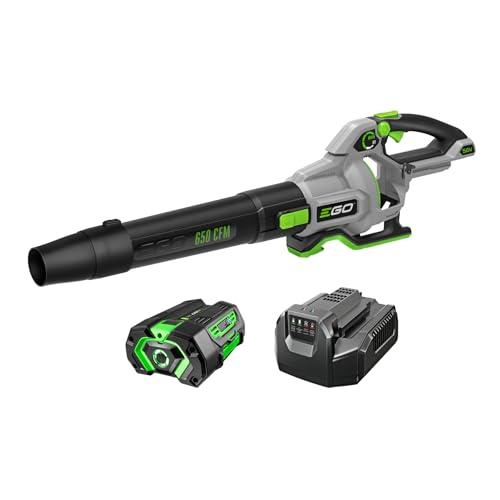
EGO Power+ LB6504 Cordless Leaf Blower — Premium Cordless Reference Point
EGO’s Power+ platform is one of the reference points for serious cordless blowing: a brushless motor, a turbo function for stubborn patches, and a large-capacity battery system shared across the brand’s garden range. In tier terms it sits at the premium end of the cordless market, and it suits the suburban-to-large garden where sessions are substantial and the owner wants one battery family for mower, trimmer and blower alike. Best for: committed cordless households with medium-to-large gardens. Not suited for: buyers who only clear a small patio twice a year, for whom it is simply more machine than the work requires.

Ryobi 40V HP Brushless Whisper Series Leaf Blower — The Quiet Option
Ryobi’s Whisper Series exists for the noise-conscious: it is engineered to run markedly more quietly than conventional blowers while remaining a full-strength garden tool on the brand’s higher-voltage platform. It sits in the mid-to-premium tier and makes its strongest case in close-set housing, where being able to tidy up without broadcasting the event to the whole street is worth real money. Best for: terraced and semi-detached gardens, early risers, anyone whose neighbours are close. Not suited for: deep rural leaf fall where maximum sustained volume matters more than manners.
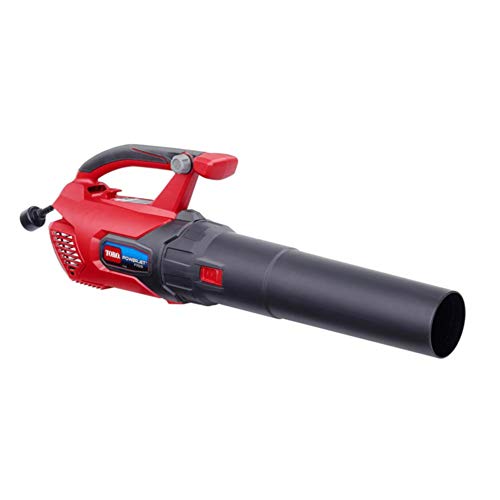
Toro PowerJet F700 Corded Leaf Blower — The Corded Simplicity Pick
Toro’s PowerJet F700 represents the corded category at its most appealing: light in the hand, simple to run, and free of batteries, fuel and charging routines entirely. It sits in the entry-to-mid tier and, paired with a good outdoor-rated extension cord on a GFCI-protected outlet, covers small gardens, drives and patios with very little fuss or upkeep. Best for: small plots near the house and anyone who values lightness above all. Not suited for: large or awkwardly shaped gardens where the cord becomes the job. Technique matters with any blower, and our step-by-step guide on how to use a leaf blower will get more out of whichever machine you choose.
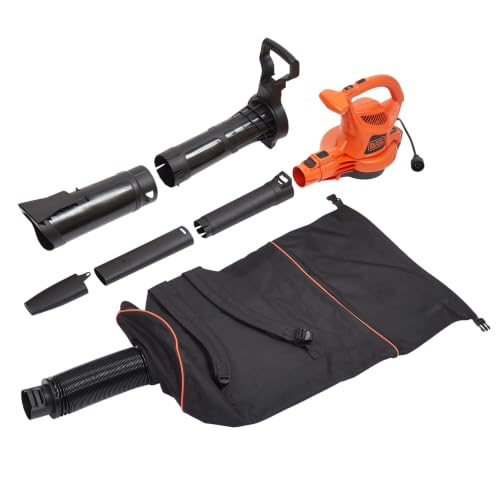
BLACK+DECKER BEBL7000 Leaf Blower Vacuum Mulcher — The Combination Machine
The BEBL7000 is a corded three-in-one: it blows, it vacuums, and it mulches what it collects into a bag, which changes the workflow from herding leaves to actually removing them in one pass. It sits in the mid tier and suits gardeners who gather leaves for compost or mulch, or who clear beds and gravel where blowing alone just relocates the mess. Best for: collectors and composters with small-to-medium gardens. Not suited for: anyone whose main job is sweeping a large lawn quickly, where a dedicated blower’s airflow is the better tool.
Common Mistakes When Choosing a Leaf Blower
The most common mistake is buying by the biggest number on the box. A headline speed figure tells you little about how the machine clears a lawn, and shoppers who chase it often end up with a narrow, fierce jet that is tiring to use and mediocre at moving bulk leaves. The second mistake is ignoring the platform: a cordless blower bought alone, with one small battery, can cost far more over three years — in extra batteries and frustration — than the same machine bought as part of a system you already own. Third, buyers underestimate noise until the first Sunday morning, when the whole street shares their purchase decision. Fourth, people buy for the worst day of the year: the one storm that drops everything at once, rather than the typical weekly tidy the machine will actually perform. A blower sized for your normal work, used little and often, beats an oversized machine that is a chore to lift. Finally, many buyers forget the unglamorous accessories — eye and hearing protection, a decent extension cord where relevant, a hook or shelf for storage — and then improvise unsafely or untidily for years.
Pro Tips From Experienced Gardeners
Work with the weather, not against it: leaves move most willingly when dry, so a late-morning start after dew lifts is worth more than extra power. Choose calm days for big clearances; blowing into a headwind is a special kind of futility. Think in destinations before you start — decide whether leaves are going onto beds as mulch, into a pile for collection, or off hard surfaces onto lawn for the mower — because the right destination halves the work. Keep sessions short and frequent during peak fall rather than heroic and rare; twenty minutes twice a week keeps on top of most gardens. And maintain the simple things: keep the intake and tube clear, store batteries sensibly per the maker’s guidance, and check cords for damage before use. The wider autumn toolkit matters too — a blower works best alongside the trimming and watering basics, as our readers of the best cordless hedge trimmers and best garden hoses guides tend to discover in the same season.
Worked Examples: Three Homes, Three Right Answers
The Small Terraced Garden
A compact terraced plot: a short lawn, a patio, a path, two small trees and neighbours on both sides. The audit says light leaf fall, short distances, an outdoor socket on the back wall, and noise sensitivity. The steps point clearly to a corded model or a compact cordless one: light weight, modest airflow, low noise, minimal storage. Spending into the premium cordless tier here buys capacity the garden will never request; the sensible money goes on a good extension cord, protection for eyes and ears, and a wall hook.
The Family Suburban Garden
A quarter-acre plot with a lawn, a long drive, decking, several mature trees and children who regard leaf piles as a seasonal entitlement. Sessions run thirty to forty-five minutes through autumn; the far corners are well beyond cord range. The steps point to a mainstream cordless blower with strong air volume, variable speed for the decking and beds, and — if the household already owns tools on a platform — batteries that interchange. A quiet-leaning model earns goodwill on weekend mornings. A second battery is a better upgrade than a bigger machine.
The Wooded Acre
An acre of ground under mature trees, where autumn delivers a deep, often wet carpet and the drive alone is a morning’s work. The audit rules out cords and makes runtime the dominant question. The honest options are a high-capacity cordless system with multiple large batteries, a backpack machine for comfort across long sessions, or petrol with its noise and maintenance accepted as the price of sustained output. Weight and balance dominate the test-handle stage, hearing protection is doubly important, and working in sections across several days — with the driest, calmest hours chosen deliberately — is the professional pattern.
Reading a Specification Sheet Without Being Fooled
Specification sheets are written to sell, and the first skill in choosing well is reading them defensively. Start by identifying which figures describe the machine’s ordinary working mode and which describe a temporary boost: on cordless models the two can differ dramatically, and only the ordinary figures predict your Tuesdays. Next, look for what is missing. A sheet that trumpets air speed but whispers about volume is telling you where its weakness lives; a sheet that quotes bare-tool weight without the battery is asking you to imagine a machine lighter than the one you will hold. Noise figures deserve the same scepticism — compare like with like where you can, and treat any single number as a rough ordering rather than a promise, because test conditions vary between brands just as airflow methods do.
Then translate every figure into your audit. A runtime claim means nothing until it is set against your session length; a weight figure means nothing until it is in your hand at arm’s length; an airflow figure means nothing until it is imagined against your wettest corner in November. This translation habit is what separates buyers who are happy in year three from buyers who were impressed in the shop. It also protects you from the category’s favourite trick — the comparison chart in which one brand’s boost-mode figures are set against a rival’s standard figures. When in doubt, compare machines within one brand’s range, where the measuring method is at least consistent, and let handling, noise and platform make the final call between near-equals.
Finally, read the unglamorous lines: what is included in the box, what the warranty covers, whether tubes and nozzles are replaceable, and whether the battery system behind a cordless model is a living platform with a future or a orphan line being cleared. A blower is a decade-scale purchase for most households, and the support ecosystem around it — spare tubes, replacement bags for vacuum models, batteries that will still be sold in five years — is worth as much as a small edge in airflow. The cheapest machine to own is usually the one you never have to replace for a silly reason.
What Your Blower Will Face Across the Year
Choosing for autumn alone undersells the decision, because a blower’s workload is seasonal in character as well as volume. Spring brings blossom, seed cases and the first grass clippings scattered across paths after mowing resumes — light work, done at low speed, where a featherable trigger earns its keep weekly. Summer is the season of clippings and dust: after every mow and edge, hard surfaces collect a green confetti that a two-minute blow restores, and patios and decks gather the dry dust that makes dust-awareness — dampening very dusty patches, never blowing toward people or laundry — a summer habit as much as an autumn one.
Autumn is the main event, and it arrives in waves rather than all at once: early fall from the first trees, the heavy middle weeks when sessions lengthen and wet mats appear after rain, and the late clearances when the last species drop and the garden is put to bed. A machine chosen with honest headroom for the middle weeks, and a routine of little-and-often sessions either side of them, handles the whole arc without heroics. Winter, in milder spells, asks for the clearing of fallen debris after storms and the removal of wet leaves from paths where they become a slip hazard — short, purposeful work where instant starting, especially on cordless models, is worth more than peak output.
Thinking across the year also disciplines the tier decision. A machine that will work forty weeks a year justifies a different purchase from one that will work six, and it reframes accessories too: the tarp, the protection, the storage hook and the second battery are not extras but the supporting cast of a year-round tool. Choose for the year, maintain for the decade, and the blower becomes one of those rare purchases that quietly disappears into the background of a well-run garden — noticed only on the days a neighbour borrows it.
Matching the Machine to Your Trees
The audit in Step 1 deserves one refinement that experienced buyers swear by: choose for your trees, not your lawn. Different trees produce genuinely different work. Large, flat leaves from maples and planes form sails that travel beautifully when dry and mats that resist everything when wet; small leaves from birches and willows infiltrate gravel, decking grooves and lawn thatch and reward vacuum modes and patience; needles from pines and conifers barely blow at all in bulk but clear cleanly from hard surfaces and defeat rakes entirely; and acorns, conkers and other mast are not blower work at all — they are gathered by hand or left for wildlife, and any machine review that implies otherwise is fantasy. A garden’s tree list therefore predicts its ideal machine more accurately than its square footage does: heavy broadleaf fall wants volume, infiltrating small-leaf fall wants versatility and a vacuum option, needle fall wants hard-surface competence, and mixed planting wants the balanced middle of the market with variable speed above all.
Leaf timing matters too, and it interacts with the machine choice in ways brochures never mention. Gardens whose trees drop early and gradually suit almost anything, because the work never accumulates beyond a light weekly pass. Gardens dominated by late-dropping species — oaks and beeches that hold leaves into winter — compress the work into cold, wet weeks when leaves arrive soaked and daylight is short; those gardens should weight wet-leaf performance, boost reserves and the operator’s comfort in cold hands far more heavily. And gardens beneath trees that drop onto roofs and gutters inherit a second, hidden workload at ground level beneath the eaves, where concentrated fall lands in narrow strips that reward a concentrator nozzle and a machine nimble enough for fiddly work. Read your trees before you read the catalogues, and half the catalogue will eliminate itself.
A Final Word on Budget Tiers
Tier discipline is the last choosing skill. The entry tier — dominated by corded machines and compact cordless models — is not a compromise tier; on the small ground it is designed for, it delivers the complete experience, and the money it saves buys the protection, the cord, the tarp and the storage that make ownership pleasant. The mid tier is where most households should land: mainstream cordless machines with real sustained output, honest build and platform support, bought as part of a battery system rather than as isolated objects. The premium tier buys headroom, refinement and quiet, and it earns its money only where the ground, the session length or the neighbours actually present the bill. The choosing error is never the tier itself — it is the mismatch, in either direction, between tier and audit. Choose by the audit, hold the tier line against showroom temptation, and this guide will have done its work.
Trying Before You Commit
Wherever possible, convert choosing from speculation into experience. Borrow a neighbour’s machine for one real session on your own ground — an offer most blower owners are happy to make, since the category inspires a mild evangelism — and pay attention to the unglamorous data: how your arm feels at minute twenty, whether the runtime anxiety appears, how the noise sits in your street, and whether the leaves of your actual trees behave as the brochures promised. A single borrowed hour answers questions that a month of reading cannot, and it calibrates every specification you subsequently read against a sensation you actually remember.
If borrowing is not possible, simulate honestly in the shop: hold the machine at working angle for a full minute rather than a moment, work its controls with the gloves you garden in, and ask the questions the shelf labels avoid — what the standard-mode figures are, what the working weight is with the largest battery fitted, what the box does not include. Retailers respect buyers who ask these questions, and the answers frequently reorder a shortlist more decisively than any review. Choosing well is mostly the discipline of insisting on evidence at the moment of decision, and the evidence is available to anyone willing to gather it.
And when the choice is made, commit to it fully for a season before judging it. Every machine in this category has a learning curve measured in sessions, and the gardener who swaps machines at the first awkward afternoon never reaches the fluent plateau where the tool disappears into the work. Keep the protection with the machine, keep the sessions short and frequent, and let the audit you made in Step 1 be the standard the purchase is judged against — not the neighbour’s bigger machine, not the newest model announced in spring. A choice made by evidence and kept with patience is the closest thing gardening offers to a guaranteed good purchase.
A Glossary for the Choosing Process
A few terms recur through every choosing conversation and deserve plain definitions. Air volume (CFM) is how much air the machine moves — the clearing figure. Air speed (MPH) is how fast that air travels at the nozzle — the loosening figure. A brushless motor is the more efficient, longer-lived electric motor design now standard in serious cordless tools. A platform is a family of tools sharing one battery system. Boost or turbo is a temporary maximum-output mode, useful in bursts and misleading as a headline. Cruise control holds a set speed without a squeezed trigger. A combination machine adds vacuum and mulching modes to blowing. GFCI protection is the electrical safety standard your outdoor socket should provide for any corded tool. None of these terms is complicated; all of them are used loosely in marketing, and a buyer who holds them precisely will read every sales page in the category with new and slightly sceptical eyes.
One more term belongs in the glossary because it decides more purchases than any specification: session. A session is one continuous period of work, and almost every choosing variable — battery capacity, weight tolerance, noise exposure, cord reach — is really a statement about your sessions: how long they run, how often they happen, and how much ground they cover. State your session honestly, in minutes and in frequency, before you shop, and the catalogue reorganises itself around the answer. Choose for your sessions, and you have chosen for your garden, your body and your street in a single act — which is, in the end, the whole teaching of this guide.
One last choosing habit separates satisfied owners from the rest, and it costs nothing: decide in autumn, when the evidence is on the ground, rather than in spring, when the catalogues are prettiest and your garden’s demands are a memory. The buyer who walks their plot in November with leaves ankle-deep makes a different — and better — decision from the buyer who shops from a photograph of a tidy lawn. If your purchase must happen out of season, reconstruct the evidence honestly from last autumn’s photographs, your trees’ species and your neighbours’ experience, and discount your own optimism by the usual margin. The machine chosen against real evidence serves for a decade; the machine chosen against a mood serves until the first wet Saturday in November, when the audit you skipped presents itself anyway.
Measure Twice, Order Once: A Hands-On Fit Check Before You Choose a Leaf blower
Choosing a leaf blower goes wrong far more often at the measuring stage than at the comparing stage. Listings are easy to browse; rooms are unforgiving. This section turns the advice elsewhere in the guide into a single hands-on session with a tape measure, a phone camera and twenty unhurried minutes. Work through it before you order, and you will eliminate the most common causes of returns in the garden & lawn category: the near-fit, the blocked door, the cable that does not reach, and the delivery that cannot get through the hallway.
Step One: Measure the Space, Then Measure the Journey
Measure the destination first — width, depth and height, at floor level and again higher up, because walls lean and skirting steals more room than people expect. Note sockets, vents, radiators, window swings and door arcs on the same sketch. Then measure the journey: every doorway, turn and stair the leaf blower must pass through, boxed, on delivery day. A model that fits the room but not the route is a return waiting to happen. Photograph each measurement with the tape in frame; when you compare listings later, the photos end arguments that memory would lose.
Step Two: Mock It Up Before You Commit
Mark the footprint on the floor with painter’s tape, or build the volume from cardboard boxes, and live around the mock-up for a day. Open nearby doors and drawers against it, walk past it carrying something bulky, and sit or stand in your usual spot to check sightlines. For anything with a screen, flame, light or lid, check the viewing or working angle from where you will actually be, not from where the photograph was taken. This crude rehearsal catches proportion mistakes that no dimension table can, and it costs nothing but an evening.
Finish the fit check with these five confirmations before ordering your leaf blower:
- The taped footprint leaves your main walking route clear even when doors, lids or drawers are fully open.
- Power, water, drainage or ventilation — whichever the design needs — is reachable without stretching cables or hoses across a walkway.
- The delivery route fits the boxed dimensions with room to spare at the tightest turn, not just at the doorways.
- Daylight and artificial light fall on the spot the way you expect, checked at the time of day you will use it most.
- Every regular user can reach, open, lift or operate the key parts from their natural standing or sitting position.
If two people in the household disagree about the leaf blower, let the person who will use or maintain it most have the deciding vote on practical questions. Beware of buying for the household you hope to become; the leaf blower that serves the household you already are will be used this week, not someday. A tape measure, a spirit level and ten patient minutes prevent more leaf blower regrets than any amount of comparison shopping after the fact. When a listing is vague about a dimension, material or included part that matters to you, treat the vagueness itself as information and look for a clearer seller. Photograph your room at the time of day you will use the leaf blower most, and compare candidates against that light rather than against bright midday photographs. Small households should weight compactness and easy storage more heavily, while large households should weight durability and simple operation, because the failure modes differ. If the leaf blower will serve children or older relatives, test the key actions with the weakest grip and the shortest reach in the house in mind. Leave a little capacity unused — in size, storage or power — because a leaf blower run permanently at its limit ages faster and annoys sooner than one with headroom.
A leaf blower chosen this way rarely surprises its owner, and that is the real goal: not the thrill of a bargain, but the quiet absence of regret. Keep the sketch and photographs with the receipt. If you ever add a matching piece, extend the setup, or move home, those twenty minutes of measurements become the most useful document you own for this category.
Frequently Asked Questions
Is CFM or MPH more important when choosing a leaf blower?
For most home clearing, CFM — air volume — is the better predictor of satisfaction, because the everyday job is moving quantities of leaves across open ground. MPH, air speed, matters most for loosening wet, stuck leaves from hard surfaces. A balanced machine offers both; be wary of models that advertise speed alone. Judge cordless models by their standard-mode figures rather than a brief turbo burst, and remember that measuring methods vary between brands, so compare figures within a brand’s range most confidently.
Are cordless leaf blowers powerful enough for a typical garden?
Yes, for the large majority of homes. Modern cordless blowers on the higher-voltage garden platforms handle lawns, drives and patios comfortably, with the convenience of instant starting and no cord or fuel. Their real limit is runtime on very large or heavily wooded properties, which a second battery or a larger-capacity pack usually solves. If your sessions are under an hour and your leaf fall is typical of a suburban plot, cordless is not a compromise — it is the mainstream choice for good reason.
How loud is a leaf blower, and what protection do I need?
Blowers are loud enough at the operator’s ear that hearing protection should be treated as standard equipment, not an optional extra, and eye protection is equally important because the airstream throws grit and small debris. Quieter-engineered cordless models reduce the burden on both you and your neighbours, but they do not remove the need for protection. Work at reasonable hours, keep sessions as short as the job allows, and never point the nozzle toward people, pets or vehicles.
Should I buy a blower that also vacuums and mulches?
A combination machine earns its place if you collect leaves — for compost, for mulch, or simply to bag them — or if you clear gravel and beds where blowing relocates debris instead of removing it. The vacuum mode changes the job from herding to gathering, and mulching shrinks the volume you handle. If your work is mainly sweeping open lawn and hard surfaces into piles, a dedicated blower usually offers better airflow for the tier and a simpler life. Many households end up happy with a plain blower plus a rake for the last corners.
What size leaf blower do I need for a large, wooded property?
Prioritise sustained air volume and session endurance over headline speed. In practice that means a high-capacity cordless system with more than one large battery, a backpack model that carries the weight on your hips, or a petrol machine if you accept the noise and upkeep. Plan to work in sections over several dry, calm days rather than in one exhausting session, wear full eye and hearing protection, and pay attention to balance and weight at the handling stage — on long sessions, comfort is performance.
Can I use a leaf blower on wet leaves and gravel?
Wet leaves are movable but stubborn: they need air speed at close range, short nozzle distance and patience, and they clear far more easily if you wait for a drying day. On gravel, use low speed and a shallow angle, or switch to a vacuum mode if your machine has one, because full power will throw stones — which is also why eye protection and keeping the nozzle pointed away from people, pets and vehicles are absolute rules. Dampening very dusty areas lightly before you start keeps dust down for everyone nearby.
Related Guides
Continue with the leaf blower buying guide for the full category picture, our hands-on leaf blower review for a deeper look at how these machines perform in real gardens, and the seasonal round-up of the best grass edge trimmers to complete the autumn tidy-up kit.