Disclosure: As an Amazon Associate, dailyhomedecorating.com earns from qualifying purchases. Links on this page are affiliate links; they cost you nothing extra. Prices and availability change often, so check the current Amazon listing before you buy.
Every autumn the leaf blower pros and cons argument restarts — in garden centres, on neighbourhood forums, and across fences — usually conducted at maximum volume by people who own either several trees or none. This page settles it properly: a quick verdict, then the genuine advantages argued one by one with evidence, then the genuine disadvantages with no softening, then what the trade-offs mean for different households, how to buy smart if you buy, and how to set up and work in ways that shrink the cons list. If you finish still undecided, the fault will not be a lack of candour.
Quick Verdict: Leaf Blower Pros and Cons at a Glance
A leaf blower is worth owning if leaves and debris regularly cover ground you care about, and if you will operate it with protection, technique and consideration. It is not worth owning if your leaf fall is light, your plot is small, or your circumstances make noise expensive. The pros are speed, reach, finish and physical relief; the cons are noise, dust, running costs and the discipline the tool demands. Neither list is universal — each household weights them differently — but both lists are real, and anyone who shows you only one of them is selling something.
In this guide
Key Takeaways
- The pros concentrate on time and body: blowers return hours across an autumn and spare shoulders and backs the worst of raking.
- The cons concentrate on noise and neighbourhood: a blower is the loudest common garden tool, and its social cost is part of its price.
- Power source changes the balance — cordless softens several cons of petrol, corded removes battery costs, and each family keeps its own honest drawbacks.
- Most cons shrink with behaviour: protection worn, hours chosen considerately, dust dampened, technique kept gentle near beds and gravel.
- The pros shrink with mismatch: a blower bought for a garden that does not need one delivers almost none of them.
- The deciding question is never ‘are blowers good?’ but ‘do the pros outweigh the cons on my ground, for my household?’
The Pros
Pro 1: Speed That Changes the Whole Season
The headline advantage is not that a blower clears a garden quickly once, but that it changes the economics of every small clearing all season. A drive, patio and path network that takes a broom and rake the better part of an hour takes a blower a fraction of that, and tasks that are short get done — before work, between showers, whenever the moment appears. The cumulative effect across autumn is measured in evenings and weekends returned, and it is the reason owners so rarely go back: once the activation cost of tidiness drops to minutes, gardens simply stay tidier. No manual tool competes on this axis, and no honest cons list can argue it away.
Pro 2: Reach Into Places Rakes Cannot Go
Leaves accumulate precisely where manual tools are weakest: under cars, benches and trampolines, along fence feet and wall bases, in the corners of steps, between decking boards, across gravel, and under shrubs whose branches punish anyone reaching in with a rake. An airstream enters all of these spaces without kneeling, lifting or dismantling, guided by a nozzle you aim from standing height. For gardeners with limited mobility this reach is not a convenience but an enabler — whole areas of the garden become maintainable that were previously surrendered. The finish in these traps is also cleaner: edges and corners are where an untidy garden announces itself, and they are exactly where the blower is strongest.
Pro 3: Physical Relief Compared With Raking
Raking is honest exercise and, for many bodies, genuinely costly exercise: repetitive shoulder loading, a flexed back, and blistered hands, performed on cold, slippery ground at the wettest time of year. Blowing replaces that with walking and a controlled sweep of one arm. It is not effortless — a heavy machine held badly will make its own complaints, which the cons list acknowledges — but for gardeners with arthritis, recovering injuries, limited stamina or advancing years, the difference decides whether the garden gets cleared at all. A light corded model or a well-balanced cordless one, used little and often, is for many households the difference between independence and dependence in their own garden.
Pro 4: A Better Finish on Hard Surfaces
Brooms move debris; blowers finish surfaces. A swept drive or patio has a quality of cleanness — grit gone from joints and edges, leaves gone from every corner, the surface reading as uniformly clean — that brushing rarely achieves and never achieves quickly. For households that care about a presentable frontage, and for anyone keeping paths safe, this matters beyond vanity: wet leaves on stone and decking are a genuine slip hazard, and a blower removes them thoroughly, including from the edges where feet actually land. The same finish applies after mowing and edging, when clippings scatter across every hard surface the garden owns.
Pro 5: Versatility Well Beyond Leaves
The machine’s name undersells it. Across a year, owners use blowers to clear grass clippings, dry washed cars and patio furniture, tidy garage and workshop floors, clear light snow dustings from paths where the manual allows, blow debris from porches and gutters at ground level, and dry wet play equipment and garden furniture before use. Combination models add vacuuming and mulching, turning gathered leaves into a compact compost ingredient. None of these secondary uses carries the purchase alone, but together they mean the machine earns its storage across twelve months rather than six weeks — a point our value analysis of whether a leaf blower is worth it develops in full.
Pro 6: Leaves End Up Where You Want Them
A blower is a placement tool as much as a clearing tool. Leaves can be herded onto beds as winter mulch, gathered onto a tarp in one efficient pile, swept onto the lawn for a mulching mower, or — with a vacuum model — collected and shredded in a single pass. Raking offers the same destinations with far more labour and far less precision on hard surfaces. Gardeners who compost seriously or mulch beds deliberately find that the blower integrates into a system: clear the hard surfaces, feed the beds and the heap, and let the lawn take a chopped layer in place. The tool rewards gardeners who think in destinations, which the how-to layer of this guide returns to below.
The Cons
Con 1: Noise — For You and Everyone Nearby
The first con is the famous one. Blowers are loud: petrol machines loudest, ordinary electric models substantial, and even quiet-engineered cordless designs unmistakably machinery. For the operator, sustained noise at the ear is a health issue that makes hearing protection mandatory, not optional. For the street, it is a social cost paid in goodwill — early mornings, Sunday lie-ins and garden parties are all real casualties, and some neighbourhoods and local rules formalise the resentment. Noise also constrains when you can work, which quietly undermines the convenience that headlines the pros list. Quieter models and considerate hours shrink this con; nothing eliminates it, and buyers in close quarters should weight it heavily.
Con 2: Dust, Debris and Air Quality at Ground Level
A blower does not distinguish between a leaf and everything lighter than a leaf: dust, pollen, dried soil, grit and small stones all join the airstream. For the operator, that means impact-rated eye protection is essential and dusty sessions are unpleasant even with it. For neighbours, a carelessly directed session exports dust onto windows, cars and laundry — one of the fastest ways to spend local goodwill. The mitigations are real but require discipline: never point the nozzle at people, pets or vehicles; avoid blowing dust toward others; lightly dampen very dusty ground before starting; and choose vacuum mode or a rake where dust would be worst. A tool whose misuse is this easy to commit carries that as a genuine con.
Con 3: Running Costs and Consumables
The purchase price is not the whole price. Cordless ownership includes battery ageing: packs gradually lose capacity across years and eventually need replacing, a cost that arrives just as the machine itself is nicely run in. Petrol ownership includes fuel, oil, filters and plugs on a recurring rhythm. Combination machines consume bags and occasionally impeller parts when twigs win an argument. Electricity for corded and charging use is minor but not zero. None of these costs is large beside, say, a car — but they are real, they recur, and the glossy version of blower ownership that omits them is incomplete. Platform buying, where batteries serve many tools, is the strongest defence against the largest item on this list.
Con 4: Weight, Vibration and the Body’s Other Complaints
The relief a blower offers shoulders compared with raking is genuine — and so is the fatigue of holding several kilograms at arm’s length, swept side to side, for half an hour. Petrol handhelds add vibration that numbs hands; heavy battery combinations pull at wrists; poor balance twists the forearm with every arc. Gardeners who buy on specification alone and never test-handle a machine discover this con in their own arms. It is manageable — lighter models, balanced designs, shoulder straps, shorter sessions, cruise control — but it must be managed deliberately, and for some users it caps session length more firmly than any battery does.
Con 5: It Can Be Bad for the Garden Itself
In careless hands a blower undoes gardening: bark mulch blown out of beds, soil scattered, delicate plants flattened, gravel relocated into lawns, and every fallen leaf removed from places where leaves were doing good — insulating beds, feeding soil life, sheltering overwintering insects. There is also a learning curve with real casualties; most new owners spend their first sessions chasing leaves in circles and blasting their own finished piles apart. Technique fixes all of this — low speed near beds, destinations chosen in advance, some areas deliberately left alone — and our step-by-step guide on how to use a leaf blower exists precisely to shorten that curve. But the con is honest: the tool makes it easy to do the wrong thing energetically.
Con 6: Storage, Security and One More Thing to Maintain
A blower is another machine in the shed: it needs dry storage, its batteries or cord or fuel need their own arrangements, its intake needs clearing and its tube needs checking, and it presents one more attractive object to opportunistic thieves in an unlocked outbuilding. Households with tiny storage feel this con disproportionately — a machine used monthly that displaces daily tools is a bad trade. The maintenance itself is light, minutes rather than hours, but it is not zero, and a neglected blower announces the fact at the worst moment of autumn. Buyers should count the shelf, not just the price.
What the Trade-Offs Mean for You
For the suburban family under mature trees, the pros dominate: hours returned weekly, hard surfaces kept safe and presentable, and a cordless platform machine whose noise is the manageable version of the con. Their correct response to the cons list is behavioural — protection worn, hours kept reasonable, dust dampened — rather than abstinence. For the gardener with physical limits, Pro 3 outweighs almost everything, provided weight is chosen with Con 4 in view: the lightest adequate machine, used little and often, is the sweet spot. For the small-plot household, the balance inverts: the pros shrink to minutes saved occasionally while the cons — noise, storage, cost — stay full size, and the rake wins honestly. For the close-quarters or noise-sensitive household, Con 1 is not a footnote but the headline, and either a quiet-engineered model used considerately or no machine at all is the defensible answer. The pattern is consistent: the trade-offs do not change, but their weights are set by your ground, your body and your street.
Context: Blower Versus the Alternatives
Against the rake and tarp, the blower wins on speed, reach and physical cost, and loses on noise, dust and price — for light leaf fall the manual system wins outright, for heavy fall it is not close. Against the mulching mower, the blower wins everywhere except the lawn itself: the mower’s chop-in-place is the better fate for leaves that land on grass, while the blower owns drives, patios, beds’ edges and everywhere else; many gardens run both happily. Against paying for a professional clearance, the blower wins on arithmetic within a season or two for most properties, and loses only where storage or inclination genuinely forbids ownership. The comparison table in our leaf blower buying guide puts representative machines against these same criteria in product form.
How to Buy Smart If the Pros Win
Buy the family first: corded for small plots near a GFCI-protected outdoor socket, cordless for the mainstream, petrol or backpack only where ground defeats batteries. Buy the platform, not just the tool — shared batteries are the best value decision in the category. Buy weight you can hold and noise you can live with, tested in the hand where possible, over headline airflow figures. Buy variable speed without exception, because half the cons list is managed with a feathered trigger. Buy the protection in the same transaction: impact-rated eye protection and hearing protection are part of the machine. And buy from the tier your audit justifies — our staged guide on how to choose a leaf blower sizes that decision honestly, while combination machines for collectors are compared in the best leaf blower vacuums round-up.
Reference Points Across the Debate
Three familiar machines illustrate how the balance shifts by type; all are presented in prose while listing verification completes.

EGO Power+ LB6504 Cordless Leaf Blower — The Cordless Balance
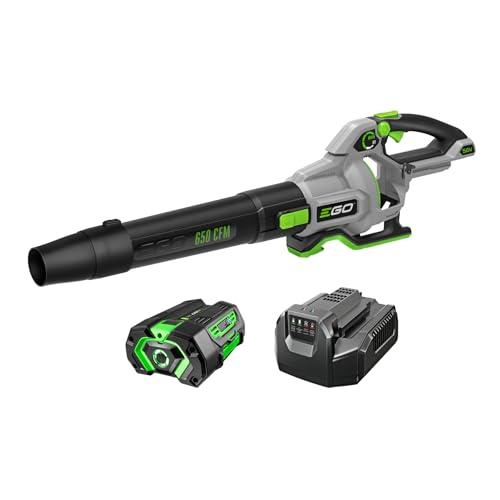
As a premium cordless reference point, the LB6504 shows the modern compromise: strong sustained output and platform convenience, with the noise and exhaust cons of petrol removed and the battery-ageing con retained. Best for: mainstream-to-large gardens. Not suited for: buyers who will not maintain a charging routine.
Toro PowerJet F700 Corded Leaf Blower — The Minimalist Balance
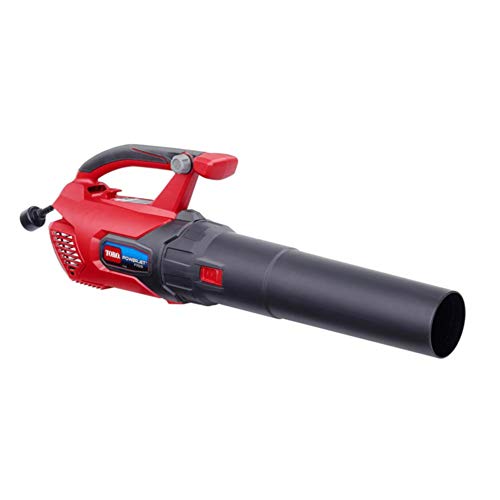
The corded PowerJet F700 deletes whole cons — no battery costs, no fuel, lightest weight, lowest tier — and concentrates everything into one: the tether, with its GFCI-protected outlet and outdoor-rated cord. Best for: small plots near the house. Not suited for: ground beyond the cord.

Ryobi 40V HP Brushless Whisper Series Leaf Blower — The Noise-Conscious Balance
The Whisper Series attacks Con 1 directly, engineering the sound down while staying a full-strength cordless tool — evidence that the category’s loudest argument is a design variable, not a law of nature. Best for: close-set housing. Not suited for: maximum-output rural work. The wider set of owner experiences is gathered in our leaf blower reviews companion.
Setup and Care That Reduce the Cons
Most cons shrink under good habits. Store the machine dry with its protection, so every session starts safe by default. Charge and store batteries following the maker’s guidance, neither baked in a hot shed nor frozen in an unheated one, and they will repay you in seasons. Work little and often — short sessions are quieter in aggregate, kinder to your arm, and less likely to coincide with a neighbour’s one peaceful hour. Dampen very dusty patches lightly before blowing and keep the nozzle low and angled, and the dust con halves. Feather the trigger near beds, gravel and piles, and the garden-damage con mostly evaporates. Keep intake vents clear of debris — and of your own clothing and hair while working — and the machine runs cooler, quieter and longer. Clear the tube and intake after each session, inspect cords before use, and the maintenance con stays at the two-minute level where it belongs. None of this is heroic; it is simply the operating style of people who have owned these machines happily for years, and it generalises across the autumn toolkit, as the care notes in our best garden hoses guide reflect.
Bottom Line
Leaf blower pros and cons do not resolve into a universal verdict, and any source claiming otherwise is simplifying for effect. The pros — speed, reach, finish, physical relief, versatility — are substantial and recur weekly for households with real leaf fall. The cons — noise, dust, running costs, physical demands of a different kind, garden carelessness, storage — are equally real and fall heaviest on small plots and close neighbours. Read both lists against your own ground and the answer usually announces itself. If the pros win, buy by platform, weight and noise, wear the protection, and work considerately. If the cons win, keep the rake with a clear conscience — you have made an equipment decision, not a surrender.
How the Balance Shifts by Power Source
The pros and cons ledger is not one ledger but three, and conflating them is how most arguments about blowers go wrong. Cordless ownership loads the pros with convenience — instant starting, no exhaust at the point of use, low maintenance, platform economics — and loads the cons with battery ageing and runtime ceilings. Its noise sits in the middle of the class, which means the social con is manageable but present. For the majority of households this is the most favourable balance available, which is a statement about their gardens as much as about the technology: suburban scale is exactly the territory where cordless strengths align and its weaknesses stay theoretical.
Corded ownership has the purest ledger of the three. Its pros are structural — lightest weight, lowest tier, unlimited runtime, almost nothing to maintain — and its cons reduce essentially to one large item, the tether, plus the discipline of a GFCI-protected outlet and a sound outdoor-rated cord. Households within the tether’s honest reach get the best ratio of benefit to burden in the entire category; households beyond it get nothing at all, which makes the corded balance the most polarised and the easiest to decide: measure your ground and the question answers itself.
Petrol’s ledger is the mirror image of cordless: the pros concentrate in sustained power and endurance, the cons in noise, exhaust, weight, vibration and upkeep. On large, wooded ground the pros are not luxuries but requirements, and the cons are diluted by distance; on a suburban plot the same cons arrive at full strength while the pros go unemployed. This is why experienced gardeners rarely argue about petrol in the abstract — the property settles it. Any pros-and-cons page that issues one verdict for all three families has not understood its own subject, which is why this page insists on the per-family reading before any household applies the lists to itself.
The Long View: Living With the Decision for a Decade
Most buying analysis stops at the first season, but a blower is a decade-scale object and its pros and cons compound differently over time. On the pro side, the time returned is not a one-off saving but an annuity: every autumn pays it again, and the garden’s baseline tidiness — the thing visitors actually notice — rises permanently because small jobs never accumulate. The physical relief compounds too, in the direction that matters: shoulders and backs that would have absorbed ten autumns of raking have absorbed ten autumns of walking instead, and gardeners still gardening happily at seventy-five rarely credit their tools enough for that arithmetic.
On the con side, the compounding items are battery replacement cycles for cordless owners, the slow accumulation of small maintenance deferred, and — the subtlest — habit drift: the slow slide from considered operation toward blowing everything, everywhere, at full power, because it is easy. Habit drift is how the garden-damage and neighbour-relations cons grow teeth in year four on a machine that behaved impeccably in year one. The defence is the same as the defence in year one: destinations chosen in advance, protection worn, hours kept, dust dampened, beds respected. Tools do not drift; operators do, and the honest cons list should say so.
There is also a decade-scale pro that rarely appears in reviews: option value. The household that owns a capable blower owns the answer to the storm morning, the pre-sale tidy, the path made safe before an elderly parent visits, the leaf fall cleared before it mats and kills the lawn beneath. These are low-frequency, high-relief events, and they never appear in a specification comparison. Owners feel them, though — ask anyone who has lent their blower to a neighbour in a crisis whether the machine was worth owning, and watch the pros list win the argument in one sentence.
The Pros and Cons Nobody Puts in the Brochure
Beyond the official lists sit the second-order effects that owners discover and brochures omit. On the pro side: a blower changes your relationship with weather windows. Because a clearance takes minutes rather than an hour, you can exploit the dry hour between showers that manual clearing cannot use, and gardens under blower ownership simply spend more of autumn dry-cleared rather than wet-matted — which compounds into less lawn damage, fewer slippery paths and less of the sodden end-of-season excavation that manual households dread. There is also a tidiness spillover: a household equipped to clear leaves in minutes tends to keep the whole outdoor standard higher, because the marginal cost of every small tidy has collapsed.
On the con side, the omitted items are equally real. A blower can mask drainage and surface problems: leaves and grit blown weekly off a path that floods or a drive that ponds will hide the worsening issue until it announces itself expensively. It can also export your problem — the operator who blows leaves into the street, the gutter or a neighbour’s frontage has not cleared anything; they have relocated it at the cost of goodwill and, in the gutter’s case, at the cost of the street’s drainage. And there is a subtle skill cost: households that blow everything stop raking well, and the one autumn the machine fails, the manual fallback is slower than it needed to be. None of these decide the question alone; all of them belong in an honest ledger.
Children, Pets and the Household Beyond the Operator
A complete pros-and-cons account must count the household members who never touch the trigger. For children, a blower is noise to be kept from ears, an airstream to be kept out of play, and — on the credit side — the magical leaf pile at the end of the session, which has launched a thousand autumn afternoons. The operating rule is absolute separation: children out of the work area while the machine runs, piles handed over only when it stops. For pets the rule is the same and the reason is double: animals are drawn to moving air and moving leaves, and the nozzle must never be pointed at them even in play, because the debris in the stream does not distinguish jest from work. Households that observe the separation get the pro — a garden the whole family uses more, because it is clear and safe — without flirting with the con.
For the wider household, the balance sheet includes the machine’s effect on shared outdoor life: patios cleared in minutes get used on autumn evenings that would otherwise be surrendered; paths kept leaf-free are safer for grandparents and delivery drivers alike; and the noise, kept to reasonable hours, fades into the ordinary soundscape of a gardening street. Weighed coldly, the household-level ledger usually reinforces the operator-level one — gardens that justify a blower justify it for everyone who lives with them, and gardens that do not, do not. The pros and cons, pursued far enough, stop being about a machine at all and become a description of the household itself, which is why this debate never settles in the abstract and always settles, quickly, in the particular.
Weighing the Lists: A Scoring Exercise for the Undecided
For households still balanced on the fence, a crude scoring exercise often clarifies what discussion cannot. Take the six pros and six cons from this page and score each, for your household only, from zero to three for how strongly it applies: leaf load drives the speed pro; bodies drive the relief pro; street density drives the noise con; storage reality drives the space con. Total the two columns honestly — not aspirationally, not as the gardener you intend to become, but as the household you are. In practice the exercise rarely produces a tie: most households discover one column doubling the other, and the discovery feels less like arithmetic than like recognition. Where the totals do run close, the tie-breakers are the two irreversibles — a body that finds raking genuinely costly, which argues buy; and a noise situation that cannot be mitigated, which argues abstain.
Run the exercise again by power source if the first pass says buy, because the families redistribute the scores dramatically: corded collapses the running-cost and weight cons while wagering everything on geography; cordless spreads its scores evenly and wins on totals for most; petrol maxes the performance pros and the noise and upkeep cons simultaneously, a profile that only large properties can cash. The exercise takes ten minutes with a pencil, and it has one more virtue — it produces a written record of why you decided, which is worth having in the first loud week of ownership when every new purchase looks like a mistake.
The Verdict of Time: What Changes After Year One
Pros and cons are not static across ownership, and a page that pretends otherwise misleads. In year one, the pros are vivid and the cons are theoretical: the speed astonishes, the relief is weekly, and the noise is a novelty the street forgives. By year three, the relationship has matured into its permanent shape — the speed is simply how the garden is kept, the relief has become invisible good health, and the cons that remain are the ones your habits did not dissolve: the battery you wish you had bought larger, the storage compromise, the neighbour whose tolerance you still manage carefully. Machines are rarely sold in year three for their specifications; they are sold, or kept for a decade, for their fit.
This is why the experienced voices in this debate — the ones who have owned across two or three machines — talk almost exclusively about fit: platform, weight, noise, ground. They have learned that the pros and cons lists are real but generic, while ownership is specific, and that the work of deciding is the work of translating the generic lists into one household’s terms. Do that translation honestly, with this page’s lists and your own garden’s evidence, and the leaf blower question — argued so loudly, so often, by so many — will settle for you the way it settles for everyone who actually works it through: quietly, and for good.
The Debate, Steelmanned: What Each Side Gets Right
Step back from the lists and the long public argument about blowers resolves into two positions that are each half right. The enthusiasts are right that the tool is transformative where leaf fall is real: the time, the reach, the relief and the finish are not marketing, and anyone who has cleared a wooded acre by hand in November knows the machine’s virtues in their shoulders. The critics are right that the tool’s costs are socialised — noise and dust land on people who never consented to them — and that a technology whose misuse is effortless will be misused, visibly, every autumn, by somebody on every street. A mature pros-and-cons page does not referee this argument to a winner; it notices that both sides are describing the same machine in different gardens, and that the disagreement dissolves the moment the discussion is forced to specify whose ground, whose body and whose street it is about.
That observation is, in the end, this page’s whole thesis. The pros and cons of a leaf blower are not properties of the blower. They are properties of a match — between a machine and a garden, a household, a neighbourhood — and they can be assessed only in the presence of all four. Readers who arrived here hoping for a universal verdict have instead been given something more useful: two honest lists, the method for weighting them, and the worked examples of households on both sides of the line living contentedly with opposite answers. The debate will restart next autumn, as it always does. Your household, at least, can sit it out — decided, equipped or deliberately unequipped, and at peace with either.
One Page, One Decision: The Summary Card
Everything above compresses onto an index card. Pros: speed that returns autumn weekends; reach into corners, edges and under obstacles; physical relief against raking; a finish on hard surfaces nothing manual matches; versatility across clippings, drying and tidying all year; leaves placed where you want them, from beds to compost. Cons: noise for operator and street; dust and debris that demand protection and discipline; running costs led by battery ageing; weight and vibration that must be matched to the body; damage in careless hands to beds, mulch and gravel; and storage plus upkeep, small but permanent. Decision rule: if your leaf load is real and recurring, buy by platform, weight and noise, and operate considerately; if it is light or your setting makes noise costly, abstain with confidence. Tape the card inside the shed door, whichever way it reads — it is the whole argument, and it fits.
Frequently Argued, Seldom Answered: Three Mini-Debates
Mini-debate one: are blowers worse than the leaf chaos they replace? The honest answer distinguishes surfaces: on paths and drives, a cleared surface is unambiguously safer and better kept, and the con column has nothing to say; in beds and wild corners, the undisturbed leaf layer is unambiguously the better ecology, and the pro column should stay silent. The debate only exists when one side claims the other’s territory. Mini-debate two: is the noise problem the machine or the operator? Both, in sequence — the machine sets the ceiling of civility, the operator decides how close to it the street lives, and regulation, where it exists, mostly polices the gap between the two. Mini-debate three: does owning a blower make gardeners lazier? The evidence of tidy gardens suggests it makes them more frequent, which is the opposite failure mode if it is one at all — the risk is not laziness but zeal, the over-cleared garden, and the cure is the destinations discipline this page has recommended throughout.
Each mini-debate teaches the same lesson as the main lists: the argument dissolves when the ground, the surface and the operator are specified. That is worth remembering the next time the fence-line debate restarts — the most useful contribution any participant can make is a question: which garden are we talking about? Pros and cons, properly understood, are not a verdict on a product category. They are an invitation to specify, and households that accept the invitation stop debating and start deciding.
Readers who have followed the argument this far will notice that the pros and cons have quietly changed character along the way: they began as properties of a product and ended as questions about a household. That transformation is the page’s real content. A leaf blower is not good or bad in the way weather is good or bad, arriving from outside and happening to everyone alike; it is good or bad the way a dog is good or bad for a household — gloriously right in the right home, a daily friction in the wrong one, and pitiable mainly when the matching was done carelessly. Match carefully, and whichever side of the line your household lands on, the result is the same: a decision you can defend, in autumn, with the evidence of your own garden under your feet.
So the final entry in the ledger belongs to neither column. It is the value of having decided deliberately at all — of owning, or not owning, a machine for reasons you can state. Gardens are long projects measured in decades, and the households that run them well share exactly this trait across every tool they keep: nothing in the shed is there by accident. Let the leaf blower, present or absent, meet that standard, and the pros and cons will have done their work.
Living With the Trade-Offs: How the Leaf blower Balance Plays Out Over a Season
A pros and cons list is a snapshot, but a leaf blower is a long-term housemate. Advantages that look decisive on paper can shrink once the seasons turn, and drawbacks that seem minor in a showroom can grow teeth in February or during a busy holiday week. The fairest way to weigh a leaf blower is to follow one full season of ordinary use and ask how each side of the ledger behaves when the weather, the light and the household routine all change. This section does exactly that, so the balance you act on reflects lived experience rather than first impressions.
When the Advantages Grow — and When They Fade
The strengths of a good leaf blower tend to compound quietly. A design that saves steps, stores more, or cleans easily gives that benefit back every single day, and over a season those small repayments add up to the real value of the purchase. By contrast, advantages based on novelty — an unusual finish, a fashionable shape, a feature you showed to guests twice — fade within weeks. When you re-read any pros list, sort each point into one of those two families: daily-compounding benefits deserve heavy weight, while novelty benefits deserve almost none, however attractive they looked at the point of ordering.
When the Drawbacks Bite Hardest
Weaknesses in a leaf blower rarely bite at random; they bite at predictable pressure points. Guests arriving, a seasonal deep clean, a heatwave, a power cut, a house move, or a child or pet entering a new stage will each stress a different limitation. Think through those moments for the leaf blower you are considering and ask whether the drawback is an occasional annoyance you can plan around or a recurring friction you will meet every week. An occasional annoyance is a fair price for a strong advantage elsewhere; a weekly friction almost never is, and it is the single most common reason owners replace a leaf blower long before it wears out.
Use these seasonal pressure tests to judge the trade-offs in any leaf blower:
- Picture the leaf blower during your busiest week of the year and decide whether its main drawback would matter more, less, or about the same.
- Picture it during the opposite season from now — high summer if it is winter, the dark months if it is spring — and re-check light, heat, moisture and ventilation around it.
- Ask who else in the household touches the leaf blower most, and weigh the cons from their height, strength and habits rather than your own.
- Separate the drawbacks you can fix with an accessory or a habit change from the ones built into the design itself.
- Give the leaf blower a simple verdict for each season rather than one verdict for the year, and only buy when it passes the seasons you care about most.
When a listing is vague about a dimension, material or included part that matters to you, treat the vagueness itself as information and look for a clearer seller. Photograph your room at the time of day you will use the leaf blower most, and compare candidates against that light rather than against bright midday photographs. Small households should weight compactness and easy storage more heavily, while large households should weight durability and simple operation, because the failure modes differ. If the leaf blower will serve children or older relatives, test the key actions with the weakest grip and the shortest reach in the house in mind. Leave a little capacity unused — in size, storage or power — because a leaf blower run permanently at its limit ages faster and annoys sooner than one with headroom. Notice which parts are replaceable and which are not; a leaf blower whose wear parts can be swapped cheaply often outlasts a sealed design twice its price in spirit, if not in years. Consider the leaf blower from the perspective of the person who cleans around it, because designs that trap dust, block access or demand special products quietly tax every week of ownership. Think about noise, light and heat as neighbours of the leaf blower, not afterthoughts, since a choice that performs well but disturbs the room around it rarely stays popular for long. Remember that guests experience your leaf blower without instructions, so anything that needs explaining, warning or demonstrating is worth simplifying before it is worth defending. Plan for the leaf blower to be moved at least twice in its life — for cleaning, redecorating or a change of room — and favour designs that forgive being shifted, tilted or carried. Look at the edges and undersides when you judge build quality, because those are the places makers save money first and the places owners discover last. Ask how the leaf blower behaves on your worst floor, wall or surface rather than your best one, since homes are uneven and listings are photographed in perfect rooms. Keep the receipt, delivery note and a photograph of the label together, because warranty conversations go smoothly when dates and model details are at hand. If two people in the household disagree about the leaf blower, let the person who will use or maintain it most have the deciding vote on practical questions. Beware of buying for the household you hope to become; the leaf blower that serves the household you already are will be used this week, not someday. A tape measure, a spirit level and ten patient minutes prevent more leaf blower regrets than any amount of comparison shopping after the fact.
Judged across a season, most leaf blower choices become clearer, not harder. The right model is rarely the one with the longest pros list; it is the one whose drawbacks land in the moments you can tolerate and whose strengths land in the moments you repeat every day. Hold any candidate up against your own calendar before you commit, and the pros and cons stop being abstract and start being a forecast you can trust.
Frequently Asked Questions
What is the biggest disadvantage of a leaf blower?
Noise, by a clear margin. It affects the operator’s hearing — protection is mandatory — and it is the cost neighbours pay for your tidy drive, which makes it a social as well as a personal con. Quieter-engineered cordless models reduce it substantially and considerate timing reduces it further, but no blower is silent. Households in close quarters should treat noise as the deciding factor; households with space and tolerant streets will find it a manageable line on the cons list rather than a veto.
Are leaf blowers bad for the environment and wildlife?
The honest answer is: it depends on the type and the operator. Petrol models produce exhaust at the point of use and the most noise; electric models shift their footprint to the grid and the battery lifecycle. Operator behaviour matters as much: blowing every leaf out of every bed removes shelter and food for garden wildlife and free mulch for the soil. The considered pattern — clear hard surfaces, leave or relocate leaves onto beds, choose electric power, work at reasonable hours — keeps a blower’s footprint modest. The tool’s impact is largely a choice, which is precisely why it belongs on the cons list to be managed rather than ignored.
Do the pros outweigh the cons for a small garden?
Usually not. In a small garden the time saved per session is small, sessions are infrequent, and the full-size cons — purchase tier, storage, noise, protection habits — are paid for a part-time benefit. A rake, a broom and a tarp cover small plots gracefully. The exceptions are physical: a gardener whose body makes raking genuinely costly, or a small plot with extensive hard surfaces under heavy trees, can flip the balance. Judge by leaf load and surfaces, not by enthusiasm for tools.
How can I reduce the downsides if I already own a blower?
Wear eye and hearing protection every session; work at reasonable hours and keep sessions short by going little and often; dampen very dusty ground and never blow dust toward people or property; feather the trigger near beds and gravel and leave leaves on beds as mulch where they help; maintain the machine in two-minute habits and store batteries per the maker’s guidance. Most of the cons list is behavioural, which is good news: the machine you own can be operated in the way that makes its pros dominate.
Is a cordless blower’s balance of pros and cons better than petrol?
For most households, yes. Cordless removes petrol’s exhaust, much of its noise, its fuel-and-oil rhythm and its starting ritual, while adding instant starts and platform convenience. It introduces battery runtime limits and eventual battery replacement costs, which matter on large properties. Petrol keeps the crown only where sustained maximum output over long sessions on big ground is the actual requirement. The crossover has moved steadily toward cordless as batteries improve, and for the typical suburban garden the argument is effectively settled.
Related Guides
Continue with the hands-on leaf blower review, the category-wide leaf blower buying guide, and the autumn system view in our best rain barrels for gardening round-up.