Disclosure: As an Amazon Associate, dailyhomedecorating.com earns from qualifying purchases. Links on this page are affiliate links; they cost you nothing extra. Prices and availability change often, so check the current Amazon listing before you buy.
Pressure washer pros and cons lists usually read like advertising with a token downside attached. This pressure washer pros and cons assessment is built differently: every advantage gets its evidence, every disadvantage gets stated at full strength, and the verdict is organised around your surfaces and habits rather than around the machine. If you finish this page still unsure, the honest answer is probably to rent first — and that, too, is a legitimate conclusion of weighing pressure washer pros and cons properly.
Quick Verdict
Suits you if: you have recurring outdoor surfaces that degrade visibly, storage for the kit, and the temperament to follow safety rules and a setup ritual every time. Does not suit you if: your outdoor area is tiny, your surfaces are fragile or suspect, or the rules would be treated as optional by anyone with access to the machine. The pros are large and real; so are the cons. Which list is longer depends on your home, not on the brochure.
In this guide
Key Takeaways
- Biggest pro: recurring cleaning becomes fast, even and genuinely satisfying.
- Biggest con: it is a hazardous tool whose misuse injures people and scars surfaces.
- Ownership overhead — storage, ritual, maintenance — is the con buyers underestimate most.
- Damage risk is mostly technique risk, which training and patience largely remove.
- Alternatives (rental, professionals, hose-and-brush) are strong for the households they fit.
Safety First: Read This Before You Touch the Trigger
Never point the wand at people or pets — not as a joke, not for a second, not even at a distance. A pressure washer jet can cause a high-pressure injection injury, driving water and debris deep under the skin through a wound that may look like a tiny pinprick at first. Injection injuries are surgical emergencies: if the jet breaks skin on you or anyone nearby, stop work and seek urgent medical care, and tell the clinician it was a high-pressure injection injury so it is treated with the seriousness it requires.
Plug an electric pressure washer into a GFCI-protected outlet only. You are deliberately mixing water and electricity outdoors, and a ground-fault circuit interrupter is the device that cuts power fast if current leaks where it should not. Test the GFCI before each session using its test button, never defeat it with an adapter, and keep every connection off wet ground where the manual tells you to. If the GFCI trips repeatedly, stop and have the outlet or the machine checked rather than resetting it and carrying on.
Wear eye protection and closed footwear every session. The jet ricochets grit, sand, loose paint chips and small stones back at the operator, and bare feet or sandals offer no defence against a wandering jet or a dropped lance. Long trousers, sturdy shoes and snug eye protection are the minimum; hearing protection is sensible around a gas engine running at working pace for an hour.
Never use a pressure washer while standing on a ladder. The trigger kick and the reaction force of the jet can push you off balance exactly when both hands are busy, and a fall with a live lance in your hands adds a second injury to the first. Wash what you can reach from the ground with an extension lance, and leave genuinely high work — upper-storey siding, high gutters, roofs — to professionals with proper access equipment.
If you suspect lead paint or asbestos-containing siding or panels, stop: that is professional remediation work only. Older homes can carry lead paint on exterior woodwork and asbestos in some siding and roofing products, and pressure washing suspect surfaces blasts hazardous material into the air, the soil and your flower beds. Never pressure-wash a surface you suspect contains lead or asbestos. Have it assessed and handled by licensed remediation professionals using containment methods designed for the hazard.
Keep the lance well away from electrical fixtures, outdoor sockets, meters, service cables and light fittings. Water driven at pressure finds its way into enclosures that shrug off rain, and it can damage a meter or fitting and create a shock hazard in the process. Work around fixtures, never at them, and shield or avoid anything electrical on the wall you are cleaning. Finally, a gas pressure washer produces carbon monoxide and is for outdoor use only — never run one in a garage, shed, porch enclosure or near an open window or vent that could draw exhaust indoors, even with the door open.
The Pros
Pro: Dramatic Time Savings on Real Jobs
The core advantage is not theoretical. Algae-filmed patios, grey driveways, dusty siding and green decking are jobs measured in weekends by hand and in hours by jet, and the jet’s finish is more even because a fan pattern does not tire the way arms do. Time saved compounds across a year of recurring jobs, and it converts maintenance from dreaded projects into routine upkeep that actually happens.
Pro: A Better, More Even Clean
Detergent dwell plus a controlled fan lifts grime uniformly, including from concrete pores, deck board texture and masonry joints that brushes skim over. The result is not just prettier: slippery algae films — a genuine fall hazard on steps and paths — are removed thoroughly rather than smeared around, and surfaces prepared for paint, stain or sealant accept their coatings more evenly.
Pro: Capability on Demand
Ownership means the tool is there for the hundred small jobs nobody hires out: muddy bikes, grubby bins, a grease spot before guests, a caravan’s winter film. Each use is short, unplanned and valuable, and collectively they are where owners say the machine justified itself. Rental and professional alternatives cannot serve this pattern at all.
Pro: Water Efficiency Compared With an Open Hose
A pressure washer moves far less water than a running open hose while doing more cleaning, because the work is done by velocity and pattern rather than volume. Used in deliberate passes rather than left running, it is the more economical way to wash large areas — an advantage that matters in dry summers and on metered supplies.
Pro: Surface Health and Early Diagnosis
Regular gentle washing removes the algae and grime that hold moisture against wood, masonry and paint, slowing decay. Washing also reveals: cracked mortar, tired sealant, failing paint and loose render all become visible once clean, while repairs are still small. Owners consistently discover problems earlier than non-owners.
Pro: Genuine Satisfaction
It would be dishonest to omit it: the before-and-after transformation is deeply satisfying, and satisfaction is a real ownership benefit because it sustains the maintenance habit. Tools that are enjoyable get used; tools that get used keep homes in better condition.
The Cons
Con: It Can Seriously Injure
The gravest disadvantage. A jet can cause high-pressure injection injuries through wounds that look minor and demand urgent surgical care; ricocheting grit threatens eyes; gas engines produce carbon monoxide that kills in enclosed spaces. These are not edge cases invented by lawyers — they are the predictable results of pointing a lance carelessly, skipping eye protection, or running an engine in a garage. The safety block at the top of this page is the price of ownership, payable every session.
Con: It Can Damage Your Home
The same force that cleans will etch concrete, fur decking, strip paint, split soft mortar and drive water behind siding when distance, pattern or angle are wrong. Beginners cause most of this damage in their first sessions, on visible surfaces, in minutes. Technique education — our guide on how to use a pressure washer — reduces the risk greatly, but never to zero, and some surfaces should simply never meet a jet.
Con: Some Surfaces Are Off Limits Entirely
Suspect lead paint and possible asbestos siding are absolute exclusions requiring professional remediation. Delicate historic brick, soft render, fragile glazing seals and ageing roof coverings are practical exclusions. A home dominated by such surfaces owns a machine it can barely point at anything, which converts every pro on this page into theory.
Con: Storage, Ritual and Maintenance Overhead
The machine wants dry, frost-safe storage; the hose wants relaxed coils; every session wants the full connect-purge-test-wash-drain routine; the pump wants winter protection; gas models want engine care. None of it is heavy, all of it is permanent, and households that resent it quietly stop using the machine — the most common failure mode of ownership.
Con: Noise and Neighbourliness
Gas models are loud in the way small engines are loud; even electrics are far from silent, and the work happens outdoors where sound carries. Early Sunday sessions will not make you popular. This is a minor con with good management — reasonable hours solve it — but on dense streets it is a real scheduling constraint.
Con: The Purchase Is Easy to Get Wrong
Overbuying power, underbuying convenience, ignoring storage, forgetting accessories that are not in the box: the category invites mismatches, and a mismatched machine delivers the cons at full strength and the pros at half. Our pressure washer buying guide exists precisely to prevent this, and the value question is examined in is a pressure washer worth it.
Pressure Washer Pros and Cons: What the Trade-Offs Mean for You
For the larger-property owner, pros dominate: area multiplies the time savings and dilutes the overhead. For the typical family home, the balance is favourable provided the safety temperament exists in the household. For the small-space household, the cons quietly win: storage and ritual stay full-size while the jobs shrink, and hose-and-brush methods — with a good nozzle from garden hose nozzles — deliver most of the benefit with none of the hazard. For the renovator, pros dominate during projects and fade between them, which argues for buying mid-tier rather than premium. Read your own household honestly into one of those profiles; the profiles, not the product pages, contain your answer.
Context: How the Alternatives Compare
| Option | Strengths | Weaknesses | Best For |
|---|---|---|---|
| Own a pressure washer | On-demand capability, best long-run value for frequent use | Storage, maintenance, hazard, learning curve | Recurring multi-surface homes |
| Rent per session | No storage or upkeep, try different tiers | Travel, queues, per-day cost, no small-job access | One annual deep clean |
| Hire a professional | Commercial kit, technique, insured, zero effort | Highest per-visit cost, scheduling | High, fragile or suspect surfaces |
| Hose, brush and detergent | Gentlest, cheapest, no hazard | Slow, uneven on large or porous areas | Small areas, delicate surfaces |
How to Buy Smart If the Pros Win
Match tier to your largest recurring job; favour the fuller accessory bundle over the marginally stronger bare machine; confirm GFCI protection at your outdoor outlet; measure storage first; and budget the safety kit — eye protection, sturdy footwear — into the same purchase. Compare the current field in our pressure washer reviews and the single-machine deep dive in pressure washer review.

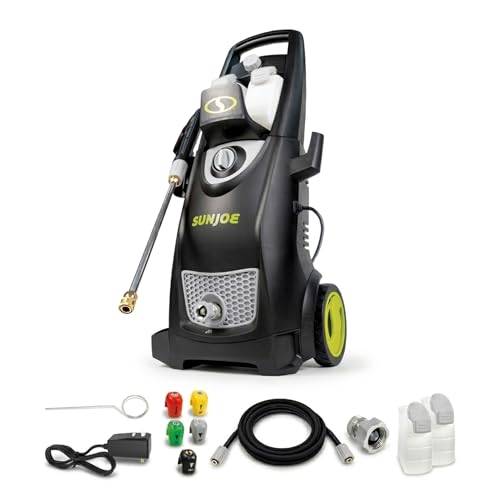
Sun Joe SPX3000
The low-commitment way to test which list wins in your household: the classic jobs covered, the full safety and ritual lessons learned, without premium money riding on the answer.
Best for: households whose profile matches its entry tier positioning. Not suited for: households on the other side of this page’s verdict. Prose-only guidance: check the current Amazon listing for the latest configuration and bundle before you buy.
Karcher K5
The high-commitment end of the same test: choose it when the pros clearly dominate — large home, long lists, frequent sessions — and its size and cost become features rather than warnings.
Best for: households whose profile matches its premium tier, electric positioning. Not suited for: households on the other side of this page’s verdict. Prose-only guidance: check the current Amazon listing for the latest configuration and bundle before you buy.
Setup and Care That Reduce the Cons
Most cons shrink under good habits: a fixed storage home so deployment is fast; a written shutdown ritual — depressurise, drain, wipe — taped inside the garage door; nozzle discipline learned on test patches; detergent doing the chemical work so the jet can stay gentler and further away. Care for the supply side too: a sound hose from garden hoses and a clear inlet filter prevent the pulsing and pressure loss that tempt operators into dangerous closeness.
Care, Storage and Keeping It Working
A pressure washer that is put away wet, dirty and pressurised will punish you at the next session. Release the pressure after every use by switching off and squeezing the trigger until the jet dies away, disconnect and drain the hoses, and wipe down the machine before it goes back to its corner. Check the inlet filter regularly — a clogged filter starves the pump and shortens its life — and inspect O-rings on connections, replacing any that are nicked or flattened so joints seal without heroic tightening.
Before winter or any long storage, follow the manual’s pump-protection routine so residual water cannot freeze and crack internal parts; a machine stored in an unheated shed is exactly the machine at risk. Coil the high-pressure hose in large, relaxed loops rather than tight kinks, because kinked hose remembers its damage and leaks follow. Gas models add engine care: fresh fuel practices, oil checks, and running the engine dry or stabilising fuel for storage as the manual directs. Replacement pumps and parts are a whole topic of their own — our guide to pressure washer pumps explains what wears and what can be swapped.
Keep nozzles clean and organised; a partially blocked tip distorts the fan and tempts you closer to the surface to compensate, which is how damage happens. A nozzle cleaning pin and a rinse after detergent use keep patterns true. Store the lance and gun where they will not be knocked or stepped on, and keep the whole kit together — machine, hose, gun, tips and manual — so the next job starts with washing, not with a treasure hunt around the garage.
Bottom Line
The pros are about capability and time; the cons are about hazard, overhead and fit. Homes with recurring surfaces, storage and safety discipline should buy without anxiety. Homes without them should rent, hire or scrub — and lose nothing by it. Either way, decide from your surfaces outward, never from a headline specification inward.
Understanding Nozzles: The Real Controls of the Machine
New owners fixate on the machine; experienced owners fixate on the tips. The nozzle decides the shape of the jet, and the shape decides everything: how much force lands on each square centimetre, how wide a stripe you paint with each pass, and whether the surface is cleaned or carved. A wide fan spreads the same energy across a broad band, which is why it rinses cars and soaps walls safely. Narrow the fan and the same energy concentrates, which is why narrow tips belong on durable surfaces, at respectful distances, for stubborn deposits — and why the narrowest spot jets are the ones that write permanent signatures into wood and soft concrete.
Work through the set methodically on any new surface. Begin with the widest fan at the greatest distance you would plausibly use, and read the result after a single pass: if grime lifts and the surface is unmarked, you have found your working combination. If grime stays, step one notch closer or one notch narrower, and test again. This staircase discipline feels slow for the first ten minutes of ownership and saves every surface for the rest of it. The corollary matters just as much: when you move to a softer surface mid-session — from concrete path to wooden gate — reset the staircase. Yesterday’s perfect setting for the driveway is today’s damage setting for the deck.
Adjustable and multi-pattern nozzles trade this clarity for convenience, and they have their place for light work, but the fixed, colour-coded quick-connect set teaches better habits because each swap is a conscious decision. Keep the set together, keep the orifices clean with the pin provided, and replace any tip whose fan has gone ragged: a distorted pattern cleans unevenly and tempts you closer to compensate, which is exactly the wrong direction. Treat nozzles as consumable precision parts, not as lifetime fittings, and the machine’s behaviour stays predictable year after year.
The Cons in Practice: Failure Stories and Their Lessons
Almost every pressure-washing horror story decomposes into the same few errors. The etched driveway: a narrow jet, held close and stationary, by an owner chasing a stain that needed chemistry. The shredded deck: a general fan used at concrete distance on soft, weathered wood, without a test patch. The water behind the siding: enthusiastic upward jetting under laps on a windy day. The injured hand: a lance waved casually while repositioning, trigger live, attention elsewhere. The dead pump: a machine stored wet through a hard frost because the shutdown ritual felt optional in November. None of these required a defective machine. All of them were prevented by the habits this site repeats until they bore you — which is rather the point.
Set against them are the quiet success stories nobody tells: the decade-old electric that still starts every spring because its owner drains it every autumn; the steps that stopped being a winter hazard; the fence that took stain evenly because it was washed properly first. Weighing pros and cons honestly means holding both sets of stories at once. The tool is neither the miracle of the advertisements nor the menace of the warning labels. It is a powerful instrument whose outcomes track the operator’s discipline with unusual fidelity — which is itself the most important item on both lists.
A Seasonal Rhythm for Pressure Washing
Ownership works best as a rhythm rather than a series of emergencies. In spring, wash the winter off: siding that carried a season of dust and algae, paths made slippery by months of damp shade, the patio where the outdoor season will actually happen. Spring is also inspection season — a clean wall shows its failed sealant and tired paint honestly, early enough to fix both in warm weather. Take the machine out of storage properly: check the inlet filter, inspect the hose for winter damage, run water through before power, and confirm the GFCI still tests and resets as it should.
Summer washing is about upkeep and events: a quick patio refresh before guests, bikes and bins as needed, the barbecue area kept civilised. Work in the cooler parts of the day, because detergent dries fast on hot stone and a dried detergent film is its own cleaning problem. Keep surfaces wet during dwell, rinse plants generously, and remember that bare feet season is exactly when the closed-footwear rule feels most annoying and matters most — ricocheting grit does not respect holidays.
Autumn is the safety wash: steps, paths and decking cleared of the leaf-stain and algae film that turns treacherous with the first frosts, gutters’ ground-level splash zones cleaned, outdoor furniture washed before it is stored under cover. Winter, for most households, is storage season: drain everything, depressurise, protect the pump exactly as the manual directs, coil hoses in relaxed loops, and store the kit somewhere frost cannot reach the water still hiding inside it. A machine wintered properly starts the spring rhythm without drama; a machine wintered wet often does not start at all.
Detergent, Taken Seriously
Detergent is the difference between washing with force and washing with intelligence. The jet’s mechanical energy is finite and, past a point, dangerous to the surface; chemistry loosens the bond between dirt and substrate so that a gentler, wider, safer jet can finish the job. Choose products made for pressure washers and matched to the surface — a house wash for siding, a concrete cleaner for driveways, a vehicle shampoo for paintwork — and respect dilution guidance, because over-concentrated solution rinses poorly, streaks readily and is harder on the plants you are trying to protect. Bleach-based treatments for algae have their place in careful hands, used exactly as labelled, kept off plants and coloured surfaces, and never mixed with other chemicals; when in doubt, a dedicated pressure-washer detergent is the calmer choice.
Application technique matters as much as product choice. Detergent goes on at low pressure, through the soap nozzle or setting, because the machine’s detergent pickup only works when pressure drops. Coat evenly, bottom-up on verticals, and then protect the dwell: keep the film wet, work in shade where you can, and give the solution the minutes it asks for. Rinsing is the reverse journey — top-down, thorough, patient — because residue left behind attracts dirt and can leave its own marks. After soapy sessions, run clean water through the pickup line as the manual directs; detergent residue drying inside a pump or injector is a slow, invisible tax on the next job.
Know detergent’s limits too. It will not remove rust staining, which needs a dedicated rust treatment; it will not lift deep oil that has soaked into porous concrete for years, though it improves it; it will not fix paint failure, efflorescence or a surface that is itself deteriorating. Recognising a chemistry problem, a specialist problem and a lost cause — and treating each accordingly — is the mark of the operator who gets professional results from domestic equipment.
Accessories That Earn Their Shelf Space
The surface cleaner is the single most transformative accessory for flat work: a hooded bar spinning two jets inches above the ground, turning driveway cleaning from striping-prone passes into an even, walking-pace glide. It also contains the spray, which your shoes, plants and nearby paintwork will appreciate. An extension lance adds reach without ladders — under eaves, across wide patios, along the far side of a car — and reach without ladders is a safety feature wearing an accessory’s clothes. A foam cannon pleases vehicle owners by laying a thick, dwelling shampoo layer that bucket washing cannot match for pre-wash softening.
Brushes — rotary and fixed — serve the surfaces where a jet alone is the wrong tool: woven furniture, cladding texture, wheel arches, caravan sides. A turbo nozzle concentrates force for stubborn spots on hard, durable surfaces and must be kept away from wood, paint, mortar in poor condition and anything with a seal. Extra hose length buys working freedom on larger properties, balanced against the discipline of managing it. Buy accessories in the order your job list demands, not in the order the marketing displays them, and store them with the machine so the kit deploys as one.
What not to buy: gadgets that promise to make the jet safe at point-blank range, unbranded tips of uncertain orifice quality, and any attachment that encourages work from ladders or roofs. The accessory market contains excellent engineering and cheerful nonsense in roughly equal measure; the test is whether a tool helps you work wider, further away, more evenly or more safely. If it does none of those, it is shelf decoration.
A Note on Children, Pets and Bystanders
One con deserves its own paragraph because it is so often managed casually. A pressure washer is not a spectator sport. Children and pets stay inside or well clear for the whole session — not because the operator intends to aim at them, but because ricochet, hose trips and a dropped lance do not ask permission. Never let a child hold the lance, even unpowered as a game, because the habit being taught is the hazard. Spectators who must be present get eye protection and a marked standing zone upwind and uphill of the work. These rules sound stern on paper and feel obvious on the day; write them into the household’s understanding of the machine from its first use, and they will never need enforcing.
Kerb Appeal, Home Value and the Honest Limits
Estate agents talk about kerb appeal because first impressions price houses. A bright driveway, clean paths, algae-free steps and fresh-looking siding photograph better, view better and signal a maintained home before a buyer reaches the front door. Regular pressure washing is one of the cheapest ways to sustain that signal, and sellers routinely discover that a weekend of washing changes how a property feels more than minor interior touches costing far more. For households planning to sell within a year or two, this alone can tip the ownership question — though a single professional visit or rental may capture most of the benefit without the purchase.
The honest limits matter as much. Washing does not repair: cracked render stays cracked, tired paint stays tired, and a failing driveway surface stays failing once its grime camouflage is removed. Indeed, a thorough wash sometimes makes a home look temporarily worse by revealing work that dirt was politely hiding. Budget emotionally and financially for what the clean surface will tell you. The machine reveals the truth about your exterior; whether that truth is good news depends on the exterior, not the machine.
There is also a maintenance-economics angle that rarely gets stated plainly. Surfaces kept clean degrade more slowly: algae and moss hold moisture against wood and masonry, gritty films abrade underfoot traffic, and neglected sealants fail early. Gentle, regular washing is preventive maintenance with a visible reward, and preventive maintenance is almost always the cheapest kind. That argument does not require the machine to be used weekly — the seasonal rhythm described in this guide captures most of the benefit with a handful of sessions a year.
Surface by Surface: The Extended Notes
Block Paving and Pavers
Jointed paving cleans beautifully and complains specifically: the jet that lifts algae from the blocks will also lift the kiln-dried sand from the joints if you work narrow, close or at an angle that digs. Use a wide fan, keep the lance more upright and further away than instinct suggests, and budget time afterwards to brush fresh jointing sand back in once everything is dry. Skipping the re-sanding leaves joints open to weeds and the blocks free to rock — a small finishing job that separates a wash from a restoration.
Tarmac and Asphalt
Tarmac is softer than it looks, especially on warm days, and it scars under concentrated jets. Wide fan, generous distance, constant movement, and never chase oil spots with force — oil on tarmac is a solvent problem, and aggressive jetting spreads it while chewing the surface. Moss on shaded tarmac lifts well with detergent dwell and patience. If the drive is already breaking up, washing will reveal and slightly accelerate the truth; that is information, not damage, but set expectations accordingly.
Composite Decking
Composite boards tolerate washing well within their makers’ guidance and punish improvisation: too close a jet can raise the surface texture and void sympathies you would rather keep. Wide fan, the greatest distance that still cleans, detergent made for composites, and a soft brush for the board grooves. Because composites vary, the board manufacturer’s care guidance outranks any general guide — read it before the first wash, not after the first mark.
Vinyl and Fibre-Cement Siding
Both wash well with the standard method — bottom-up detergent, top-down rinse, downward angle — and both share the same vulnerability: water driven upward behind laps. Vinyl adds a cold-weather caution, since cold panels are more brittle; fibre-cement adds weight to the never-jet-damaged-panels rule, because a cracked board washed hard becomes a water inlet. Work around, never at, vents, fixtures and the meter, as the safety section insists.
Conservatories, Glass and Frames
Glass wants the gentlest version of everything: wide fan, distance, low-pressure detergent application and a thorough rinse, with seals and vents treated as no-jet zones. Polycarbonate roofing panels scratch and cloud under aggressive treatment and are usually better served by a soft brush, hose and suitable cleaner from the ground with an extending brush. If reaching a surface safely requires a ladder, the correct pressure-washing decision is not to pressure wash it — hire the work out with proper access equipment.
The Mistake Gallery, Annotated
Every experienced operator carries a private gallery of errors, their own or witnessed. The scalloped fence, where each pass stopped and started visibly because the operator feathered the trigger mid-stroke instead of walking a steady line. The concrete autograph, a name-shaped pale patch where a spot jet was tested ‘just for a second’. The flooded wall cavity, courtesy of enthusiastic upward rinsing under siding on a house whose vents were exactly where nobody looked. The January pump, cracked by stored water and frost, discovered in April with the season’s first job half set up. The near-miss with a bare foot and a wandering lance during a repositioning shuffle, retold at barbecues with more laughter than it deserves.
Annotate the gallery and a syllabus emerges: keep moving, keep distance, test first, angle down, drain always, dress properly, and never let the trigger be live while your attention is not. None of these require talent. All of them require deciding, in advance, that the ritual outranks the shortcut — especially on the quick job, the familiar job, the last job of the day. Pressure washing forgives many things, but it keeps a perfect record of complacency, and it collects without warning.
How the Home Pressure Washer Got Here
Pressure washing began as industrial equipment — steam and hot-water machines for factories, fleets and food plants — and shrank toward the home as pumps became cheaper, electric motors stronger and safety expectations higher. The domestic category matured when quick-connect nozzles standardised, when detergent systems moved from improvisation to integration, and when manufacturers learned that homeowners value deployment speed and storage as much as cleaning force. That history explains the modern field’s shape: the professional’s priorities (output, durability, serviceability) filtered through the homeowner’s realities (cupboards, weekends, neighbours, and a justified respect for a tool that can injure).
It also explains the category’s persistent marketing distortion. Industrial buyers compare machines on sustained duty and parts support; homeowners, offered a single dramatic number, understandably reach for it. The mature way to read the modern market is the way this guide has tried to model: by tier, by job, by logistics and by the operator’s discipline. The machines have become genuinely good across the price range. The remaining variable, as it has been since the first factory unit, is the person holding the lance — which is why so much of this page is about habits rather than hardware.
Scoring the Lists for a Typical Home
To make the balance concrete, score the typical family home against both lists. Pros, at full strength: the driveway, patio, decking, siding and vehicles all present recurring work; the time saving is measured in weekends per year; the safety dividend of algae-free steps is real; the satisfaction sustains the habit. Cons, at full strength: a hazardous tool enters a household with children and visitors; storage is claimed permanently; the ritual must survive busy lives; the first sessions carry genuine damage risk. For this median household the pros win — provided the safety temperament is present, which is the single variable that flips the result. Remove that temperament and the same lists reverse instantly, because the gravest con is not a cost but a risk, and risks do not average out against conveniences. That asymmetry is the deepest truth on this page: weigh the pros by counting, but weigh the cons by imagining, and let the imagining have the final vote.
Environmental Pros and Cons, Weighed Separately
The environmental ledger deserves its own honest pass. On the credit side: a pressure washer uses markedly less water than an open hose for the same cleaning, detergent use is episodic and small in volume, electric models produce no exhaust at the point of use, and well-maintained surfaces last longer before needing replacement — a quiet but real resource saving. On the debit side: runoff carries whatever was on your surfaces toward drains and soil unless you manage it thoughtfully; gas models burn fuel and make noise that wildlife and neighbours both notice; and the machines themselves are durable goods whose manufacture and eventual disposal carry a footprint that only years of use can amortise. The balance favours ownership precisely when use is frequent and long — another reason the rarely used machine is the worst outcome on every list this page keeps, environmental included. Buy to use, use with runoff awareness, maintain for longevity, and the environmental column lands modestly in credit; buy to store, and it never can.
One Last Balance: Emotion Versus Evidence
It is worth admitting that this decision is rarely made on evidence alone. The transformation photographs are seductive, the showroom machines gleam, and the neighbour’s driveway — washed last Saturday — has never looked better. Emotion is not a disreputable adviser here; the satisfaction pro on our list is real, and a tool that delights gets used, maintained and kept for years. But emotion should propose and evidence should dispose. Run the checklist, imagine the two-year garage, interrogate your surfaces and your storage, and let the household’s honest answers outrank the showroom’s lighting. Households that decide that way almost never regret either answer — and that, more than any single pro or con, is the outcome this page exists to produce.
Living With the Trade-Offs: A Week-by-Week Reality Check for a Pressure Washer
A pros-and-cons list is a snapshot, but living with a pressure washer is a film, and this section follows the trade-offs across the first weeks when novelty fades and routine takes over. In week one, most owners notice the headline advantage of a pressure washer constantly, because every use is a comparison with whatever came before it, while the headline drawback feels minor simply because it is still new. Keep the packaging of a larger pressure washer until those first ordinary tests are done, flattened if space is tight, because re-boxing an awkward shape from scratch is the hidden difficulty inside many otherwise straightforward returns. If you already own a pressure washer, run the same week-by-week check backwards and note which drawback you have genuinely stopped noticing and which one still earns a small sigh, because that sigh is the most honest review you will ever read.
Per-use costs forgive nothing, so weigh any drawback that appears every time you reach for the pressure washer — noise, wobble, awkward controls, slow setup, difficult emptying or cleaning — far more heavily than its position on a balanced list suggests. Consider the cleaning rhythm honestly: a pressure washer that needs attention after every use suits a household that enjoys small rituals, and frustrates a household that wants to finish a job and walk away, so match the upkeep to the temperament, not the intention. Use a simple decision checklist at the end: the pressure washer fits the measured space, suits the real frequency of the job, matches the household’s cleaning temperament, has obtainable parts, and has a named storage home — five yeses make a confident order. Think about who else will use the pressure washer and what they will do differently: shorter reach, less patience, stronger habits, no interest in the manual, and a tendency to leave things wherever they were last set down.
Look at replacement parts and consumables for the pressure washer while you are still comparing, confirming that the pieces most likely to wear, clog, tear, fade or get lost can actually be obtained without replacing the whole product. For troubleshooting, start with the boring causes first: power, water, fit, blockage, alignment, a full container, a loose connection or a setting changed by the last person who used the pressure washer, because boring causes account for most apparent failures. Read the manual’s warnings page for the pressure washer even if you read nothing else, because that page is a compressed list of every way the product has ever been misused, and it tells you exactly which of your own habits needs adjusting. Decide in advance what good enough looks like for the job the pressure washer does in your home, because chasing a flawless result usually costs more time than the flaw itself, and most households are happier with a reliable ninety percent they actually repeat.
Check the floor, wall, ground or surface the pressure washer will meet, since level, texture, moisture and finish decide more about everyday performance in garden & lawn settings than most shoppers expect when they are comparing listings on a screen. Seasonal thinking helps more than expected: a pressure washer bought in one season will meet different light, humidity, mud, heat, guests and routines in another, so judge its size, storage and upkeep against the hardest season it will face. Photograph your setup once the pressure washer is working well — the position, settings, arrangement or layout you settled on — so that after a move, a deep clean or a seasonal break you can recreate the arrangement that worked instead of rediscovering it. That reversal is the real test for a pressure washer: ask whether the drawback you are weighing is a one-time cost, paid at setup or purchase, or a per-use cost that you will pay hundreds of times a year without ever getting used to it.
When something about the pressure washer disappoints, change one variable at a time — position, setting, timing, load, accessory or technique — and give the change a fair trial, because changing three things at once leaves you with a better or worse result and no idea why. Keep a short note of what you adjusted on the pressure washer during the first month, even just a line on your phone, since those notes turn vague impressions into a setup you can repeat, share or troubleshoot months later. By week three the pattern usually reverses: the advantage becomes invisible background, part of how the room or routine simply works now, while any recurring friction with the pressure washer — a awkward reach, a fiddly clean, a storage squeeze — is the thing you feel on every single use.
Frequently Asked Questions
Can a pressure washer damage my home’s surfaces?
Yes, and the damage is usually technique damage rather than machine damage. A narrow jet held close will etch concrete, fur decking, strip paint and drive water behind siding. Start with a wide fan at a generous distance, test an inconspicuous patch, and move closer only in small steps while the surface tolerates it. Keep the lance moving at all times, never park the jet in one spot, and keep it away from electrical fixtures, meters, seals and vents. If a surface is suspect — old flaking paint that might contain lead, or siding that might contain asbestos — do not wash it at all; that is professional remediation work.
What should I never do with a pressure washer?
Never point the wand at people or pets, because a high-pressure injection injury can occur through a wound that looks trivial and still needs urgent surgical care. Never use one from a ladder, never plug an electric model into anything but a GFCI-protected outlet, never run a gas model indoors or in any enclosed space because of carbon monoxide, and never aim at electrical fixtures, meters or service cables. Never wash surfaces you suspect contain lead paint or asbestos. Wear eye protection and closed footwear for every session, without exceptions for quick jobs.
Electric or gas: which suits a typical home?
Electric suits most typical homes: it starts instantly, runs quietly by comparison, needs no fuel or oil routine, and covers patios, decking, siding, furniture and vehicles comfortably. Gas earns its keep on large properties, long driveways and heavy, frequent work far from an outlet, at the cost of engine maintenance, more noise and strict outdoor-only use because of carbon monoxide. Be honest about your real cleaning list. Most households overbuy power and underbuy convenience, then use the machine less because setting it up feels like an event.
Do I need detergent, or is water enough?
Water alone handles loose dirt, dust, pollen and fresh mud well. Detergent earns its place on algae, mildew staining, greasy driveways and traffic film, because it loosens the bond between grime and surface so a gentler jet can lift it. Apply detergent at low pressure, let it dwell while keeping the surface wet, and rinse thoroughly. Use products intended for pressure washers and for the surface you are cleaning, follow their dilution guidance, and protect nearby plants by wetting them before and rinsing them after the job.
How often should a home be pressure washed?
Most homes benefit from an annual wash of siding, paths and patio areas, with spot cleaning as needed after storms, pollen season or algae growth in shaded, damp corners. Over-washing has real costs: it wears paint and sealants, worries mortar and deck finishes, and wastes water. Judge by condition rather than calendar — green algae film, slippery steps and grey, gritty concrete are honest signals, while a surface that merely looks less than brand new usually is not asking for a jet. Always re-check safety basics each session, however routine the job feels.
Can I pressure wash a car safely?
Yes, with a rinsing mindset rather than a blasting mindset. Use a wide fan, keep a generous distance, and treat the washer as a pre-wash and rinse tool alongside a bucket, wash mitt and suitable car shampoo. Keep the jet away from badges, trim seals, stone chips, tyre sidewalls and anything electrical, and never open the bonnet to wash an engine bay with one. If you would not hold your hand comfortably in front of the fan at your working distance, the car should not be there either. When in doubt, the garden hose and a good nozzle are the gentler tool.
Related Guides
Keep the outdoor kit coherent: pre-treat with garden sprayers, clear dry debris with leaf blower vacuums, and store it all in deck boxes for cushions.