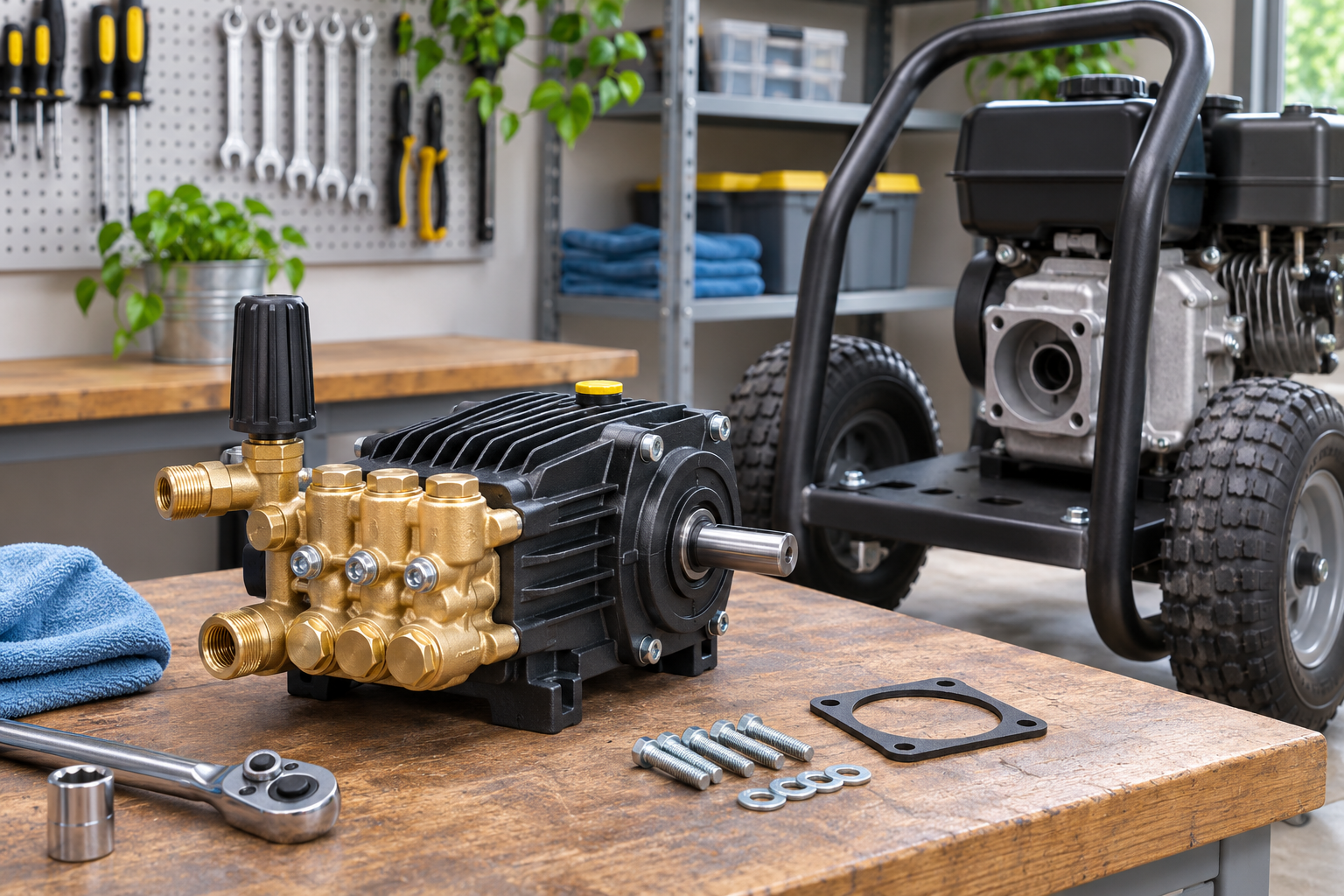
Amazon product examples to compare
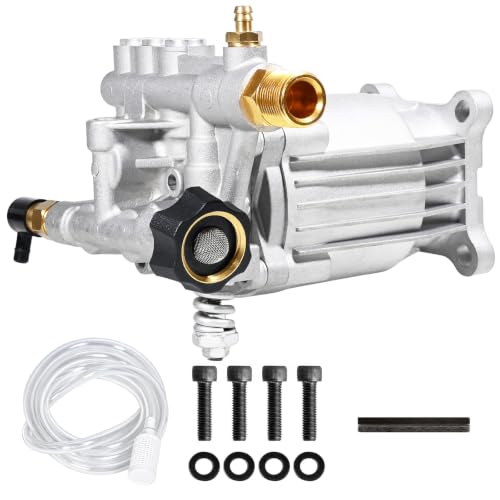
ASIN: B07KMY34ZZView on Amazon

ASIN: B0DJ6LBNZ2View on Amazon

ASIN: B0CR2MPWQ7View on Amazon
Certain content that appears on this site comes from Amazon. This content is provided “as is” and is subject to change or removal at any time. Product examples and images are supplied through Amazon Creators API; check the current listing for specifications and availability.
As an Amazon Associate, DailyHomeDecorating.com earns from qualifying purchases.
When a pressure washer loses pressure, pulses, leaks water into its own oil, or refuses to build pressure at all, the engine often gets the blame — but the pump is usually the part that has worn out. The pump pressurizes garden-hose water for the wand, and replacing it can return a sound machine to full service for a fraction of a new washer’s cost — while the wrong pump wastes the money completely.
That distinction shapes this entire guide. This is not an article about choosing a pressure washer. It is about choosing a replacement pump for a machine you already own, which means compatibility comes before performance: the new pump must bolt to your engine or motor, connect to its shaft, and deliver pressure and flow figures that the power source can actually drive.
This guide explains the two main replacement pump designs, how PSI and GPM must match your engine, how to verify shaft size, mounting pattern, and plumbing connections, and how to judge honestly whether a pump replacement is worth doing at all.
What to Look for First
Four checks decide whether a replacement pump belongs on your washer: the flow it must deliver, the head — here expressed as working pressure — it must generate, the power available to drive it, and the materials and construction that determine how long the new pump will last. A pump that fails any one of these checks is the wrong pump, however attractive its price or ratings look.
Flow Rate: GPM
Flow on a pressure washer is measured in gallons per minute, and it matters as much as pressure. Pressure loosens dirt; flow rinses it away and determines how wide a cleaning path you can work efficiently. For a replacement pump, the rule is matching, not maximizing. Your engine or electric motor was paired with a pump of a certain flow at a certain pressure, and that pairing reflects the power available.
Set your target from the original machine’s specifications, which are usually printed on the washer’s label or in its manual. If the original pump delivered a given GPM at a given PSI, a replacement in that same class keeps the machine balanced.
Head and Working Pressure: PSI
Where other pumps in this category are described by head height, a pressure washer pump is described by the pressure it generates, in pounds per square inch. Pressure and head are the same physical idea — how hard the pump pushes water — expressed for a job where the water is not being lifted to a height but squeezed through a small nozzle. For replacement purposes, treat PSI with the same discipline as GPM: match the original rating class.
Check the maximum pressure of your hose, gun, and surface attachments against any replacement you consider. Every component downstream of the pump must be rated for the pressure the pump can produce, and the pump’s unloader or relief arrangement must be compatible with safe operation, as discussed under key features below.
Power Source: Engine and Motor Matching
A pressure washer pump is a driven component. It has no power of its own; it converts your engine’s or motor’s output into pressurized water. That makes the power source a specification of the pump purchase. Gas engines are commonly described by horsepower or displacement, electric motors by amperage and whether the machine is corded residential equipment.
Shaft speed and rotation matter as well. Many residential gas washers use a direct-drive arrangement in which the pump mounts straight onto the engine shaft and spins at engine speed, while larger or commercial machines may use a belt, gearbox, or a pump built for a different input speed. A replacement pump must be designed for the drive arrangement and rotation direction your machine provides.
Materials and Build Quality
Inside a replacement pump, the parts that decide lifespan are the pistons or plungers, seals, valves, and the manifold they work in. Brass manifolds are a common sign of a pump built to be serviced and to resist corrosion better than lightweight alloy alternatives, which are common on entry-level original pumps. Ceramic plungers, where fitted, resist wear and heat better than simpler materials.
Consider your water and your habits too. Hard water scales valves and seals, grit in a private supply abrades everything, and winter storage with water left inside can crack a manifold in one freeze.
Types of Pressure Washer Pumps Explained
Replacement pumps fall into two main mechanical families, plus a set of variations in how they mount and are driven. Understanding the families explains most price differences — and most lifespan differences — in this market.
Axial Cam Pumps
An axial cam pump drives its pistons from an angled wobble plate attached directly to the engine shaft. As the shaft turns, the plate pushes each piston in turn, drawing water in and forcing it out under pressure.
Its limits follow from the same design. The pistons ride in a fixed angled arrangement with limited lubrication and cooling compared with larger designs, and many residential axial pumps are built as sealed units with modest serviceability. For typical homeowner duty — periodic driveway, siding, and vehicle work — a good axial replacement restores exactly the performance the machine was designed for.
Triplex Pumps
A triplex pump uses a crankshaft to drive three plungers in a straight line, in a layout derived from industrial pump design. The crankshaft runs in an oil bath, the plungers are usually ceramic, and seals, valves, and many wear parts are designed to be replaced.
The cautions are compatibility and cost. A triplex pump must still match your engine’s shaft, mounting pattern, power, and required input speed; many are built for belt drive or gear reduction rather than direct mounting at full engine speed, though direct-drive triplex replacements for common residential engine patterns do exist.
Mounting and Drive Variations
Beyond the internal design, pumps vary in how they meet the machine. Direct flange mounting onto the engine is most common for residential replacements. Horizontal-shaft and vertical-shaft engines need pumps built for their orientation — a very common source of ordering mistakes, because many popular residential washers use vertical-shaft engines borrowed from lawn equipment, and their pumps are not interchangeable with horizontal-shaft versions.
Key Features That Actually Matter
Shaft Size and Keyway
The pump must fit your engine’s output shaft exactly. Residential gas engines commonly use one of a small number of standard shaft diameters, but common is not universal, and a pump bored for a different shaft will either not slide on or will sit loose and destroy itself and the shaft. Measure the shaft diameter with calipers if you can, and check the shaft length available for the pump to engage, plus the keyway arrangement that transmits torque.
Bolt Pattern and Flange Fit
The pump’s mounting flange must match the engine’s bolt circle and pilot so the pump sits square and fully supported. A pump that hangs on a partial pattern or sits at an angle will vibrate, leak, and wear its drive connection.
Inlet, Outlet, and Accessory Connections
The water inlet must accept your garden hose supply arrangement, and the outlet must match your high-pressure hose — thread types in this market include several similar-looking standards that do not seal against each other. Confirm thread size and type on both ports, the location of the ports relative to the machine so hoses route without kinking, and the position of the chemical or detergent injection fitting if your machine uses downstream detergent application, since losing that fitting in a replacement changes how the washer can be used.
Unloader Valve and Pressure Adjustment
The unloader valve routes water in bypass when you release the spray trigger, protecting the pump from a dangerous pressure spike against a closed outlet. Some replacement pumps include an integrated unloader, some expect an external one, and some offer adjustable pressure. Confirm which arrangement your machine uses and that the replacement matches it.
Thermal Relief and Service Kits
A thermal relief valve vents water if bypass operation overheats the pump, and it is a worthwhile protective feature on any replacement. Also check, before purchase, whether seal kits, valve kits, and unloaders for that pump are readily available.
How to Choose by Use Case
The Engine Is Good and the Pump Is Dead
This is the classic case for replacement, and the decision is usually easy: a healthy engine, a sound frame, and good hoses and accessories, paired with a pump that leaks, pulses, or will not build pressure.
You Want the Machine to Last Longer This Time
If you use the washer frequently — a large property, regular vehicle and equipment washing, or light work for others — and the engine is a strong match, a serviceable triplex replacement that genuinely fits your drive arrangement can be a rational upgrade.
The Washer Is Old, Weak, or Damaged Beyond the Pump
Be honest about the whole machine. If the engine smokes, surges, or is hard to start, if the frame is bent, the hose is cracked, and the gun leaks, a new pump bolts new life onto a dying system and the total spend approaches a new washer while leaving you with old problems everywhere except the pump.
Electric Pressure Washers
For corded electric machines, replacement pumps exist for some models but fitment is less standardized, and the economics are tighter because whole electric washers are relatively inexpensive. Check availability against your exact model, confirm the motor interface, and compare the pump’s cost against a new machine with fresh accessories and warranty.
Safety: Electricity, Water, and High Pressure
Pressure washer repair combines three hazards at once, and the calm, unhurried approach is the whole of the safety program. Work only when you can give the job your full attention, on a dry, stable surface, with the machine completely shut down.
Disconnect All Power Before You Begin
For a gas machine, switch the engine off, remove the spark plug lead, and close the fuel valve before unbolting anything, so the engine cannot turn while your hands are on the pump or shaft. For an electric machine, unplug it from the outlet entirely — a wall switch is not enough — and keep the plug in sight while you work.
GFCI Protection for Electric Machines and Testing
Any electric pressure washer should be powered through a ground-fault circuit interrupter protected outlet or circuit — a GFCI outlet, a GFCI breaker, or the protection built into the machine’s plug where fitted — because this equipment deliberately mixes electricity and water. Test the GFCI regularly with its test button, never defeat or bypass it, and do not use an electric washer with a damaged cord or plug.
Respect the Pressure Itself
A pressure washer’s jet can cut skin and cause serious injection injuries that look deceptively minor at first. Never point the wand at people, animals, or yourself, never test a repair by placing a hand in front of a nozzle, and seek urgent medical attention for any high-pressure injection injury, telling the clinician what happened, because these injuries are routinely underestimated. Wear eye protection during testing — debris leaves a cleaned surface at speed — and secure all high-pressure fittings before the first start, because a hose that whips loose under pressure is a genuine hazard.
Installation Tips That Prevent Problems
Before ordering, assemble your machine’s facts in one place: engine shaft diameter and length, engine orientation, bolt pattern, original pump ratings for PSI and GPM, port thread types, and the unloader arrangement.
Remove the old pump methodically. Drain its oil if it is an oil-filled design, expect residual water, and keep mounting surfaces clean. Old pumps that have corroded onto a shaft can resist removal; work patiently with the methods the pump and engine makers describe rather than prying against castings or the crankshaft, which can turn a pump replacement into an engine replacement. Clean the shaft, check it for damage or a worn key, and trial-fit the new pump fully by hand before tightening anything.
Fit new seals or O-rings where the design calls for them, tighten mounting bolts evenly in a cross pattern to the specified feel or torque where published, and fill a new oil-filled pump to the correct level with the specified oil before its first start — some pumps ship with oil and some without, so check rather than assume. Before starting, run water through the pump with the machine off until it flows steadily, purging air, because a pump started dry is damaged from its first seconds.
Care and Maintenance
The habits that kill pressure washer pumps are remarkably consistent, and so are the habits that save them. Never let the pump run dry, and never leave the machine running with the trigger released for more than a brief period, because in bypass the same small volume of water circulates and heats until seals suffer. If you must pause, shut the machine down.
Change the pump oil on oil-filled designs at the intervals the manual sets, using the specified oil, and inspect the oil for a milky appearance, which indicates water has crossed a seal and the pump needs service before further use. Before freezing weather, drain the pump completely and use a pump-saver product made for this purpose, or store the machine where it cannot freeze; one freeze-cracked manifold is the most common reason a replacement pump is needed at all.
Common Mistakes to Avoid
The most common mistake is ordering by appearance or by PSI alone — a pump that looks right, or that promises more pressure, but has the wrong shaft bore, the wrong bolt pattern, or a rating class the engine cannot drive. The second is confusing vertical-shaft and horizontal-shaft fitments, which are not interchangeable.
Installation mistakes follow close behind: forcing a pump onto a shaft with its bolts, starting a new pump dry, forgetting to check whether it shipped with oil, reusing damaged O-rings, and cross-threading the similar-looking but incompatible hose fittings found across this market.
Frequently Asked Questions
How do I know if my pressure washer pump is bad?
Typical signs are pressure that has faded or pulses, water leaking from the pump body or into the pump oil, oil that looks milky, and a pump that will not build pressure despite a good water supply, a clean inlet screen, and a nozzle known to be correct. Rule out the simple causes first — supply hose, inlet filter, nozzle, and unloader — because several of them imitate pump failure cheaply.
Can I put a higher-pressure pump on my pressure washer?
Only within what your engine can drive and your accessories can withstand, which in practice means staying in the original rating class. Pressure multiplied by flow is workload, and the engine’s power caps it.
Are axial cam and triplex pumps interchangeable?
Not directly. They differ in size, drive arrangement, input speed requirements, and mounting. A triplex replacement works only where its shaft fit, flange pattern, rotation, speed, and power requirements all match your machine. Where they do match, a triplex offers longer, serviceable life; where they do not, a quality axial pump of the correct fitment is the right replacement.
What shaft size does my engine have?
Measure it. Use calipers on the exposed engine shaft, record the diameter and usable length, and check the keyway, or find the figures in the engine manual. Guessing from the washer’s brand or appearance is the leading cause of returns and damaged shafts in this repair. Compare your measurements against the replacement pump’s stated shaft requirement before ordering.
Is it worth replacing a pressure washer pump?
It is worth it when the engine or motor is healthy, the frame and accessories are sound, and a correctly fitting pump costs a clear fraction of a comparable new machine. It is not worth it when the power source is failing, several accessories also need replacement, or no pump can be found that matches your machine’s shaft, mounting, and ratings without adaptation.
Why did my pump fail so quickly?
The usual causes are running dry or in bypass long enough to overheat, freezing water left inside over winter, a clogged inlet screen starving the pump, and gritty or hard water wearing seals and valves. A replacement pump fitted without changing the habit that killed the first one will usually follow it, so pair the repair with the maintenance steps above.
Replacement Pump to Compare
- Cat Pumps 5CP4116CSS: A triplex pump rated at 3.8 gallons per minute and up to 4,000 psi at 1,750 rpm. Confirm shaft, mounting, rotation, RPM, unloader, and engine or motor compatibility; this rating does not promise a drop-in fit. Amazon exact-model search · Manufacturer specs.
Match the washer’s full configuration, not PSI alone.
Conclusion
The best pressure washer pumps are not the ones with the biggest numbers; they are the ones that fit your machine exactly and match its original balance of pressure, flow, and power. Verify the shaft, the bolt pattern, the engine orientation, and the port threads from your own washer, choose between a like-for-like axial replacement and a genuinely compatible, serviceable triplex upgrade with your usage in mind, and be honest about whether the rest of the machine deserves a new pump at all.