Disclosure: As an Amazon Associate, dailyhomedecorating.com earns from qualifying purchases. Links on this page are affiliate links; they cost you nothing extra. Prices and availability change often, so check the current Amazon listing before you buy.
Short answer first, because the question is a ceiling fan with light worth it deserves one: worth it if the room is used daily, the ceiling can mount a fan safely, and the household will use both halves — the breeze in summer, the reverse in winter, the light every evening of the year. Not worth it if the ceiling is too low for safe blades, the room is a monthly formality, or the real problem is a house that overheats, which no fan can fix. Between those poles sits most of the housing stock, and for most of it the answer is a genuine yes — not because the appliance is miraculous, but because it is one of the rare home purchases whose value arrives daily, in small amounts, for a decade, at a running cost too small to notice. This article makes that case properly: what you actually get, what it actually costs beyond money, who it pays off for, who should skip it, and the checklist that settles the question for your ceiling specifically.
Key Takeaways
- The value is compound and daily: air movement, even temperatures in both seasons, and the room’s main light, from one installation.
- The running cost is among the lowest of any comfort appliance; the real costs are the installation effort and the ceiling’s suitability.
- Worth is decided by the room more than the product: daily-use rooms repay the purchase quickly, rarely used rooms may never.
- The purchase fails in predictable places — low ceilings, wrong size, an unchosen light, a skipped fan-rated box — all avoidable in advance.
- For most lived-in rooms with workable ceilings, the verdict of long-term owners is consistent: yes, and they would do it again in the next room.
In this guide
Is a Ceiling Fan with Light Worth It: What You Actually Get
Strip the marketing away and the purchase delivers four concrete things. The first is comfort on demand: moving air that makes a warm room feel several degrees kinder, available at a switch, in the room’s every corner, without chilling the whole house or waiting for anything to cycle. Owners underestimate this before purchase because it sounds modest; they re-rate it after the first heatwave, when the living room stays usable through the evening and the bedroom stays sleepable through the night. The second delivery is evenness. Rooms are layered — warm at the ceiling, cool at the floor, hot at the sunny wall, cold at the far corner — and a ceiling fan is the one appliance positioned to stir those layers into a single, uniform climate. Evenness is why the fan makes air conditioning feel more effective than it is and heating feel more complete than it was: it distributes what the house already produces.
The third delivery is the light, and it is the one the value case most often forgets to count. The fan occupies the ceiling’s centre and becomes the room’s main light — used every day, in every season, at every hour the room is occupied after dark. If the light is chosen well, the purchase includes a lighting upgrade that households routinely pay separately to achieve: brighter, warmer or cooler as the room wants, dimmable into the evening. The fourth delivery is time-proofing: a mature appliance from an established maker, with parts available and no subscription, no consumable, no app dependency standing between the household and its function. In a decade when home technology increasingly rents itself back to its owners, a purchase that simply works, owned outright, for years, is a form of value that deserves its line in the ledger. Set against these four, the alternatives in the later section will have their say — but this is the honest inventory of what the money buys, and it is not a small one. The detailed criteria for realising all four are in ceiling fan with light buying guide.
The Real Costs Beyond Money
The purchase price is the least interesting cost, and this article will not pretend a number for it — the market’s tiers move too quickly, and the figure that matters is the one on the configuration you choose, checked at the moment you buy. The real costs are these. First, the installation: a fan is wired in and overhead, needing a fan-rated braced box, a breaker-off-and-verified safety routine, and either a careful home installer or an electrician’s visit — an effort and scheduling cost that plug-in appliances never ask. Second, the ceiling’s candidacy: the purchase may require box work, a slope adapter, a longer downrod, or the discovery that this room, honestly measured, cannot take a fan at all. Third, the decision cost: a fan-light is two products in one, and choosing both halves well — span and mount for the fan, brightness and colour and dimming for the light — asks an evening of real attention that a lamp never does. Fourth, the maintenance tithe: dust at height, a bulb now and then, a seasonal direction flip, small but perpetual. Fifth, the commitment itself: a wired-in, decade-long ceiling resident whose finish and style the household will live with through several redecorations. None of these costs is hidden, and together they explain the shape of the verdict: the purchase rewards households that pay them once, deliberately, and punishes — mildly, chronically — the households that discover them later. The full safety and procedure account is in how to install ceiling fan with light.
Who It Pays Off For
The Daily Bedroom
The strongest case in the category. A bedroom used every night repays the installation with sleep: moving air through warm nights, a light that dims to the evening’s end, winter evenness when the heating runs. The fan’s value here is not measured in the room’s comfort but in the occupants’ rest, compounded nightly across years. If any room in the house justifies the purchase on its own, it is this one — provided the ceiling passes and the fan is chosen for quiet, as the bedroom sections of this cluster keep insisting.
The Lived-In Living Room
The second-strongest case. The living room concentrates a household’s waking hours, hosts its guests, and suffers its worst temperature patches — the sunny corner, the far sofa, the evening stuffiness when everyone is home. A correctly sized fan-light addresses all of it from the ceiling’s centre while upgrading the room’s main light in the same act. The installation amortises across more occupied hours than any other room can offer, which is the arithmetic underneath the verdict: value is benefit multiplied by use, and this room maximises use.
The Home Worker and the Warm-Climate Household
Two further profiles share the podium. The home worker spends the day in one room, where afternoon stillness taxes concentration and full-house cooling for one occupant is an extravagance a fan makes unnecessary. The warm-climate household lives the fan’s season at full length — months in which the breeze is not a luxury but the house’s operating condition — and adds the shoulder-season evenings where the fan replaces cooling entirely. For both, the running-cost asymmetry at the heart of the category compounds fastest, and the purchase crosses from worth it to obviously worth it.
The Light-Starved Room
One more profile earns its place, and it is the one buyers least expect: the room whose existing light is its worst feature. Many homes have one — the living room lit by a single feeble dome, the bedroom where dressing happens in a gloom the mirror forgives and the wardrobe does not. For this room, the fan-light’s second half is not a bonus but the headline: the purchase replaces the room’s main light with a brighter, dimmable, deliberately chosen one, and adds the entire fan — breeze, evenness, winter reverse — as the accompanying benefit. Judged as a lighting upgrade alone, the purchase often justifies itself; judged whole, it is the closest thing the category has to two renovations for one installation, and households with such a room should move it to the front of the queue, ahead of rooms where only the air needs help.
Who Should Skip It
The Too-Low Ceiling
The clearest skip. If honest measurement cannot put the blades safely above the room’s occupants — conventionally at least seven feet — even with a flush mount, the purchase should not happen, and no discount or design should argue otherwise. This household’s money belongs in a fine light fixture and a different air strategy, and the category will be there, unjudged, if a taller room ever joins the house.
The Rarely Used Room
The guest room occupied a dozen nights a year, the formal room entered at holidays: here the installation’s effort and the appliance’s decade of presence are spent on a room that cannot return them. A good lamp, a portable fan for the guests’ week, and the money kept for a daily room make the better household decision. Worth is use multiplied by benefit, and near-zero use defeats any benefit.
The House Whose Problem Is Heat, Not Stillness
The most important skip, because it is a misdiagnosis rather than a judgement on the product. A fan cools people, not houses. If the home overheats — failed cooling, absent insulation, a sun-trap upper floor — the fan will be bought as a cure, will perform exactly as physics allows, and will be blamed for the shortfall. This household should spend first on the actual problem; the fan, bought afterwards as the complement it is, will then be rated the success it deserves to be. The balanced ledger behind all three skips is in ceiling fan with light pros and cons.
The Strengths and Trade-Offs of Owning One
- Strength — Daily compounding: the benefit arrives in small amounts every day, in every season, for years — the most reliable shape value takes.
- Strength — Frugal running: the appliance sips compared with cooling the air itself, and its light, LED-based or bulb-based, is similarly modest.
- Strength — Two upgrades in one installation: air movement and the room’s main light, from a single ceiling position and a single project.
- Trade-off — Installation is a project: breaker discipline, a fan-rated box, a ladder and an hour or an electrician — real effort before the first breeze.
- Trade-off — Coupled fate: the fan and the main light are one product; a compromise or failure in either half visits the other.
- Trade-off — The ceiling decides: height, slope and structure gate the purchase absolutely, and some rooms are honestly excluded.
Alternatives to Consider
Worth is always relative, so the alternatives deserve their hearing. A dedicated ceiling light plus portable fans is the flexible rival: the light chosen purely as light, the air provided by units that move room to room. It wins for renters, for the too-low ceiling, and for households whose needs migrate seasonally — and loses on tidiness, floor space, wiring elegance and the quiet permanence of the ceiling solution. A statement fixture alone — the chandelier path — wins where a formal room’s design leads and its climate is otherwise handled; it provides no air at all, and its buyers should be sure air is genuinely not wanted. Cooling upgrades — better air conditioning, a mini-split — solve the different problem of hot air itself, at a different order of cost and disruption; they are the right answer to the misdiagnosed house, and they pair with fans rather than replacing them. And doing nothing remains a legitimate alternative wherever the room is rarely used or the budget is honestly committed elsewhere: the existing fixture keeps its job, and the question can be revisited when the room’s use changes. If, having heard them, the fan still calls — as it does for most daily rooms — the patterns below are the shapes the purchase takes, each a real model described in prose; check price on Amazon for the configuration you need.

Hunter Kenbridge — the Decade Answer
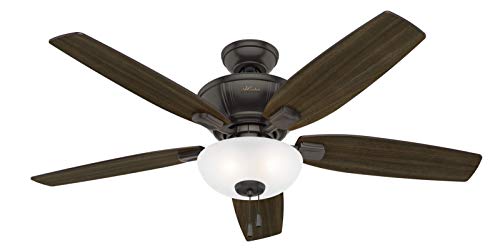
The classic full-size downrod pattern from a heritage maker, with bulb freedom and a reversible motor: the purchase for the living room or large bedroom you intend to keep, where serviceability across years is the value argument itself. Best for: standard-to-tall ceilings, long ownership. Check price on Amazon.

Harbor Breeze Mazon — the Low-Ceiling Answer
The compact flush mount with integrated dimmable light and remote: the purchase that makes the worth-it answer yes in the rooms the classic cannot enter. Best for: eight-foot ceilings, small-to-medium rooms. Check price on Amazon.
Prominence Home Robyn — the Budget Answer
The full-size entry pattern with the modern feature set: the purchase that keeps the verdict yes when the budget is the binding constraint, by protecting size and surrendering finish. Best for: full-size rooms on a budget. Check price on Amazon.
Honeywell Carmel — the Bedroom Answer
The mid-size bowl-light specialist: the purchase for the room where the value case is strongest, tuned for quiet nights and soft light. Best for: bedrooms and guest rooms. Check price on Amazon.
How to Get the Most Value If You Buy
The difference between a fan that was worth it and one that merely was is mostly behaviour after the purchase, and it condenses to six habits. Size and mount it correctly in the first place — value cannot be recovered from a fan mismatched to its room, so the choosing steps in how to choose a ceiling fan with light are the first value habit, not a preliminary. Use the reverse: the winter direction is half the appliance’s working year, sitting unused in households that never flip it. Use the fan to relax the thermostat rather than alongside a frozen one — the breeze exists so the cooling can ease, and the households that bank that difference are the ones whose worth-it arithmetic sings. Choose and fit the light deliberately, bulbs included, because the light is the half you will use daily. Maintain the small rhythm — dust, listen, flip with the seasons — that keeps a good fan good. And put the fan in the room where life happens, even if that means moving the project from the room you planned to the room you inhabit: value follows use with a fidelity that no specification can match.
Three further habits separate the households that rave from the households that shrug, and they are all about attention rather than money. Run the fan at the speed the moment wants rather than the speed it was left at — the control is within reach for a reason, and a fan treated as a two-state object, on or off, delivers a fraction of the comfort of one adjusted through its range as evenings warm and cool. Keep the light’s promise current: when a bulb fails, replace it with the chosen specification rather than the drawer’s survivor, because a main light degrades one expedient bulb at a time into a light nobody chose. And revisit the room once, a season in, with the checklist in hand — not to audit the purchase but to finish it: the speed that became the default, the dimming floor at the real hour of use, the direction flip when the heating started. Purchases of this kind are not finished at the till or even at the ladder; they are finished when the household’s habits have grown around the appliance, and the households that tend that last stage are the ones whose answer, a year later, needs no qualification.
The Arithmetic of a Decade, Done in Words
Most worth-it questions are really arithmetic questions wearing a disguise, and this one can be done honestly without inventing a single figure. On the cost side of the decade: the purchase, once; the installation, once — an afternoon of careful work or an electrician’s visit; a tithe of maintenance measured in minutes per season; bulbs, in the bulb-based designs, as the years occasionally ask; and a running cost so small that a decade of evenings barely registers beside the appliances it relieves. On the benefit side: every warm evening made pleasant rather than endured, multiplied by the summers of a decade; every winter morning’s even warmth; every night of better sleep in the rooms that have the fan; and the main light of the room, upgraded once and used thousands of times. The asymmetry is the argument. The costs are front-loaded, finite and known; the benefits are small, daily and compounding. Purchases with that shape — pay once, deliberately, and collect quietly forever — are the ones households retrospectively call obvious. Purchases with the opposite shape are the ones that fill garages. A ceiling fan with a light, correctly fitted to a daily room, belongs so firmly to the first family that the interesting question is rarely whether it is worth it, but why the room waited so long. The exceptions remain the exceptions this article has named — the ceiling, the rare room, the misdiagnosed house — and they are exceptions of fit, not of the appliance’s arithmetic.
Worth It, Room by Room: The Full Tour
The profiles above named the strongest and weakest cases; the full tour completes the map, because most readers’ rooms live between the poles. The kitchen: worth it, with a caveat — cooking heat is real and local, the fan’s air is a working benefit, and a bright light is a task asset; the caveat is grease, which makes the maintenance tithe quarterly, and the sensible placement of the fan so it assists rather than fights the room’s extraction. The home office: worth it for anyone who works there daily, on the strength of afternoons — the still, warm hours when concentration thins — and marginal for the occasional desk. The child’s room and nursery: worth it where the ceiling and the furniture arithmetic pass, because sleep is the currency and the fan deals in it, with the flush-mount and quiet disciplines applied strictly. The dining room: the honest borderline — worth it where the room dines daily and its ceiling wants a working centrepiece, not worth it where the room is a formal stage set for occasions, better crowned by a fixture that only has to be beautiful. The hallway and landing: rarely worth it, because nobody lives there — the exception being the landing that serves as the house’s warm-air sump in summer, where a fan can move air between floors’ worth of rooms. The covered porch: worth it in its own damp-rated branch, where the fan converts unusable hot evenings into the house’s best seat, and judged by porch rules rather than indoor ones. The tour’s pattern is the article’s thesis wearing different clothes: wherever life is daily, the fan earns; wherever life is occasional or ceremonial, it waits.
Worth It at Each Tier
The verdict also shifts — subtly, not fundamentally — across the market’s tiers, and buyers deserve the honest version of each. At the entry tier, the worth case rests on the category’s core arithmetic surviving intact: a full-size fan, a reversible motor where fitted, a dimmable light and a remote deliver the daily benefit at the most accessible commitment, and for first homes and secondary rooms the case is genuinely strong. What the tier asks in return is tolerance: for thinner finishes, for a motor less composed at its extremes, for a support ecosystem that may not outlast the decade. At the mid tier — where this cluster’s reference patterns sit — the worth case reaches its maximum, because the tier buys the things that protect the decade: quiet, balanced running, honest materials, parts that remain obtainable, and lights judged rather than merely included. Most households that run the checklist and land on yes should land here. At the premium tier, the worth case becomes partly aesthetic, and it should be owned as such: the additional money buys design and refinement that a composed room will repay in daily looking-pleasure, and a functional room will not repay at all. None of the tiers changes the checklist’s answers; they change what the yes costs and how it feels to live under. The error the tiers invite is spending upward to compensate for a fit problem — no tier’s fan, however refined, is worth it in a room it is the wrong size for — and the discipline the tiers reward is the opposite: fit first, at the tier the room and the budget agree on.
The Opportunity Cost Question, Answered Fairly
Every worth-it judgement is secretly a comparison, so let the comparison be explicit: what else could the same money and the same weekend do for this room? It could buy a finer light fixture — and if the room’s air is already kind and its evenings are its problem, that may be the better purchase, honestly made. It could go toward cooling — toward servicing, sealing or upgrading the system that handles the house’s real heat — and in the misdiagnosed house it should. It could furnish: a chair in the room’s cold corner will not move the air that makes the corner cold. It could simply wait, banked against the season when the room’s use changes — a legitimate answer for the household mid-renovation or mid-move, for whom this year’s ceiling is not next year’s. The fan wins its comparisons in the specific, common case this article keeps circling: a daily room, a workable ceiling, still and layered air, an ordinary light. There, no rival purchase delivers comfort as broadly, as daily, or as durably for the same commitment, because no rival occupies the ceiling’s centre doing two jobs at once. Naming the comparison fairly is what separates a verdict from an advertisement — and the verdict survives it, for the rooms it claims, with room to spare.
What Owners Report a Year Later
The worth-it question is best answered by the only jury with standing: owners, a year in, when novelty has burned off and the appliance has become furniture. Their reports, across the category’s long record, converge with unusual consistency. The satisfied majority — owners of correctly sized, correctly mounted fans in daily rooms — report the purchase in the past tense of settled things: the room is simply comfortable now, the fan unremarked, the light assumed. The specific pleasures they name are the ones this article inventoried: the first heatwave survived gracefully, the winter mornings, the evening light. The dissatisfied minority’s reports decode, with equal consistency, to the named failures: the fan too small for its room, working heroically and audibly at speeds it should never have needed; the light nobody chose, wrong in colour or dimming, resented nightly; the wobble that commissioning would have caught; the low ceiling negotiated with rather than obeyed. Almost no owner, in either camp, reports the category itself as the mistake — the dissatisfied bought the wrong fan for the room, or installed the right one carelessly, and say so with the precision of people who have had a year to think about it. A buyer reading this article before purchase is in the enviable position of the second group with the first group’s hindsight available free: the failures are all named, all dated, and all avoidable by the choosing and installing discipline this cluster exists to teach.
The Environmental Footnote, Which Is Not a Footnote
One strand of the worth case deserves its own space because households increasingly weigh it deliberately: the fan is among the most environmentally modest comfort decisions available. Its running draw is a small fraction of the cooling it displaces or assists, its light — LED at the factory or by the owner’s bulb choice — is similarly frugal, and the appliance itself is a long-lived, repairable, largely metal object from a mature industry, with no consumables, no refrigerant and no planned obsolescence engineered into its function. A fan that lets a household run its cooling less, heat more evenly, and light a room for a decade from one fixture is not a gesture; compounded across the housing stock it is one of the quieter levers on domestic energy. None of this requires exaggeration, and this article will not claim the fan saves the planet. It claims the smaller, checkable thing: among the ways to make a room comfortable, this is one of the lightest on the meter and the grid, and for households that count such things, that lightness belongs in the worth-it ledger alongside the comfort — another small, daily, compounding entry on the benefit side, arriving every evening the fan turns instead of the compressor.
The Honest Counterargument, Steelmanned
A worth-it article that cannot state the case against itself has not finished thinking, so here is that case at full strength. The ceiling fan with light, the counterargument runs, is a compromise fossilised at the centre of the ceiling: a fan less free than a dedicated fan could be, a light less beautiful than a dedicated fixture would be, yoked together so that upgrading either means replacing both. It asks a project — wiring, bracing, ladders — for benefits that modern alternatives deliver without one: cooling that actually cools, portable air that follows the occupant, lighting designed as lighting. Its winter party trick warms the ankles of people whose heating was adequate anyway. And its celebrated cheapness to run is the cheapness of a device that, strictly, does very little: it stirs air and holds bulbs, and charges a decade of ceiling presence for the service. That is the case, and in the rooms this article has excluded — the low, the rare, the overheated, the formal — it is simply correct. Where it fails is in the common room it refuses to visit: the bedroom at midnight in August, where stirring air is precisely the service sleep requires; the living room across a decade of evenings, where the yoked light was in fact chosen and the compromise never once announced itself; the household accounts, where doing very little, very cheaply, every day, for years, turned out to be the whole of the value. A compromise is only a flaw when the uncompromised alternatives were actually available for the same position, the same project and the same money — and at the centre of a real ceiling, they were not.
Two More Angles: Renting, Selling and the House’s Story
Two situations refine the verdict in ways the main argument only touches. The renter’s case is governed by permission and portability: a fan is wired in and stays, so the renter who cannot take it when they leave is buying the landlord a fixture — occasionally worth it for a long tenancy in a hot flat, with the landlord’s written blessing and perhaps contribution, and usually not worth it otherwise; the portable alternatives exist precisely for this household, and there is no shame in their column of the table. The seller’s case runs the other way: a well-chosen fan-light in a main room is among the fixtures buyers notice and approve — it signals a house whose comfort has been thought about — though no honest article will promise it moves a valuation; its selling value is in the impression of care, which is real but unquantifiable, and it should be a footnote to the decision rather than its engine. Behind both angles sits the longest view of all: a house accumulates its comforts one deliberate fixture at a time, and the rooms a household has genuinely solved — lit well, aired well, quiet at night — are the rooms it remembers. A fan-light, in the right room, is one of the smallest purchases that earns a place in that story, and the owners who describe it that way, years later, are not being sentimental about an appliance. They are reporting that the arithmetic of daily benefit, compounded, eventually stops feeling like arithmetic.
A Final Word on Timing
When the purchase is worth it, when it happens still matters more than buyers expect. The fan bought in a calm season — chosen with the tape measure rather than the heatwave, installed on a free weekend or by an electrician whose diary is not besieged — is measurably the same appliance and experientially a different one: sized without panic, mounted without haste, commissioned without an audience of overheated occupants. The fan bought in the first brutal week of summer is installed under every pressure that produces the named failures, and its owners spend the season auditing it rather than enjoying it. If this article has persuaded you that your room is a yes, let its last counsel be about the calendar: buy in the shoulder, install in the calm, and meet the heatwave as the household that prepared for it. The checklist below will keep for a season. The ceiling will keep for longer. And the verdict, when the warm evenings arrive and the room simply feels right, will deliver itself — which is, in the end, the only worth-it answer that was ever going to convince anyone.
The Decision Checklist
Answer honestly, in order. Is the room used daily, or near it? Can the blades sit safely at least seven feet above the floor, with the right mount for the ceiling’s height and slope? Is there a ceiling electrical position, with a fan-rated box in place or a plan to fit one? Is the room’s problem still, layered air — rather than a house that overheats? Will the household use the light as its main light, and the reverse mode in winter? Is the installation path settled — a careful like-for-like replacement, or an electrician booked? Six yeses make the purchase as close to certainly worth it as home decisions get. A no on the ceiling or the heat question stops the purchase outright, whatever the other answers. A no on daily use demotes it below the rooms that would answer yes. The checklist’s purpose is not to sell the fan but to locate your room on the map this article has drawn — and most lived-in rooms, it turns out, are standing in the yes.
One last refinement for the household that answered yes with a single hesitation: name the hesitation, because it is usually the purchase’s real specification in disguise. Hesitating over noise means the bedroom discipline — quiet pattern, careful balance — is your deciding criterion, and it should outrank finish in the shortlist. Hesitating over the light means the bulb-versus-sealed decision is your purchase, and it deserves the evening of research the fan itself might not. Hesitating over the installation means the electrician’s visit belongs in the budget from the start, converting the project’s one genuine burden into a booked appointment. Hesitating over money, honestly examined, usually resolves to tier rather than to no — the entry pattern at full size protects the verdict better than a postponed mid-tier purchase that leaves the room unserved for another summer. A hesitation named is a criterion; a hesitation unnamed is a year of low-grade doubt purchased alongside the fan. The checklist finds the yes; the hesitation, listened to, finds the right fan inside it.
The Earn-Its-Place Test: When a Ceiling Fan with Light Repays the Space It Takes
Worth-it questions about a ceiling fan with light are really questions about frequency, so start by honestly counting how often the job it does actually arises in your household in a normal month, not in the motivated week when you decided to shop for one. Multiply that frequency by the friction it removes each time — minutes saved, mess avoided, a workaround retired, a room made usable for longer each day — and the value of a ceiling fan with light stops being a feeling and becomes a rough but usable number. When something about the ceiling fan with light disappoints, change one variable at a time — position, setting, timing, load, accessory or technique — and give the change a fair trial, because changing three things at once leaves you with a better or worse result and no idea why. Think about who else will use the ceiling fan with light and what they will do differently: shorter reach, less patience, stronger habits, no interest in the manual, and a tendency to leave things wherever they were last set down.
Decide in advance what good enough looks like for the job the ceiling fan with light does in your home, because chasing a flawless result usually costs more time than the flaw itself, and most households are happier with a reliable ninety percent they actually repeat. Read the manual’s warnings page for the ceiling fan with light even if you read nothing else, because that page is a compressed list of every way the product has ever been misused, and it tells you exactly which of your own habits needs adjusting. Borrowed enthusiasm is the trap here: a ceiling fan with light can be excellent and still not be worth it for you, if your neighbours, your feed or your guests use theirs weekly while your own routine would reach for it a handful of times a year. Plan the storage home for the ceiling fan with light before it arrives, naming the exact cupboard, corner, shelf, hook or stretch of floor, because a product without a home migrates around the house and slowly becomes the clutter it was bought to reduce.
If you want a concrete listing check, take a name already shortlisted in this guide, such as Hunter Kenbridge, Harbor Breeze Mazon and Prominence Home Robyn, and verify that exact ceiling fan with light listing against the measurements and compatibility questions above, field by field, rather than trusting the headline description alone. Finally, remember that the best ceiling fan with light for your home is the one whose size, habits and upkeep disappear into your routine, leaving only the result behind — a cleaner surface, a better-lit seat, a tidier shelf, an easier job — week after ordinary week. Test the ceiling fan with light in the first week under deliberately ordinary conditions rather than saving it for a special occasion, so that any problem surfaces while returning, exchanging or adjusting your setup is still simple. Measure before anything else, and measure the ceiling fan with light in its working state rather than its packed or folded state, because handles extend, lids open, cords trail, doors swing and users stand somewhere, and all of that belongs in the measurement.
Look at replacement parts and consumables for the ceiling fan with light while you are still comparing, confirming that the pieces most likely to wear, clog, tear, fade or get lost can actually be obtained without replacing the whole product. Photograph your setup once the ceiling fan with light is working well — the position, settings, arrangement or layout you settled on — so that after a move, a deep clean or a seasonal break you can recreate the arrangement that worked instead of rediscovering it. A ceiling fan with light earns its place fastest in households where the job is frequent and the current workaround is genuinely annoying, and slowest where the job is seasonal, occasional, or already handled well by something you own. Check the floor, wall, ground or surface the ceiling fan with light will meet, since level, texture, moisture and finish decide more about everyday performance in home decor & lighting settings than most shoppers expect when they are comparing listings on a screen.
Keep a short note of what you adjusted on the ceiling fan with light during the first month, even just a line on your phone, since those notes turn vague impressions into a setup you can repeat, share or troubleshoot months later. Watch for edge cases in your own home: the pet that investigates everything, the child who treats every new object as furniture, the guest who uses force where you use familiarity, and the weather, light or season that changes how a ceiling fan with light behaves. Seasonal thinking helps more than expected: a ceiling fan with light bought in one season will meet different light, humidity, mud, heat, guests and routines in another, so judge its size, storage and upkeep against the hardest season it will face. Consider the cleaning rhythm honestly: a ceiling fan with light that needs attention after every use suits a household that enjoys small rituals, and frustrates a household that wants to finish a job and walk away, so match the upkeep to the temperament, not the intention.
Then subtract the standing costs honestly: the floor, shelf, cupboard or counter space a ceiling fan with light occupies every day, the cleaning and upkeep it asks for, and the small accessories or consumables its ownership quietly requires. Keep the packaging of a larger ceiling fan with light until those first ordinary tests are done, flattened if space is tight, because re-boxing an awkward shape from scratch is the hidden difficulty inside many otherwise straightforward returns. The deciding experiment is to live one ordinary week noticing every moment the ceiling fan with light would have been used, marking each one down, because a week of real tally marks settles the worth-it question better than another evening of comparison shopping.
Frequently Asked Questions
Is a ceiling fan with light worth it in a bedroom?
It is the category’s strongest case. A bedroom is used nightly, its comfort is sleep itself, and the fan serves it in every season — breeze on warm nights, even warmth in winter, a dimmable main light at both ends of the day. Provided the ceiling allows safe mounting and the fan is chosen for quiet low-speed manners and a light that goes genuinely low, the bedroom repays the installation faster and more completely than any other room in the house. Households that install one fan only, in one room only, and choose this room, have understood the article.
Does a ceiling fan with light actually lower energy bills?
It can, through the thermostat rather than by itself. Moving air makes occupants feel cooler, so the cooling can be set a little warmer without anyone feeling the difference — and cooling set warmer is where the saving lives, since the fan itself costs very little to run. In winter, reverse operation makes heated air feel more even. A fan spinning in an empty room at an unchanged thermostat saves nothing; the value is behavioural, and households that use it bank it.
How long does a ceiling fan with light take to pay for itself?
There is no honest universal figure, because the return is mostly comfort rather than cash, and comfort’s exchange rate is personal. In running-cost terms the appliance is frugal enough that heavy users in warm climates feel the benefit within the first season; in comfort terms, most owners report the purchase feeling justified within the first hot spell and the first winter. Rooms used daily justify it quickly; rooms used rarely may never — which is the article’s whole argument in one answer. Treat any source that quotes you a precise payback period with suspicion: it has invented at least one of its numbers, and the invention is doing the persuading.
Is it worth replacing a working ceiling light with a fan light?
If the room is lived in and the ceiling qualifies, usually yes: the replacement upgrades the light itself in most cases while adding air movement and winter evenness from the same position. The honest costs are the box check — a light’s box is often not fan-rated, so the swap may include box work — and the installation effort. If the existing light is a beloved fixture or the room is rarely used, the working light deserves to keep its job. One further consideration tips many households: the swap is the single moment when the room’s lighting is easiest to rethink, and a household that has quietly disliked its main light for years is not really deciding whether to buy a fan — it is deciding whether to keep postponing a light it already wants, with a fan attached as the reward for stopping.
Are expensive ceiling fans with lights worth more than budget ones?
They are worth different things. Premium tiers buy design, finish quality and motor refinement; mid tiers buy the category’s full function with strong support; entry tiers buy the core function honestly at the cost of refinement. None buys a different verdict: a correctly sized budget fan in a daily room is worth more, in lived value, than a premium fan in the wrong room. Spend first on fit — size, mount, light — and on tier second.
When is a ceiling fan with light definitely not worth it?
In three situations: a ceiling that cannot give the blades safe clearance even with a flush mount; a room used so rarely that the installation can never repay itself in comfort; and a house whose real problem is overheating, where the money belongs to cooling or insulation first. A fourth, softer case is the renter without permission to alter the fixture. Outside those, the category’s track record is that correctly chosen fans earn their place. The definiteness matters: these are not matters of taste or tier but of physics, use and diagnosis, and a household that recognises itself in one of them has saved a purchase, not missed one.
Related Guides
Continue within this cluster: the purchasing framework in ceiling fan with light buying guide, the collected pattern verdicts in ceiling fan with light reviews, and the deep single-design assessment in ceiling fan with light review. For live roundups on this site, see best ceiling fans with lights, the modern-home shortlist at best ceiling fan with light for modern homes, and the small-room picks at best ceiling fan with light for small rooms.


