Disclosure: As an Amazon Associate, Reviews Took earns from qualifying purchases. Links to Amazon on this page are affiliate links; they cost you nothing extra.
Use a qualified electrician if unsure.
This guide is built from Amazon product listings and maker specs, not our own testing, so confirm size, contents and current price on each product page. Health products are for general information and are not medical advice.
Check the current price on Amazon before you buy.
Last updated: November 2, 2026.
In this guide
Quick Picks
| Product | Type | Best for |
|---|---|---|
| Roomratv 52 Inch White Ceiling Fans with Lights and Remote Large | Ceiling fan | whole-room airflow |
| 42” Black Low Profile Ceiling Fans with Lights and Remote Control | Ceiling fan | whole-room airflow |
| Depuley Modern Ceiling Fan with Light 42-Inch Black Small Fans | Ceiling fan | whole-room airflow |
| ZMISHIBO 52 Inch Ceiling Fans with Lights Remote&App Control | Ceiling fan | whole-room airflow |
| TCL 52″ White Low Profile Ceiling Fan with Light & Remote | Ceiling fan | whole-room airflow |
| JSAITEE 60Inch Ceiling Fan with Lights Large Low Profile Flush | Ceiling fan | whole-room airflow |
| Sofucor 48 Inch Smart Wood Ceiling Fans with Lights Flush/Downrod | Ceiling fan | whole-room airflow |
| WINGBO 54 Inch Flush Mount DC Ceiling Fan with Lights and Remote | Ceiling fan | whole-room airflow |
Our Picks

1. Roomratv 52 Inch White Ceiling Fans with Lights and Remote Large
A Roomratv 52 Inch White Ceiling Fans with Lights and Remote Large (ceiling fan), per the listing. Check price on Amazon.
Good for: whole-room airflow. Watch out: Check size and installation.
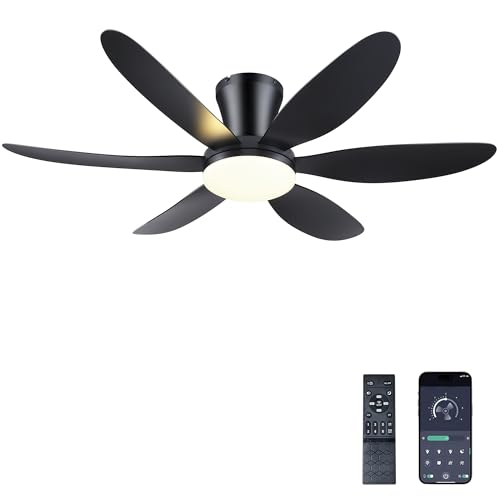
2. 42” Black Low Profile Ceiling Fans with Lights and Remote Control
A 42” Black Low Profile Ceiling Fans with Lights and Remote Control (ceiling fan), per the listing. Check price on Amazon.
Good for: whole-room airflow. Watch out: Check size and installation.

3. Depuley Modern Ceiling Fan with Light 42-Inch Black Small Fans
A Depuley Modern Ceiling Fan with Light 42-Inch Black Small Fans (ceiling fan), per the listing. Check price on Amazon.
Good for: whole-room airflow. Watch out: Check size and installation.

4. ZMISHIBO 52 Inch Ceiling Fans with Lights Remote&App Control
A ZMISHIBO 52 Inch Ceiling Fans with Lights Remote&App Control (ceiling fan), per the listing. Check price on Amazon.
Good for: whole-room airflow. Watch out: Check size and installation.

5. TCL 52″ White Low Profile Ceiling Fan with Light & Remote
A TCL 52″ White Low Profile Ceiling Fan with Light & Remote (ceiling fan), per the listing. Check price on Amazon.
Good for: whole-room airflow. Watch out: Check size and installation.
6. JSAITEE 60Inch Ceiling Fan with Lights Large Low Profile Flush
A JSAITEE 60Inch Ceiling Fan with Lights Large Low Profile Flush (ceiling fan), per the listing. Check price on Amazon.
Good for: whole-room airflow. Watch out: Check size and installation.

7. Sofucor 48 Inch Smart Wood Ceiling Fans with Lights Flush/Downrod
A Sofucor 48 Inch Smart Wood Ceiling Fans with Lights Flush/Downrod (ceiling fan), per the listing. Check price on Amazon.
Good for: whole-room airflow. Watch out: Check size and installation.

8. WINGBO 54 Inch Flush Mount DC Ceiling Fan with Lights and Remote
A WINGBO 54 Inch Flush Mount DC Ceiling Fan with Lights and Remote (ceiling fan), per the listing. Check price on Amazon.
Good for: whole-room airflow. Watch out: Check size and installation.
How to Choose
Size and fit
Check dimensions for your space or vehicle.
Build and materials
Durable materials last longer.
Ease of use
Simple setup and cleaning help.
Measuring Your Ceiling and Room First
Most ceiling fan problems start with a mismatch between the fan and the space. Begin by measuring the room and the ceiling, not by looking at the fan photo. Blade span, the distance across the tips of the blades, should suit the floor area. As a rough guide, small rooms such as a compact bedroom or office suit smaller spans, average bedrooms and living rooms suit mid-range spans, and big open rooms suit the largest spans. Check the product listing and manual for the maker’s own room-size guidance, since it varies.
Next, measure the ceiling height. A fan should hang with the blades well above head height, and the manual states the minimum clearance from the floor and from the walls. In a low room, a flush-mount or low-profile design keeps the blades higher. In a high or sloped ceiling, you will probably need a downrod, and the right length depends on the ceiling height. Check whether the box includes one and whether your ceiling slope is within the approved angle.
- Measure from the ceiling to the floor, and note any beams, sloped sections or light fixtures nearby.
- Leave clear space between the blade tips and any wall, cabinet or door swing.
- Check where doors open, and make sure a tall person cannot reach the blades.
- Confirm the fan is rated for your location, such as damp-rated for covered porches.
Choosing a fan that is too small leaves air moving only in a narrow area, while one that is too large can feel overpowering and crowd the room. Write down your measurements before shopping so you can compare them with each listing quickly.
Low-Profile Versus Downrod Mounting
Mounting style is a decision you should make before you look at finishes. A low-profile or flush-mount fan attaches close to the ceiling, which suits rooms with standard or low ceilings. The tradeoff is that the blades sit nearer the ceiling, which can reduce the amount of air that moves below them, and the fan may need more room to circulate air effectively. A downrod mount hangs the fan lower so the blades work in clearer air, which is helpful in rooms with high ceilings.
Some models support both styles, with a short downrod included or a flush adapter. That flexibility is useful if you are unsure, or if you may move the fan to another room. Check the listing for what hardware is in the box, because the missing piece is often the longer downrod.
- Low-profile: good for ceilings of standard height or lower; check blade clearance.
- Standard downrod: better for taller ceilings and better airflow below the blades.
- Angled mounts: needed for sloped ceilings; check the maximum angle allowed.
Make sure the ceiling box is rated to support a moving fan, not just a fixed light. A standard light fixture box is often not strong enough. The manual describes the requirement, and this is a key reason to use a qualified electrician if you are unsure. The weight of the fan, including the light kit, also matters, so look at the stated weight on the listing and compare it with the box’s rating.
Light Kits, Brightness and Bulb Choices
A combined fan and light is convenient, but lighting needs deserve their own check. Many fan lights are integrated LED modules, while others use replaceable bulbs. Integrated modules save you buying bulbs but may be harder to replace if they fail, so look at what the maker says about replacement parts. Replaceable bulbs give you control over brightness and color, but check the bulb type, base and maximum wattage in the manual.
Brightness is usually shown in lumens on the listing. Compare it with the room’s purpose: a reading room or kitchen benefits from brighter light, while a bedroom may prefer a softer glow. Color temperature also matters. Warmer light feels cozy, cooler light looks crisper and suits workspaces. Some fans offer a setting that lets you change between several color temperatures, which is handy if different people use the room.
- Check whether the light can be dimmed and whether dimming works through the remote.
- Find out if the light can work independently of the fan.
- Look at the shade material and how it is held, since loose shades can rattle.
- Consider glare, especially in low rooms where the light sits close to eye level.
Also think about heat. Enclosed fixtures can trap heat around bulbs, so use only the bulb types the manual allows. If you often read or work under the light, a shielded design can reduce harsh glare. Look at the customer questions on the listing for comments about how bright the light really is in a given room size.
Remote, App and Motor Considerations
Controls change how often you use a fan. A handheld remote is the simplest option and works without a phone. Check whether it needs batteries, how many speeds it offers, and whether it includes a reverse function and a timer. Wall controls are another option if you prefer a fixed switch. Some fans also work with a phone app or a voice assistant, which can be handy but depends on your home network and the app staying supported, so read what the maker says before relying on it.
Motor type affects noise and efficiency. Many fans use a traditional AC motor, while others use a DC motor. DC models are often described as quieter and more energy efficient and tend to offer more speed steps, though you should confirm this in the listing instead of assuming it. Quiet operation matters most in bedrooms, so look for wording about noise, and read customer questions about humming or wobble.
- Check how many speeds there are and whether there is a gentle low setting.
- Look for a reverse switch so you can push air up in winter, if the maker describes it.
- Find out how the remote is paired and whether a spare is easy to get.
- Ask whether the fan still works if the remote is lost.
Balance matters too. Blades that are slightly different in weight can cause wobble, and many kits include balancing weights. Tighten the screws as the manual describes after the first few days of use.
Installation, Safety and Upkeep
Installation involves electricity and overhead weight, so take it seriously. Turn off the power at the breaker, not only the wall switch, and confirm it is off with a tester before touching wires. Check that the ceiling box is rated for a fan and securely attached to a joist or an approved brace. If any step is unclear, or if the wiring looks old or unusual, use a qualified electrician. Many fans need a switch setup that controls both fan and light, so confirm whether your existing wiring supports the remote or wall control you want.
Once the fan is up, keep it in good shape. Dust builds up on blades and can cause wobble and uneven airflow. Wipe the blades with a soft cloth while the fan is off and still, and support the blade so you do not bend it. Check the screws on the canopy, blade arms and light kit every few months, as vibration can loosen them.
- Do not lean a ladder against the blades or lift the fan by them.
- Make sure the fan is fully stopped before cleaning.
- Listen for new clicking, grinding or wobbling, and investigate quickly.
- Keep the manual and a note of the model number for parts and warranty claims.
Signs it is time to replace a fan include a motor that hums or struggles at low speeds, a persistent wobble that balancing does not fix, a failing light module that cannot be replaced, or controls that no longer respond even with new batteries. Budget fans can cover the basics well for a bedroom, while higher-end models tend to add quieter motors and more control options, so choose according to how much you will use the fan.
Blade Span by Room Type
The fans in this guide range from a compact 42-inch size to a large 60-inch size, with several in between. Blade span is the quickest way to narrow the field, but it works best when you think about how the room is used. A small bedroom, home office or nursery generally suits a smaller span, which circulates air without feeling like a gale. A standard bedroom or living room often suits a mid-sized span, while a large open-plan space or a wide living room may call for the biggest sizes.
Ceiling shape changes the picture. In a long, narrow room, one very large fan may not reach the corners, and two smaller fans can work better, though this depends on your layout and wiring. In a square room, a single fan in the center is usually the simplest. Check the maker’s coverage guidance on each listing, because it varies and is not standardized across brands.
Do not treat span as the only factor. Blade pitch, motor power and speed settings all affect how much air moves. A larger fan running slowly can feel gentler than a smaller fan running fast, which is why many people prefer a slightly larger fan for comfort in a bedroom.
Blade Materials and Finish Choices
Blades are made from different materials, such as wood, engineered wood, plastic and metal. Listings in this guide include a wood-style model alongside several others with different finishes, so read what each page says about the blade material. Wood and engineered wood can add a warmer look, but some types may react to humidity over time. Plastic and metal blades are often chosen for lower-maintenance rooms and for their consistency.
Finish and color affect more than looks. White and black fans look quite different from the ceiling, and the choice can change how noticeable the fan is. Some models offer reversible blades with two finishes, which lets you match room decor, but check whether the listing says so before relying on it.
- Check whether the blades come pre-attached or need assembly.
- Look at how many blades the fan has, since this affects both look and noise, though the effect varies by model.
- Consider whether the finish will show dust easily, particularly on dark blades.
- Ask whether replacement blades are sold if one is damaged.
If the fan will be in a damp area, make sure the listing states it is rated for that location, rather than assuming the finish will cope.
Airflow, Noise and Energy Use
Three numbers are often shown or implied for ceiling fans: airflow, noise and power use. Airflow is typically stated in cubic feet per minute, and a higher number means more air moved, though real comfort depends on room and height. Noise ratings are less often given, so look for comments about operation sound in the description or buyer feedback. Power use is lower for many DC motor designs, but check the listing to see what the maker says rather than assuming.
Remember that the light kit also uses power, and it may be the main use if you leave it on for long periods. LED lights are common and use relatively little energy, but confirm that on each page. If the fan and light share one control, check whether you can use them independently, since a fan you want running overnight may not need a bright light.
When comparing across the lineup, put the airflow figure beside the speed settings. A fan with more speed steps lets you fine-tune comfort. In a bedroom, a gentle low speed matters more than a high maximum, because most night-time use is at the lower end.
Common Buying Mistakes With Fan and Light Combinations
A frequent mistake is buying a fan based on the photo and price without checking the downrod and the ceiling height. A fan that arrives with the wrong mounting hardware for your ceiling can mean extra shopping and delay. Another is overlooking the weight of the fan, which affects whether your ceiling box can support it.
People also forget about the remote. If the remote is lost or its batteries die, you may be left without control unless a wall switch or pull chain is available. Check the listing for what controls are included and whether a spare is easy to find. For models with app control, confirm what the app needs and what happens if the connection drops.
- Not measuring clearance from blade tips to walls and doors.
- Assuming every fan is rated for damp or covered outdoor areas.
- Skipping the light brightness and color options, then finding the light too harsh or dim.
- Ignoring the wiring, since some remotes need a specific wiring arrangement.
- Choosing the cheapest option without reading what is included.
Careful reading of the box contents and dimensions avoids most of these problems.
Budget Tiers and What to Expect
Prices in this guide span a wide range. Lower-priced fans usually cover the essentials of airflow, a light and a remote, and they suit rooms that do not see heavy use or where a quieter motor is not the top priority. They can be a sensible choice for a guest room, a rental or a small space.
Mid-priced fans tend to add larger spans, more speed settings and app or smart control. Higher-priced fans often emphasize a DC motor, a wider speed range and a more refined finish, though you should confirm each feature on the listing. A higher price does not guarantee suitability for your ceiling or room size, so measure first and compare after.
Whatever you spend, look at the warranty terms and whether the maker offers parts and support. Check how many ratings sit behind each average, and read comments about wobble, noise and remote reliability. If something about a listing is unclear, ask the seller before you buy, and keep the packaging until the fan is installed and running well.
Reading the Picks by Room: Low-Profile Fans, Large Rooms and Light Output
The eight fans in this guide divide along two lines that matter more than finish or styling: how the fan mounts, and how much air the room needs. Low-profile models, which sit close to the ceiling, exist for rooms where headroom is limited, where a hanging fan would hang too low over a bed, a table or a doorway swing. Larger fans with longer blades exist for the opposite problem, wide living rooms and open-plan spaces where a small fan stirs the air above one sofa and leaves the rest of the room still. The guide’s title names both families, and most buying mistakes come from crossing them: a generous fan crammed under a low ceiling, or a neat flush fan lost in a big room.
Light output is the second decision, and it is easy to undervalue until the fan is installed. In a bedroom or living room where the ceiling fan carries the main light, the integrated light becomes the room’s everyday lighting, so its brightness, its warmth of tone and whether it dims will shape the room every evening, not just on moving day. In a room with lamps, wall lights or large windows, the fan’s light matters less and a simpler model may serve perfectly. Decide which kind of room you have before comparing models, because upgrading a disappointing light afterward usually means replacing the whole fan rather than a bulb, on designs where the light is built in.
Control method is the third quiet divider. A remote suits bedrooms and high ceilings where a wall switch or pull chain is awkward, and it lets you adjust speed from bed, which is where most people most want to adjust it. Wall control suits households that lose remotes and rooms where several people need equal access. App or smart control, where a model offers it, adds scheduling, for example setting a fan to slow down as the night cools. None of these is best in general; the right answer is the one that matches how the room is used at the moment the fan needs changing, which is usually half asleep, mid-conversation or with hands full in a kitchen.
Finally, read the room itself. Measure the ceiling height, the distance from the fan position to walls and tall furniture, and where people sit and sleep in relation to the fan’s centre. A fan centred over a dining table cools diners and flutters napkins; the same fan offset toward the seating may serve the room better. Note beams, sloped ceilings and existing ceiling boxes, since each affects which mounts will fit, and check the earlier installation sections of this guide for what each situation needs. Ten minutes with a tape measure prevents the classic outcome of a fan that is perfect on paper and impossible in the room.
Before Installation Day: Checks That Prevent a Second Ladder Session
Ceiling fan problems are cheapest before the fan goes up. Confirm the ceiling box is rated to support a fan and is fixed firmly to the structure, not merely to plasterboard; a fan is heavier than a light fitting and it moves, so the mounting must be fan-rated, and the earlier safety sections of this guide treat this as the non-negotiable step. If you are in any doubt about the box or the wiring, that is the point to bring in an electrician, and the cost of one visit is small beside the cost of a fan that wobbles itself loose over a season.
Turn the power off at the breaker, not only at the wall switch, and test that it is off before touching any wire. Lay out every part from the box on a clear surface, check the parts against the manual’s list, and assemble on the ground whatever the manual allows to be assembled there, since work at the top of a ladder should be kept to the shortest list possible. Keep the screws for each stage grouped, and have a second person present: one to hand parts up, steady the ladder and catch anything dropped, because a dropped blade screw in carpet can end an installation day more surely than any electrical problem.
Plan the blade direction and balance checks before you finish. Most fans include a reversing control for seasonal use, and the time to find it and confirm it works is during installation, not on the first cold evening of autumn. Once the fan is up, run it at every speed and watch and listen: a new fan should run smoothly, and any wobble, clicking or scraping found on day one is an installation detail to fix while the ladder is still out, following the balancing guidance in this guide, rather than a character trait to live with. Check the light and every control method too, including the remote at the distance of the bed or sofa, because discovering a dead remote battery after the room is tidied is a small but perfect annoyance.
Living With the Fan: Seasonal Use, Cleaning and Small Noises
A ceiling fan earns its keep in both halves of the year when you use its reverse setting as the seasons turn. In warm months the fan should send air downward so the breeze reaches the people below. In cooler months, running it slowly in reverse draws air up and pushes the warm air pooled at the ceiling gently down the walls, evening out a room heated by radiators or a stove. Keep the speed low in winter mode; the goal is circulation you barely feel, not a cold draught from above. The earlier sections of this guide explain the direction settings in detail, and the switch is often on the fan body itself, which is one more reason to find it during installation rather than mid-winter.
Dust is the ceiling fan’s constant companion, because blades collect it on their upper surfaces where nobody looks. A layer of dust adds weight unevenly, encourages wobble, and showers the room the first time the fan is switched on after a quiet period. Clean the blades a few times a year with the power off, using a step ladder you can work from safely and a cloth or a pillowcase slipped over each blade to trap the dust instead of scattering it. Wipe the light cover as well, since a dusty cover dims the light gradually enough that households often blame the fitting. Never hang from or pull on a blade to steady yourself, and never clean a fan while it is turning, however slowly it seems to be moving.
Small noises deserve early attention because they rarely cure themselves. A ticking that follows the fan’s speed often comes from a loose blade screw, a wire resting where it should not inside the canopy, or a light cover that is not seated; switch off at the breaker and check the accessible fixings as the manual directs. A hum that rises with speed may be the motor’s normal character or a sign the fan is working against a dimmer control it was not designed for, which the control sections of this guide discuss. A fan that begins to wobble after months of smooth running has changed something, a screw backing out, a blade warped by heat or moisture, a mounting loosening, and it should be switched off and inspected rather than run at a lower speed and forgotten. Ceiling fans fail slowly and visibly when they are watched, which is the best reason to glance up at yours whenever the sound of the room changes.
More Questions Readers Ask About Ceiling Fans With Lights
How do I choose between a remote and a wall control?
Choose by imagining the moment of use. If the fan will mostly be adjusted from bed or from a sofa, a remote is the natural fit, ideally with a holder fixed by the bed or the door so it has a home. If the room is shared by children, guests or a whole family moving through it, a wall control cannot be lost, buried in cushions or carried to another room. Some installations allow both, and households that argue about it usually settle happily on the combination: wall control for everyone, remote for the person who sleeps furthest from the switch.
Can a ceiling fan replace air conditioning?
No, and the distinction matters for comfort. A fan cools people by moving air across skin; it does not lower the room’s temperature, so a fan running in an empty room achieves nothing. What a fan can do is make a warmer room feel comfortable, which lets many households run air conditioning less often or set it a little warmer, and it can spread cooled air evenly so one corner is not cold while another stays stuffy. Treat the fan as a partner to cooling rather than a substitute, and switch it off when the room empties.
Why does my new fan wobble only at the highest speed?
Imbalance shows itself most at speed, so a small difference between blades, a screw not fully tight, a blade fitted slightly askew, can stay invisible at low settings and appear at the top one. Work through the balancing steps in this guide: confirm every blade screw is snug, check the blades sit at equal heights and angles, and use the balancing kit if your fan included one. If the wobble persists through careful balancing, or the fan shakes rather than sways gently, switch it off and have the mounting checked, because the mounting, not the blades, may be the cause.
What should I check before buying a fan for a sloped ceiling?
The slope itself, the mounting the maker allows for it, and the clearance the blades will have at the slope’s low side through their whole circle. Many fans need a specific adapter or a longer drop for angled ceilings, and the maker’s stated limits for slope should be treated as hard limits rather than guidelines. Measure the angle if you can, photograph the ceiling, and compare both against the manual before ordering, because a fan returned for slope reasons is a heavy, awkward parcel that a few minutes of measuring would have prevented.
Keep the fan’s manual, remote codes and any balancing kit together in one envelope near the room’s other household papers. Ceiling fans stay in service for many years, and the questions that arise in year five, a lost remote, a replacement light, a seasonal direction switch, are all answered by the paperwork that was nearly thrown away on installation day.
Frequently Asked Questions
Is it easy to install?
Check the manual.
Is it worth the price?
Budget options cover basics.
How do I care for it?
Clean as directed.
What size ceiling fan do I need for my room?
It depends on floor area and ceiling height, so measure the room and compare the result with the maker's room-size guidance in the listing or manual. A fan that is too small moves air in a limited area, while one that is too large can crowd the room.
Can I put a ceiling fan in a room with a low ceiling?
Often yes, if you choose a flush-mount design and check the minimum blade clearance in the manual. Make sure the blades stay out of reach and that the ceiling height meets any local requirements.
Can I use my existing light fixture box?
Only if it is rated to support a moving fan. Many standard light boxes are not strong enough, so check the box label and the manual, or ask a qualified electrician.
Why does my fan wobble?
Loose screws, blades with slightly different weights, or a bent blade arm are common causes. Tighten the hardware as described in the manual and use any balancing kit supplied.
Which direction should the blades turn?
Many makers advise counterclockwise for summer cooling and clockwise at low speed in winter, but follow the manual for your model. Not all fans have a reverse option.
Do I need a smart fan?
No. A simple remote covers most needs. App and voice control are convenient, but they depend on your network and on ongoing support from the maker.
How often should I clean the blades?
Wipe them when you see dust building up, which for many homes means every few months. Clean with the fan off and stopped, and support each blade to avoid bending it.
Are fans with lights suitable for bathrooms or porches?
Only if the listing says the fan is rated for damp or wet locations. Check the rating and follow the installation instructions for that environment.
Is a bigger fan always better for a large room?
Not always. A larger span covers more area, but motor power, blade pitch and mounting height also matter. Check the maker's room-size guidance and your ceiling height.
Do I need a downrod?
It depends on ceiling height. Flush-mount fans suit lower ceilings, while taller ceilings usually benefit from a downrod. Check what the listing includes, since longer rods are often sold separately.
Can I control the fan and light separately?
Many fans allow this through the remote or wall control, but not all do. Check the listing before you buy if separate control matters to you.
What if I lose the remote?
Some fans have a backup control, such as a wall switch or pull chain, but others do not. Check the listing and ask about spare remotes from the maker.
Are DC motor fans quieter?
They are often described that way, but check the listing and buyer comments for your specific model. Noise also depends on installation and balance.
Can two smaller fans work better than one large one?
In a long or oddly shaped room, they can. Consider wiring, ceiling space and the maker's guidance before deciding.
How do I know if the light is bright enough?
Look for the lumen figure on the listing and compare it with the room's purpose. Check whether the light is dimmable and whether it changes color temperature.
Is it safe to install a fan with a light on a sloped ceiling?
Some fans support sloped ceilings up to a stated angle with the right mount. Check the manual and use a qualified electrician if you are unsure.
Bottom Line
Match blade size to room size; have wiring checked.
More Home & Garden Guides
- Best Indoor Humidity and Temperature Monitors
- Best Oscillating Standing Fans
- Best Small Air Circulator Fans
- Best Small Thermoelectric Coolers
- Best Heated Throws and Full-Size Blankets
- Best Heated Foot Warmers for Home
- Best Cordless Clippers and Trimmer Kits
- Best Pour-Over Kettles with Temperature Control