Disclosure: As an Amazon Associate, dailyhomedecorating.com earns from qualifying purchases. Links on this page are affiliate links; they cost you nothing extra. Prices and availability change often, so check the current Amazon listing before you buy.
Every ceiling fan with light pros and cons list on the internet reads roughly the same: cheap to run, nice breeze, some installation hassle, done. That is not wrong, exactly, but it is useless at the moment of decision, because nobody is choosing between a ceiling fan and nothing. You are choosing between a fan-light and the alternatives that could occupy the same ceiling and the same budget — a good standalone light fixture plus the fans you already own, a mini-split’s breeze, a prettier chandelier — and you are choosing for a specific room with a specific ceiling height, a specific sleeper or worker or diner underneath it. This article takes the honest-ledger approach seriously: the genuine advantages, stated at full strength, then the genuine disadvantages, stated just as plainly, then the part most lists skip — what the trade-offs actually mean for different rooms and different people, so the verdict you reach is about your ceiling, not the average of everyone else’s.
The quick verdict, for readers who stop early: a ceiling fan with a light is one of the best-value comfort upgrades in the home for rooms that are lived in daily, have the ceiling height to mount one safely, and need both air movement and overhead light. It is a poor buy for very low ceilings that force bad compromises, for rooms used so rarely that the installation never pays back in comfort, and for anyone whose real problem is a hot house rather than a still room — a fan moves air; it does not refrigerate it. Everything below defends, qualifies and occasionally argues with that verdict. For the purchasing framework that follows from it, see ceiling fan with light buying guide; for the pure value question, see is a ceiling fan with light worth it.
Key Takeaways
- The core pro is compound: one installation delivers air movement, main-room lighting and year-round temperature evening for a very modest running cost.
- The core con is also compound: the fan and the light share one position and one fate, so a compromise in either half — dim light, noisy motor — is lived with twice.
- Most cons are conditional, not absolute: wobble, noise and weak light are usually sizing or installation failures, not properties of the category.
- Ceiling height is the hard gate. Rooms that cannot give the blades safe clearance should not be talked into a fan by any list of pros.
- The category suits daily-use rooms — bedrooms, living rooms, kitchens — far better than rarely used spaces.
In this guide
Ceiling Fan with Light Pros and Cons: The Honest Ledger
The Pros
Pro: Two Appliances, One Ceiling Position, One Installation
The combination itself is the first advantage, and it is easy to underrate. Most rooms have exactly one central ceiling electrical position. A fan-light uses it to deliver both of the things a room’s centre is best placed to provide: air movement that reaches every corner and light that spreads evenly across the whole space. The alternatives all cost more positions, more wiring or more floor and table space — a separate fixture plus portable fans, or a fixture plus a tower fan in the corner. One installation, one fan-rated box, one control scheme, and the centre of the ceiling is doing double duty for a decade. In renovations especially, where opening ceilings and running new wiring is the expensive part of any plan, consolidating two functions into the existing position is a real and bankable saving of effort.
Pro: Genuine Comfort at a Very Low Running Cost
A fan makes occupants feel cooler by moving air across skin, and it does so for a small fraction of the energy that cooling the air itself requires. That asymmetry is the economic heart of the category: run the fan, feel several degrees more comfortable, and ease the air conditioning back — or, in the many climates and seasons where the house is merely still and stuffy rather than truly hot, skip the cooling entirely. The light half shares the virtue when it is LED-based, drawing little while serving as the room’s main light. Few home purchases return comfort this directly per unit of running cost, and the effect is not subtle or delayed: the first warm evening with the fan turning is the whole argument, delivered.
Pro: It Works in Winter Too
The reversible motor is the most under-sold feature in the category. In winter, warm air pools at the ceiling — exactly where nobody lives — while the floor level stays cool. A fan running slowly in reverse draws that warm air down the walls and evens the room without creating a downdraft on occupants. The result is a heated room that feels uniformly warm rather than layered, and in tall rooms the difference can be the difference between a space that feels finished and one that never quite heats. This doubles the fan’s working year: it is not a summer appliance stored in plain sight for six months, but a year-round part of how the room’s climate is managed. Buyers comparing models should treat reversibility as close to non-negotiable, a point the step-by-step selection method in how to choose a ceiling fan with light develops in full.
Pro: Better, More Even Light Than the Fixture It Replaces
The ceiling position a fan occupies is the best lighting position in the room, and a well-chosen fan-light exploits it. Compared with the single builder-grade dome it usually replaces, a good fan-light offers more brightness, often dimmability, and in bulb-based designs a free choice of colour temperature. The light also lands differently: centred and overhead, it fills the room evenly instead of pooling from a corner lamp. For bedrooms and living rooms — where the overhead light is the room’s evening backbone — this upgrade in the main light is a benefit owners notice daily, long after the novelty of the breeze has faded into routine. The condition, explored in the cons, is choosing the light deliberately; the pro is that the position and the modern LED options make a genuinely good result available.
Pro: Space, Safety and Tidiness
A ceiling fan takes no floor, no table and no shelf. In small rooms that alone can settle the question: the cooling and lighting live overhead, and the room’s limited surfaces stay free. There are no cords to trip over, no tower fan to knock, no portable unit for a child or a pet to investigate at close range, and nothing to drag out in May and store in October. For households with toddlers, large dogs or simply a low tolerance for visual clutter, the ceiling is the safest and tidiest place for moving air to live. This pro rarely headlines a review, but it is the one owners in compact homes mention with the most feeling.
Pro: A Mature, Serviceable, Long-Lived Category
Ceiling fans are old technology in the best sense: the designs are settled, the makers are established, parts and replacement blades exist, motors are expected to run for many years, and any competent electrician knows the installation by heart. You are not betting on a startup’s app surviving, a proprietary consumable, or a fashion cycle. Even smart models layer their novelty on top of a fundamentally standard appliance. For a purchase that is wired into the house and expected to serve for a decade or more, that maturity is a genuine advantage — the risk profile of the category is about as low as home equipment gets.
The Cons
Con: Installation Is Real Work, With Real Safety Rules
There is no way to soften this one: a fan is a heavy, moving object wired into the ceiling, and installing it properly means working at the breaker, verifying power is off, and mounting to a fan-rated, braced electrical box — not the ordinary fixture box that may be up there now. For a confident home electrician doing a like-for-like swap it is a manageable project; for anyone else it is an electrician’s visit, which adds cost and scheduling to the purchase. Rooms without an existing ceiling position face a bigger job still. The full safety sequence is laid out in how to install ceiling fan with light, and it should be read before, not after, the fan comes home. This con is the main reason the category does not suit renters or anyone unwilling to touch the ceiling.
Con: The Shared Position Means Shared Compromises
The pro of combination has a mirror image. The best place for a light is the centre of the ceiling; the best place for a fan is also the centre of the ceiling — but the best light and the best fan are not always the same product. Fan-lights ask you to accept one design’s answer to both questions. The light may be dimmer, less beautiful or less flexible than the dedicated fixture you would have chosen; the fan may be less powerful or less refined than the dedicated fan you would have chosen. And the coupling persists: if the integrated LED module fails years from now, the repair touches your fan; if you tire of the fan’s look, you are replacing your main light too. Buyers who care intensely about lighting design, in particular, should weigh this honestly.
Con: Low Ceilings Shrink the Category and Punish Errors
Blades need safe clearance — conventionally at least seven feet above the floor — and that single rule governs everything. In a room with a low ceiling, your choice narrows to flush mounts; add tall occupants, a bunk bed or a four-poster, and even those deserve a second thought. A fan mounted too low is not merely less effective; it is a hazard and a source of low-grade anxiety every time someone stretches or carries something tall through the room. Some low rooms are simply not fan rooms, and no list of pros should talk their owners into one. This is the category’s hardest constraint, and the honest response to a too-low ceiling is a good light fixture and a different cooling strategy.
Con: A Fan Does Not Cool a Room — and the Misconception Disappoints
The most common disappointment in the category is a misunderstanding, but it is a real con in its effects. A fan cools people, not air: left running in an empty room, it changes nothing except the electricity meter, and in a genuinely hot house — a heatwave, a failed air conditioner, a sun-baked top floor — a fan alone will feel inadequate because the task is beyond physics. Buyers who purchase a fan expecting refrigeration will rate a perfectly good product as a failure. The fan’s true job is extending comfort at the margins: making a warm room pleasant, making cooled air feel more effective, evening out hot and cold patches. Within that job it excels; outside it, no model at any tier will save the purchase.
Con: Noise, Wobble and Light Quality Are Live Risks
A badly chosen or badly installed fan announces itself: a hum that grows with speed, a click per revolution, a wobble that sets the light swaying, a dome of cold, dim light over the bed. These are not the category’s normal state — they are the failure modes, and they cluster around undersized motors worked too hard, unbalanced blades, loose hardware, and lights chosen by photograph instead of specification. The con is that the risk is real and the fix is effort: balancing kits, screwdrivers, occasionally a return. Bedrooms raise the stakes, because a noise that is nothing at noon is everything at 2 a.m. Buyers who are light sleepers should weight this con heavily and shop the quiet patterns deliberately.
Con: Cleaning and Maintenance Happen at Height
Fans collect dust on the top surfaces of their blades with an efficiency that would impress if it were useful, and that dust lives eight feet in the air. Let it build and the fan redistributes it; clean it and you are on a step stool with a duster, several times a year, plus light covers to wipe and, on bulb models, occasional bulbs to change in a fixture you cannot set on a table. None of this is hard, but all of it is overhead, and for owners with limited mobility it can turn a small chore into a genuine obstacle that quietly goes undone. The maintenance section below covers the techniques that keep this con small; it cannot make the fan come down to you.
What the Trade-Offs Mean for You
Lists treat pros and cons as if they weigh the same for everyone. They do not. The same ledger resolves differently depending on the room and the person, and the four readings below cover most households.
For the Bedroom, the Cons Are About Noise and Light — the Pros Win if You Shop for Them
In a bedroom, the comfort pro is at its most valuable — moving air is the difference between restless and restful nights — and the winter-evening light upgrade is a daily pleasure. But the bedroom is also where the noise and light cons bite hardest: a humming fan or a glaring, non-dimming dome is not a minor flaw in the room where you sleep. The resolution is not to avoid the category but to shop its bedroom branch deliberately: quiet motor patterns, a remote, a light that dims low or switches independently. Do that and the ledger is not close. Skip that homework and the cons will find you at 2 a.m.
For the Living Room, the Ledger Is Not Close at All
The living room is the category’s home turf. It is usually large enough to size a fan properly, used daily so the installation pays back quickly, tolerant of a little motor presence, and in need of exactly what the fan provides: even air across a seating area and a strong central light for evenings. The shared-compromise con is mildest here too, because a living room fan-light’s light is typically an upgrade on what it replaces. Unless the ceiling is too low or the room’s design genuinely belongs to a statement fixture, the pros carry this room comfortably.
For the Low-Ceilinged or Rented Room, the Cons Deserve the Final Word
Two situations flip the verdict. If the ceiling cannot give the blades safe clearance even with a flush mount, the safety con outranks every pro — choose a good fixture and a different way to move air. And if you rent, the installation con compounds: you may lack permission to change the fixture or the box, and you cannot take a wired-in fan with you. In both cases the honest answer is that this category, however good, is not for this room at this time, and the money is better spent on the alternatives in the table below.
For the Hot House, the Problem Is Not the Fan
If the underlying issue is a house that overheats — poor insulation, a failing cooling system, a sun-trap top floor — the fan will be blamed for a problem it never claimed to solve. It still helps at the margins and still earns its running cost, but it should be bought as a complement to fixing the real issue, not as the fix. Buyers in this position get the most from the category when expectations are set correctly at the start, which is precisely what the misconception con above is for.
How the Fan-Light Compares With the Alternatives
The realistic rivals for the same ceiling and budget clarify the trade-offs better than any abstract list. A dedicated ceiling light plus portable fans wins on flexibility and loses on tidiness, wiring and elegance. A statement fixture such as a chandelier wins on looks in formal rooms and provides no air movement at all. Doing nothing — keeping the existing fixture — wins on cost and effort, and forfeits the comfort entirely.
| Option | Air movement | Light quality | Effort and disruption | Best for |
|---|---|---|---|---|
| Ceiling fan with light | Whole-room, year-round with reverse | Good to very good; dimmable options | One fan-rated installation | Daily-use rooms with adequate ceiling height |
| Ceiling light + portable fans | Localised, seasonal | As good as the fixture you choose | No wiring; ongoing clutter and storage | Renters, low ceilings, occasional use |
| Statement fixture only | None | Potentially excellent, design-led | One standard installation | Formal rooms where looks lead and climate is handled |
| Keep existing fixture | None | Unchanged | None | Rooms used rarely, or budgets committed elsewhere |
Read the table by your constraint. If the constraint is permission or ceiling height, the second row is your answer and it is a respectable one. If the constraint is a formal dining room’s design, the third row defends itself. The fan-light wins the first row’s argument — the common case of a lived-in room with a workable ceiling — on the compound value of doing two jobs well from one position.
How to Buy Smart: Turning the Ledger Into a Shortlist
Every con above has a shopping behaviour that shrinks it. Size by the room’s square footage and choose the larger span when between bands, which retires the weak-airflow complaint. Let ceiling height pick the mount family before you look at finishes. Insist on a reversible motor, dimmable light and independent control of fan and light. Prefer established makers with obtainable parts. And study the patterns below — real models chosen because each one embodies a way of minimising a specific con while keeping the pros.

Harbor Breeze Mazon — the Low-Ceiling Answer
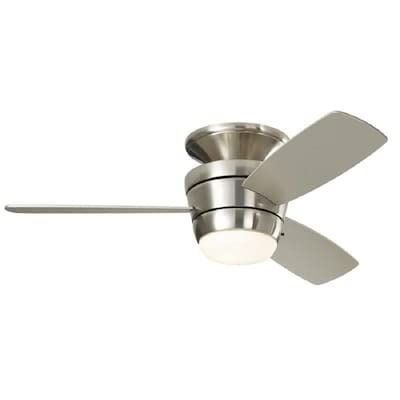
The Mazon’s flush-mount, compact-span pattern exists to neutralise the ceiling-height con: it keeps blades safely high in modest rooms while still delivering an integrated, dimmable LED and remote control. It is the pattern to study when headroom is your binding constraint. Best for: low ceilings and smaller rooms. Not suited for: large or tall spaces. Check price on Amazon in the finish you need.

Hunter Kenbridge — the Serviceability Answer
The Kenbridge answers the shared-fate con with a bulb-based light kit: the light is yours to choose and replace forever, independent of the fan, and the classic downrod design comes from a maker with deep parts support. Best for: large rooms and owners who value repairability. Not suited for: low ceilings or sealed-LED minimalism. Check price on Amazon before you buy.
Prominence Home Robyn — the Budget Answer
The Robyn shows the entry tier keeping the important pros — full size, remote, dimmable integrated light — so that a disciplined budget does not force the undersizing mistake. Best for: full-size rooms on a budget. Not suited for: premium finish or refinement chases. Check price on Amazon, where its configurations rotate.
Minka-Aire Concept II — the Design Answer
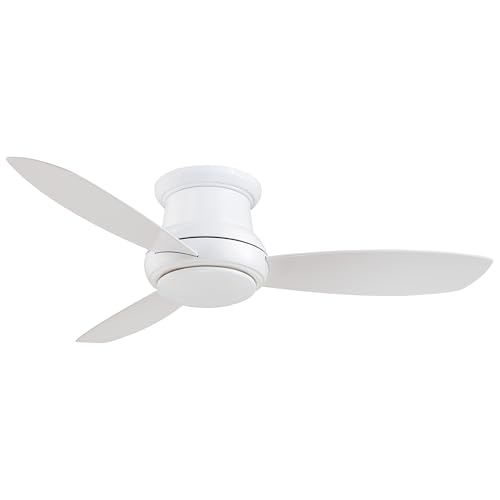
The Concept II answers the objection that a fan-light cannot be a deliberate design object: a sculptural low-profile hugger with refined finishes and quiet manners. Best for: styled interiors with low-to-standard ceilings. Not suited for: very large rooms. Check price on Amazon in your chosen finish.
Setup and Care That Reduce the Cons
Half the cons in this article are decided in the first week. Mount to a properly braced, fan-rated box and the wobble con mostly evaporates. Seat every screw, then run the fan at all speeds and fix noises while the ladder is still out — a click found on day one is a two-minute correction; the same click found in month three is a grievance. Balance the blades with the included kit if the fan sways. Set the light deliberately: bulbs chosen for colour and brightness before installation, dimming range programmed while you are thinking about it. Then keep the maintenance con small with rhythm rather than effort: dust blades little and often with a pillowcase drawn along each blade, which traps the dust instead of snowing it onto the bed; wipe the light cover when you dust; and flip the direction with the seasons so the winter pro actually happens. Owners who do these small things report a different product from owners who do not — which is the real lesson of the ledger: in this category, the gap between the pros column and the cons column is largely workmanship, yours and the maker’s. The deep assessment of how the category performs in daily use is in ceiling fan with light review and the collected verdicts in ceiling fan with light reviews.
How the Ledger Shifts by Tier
The balance of pros and cons is not the same at every level of the market, and knowing how it shifts prevents two opposite errors: assuming the entry tier delivers the full category promise, and assuming the premium tier is mere decoration. At the entry tier, the core pros survive intact — the combination, the comfort, the low running cost — because they come from the concept rather than the price. What thins out is refinement: motors are more likely to be audible at some speeds, remotes and dimming are cruder, finishes are thinner, and the light, while adequate, is less carefully judged. The cons column grows at the margins rather than at the centre. In the mid tier, which is where most of the models in this cluster sit, the ledger reaches its best balance: quiet, reversible motors, genuinely dimmable lights, remotes included, finishes that hold up, and parts support behind it all. This is the tier where the category’s promise is delivered most completely per unit of money. At the premium tier, what you buy is design and refinement — sculptural forms, superior finishes, the quietest DC motors, the smoothest controls — rather than additional function. The pros do not grow much, but the ownership experience polishes, and for a fan that hangs in the centre of a styled room for a decade, that polish is a rational purchase rather than an indulgence. The error to avoid at every tier is spending on the wrong axis: premium money on a fan that is the wrong size for the room buys a beautiful disappointment, while entry money spent on the correct size, mount and light buys most of what the category offers.
What Owners Get Wrong in Both Directions
Having read the ledger, owners still surprise themselves in two predictable directions, and naming them may save you from both. The first surprise is how much the light matters. Buyers shop the fan — span, speeds, airflow — and treat the light as a checkbox, then discover that they use the light every single day of the year, in every season, while the fan’s breeze is a seasonal pleasure. Within a year, the light’s brightness, colour and dimming have shaped more evenings than the blades have shaped afternoons. The correction is simple and repeated throughout this cluster because it matters: choose the light with the same care as the fan, and if light quality is your passion, choose a bulb-based model so the light remains yours to perfect. The second surprise runs the other way: how completely a good fan disappears. Buyers who agonised over finishes and blade counts find, six months in, that they never look at the fan at all — they simply live in a room that feels right. This is not a disappointment; it is the product working. But it does argue for weighting the invisible virtues — quietness, control convenience, light quality, correct size — above the visible ones when the choice is forced, because the visible ones will be admired for a week and the invisible ones will be lived with for a decade.
There is a third, quieter surprise worth adding: how often the fan changes the room’s use. A bedroom that was too stuffy for afternoon reading becomes a retreat; a living room corner that collected heat becomes the favourite seat; a porch-adjacent kitchen becomes workable in summer. The pros column, read in advance, sounds like a list of small efficiencies. Lived with, it adds up to rooms being used more and enjoyed more, which is the actual return on the installation effort in the cons column. Owners rarely report regretting a correctly sized, correctly installed fan; the regrets cluster almost entirely around the avoidable errors — wrong size, wrong mount, wrong light, wrong box — that this guide and its companions exist to prevent.
The Physics Underneath the Ledger
Most of the pros and cons above reduce to three physical facts, and understanding them makes the whole category easier to judge than any feature list. The first fact is that moving air cools skin by speeding evaporation and stripping away the thin layer of warmed air that clings to the body. That is why a fan’s comfort effect is immediate, why it vanishes the moment you leave the room, and why it cannot help a house that is simply too hot: the mechanism works on people, in place, in the airstream. The second fact is that warm air rises and cool air sinks, so every room is quietly layered — warmest at the ceiling, coolest at the floor. A ceiling fan is the only common appliance positioned to stir those layers from above, which is why its winter reverse mode works and why it makes both heating and cooling feel more even than either system achieves alone. The third fact is that air needs room to move: a fan draws air from above its blades and throws it down and out, so blade clearance from the ceiling, sensible span for the room’s volume, and freedom from obstructions like beams and tall furniture all shape the result. Flush mounts trade a little of that breathing room for headroom; oversized spans in small rooms waste it as turbulence; undersized spans in large rooms never reach the corners. Nearly every disappointment in owner feedback is one of these three facts asserting itself against a purchase that ignored it — and nearly every delighted review is the same facts, respected.
The Long-Term View: Years Two Through Ten
Reviews are written in week one; ownership happens over a decade, and the ledger shifts with time in ways worth anticipating. In the fan’s favour, the daily benefits compound quietly: hundreds of evenings of even light and moving air, winters made more comfortable, an appliance that asks almost nothing and is simply there. Owners consistently report that the purchase fades from memory precisely because it works — the highest praise a fixture can earn. Against that, three slow cons deserve honest mention. The first is fashion: a fan is a decade-long décor commitment in the centre of the ceiling, and a finish chosen to match a passing trend will date the room as surely as it once enlivened it; neutral, well-made designs age best. The second is technological drift in the light: integrated LED modules and smart controls are the parts most likely to feel old or become unsupported before the motor does, which is a real argument for bulb-based lights and simple controls in a forever home. The third is the accumulation of small maintenance deferred — dust, a loosening screw, a remote with a dying battery — each trivial, together enough to turn a good fan into a rattling one if years pass without the ladder coming out. None of these overturns the category’s case. They argue for buying the boring virtues — standard bulbs, established makers, timeless finishes, obtainable parts — over the exciting ones, because the fan you live with in year eight is the one you actually bought.
One More Profile: The Kitchen and the Open-Plan Space
Kitchens and open-plan rooms deserve their own reading of the ledger, because both stretch the category in opposite directions. In a kitchen, the fan’s air movement is a genuine working benefit — cooking heat is real and localised — and a bright, slightly cooler light is a task asset rather than a flaw. The cautions are practical: cooking grease travels upward, so blades and light covers need wiping more often than in a bedroom, and the fan should not be asked to fight a range hood for the same air. In open-plan spaces, the challenge is scale: the fan serves a zone, not the whole volume, so size for the seating or dining area it hangs over, consider whether two smaller fans beat one large one in a long space, and expect the light to be one layer among several rather than the room’s only source. In both cases the category still earns its place, but the sizing and light decisions matter more than the badge on the box — a theme the worked examples in how to choose a ceiling fan with light take up in practical detail.
Household Notes: Allergies, Pets, Children and Shared Spaces
A few household realities adjust the ledger at the edges and are worth a direct word. For allergy-sensitive households, the fan is mostly a friend — even temperatures and gentle air movement reduce the stuffiness that makes rooms feel oppressive — with one discipline attached: the blades must be dusted regularly, because a dusty fan does redistribute what settles on it, and the pillowcase method in the care section exists precisely to keep that dust out of the air. For homes with pets, the ceiling position is a quiet blessing: nothing to knock over, no cords to chew, no floor unit for a curious animal to claim, and the moving air tends to even out the warm spots pets migrate between. For children, the safety arithmetic is favourable compared with any floor fan — everything is out of reach by design — provided the mounting is sound and bunk beds are measured against blade height with genuine care rather than optimism. In shared and multi-use spaces — the living room that is also a playroom, office and cinema — the fan-light’s ability to serve several moods from one position, breeze and bright light for work, still air and dim light for a film, is the pro that grows on households slowly and then completely. None of these notes changes the category’s fundamentals; they simply confirm that the compound appliance fits the compound reality of how homes are actually used.
A Short Decision Procedure, If You Are Still Torn
If the ledger has left you balanced exactly on the fence, run the decision in this order and let the first hard answer settle it. First, measure the ceiling: if the blades cannot sit safely at least seven feet above the floor even with a flush mount, stop — the answer is no for this room, and the alternatives table is your path. Second, ask whether the room is used daily: if it is a guest room or a formal space entered monthly, the installation effort will not pay back in comfort, and the answer leans no unless the light upgrade alone justifies it. Third, ask whether the room’s real problem is still air or hot air: if the house overheats structurally, fix that first and revisit the fan as a complement. Fourth, if you have passed those three gates, ask the light question: can you name the brightness, colour and dimming behaviour you want overhead? If yes, the category can almost certainly deliver it, and the answer is yes — buy the fan that matches the answer, at the right size, from the mid tier unless design or budget argues otherwise. Fifth and finally, sanity-check the installation: a fan-rated box in place or an electrician booked, the control scheme decided, the mount family chosen by the ceiling rather than the photograph. A purchase that survives all five questions is, in this category’s long track record, very unlikely to be regretted. The fence, in other words, is usually not about the product at all — it is about one unmeasured ceiling or one unnamed requirement, and both yield to ten minutes of honest checking.
Bottom Line
A ceiling fan with a light is a compound appliance with compound virtues and compound compromises. For a daily-use room with a workable ceiling, bought at the right size with a reversible motor and a light chosen on purpose, the pros — comfort, economy, year-round usefulness, tidiness, maturity — outweigh the cons decisively. For a too-low ceiling, a rented room, or a house whose real problem is heat rather than stillness, the cons are not fine print; they are the answer. The category does not need exaggeration in either direction, and neither do you: measure the room, name its job, and the ledger reads itself. If you take one sentence from this article to the shops, take this one: the fan half will be judged for a season, the light half will be judged every day, and the installation will be judged exactly once — on the day it is done well or done badly — so spend your care in that order and the pros column will take care of itself.
Living With the Trade-Offs: A Week-by-Week Reality Check for a Ceiling Fan with Light
A pros-and-cons list is a snapshot, but living with a ceiling fan with light is a film, and this section follows the trade-offs across the first weeks when novelty fades and routine takes over. In week one, most owners notice the headline advantage of a ceiling fan with light constantly, because every use is a comparison with whatever came before it, while the headline drawback feels minor simply because it is still new. Keep the packaging of a larger ceiling fan with light until those first ordinary tests are done, flattened if space is tight, because re-boxing an awkward shape from scratch is the hidden difficulty inside many otherwise straightforward returns. Think about who else will use the ceiling fan with light and what they will do differently: shorter reach, less patience, stronger habits, no interest in the manual, and a tendency to leave things wherever they were last set down.
Keep a short note of what you adjusted on the ceiling fan with light during the first month, even just a line on your phone, since those notes turn vague impressions into a setup you can repeat, share or troubleshoot months later. Plan the storage home for the ceiling fan with light before it arrives, naming the exact cupboard, corner, shelf, hook or stretch of floor, because a product without a home migrates around the house and slowly becomes the clutter it was bought to reduce. Look at replacement parts and consumables for the ceiling fan with light while you are still comparing, confirming that the pieces most likely to wear, clog, tear, fade or get lost can actually be obtained without replacing the whole product. One-time costs forgive easily, so a ceiling fan with light that is slow to assemble, heavy to position once, or demanding on its first deep clean can still be the right long-term choice if daily use afterwards is effortless.
If you already own a ceiling fan with light, run the same week-by-week check backwards and note which drawback you have genuinely stopped noticing and which one still earns a small sigh, because that sigh is the most honest review you will ever read. Use a simple decision checklist at the end: the ceiling fan with light fits the measured space, suits the real frequency of the job, matches the household’s cleaning temperament, has obtainable parts, and has a named storage home — five yeses make a confident order. For troubleshooting, start with the boring causes first: power, water, fit, blockage, alignment, a full container, a loose connection or a setting changed by the last person who used the ceiling fan with light, because boring causes account for most apparent failures. By week three the pattern usually reverses: the advantage becomes invisible background, part of how the room or routine simply works now, while any recurring friction with the ceiling fan with light — a awkward reach, a fiddly clean, a storage squeeze — is the thing you feel on every single use.
Finally, remember that the best ceiling fan with light for your home is the one whose size, habits and upkeep disappear into your routine, leaving only the result behind — a cleaner surface, a better-lit seat, a tidier shelf, an easier job — week after ordinary week. If you want a concrete listing check, take a name already shortlisted in this guide, such as Harbor Breeze Mazon, Hunter Kenbridge and Prominence Home Robyn, and verify that exact ceiling fan with light listing against the measurements and compatibility questions above, field by field, rather than trusting the headline description alone. That reversal is the real test for a ceiling fan with light: ask whether the drawback you are weighing is a one-time cost, paid at setup or purchase, or a per-use cost that you will pay hundreds of times a year without ever getting used to it. Decide in advance what good enough looks like for the job the ceiling fan with light does in your home, because chasing a flawless result usually costs more time than the flaw itself, and most households are happier with a reliable ninety percent they actually repeat.
Test the ceiling fan with light in the first week under deliberately ordinary conditions rather than saving it for a special occasion, so that any problem surfaces while returning, exchanging or adjusting your setup is still simple. Per-use costs forgive nothing, so weigh any drawback that appears every time you reach for the ceiling fan with light — noise, wobble, awkward controls, slow setup, difficult emptying or cleaning — far more heavily than its position on a balanced list suggests. If a problem with the ceiling fan with light repeats in the same spot or the same stage of the job, treat the pattern as the clue — patterns point to setup, surface or technique, while random problems point more often to the individual unit. Seasonal thinking helps more than expected: a ceiling fan with light bought in one season will meet different light, humidity, mud, heat, guests and routines in another, so judge its size, storage and upkeep against the hardest season it will face.
When something about the ceiling fan with light disappoints, change one variable at a time — position, setting, timing, load, accessory or technique — and give the change a fair trial, because changing three things at once leaves you with a better or worse result and no idea why.
Frequently Asked Questions
What is the biggest disadvantage of a ceiling fan with light?
For most owners it is the coupling: the fan and the main light share one position and one product, so a compromise in either — a dim light, a noisy motor, a style you tire of — affects both functions at once. Installation effort runs a close second. Both disadvantages shrink dramatically with deliberate choosing: bulb-based lights decouple the light choice, and a properly braced mount prevents most noise and wobble from ever appearing.
Do ceiling fans with lights actually save money?
They can, through behaviour rather than magic. A fan lets you feel comfortable at a warmer thermostat setting in summer because moving air cools skin efficiently, and it costs very little to run compared with cooling the air itself. In winter, reverse operation makes heated air feel more even. The savings depend on actually adjusting the thermostat and using the reverse mode; a fan spinning in an empty, fully air-conditioned room saves nothing.
Are ceiling fans with lights noisy?
A well-chosen, well-installed fan is quiet — a soft air sound, most noticeable on high. Noise problems usually trace to fixable causes: loose hardware, unbalanced blades, a housing touching the ceiling, or an undersized fan forced to live on its top speed. DC-motor models and fans from established makers are the quiet patterns. Bedrooms deserve the most care here, since small sounds matter most at night.
Is a ceiling fan with light a bad idea in a low-ceiling room?
It depends on the actual measurement. Flush-mount fans are designed exactly for low ceilings and work well in rooms around eight feet, provided the blades still clear occupants safely — conventionally at least seven feet above the floor. Below that, or with bunk beds and very tall occupants in the equation, the honest answer is yes, it is a bad idea, and a good light fixture plus another cooling approach serves the room better.
What is the main alternative to a ceiling fan with light?
The main alternative is a dedicated ceiling light — chosen purely as lighting, potentially more beautiful or brighter — combined with portable or wall-mounted fans for air movement. That pairing wins on flexibility and on lighting freedom, and loses on tidiness, floor space, wiring simplicity and year-round elegance. Renters and low-ceiling rooms usually land there; most other daily-use rooms are better served by the combined appliance.
How long do ceiling fans with lights last?
The category is built for long service: motors from established makers are expected to run for many years, and the appliance has few wear points beyond bearings, controls and the light. Bulb-based lights are maintained indefinitely with bulbs; integrated LED modules last for years but eventually need a proprietary part. Longevity is one of the category’s genuine pros, provided the initial installation is sound.
Related Guides
Keep reading within this cluster: the full purchasing framework in ceiling fan with light buying guide, the selection method in how to choose a ceiling fan with light, and the safety-first installation walkthrough in how to install ceiling fan with light. For live model roundups on this site, see best ceiling fans with lights, the modern-home shortlist at best ceiling fan with light for modern homes, and the apartment-focused picks at best ceiling fan with light for apartments.