Disclosure: As an Amazon Associate, dailyhomedecorating.com earns from qualifying purchases. Links on this page are affiliate links; they cost you nothing extra. Prices and availability change often, so check the current Amazon listing before you buy.
Begin this medify ma 50 review with the room it was made for: not a floor, not a desk, but the one grand room most houses actually have — the big living room with the dining end, the primary suite with a sofa it did not need, the finished basement that became the family’s real home. The MA-50’s listing claims 2,640 square feet of coverage in an hour, a figure that translates, in such rooms, into several full air changes at speeds a conversation can survive. This review weighs the 50 against the flagship above it and the bedroom machine below it, and asks the only question that matters at this rung: is this the Medify most larger homes should actually buy?
The suspicion, stated early so the evidence can be judged against it, is yes. Flagships seduce with their ceilings; bedrooms seduce with their prices; the middle-large rung quietly matches the measured volume of the rooms people gather in. The MA-50 is the third generation of that idea in its maker’s line, carrying the family filtration promise — HEPA media, removal to 0.3 microns on the listing — in a cabinet sized for one serious room rather than a whole storey.
In this guide
Quick picks in the Medify Ma 50 Review
| Model | Coverage claimed on listing | Room it serves | Link |
|---|---|---|---|
| Medify MA-50 V3.0 | 2,640 sq. ft. in 1 hour | Grand living room or suite | Check price on Amazon |
| Medify MA-112 V3.0 | 5,948 sq. ft. in 1 hour | Whole open floor | Check price on Amazon |
| Medify MA-40 | 1,793 sq. ft. in 1 hour | Large bedroom or office | Check price on Amazon |
The hourly phrasing rewards one more translation, because it decides this comparison. In a living room of five hundred square feet, the MA-50’s claim implies roughly five air changes across an hour at full effort — headroom that lets ordinary evenings run at a fraction of that effort. The MA-40 in the same room manages a respectable regime with less to spare; the MA-112 treats the room as a warm-up exercise and saves its strength for the floor beyond the doorway. Buy the headroom your room’s worst week needs, not the headroom its average Tuesday applauds.
How the trio was assembled
All three machines were confirmed through this site’s Creators API records before a word was written — exact titles, official images, live listings. They are consecutive rungs of one maker’s ladder, chosen because the MA-50’s real competition is not another brand’s gadget but its own siblings: the shopper’s genuine dilemma is which Medify, not whether Medify. Criteria stayed domestic — hourly coverage against measured rooms, filtration standard, filter estate and its replacement rhythm, working noise in occupied rooms, and the cabinet’s negotiation with real furniture.
Detailed reviews

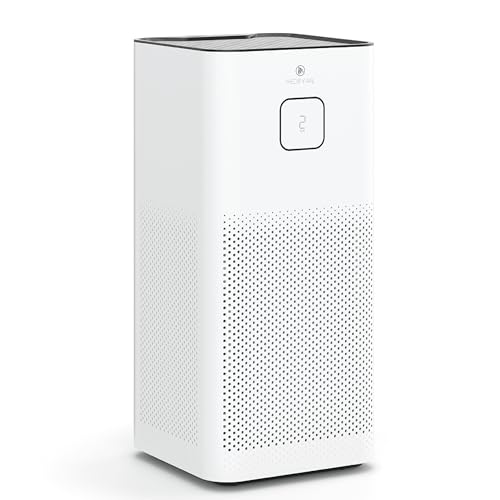
Medify MA-50 V3.0 — the grand room’s machine
Badge: Best for the largest single room in the house
- Coverage stated: 2,640 square feet in one hour
- HEPA filtration, removal to 0.3 microns per listing
- Named for smoke, wildfires, odours, pollen, pets
- V3.0 generation, white cabinet, single pack
The MA-50’s virtue is proportion. A grand living room is a demanding client — cooking drift from one end, a dog’s bed at the other, a television audience in the middle, doors opening to the garden all summer — and it defeats bedroom machines by volume while making a flagship feel like artillery at a garden party. The 50 meets that client at its scale: enough hourly throughput to recover the room after a smoky evening or a vacuum’s dust bloom, enough filter estate to hold its performance between changes, and a cabinet that can stand in a furnished room without rearranging the furniture’s loyalties.
Wildfire and smoke duty, named first in its listing, is where the headroom argument stops being theoretical. On the bad days, the room becomes the household’s refuge, doors shut against a yellow sky, and the machine’s job is to hold a large volume against a continuous insult. A unit sized exactly to the room on a clear day has nothing left for that week; the 50’s surplus is precisely a smoke-season reserve, bought in advance and stored in the only currency that matters then — capacity.
At ordinary times the same surplus buys quiet. A machine working at a third of its range makes a third of its potential noise, and a living room machine must coexist with conversation, music, and the television’s quieter scenes. Owners consistently underrate this trade when shopping by figures and overrate it ever after, which is why this review keeps returning the reader to the room’s worst week and its average evening simultaneously: the 50 is the rare rung that serves both without apology.
Strengths
- Hourly coverage matched to real grand rooms
- Surplus capacity doubles as smoke-season reserve
- Filter estate sized for steady, unhurried loading
Trade-offs
- Cannot defend a whole open floor alone
- Cabinet is substantial furniture, not an accessory
- Manual controls beside smart-brand alternatives
Best for: the biggest single room in a house, used all day. / Not suited for: small bedrooms or true whole-floor plans.

Medify MA-112 V3.0 — when the room is actually a floor
Badge: Best for open-plan storeys and basements without divisions
- Coverage stated: 5,948 square feet in one hour
- HEPA filtration, removal to 0.3 microns per listing
- Named for smoke, wildfires, odours, pollen, pets
- V3.0 generation, white cabinet
The flagship earns its place in this review as the boundary marker: the machine for when the grand room refuses to end — when kitchen, dining, and living flow into one another without a door the household is willing to close, or when a basement’s single volume rivals the floor above it. Its full examination lives at the MA-112 reviewed in depth. Here it suffices to say that the 112’s hourly figure is not an extravagance in such architecture; it is the admission price, and the 50’s honest limit is the doorway where the flagship’s necessity begins.
Choosing between them is therefore a floor-plan question wearing a price tag. Measure the connected volume, including the spaces that share its air through permanently open doorways, and let the total vote. Households that vote honestly rarely regret either machine; households that vote hopefully regret the smaller one every smoke season.
Strengths
- Whole-floor hourly coverage without rival here
- Largest filter estate in the family
- Event capacity for the worst regional weeks
Trade-offs
- Scale and filter costs exceed single-room needs
- Demands central placement to justify itself
- Overwhelming in an ordinary living room
Best for: open storeys and undivided basements. / Not suited for: one grand room, however grand.

Medify MA-40 — the rung below, for the room behind a door
Badge: Best for large bedrooms and studies
- Coverage stated: 1,793 square feet in one hour
- HEPA filtration, removal to 0.3 microns per listing
- Named for smoke, odours, pollen, pets
- White, single-pack cabinet
The MA-40 is the 50’s natural partner rather than its rival: the machine for the bedroom or study whose door closes, while the 50 holds the open room beyond it. Its standalone review sits at the MA-40 on its own page, and households furnishing a whole home from this ladder commonly arrive at exactly that pairing — one 50 for the gathering room, one 40 for the sleeping room, filters and habits shared across a single brand’s logic.
In a grand living room the 40 is the false economy this review exists to prevent: adequate on paper for a mild week, out of reserve on the week that matters, and condemned to higher, louder speeds for the same result. Its excellence is real but zoned, and zoning is the family’s whole philosophy.
Strengths
- Generous headroom for closed-door rooms
- Pairs naturally with the 50 in whole-home plans
- Same filtration standard as the flagship
Trade-offs
- No reserve for open or event-heavy rooms
- Still a clinical, sizeable cabinet
- Manual temperament throughout
Best for: the large bedroom behind the grand room’s door. / Not suited for: the grand room itself in smoke country.
Buying guide: the case for the middle-large rung
Start, as always in this cluster, with volume — but measure the gathering room the way it lives, not the way it photographs. Include the dining end, the reading corner, the air above the stairs if the room borrows it, and the kitchen’s contribution if no door divides them. Then ask the worst-week question: in smoke, in pollen, with guests and cooking and a dog shaking off the rain, how fast must this room recover? The MA-50’s claim was written for that arithmetic. Rooms whose worst week is gentle can step down to the 40 and bank the difference; rooms whose worst week is regional and annual should not.
Next, the furniture negotiation. A machine of the 50’s class needs a post with clearance and a sightline to the room’s whole volume — ideally the junction between the room’s halves, where cleaned air can be claimed by both. Walk the room with the cabinet’s dimensions in hand before ordering, and identify the post by name. Households that skip this ritual discover the machine’s true size in the doorway, with the courier still on the step, and improvise a corner exile that no specification can survive.
Filter planning completes the purchase. Confirm the exact cartridge from the listing, price a year of the household’s realistic loading — heavier with pets, fireplaces, or a dusty street — and set the reminder before the machine arrives. The 50’s estate is a virtue only while it is fed on schedule; allowed to exhaust, it becomes the most expensive fan in the house. Readers comparing beyond one brand should carry the same three questions to large-room purifiers across the market.
Running the MA-50 through a household’s week
Step 1: Commission it like infrastructure
Unpack at its post, free the filter of every transit film, run it hard in the empty room for its first session, and learn its voice at each speed while the room is yours to experiment in. Infrastructure is commissioned once, deliberately — not discovered gradually through complaints.
Step 2: Give the week a pattern
Working speed during the room’s active hours, a raised setting through cooking and gatherings, a gentle maintenance voice overnight if the room doubles for sleeping. The pattern should be boring enough to survive a busy month without renegotiation, because a purifier’s worst enemy is a household too tired to operate it.
Step 3: Inspect on the filter’s calendar, not the mood’s
Monthly intake checks, the maker’s interval for the media itself, and a spare ordered ahead of the regional hard season. Large rooms load filters with large appetites; the calendar, not the indicator light’s first appearance during a smoke week, is the professional way to run the estate.
Mistakes at the grand-room scale
The characteristic error is buying the room’s average instead of its worst week, then meeting the worst week annually with a machine at its limit and a household at its patience’s. Second is doorway denial — measuring the living room, ignoring the open kitchen that shares its air, and wondering why the figures never feel true. Third is television-corner placement, where the machine is exiled to the room’s least central point for the sake of a sightline, and cleans the entertainment centre’s air with great dedication.
Fourth is treating the grand room as the whole house: the 50 defends its zone superbly and the closed bedrooms not at all, and households that grasp the zoning buy the 40 partner sooner and sleep better for it. Fifth is filter optimism at scale — the bigger the estate, the more tempting the extra month, and the steeper the performance cliff when a loaded large filter finally surrenders during the very event it was saved for.
Final recommendation in this Medify Ma 50 Review
For the household whose problem is one big, busy, beloved room, the MA-50 is the Medify to buy: capacity matched to the volume, reserve matched to the region’s worst week, and a filter estate matched to years of service. Step up to the 112 only when the floor plan abolishes the room’s boundaries; step down to the 40 only when a door closes the question. Between those honest borders, the 50 is not the compromise of the range. It is the range’s centre of gravity, and most larger homes will find their air, and their budget, settling exactly there.
The grand room, anatomised
Why does one room defeat so many purifiers? Because the grand room is not one environment but a federation. The kitchen end manufactures particles and odours on a schedule. The window end imports the street and the season. The sofa end accumulates the soft-furnishing reservoir — fibres, dander, the dust that rises in visible weather whenever a cushion is sat on with conviction. A machine serving the federation must be sized to its total volume and placed at its crossroads, and it must have the reserve to answer the kitchen’s events without abandoning the sofa’s baseline. That triple requirement is the MA-50’s design brief stated in domestic language, and it is why the rung exists at all: bedroom machines fail the volume, flagships overserve the federation’s quieter provinces, and the 50 was built for the federation itself.
The federation also explains the room’s acoustics problem. A grand room is where a household performs its life — calls, music practice, a film’s whispered scene, a grandparent’s nap in the good chair — often simultaneously, in different provinces. A purifier’s voice must therefore be judged province by province, and the winning pattern is the one this review keeps recommending: capacity in reserve, so the working voice stays beneath the quietest province’s threshold while the loudest province is being served.
Suites, rentals, and other 50-shaped lives
The primary suite is the grand room’s private twin: a bedroom that annexed a seating area, a dressing space, sometimes a work desk, until its volume outgrew every bedroom machine’s comfort. The MA-50 serves suites particularly well because a suite’s door does close — the volume is large but bounded, the federation is a household of two, and the machine’s reserve converts directly into night-time quiet at scale. Rental houses present the opposite geometry: a big, draughty living room in a property the tenant cannot modify, where a free-standing machine with whole-room authority is the only environmental upgrade available without a landlord’s signature. In both lives the 50’s proposition is identical — one room, properly held, without construction, permission, or apology.
Holiday homes and multigenerational houses add a third pattern: the grand room that must be ready. A machine that can recover a closed-up house’s main room in an afternoon of hard running, then hold it gently through a family’s stay, earns its place in a way steady-state machines never have to. Capacity, again, is readiness — the recurring theme of this rung, and the reason its owners describe it less as an appliance than as the room’s standing preparation for life.
Fireplaces, stoves, and the winter grand room
Winter concentrates the grand room’s life and its particles together. The wood stove or open fire that anchors the room’s charm is also its most loyal pollution source, exhaling a fine fraction at every loading and a larger one at every imperfect start. A capacity purifier placed with respect for the flue’s draw — never blowing across the hearth, never starved against a wall — becomes the fire’s quiet partner, capturing what the chimney misses and keeping the room’s textiles from becoming the season’s archive of smoke. Households that heat with wood should shorten the filter’s inspection rhythm through the burning months, because the estate is doing double duty and deserves to be audited like it.
The same season tests the machine’s other border: dry, heated air makes dust more mobile and throats less forgiving, and a purifier is sometimes blamed for dryness it did not cause and cannot cure. Humidity is a separate appliance’s department. The 50’s department is the particles that dry air carries so efficiently, and within that department a winter grand room, stove and all, is precisely the post it was built to hold.
The party test and the morning after
Every grand room eventually hosts the gathering that defines its air: a dozen people, a kitchen in full production, candles, coats, a door opening forty times to the night. The purifier’s contribution is invisible during the event — raised a setting beforehand, it simply prevents the room from accumulating the evening — and unmistakable the morning after, when the house smells like a house rather than a venue. Hosts who run the pattern once tend to make it liturgy: machine up before the first guest, windows aired at the first lull if the season allows, machine held at working speed until the last dish is washed. The MA-50’s reserve is what makes the liturgy possible in a large room; a machine without reserve can only apologise at full volume while the party is still in the room.
Pets at grand-room scale
A dog in a flat is a bedroom problem; a dog in a grand room is a zoning treaty. The animal’s bed, the sofa it is not allowed on and uses anyway, the door it shakes itself beside after rain — each is a small province of hair and dander inside the federation, and the machine’s job is to keep the provinces from amalgamating into the room’s general atmosphere. Placement near the animal’s main station, without obstructing it or blowing directly across a bed the animal is meant to enjoy, captures the load near its source. Grooming remains the first filter, the vacuum the second, and the purifier the third and most patient. Households with multiple large animals should read the 50’s claim with the cluster’s standing discount and consider whether their federation has quietly become flagship territory — an honest reassessment the animals, shedding in chorus, will support.
Resale, warranty, and the third-generation advantage
A V3.0 suffix is easy to skim past and worth pausing on. Third generations of an appliance line are where the failure modes have been priced in — the parts that broke in year one redesigned, the filter supply chain settled into routine, the documentation corrected by a thousand support calls. Buying the mature generation of anything is unglamorous and statistically kind, and the MA-50’s current listing represents exactly that maturity within its family. The corresponding duty is the buyer’s: confirm the generation on the actual listing at purchase, since long-lived names accumulate versions in the marketplace, and a filter or a warranty conversation begun against the wrong generation wastes the maturity the buyer paid for.
The decision between the 50 and everything else, in one sitting
Sit in the grand room with a notebook, at the hour it is busiest, and answer the page’s questions in the room’s own evidence. How many provinces does it have, and which of them manufactures the air’s problems? Where would a cabinet stand at the crossroads, and what furniture must forgive it? What is the worst week this room endures in a year, and who is in it? What will the filter cost across three years at this household’s loading rate, and is there a cupboard where the spare will live? A household that answers those five in the room itself will find the choice between the 40, the 50, and the 112 has quietly made itself — because the rungs differ by exactly the variables the notebook records, and by nothing else that matters.
That is the deepest compliment this review can pay its subject: the MA-50 does not need to be sold. It needs to be measured against, and in a category addicted to adjectives, a machine whose case rests entirely on arithmetic is a restful thing to recommend. Buy it where the arithmetic points, feed it filters on the calendar, and let the grand room — the hardest-working room in the house — finally have staff.
A note on the room’s other staff
The purifier joins an existing workforce and should be scheduled like one. The vacuum owns the reservoirs; the windows own the exchanges on kind days; the kitchen’s extraction owns the cooking plume at its source; the purifier owns everything airborne that escapes the other three. Households that run the workforce as a team — vacuum while the machine runs high, extract while the machine holds the room, air the room when the street is kind and let the machine rest its voice — get more from the 50 than its specification promises, because the specification assumes it works alone. It should never have to, and in a well-run grand room, it never does.
Staff, to stay staff, must be managed — and the management of a grand-room purifier is a calendar, a cupboard, and a post. The calendar holds the filter’s dates. The cupboard holds the spare. The post holds the cabinet at the room’s crossroads, defended against the slow creep of furniture that would exile it to a corner by inches across a year. Households that assign those three small sovereignties to somebody by name find the machine’s service unbroken; households that leave them to everybody find, in the second year, that everybody was nobody. The MA-50 will forgive many things — a smoky week, a shedding season, a party — but it cannot forgive being nobody’s responsibility, because no appliance can.
There is a final, quieter dividend to record for the grand room specifically: it is the room guests judge a house by, and the room its owners judge their own lives by, in the evenings. Air that smells of nothing, shelves that dust slowly, a sofa that does not release weather when sat on — these register below consciousness and accumulate into the feeling that a home is well kept, a feeling no single purchase creates and every neglected system erodes. The 50’s contribution to that feeling is out of proportion to its cabinet, which is another way of saying that the grand room was the right room to defend first, and this machine is the right size to defend it with.
Defend it first, and the rest of the house becomes easier to argue for — the bedroom’s 40 justified by the sleeper’s hours, the desk’s mini by the worker’s shift, each new zone admitted to the system on the evidence of the grand room’s success. That is how whole-home air plans actually grow in real households: not from a catalogue’s bundle, but from one room’s proof, repeated. The MA-50, sized to the room where proof is most visible, is the natural founding member of such a plan, and founding members set the culture — in this family’s case, a culture of measured rooms, dated filters, and machines placed where the air, rather than the furniture catalogue, wants them.
Culture, once set, outlives the founding machine. When the 50 eventually retires — years out, on the evidence of its generation’s maturity — its replacement will be chosen by the notebook method its owners learned on it, and the household will discover that the most valuable thing the Medify ever filtered was its own future shopping. Until that distant season, the work is the week’s pattern, the season’s spare, and the room’s held breath — the grand room, at last, exhaling.
Exhaling is the right image to end the argument on, because a grand room under a good purifier’s care has a quality its occupants describe in exactly those bodily terms — the room breathes easier, the house feels lighter, the evening sits more comfortably in its chairs. Such language is imprecise and, in aggregate, unignorable; it is the sound of a specification having become an experience. The MA-50’s numbers were always a means to that sentence. Households that buy the numbers, place the cabinet, and keep the calendar will hear the sentence in their own room within a season, and will thereafter read every other rung of the ladder — up to the flagship, down to the desktop — with the fluency of people who have heard it once.
Fluency has one more use, and it is worth stating before the questions take over: it makes the household immune to the next catalogue. When the generations turn and the names shuffle — as this cluster’s missing middles prove they do — the fluent household simply remeasures its rooms, rereads the verified listings of the day, and reassigns its defences without nostalgia or panic. The MA-50’s owners are, by the evidence of its mature generation and its owners’ filter discipline, well on the way to that fluency. This review’s last service is to hand its readers the same immunity, gift-wrapped in a single machine’s examination.
Immunity, in the end, is what separates owners from shoppers. Shoppers are at the mercy of every season’s naming; owners hold a room, a routine, and a record, and consult catalogues only when the record says to. The grand room defended by an MA-50 produces owners of exactly that kind — which may be the strongest argument in this entire review, stronger than any hourly figure, for putting the range’s centre of gravity in the house’s centre of life and letting the two grow old, and fluent, together.
Growing old together, for a machine and a room, looks like this in practice: the cabinet’s post becomes as fixed as the sofa’s, the filter’s dates join the household’s other anniversaries, and the machine’s voice at its working speed becomes part of the room’s definition of quiet — missed, on the rare evening it is off, the way a ticking clock’s absence is missed. Appliances that reach that status are never really replaced; they are succeeded, with respect, by machines chosen in their image. The MA-50, third generation of its line and centre of its ladder, was built to reach that status in the room where a household’s life is largest. On the evidence of its specification, its ecosystem, and its owners’ habits, it does.
At the final fence, most households hesitate over the same two fears, and both deserve a direct answer. The first fear is buying too much machine — answered by the room’s own arithmetic, which either needs the reserve or does not, and by the knowledge that surplus capacity in a purifier is spent as quiet rather than wasted as excess. The second fear is buying too little — answered by the worst week, which arrives on schedule every year and grades the purchase without mercy. Between those two fears, the 50 sits at the point where the arithmetic and the worst week most often agree, which is why this review, having examined the flagship’s grandeur and the bedroom rung’s economy with respect, keeps returning its readers to the centre of the ladder.
The centre of the ladder is an unfashionable place to recommend, in a market that monetises extremes — the flagship for the aspirational, the miniature for the impulsive — and this review is content with the unfashionable address. Centres hold. They hold rooms, budgets, and households together across the years when the extremes are being redesigned around them. A grand room does not need a monument or a toy; it needs a machine proportioned to its life, and proportion, though it photographs badly, sleeps beautifully and lasts.
Lasts, in this context, has a specific domestic meaning worth one more sentence: the machine is still there, and still fed, and still placed, when the room has been repainted twice and the sofa replaced once and the dog succeeded by another dog. Longevity of that kind is not a specification. It is a relationship between a household and an object that never asked for more than its calendar and its corner — or, in the 50’s case, its crossroads — and it is the true product this review has been describing under the cover of hourly figures all along.
Hourly figures brought the reader here; a relationship is what the reader is actually invited to buy. That is not a criticism of the figures — without them, no honest comparison in this cluster would exist — but a reminder of their rank. Numbers choose the machine. Habits keep it. The grand room, measured and then inhabited, will supply the habits if the household supplies the calendar, and the MA-50 will supply the rest: throughput, reserve, and the particular quiet of a machine that is exactly, and only, as large as its job.
Exactly as large as its job — the phrase deserves to stand as the rung’s epitaph and its advertisement in one, because it distinguishes the 50 from both directions of error that surround it. The flagship is larger than most jobs. The bedroom rung is smaller than this one. Between them, proportioned to the grand room’s federation of provinces and seasons, stands the machine this review set out to examine, and having examined it from its filter estate to its morning-after party trick, the page can report that the proportion holds under every light it was tested in.
Tested, and now handed over. The reader’s room is the next laboratory, and its instruments are a tape measure, a notebook, and one honest week of attention to where the air in the grand room actually comes from and where it needs to go. Run that week before ordering anything, and the order — whichever rung it names — will be the rare appliance purchase that arrives as a confirmation rather than a gamble.
Confirmation purchases have a recognisable calm about them: no unboxing anxiety, no first-night doubts, no returns-window vigilance — just a machine taking a post that was measured for it, in a room whose habits were already understood. That calm is available to every reader of this page, at every rung, for the price of one attentive week. It is, in the end, the only upgrade in the entire catalogue that no manufacturer can sell and no discount can replace.
Take the week, then. Walk the room at its busiest, note its provinces, name its worst week, and let the notebook — not the season’s first smoky afternoon — choose the machine. If the notebook says the centre of the ladder, this review’s subject is waiting with its third-generation steadiness and its unglamorous, sufficient claim. If it says otherwise, the siblings stand ready in the same verified light. Either way, the grand room gets its defender, and the household gets the calm that only a measured purchase brings.
Calm, measured, and sufficient — if those three words describe the purchase, they will soon describe the room, and the room, in a house, has a way of setting the terms for everything beyond its doorway. Start where the life is largest. The rest of the home’s air can be arranged from there, rung by rung, season by season, in the order the household actually lives it.
Lives it, in the grand room’s case, at full volume and in all weathers — which is why the founding purchase deserves the full ceremony of measurement this review has prescribed, and why the machine at the centre of the ladder, neither monument nor miniature, so often turns out to be the one the ceremony names.
Names it, more often than the extremes’ advertising would predict — because most houses, measured honestly, are built around one grand room rather than a ballroom or a bedsit, and most grand rooms, measured honestly, describe the MA-50’s claim as though the claim had been written from their own floor plans. In a sense it was: product ladders are drawn from housing stock, and this rung exists because the room does.
The room exists, the rung exists, and the match between them — verified on the listing, tested by the seasons, kept by the calendar — is the entire transaction. Everything else in this long examination has been commentary on that match, offered so that the household making it can do so with its eyes open and its notebook full.
How the MA-50 changes the way a grand room gets used
Owners of large-room purifiers often report a change that has nothing to do with particles: the grand room starts being used for things it was quietly avoided for. The spare chair by the window, formerly dusty by Thursday, gets sat in. The reading lamp’s table stops growing a grey film between cleanings, so the book left open on it stays open. A household member who used to retreat to the bedroom to work on a laptop during pollen season works at the big table instead, because the room no longer punishes an afternoon spent in it. None of these changes appears in any specification, and all of them trace back to the same arithmetic: a room whose air is turned over often enough stops depositing its contents on everything inside it, including its people.
The change also runs in the other direction — the room’s demands on the machine become more predictable as the household learns its own patterns. The family discovers that Sunday roasting needs the higher setting from the moment the oven opens, that the dog’s post-walk shake happens by the door and nowhere else, that the fireplace’s first lighting of the year deserves an afternoon of hard running rather than an evening of complaint. Predictability is what turns an appliance into infrastructure. Once the patterns are known, the machine’s settings become as unremarkable as the thermostat’s, adjusted without discussion by whoever passes first. That is the mature state of ownership this rung aims at, and it is reachable precisely because the 50’s reserve means the patterns never have to be negotiated against the machine’s limits — there is always a setting that covers the event, and a quieter one waiting underneath for when the event passes.
Where the MA-50 sits in a house that already owns purifiers
Many grand-room buyers are not starting from zero. They own a bedroom machine that impressed them, perhaps a desktop unit from a home-office experiment, and their question is whether the big room can simply borrow the same trick at larger scale. It can, with one correction: scale changes the filter economics more than the cleaning experience. A bedroom machine’s media lasts in proportion to a small, closed, low-traffic volume. The grand room’s volume is larger, its traffic heavier, its sources stronger, and its doors opened more often in an hour than the bedroom’s in a day. The household that budgets the 50’s filters by the bedroom machine’s calendar will underfeed it; the household that budgets by the grand room’s own evidence — the inspection rhythm, the loaded-filter smell test, the dust returning to the shelves — will keep it honest. Treat the new machine as a new department with its own ledger, not as a bigger copy of an existing one, and the multi-machine house runs as smoothly as the single-machine one.
There is also a division of labour to settle. When the big machine arrives, the smaller units should be redeployed, not retired: the bedroom unit stays where sleep is, the desktop unit keeps the desk’s immediate air, and the 50 takes the federation. Households sometimes make the mistake of gathering every machine into the grand room for a special event and leaving them there, stripping the bedrooms for a month. Resist it. The system works because each zone has its own defender; the grand room’s defender is simply the one whose zone is hardest, largest, and most public — which is why, of all the machines in the house, it is the one whose purchase deserves the most careful measuring.
The second winter is the verdict
Every purifier looks competent in its first season, because a new filter forgives almost any mismatch between machine and room. The honest verdict arrives in the second winter, when the media has a year of the room’s life inside it, the household’s routines have either formed or failed to form, and the machine must perform on maintenance rather than novelty. This is where the MA-50’s third-generation maturity stops being a footnote and becomes the argument: parts and filters for a settled design remain easy to source, the failure modes are known and mostly preventable, and the owners who kept the calendar discover that year two costs them nothing in performance. Owners who did not keep it discover the same winter from the other side — a machine straining audibly against loaded media, blamed for a decline that was scheduled, preventable, and announced months earlier by the shelves.
So the review ends where the ownership begins: not with the purchase, but with the second winter in mind. Buy the rung your grand room’s arithmetic names, place it at the crossroads, write the filter dates where the household keeps its other promises, and let two winters judge. On the evidence assembled here — the verified listing, the claim read at the cluster’s standing discount, the family’s filter ecosystem, and the room-by-room testimony of how these machines actually live — the MA-50 is built to be judged well.
Judged well, and kept easily — the two halves of the proposition are worth separating one last time, because households routinely buy the first and neglect the second. A machine can be excellent and still fail a room if nobody owns its calendar; a machine can be merely adequate and serve for a decade under a household that does. The MA-50 asks to be both bought well and kept well, and it is unusually honest about the bargain: its specification states what it will do, its filter system states what it will need, and the grand room itself states, in dust and smell and morning-after evidence, whether the household held up its end. Few purchases explain themselves so completely in advance.
The questions that follow gather the comparison’s residue into short answers — open plans, daily differences, noise, keeping costs, basements, and the smart-versus-plain temperament divide — for the reader who has measured the room and is standing, notebook in hand, at the final fence.
Frequently asked questions
Is the MA-50 enough for an open-plan kitchen and living room?
It depends on the combined volume and the household’s worst week. A modest open plan whose total sits comfortably inside the claim, in a mild region, is the 50’s home ground. A sprawling open storey, or smoke country with annual siege weeks, belongs to the MA-112. Measure the connected space as one room — because the air already does — and compare honestly against both listings.
How does the MA-50 differ from the MA-112 in daily life?
Less in character than in jurisdiction. Both share the family’s filtration promise and manual temperament; the 112 simply holds a storey where the 50 holds a room, with filter costs and cabinet presence scaled accordingly. Daily life with either is a pattern of working speeds, event settings, and calendar-based filter care — the difference appears on the bad weeks, when the flagship’s reserve keeps working after the 50 has given its all.
Will the MA-50 be too loud for television and conversation?
At the maintenance speeds a correctly sized room requires, owners generally place it beneath the room’s ordinary sound. Its higher settings, reserved for cooking events and smoke days, are audible in the way of all honest machinery moving serious air. The sizing is the silencer: a machine with reserve spends its life loafing, and loafing is quiet. Undersized machines, forced to strive, are the loud ones in any range.
What does the MA-50 cost to keep, beyond the purchase?
A filter estate replaced on the maker’s rhythm — priced from the current listing before buying, since the cartridge is the machine’s true subscription — plus electricity that follows the speeds the household actually uses. Budget both before checkout, and compare the total against the 40’s smaller appetite and the 112’s larger one. The cheapest Medify to own is always the one whose filters the household replaces without resentment or delay.
Can the MA-50 handle a finished basement on its own?
A basement that is one open volume is close to its ideal post, provided damp is handled as the building issue it is — a purifier is not a dehumidifier, and musty air with a moisture source needs the source addressed first. With dryness established, the 50’s hourly throughput suits the long, low rooms basements tend to be, and its smoke and odour positioning covers the gym corner and the media end alike. See whole-home thinking for split levels.
Should I buy the MA-50 or wait for a smart model instead?
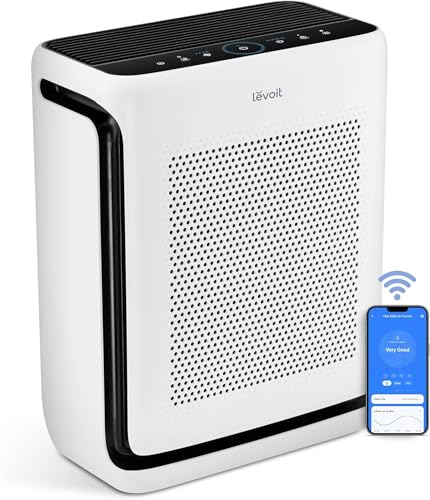
That is a temperament question wearing a technical costume. Households that will use sensors, schedules, and app data — and there are many, well served by the smart rivals in this programme’s other reviews, including the sensor-led Levoit Vital 200S — should buy that temperament. Households that want capacity, filter mass, and controls that never need a password will find the 50’s plainness a feature renewed daily. The air does not care which philosophy cleans it; the household must live with the philosophy, so choose the one that will still be running in year three.
Related guides
the missing middle rung and its bracket
HEPA machines for serious rooms