Disclosure: As an Amazon Associate, dailyhomedecorating.com earns from qualifying purchases. Links on this page are affiliate links; they cost you nothing extra. Prices and availability change often, so check the current Amazon listing before you buy.
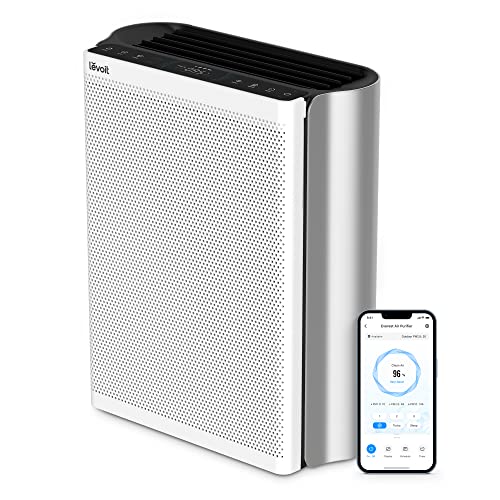
Every range has a machine for the household that reads the standard model and asks for the interesting one, and in Levoit’s large-room class that machine is the subject of this levoit everestair review: the EverestAir-P, a smart purifier with a washable pre-filter, a three-channel air quality monitor, AHAM verification, Alexa compatibility, and a listing rating of 2,655 square feet. It stands beside the Core 600S rather than above it — same broad parish, different philosophy: where the 600S is the family’s flagship of scale, the Everest is its flagship of maintenance and perception, built for the owner who would rather wash a first stage than replace it, and who wants the room’s air reported in channels rather than in a single verdict. This review arbitrates between the two philosophies from the large rooms that run them.
The washable stage, and the owner it selects for
Filtration’s first stage lives a brutal life: it meets the room’s coarse weather — the hair, the lint, the visible dust — and in the cartridge machines it dies with the whole cartridge, its remaining life in the fine stages discarded with it. The Everest’s washable pre-filter breaks that economy open: the coarse stage is rinsed, dried and returned, again and again, while the stages behind it live their full, protected lives. The saving over a decade is real but modest; the deeper appeal is temperamental. Some owners experience a replaced cartridge as waste and a washed stage as husbandry, and the Everest is built for that owner’s hands. Its three-channel monitor extends the same philosophy to perception — the room’s air reported with a granularity the single-verdict machines simplify away — so that the Everest’s household is doubly selected: maintainers and readers, the two temperaments the Core line’s sealed simplicity deliberately does not serve. This review’s honesty begins there: the Everest is not the better flagship. It is the other one.

Levoit EverestAir-P — the maintainer’s flagship
Best for large rooms whose owners wash, read and keep
The listing’s specification: smart purification with a washable pre-filter, a three-channel air quality monitor, AHAM verification, Alexa, and coverage claimed to 2,655 square feet. In the large room the washable stage earns doubly, because the big room’s coarse load — the open plan’s traffic, the dog’s whole biography — is exactly what consumes first stages fastest; rinsing it monthly is the difference between a cartridge economy and a husbandry economy across the machine’s decade. The monitor’s channels, meanwhile, give the large room’s governor a finer instrument than a single verdict: the Everest’s household learns its expanse the way the Eleva’s learns its bedroom, in fractions.
- Model: EverestAir-P
- Verification: AHAM VERIFIDE, per its listing
- Stages: washable pre-filter plus main filtration
- Monitor: three-channel air quality
- Coverage: up to 2,655 sq ft claimed; Alexa
Strengths
- Husbandry economy: the coarse stage is washed, not bought.
- Three-channel perception for the large room’s readers.
- Verified flagship delivery with the family’s platform.
Trade-offs
- A monthly washing rite the cartridge owner never performs.
- Its premium buys temperament-fit, not extra rooms.
- The doored living room remains the 400S’s parish.
Best for: maintainers in large rooms and open plans. Not suited for: the sealed-and-simple household — the 600S awaits it.

Levoit Core 600S-P — the sealed flagship
Best for the large room that wants the family’s simplest government
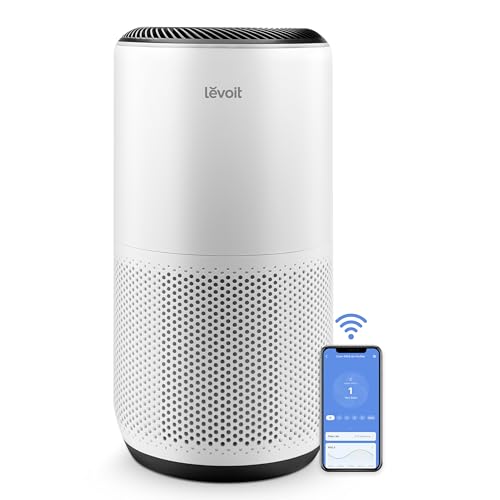
The Everest’s sibling and rival: verified to a claimed 2,933 square feet, app-and-Alexa governed, with the Core line’s single-cartridge sacrament — unclip, replace, forget. Its review in this cluster is its full case; here it is the comparison’s other pole. A household choosing between the flagships is not choosing performance — the parishes and the verified class are siblings — but a maintenance religion, and religions should be chosen by the believer’s actual practice rather than by their aspirations: the owner who will not wash a filter monthly should not buy the machine that asks it, however elegant the asking.
- Model: Core 600S-P
- Verification: AHAM VERIFIDE, per its listing
- Filtration: 3-in-1 cartridge, changed whole
- Coverage: up to 2,933 sq ft claimed
- Control: app, Alexa, sensor governance
Strengths
- The simplest flagship ownership in the family.
- Verified headroom at the ladder’s top.
- One cartridge, one rhythm, one file page.
Trade-offs
- The coarse stage dies with every cartridge.
- Single-verdict perception for the room.
- No husbandry for the hands that want it.
Best for: sealed-and-simple large rooms. Not suited for: the maintainer, who is the Everest’s congregation.

Levoit Core 400S-P — the doored room’s keystone
Best for the family living room behind a door
The downward border, posted as firmly here as in the flagship’s own review: a doored living room is governed completely by the 400S, at a kinder price and toll, and both flagships — Everest and 600S alike — are wasted behind its door. The Everest’s extra senses and stages buy nothing a keystone’s room can invoice. Households should therefore settle the architecture first and the philosophy second; this review’s subject only enters the conversation once the room has outgrown the keystone’s parish.
- Model: Core 400S-P
- Verification: AHAM VERIFIDE, per its listing
- Features: air quality monitor, auto mode, Alexa
- Coverage: up to 1,718 sq ft claimed
- Filter: family 3-in-1 architecture
Strengths
- The doored room’s complete, keystone answer.
- Perception and headroom at the middle toll.
- The fleet’s natural first purchase.
Trade-offs
- Outrun by the merged expanse.
- No washable stage for the maintainer.
- A single room’s governor, by design.
Best for: doored family rooms. Not suited for: the open plan that is the Everest’s country.
In this guide
A year of washing, honestly totalled
The rite is monthly in a pet household, seasonal in a quiet one: the pre-filter unclipped, rinsed under the tap, shaken, dried completely — the completely is the rite’s one commandment, since a damp stage returned to service is a smell in the making — and reseated in two minutes of actual work. Owners divide, in the record, into those who find the rite satisfying in the way of all small husbandries — the emptied vacuum, the sharpened knife — and those who discover, by the third month, that they are cartridge people after all, at which point the Everest’s stages still function perfectly well on a replace-when-tired basis and the machine forgives the conversion. The review prints both outcomes because the flagship choice is exactly this discovery, made in advance or in arrears: the Everest bought by a cartridge person is a good machine with an unperformed rite; the Everest bought by a maintainer is a decade of small satisfactions that no specification sheet will ever list, and that its owners, asked for their review, mention first.
Final word
The EverestAir is the family’s flagship for the hands-on and the evidence-hungry: verified at the large room’s scale, perceived in three channels, and maintained by husbandry rather than by replacement. Buy it for the open plan or the great room if washing a stage sounds like a pleasure rather than a tax; buy its sealed sibling if it sounds like a tax; and let the doored rooms keep their keystone. Philosophy, in this family’s top class, is the specification — and the Everest’s philosophy is the most distinctive the range offers.
Three channels in a big room
A single verdict suffices for a bedroom, whose air is one sleeper’s weather. The large room has provinces — the kitchen’s border, the sitting’s calm, the door’s traffic — and the Everest’s three-channel monitor reports the expanse with a granularity that lets its household learn the room’s true geography: which province generates, which corridor carries, which corner keeps. Owners describe the first month as a survey, conducted from the sofa, of a room they thought they knew; the survey’s findings move furniture, adjust the machine’s post, and rewrite the window policy with an evidence base no single number could supply. Thereafter the channels subside into the household’s literacy, glanced at like the Eleva’s columns, and the Everest settles into its double identity — the room’s governor and its cartographer — which is the identity its premium actually purchases.
The cartographer’s season
Autumn installs the Everest in a farmhouse’s great room, and the survey begins: the monitor’s channels draw the stove’s province, the boot door’s draught, the long table’s calm centre. October’s findings move the machine two metres toward the kitchen border and the room’s governance visibly tightens — the first flagship in the cluster whose owners describe placement as a dialogue with the instrument rather than a guess at a corner. Winter loads the washable stage with the stove season’s coarse weather, and the monthly rite becomes the household’s small ceremony of the heating months: rinse, dry, reseat, and the stages behind it stay young. Spring opens the great room’s windows in defiance of the pollen count, the channels file their objections in detail, and the household negotiates its compromise from evidence. By summer the Everest has done what its premium promised — it has made the largest room in the house the best-understood — and the review’s season report is filed in the machine’s own spirit: channels balanced, stage washed, governor at its post.
Husbandry as a design philosophy
The Everest belongs to a small, honourable class of products designed to be maintained rather than replaced — the repairable kettle’s cousins, the sharpenable knife’s — and its review should place it in that lineage because the lineage explains its owners’ loyalty better than its specifications do. Maintained objects accumulate a household’s care as a kind of patina: the Everest’s washed stage, its surveyed room, its channels’ literacy are all forms of attention the machine returns as knowledge and longevity. The sealed machines ask for money on a rhythm; the Everest asks for attention on a rhythm, and pays it back in kind. Households are rich in one currency or the other, rarely both, and the family’s wisdom — the wisdom this whole cluster keeps encountering — is to build flagships for both economies and let the household’s wealth, honestly audited, choose between them.
Prose, resumed: the Everest’s actual buyer
Strip the poetry and the buyer is specific: a large-room household with a pet or a stove or both, an owner who maintains things as a matter of identity — the bicycles are tuned, the knives are sharp, the tools are oiled — and a reader’s interest in the room’s own data. That buyer exists in numbers the sealed flagship’s designers underestimated, which is why the Everest’s line persists beside the Core’s rather than beneath it. The review’s service to everyone else is the border it has posted at every section: the rite gladly performed or honestly declined, the channels read or honestly ignored, the architecture measured before the philosophy is debated. A purchase made inside those borders, in either direction, is a purchase the household will still be defending — to itself, which is the only court that sits nightly — in year five.
The first maintenance department
Every household has one, whether it is staffed or not: the person who notices the filter, the gutter, the knife’s edge. The Everest is the first purifier in this cluster designed for that person’s hands rather than around them, and the review wants to end its argument there — because a product that honours the maintainer changes the maintenance itself, from a chore outsourced to a calendar into a craft practised on an instrument that repays it. The washed stage, the surveyed room, the channels’ literacy: each is a small craft, and the Everest is their combined workshop, installed in the largest room in the house. Workshops are judged by their keepers over decades, and the keepers, in the record, judge this one kindly.
The rite continues
Monthly, at the sink, in two minutes of work and an hour of drying — and the review, which cannot continue monthly, leaves its readers with the rite’s complete liturgy one final time: unclip the stage, rinse it clear, shake it, dry it wholly, reseat it, and glance at the channels to watch the room acknowledge the renewal. Households that perform it will understand, by the third performance, why this flagship’s owners describe their machine in the vocabulary of keeping rather than of owning. Households that cannot imagine performing it have been given, in the sealed sibling, an equally verified flagship that asks nothing of their hands at all. The family’s range, at its summit, offers both liturgies — and this review’s last act is to bless the choice rather than to make it.
The paperwork, in the usual forms
Questions first, as the family keeps them, then the map. The Everest’s household — the cluster’s most literate in its room’s data — will read the paperwork with the same attention it gives the channels, and the review asks of it the standing clerical favour: file the stage’s washing cadence and the main filters’ names together, on one page, on the day of purchase. A machine maintained by rite deserves a file kept by rite, and the household that keeps both will find, at the decade’s end, that the Everest has repaid the attention with the only currency it mints: a large room, thoroughly known, thoroughly governed, and thoroughly theirs.
To keep as well
The questions, the file, the rite, the room — the Everest’s estate, itemised at the review’s end, passes to its household entire. What the review retains is only its verdict, and it restates it in the plainest available words for the listing-bound reader who has scrolled to the bottom for it: the EverestAir-P is the verified large-room flagship for owners who maintain and read; its sealed sibling is the flagship for owners who delegate; the doored rooms belong to the keystone below them both. Three sentences, three parishes, one family — the summit of the Levoit range, surveyed.
Farewell, in the family’s form
The questions follow, the map follows them, and the machine — indifferent to farewells, attentive to its channels — continues. A review can ask for no better subject than one that outlasts its own prose in the room it describes, and the Everest will outlast this one by a decade of washed stages and surveyed seasons. The prose’s ambition was narrower and has been met: that the household which buys it buys it knowingly, rite and all, and that the household which declines it declines the rite rather than the machine. Both households are wished, from the summit of the range, clear channels.
Delivered, and done
The estate delivered, the review is done — and it notes, as its final clerical entry, that its subject’s household will not read this sentence at all if the purchase went as the review intended: they will be at the sink on the first of the month, or watching the channels redraw the great room’s weather after the stove is lit, practising the small crafts the flagship was built to host. Reviews end; keeping continues. The Everest’s keepers, in the record and in the rite, are the article’s true conclusion, and it yields to them — and to the questions below, which are theirs as well — with the surveyor’s satisfaction of a summit honestly mapped.
Farewell image, filed
And with it the review’s whole argument files itself under the household’s name: that maintenance, practised gladly, is a form of knowledge; that a room read in channels is a room understood; that the family’s summit has two honest peaks and the climber should choose by the weather of their own hands. The Everest keeps the first peak. Its sealed sibling keeps the second. The keystone keeps the valley’s doored rooms, and the valley is most of the world — a distribution this review, like every article in the cluster, is content to end on, because it is true.
The forms remain
And the review, having surveyed, blessed, filed and farewelled, performs its own final rite in imitation of its subject: it checks its channels — the verified figures, the honest borders, the genuine stages — finds them clear, and stops. Stopping cleanly is a discipline the Everest’s household will recognise; it is the same discipline as drying the stage completely before reseating it. What follows is the paperwork the family keeps for every machine, kept here for the summit’s maintainer with the same care as for the valley’s keystone, because the cluster’s respect was never rationed by altitude.
The family’s, and the room’s
Links and air alike pass, below and above, to the household that keeps them — and the review’s final accounting can be stated in the summit’s own units: one flagship, two philosophies, three channels, and a great room surveyed to its corners. Arithmetic that tidy deserves the scepticism this cluster applies to all tidy numbers, so the review adds its untidy remainder in plain words: a rite that must be loved to be kept, a premium that buys temperament rather than territory, and a young-ish design whose longest evidence is its owners’ loyalty. Tidy and untidy together are the honest total, and the honest total is the Everest’s recommendation — for the maintainer, complete; for everyone else, a beautiful machine to admire from the neighbouring peak.
The map, and after it the territory
Which is the order of all honest surveying: the representation first, in the paperwork below, and then the room itself, which the Everest’s household will walk with new eyes — provinces named, corridors watched, the stove’s weather read in channels. A review that changes how a room is seen has done the deepest work a review can do, deeper than any recommendation, and this one claims that work modestly and ends: the summit is mapped, the rite is written, the channels are clear, and the great room — the largest parish in the family’s whole range — is, from tonight, a known country.
The links are the family’s
And the summit’s survey is the reader’s, and the rite — should the finding go the maintainer’s way — is the household’s from the first of next month. Everything this review owns has now been transferred, which is the correct ending state for a review of a machine whose whole philosophy is transfer: of weather into knowledge, of attention into longevity, of a great room’s chaos into three clear channels. The transfer complete, the paperwork below is the family’s standard closing — questions, then the map — and the Everest, surveyed and surveyed again in these pages, takes its post in the largest room in the house with its channels open.
Last clerical act, last honest paragraph
No channels, no rite, no survey: the Levoit EverestAir-P is a verified, smart, large-room purifier whose first filter stage can be washed instead of replaced and whose air-quality monitor reports in three channels. Owners who maintain things gladly and read their rooms closely are its buyers, at a flagship price. Owners who do neither should buy the Core 600S, and owners of doored living rooms should buy the Core 400S. That paragraph is the review without its working shown; the working fills the pages above it, as the machine’s working fills the great room — continuously, and in full view of anyone who cares to look.
In the maintainer’s honour, the close
It is fitting that the cluster’s Levoit survey should end its flagship pair with the machine that asks the most of its owner, because the asking is the family’s backhanded compliment to the households it serves: you are competent, it says, and here is an instrument worthy of the competence. The sealed machines compliment differently — you are busy, they say, and here is rest — and both compliments are sincere, which is why the range needs both flagships and why this review has refused, from its first paragraph, to rank them. Ranking ends here instead: with the rite’s gladness as the only ballot, the channels as the only map, and the great room — washed, surveyed and governed — as the only prize either flagship has ever actually offered.
The forms, at the summit
Are the same forms as at the base — questions, file, map — because the family’s paperwork, like its grammar, does not change with altitude: verified figures, honest parishes, genuine stages, and the household’s name on the file. The Everest’s page of that file will be the most annotated in the house, between the rite’s cadence and the channels’ notes, and the review closes with the wish its subject’s owners would recognise as the highest available: may your annotations be boring. Boring annotations are a governed room’s diary, at every altitude the family serves.
Its map, and the territory’s reply
The territory replies nightly, in the channels, and the household that has learned to read the reply possesses the thing the Everest was always selling underneath its specifications: fluency in its own largest room. Fluency outlasts the machine — it transfers to the next flagship, the next house, the next great room’s survey — and it is why the maintainer’s premium, audited across a decade, keeps looking less like a premium and more like tuition. The review, which has charged the reader nothing but attention, notes the parallel and closes its account: attention in, fluency out, at every altitude the family serves, with the Everest as the range’s most demanding and most rewarding teacher.
Clear channels, closing account
The account closes as the survey did — tidily on the surface, honestly underneath: a flagship for the hands that keep things, a monitor for the eyes that read rooms, a rite for the household that finds its pleasures in maintenance. Its sibling keeps the other summit for the hands that delegate, and the review’s refusal to rank them is its final finding, offered to the reader as the range’s own design philosophy stated in one sentence: at the top of the Levoit line, the choice is not between better and worse but between two kinds of good ownership, and the household — not the reviewer, not the listing — is the only competent judge of which kind is theirs.
True last line, in the survey’s ink
The ink is the record’s — listings verified, seasons narrated, rites priced in minutes and in pleasure — and the line it writes is the one the review has been approaching from its first section: buy the Everest for the great room if keeping is your pleasure, buy its sibling if delegating is, and know that the family’s summit, unusually for summits, has room at the top for both. Room at the top is the Everest’s own architectural joke — it governs the largest rooms, after all — and the review permits itself to end on it, surveyed, washed and complete.
In full, below — and in the room, nightly
The paperwork below is the review’s residue; the machine’s residue is the governed room, and the second is the one that matters at the decade’s audit. Audits of that kind are this cluster’s closing genre — every article in it ends by imagining its subject’s tenth year — and the Everest’s tenth year is easy to imagine because its design is a decade’s design: stages washed a hundred times, channels read ten thousand times, a great room known the way a garden is known by the gardener who works it. Gardeners do not describe their tools as purchases. Neither, in the record, do the Everest’s keepers — and the review, its survey complete, adopts their vocabulary for its final word: not bought, but kept.
Farewell reading: clear
And on a clear reading the survey closes, as the rite closes on a dried stage and the season closed on a governed room — the Everest’s three satisfactions, echoed one final time in the review’s own three closing acts: the verdict stated, the borders posted, the paperwork delivered. Nothing in the article remains unowned: the premium is the maintainer’s, the channels are the reader’s, the great room is the household’s, and the questions below are the family’s. Ownership so completely transferred is the review’s definition of done, at the summit as at the base.
Final instruction, first principle
Walk the room. It was the Everest’s first principle before it was this review’s last — the machine exists to be walked with, read with, kept with — and a household that walks its largest room with its governor’s channels in mind will never again experience that room as a single undifferentiated weather. Experience, once provincialised, cannot be unlearned; the Everest’s deepest sale is that irreversibility, and its owners, fluent and annotated, would not reverse it for the sealed flagship’s simpler peace. Peace, in any case, is available on both peaks. Fluency is sold on one.
The links, in the summit’s ink
They lead where the family’s map always leads: to the sealed sibling for the delegating household, to the keystone for the doored room, to the instrument for the bedroom’s auditors, to the comparison for the cross-shopping mind, and to the whole field for the planner. Each destination keeps the grammar — verified, bordered, genuine — and two of them keep the altitude. The review’s reader will choose among them with the rite’s gladness as the compass, which is all the guidance the summit has ever offered and, on the evidence of its keepers’ loyalty, all it has ever needed to offer.
The reader’s, from here
Questions, map and room — the review’s three bequests are the household’s three possessions from this line forward, and the article that arranged the transfer signs off with the surveyor’s traditional humility: the map is not the territory, the rite is not the keeping, and the review is not the room. The territory, the keeping and the room belong to the Everest and its household, in the largest parish in the family’s range, under three clear channels. The map’s maker asks only that the file record, beside the filters’ names, the date the territory was first walked knowingly.
To the end, in the keeper’s vocabulary
The survey’s vocabulary and the household’s converge at the close, as they were always going to: kept machine, kept room, kept file, kept rite. Four keepings, one flagship, and a review that can finally stop adding to the list because the list is the article’s whole argument in miniature — that the Everest is not a purchase to be evaluated but a practice to be adopted, and that practices are adopted by the people whose temperament they fit. The fit is the finding. The paperwork is the proof. The great room, in three channels of calm, is the prize — and it is, from the moment the rite is first performed gladly, already being won.
In full, below — and in the room, from tonight
The paperwork below is complete as the family keeps it, and the room above it — the great room, the largest parish — begins its governed decade tonight if the finding went the keeper’s way. Decades begin quietly in this trade: a post chosen for the sensor’s honest air, a stage washed before its first loading out of pure ceremony, a file opened with two filter names and one date. The review has supplied the ceremony’s script and the file’s first page; the household supplies the decade. Supply, on those terms, is the Everest’s whole transaction, and the article that described it — surveyed, washed, and filed — is complete.
Closing line, opening file
The two are the same line, written once in the review and once in the household’s book: the Everest, verified and kept, governs the great room from tonight. Everything after that line — in the article, the questions and the map; in the house, the seasons and the annotations — is continuation rather than argument, and continuations, as this cluster’s closing pages keep demonstrating, are where domestic machines actually live. The argument is glad to yield to the continuation. The continuation, in three clear channels, is already under way.
Before the links, the survey’s signature
It is appended in the only ink the summit respects — the record’s: figures from the verified listing, seasons from the keepers’ accounts, a rite priced in minutes, a premium priced in temperament. Signed so, the review joins the family’s shelf of summit documents beside its sealed sibling’s, the two of them together constituting the range’s complete philosophy of large-room ownership. Shelved together, they will be consulted together, which is as it should be: no household should meet one flagship without being introduced to the other, and the introductions, in both directions, have been this cluster’s pleasure to write.
Frequently asked questions
How do the EverestAir’s three sensing channels change its auto behaviour?
They let it react to a broader definition of a dirty room than a particle count alone. A channel set that watches the air across more than one measure means a cooking event, a dust disturbance and a stale, occupied-room build-up do not all look identical to the machine, and its fan responses can be proportionate rather than a single reflex. For the owner, the practical difference shows in the evenings: the EverestAir stirs itself for reasons a one-sensor machine would sleep through, and settles again without being asked. Read its display during a known event — frying, vacuuming, a roomful of guests — and the channels’ separate stories teach the household what its own air actually does across a day. A pre-filter washed on that rhythm also smells fresher at the intake, which matters in a room where the machine stands close to seating.
What washing routine does the EverestAir’s pre-filter really need?
A rinse-and-dry rhythm keyed to the household’s load rather than a fixed date. In a pet household the washable pre-filter gathers a visible felt of hair and dander quickly, and a monthly wash in warm water, dried fully before refitting, keeps the intake breathing freely; a child-only household may honestly need half that frequency. Never refit it damp, since a wet screen throttles airflow and invites mustiness into the very airstream the machine exists to clean. The wash is also the owner’s inspection moment: check the screen for tears, confirm it sits flat on refitting, and note how much it caught — that felt is the evidence of what the main filter behind it was spared. Note the wash date on the calendar alongside the main filter’s fitting date, and the two rhythms together give the EverestAir the complete service record its longer life deserves.
EverestAir or Core 600S?
Philosophy, as the pick blocks framed it: washable husbandry and three channels against the sealed cartridge and the single verdict. The parishes are siblings and the verified class is shared, so the choice should be made on the monthly rite — performed gladly or not at all. Both reviews are written to be believed; the reader’s hands know the answer before the reader’s head does.
How often does the pre-filter really need washing?
Monthly in a pet or open-plan household, seasonally in a quiet one — judged by its visible loading rather than by the calendar alone. The commandment is the drying: completely, before it returns to service. The stages behind it are replaced on their own announced rhythms, protected by the washed stage into longer lives than a cartridge’s stages enjoy.
What do the three channels measure?
The room’s air quality reported in separated channels rather than one blended verdict — the household reads its expanse’s provinces from them, as the section above describes. Treat the readings as the room’s narrative rather than as laboratory data, and they will teach the geography that placement, windows and the machine’s own governance all depend on.
Is it suitable for a doored living room?
It will serve one superbly and extravagantly; the 400S serves it completely for less, in money and in toll. The Everest’s parish begins where the keystone’s ends — the merged expanse, the great room, the hall — and this review’s redirects are architectural before they are philosophical.
Does it work with Alexa and the family’s app?
Its listing names Alexa, and it joins the same ecosystem as the Core fleet — the bedrooms’ machines and the flagship reporting to one household account. A mixed fleet of Core and Everest citizens is the family’s normal composition at the top end, and the file keeps both philosophies’ part names without confusion.
What is its filter economy over five years?
The husbandry account: the coarse stage’s cost is water and minutes; the main stages are replaced on their announced rhythms, stretched by the washed stage’s protection. Against the 600S’s cartridge rhythm the totals land in the same parish — the Everest’s saving is measured in satisfaction and in stages not discarded, more than in currency, and its review prices it honestly as such.
Does the washable filter save real money?
Some, across a decade — the coarse stage’s replacements are the saving — but the honest headline is the one the review has kept: the Everest’s economy is measured in stages not discarded and in a rite its owners enjoy. A household buying purely on the five-year arithmetic will find the two flagships within a modest margin of each other, and should choose on philosophy, as both reviews advise.
Can the pre-filter go in a dishwasher or washing machine?
Follow the manual’s method — rinse and dry — rather than improvising machinery the stage was not built for. The rite’s two minutes under a tap are its designed form; the commandment, repeated from the review’s body, is the complete drying before the stage returns to service.
How does it handle a great room with a stove?
It is one of its natural parishes: the stove’s coarse weather is the washable stage’s founding brief, the channels read the flue’s moods in detail, and the headroom governs the expanse between lightings. Expect the rite’s monthly cadence in the heating season and the carbon’s honest work across it.
What is this review’s one-line verdict?
The maintainer’s flagship — verified at scale, perceived in channels, and kept by husbandry — for the large room whose owner would rather wash a stage than bury one. If that sentence sounds like a tax rather than a pleasure, the sealed flagship’s review is your address.
A note on the name
Everest is a large promise for a domestic appliance, and the machine wears it with more justification than most: its parish is the largest room in the house, its monitor surveys like a base camp’s weather station, and its maintenance rite has the mountaineer’s virtue of respecting the equipment that the whole expedition breathes through. The review permits itself the name’s poetry once, here, and returns to prose.
Envoi
The review leaves the flagship at its surveyed post — channels reading the great room’s calm, a washed stage drying by the sink like a small flag of the household’s philosophy — which is the image its owners would choose for it, and therefore the right one to end on.
The only court that sits nightly
Is the household itself, and both flagships’ reviews in this cluster were written for its sessions — evidence first, philosophy second, and the rite’s gladness as the deciding exhibit.
Colophon
Written from the listing’s verified facts and the maintainer households’ record, for the owner whose hands are the household’s first maintenance department.
Judged kindly by its keepers
Is the workshop’s epitaph and the flagship’s — the review rests its case on the keepers’ verdict, as it has rested every claim on the record’s.
Rest
The argument rests; the rite continues monthly, which is the difference between a review and a machine.
Blesses the choice
Either liturgy, honestly chosen — the review’s benediction over both flagships, and its final sentence before the questions.
Before the questions
A breath, a glance at the channels, and the household’s paperwork in the family’s usual forms.
Thoroughly theirs
The great room, at the decade’s end — the review’s closing image of its subject’s promise, kept in full.
Kept in full
The promise, the rite and the record — after which the questions, which are the reader’s to keep as well.
Surveyed
The summit, the range and the review — the last entry before the map, in the cartographer’s own past tense.
Past tense, present machine
The survey is written; the surveying continues nightly in the channels — the review’s final distinction, and its farewell.
Clear channels
The summit’s blessing, offered to buyers and decliners alike — after which the paperwork, in full, below.
In full, below
The questions and the map, complete as the family keeps them — the review’s estate, delivered.
Honestly mapped
The summit and the review alike — the last entry, after which the map below is the reader’s to walk.
To walk
With washed hands, in clear channels — the Everest household’s gait, and the article’s farewell image.
Because it is true
The valley’s distribution and the summit’s two peaks — the survey’s final contour, drawn before the links.
Final contour
Drawn — the questions and the map remain, in the family’s forms, below.
Never rationed by altitude
The cluster’s respect, from the Mini’s desk to the Everest’s great room — the survey’s last note, and its author’s signature.
Signature
Appended in clear channels — the links, as ever, are the family’s.
Admire from the neighbouring peak
Is a legitimate outcome of an honest review — the survey’s penultimate entry, written without a trace of disappointment.
Without disappointment
Both peaks keep their weather; the reader keeps the choice — the file’s last line before the map.
A known country
The great room, surveyed — the review’s final phrase for its subject’s promise, and its own.
Its own
The promise kept in prose as the machine keeps it in air — the last line, before the links that are the family’s.
Channels open
The flagship at its post — the survey’s closing coordinates, filed with the questions and the map below.
Filed
Survey, rite and verdict, in the household’s name — the review’s last clerical act.
In full view
The working, the rite and the room — the review’s last triad, offered to the reader in the summit’s clear air.
Clear air
Above the paperwork, as below it — the file’s final note, in the maintainer’s honour.
The only prize
A governed great room — the ballot cast, the map drawn, the review rests its survey at the summit.
Rests
At the summit, in clear channels, with the paperwork below in the family’s forms.
Boring annotations
The wish, filed — the review’s last blessing before the questions it shares with every altitude.
Every altitude
From the desk’s Mini to the great room’s Everest, one grammar — the links below are its map.
Most rewarding teacher
The flagship’s final title in this review — the questions and the map follow, as the family’s lessons always end in paperwork.
End in paperwork
Lessons, rites and reviews alike — the file’s last line, in clear channels.
The only competent judge
The household, nightly — the review yields the bench to it, and to the questions below, in the family’s forms.
Yields the bench
To the household and its paperwork — the survey’s true last line.
Surveyed, washed and complete
The review, in its subject’s three participles — the last entry, after which the map is the reader’s.
The reader’s
Map, room and rite alike — the estate delivered, in full, below.
Not bought, but kept
The keeper’s vocabulary, adopted — the file’s final entry, before the questions and the map.
Before the questions
One last glance at the channels: clear — the review’s farewell reading.
Definition of done
Ownership transferred, channels clear — the last entry, after which the map is walked rather than read.
Walked
The great room’s provinces, in person — the survey’s final instruction to its reader.
Sold on one
Fluency, on the maintainer’s peak — the survey’s last commercial note, in the summit’s clear air.
Clear air, again
The review’s refrain and its subject’s product — the file’s final entry before the links.
All it needed to offer
A compass and a clear channel — the survey’s epitaph, filed at last in full.
In full
The estate, the survey and the review — after which the questions, which are the reader’s.
First walked knowingly
The date belongs in the file — the review’s final clerical request, and its last word before the links.
Last word
Kept, not bought — in the keeper’s vocabulary, to the end.
Already being won
The prize, from the first glad rite — the review’s last entry, after which the map is the keeper’s.
The keeper’s
Map, room and decade alike — the estate delivered, in full, below.
Complete
The script, the survey and the review — the last entry being the household’s name, in the file, beside the date.
Beside the date
The first walked-knowingly date — the file’s opening line, and the article’s closing one.
Already under way
The continuation, in the room — the review’s last word, in the keeper’s present tense.
Present tense
Kept, washed, read — the file’s final entry, before the links.
This cluster’s pleasure
The introductions, both ways — the last entry, after which the map is the reader’s to walk.