Disclosure: As an Amazon Associate, dailyhomedecorating.com earns from qualifying purchases. Links on this page are affiliate links; they cost you nothing extra. Prices and availability change often, so check the current Amazon listing before you buy.
This stainless steel food containers buying guide exists because the category looks simple and behaves complicated. A wall of bright, nested boxes promises an organised kitchen, yet the difference between a set that serves a household for a decade and one that colonises a cupboard within a season comes down to a handful of decisions: the lid system, the size pattern, the shape, and how your household reheats. This guide explains the types, names the picks worth shortlisting at each tier, turns the important criteria into plain questions, and matches them to real household profiles — so the set you buy is the set your actual week would have chosen.
Two ground rules before the tour. First, the safety rule that shapes the whole category: stainless steel food containers must never go in the microwave, because metal reflects microwave energy and can spark, damaging the oven and the container; reheating always means decanting onto a plate or into a microwave-safe bowl. Second, the hygiene rule: lids with silicone gaskets or snap locks hide a seam where moisture and residue collect, and that seam grows mould if it is not washed and dried completely. Neither rule is a reason to avoid steel — both are simply the terms on which steel delivers its considerable strengths, and this guide will keep returning to them where they matter.
Key Takeaways
- Buy the lid for your wettest food: plain lids for dry duty, silicone seals for soups and stews.
- Steel never microwaves — plan to decant, or choose glass for reheating-centred routines.
- Straight sides and shared footprints make fridge and cupboard space go noticeably further.
- A lean starter set plus a one-month audit beats a giant set bought on day one.
- Gaskets must be removed, washed and fully dried, or the seam becomes the set’s weak point.
Stainless Steel Food Containers Buying Guide: What They Do and the Main Types
At heart, a stainless steel food container does one job — hold food in a rigid, non-porous, flavour-neutral box — for three different theatres: transport, cold storage and portioning. The theatres reward different designs, which is why the category has settled into distinct types rather than one universal box. Understanding the types first prevents the classic error of buying a transport design for a storage job and then blaming the material for the mismatch.
Plain-lidded containers
The original form: a steel body and a steel lid, held by friction, a simple lip or light latches. Plain-lidded containers are the easiest to wash, carry no gasket to maintain, stack beautifully, and handle dry food, salads and fridge leftovers with total competence. Their honest limit is liquid: they are splash-resistant, not leak-resistant, and a soup commute in one is a gamble. Households whose cargo is mostly solid will find this type covers the great majority of their week at the lowest maintenance cost in the category, which is why it remains the backbone of most sensible sets.
Compartment lunch systems
Compartment systems divide one tray into fixed sections under a single lid, turning lunch into an open-and-eat spread. They serve children, grazers and anyone whose midday meal is a small buffet, and they eliminate the fleet of little pots a varied lunch otherwise needs. The trade-offs are portion rigidity — the tray decides how much of each thing you get — and liquid behaviour, since runny food can wander between sections in many designs. As a school or office centrepiece they are superb; as a home for stew they are the wrong tool, and no amount of build quality changes that geometry.
Silicone-sealed containers
Sealed designs press a silicone gasket against the rim, sometimes helped by snap locks, to make the container genuinely suitable for soups, stews and saucy dishes in transit. This is the type that unlocks the full menu for commuters, and the type that asks the most in return: the gasket must come out, be washed in hot soapy water, and dry completely before reassembly, every time, or the hidden seam becomes a mould nursery. Buy this type for the wettest thing you regularly carry, test it with water over the sink before its first real journey, and keep it upright in the bag as a belt-and-braces habit.
Graduated nesting sets
Sets of containers in graduated sizes, designed to nest inside one another for storage, sell the whole-cupboard solution: one purchase that covers fridge, freezer, prep and lunch. Their value depends entirely on the size pattern matching your real portions, which is why this guide insists on a week of portion-watching before choosing one. When the pattern fits, a nesting set is the most space-efficient way to own steel; when it does not, the unused sizes become elegant ballast. Buy the pattern, not the piece count.
Small pots and rounds
The supporting type: small round containers, often with flexible silicone lids, for dressings, dips, nuts, berries and the fiddly extras that otherwise rattle loose inside a main box. They are cheap in tier terms, disproportionately useful, and the most common omission from first orders. Almost every satisfied steel household owns a few, because systems fail at their edges and small pots are how the edges get covered.
In this guide
Top Picks at a Glance
Six families cover the types above, positioned here by role and tier rather than price, since prices move and roles endure. Each carries a marker where the publishing pipeline will attach the verified listing and photograph, and each is treated in prose until that verification completes. Readers who want the deep-dive treatment can continue into our stainless steel food containers review and our comparative stainless steel food containers reviews.
LunchBots Large — Best Overall for Most Households
The plain-lidded workhorse earns the overall badge by covering the widest share of real weeks: lunches, leftovers, prep portions, all without a gasket to maintain. Mid-tier, endlessly stackable, and the easiest recommendation in this guide for a first steel purchase. Best for: general households starting the switch. Not suited for: soup commuters, who need a seal.

PlanetBox Rover — Best for School and Grazer Lunches
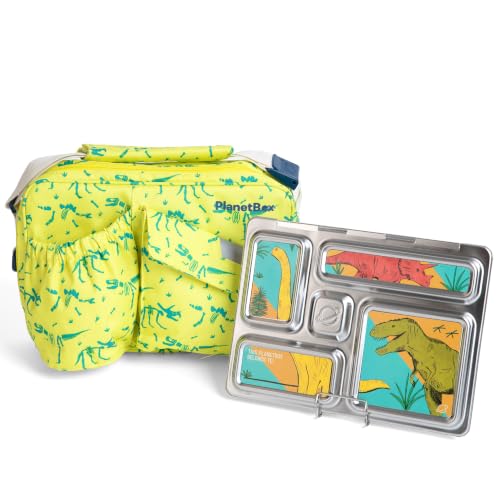
The compartment benchmark, premium-tier and unapologetic about it, justified by daily use. Sections organise a varied lunch into one tray, and the build tolerates school-bag life. Best for: children and committed grazers. Not suited for: liquid lunches or portion improvisers.
Ecozoi Container Set — Best Whole-Cupboard Set
The graduated nesting answer for households replacing a plastic drawer in one move. Its value rises or falls with the size-pattern fit, so measure portions first. Best for: organised family kitchens. Not suited for: guessers, or cupboards that cannot house the full nest.
Klean Kanteen Food Box — Best for Wet Lunches
The seal-forward choice for soups, stews and saucy commutes, mid-to-premium tier. Its owners sign up for the gasket routine and receive leak confidence in exchange. Best for: disciplined soup carriers. Not suited for: households that will not wash and dry seals.
U Konserve Round Container — Best Small Pots
The dressing-and-dip specialists that complete any system, entry-to-mid tier and bought in pairs. Best for: everyone, as the second line of any order. Not suited for: being the whole order — they are a supporting act by design.
Bentgo Stainless — Best Mainstream Compartment Box
Bentgo’s stainless take on its familiar compartment layout, mid-tier, aimed at households upgrading from plastic bento habits. Best for: lunch packers who want sections without a premium badge. Not suited for: households needing certified soup transport.
How Much Capacity Do You Actually Need?
Capacity questions fail when they are asked in the abstract, so ask them against your own servings. Ladle a typical lunch into a measuring jug once and note the volume honestly; do the same with the leftovers from a normal family dinner. Most adults’ packed lunches cluster in a middle band that one generous container covers, most family leftovers want one large container rather than three mediums, and most disappointments come from sets heavy in small sizes nobody fills. Buy for the servings you measured, keep one size up for the weekly roast or batch session, and let small pots — not extra mediums — handle the extras. Capacity is also a fridge question: straight-sided containers in shared footprints turn a shelf into a grid, while a menagerie of tapers and rounds wastes the corners of every shelf they touch.
Which Lid Type Fits Your Wettest Food?
This is the criterion that decides satisfaction, so it gets its own heading in question form. List the wettest three things you carry or store regularly. If the list stops at salads and sandwiches, plain lids win on simplicity and washing ease. If it includes a weekly soup, a curry with ambitions, or a stew that travels, only a silicone-sealed design deserves your money, and the seal’s maintenance becomes part of the purchase. Snap-lock lids sit between: firm sealing and fast opening for busy family kitchens, with hinge grooves that need the same drying discipline as gaskets. Whichever family you choose, rehearse its routine before the set multiplies — can the gasket come out easily, can every household hand open the lid, does the whole thing dry in the space you actually have? A lid that passes those questions will be loved; a lid that fails them will be circumvented, and a circumvented container is a wasted one.
How Will You Reheat? The Question That Can End the Search
Every buying guide in this category owes you this section early, and here it is without decoration. Stainless steel must never go in the microwave. If your routine reheats food in the container it travelled or stored in — the office microwave queue, the student kitchen, the desk lunch eaten hot from its box — then steel is the wrong main material for you, full stop, and glass is the right one; stainless steel food containers vs glass food storage containers makes that comparison in full. If, instead, your food is reheated on plates, in pans or in an oven dish, or eaten cold by design, steel’s rule costs you one decanting step and nothing more. There is no third answer, and any guide that blurs this one is selling rather than guiding. Decide this question before the sizes, the sets and the badges, because it can end — or properly begin — the entire search.
Does the Set Need to Survive a School Bag, a Bike Bag or a Building Site?
Transport severity is the quiet criterion. A container that rides in a car footwell lives a gentle life; one that commutes by bicycle, gets dropped on playground tarmac, or shares a bag with tools lives a violent one. Steel’s rigidity is the category’s founding advantage precisely here: bodies do not crack, split or flex their lids open under pressure from neighbouring objects. For violent transport, weight the decision toward robust latches and rounded corners, keep sealed containers upright where possible, and remember that the lid remains the system boundary — a body can survive a drop that a tired gasket will quietly fail after. Households choosing for children should also test opening force with the child’s own hands, because the strongest container in the world fails its mission if lunch stays locked inside it.
How to Prioritise by Use Case
The weekday lunch household
Prioritise in this order: lid fit for your menu, then opening ease, then footprint, then everything else. A plain-lidded workhorse or a compartment box forms the centre; small pots join immediately; a sealed design joins only if the menu demands it. This household uses its containers more in a month than others do in a year, so durability of the lid mechanism outranks almost every aesthetic consideration. Two containers per packer, so one can dry fully while the other works, is the configuration that quietly prevents the damp-seal problem from ever starting.
The batch-cooking household
Prioritise identical sizes and shared footprints above all, because prep is a numbers game: five portions, five matching boxes, one calm fridge grid. Straight sides, freezer-tolerant lids checked against the maker’s guidance, and labels on everything — batch households live or die by their labelling, since five identical steel boxes of five similar stews is a lottery nobody wins hungry. One large container for the cooking day itself completes a system that can run for years without a single addition.
The family with young children
Prioritise openability and compartments. A school lunch must open under small, hurried hands, in noise, without a teacher’s rescue; test every lid with the child who will use it. Compartment trays earn their premium here by removing decisions at the lunch table, and steel earns its place by surviving the bag, the drop and the forgotten weekend in a locker. Weight-check the packed box in the real school bag, and keep the home leftover system separate and simpler — plain lids, big sizes, no gaskets for anyone to neglect.
The small-kitchen household
Prioritise nesting and footprint discipline ruthlessly. A graduated set whose bodies nest to a fraction of their spread is worth more in a small kitchen than any feature, and containers that share footprints across sizes stack in the fridge instead of sprawling. This household should also exploit steel’s calm appearance: a small, matching system can live on an open shelf or in closet organiser shelves that use the same stacking logic without visual noise, while the odd shapes steel does not suit go to the best storage baskets for corralling packets and odd shapes.
First Setup and Care Essentials
Setup begins with a wash: every body, lid and gasket washed in hot soapy water before first use, gaskets removed where they can be, and every part dried completely in open air. Decide the storage arrangement the same day — bodies nested, lids stored ajar or separately so no damp is trapped, tape and a marker living in the cupboard for labels. Run a water test on any sealed container over the sink. Then let the first week be a strengths tour: the compartment box with a grazer’s lunch, the sealed box with something saucy, the plain box with leftovers, so the household learns what each piece is for by using it where it shines.
Care thereafter is a rhythm. Wash bodies as you would a pan, with a normal sponge; use a bicarbonate paste for the rare stubborn mark and avoid scourers that scratch the finish. Give gaskets and lid grooves their weekly wash and — the step that decides everything — their complete dry before reassembly, inspecting the groove for dark spots or a musty smell. On food safety, keep the guide’s qualitative line: steel is a non-porous, food-contact material that does not absorb odours or flavours, and your protection is ordinary hygiene — cool cooked food promptly, refrigerate leftovers without delay, reheat thoroughly, and never leave perishables at room temperature because the box feels sturdy. No container outperforms its owner’s habits, and steel rewards good ones for years.
Mistakes to Avoid
The champion mistake is buying the biggest set on the page, because piece count photographs well and stores badly; the runner-up is choosing by body while ignoring the lid, which decides leaks, washing and satisfaction. Third is forgetting the microwave rule until the first office lunch, when it is too late to swap materials gracefully. Fourth is assuming all steel containers share the same freezer and oven behaviour — designs and lids differ, and the specific maker’s guidance governs, not the category’s reputation. Fifth is neglecting the dry: a sealed container stored damp will grow the mould its owner bought steel to escape, and the fix costs one minute of air-drying per wash. Finally, avoid mixing footprints across families when you expand; a system stacks or it sprawls, and the difference is decided at every second purchase. The balanced ledger in stainless steel food containers pros and cons and the value analysis in are stainless steel food containers worth it are worth reading before any order, and how to choose stainless steel food containers, step by step turns this guide’s criteria into a checklist.
A Word on Tiers, Without a Single Price
Prices change too often to print responsibly, so this guide positions picks by tier, and tiers in this category buy identifiable things. Entry tier buys the body and a plain lid: honest steel, simple duty, dry food — a legitimate place to start and, for some households, to finish. Mid tier buys the seal and the system: gasketed lids that survive soup, sizes that share footprints, small pots that complete the edges. Premium tier buys polish and permanence: compartment trays that latch beautifully, finishes that age gracefully, replacement parts available for years. The correct tier is the one matched to your frequency. Daily users amortise premium polish into pennies of experience; occasional users should let entry and mid tiers carry them, and spend the difference on the plate, bowl and labels that make the system work. However the tiers tempt you, keep the starter discipline: buy the smallest configuration that covers your measured week, audit after a month, and let evidence order the rest.
How the Types Behave Across a Real Week
Abstract comparisons sharpen when they are walked through a week. On Monday the plain-lidded box carries a sandwich and salad to work and comes home rinsed in seconds — the type at its best. On Tuesday the sealed container takes soup across town by bicycle and returns with its gasket removed, washed and drying on the rack, a minute of care that is the entire price of Tuesday’s confidence. Wednesday is prep night: identical containers take five portions in a fridge grid, labels facing out, and the batch household understands why it prioritised footprints. Thursday belongs to the compartment tray in a school bag, dropped once, unscathed, opened by small hands without rescue. Friday’s leftovers go into the large container; the weekend’s picnic drafts the small pots for berries and dips. No single type wins the week; the system does, which is why this guide sells allocation — each type on the day it is best at — rather than a mythical universal box.
The same week exposes the failure modes honestly. Monday’s plain lid would have failed Tuesday’s soup. Wednesday’s identical boxes would have frustrated Thursday’s child, who needed compartments, not capacity. The sealed container, left closed and damp after Tuesday, would have announced itself by the following week with a smell in the groove. And every reheated lunch in the week began with a decant onto a plate — a step so quickly habitual that by Friday nobody in the household could remember it being a consideration. That is the realistic texture of owning steel: not perfection, but a set of small, known behaviours matched to small, known designs.
Living With the Picks: A Closer Look at Each Family
Badges are a summary; households live with details. This section revisits each shortlisted family as it behaves across months rather than minutes, because the differences that matter — a gasket’s manners, a latch’s patience, a footprint’s honesty — only declare themselves over time. Cross-check any of it against the long-form findings in our stainless steel food containers reviews.
LunchBots Large, month after month
The plain-lidded workhorse’s virtue is the absence of events. There is no seal to inspect, no hinge to baby, no correct orientation in the dishwasher to discover. It goes from fridge to bag to wash to cupboard in a loop so uneventful that households forget it is equipment at all, which is precisely the compliment this category can earn. Its limits stay equally constant: it will never be the soup container, and pretending otherwise ends in a wet bag exactly once per household. Within its dry and saucy remit, it is the container against which the others’ extra features must justify themselves, and often they cannot.
PlanetBox Rover, across a school year
The Rover’s year is measured in school terms. Its sections end the morning negotiation about what lunch contains, because the tray itself proposes the menu: something in each compartment, lid down, done. It survives the bag, the drop and the locker weekend with the indifference steel promises, and its latch becomes a small ritual children master in the first week. The honest costs are its packed weight in a small child’s bag and its uselessness for the wet end of the menu. Families who accept those terms tend to describe it, years later, as the lunchbox — definite article, no successor considered.
Ecozoi sets, across a cupboard’s life
A graduated set lives or dies by its pattern, and the Ecozoi pattern — nested bodies, fridge-friendly footprints — suits the household that measured first. In that household the set performs a quiet magic trick: a full drawer of storage that stores itself into a single stack when empty. In the household that guessed, the same set becomes a museum of almost-right sizes. The lesson generalises beyond the brand: in set buying, the shopper’s homework is a product feature, arguably the main one, and no maker can ship it in the box.
Klean Kanteen Food Box, across a soup season
The sealed food box’s season runs from the first autumn stew to the last spring soup, and its story is the gasket’s story. Owners who built the remove-wash-dry ritual into their washing up report a container that simply never leaks, week after week, bicycle after bicycle. Owners who treated the seal as decoration report the smell in the groove and blame the steel. Both are describing the same product under different ownership, which is why this guide treats the seal routine as part of the specification. If your household will keep the ritual, this is the wet-lunch answer; if it will not, it is an expensive way to learn so.
U Konserve rounds, across every edge case
The small rounds accumulate the strangest résumé in the cupboard: dressings on weekdays, berries on picnics, screws during a shelf repair, earrings on holiday. Their flexible lids make them the forgiving container, the one lent without anxiety and grabbed without thought. They will never headline a buying guide, and no system in this article is complete without them, because every main container eventually meets the small wet thing that needs separating — and on that day the household either owns two small pots or improvises badly with cling film and regret.
Bentgo Stainless, across the upgrade path
Bentgo’s stainless box is the upgrade made familiar: households arrive from its plastic ancestors knowing the layout already, and the steel version simply removes the old complaints — the staining, the warping, the lid fatigue — while keeping the shape of the habit. That continuity is its real feature. As a first compartment box it is the low-risk way to learn whether sections suit your packers before a premium system enters the conversation, and many households find it is also the last compartment box they need.
The Fridge, Freezer and Cupboard Tests
Before any set is declared chosen, run it mentally through the three rooms it will live in. The fridge test is about geometry and honesty: straight sides, shared footprints, labels facing out, oldest food at the front. Steel passes the geometry better than tapered plastic ever did, and fails the honesty exactly as much as its owner does — an unlabelled steel fridge is a row of identical mysteries, so the filing habit is part of the purchase. The freezer test is about lids and headroom: check the specific model’s guidance for its lid and gasket in the cold, leave room for expansion as with any container, and label with dates, because frozen anonymity is worse than refrigerated anonymity. The cupboard test is about the empty state, which product pages never show: bodies nested, lids stored so air reaches them, the whole system occupying a shelf zone rather than a landslide. A set that passes all three tests in your imagination, with your shelves and your habits, will pass them in fact.
There is a fourth test, unofficial but decisive: the washing-up test. Picture the set at the end of its busiest day — five containers, two gaskets, a compartment tray — in your sink, with your household’s least enthusiastic washer on duty. If the scene still looks manageable, the set is right-sized. If it looks like a penance, the set is too large or too sealed, and the correct response is to shrink it on paper before it shrinks your goodwill in practice. Kitchens are ecosystems, and containers are livestock: own the number you can actually care for, keep them clean and dry, and they will repay you for years. Own more than you can care for, and even steel — patient, stain-proof, nearly immortal steel — will find its one way to fail you, in a damp groove you stopped opening.
How to Read Other Reviews of This Category Without Being Misled
A buying guide should teach you to read its competitors, so here is the honest field kit. Distrust any review whose testing appears to have lasted an afternoon: steel’s story is told in months, and the failures that matter — a tiring gasket, a loosening latch, a smell in a groove — are all slow. Distrust superlatives about health, in either direction; the defensible claims about this material are plain ones about non-porous, flavour-neutral, easy-clean storage, and anything more precise belongs to a laboratory report rather than a shopping page. Value reviews that test lids with liquid, in bags, over time, and that report the washing routine as part of the verdict, because that is where ownership actually happens. And value any guide, including this one, in proportion to how clearly it tells you when not to buy the product — a category with a hard microwave rule and a real maintenance routine has genuine no-buy cases, and a review that cannot name them is an advertisement wearing a lab coat.
Buying Steel Containers as a Gift or for a Second Household
Steel sets are increasingly given — to students leaving home, to newlyweds assembling a first kitchen, to parents whose plastic drawer has become a family joke — and gifting changes the correct choice. Give the simple end of the category: plain-lidded containers and small pots, which ask nothing of the recipient but use, rather than a gasketed system whose routine the recipient never volunteered for. Include the tape and marker, unglamorous as they seem, because the labelling habit is the gift that makes the gift work. If the recipient’s life is microwave-centred — and a student’s usually is — give glass with a kind note instead, or pair one steel lunch box for travel with glass for the halls kitchen. The best kitchen gifts are the ones matched to the recipient’s actual week, and steel, given with that match in mind, has an unusually long life in other people’s cupboards: it is the rare present that can be re-gifted a decade later, still working, still unembarrassed, when the student’s own household outgrows it.
The Short Version, for the Shopper in a Hurry
If the whole guide must collapse into a paragraph, it is this. Decide the reheating question first: microwave-in-container households buy glass, everyone else may proceed. Name your wettest cargo and buy the lid that survives it — plain for dry, silicone-sealed for soup. Measure a lunch and a leftover, and buy sizes that match them, in straight-sided shapes that share footprints. Start with two mediums, one large and two small pots; add a compartment box per grazer and a sealed box per soup carrier. Wash gaskets like you mean it and dry them like it matters, because it does. Audit after a month and let the gap note, not the internet, order round two. That paragraph, followed faithfully, will land any household within one small exchange of the perfect set — and in a category built to be bought once, that is the whole game.
Small Accessories That Earn Their Place Beside the Set
A steel system runs on humble support equipment, and a buying guide should name it. The masking tape and marker come first, because labelling is the difference between a filing system and a mystery row. A designated microwave-safe plate or bowl comes second — the official decanting partner that dissolves the category’s one hard rule into a non-event. A slim bottle brush or old soft toothbrush earns third place, because gasket grooves and snap-lock hinges clean in seconds with the right tool and sulkily with the wrong one. A dedicated drying spot — a rack or a clean towel where lids and seals can spread out fully — is the fourth, and households with organic kitchen towels reserved for the drying routine find the dry-before-storing rule keeps itself. None of these items is exciting, all of them are cheap in every sense, and together they are worth more to the set’s tenth year than any upgrade in finish or badge. Buy the system, not just the boxes, and the boxes will look after themselves.
When the Guide’s Answer Is to Wait
A buying guide earns its keep on the purchases it postpones, so let this one be plain about its three wait cases. Wait if your household is mid-change — a move, a new baby, a new job — because the routine you are buying for does not exist yet, and steel bought for a guessed routine is steel stored. Wait if the reheating question is genuinely undecided in your house; a fortnight of noticing how lunches actually get warmed will answer it better than any argument, and the containers will still be on sale, in every sense, when it does. And wait if the current system, however unfashionable, is actually working — containers that seal, clean and get used are not a problem, and replacing a working system to feel upgraded is how good kitchens accumulate expensive clutter. When the wait ends, it will end with evidence: a cracked tub too many, a school year beginning, a commute changing. Buy then, buy lean, and buy once. That patience, paradoxically, is the most enthusiastic recommendation this guide can give the material — steel rewards the household that chooses it deliberately, and it can afford to wait for you to be ready, because unlike the plastic drawer it replaces, it is in no hurry at all.
Putting the Shortlist to Work: A First-Month Reality Check for Your Stainless steel food containers
A buying guide can rank features, but a stainless steel food containers only proves itself once it is living in your food storage & organization routine. The first month is the honest test period: the novelty fades, the daily habits settle in, and the small mismatches between a listing photo and your room become impossible to ignore. Use the weeks after delivery as a structured trial rather than a victory lap. Keep the packaging until you have lived with the stainless steel food containers through ordinary weekdays and one busy weekend, because the two situations stress very different qualities. What follows is a practical way to judge whether the model you chose is genuinely right, and what to adjust while adjusting is still easy.
Week One: Fit, Clearance and the Walk-Past Test
Start with movement. Walk the routes you actually use — carrying laundry, a tray, a vacuum, or shopping bags — and notice whether the stainless steel food containers narrows any of them. Open every door, drawer, lid or panel to its full travel and check it against walls, skirting and neighbouring furniture. Sit or stand where you will normally use it and look at it from that height, not from the doorway: proportions that looked balanced in a listing can feel top-heavy or lost once your eye level changes. If something feels awkward now, it will not improve with familiarity; small placement changes made in week one are far easier than returns made in month three.
Weeks Two to Four: Load It the Way You Really Live
Most stainless steel food containers disappointments come from a gap between the staged use in photographs and the untidy reality of a working home. So load it honestly. Put the heavy, awkward, everyday items in first, not the photogenic ones, and leave it that way for a fortnight. Watch for the early warning signs that matter: flexing, wobbling, sticking, fading, lingering odours, or parts that need constant re-adjusting. Note which features you reach for daily and which you have not touched at all, because that pattern tells you what to prioritise — and what to ignore — if you ever buy a second one for another room.
Before the trial month ends, run through this short decision checklist for your stainless steel food containers:
- Photograph the stainless steel food containers in place from the doorway and from your usual seat, and judge the proportions from the pictures rather than from memory.
- Check every fixing, joint and moving part once by hand, and tighten or adjust anything that has settled after the first days of use.
- Move one item you use every day to the most reachable position, and one rarely used item to the least reachable, then see whether the layout still makes sense.
- Clean the stainless steel food containers once using only the method the maker recommends, and note how long it honestly takes you.
- Write down the single change you would make if you bought again — size, finish, layout or configuration — while the reasoning is still fresh.
Remember that guests experience your stainless steel food containers without instructions, so anything that needs explaining, warning or demonstrating is worth simplifying before it is worth defending. Plan for the stainless steel food containers to be moved at least twice in its life — for cleaning, redecorating or a change of room — and favour designs that forgive being shifted, tilted or carried. Look at the edges and undersides when you judge build quality, because those are the places makers save money first and the places owners discover last. Ask how the stainless steel food containers behaves on your worst floor, wall or surface rather than your best one, since homes are uneven and listings are photographed in perfect rooms. Keep the receipt, delivery note and a photograph of the label together, because warranty conversations go smoothly when dates and model details are at hand. If two people in the household disagree about the stainless steel food containers, let the person who will use or maintain it most have the deciding vote on practical questions. Beware of buying for the household you hope to become; the stainless steel food containers that serves the household you already are will be used this week, not someday. A tape measure, a spirit level and ten patient minutes prevent more stainless steel food containers regrets than any amount of comparison shopping after the fact. When a listing is vague about a dimension, material or included part that matters to you, treat the vagueness itself as information and look for a clearer seller. Photograph your room at the time of day you will use the stainless steel food containers most, and compare candidates against that light rather than against bright midday photographs. Small households should weight compactness and easy storage more heavily, while large households should weight durability and simple operation, because the failure modes differ. If the stainless steel food containers will serve children or older relatives, test the key actions with the weakest grip and the shortest reach in the house in mind.
If the stainless steel food containers passes the month with only minor grumbles, you have bought well, and the remaining niggles are usually arrangement problems rather than product problems. If it fails on fit or on daily friction, act while the return window is open instead of hoping the irritation will fade. Either way, the trial turns a hopeful purchase into a known quantity, and that knowledge is what makes the next food storage & organization decision faster and calmer.
Frequently Asked Questions
What type of stainless steel container should a first-time buyer start with?
Start with the plain-lidded workhorse in a medium and a large size, plus a pair of small pots. That starter covers lunches, leftovers and prep for most households, carries no gasket to maintain, and teaches you your real patterns within a month. Add a silicone-sealed container only if soups and stews are regular cargo, and a compartment box only for the packers who graze. Starting lean is not caution for its own sake; it is how the eventual set ends up containing only pieces that earn their cupboard space. Think of the first order as research you get to eat lunch from: every day of the first month is data about portions, lids and carries, and the second order — written by that data — is the one households describe, years later, as the moment the system clicked.
Can stainless steel food containers go in the microwave or oven?
Never in the microwave: metal reflects microwave energy, which can spark and damage the oven and the container, so reheating always means decanting onto a plate or into a microwave-safe bowl first. Oven behaviour varies by design and especially by lid — gaskets and plastic parts set the limit — so the specific maker’s guidance governs for the model you own. When in doubt, decant; a plate has never once complained about being used.
How do I keep gaskets and lids from going mouldy?
Remove the gasket or open the lid fully after washing, wash the seal itself in hot soapy water, and let every part dry completely in open air before reassembling or storing. Inspect the groove weekly for dark spots or a musty smell, and store lids ajar or separately so overnight damp has nowhere to hide. The routine takes about a minute, and it is the whole difference between a sealed container that stays fresh for years and one that develops a hidden smell.
Are nesting sets better than buying individual containers?
Neither is automatically better; the question is whether a set’s size pattern matches your measured portions. Sets win on nesting storage and shared footprints, and they are the efficient route when the pattern fits. Individuals win when your pattern is unusual — two larges, no smalls, say — or when you are expanding a system one proven gap at a time. Measure first, then let the pattern choose the format, and be suspicious of any set whose appeal is mainly its piece count. A useful tie-breaker is the empty-state test: picture both options stored, not filled. The set that nests into one calm stack usually wins the small kitchen, while the household with a deep cupboard and an eccentric portion pattern should feel no guilt about assembling its system piece by piece, because a system is defined by how its parts work together, not by whether they arrived in the same box.
Is stainless steel a safe and practical material for everyday food storage?
Yes, in the ordinary, qualitative sense this guide sticks to: steel is a non-porous, food-contact material that does not absorb odours or flavours and cleans thoroughly. Treat precise health claims from any source with caution, and rely on standard food hygiene — cool cooked food promptly, refrigerate leftovers without delay, reheat thoroughly, and do not store perishables at room temperature for long stretches in any container. The material supports good habits; it does not substitute for them. Households that want the fuller safety picture — including why the microwave rule is absolute and how the gasket routine prevents mould — will find it woven through every section of this guide rather than quarantined in one, because in practice safety in this category is not a feature of the box but a property of the routine around it, and the routine is mercifully simple: decant to reheat, wash the seams, dry everything, label what you store.
How many containers should a household own in total?
Most households settle at a surprisingly small number: two mediums and a large per main user pattern, a pair of small pots, one sealed container if the menu is wet, and one compartment box per committed grazer. The honest way to find your number is the starter-plus-audit method — buy the lean configuration, keep a gap note for a month, and add only what the note proves. Households that shop this way use everything they own; households that buy the giant set first use about half of it and store the rest. If your count creeps upward, let it creep in the sizes the audit named, from the same family where possible, so footprints keep stacking and the cupboard keeps its calm grid instead of dissolving into a second, shinier version of the plastic drawer’s chaos.
Related Guides and Next Steps
Go deeper with our stainless steel food containers review, run the method in how to choose stainless steel food containers, or settle the material question in stainless steel food containers vs glass food storage containers. For the surrounding kitchen, vacuum storage bags for bulk overflow and seasonal spares and organic kitchen towels for the wash-and-dry routine complete the picture. And when the set arrives and the first month begins, keep the gap note honestly: the second order it writes — small, specific, evidence-based — is the moment a collection of boxes becomes a system, and a system, in this category, is what a decade of calm lunches is actually made of. Choose the lid for your wettest food, size for your measured portions, dry your seals like it matters, and this guide’s work is done.


