Disclosure: As an Amazon Associate, dailyhomedecorating.com earns from qualifying purchases. Links on this page are affiliate links; they cost you nothing extra. Prices and availability change often, so check the current Amazon listing before you buy.
If you are asking are stainless steel food containers worth it, you are probably standing at a familiar kitchen crossroads: a drawer full of mismatched plastic tubs with warped lids and tomato-stained walls, and the nagging sense that you keep buying the same cheap solution over and over. Stainless steel food containers promise an exit from that cycle. They cost more at the start, they feel heavier in the hand, and they ask a few new habits of you in return. This guide works through the honest maths of value — not in prices, which change constantly, but in years of service, daily friction, breakage avoided and food actually eaten — so you can decide whether the switch pays off for your household or whether you are better served staying with what you have.
The short answer is this. Worth it if you pack lunches or store leftovers most days, if you are tired of replacing cracked and stained plastic, and if you can live with decanting food before reheating. Not worth it if your routine depends on microwaving food in the same vessel it travelled in, if you need to see contents at a glance through the fridge door, or if the containers would sit in a cupboard used twice a year. Steel rewards daily use and punishes occasional use, because its value is spread across thousands of small, uneventful servings rather than delivered in one dramatic moment. Everything that follows is an expansion of that paragraph, tested against the way real households actually cook, carry, wash and forget things in the fridge.
Key Takeaways
- Steel earns its keep through longevity: one set used daily for years replaces many rounds of disposable-feeling plastic.
- The microwave rule is the biggest lifestyle cost — food must be decanted before reheating, every single time.
- Lids and gaskets, not the steel body, decide how long a set stays pleasant to use.
- Value peaks for lunch packers, meal preppers and leftover-heavy households; it dips sharply for occasional users.
- Start with two or three versatile sizes rather than a giant set, and expand only when a real gap appears.
Are Stainless Steel Food Containers Worth It? What You Actually Get
What you actually get, first and most simply, is a container that does not age the way plastic ages. A steel body does not warp in a hot wash, does not hold the orange ghost of last month’s curry, and does not develop the fine web of knife scratches that makes an old tub look permanently dirty no matter how hard you scrub it. After a year of daily use a good steel container looks much as it did in its first month, perhaps with a few honest dings picked up from drops and dishwasher racks. That cosmetic point matters more than it sounds, because people keep using containers they are not faintly embarrassed by, and a container that stays in rotation is a container that keeps paying back its purchase. A tub you hide at the back of the cupboard delivers no value at all, however cheap it was.
You also get structural confidence. Steel does not crack when it is dropped on a tiled floor, does not split at the corners in a cold freezer, and does not flex in a packed bag in a way that works a lid loose. For anyone who has opened a work bag to find soup migrating through a notebook, that rigidity is not a luxury feature; it is the whole point. Lids vary — some sets use plain steel lids, some use silicone-sealed or snap-lock designs — and the lid system deserves as much scrutiny as the body, but the body itself removes an entire category of failure from your kitchen life. There is no brittle stage, no slow yellowing, no lid that fits in January and floats by June.
There is a quieter benefit in how steel handles flavour. Non-porous walls mean yesterday’s garlic does not season today’s fruit salad, and strong sauces do not tattoo the container. Households that cook boldly — curries, tomato sauces, beetroot salads, sharp marinades — notice this within the first week. It also means one set can swing between sweet and savoury duty without a lingering penalty, which effectively increases the useful size of a smaller set. Fewer containers doing more jobs is part of the value case that rarely appears in a feature list, yet in a small kitchen it may be the most practical advantage of all: the cupboard holds a system, not a crowd.
Finally, you get a different relationship with replacement. Buying steel is closer to buying a pan than buying a packet of tubs: a considered purchase, made once, expected to last. Many established makers in this space — our stainless steel food containers review of the leading sets covers names such as PlanetBox, LunchBots, Ecozoi, Klean Kanteen, U Konserve and Bentgo Stainless — build their reputations on exactly that longevity promise. Whether the promise holds for you depends on the costs in the next section, which are real and should not be waved away by anyone, least of all by a guide asking for your trust.
In this guide
The Real Costs Beyond Money
The first cost is the decanting habit. One rule is absolute and it belongs at the front of every conversation about this category: stainless steel food containers must never go in the microwave. Metal reflects microwave energy instead of absorbing it, which can spark, damage the oven and ruin the container, and even containers marketed as microwave-friendly in other materials are a different product entirely. If your routine depends on reheating food in the same vessel it travelled in, steel asks you to decant onto a plate or into a microwave-safe bowl first. For some households that single extra step is a genuine deal-breaker, and it is better to know it before buying than to discover it at the office kitchen on a hungry Tuesday, plate-less and annoyed.
The second cost is visibility. Steel is opaque, and a fridge full of identical steel boxes is a fridge full of small mysteries. Households that graze, share leftovers between several people, or batch-cook five similar-looking meals will feel this daily. The remedies are humble — labels, masking tape and a marker, a household rule that the newest box goes at the back — but they are remedies you must actually adopt. Glass, the main alternative, wins this category outright, which is why the head-to-head in stainless steel food containers vs glass food storage containers, compared honestly gives visibility entirely to glass. If unlabelled mystery boxes would drive your household to order takeaway instead, steel’s value collapses regardless of its durability, because uneaten leftovers are the most expensive food storage outcome of all.
The third cost is weight and care attention. Steel is not heavy like cast iron, but a packed steel lunch plus food is noticeably heavier than its plastic equivalent, which matters for small children, long cycle commutes and anyone carrying lunch alongside a laptop all day. Care attention is the other quiet tax: any container with a silicone gasket, a snap-lock lid or a hinged closure has a hidden seam where moisture and food residue collect, and that seam is where mould starts if it is ignored. The fix is unglamorous and completely effective: remove the gasket or open the lid fully after washing, wash the seal itself with hot soapy water, let every part dry completely in open air before reassembling, and inspect the groove weekly for dark spots or a musty smell. A container that is washed but stored sealed while still damp will grow exactly the problem its owner bought steel to avoid.
There is also a learning curve around what steel is not. It is not an oven-to-table dish for every recipe, not a container for long freezer expeditions in every design, and not the best home for highly acidic food left for many days, where most households are better decanting into a fresh container after a couple of days as a matter of ordinary kitchen sense. None of these limits are hidden flaws; they are the normal boundaries of a material, like the fact that a wooden spoon should not live in a dishwasher. Value appears when your habits already live comfortably inside those boundaries, and disappears when every meal requires an exception.
Who It Pays Off For
The daily lunch packer
The clearest winner is the person who packs lunch four or five days a week. For this user the container is not storage, it is transport equipment, used roughly a thousand times across a few years. Plastic lunch boxes in that role die predictable deaths: hinges fatigue, lids warp until they weep, compartments stain until the whole thing looks tired. A steel system — a compartment lunch box of the PlanetBox Rover type, or a simple large LunchBots container with a couple of small pots alongside — absorbs that workload without complaint. The payback per use becomes tiny very quickly, and the daily experience improves: food arrives uncrushed, sections stay separate, and the box rinses clean in seconds. If one profile justifies the switch on its own, it is this one, because frequency is the engine of the whole value case.
The meal prepper
Meal preppers live by the batch: grains, roasted vegetables, proteins and sauces made on Sunday and portioned for the week. Steel suits the prepper who eats at a desk with a plate available, or who reheats at home in a pan or an oven dish. Portions stack neatly, the boxes tolerate fridge and freezer duty in most designs, and the prepper’s real enemy — the lingering flavour of last week’s chilli haunting this week’s rice — largely disappears. Portion discipline also improves, because a set of identical containers makes five equal lunches almost automatic. The prepper who reheats in the microwave at a shared office kitchen, however, should read the skip section below carefully, because their workflow collides head-on with steel’s one hard rule, and no amount of durability compensates for a workflow that fights you daily.
The plastic-weary household
Some households switch for reasons that are part practical, part temperamental: they are simply done with the plastic drawer. Done with lids that match nothing, done with replacing tubs every year, done with the faint sense that food storage is a consumable. For them steel’s value includes the calm of a small, permanent, matching system — a handful of containers that nest, stack and cover nearly every job, supplemented by the best storage baskets for corralling the odd shapes steel does not suit for the rest. This household should buy slowly, because the temptation to replace everything in one grand order usually overshoots what the kitchen actually needs, and an over-bought steel set is just clutter with better metallurgy.
Who Should Skip It
Skip steel if the microwave is the centre of your reheating life. Office workers without access to a plate, students in halls, anyone whose lunch is designed around three minutes in a shared microwave — these users will fight the material every day, and a daily fight means the containers lose. Glass with a vented lid, or good plastic used without resentment, serves them better. There is no virtue in owning the durable option you dislike using, and no sustainability credit for a container that sits unused while you buy lunch in disposable packaging out of sheer frustration.
Skip it, too, if the containers are for a young child’s independent use and the weight or tight lids will frustrate small hands — or choose deliberately child-designed steel, such as the compartment boxes made for school lunches, rather than adult sets scaled down by wishful thinking. And skip the giant set if your storage need is occasional: a household that stores leftovers twice a month will never use steel enough to repay it, and the money is better spent on two excellent containers in the sizes that match their actual cooking. Our step-by-step guide on how to choose stainless steel food containers walks through that sizing exercise in detail, including how to measure your real portions before spending anything.
Finally, skip it if nobody in the house will own the seal routine. A steel set with neglected gaskets smells worse than the plastic it replaced, because the failure hides in a groove you cannot see until it is established. Be honest about your household’s washing-up character. The material rewards a rinse-and-dry household richly; it quietly punishes a soak-it-eventually one. This is not a moral judgement — plenty of excellent cooks hate washing up — but it is a purchasing fact, and honest purchasing facts are what this guide is for.
Strengths and Trade-Offs of Owning Steel
Strengths
- Longevity that changes the maths: bodies that shrug off drops, stains and years of washing turn a recurring purchase into a one-off.
- Flavour neutrality: non-porous walls keep sweet and savoury food honest, so a smaller set covers more jobs.
- Structural trust in transit: rigid walls and well-made lids protect food in bags, on bikes and through busy commutes.
- Simple, thorough cleaning: steel scrubs clean without retaining odours, and most bodies are perfectly content in a dishwasher.
- A calmer cupboard: a small permanent system replaces the sprawling, mismatched plastic drawer for good.
Trade-offs
- No microwave, ever: reheating always means decanting first — the single biggest lifestyle cost of the category.
- Opaque walls: contents are invisible, so labelling becomes a household habit rather than an optional extra.
- Lids are the weak point: gaskets and seals need removing, washing and full drying to stay mould-free.
- Higher starting outlay: the value only arrives through sustained use over a long period of time.
- Weight in the bag: noticeable on long carries, and a real consideration for younger children.
A Year With Steel: How the Value Actually Arrives
It helps to picture the ownership year honestly, because steel’s case is cumulative rather than instant. In the first month, the set feels like an upgrade in the hand and a small project in the kitchen: you are learning which size suits your portions, building the labelling habit, and remembering — usually after one hopeful walk toward the microwave — that reheating works differently now. This is the month where sceptics in the household make their jokes, and where the containers either become the default or begin their slide toward the back of the cupboard. Sets that survive month one almost always survive for years, because the habits that carry them are formed here.
By month three, the pattern has usually settled. The containers have a home, the tape and marker live beside them, and the seal routine has become as automatic as rinsing a pan. This is also when the comparison with the old plastic becomes quietly stark: a plastic tub bought in the same week would already be showing its first stains and a lid with opinions of its own, while the steel set looks — and this is the entire point — completely unremarkable. Boredom is the product working. Value in this category does not announce itself; it accumulates as the absence of small annoyances you no longer remember having.
By the end of the first year, the household has usually stopped thinking about food storage as a category at all, which is the deepest form the worth-it answer takes. There is no drawer archaeology before packing a lunch, no sniff test on a stained tub, no emergency purchase of replacement tubs during a weekly shop. The remaining questions are refinements — one more small pot for dressings, perhaps, or a leak-resistant design for the soup enthusiast — and refinements are cheap. Households that reach this point rarely go back, not out of ideology but out of a settled preference for tools that stay bought.
Alternatives to Consider
Glass is the strongest alternative and the right answer for microwave-centred households: visible, reheat-friendly in its oven-safe forms, and equally flavour-neutral, at the cost of weight and breakage risk. The full comparison in our stainless steel food containers vs glass food storage containers verdict scores each material across the criteria that matter. Many households end up hybrid — steel for transport and the packed lunch, glass for fridge leftovers that will be reheated — and a hybrid is not a compromise but a sensible allocation of each material to its strength. Insisting on one material for every job is how households end up fighting their own cupboards.
Good plastic remains the second alternative, and honesty requires saying it serves some jobs well: featherweight carrying, see-through fridge storage, and cheap, replaceable bulk for a one-off event like a bake sale or a house move. Silicone pouches and bags occupy a third niche for snacks and freezer portions where a rigid box wastes space; households exploring overflow options may find vacuum storage bags for bulk overflow and seasonal spares useful for the jobs steel cannot help with. The worth-it question is never steel versus a villain; it is steel versus your actual week, and your actual week is the only honest benchmark available.
Within steel itself, the alternative shapes matter as much as the material decision. A compartment lunch system suits grazers and children; plain round and rectangular containers suit leftovers and prep; leak-resistant designs with silicone seals suit soup carriers. The named families in our comparative stainless steel food containers reviews map to those shapes — U Konserve’s rounds for snacks and sides, Ecozoi’s sets for whole-cupboard coverage, Klean Kanteen’s food boxes for straightforward packed meals — and choosing the right shape is worth more than choosing the fashionable brand, because a shape you use daily beats a badge you admire weekly.
How to Get the Most Value If You Buy
Buy the smallest set that covers your real week, then live with it for a month before adding anything. Most households discover their true pattern is narrower than they feared: two medium containers, one large, and a couple of small pots handle the great majority of lunches and leftovers. The gaps that remain after a month of real use are the only gaps worth filling, and filling them deliberately is how a set stays lean instead of becoming a second cluttered drawer, this time in metal. It also spreads the outlay, which softens the one undeniable cost of the category.
Build the supporting habits on day one, while enthusiasm is high. Put a roll of masking tape and a marker in the container cupboard itself, so labelling takes five seconds rather than a search. Adopt the rule that lids and gaskets dry fully, in the open, before anything is put away — and store containers with lids ajar or separate so yesterday’s damp never becomes next week’s smell. Keep one container permanently in your work or gym bag so the system is present where the food decision actually happens. These micro-habits are worth more than any upgrade in steel finish or lid engineering, because they are what the daily experience is actually made of.
On food safety itself, this guide stays deliberately qualitative. Stainless steel is a non-porous, food-contact material that does not absorb odours or colours the way many plastics do, and it does not lend flavour to acidic foods under normal household use. That is a fair, general statement about the material. What no container article should do is promise specific health outcomes or quote precise figures about chemicals, bacteria or nutrition, because those depend on the food, the temperature, the storage time and your own kitchen habits. Follow ordinary food hygiene instead: cool cooked food promptly, refrigerate leftovers without delay, reheat thoroughly, and never store perishable food at room temperature just because the box feels sturdy.
Finally, protect the investment in the ordinary ways. Avoid steel wool scourers that scratch the finish and give residue places to cling; a normal sponge and hot soapy water handles almost everything, with a paste of bicarbonate of soda for the rare stubborn mark. Dry bodies before stacking to avoid water spots and musty cupboards. Treat the set like the pans you expect to keep for a decade, because that is the purchase you actually made — and read the stainless steel food containers buying guide, with picks by use case before choosing which specific set deserves that decade.
The Decision Checklist
Answer these honestly, out loud if necessary. Do I pack or store food at least four times a week? Can I reheat on a plate or in a pan without resentment? Will I label boxes rather than open three wrong ones in a row? Will someone wash and fully dry the seals? Is my bag already heavy before lunch joins it? Do I mostly need transport, fridge storage, or both? Four or more answers pointing toward steel means buy with confidence, starting small. Two or fewer means the honest answer to the worth-it question, for your household, is not yet — and there is no shame in a well-chosen glass or plastic set in the meantime. Revisit the question when your routine changes; steel will still be there, unchanged, which is rather its point.
If you do buy, the balanced stainless steel food containers pros and cons, weighed plainly will help you choose the specific shapes and lid types that fit the week you actually live. And if cupboard space is the binding constraint, closet organiser shelves that use the same stacking logic shows how other households make a small system earn a small footprint, because a set that fits its cupboard is a set that stays in use.
Thinking in Cost Per Use, Without a Single Price Tag
Prices change too often for any guide to quote them responsibly, but the shape of the calculation is stable and worth understanding. Divide what a container costs by the number of times it will realistically be used, and steel’s arithmetic becomes difficult to argue with for frequent users. A lunch container used on workdays accumulates hundreds of uses in its first year alone; a leftover box in a cooking household is not far behind. Against that denominator, even a premium container’s per-use cost shrinks toward the trivial, while a cheap tub replaced every few months quietly rebuilds its price again and again. The honest comparison is never the two shelf prices side by side; it is one purchase stretched across years against the same purchase repeated until it stops being counted.
The calculation flips, however, when the use count is low, and this is where many enthusiastic buyers fool themselves. A container used at Christmas and for one picnic is not a durable investment; it is an expensive ornament with a lid. This is why this guide keeps returning to frequency as the deciding variable. It is also why borrowing the experience first helps: pack your lunch in any sturdy container you already own for two weeks, count the actual uses, and let that count — not optimism — size your order. Households that do this small experiment almost never overbuy, and overbuying is the only way the worth-it answer turns negative for a frequent user.
There is a second, softer ledger worth keeping: the food itself. Containers that seal reliably, clean completely and invite use tend to reduce the quiet waste of leftovers forgotten, sauces spilt and lunches bought because packing felt like a chore. Nobody can put a trustworthy figure on that saving for your household, and this guide will not invent one. But anyone who has thrown away a forgotten curry — container and all, because opening it felt like archaeology — understands that the most expensive storage is the storage that makes food disappear. A system you trust is a system whose contents get eaten, and eaten food is value in its plainest form.
What New Owners Commonly Get Wrong
The first mistake is buying for the fantasy kitchen instead of the real one: the twelve-piece set purchased in a burst of January resolve, sized for a household that batch-cooks for six, owned by a household of two that eats out on Fridays. The fix is the starter-set discipline described earlier, and it works because real gaps announce themselves loudly within a fortnight. The second mistake is treating the lids as an afterthought — storing them sealed and damp, losing gaskets in the dishwasher’s cutlery basket, or forcing a lid that has warped in a hot wash. Lids are the system; the steel is merely the part that cannot go wrong. The third mistake is forgetting the decanting plate: buy or designate one microwave-safe plate or bowl that lives where the steel containers are unpacked, at home and, if possible, at work, and the category’s biggest friction simply evaporates.
A fourth mistake deserves its own sentence because it is so common: using the new steel set for everything on day one, including the jobs it is worst at, then judging the whole category by those jobs. Do not christen the set with a soup commute in a plain-lidded box, a microwave lunch, and an unlabelled fridge row of identical stews. Introduce it where it is strong — the packed lunch, the sturdy leftover, the marinade that would stain plastic forever — and let it earn the harder jobs as the supporting habits form. First impressions apply to kitchens as much as to people, and a set introduced kindly tends to be judged fairly.
Steel Within the Wider Kitchen System
No container set lives alone, and part of judging worth is asking how steel behaves alongside everything else in the kitchen. In the fridge it stacks more honestly than tapered plastic tubs, whose sloped walls waste the corners of every shelf; straight-sided steel turns a crowded shelf into something closer to a filing system, especially when the set shares footprints across sizes. In the freezer, most steel bodies handle the cold without the brittleness that cracks plastic at the corners, though lids with silicone seals should be checked for a firm close before a long freeze, and headroom left for expansion as with any container. In a bag, rigidity protects both the food and everything sharing the bag, which is why commuters convert so completely. And in the cupboard, nesting bodies and separately stored lids take a fraction of the space of the plastic crowd they replace — a dividend small kitchens feel immediately.
The one arena where steel should politely step aside is the oven-to-table and microwave-to-desk pipeline, and a mature kitchen simply routes those jobs elsewhere. Households often find the final arrangement looks like this: steel owns transport and cold storage, glass owns reheating, and a small residue of plastic or silicone owns the odd, light, disposable-feeling jobs. That is not a failure of the switch but its completion. Worth, in a working kitchen, is a property of the system, and steel raises the whole system’s standard even in the jobs it never touches, because the containers it replaces stop leaking, staining and vanishing at the worst moments.
How to Run a Two-Week Trial Before Committing
If this guide has left you balanced on the fence, run the trial that settles it empirically. For two ordinary weeks — not holiday weeks, not unusually virtuous weeks — pack and store everything you realistically would in the containers you already own, and keep a rough tally on the fridge door: lunches packed, leftovers stored, reheats needed, spills, stains, frustrations. At the end, read the tally like a buying brief. A high pack count with microwave reheats points to glass. A high pack count with plate reheats points squarely to steel. A low count of everything points to your current drawer and a clear conscience. The trial costs nothing, takes no willpower beyond the tally, and converts a vibes-based purchase into a measured one.
Households that run the trial also learn their true size pattern, which is the other great unknown in this category. Most discover that one medium size does the heavy lifting, that the very large container is a monthly guest rather than a daily worker, and that small pots for dressings and dips are used far more than expected. Carry that knowledge into how to choose stainless steel food containers, size by size and the eventual order practically writes itself — lean, matched to your week, and very likely smaller than the set you were about to buy.
The Verdict, Household by Household
For the commuter household — two adults, packed lunches most days, reheating on plates at a workplace kitchen or at home — the answer is an uncomplicated yes. Steel will be used hard, washed often, and judged daily, and it passes that judgement in a way plastic visibly does not by the second season. Buy a compartment system for the grazer, plain containers for the sandwich-and-salad partner, leak-resistant designs only if soup is a regular passenger, and expect the set to become invisible infrastructure: the highest compliment kitchen equipment can earn.
For the family household with young children, the answer is yes with shape discipline. Compartment boxes designed for school lunches earn their place because they organise a child’s meal into a single open-and-eat tray, and steel’s indifference to being dropped, sat on and forgotten in a school bag is worth real money across a school career. Adult leftover storage can join the system gradually. The cautions are weight for the smallest children and lids that little hands must be able to open without a wrestling match at a noisy lunch table — test both before committing to a full fleet.
For the single-person, microwave-centred household — the studio flat, the halls of residence, the office microwave queue — the honest answer is mostly no, and this guide would rather lose the sale than the argument. Glass does that life better. Steel may still earn one supporting role, as the indestructible transport box for days when lunch travels across town, but as the main system it will frustrate daily. And for the occasional-use household, the answer is a gentle not yet: buy two good containers for the jobs you actually do, in whatever material suits them, and let frequency — if it ever arrives — make the steel case for you.
A Note on Resale, Hand-Me-Downs and the Second Life of Steel
One underappreciated part of the value case is what happens when a household’s needs change. Plastic tubs at that moment are worthless — donated guiltily or binned — because they carry their age visibly. Steel containers, by contrast, hand down gracefully: a set that no longer suits a family whose children have left home passes to a student flat, a first kitchen, a camping kit or a workshop’s lunch shelf with its function fully intact. Makers in this category also tend to sell replacement lids and seals separately, which means the part that ages can be renewed without replacing the part that does not. A purchase that can be repaired, resized by giving pieces away, and ultimately passed on has a value tail that the shelf price never captures. When you divide cost by uses, remember to count the second household’s uses too — steel often serves two kitchens in its life, and it is the rare food-storage purchase about which that sentence can honestly be written.
The Bottom Line on Worth
Strip the question back to its frame and the answer is refreshingly plain. Stainless steel food containers are worth it when they are used the way durable tools want to be used: often, unremarkably, and with two small habits — decant before reheating, dry the seals before storing — held as household routine. They are not worth it as a gesture, a January resolution, or a prettier version of a drawer you rarely open. Buy for frequency, size for your real portions, choose lids for your wettest food, and the set will repay you in the only currency this category really deals in: thousands of lunches and leftovers that simply work, year after year, without a single stained, warped or mysteriously lidless casualty along the way.
The Named Options Behind This Verdict
The value judgement above is not abstract; it rests on the real families of steel containers households actually buy, each of which embodies the trade-offs differently. They are presented here in prose, with a marker where the publishing pipeline will attach the verified listing and photograph.

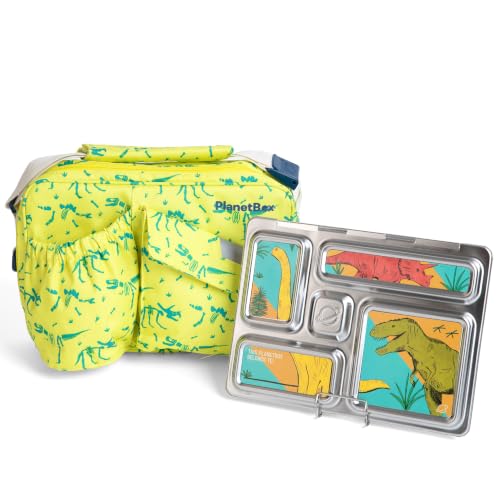
PlanetBox Rover — the compartment system
The Rover is the reference point for compartment steel lunch boxes: a tray of fixed sections under a latched steel lid, designed so a whole meal travels in one open-and-eat unit. Its worth-it case is strongest for children and grazers, because the organisation is built in rather than improvised with pots. It is a premium-tier purchase and proud of it, justified only by daily school or office use — exactly the frequency this guide keeps insisting on.
LunchBots Large — the simple workhorse
LunchBots built its name on plain, sturdy containers with steel lids, and the large format is the leftover-and-lunch staple of the range. No gasket to nurse, no compartments to dictate the menu: just a rigid box that stacks, washes and endures. For households whose food is mostly dry or merely saucy rather than soupy, it is the lowest-friction way into the category, at a mid-tier position.
Ecozoi Container Set — the whole-cupboard answer
Ecozoi sells the set logic: nested steel containers in graduated sizes, aimed at households replacing a plastic drawer in one move. The value case depends entirely on whether the graduated sizes match your real portions — run the two-week tally first. When they do match, the per-container position is attractive; when they do not, you have bought elegant ballast. The set is the purest test of this guide’s starter discipline.
Klean Kanteen Food Box — the seal-forward option
Klean Kanteen’s food boxes bring a silicone-sealed lid philosophy from the bottle world into food storage, which makes them the natural candidate for carriers of wetter lunches. The seal is also their homework: it must be washed and dried properly, as this guide has repeated, or the advantage curdles. For soup-and-stew commuters willing to keep that routine, they sit in the mid-to-premium tier and earn it.
U Konserve Round Container — the small-pot specialist
U Konserve’s rounds are the supporting cast that quietly becomes indispensable: dressings, dips, nuts, berries, the small wet or fiddly things that ruin a main container’s organisation. Silicone lids keep them flexible in role. Nobody’s worth-it verdict turns on a small pot, but almost every satisfied steel household owns a few, because systems fail at their edges and these cover the edges.
Bentgo Stainless — the mainstream compartment choice
Bentgo carried the compartment idea to a wide audience in plastic, and its stainless version applies the same thinking in steel: sections, a familiar layout, an easy on-ramp for households upgrading from the plastic original. It sits mid-tier and suits lunch packers who want organisation without a premium badge. As with every compartment design, check that the sections match how your household actually eats before committing.
The Break-Even Question: When a Stainless steel food containers Earns Its Space, and When It Honestly Does Not
Worth it is a personal verdict dressed as a product question. The same stainless steel food containers can be money well spent for one household and an expensive ornament for another, and the difference is almost never quality — it is frequency of use, fit with the space, and what it replaces. This section gives you a break-even way of thinking about the stainless steel food containers: a simple accounting of cost per use, space per benefit, and effort per result, plus the honest signs that your household should skip it, borrow it, or buy the simpler version instead. Run your own numbers through it before you decide.
The Arithmetic That Actually Matters
Start with cost per use. Take the full cost of owning the stainless steel food containers — purchase, any consumables, any accessories you genuinely need, and the space it occupies valued honestly — and divide it by a realistic count of uses in its first two years. Realistic is the key word: count the uses your calendar supports, not the uses your intentions promise in January. Then compare that figure with the alternatives you would actually use — hiring, borrowing, a service, or the simpler item you already own. A stainless steel food containers that wins that comparison on your real schedule is worth it almost regardless of its badge; one that only wins on an imagined schedule is not.
Consider the stainless steel food containers from the perspective of the person who cleans around it, because designs that trap dust, block access or demand special products quietly tax every week of ownership. Think about noise, light and heat as neighbours of the stainless steel food containers, not afterthoughts, since a choice that performs well but disturbs the room around it rarely stays popular for long.
The last question is the sharpest: immediate replacement means the stainless steel food containers has become infrastructure in your home, and purchases like that are almost always worth it. Quiet relief means the opposite, however good the reviews were. Decide with your own arithmetic and your own answers, and whichever way the verdict falls you will have bought — or saved — with your eyes open, which is the only definition of value that survives contact with real life.
Frequently Asked Questions
Can stainless steel food containers go in the microwave?
No. Steel reflects microwave energy, which can spark and damage both the oven and the container. Reheating always means moving the food onto a plate or into a microwave-safe bowl first. This is the single most important practical fact about the category, and it is the main reason microwave-centred households are usually better served by glass. If your lunch routine has a plate and two spare minutes in it, the rule is a minor habit; if it does not, it is a daily obstacle that no durability can outweigh.
How long do stainless steel food containers actually last?
The steel body, treated normally, lasts for many years — typically far longer than the household routines around it. What ages first is the lid system: silicone gaskets can tire, snap locks can loosen, and plain lids can pick up dents that spoil a seal. Choosing makers with replaceable seals, and washing and drying those seals properly, is what turns a long-lasting body into a genuinely long-lasting set. Expect the purchase to behave like a pan, not like a packet of tubs, and budget your attention accordingly: a minute of care per wash, repaid over years.
Do stainless steel containers keep food fresh and safe?
They keep food as well as any rigid container when ordinary hygiene is followed: cool cooked food promptly, refrigerate without delay, and eat leftovers within a sensible window. Steel’s non-porous surface does not absorb odours or flavours, which keeps food tasting like itself. Beyond that, no container can make old food safe, and claims of precise health effects should be treated with suspicion wherever you meet them. The container’s job is clean, sturdy, neutral storage; freshness still comes from your habits, your fridge and your calendar.
Are stainless steel containers leakproof?
Some are, many are not, and the difference lives entirely in the lid. Plain steel lids and simple compartment trays are splash-resistant at best and will weep soup in a bag. Designs with a silicone gasket and a firm closure are the ones to choose for liquids, and even then a sensible carrier keeps the soup container upright and gives the seal a weekly wash and a full dry. Match the lid to the wettest thing you regularly carry, not to the average thing, and test any new container with water over the sink before trusting it with lunch.
Is it worth switching if I only store leftovers at home?
It can be, if leftovers are frequent and your current tubs stain, warp and embarrass you — steel’s flavour neutrality and easy cleaning shine in fridge duty. But if reheating in the storage container is your habit, glass usually wins at home, and a hybrid — steel for the packed lunches leaving the house, glass for the leftovers staying in — is the arrangement many households settle on happily. Occasional leftover storage, a few times a month, rarely repays a full switch on its own, because the value case is built on frequency.
How many containers should I buy first?
Fewer than you think. Two medium containers, one large and a couple of small pots cover most households’ real weeks, and a month of living with that starter set reveals exactly which size, if any, is missing. Buying a large matching set on day one usually means paying for sizes that become cupboard ballast. Start lean, label everything, keep the seals dry, and let your actual routine — not a product photograph — write the shopping list for round two.
Related Guides and Next Steps
Continue with the stainless steel food containers buying guide, weigh the full stainless steel food containers pros and cons, or compare materials directly in stainless steel food containers vs glass food storage containers. For the wider cupboard, under-bed storage ideas for overflow a small kitchen cannot hold and waffle kitchen towels for the drying routine steel lids prefer round out the system nicely.


