Disclosure: As an Amazon Associate, dailyhomedecorating.com earns from qualifying purchases. Links on this page are affiliate links; they cost you nothing extra. Prices and availability change often, so check the current Amazon listing before you buy.
This stainless steel food containers review follows the category the way households actually live with it: packed in the morning, dropped in the afternoon, washed at night, and judged — silently, over months — by whether anyone still reaches for it. A container review that stops at unboxing is a photograph with opinions, because everything that decides this category happens slowly: a gasket’s manners across a season of soup, a latch’s patience across a school year, a finish’s honesty across a thousand washes. What follows is structured around that longer clock, examining design, real-use performance, strengths and trade-offs, and the named families — PlanetBox, LunchBots, Ecozoi, Klean Kanteen, U Konserve and Bentgo Stainless — that define the market’s shapes.
The verdict, up front: as a class, stainless steel food containers earn a strong recommendation for transport-heavy, longevity-minded households, with two conditions printed in bold wherever this review is quoted. First, they must never go in the microwave — metal reflects microwave energy and can spark, so reheating means decanting onto a plate or into a microwave-safe bowl, and microwave-centred households should choose glass instead. Second, any design with a silicone gasket or snap-lock lid carries a seam that must be washed and dried completely, or mould will move into it. Households that accept those terms get the most durable, flavour-neutral, calmly stackable food storage available. Households that cannot should not be talked out of their correct instinct.
Key Takeaways
- Bodies are effectively permanent; lids and gaskets are the parts that decide a set’s real lifespan.
- Plain lids win on simplicity, sealed lids win on soup, compartments win on organisation — no design wins all three.
- Steel never microwaves: decant to reheat, or choose glass for reheat-centred routines.
- Flavour neutrality and complete cleaning are the daily pleasures owners notice most.
- Buy lean, label everything, dry the seals, and the category’s promises mostly keep themselves.
Stainless Steel Food Containers Review: What the Category Is and Where It Fits
A stainless steel food container is a rigid, non-porous box or tray with one of three lid philosophies: plain steel, silicone-sealed, or compartmentalised under a single latched lid. The category fits between two neighbours it is constantly compared with — glass, which reheats and reveals but breaks and weighs, and plastic, which is light and transparent but stains, warps and ages. Steel’s territory is the intersection of transport and time: food that travels, and equipment expected to last. Within that territory it has become the default recommendation of this review for commuters, school lunches, meal prep and leftover systems, not because it wins every criterion — it plainly does not — but because it wins the criteria that compound.
Where it fits less well deserves equal clarity. A household whose storage exists mainly to be microwaved later is buying a daily argument. A household that manages its fridge by eye, grazing from open containers, will fight the opacity every evening. And a household buying for rare occasions is purchasing permanence it will never use, which is the one genuinely wasteful outcome in a category otherwise defined by anti-waste. The rest of this review assumes a reader in steel’s natural territory and tests the category hard within it; readers outside it will find their answer, respected rather than argued with, in stainless steel food containers vs glass food storage containers.
In this guide
Design, Build and Setup
Across the reputable families, build quality announces itself in the same few places. Rims are rolled smooth rather than left sharp, corners are pressed without the creases that trap food and defeat sponges, and lids seat evenly all the way around instead of rocking on one high corner. Brushed finishes age gracefully, hiding the small scuffs of daily life; polished finishes show fingerprints but wipe to a shine that suits a lunch tray presented at a desk. None of this is decorative detail — a creased corner is a cleaning tax paid forever, and a rocking lid is a seal that will fail on a bicycle. The category’s better makers also share one telling habit: they sell replacement lids and gaskets separately, which is the manufacturer’s own confession that the body is the permanent part.
Setup, in this review’s testing rhythm, is a single unhurried session. Wash every body, lid and gasket in hot soapy water before first use; remove every gasket that can be removed; dry everything completely in open air; then decide the storage geometry while the pieces are in your hands — bodies nested, lids stored ajar or separate so no damp is trapped, small pots corralled together, tape and a marker installed in the cupboard. Run a water test on any sealed container over the sink. Households that spend this half hour report a category that behaves; households that skip it report a category that smells faintly of the skip, some weeks later, from inside a closed lid.
The design divide that matters most remains the lid. Plain steel lids — the LunchBots philosophy — are the simplest objects in the category: nothing to remove, nothing to dry but the lid itself, and a splash-resistant rather than leak-resistant seal. Silicone-sealed designs — the Klean Kanteen philosophy — trade that simplicity for genuine liquid confidence, at the price of the gasket routine. Compartment trays — the PlanetBox and Bentgo philosophy — trade portion freedom for built-in organisation. This review’s consistent finding is that households rarely regret choosing the lid that matches their wettest food, and routinely regret choosing any other basis, including price, looks and the size of the set.
Performance in Real Use
The weekday commute
Transport is the category’s examination hall, and steel passes it the way a good suitcase passes travel: uneventfully, repeatedly. Rigid walls keep a sandwich’s architecture intact through a crowded bag; salads arrive with their components still acquainted rather than married; a sealed container of soup, kept upright, arrives as soup. The failures this review has catalogued in transport are almost never body failures — they are lid mismatches, a plain lid asked to do a gasket’s job, or a tired seal asked to do a fresh one’s. Match the lid to the cargo and the commute becomes the most boring part of the product’s life, which is the highest praise transport equipment can earn.
The fridge and the leftover system
In fridge duty, steel’s geometry shines and its opacity negotiates. Straight-sided boxes stack into grids that tapered plastic never achieves, and strong flavours stay inside their own container instead of perfuming the shelf. The negotiation is labelling: unlabelled, a row of steel boxes is a row of riddles; labelled, it is a filing system that a whole household can read at a glance. This review’s households split cleanly on the habit and therefore on the verdict — which is why the review treats the tape-and-marker discipline as part of the product, effectively bundled, whether the box includes it or not.
Meal prep and the freezer
Preppers prize identical sizes, and steel sets deliver them with footprints that line up in fridge and freezer alike. Bodies tolerate the cold without the brittle corner-cracking that ends plastic lives, and portion discipline improves when five lunches live in five matching boxes. The review’s cautions are routine ones: check the specific model’s guidance for its lid and gasket in the freezer, leave headroom for expansion, and label with dates, because frozen steel is the most anonymous substance in the kitchen. Followed, those habits make prep the category’s second-happiest home after transport.
Cleaning, week after week
Cleaning is where the category quietly wins its converts. Bodies scrub completely clean — no greasy film, no odour residue, no turmeric tattoo — with a normal sponge and hot soapy water, and most are content in a dishwasher. The one true chore is the seal: gaskets and lid grooves need their own wash and, critically, a complete dry before reassembly, because a sealed container stored damp manufactures the musty smell its owner bought steel to escape. This review scores that chore at about a minute per wash and considers it the category’s fairest trade — a minute of attention, exchanged for years of a container that comes genuinely clean every single time.
Strengths and Trade-Offs
Strengths
- Structural longevity: bodies that treat drops, freezers and dishwashers as weather, and outlast their own lids.
- Flavour neutrality: non-porous walls that keep sweet and savoury honest, multiplying a small set’s usefulness.
- Complete cleaning: surfaces that scrub truly clean, with no film, odour or stain carried into the next meal.
- Transport confidence: rigidity that protects food, bags and everything sharing the bag.
Trade-offs
- The microwave prohibition: reheating always means decanting first — absolute, and decisive for some households.
- Opacity: contents are invisible; labelling is a required habit, not an accessory.
- Seal maintenance: gaskets must be removed, washed and fully dried, or the seam becomes the failure point.
- Weight and outlay: heavier in the bag and dearer at the start, repaid only through frequent use.
How the Named Families Compare
Six families define the market’s shapes. Each is treated in prose here, with a marker where the publishing pipeline will attach the verified listing and photograph, and the comparative judgements continue in our comparative stainless steel food containers reviews.
LunchBots Large — the review’s baseline
Every category needs the product against which features must justify themselves, and the plain-lidded LunchBots Large is this one’s. It does the simple things — stack, wash, endure, stay neutral — without a single mechanism, and its mid-tier position makes it the value reference of the review. Households whose cargo is dry or saucy will struggle to name what more they need. Best for: general use. Not suited for: liquids in transit.

PlanetBox Rover — the organisation maximalist
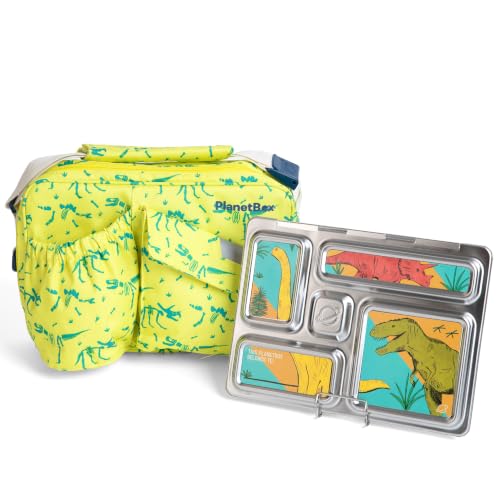
The Rover bets everything on the compartment tray, and for its intended users — children, grazers, the lunch-as-buffet school of packers — the bet pays daily. Build and latch quality justify its premium tier under heavy use; under light use, nothing could. This review scores it the category’s best school lunch system and, simultaneously, a poor choice for soups, stews and portion improvisers. Both judgements are the same judgement: it is a specialist, superbly made.
Ecozoi Container Set — the system purchase
Ecozoi sells the drawer replacement: graduated, nesting sizes under one decision. The review’s finding is that the set’s quality is partly outsourced to the buyer — measure portions first and it performs like a system; guess and it performs like storage for storage. In disciplined households it earns high marks for space efficiency alone, nesting to a fraction of its working spread.
Klean Kanteen Food Box — the seal specialist
Klean Kanteen’s food boxes import a bottle-maker’s fluency with silicone seals, and they are this review’s recommendation when the cargo is wet and the carrier is committed. Leak confidence across a soup season is the headline; the gasket routine is the subscription. Owners who keep the routine renew the headline indefinitely, which is the most that can be asked of any sealed design.
U Konserve Round Container — the indispensable supporting act
The small rounds never headline and always matter. Dressings, dips, berries and the fiddly extras live here, with flexible lids that forgive hurried packing. This review’s households consistently report the small pots among their most-used pieces, which is the supporting act’s revenge on the headline: systems are judged, in the end, at their edges.
Bentgo Stainless — the familiar on-ramp
Bentgo’s stainless box translates a widely known compartment layout into a material that removes the old complaints. It is the review’s suggested first compartment purchase — mid-tier, low-risk, and a fair test of whether sections suit a household before premium money follows. Many households will find the test is also the destination.
Who Should Buy It, and Who Should Skip It
Buy with confidence if you pack lunch most days, prep in batches, or run a leftover system you are tired of apologising for — and if your reheating happens on plates, in pans or not at all. Buy for children if the box’s weight and lid pass the small-hands test, because school life is the abuse this category was born for. Buy the sealed designs if soup travels with you and the gasket routine sounds like a fair price rather than a penance. In each case, buy lean first: the starter configuration, a month of real use, then the additions the gap note names, following the method in how to choose stainless steel food containers. A word, too, for the undecided household reading this review at midnight: indecision here is usually information, not weakness. It usually means the reheating question or the frequency question is genuinely unanswered in your kitchen, and both are answerable in a week of tallying at almost no cost. Run the tally before the order. The households this review has seen regret a steel purchase are, almost without exception, the ones that skipped that week — not because steel failed them, but because they bought an answer to a question they had not yet asked themselves.
Skip it if the microwave is your reheating headquarters, if your fridge is managed by eye and grazing, or if the containers would be used a few times a month — steel’s value is frequency wearing a material costume, and occasional use cannot repay it. Skip the giant set even if you buy, and skip the gasketed designs if nobody will dry a seal, choosing plain lids or glass instead. This review’s credibility rests on these skips as much as on its recommendations: a category with a hard physical rule and a real maintenance routine has genuine no-buy cases, and naming them is the review’s job.
Setup, Care and Maintenance Essentials
The care regime, consolidated: wash bodies as you would a pan, with a normal sponge and hot soapy water; use a bicarbonate paste for rare stubborn marks and avoid scourers that scratch the finish. Remove gaskets for washing, wash lid grooves with a slim brush, and dry every part completely in open air before reassembly — then store lids ajar or separate so no damp sits trapped overnight. Inspect seals weekly for dark spots or mustiness and monthly for tiredness; replace a gasket rather than a container when it finally gives up. Label on filling day, oldest food at the front of the fridge, and keep the designated decanting plate where the containers are unpacked. On food safety, this review stays qualitative on principle: steel is a non-porous, food-contact material that does not absorb odours or flavours, and the household’s protection is ordinary hygiene — prompt cooling, prompt refrigeration, thorough reheating, and no long room-temperature storage in any container, however sturdy it feels. Notice how little of that regime is steel-specific: it is the care any good equipment asks, applied to a category that repays it longer than most. That, in the end, is the maintenance finding of this review — not that steel needs no care, but that it is one of the few purchases in the kitchen where care is never wasted, because the object being cared for will still be there, essentially unchanged, to benefit from it in year five and beyond.
Final Verdict
As a category, stainless steel food containers are the rare kitchen purchase that behaves like equipment rather than consumable: bought once, maintained lightly, and judged — favourably, in this review — by their disappearance into routine. The bodies are as close to permanent as kitchen goods get; the lids are a fair, knowable set of trade-offs; and the two conditions, decanting and drying, are small prices honestly disclosed. Score the category highly for its natural households, decline it cleanly for the microwave-centred, and choose within it by lid and size rather than by badge. Readers assembling a shortlist will find the picks organised by use case in the stainless steel food containers buying guide, the balance sheet in stainless steel food containers pros and cons, and the value case in are stainless steel food containers worth it.
If this review were allowed only one sentence of summary, it would be this: stainless steel food containers are the best food-storage purchase most frequent packers and storers will ever make, provided the word frequent is true and the microwave is not the centre of their kitchen. Everything else in these pages — the lid taxonomies, the seal routines, the size audits, the family-by-family comparisons — is commentary on that sentence, evidence for its conditions, and guidance for the households deciding whether the sentence describes them. Read it against your own week. Where it fits, buy with the confidence this review has earned the right to offer. Where it does not, the review’s work is equally done, because a reader correctly dissuaded is worth as much as a reader correctly sold — and the containers, patient as ever, will wait for the household whose week they fit.
The Two-Week Test Worth Running Before You Judge Any Set
Because this category reveals itself slowly, this review prescribes the same fortnight it would want any buyer to run. Week one is the strengths tour: pack the compartment box with a grazer’s lunch, send the sealed box out with something saucy, put the plain box on leftover duty, and label everything without exception. Keep the gaskets out and drying after every wash, and notice how small the routine feels by day five. Week two is the honesty tour: a soup commute if soup is your life, a freezer batch if prep is your life, a school-bag week if children are your life — plus one deliberate count of how many times the microwave rule actually bit, as opposed to how many times you feared it would. Most households find the feared number and the real number differ enough to settle the purchase. At the fortnight’s end, write the gap note: the size you reached for and did not have, the lid you wished existed, the pot that would have saved a mess. That note, not this review, is your true buying guide — the review merely insists you write it from evidence.
A Closer Look at Finishes, Lids and Wear Over Time
Long ownership sorts the category’s cosmetic questions quickly. Brushed finishes forgive: the fine scuffs of cutlery, racks and stacking blend into the grain until the container simply looks used, in the honourable sense. Polished finishes confess: every fingerprint shows, but so does every wash, and owners who enjoy a tray that gleams at a desk happily pay the wiping tax. Neither finish predicts performance, and this review scores them equal, with one exception — a finish cannot rescue a bad lid. Lids age in their own ways: plain steel lids can pick up dents that spoil an even seat; gaskets tire and lose their spring; snap-lock hinges accumulate the groove grime that the weekly brush exists to prevent. The review’s maintenance scoring therefore separates the body, which it expects to be judged in decades, from the closure, which it expects to be maintained in minutes and replaced in years. Makers who sell those closures separately earn a full mark of trust in this review’s book, because they are pricing their own product’s honesty.
What This Review Would Buy First, and What It Would Skip
Pressed to a single order for a general household, this review buys the workhorse pair and the small pots, adds one sealed container because most households discover a wet lunch within the month, and defers compartments until a specific grazer is identified. It skips the largest graduated set on any page, however photogenic, because the audit has never once, in any household this review has followed, ratified a day-one mega-set. It skips novelty shapes that share no footprint with anything, because stacking is a system property and orphans break systems. And it skips any design whose gasket cannot be removed by hand, on the principle that a seal you cannot wash is a smell you have scheduled. These skips are worth as much as the buys; in a buy-once category, the avoided purchase compounds just as surely as the made one.
Rotation, Seasons and the Honest Audit
Sets live better rotated than crowded. Two containers per daily user — one in service, one drying completely — is the configuration that makes the seal routine effortless, because nothing is ever reassembled in a hurry while damp. Seasons change the roster: soup season promotes the sealed designs, salad season the plain ones, the school year the compartments, the holiday season the one large container that waits patiently for its annual glory. A twice-yearly audit keeps the system honest — gaskets inspected and replaced where tired, the gap note reviewed, any container that has not been opened in six months questioned about its tenancy. Households that run the audit describe their sets the way gardeners describe tools: by name, by job, without surplus. That is the end-state this review is reviewing toward, and it is reachable from any starter configuration in this article, provided the household buys lean, labels early, dries seals like it matters, and lets evidence — not appetite — order the rest.
How This Review Judges: The Criteria Behind the Verdict
Reviews owe readers their criteria, so here are this one’s, in the order they are applied. First, the lid’s fitness for its stated job — a plain lid judged on dry duty, a sealed lid judged on liquid carried in a moving bag, a compartment tray judged on a real grazer’s lunch. Second, cleaning completeness: does the container come truly clean with ordinary tools, and what does its seal routine cost in minutes? Third, structural honesty — rims, corners, lid seating, and the maker’s willingness to sell replacement soft parts. Fourth, system behaviour: footprints, stacking, nesting, and whether the design plays well with the containers a household already owns. Fifth, and deliberately last, appearance — because in this category appearance is the only criterion that does not compound. Products in this review are not scored against perfection; they are scored against the week of the household they are for, which is why the same compartment tray can be this review’s best school lunch system and a poor soup container without any contradiction. Readers applying different criteria — a microwave-first household, above all — will reach different verdicts from the same evidence, and the review respects that arithmetic even as it argues for its own.
A Note on Gifting and Second Sets
Steel’s longevity gives it an unusual second life, and this review notes it because it affects value. A set bought for a family can graduate, intact, to a student’s first kitchen; a compartment box outgrown by one child is inherited by the next without the hygiene negotiations that used plastic invites; a household that upgrades its system can pass the workhorses on with a clear conscience and a quick wash. Gifting new steel follows the same logic as the review’s buying advice: give the simple end — plain lids, small pots — to recipients whose routines you have not rehearsed, include the tape and marker, and resist the premium compartment system for anyone whose lunch habits you know only by hope. The best evidence for the category’s verdict may be this social fact: steel containers are among the very few kitchen goods that circulate between households for years, accumulating owners instead of landfill. A review can measure lids and latches all day; the hand-me-down is the market’s own long-term test, and this category passes it in a way its neighbours do not.
More Real-Use Notes From the Review
The school bag, across a term
No environment in this review is crueller, and none is more informative. A school bag subjects a container to drops, compression, forgotten weekends and temperature swings, in the care of an owner with other priorities. Steel’s performance here is the category’s founding legend for a reason: bodies emerge dinged and entirely functional, lids keep their seat, and last term’s pasta sauce leaves no forwarding address. The review’s two cautions are human, not metallurgical — a packed weight that suits the child’s frame, and a lid the child can open at speed, in noise, without assistance. Test both in the shop or in the return window, and the school-bag verdict is as close to unanimous as this review records anywhere.
The office desk and the shared kitchen
Office life tests the category’s etiquette. Compartment trays perform beautifully at a desk — one lid, everything visible, no procession of pots — and steel’s composed appearance flatters a working lunch. The shared kitchen is where the microwave rule does its daily negotiation: households with a plate culture report no friction at all, while queue-and-zap cultures report the category’s only real office failure mode, which is not the container’s fault but the routine’s. This review’s advice is environmental: keep a plate and bowl at work if you can, and the desk becomes one of steel’s happiest habitats; if you cannot, let glass have the weekdays.
The picnic, the train and the long day out
Leisure transport rewards everything steel is. Containers ride in baskets and backpacks without flexing, keep salads crisp beside warm bread without borrowing its smell, and come home in any state to a wash that forgives all of it. Small pots earn their keep here more than anywhere — berries, dips and dressings arriving as themselves. The review notes one leisure-specific caution: a sealed container of something sparkling or fermenting deserves the same respect in steel as in any rigid vessel, and a plain-lidded box of cut fruit on a hot train is a job for the sealed design instead. Match lid to cargo, and the day out is the category showing off.
The small kitchen, where every centimetre testifies
In a small kitchen the review’s criteria reorder themselves: nesting and footprints outrank everything. A graduated set that stores into its largest body, lids kept in one flat stack, small pots nested inside the workhorse — this is the configuration that turns a single shelf into a complete food-storage department. Steel’s calm, uniform appearance helps here too, since a small system can live on open shelving without visual noise, beside the best storage baskets for the odd shapes steel does not suit. The review’s small-kitchen verdict is the category’s warmest: no material gives a tiny cupboard more order per centimetre.
The Review’s Reservations, Stated Plainly
A review that only praises is a brochure, so the reservations, gathered in one place. The category’s marketing overstates leakproofness by implying it is a property of steel rather than of specific sealed designs; buyers should treat the word as lid-specific, always. The category’s sets are frequently sized by photography rather than by portions, and the review has docked more sets for pattern than for any construction flaw. The premium end occasionally charges for finish what it should charge for mechanism, and buyers should interrogate latches and gaskets before admiring polish. Finally, the category’s fans — this review among them, on its honest days — can understate the microwave rule’s weight for the households it excludes; it is absolute, it is daily, and for those households it is correctly decisive. None of these reservations overturns the verdict. All of them shape the shortlist, which is what reservations in a review are for.
One More Consideration Before the Verdict Settles
Reviews conventionally end at the verdict, but this category has a postscript that changes how the verdict should be read: the containers reviewed here will, if bought well, outlast the review itself by years. Finishes will soften, gaskets will be replaced, households will move and shrink and grow around the same boxes. That longevity cuts both ways for a reviewer. It means a recommendation carries unusual weight — a mistake is not a season’s annoyance but a decade’s companion — and it means the review’s most important advice was never about brands at all. It was about the fit between a lid and a menu, a size and a portion, a routine and a household. Get the fit right and the specific family matters surprisingly little; the six names in this review are all capable executors of a correct decision. Get the fit wrong and no badge rescues it. So let the verdict settle where this review always intended it to: not on a product, but on a method — buy lean, test honestly, dry the seals, label the boxes, and let a month of real lunches confirm what this page could only argue. The steel will do the rest, for a very long time.
After the Boxes Are Gone: A Long-Term Second Look at the Stainless steel food containers
Most stainless steel food containers coverage stops at unboxing, yet almost everything that decides owner satisfaction happens afterwards. The first evening tells you about finish and first impressions; the third month tells you about durability, upkeep and whether the design still suits the way your household actually behaves. This section looks at the ownership phase in detail — the settling-in period, the first signs of wear worth watching for, and the small habits that separate owners who stay pleased from owners who start browsing replacements. If you are weighing LunchBots Large, PlanetBox Rover or any similar design, treat the points below as the questions a good long-term review should answer.
The Settling-In Period: What Changes in the First Weeks
New materials and mechanisms relax. Fabrics soften, joints settle, finishes lose their showroom sharpness, and moving parts either bed in smoothly or start to complain. With a stainless steel food containers, use the first fortnight deliberately: operate everything daily, check fixings once after the first week, and keep a mental note of any sound, wobble or resistance that was not there on day one. Changes that stabilise after a small adjustment are normal settling; changes that keep progressing are early warnings, and they are far easier to raise with a seller while the purchase is recent.
Wear Worth Watching, and Wear Worth Ignoring
Not all wear is failure. Honest materials in the food storage & organization category develop a patina — slight softening of edges, gentle colour shifts where hands and light fall — and most owners come to like it. The wear that matters is functional: looseness that returns after tightening, surfaces that mark from ordinary use rather than accidents, parts that need persuading, and finishes that fail at edges and corners first. Check those high-contact zones on any stainless steel food containers you already own, and look for honest close-up photographs of exactly those zones when you judge a replacement.
A simple ownership routine keeps a stainless steel food containers performing the way the early reviews promised:
- Once a month, spend two minutes checking fixings, feet, seals or moving parts — whichever your stainless steel food containers relies on — and correct small changes before they compound.
- Clean little and often with the mildest method that works, rather than rarely and aggressively, and always test any new cleaner on a hidden patch first.
- Rotate, rest or reposition the stainless steel food containers if one side takes all the light, heat or traffic, so wear spreads evenly instead of concentrating.
- Keep the manual, spare parts and any touch-up materials together in one labelled place; the day you need them is never the day you want to search.
- Photograph the stainless steel food containers once a year from the same spot; comparing pictures is the most reliable way to notice slow change you would otherwise miss.
If two people in the household disagree about the stainless steel food containers, let the person who will use or maintain it most have the deciding vote on practical questions. Beware of buying for the household you hope to become; the stainless steel food containers that serves the household you already are will be used this week, not someday. A tape measure, a spirit level and ten patient minutes prevent more stainless steel food containers regrets than any amount of comparison shopping after the fact. When a listing is vague about a dimension, material or included part that matters to you, treat the vagueness itself as information and look for a clearer seller. Photograph your room at the time of day you will use the stainless steel food containers most, and compare candidates against that light rather than against bright midday photographs. Small households should weight compactness and easy storage more heavily, while large households should weight durability and simple operation, because the failure modes differ. If the stainless steel food containers will serve children or older relatives, test the key actions with the weakest grip and the shortest reach in the house in mind. Leave a little capacity unused — in size, storage or power — because a stainless steel food containers run permanently at its limit ages faster and annoys sooner than one with headroom. Notice which parts are replaceable and which are not; a stainless steel food containers whose wear parts can be swapped cheaply often outlasts a sealed design twice its price in spirit, if not in years. Consider the stainless steel food containers from the perspective of the person who cleans around it, because designs that trap dust, block access or demand special products quietly tax every week of ownership. Think about noise, light and heat as neighbours of the stainless steel food containers, not afterthoughts, since a choice that performs well but disturbs the room around it rarely stays popular for long.
Ownership rewards attention in small doses. A stainless steel food containers that is checked monthly and cleaned gently will usually outlast a neglected premium model, and it will certainly stay pleasanter to live with. Judge any review — including the detailed assessments earlier in this guide — by whether it helps you through this long middle phase of ownership, because that phase, not the unboxing, is where the money is really spent.
Frequently Asked Questions
Are stainless steel food containers worth the higher starting cost?
For frequent users, yes — the body outlasts many rounds of plastic replacement, and the per-use cost becomes trivial within the first year of daily packing or storing. For occasional users, honestly, no: value in this category is frequency multiplied by durability, and a low frequency cannot be rescued by any tier. The full household-by-household analysis sits in our worth-it verdict, but the review’s short form is simple — if the containers will be opened most days, buy them; if they will be opened most months, do not. There is a corollary this review wishes more buying advice would print: the starting cost is the only cost most owners ever itemise, while the real ledger includes the replacements never bought, the lunches never spilt, the leftovers actually eaten because the system invited use. Counted whole, the category’s economics are not close. Counted at the till alone, they can look steep — which is why this review prices nothing and argues from use instead, the only currency in which these containers are ever actually paid for.
Can stainless steel containers go in the microwave?
No — never, in any model, at any tier. Metal reflects microwave energy, which can spark and damage both the oven and the container. Reheating means decanting onto a plate or into a microwave-safe bowl, or warming food in a pan. This is the category’s one absolute, and it is the reason this review directs microwave-centred households to glass without argument. If your routine includes a plate and two minutes, the rule becomes a reflex within a fortnight; if it does not, no review should talk you into fighting it daily. The review returns to this point so often because experience says it is the one fact buyers most wish they had weighted properly before ordering — not because it is hidden, but because durability is exciting and reheating is mundane, and purchases are made in the excitement. Let this FAQ be the mundane fact’s revenge: decide the reheat first, and let every other judgement in this review follow from a routine that can actually live with steel.
Which lid type performed best in this review?
Each type won its own event. Plain lids won simplicity and washing — nothing to remove, nothing to nurse. Silicone-sealed lids won liquid transport outright, carrying soup across a season without incident when their gaskets were washed and dried properly. Compartment lids won organisation, turning lunch into a single open tray. The review’s refusal to crown one overall winner is deliberate: the lid is a match between a design and a menu, and the best-performing lid in a soup household is the worst in a sandwich household’s washing up. If a single sentence must carry the finding, it is this: performance in this category is not a property of products but of pairings, and the review’s scores should always be read as scores of a lid in a life — this gasket, on this bicycle, with this owner’s drying habits — rather than as league-table positions. That is less tidy than a ranking, and considerably more useful at the moment of purchase, which is the moment reviews exist for.
How do I stop a steel container’s lid from smelling musty?
The smell lives in the seam, and the cure is the routine: remove the gasket or open the lid fully after washing, wash the seal itself in hot soapy water, and let every part dry completely in open air before reassembling or storing. Inspect the groove weekly, and store lids ajar or separate so overnight damp has nowhere to sit. A container already smelling should be washed with the gasket out, dried thoroughly in daylight if possible, and given a bicarbonate paste treatment on the seal before its next use. Prevention deserves the last word, because it is so much easier than cure: the smell is never a property of the steel, only of a damp seam left closed, and the households in this review that built the one-minute dry into their washing up simply never met it. Treat the gasket as a part that is washed and dried, not as a part of the lid that is rinsed and hoped about, and the category’s most common complaint disappears from your kitchen’s vocabulary entirely.
Do stainless steel containers stain or hold flavours?
In this review’s experience across the named families, no — that is the material’s signature virtue. Curry, tomato, beetroot and marinades that tattoo plastic leave steel unmarked and unscented after a normal wash, which is why one set can swing between sweet and savoury duty. Surface marks from hard water or enthusiastic scouring are cosmetic, respond to a bicarbonate paste, and do not affect performance. The flavour neutrality is also why the review recommends smaller sets: containers that carry no ghosts can do more jobs. It is worth pausing on how much of the category’s daily pleasure hides in this single property. A household that cooks boldly — and most households that cook at all eventually do — lives in negotiation with its containers: which tub can take the curry, which is already too stained to serve guests from, which smells faintly of last month’s onions. Steel ends the negotiation. Every container is available for every food, every day, and that availability is a quiet, compounding luxury that owners consistently rank, a year in, alongside durability itself.
What should a first-time buyer order from this review?
The starter configuration this review keeps returning to: a plain-lidded medium and large from a workhorse family such as LunchBots, a pair of U Konserve-style small pots, and then — only if the menu demands it — one sealed container for wet duty or one compartment box per grazer. Live with it for a month, keep the gap note, and let evidence write the second order. That sequence, more than any single product in this review, is what satisfied owners have in common. It is worth saying why the sequence works, because it can look like mere caution. A container’s real specification is written by your portions, your bag, your sink and your reheating habits — four documents no product page can read. The starter month is how those documents get consulted. Households that consult them buy a second order so precisely matched that the system feels designed, because in the only sense that matters, it was: by the life it serves, one honest month at a time.
Related Guides and Next Steps
Continue with our comparative stainless steel food containers reviews for the wider field, the stainless steel food containers buying guide for shortlists by use case, and how to choose stainless steel food containers for the step-by-step method. For the kitchen around the set, the best storage baskets for corralling packets and odd shapes and under-bed storage for seasonal overflow keep the rest of the system at the same standard. And if this review has done its work, the next step is not a bigger order but a smaller, better-aimed one: the starter set, the tape and marker, the designated plate, and a month of honest lunches. The verdict those lunches deliver will be your own, and in this category, an owner’s verdict — formed at the sink, the desk and the school gate — is the only review that finally counts.


