Disclosure: As an Amazon Associate, dailyhomedecorating.com earns from qualifying purchases. Links on this page are affiliate links; they cost you nothing extra. Prices and availability change often, so check the current Amazon listing before you buy.
Weighing stainless steel food containers pros and cons honestly means resisting two temptations: the evangelist’s, who sees only gleaming permanence, and the sceptic’s, who sees only an expensive box that cannot enter a microwave. The truth is a ledger, and ledgers are useful precisely because both columns are real. Steel’s advantages are structural and compounding — durability, flavour neutrality, cleaning ease — while its disadvantages are behavioural and daily — reheating friction, invisible contents, seals that demand a routine. Which column governs your kitchen depends on your week, and this article lays out both sides in enough detail to let your week decide.
The quick verdict: steel suits households that pack and store food frequently, reheat on plates or in pans, and will keep a one-minute seal routine. It does not suit microwave-centred routines, households that need to see leftovers at a glance, or anyone buying for occasional use. If that verdict already settles your question, the rest of this article is the evidence; if it does not, the evidence is exactly what you need. Either way, two safety facts frame everything: steel must never go in the microwave, and gasketed lids grow mould in their seams if they are stored damp. Both appear in the cons column, where they belong, and both are manageable — which is not the same as ignorable.
Key Takeaways
- Pros are structural: durability, flavour neutrality, easy cleaning, honest stacking, longevity.
- Cons are behavioural: no microwaving, opaque walls, seal maintenance, weight, higher starting outlay.
- The microwave rule is the only con that cannot be managed — only accepted or avoided by choosing glass.
- Most other cons shrink dramatically with two habits: labelling and drying seals fully.
- Frequency decides the verdict: daily use makes the pros compound and the cons fade into routine.
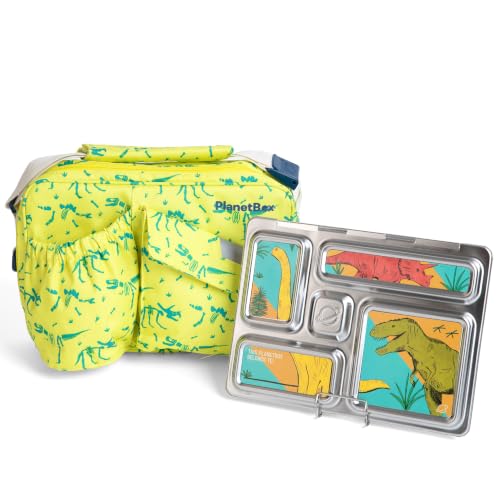
Stainless Steel Food Containers Pros and Cons: The Pros
Pro: Durability that ends the replacement cycle
The founding advantage, and still the strongest. A steel body does not crack when dropped on tiles, does not split at frozen corners, does not warp in a hot wash, and does not develop the brittle, tired feel that tells you a plastic tub is entering its final season. For households that pack daily, this is not a marginal gain: transport equipment lives a violent life, and steel is the material that absorbs that life without keeping score. The durability also changes the psychology of ownership — you stop treating containers as semi-disposable and start treating them as equipment, which quietly improves how they are washed, stored and used.
Pro: Flavour and odour neutrality
Non-porous walls neither absorb yesterday’s garlic nor donate it to today’s fruit salad, and strong sauces do not tattoo the container the way they tattoo plastic. Bold-cooking households feel this within a week: the curry box can carry tomorrow’s berries without a haunting. Neutrality also multiplies a small set’s usefulness, because any container can swing between sweet and savoury duty, which means fewer containers cover more jobs — a pro that shows up as cupboard space as much as taste.
Pro: Cleaning that actually finishes
Steel scrubs clean completely, without the greasy film that clings to plastic or the odour residue that survives a wash and announces itself next use. Most bodies are content in a dishwasher, and a normal sponge with hot soapy water handles the rest, with a bicarbonate paste for the rare stubborn mark. Cleaning that finishes matters more than it sounds: a container that comes truly clean is a container people reach for, and a container people reach for is the only kind that repays its purchase.
Pro: Rigidity that protects food and bags
A steel box does not flex, and that inflexibility is a feature wherever food travels. Sandwiches arrive unsquashed, salads arrive unmixed with their dressing neighbour, and a packed bag’s other contents are protected from the container as much as the container’s contents are protected from them. In the fridge and freezer, rigidity means honest stacking — straight sides, shared footprints, shelves that behave like grids rather than landslides. Households with small kitchens consistently rank this quiet geometric virtue higher than any headline feature.
Pro: Longevity and repairability
Because the body outlasts the soft parts, and because established makers — the families surveyed in our stainless steel food containers review, from PlanetBox and LunchBots to Ecozoi, Klean Kanteen, U Konserve and Bentgo Stainless — generally sell replacement lids and gaskets, a steel set can be maintained rather than replaced. That repairability is a genuine structural pro: the part that ages is cheap and swappable, the part that endures is the part you paid for. Add the hand-me-down factor — a set can serve a second household when the first outgrows it — and steel’s longevity becomes a property few kitchen purchases can match.
Pro: A calmer, smaller cupboard
A matching steel system replaces the sprawling plastic drawer — the mismatched lids, the orphaned tubs, the archaeological layers — with a small set that nests, stacks and covers nearly every job. The calm is practical, not merely aesthetic: finding the right container takes seconds, packing a lunch stops being a search, and the cupboard stops taxing every cooking session. For small kitchens especially, this pro compounds daily, and it is the one former sceptics mention most often a year after switching.
In this guide
The Cons
Con: The microwave prohibition
The heaviest item in this column, and the only one that cannot be managed into insignificance. Stainless steel must never go in the microwave: metal reflects microwave energy, which can spark and damage the oven and the container. Every reheated meal therefore begins with decanting onto a plate or into a microwave-safe bowl. Households with a plate and two minutes absorb this as a trivial habit; households built around the office microwave experience it as a daily tax that no durability can refund. This single con decides the category for more households than all the others combined, and any honest account — see stainless steel food containers vs glass food storage containers for the full material comparison — must place it first and without softening.
Con: Opaque walls and the mystery-box problem
Steel hides its contents, and a fridge row of identical steel boxes is a row of small mysteries. Grazing households, shared fridges and batch cooks with five similar stews feel this daily, in the small friction of opening three boxes to find the fourth thing. Labelling — tape, marker, five seconds — genuinely solves it, but it solves it as a habit that must be adopted, not a feature that arrives in the box. Households unwilling to label should count this con at full weight.
Con: Seals demand a routine, and punish its absence
Any lid with a silicone gasket, snap locks or hinge grooves hides a seam where moisture and residue collect, and that seam is where mould starts when it is stored damp. The counter-routine is short — gasket out, washed in hot soapy water, everything dried completely in open air, groove inspected weekly — but it is non-negotiable, and a neglected sealed container develops a smell worse than anything plastic manages, precisely because the failure hides. Plain-lidded designs avoid this con entirely, which is a real argument for them; sealed designs carry it as the price of leak confidence.
Con: Weight in the bag
A packed steel lunch outweighs its plastic equivalent noticeably. On a car commute that is nothing; on a bicycle, a long walk, or in a young child’s school bag it is a genuine cost, paid daily. Weight also interacts with capacity: the large family container that is a blessing in the fridge is a burden in a tote. Households with long carries should weight this con heavily and favour the lighter plain-lidded designs and smaller footprints.
Con: A higher starting outlay, repaid slowly
Steel costs more at the start than the plastic it replaces, and its value arrives across years of use rather than at the till. For frequent users the repayment is certain and the per-use cost becomes trivial; for occasional users the repayment may never arrive, making the same purchase genuinely poor value. This con is therefore really a frequency warning: the outlay is a prologue to value only when the containers are used hard and often, which is why are stainless steel food containers worth it, answered by household type makes frequency its deciding variable.
Con: Lids vary, and not every design seals
Shoppers routinely assume steel containers are leakproof as a class, and they are not: plain lids are splash-resistant at best, compartment trays let runny food wander, and only gasketed designs earn soup duty. The category’s marketing does not always hurry to correct the assumption. The result is a predictable first-month accident — a wet bag, a lesson learned — that better information prevents. Count this as a con of the category’s clarity rather than its construction, and neutralise it by choosing the lid for your wettest food, as how to choose stainless steel food containers, step by step sets out.
What the Trade-Offs Mean for You
Read the two columns as a matching exercise. If your household’s week is heavy on transport, batch cooking and bold flavours, the pros column reads like a description of your problems being solved, while the cons reduce to a labelling habit and a decanting step. If your week is heavy on microwave reheats and fridge grazing, the cons column reads like a description of your daily life being taxed, while the pros — however real — accrue to a routine you do not have. The trade-offs also interact: the seal routine (con) is what purchases leak confidence (pro); the opacity (con) is the price of the rigidity (pro); the outlay (con) is the admission fee for the longevity (pro). Mature choosing is not counting the columns but asking whether each con is the acceptable price of its paired pro, in your kitchen, with your habits, on your wettest and busiest day.
One more lens helps: reversibility. Most cons can be softened after purchase — labels can be adopted, a decanting plate can be designated, a tired gasket can be replaced. The microwave con cannot; it is a property of physics, not of the product. So weight it separately and first. Households that can accept it usually find the rest of the ledger tilts steadily pro-ward within a month, as the routines form and the durability begins its quiet compounding. Households that cannot accept it should exit toward glass without regret, because a well-chosen glass set beats a resented steel one by every measure that matters.
The Named Options, Weighed on the Same Ledger
The ledger applies differently to each real family in the category, summarised here in prose with a marker where the publishing pipeline will attach the verified listing and photograph.
LunchBots Large — the ledger at its simplest
Pros: no gasket to maintain, honest stacking, mid-tier position, the full durability and neutrality of steel. Cons: plain lid, so no soup duty; opaque like all steel. For dry and saucy households its ledger is the most one-sided in the category.

PlanetBox Rover — premium polish, compartment terms
Pros: built-in organisation, school-bag toughness, a latch children master quickly. Cons: premium tier, fixed portions, weak with liquids, and a packed weight small children feel. Its ledger balances only under daily use — the frequency rule again.
Ecozoi Container Set — the pattern gamble
Pros: whole-cupboard coverage, nesting storage, shared footprints. Cons: the size pattern may not match your portions, and the set asks for one larger decision up front. Its ledger is decided by the buyer’s homework more than by the product.
Klean Kanteen Food Box — leak confidence at a routine’s price
Pros: a silicone seal that makes wet lunches a non-event, from a maker fluent in sealed design. Cons: the full gasket routine, every wash, forever. The fairest ledger in the category — both columns are entirely honest about each other.
U Konserve Round Container — the small print that matters
Pros: flexible lids, edge-case coverage for dressings and dips, easy to add in pairs. Cons: a supporting act, never a system alone. Its ledger is short because its job is narrow, and it does that job the way a good specialist should.
Bentgo Stainless — the familiar upgrade
Pros: a compartment layout households may already know from plastic, in a material that removes the old complaints. Cons: compartment limits on portions and liquids, mid-tier without premium polish. A ledger for upgraders, written in a familiar hand.
How to Buy Smart, Given the Ledger
Buying smart means purchasing the pros you will use and refusing to pay for cons you will not accept. Concretely: if your menu is dry, buy plain lids and bank the seal routine you will never perform. If your menu is wet, buy the gasketed design and budget the routine as part of the price — in attention, not money. Measure portions before sizing, because the longevity pro only compounds on containers that fit your food. Prefer makers who sell replacement seals, because repairability converts the lid from a lifespan into a consumable. And stage the purchase: a starter set now, a gap-note month, then the additions the evidence names. The stainless steel food containers buying guide assembles these rules into a full shortlist, and it is worth reading alongside this ledger before any order.
Setup and Care That Reduce the Cons
Half the cons column is negotiable through setup. Opacity shrinks when tape and a marker live in the container cupboard and every box is labelled on filling day. The microwave con shrinks — for households that can accept it at all — when a designated plate or bowl waits at home and at work, turning decanting into a reflex rather than a decision. The seal con shrinks to a minute when the routine is built into washing up itself: gasket out at the sink, washed with the rest, spread to dry completely, reassembled only when dry, groove glanced at weekly. Weight shrinks when containers are matched to carries — the big box for the fridge, the light box for the bicycle. Even the outlay con shrinks under the starter discipline, which spreads spending across evidence instead of hope. What remains after all that shrinking is the honest residue: a material that asks a little daily cooperation in exchange for years of structural indifference to abuse. Most households that set up deliberately find the residue very easy to live with.
On food safety, this article keeps the qualitative line it would want every article to keep. Steel is a non-porous, food-contact material that does not absorb odours or flavours, and it cleans thoroughly — fair, general statements. Precise health claims, in either direction, deserve suspicion wherever they appear, and your real protection is ordinary hygiene: cool cooked food promptly, refrigerate leftovers without delay, reheat thoroughly, and never leave perishable food at room temperature for long because the container feels reassuring. A container is a tool in a routine; the routine is where safety lives.
Bottom Line
The pros of stainless steel food containers are the pros of a material: strength, neutrality, cleanability, longevity. The cons are the cons of a relationship: it cannot microwave, it will not show you its contents, and its seals ask a minute of care at every wash. Households whose weeks reward the material and can offer the relationship get one of the best bargains in the kitchen — not cheap, but finished, in the sense that the subject of food containers simply closes. Households whose weeks do the opposite should choose glass or good plastic without a backward glance. The ledger does not change between households; the week does. Read yours honestly, and the bottom line writes itself.
One final entry belongs in both columns, because it is the truest thing in this article. Steel is honest equipment: it does exactly what its ledger says, no more and no less, for years at a time. In a kitchen category full of containers that promise permanence and deliver a season, that honesty is itself a pro — and the routine it asks in return, a label here, a dried gasket there, a plate for reheating, is a con most households find they were happy to pay. Weigh it all, run the week if you are unsure, and choose like someone who intends to stop choosing. That is what the material is for.
The Ledger in Context: Steel Against Glass and Plastic
No ledger is complete until the alternatives are priced in the same currency. The table below scores the three materials qualitatively — deliberately without figures, because the honest differences here are kinds, not numbers.
| Criterion | Stainless Steel | Glass | Plastic |
|---|---|---|---|
| Microwave reheating | Never — decant first | Yes, in suitable designs | Yes, in suitable designs |
| Visibility of contents | Opaque — label instead | Fully visible | Usually visible |
| Drop survival | Excellent | Poor to fair | Good |
| Stain and odour behaviour | Resists both | Resists both | Absorbs both over time |
| Weight in a bag | Moderate | Heaviest | Lightest |
| Maintenance focus | Gaskets and drying | Lids and careful handling | Replacement cycle |
| Longevity | Years, repairable soft parts | Years, until the drop | Seasons, typically |
Read the table by your own week and a pattern emerges: steel wins the transport and longevity rows, glass wins the reheating and visibility rows, plastic wins the weight and replaceability rows. Most real kitchens are not one row but several, which is why the hybrid household — steel for the road, glass for the reheat, a residue of plastic for the odd light job — is not a failure of commitment but the table correctly applied. The pros-and-cons question, properly asked, is never which material is best; it is which material’s column of weaknesses your household will notice least.
How the Ledger Shifts After a Year of Ownership
Pros and cons are not static; ownership reweights them, and a fair article should say how. In month one, the cons feel larger than they are: the decanting step is still a decision rather than a reflex, the labels are still a new chore, the gasket routine is still being remembered rather than performed. The pros, meanwhile, are mostly promises in month one — durability has not yet had time to prove anything. By month six the columns have quietly swapped weights. The routines have become reflexes and shrunk to their true size, which is small, while the pros have begun compounding visibly: the set looks new, the cupboard is calm, the plastic-era annoyances have been forgotten so completely that owners struggle to list them. By the end of the first year, most households that chose well report that the ledger feels lopsided in steel’s favour — not because the cons vanished, but because cons paid daily in tiny habits are cheap, while pros paid daily in reliability are rich. The exception remains the microwave household, for whom the central con never shrinks, because it is re-encountered at full size at every single meal. That asymmetry — habits fade, physics does not — is the deepest insight the ledger offers, and it is why this article keeps returning the verdict to that one question.
The Pros and Cons, Room by Room
In the fridge
The fridge is where steel’s geometry pro and opacity con meet head-on. Straight-sided boxes turn shelves into grids, stack without the lean and slump of tapered tubs, and keep strong flavours from migrating into neighbouring food through stained, odour-holding walls. Against that, every box is anonymous until opened or labelled, and a fridge managed by several people with different memories will test the labelling habit daily. Verdict for the room: a clear net pro for households that label, a genuine frustration for households that will not — the room does not care about the material’s durability at all, only about its owner’s system.
In the freezer
Freezer duty flatters steel’s toughness: no brittle corners to crack in the cold, no warping lids to admit the dry freezer air that ruins food surfaces. Portions freeze in honest stacks, and identical boxes make a batch session look like a filing exercise. The cautions are design-specific rather than material-wide — check the maker’s guidance for the lid and gasket you own, leave headroom for expansion as with any container, and label with dates, because a frozen steel box keeps its secret even more completely than a refrigerated one. Net: a pro, with paperwork.
In the bag and on the move
Transport is steel’s home turf and the room — if a bicycle pannier is a room — where its pros stack highest: rigidity protects the food, the bag and the laptop sharing the bag; bodies survive drops that end other materials; sealed designs make soup a realistic passenger. The cons present here are weight, honestly paid on long carries, and the seal’s dependence on its owner’s routine. Net: the strongest net pro of any setting, which is why commuters and school runs dominate the category’s success stories.
At the table and the desk
Eating from steel divides opinion in a way the ledger should record. Compartment trays make a desk lunch feel organised and even pleasurable — everything visible at once, nothing mingling — and a steel box looks composed in a way a stained tub never will. Against that, food that needs reheating must leave the box before it can be eaten hot, and the box itself offers no view of the meal until the lid lifts. Net: a pro for cold and room-temperature eaters and grazers, a con for hot-lunch devotees, with the decanting plate as the peacemaker between them.
At the sink
The sink is where the seal con is paid and the cleaning pro is collected, in the same minute. Bodies wash fast and completely; gaskets ask for removal, their own wash, and — the whole game — complete drying before the set is put away. Households that build that sequence into washing up experience the sink as a pro with a small fee. Households that wash and seal damp experience the sink as the place a slow problem is manufactured. Net: entirely owner-dependent, which is this category in miniature.
Myths in Both Columns
A ledger should also clear the entries that do not belong in either column. Myth one, from the pro side: that steel keeps food fresher for meaningfully longer than any other clean, sealed container. It does not; freshness is governed by temperature, time and the food itself, and steel’s contribution is neutrality and cleanliness, not magic. Myth two, also from the pro side: that steel is maintenance-free. The body nearly is; the lids are not, and the gasket routine is the category’s standing refutation. Myth three, from the con side: that steel is impractical because it cannot microwave. For plate-and-pan households the rule is a two-minute habit, not a hardship, and calling it disqualifying for everyone is as sloppy as ignoring it. Myth four, from the con side: that steel is heavy like cookware. A lunch system is noticeable in a bag, not burdensome, and the weight con belongs to long carries and small children rather than to the average commute. Myth five, from both sides at once: that the choice is permanent and total. Kitchens are allowed hybrids, starters and changes of mind, and steel’s durability means a set bought for one chapter of life can be handed to the next chapter’s household intact. Clearing the myths leaves the real ledger — durability against decanting, neutrality against opacity, longevity against routine — and that ledger, unlike the myths, is strong enough to decide on.
The Ledger for Five Household Types
The commuter couple
Pros dominate. Daily transport monetises durability immediately, the decanting step fits a workplace kitchen with plates, and two containers per person — one working, one drying — dissolve the seal problem by rotation. Their ledger’s only live con is weight, and a car or short train ride shrinks it to a footnote.
The family with school-age children
Pros dominate with shape discipline. Compartments and toughness map onto school life; the cons to manage are small-hand openability and the adult-owned washing routine. Families that assign the gasket to the dishwasher-loading adult, and the labelling to whoever packs, find the ledger settles quickly and stays settled for years of terms.
The batch-cooking single household
A split ledger that tips pro if reheating happens in a pan at home, and con if it happens in an office microwave. The deciding experiment costs a week: count the reheats and where they happen. Identical boxes, honest labels and a freezer grid make the pro version of this household one of the category’s happiest configurations.
The elderly household
A genuinely mixed ledger that deserves care. Steel’s lightness relative to glass and its unbreakability are real pros; tight gasketed lids and heavier large containers are real cons for hands that have lost strength. The resolution is usually plain lids, smaller sizes, and steel reserved for storage while glass or lighter options handle reheating — a hybrid chosen by grip and routine rather than by fashion.
The occasional entertainer
Cons dominate, honestly. A household whose storage peaks at holidays and dinner parties will not use steel enough to repay it, and its containers will spend their lives as expensive cupboard residents. Two good containers for the regular week, in whatever material suits it, plus inexpensive overflow for the peaks — perhaps vacuum storage bags for bulk overflow and seasonal spares — is the ledger-literate answer, and this article would rather print it than sell a set.
Cons That Shrink, Pros That Grow: The Honest Summary
If the whole article had to be carried away in one observation, it would be this: steel’s cons are front-loaded and its pros are back-loaded, and almost every mistaken judgement of the category comes from sampling it too early. The first week is all cons — new routines, a forgotten decant, an unlabelled box opened in hope. The first year is mostly pros — a set that looks new, a cupboard that stays calm, lunches that arrive intact as a matter of routine. Judging steel by its first week is like judging a cast-iron pan by its first wash: technically an experience of the product, and a reliable predictor of nothing. This is also why the starter-set method matters so much in this category. It is not merely a budgeting trick; it is a fair trial, long enough for the routines to shrink and the durability to start speaking, at the end of which the household’s verdict — pro, con, or hybrid — is based on the product’s real character rather than its awkward introduction. Give the ledger a month before you total it. Very few households that do ever total it against the steel.
A Note on the Environmental Column
Many buyers arrive at this ledger with a sustainability question, and it deserves a careful, unexaggerated entry. The defensible pro is simple: a container bought once and used for years displaces a stream of short-lived replacements, and a set that can be repaired at the gasket and handed on at the end extends that displacement further. That is a real, if unglamorous, advantage, and it belongs in the pro column at face value. The equally defensible caution is that the advantage is entirely use-dependent: a steel set bought and shelved is worse, by any accounting, than a plastic tub used daily, because durability that is never exercised is just mass in a cupboard. So the environmental entry does not change the ledger’s logic — it reinforces it. Frequency first, shapes matched to real food, routines kept, and the sustainability pro arrives as a consequence of the same decisions that make the set worth its money. Buy steel the way this article has argued throughout — lean, matched, and used hard — and the greenest thing about it will be the truest thing about it: you bought it once.
Testing the Ledger in Your Own Kitchen in One Week
Ledgers persuade; experiments convince. Before buying, run the one-week test this article recommends to every undecided household. For seven ordinary days, keep a note on the fridge with two columns — the same two columns as this article. Every time food is packed or stored, mark which material property mattered: a drop survived, a stain avoided, a reheat needed in the container, a box opened by mistake, a seal that would have been washed. At the week’s end, total your own columns. Households are often surprised by their own data: the microwave column is sometimes nearly empty in a house that considered itself microwave-centred, and the transport column sometimes overflows in a house that thought of itself as stay-at-home. Your tally outranks this article, and it should — the pros and cons of a material are universal, but their weights are private, set by a routine only you can observe. Run the week, read the tally, and then buy — steel, glass, plastic or a deliberate mixture — with the confidence of a household that has seen its own evidence. That is all this ledger was ever trying to give you: not a verdict, but a way of reaching your own and trusting it.
Living With the Trade-Offs: How the Stainless steel food containers Balance Plays Out Over a Season
A pros and cons list is a snapshot, but a stainless steel food containers is a long-term housemate. Advantages that look decisive on paper can shrink once the seasons turn, and drawbacks that seem minor in a showroom can grow teeth in February or during a busy holiday week. The fairest way to weigh a stainless steel food containers is to follow one full season of ordinary use and ask how each side of the ledger behaves when the weather, the light and the household routine all change. This section does exactly that, so the balance you act on reflects lived experience rather than first impressions.
When the Advantages Grow — and When They Fade
The strengths of a good stainless steel food containers tend to compound quietly. A design that saves steps, stores more, or cleans easily gives that benefit back every single day, and over a season those small repayments add up to the real value of the purchase. By contrast, advantages based on novelty — an unusual finish, a fashionable shape, a feature you showed to guests twice — fade within weeks. When you re-read any pros list, sort each point into one of those two families: daily-compounding benefits deserve heavy weight, while novelty benefits deserve almost none, however attractive they looked at the point of ordering.
When the Drawbacks Bite Hardest
Weaknesses in a stainless steel food containers rarely bite at random; they bite at predictable pressure points. Guests arriving, a seasonal deep clean, a heatwave, a power cut, a house move, or a child or pet entering a new stage will each stress a different limitation. Think through those moments for the stainless steel food containers you are considering and ask whether the drawback is an occasional annoyance you can plan around or a recurring friction you will meet every week. An occasional annoyance is a fair price for a strong advantage elsewhere; a weekly friction almost never is, and it is the single most common reason owners replace a stainless steel food containers long before it wears out.
Use these seasonal pressure tests to judge the trade-offs in any stainless steel food containers:
- Picture the stainless steel food containers during your busiest week of the year and decide whether its main drawback would matter more, less, or about the same.
- Picture it during the opposite season from now — high summer if it is winter, the dark months if it is spring — and re-check light, heat, moisture and ventilation around it.
- Ask who else in the household touches the stainless steel food containers most, and weigh the cons from their height, strength and habits rather than your own.
- Separate the drawbacks you can fix with an accessory or a habit change from the ones built into the design itself.
- Give the stainless steel food containers a simple verdict for each season rather than one verdict for the year, and only buy when it passes the seasons you care about most.
Remember that guests experience your stainless steel food containers without instructions, so anything that needs explaining, warning or demonstrating is worth simplifying before it is worth defending. Plan for the stainless steel food containers to be moved at least twice in its life — for cleaning, redecorating or a change of room — and favour designs that forgive being shifted, tilted or carried. Look at the edges and undersides when you judge build quality, because those are the places makers save money first and the places owners discover last. Ask how the stainless steel food containers behaves on your worst floor, wall or surface rather than your best one, since homes are uneven and listings are photographed in perfect rooms. Keep the receipt, delivery note and a photograph of the label together, because warranty conversations go smoothly when dates and model details are at hand. If two people in the household disagree about the stainless steel food containers, let the person who will use or maintain it most have the deciding vote on practical questions. Beware of buying for the household you hope to become; the stainless steel food containers that serves the household you already are will be used this week, not someday. A tape measure, a spirit level and ten patient minutes prevent more stainless steel food containers regrets than any amount of comparison shopping after the fact. When a listing is vague about a dimension, material or included part that matters to you, treat the vagueness itself as information and look for a clearer seller. Photograph your room at the time of day you will use the stainless steel food containers most, and compare candidates against that light rather than against bright midday photographs. Small households should weight compactness and easy storage more heavily, while large households should weight durability and simple operation, because the failure modes differ.
Judged across a season, most stainless steel food containers choices become clearer, not harder. The right model is rarely the one with the longest pros list; it is the one whose drawbacks land in the moments you can tolerate and whose strengths land in the moments you repeat every day. Hold any candidate up against your own calendar before you commit, and the pros and cons stop being abstract and start being a forecast you can trust.
Frequently Asked Questions
What is the single biggest pro of stainless steel food containers?
Durability in daily service. A steel body shrugs off the drops, stains, warps and cracks that end plastic containers’ lives, and it does so while staying flavour-neutral and easy to clean. For households that pack or store food most days, that durability compounds into years of uneventful use, which is the real product being bought. The supporting pros — stacking, repairability, a calmer cupboard — all flow from a body that simply refuses to age at the normal rate. Put in ledger language: most purchases depreciate from the day they are opened, while a steel container’s usefulness holds almost level for years, and that flat line — boring, reliable, uneventful — is worth more to a busy kitchen than any spike of novelty a lesser container can offer in its first month.
What is the single biggest con?
The microwave prohibition, by a wide margin. Steel must never be microwaved, so reheating always means decanting onto a plate or into a microwave-safe bowl first. Unlike the other cons, this one cannot be softened by habits or accessories for a household whose routine is built on reheating in the container; it can only be accepted or avoided by choosing glass. Decide it first, because it decides more purchases than every other factor combined. Notice, too, what the con is not: it is not a defect, a quality failure or a sign of a cheap product. It is physics, shared by every steel container ever made, from the humblest to the most premium. That is precisely why it must be weighed before brand, tier and shape — no upgrade path exists past it, and the household that buys hoping a better model will somehow microwave has misunderstood the category at the only point where misunderstanding is expensive.
Do the cons outweigh the pros for families with children?
Usually not, provided the shapes are chosen for children. The pros — toughness against drops and bag life, compartments that organise a school lunch, no staining from a term of pasta sauces — map directly onto family reality. The cons need managing: packed weight for the smallest children, lids that little hands must be able to open, and an adult-owned seal routine. Families that test openability and weight before buying generally land firmly on the pro side. It also helps to assign the ledger’s chores explicitly rather than letting them float: one adult owns gaskets, whoever packs owns labels, and the children own the one job steel makes genuinely fun — opening a tray that has survived the school bag yet again. A ledger with named owners stops being a list of drawbacks and becomes a rota, and rotas, unlike resolutions, tend to still be running in month six.
How serious is the mould risk in lids and gaskets?
Serious if ignored, negligible if managed. The seam under a gasket or inside a snap-lock lid collects moisture and residue, and stored damp it will grow mould and a musty smell. The management is a minute’s work: remove the gasket, wash it in hot soapy water, dry every part completely in open air before reassembling, and inspect the groove weekly. Households unwilling to keep that routine should choose plain steel lids, which carry no such seam, and let the ledger rebalance itself. It is worth adding that the risk is not unique to steel — any sealed container in any material grows the same problem in the same damp seam — but steel owners meet it with higher expectations, because everything else about the product feels so permanent. Let the expectation be accurate instead: the body is permanent, the seal is a maintained part, and a maintained part, in this category as in a car or a kettle, is not a flaw in the design but the design working as intended.
Are stainless steel containers better than plastic in every way?
No, and this article’s ledger is the proof. Plastic remains lighter, transparent, microwave-friendly in its suitable forms, and cheap to replace — real pros that serve real routines, from fridge grazing to one-off events. Steel’s case is not superiority in every column but a better match for frequent, transport-heavy, longevity-minded use. The honest comparison, including glass, is set out in our stainless steel food containers vs glass food storage containers comparison, and the mature kitchen often ends up hybrid, allocating each material to the job its column wins. There is a discipline hidden in that answer worth stating plainly: the household that insists on one material for every job will spend its life fighting the jobs that material loses, while the household that allocates calmly stops thinking about containers altogether — which, as this article has argued from its first page, is the actual prize on offer, whichever materials the allocation happens to favour.
Which con surprises owners most after buying?
Opacity. Buyers anticipate the microwave rule — it is famous — but the daily reality of a fridge full of identical, unlabelled boxes catches many by surprise, usually at the moment a hungry household opens its third wrong container. The fix is humble and total: tape and a marker in the cupboard, a label on every filling, oldest at the front. Owners who adopt it in week one stop noticing the con; owners who keep meaning to adopt it keep meeting it, nightly, at eye level. A close runner-up is the gasket’s revenge: owners who treated the seal as a fit-and-forget part meet the smell in the groove a few months in, and learn — usually permanently — that in this category the soft parts are maintained or they are replaced. Both surprises share a moral worth carrying into the purchase: steel’s cons are rarely about the steel. They are about the small systems around it, and small systems are exactly the kind a household can fix in an evening, which is more than can be said for a cracked box or a warped lid.
Related Guides and Next Steps
Apply the ledger with the stainless steel food containers buying guide, test it against are stainless steel food containers worth it, and read the field reports in our stainless steel food containers reviews. For the cupboard around the set, the best storage baskets for corralling packets and odd shapes and waffle kitchen towels for the dry-before-storing routine are the natural companions. Whichever way your ledger totals, total it on evidence — a week of tallies, a month of starter use — and the material you end up with, steel or otherwise, will have been chosen rather than merely bought. In a category where the wrong choice sits in a cupboard for years, that difference is the whole subject of this article, and it is now, properly, in your hands.


