Disclosure: As an Amazon Associate, dailyhomedecorating.com earns from qualifying purchases. Links on this page are affiliate links; they cost you nothing extra. Prices and availability change often, so check the current Amazon listing before you buy.
This pro breeze review exists because the little machine behind the keyword — the Pro Breeze PB-P01 mini air purifier — occupies a curious corner of the market. It is one of the smallest branded purifiers ever sold in large numbers, a USB-powered desktop unit aimed at desks, bedside tables, and car cup holders, and it has been bought by a great many people whose real question was never about this specific gadget. Their real question is whether a purifier that small can do anything at all, and that is the question this review answers honestly, using the PB-P01 as the case study.
A disclosure about sourcing belongs near the top, because it shapes what this page can and cannot do. When the products for this guide were verified against current Amazon listings, the PB-P01 unit itself did not appear — only its replacement filters did. That pattern usually means a model is being wound down, sold through remaining stock in some regions, or listed under changing names. Rather than invent a link, this review treats the PB-P01 in prose, describes exactly what it is and how it behaves, and links two verified mini purifiers you can actually buy today as the practical alternatives.
So the shape of the page is this: first, a full account of the PB-P01 — its design, its filter, its power supply, its genuine strengths, and the limits imposed by its size. Then detailed reviews of the two linked alternatives, the Pure Enrichment PureZone Mini and the Levoit Core Mini, which approach the same desk-and-bedside job from slightly different directions. After that comes a buying guide for the whole mini-purifier class, placement and care instructions, the mistakes that make small purifiers seem useless, and a frank final verdict on who should buy anything in this category at all.
One expectation deserves setting before any product talk. A mini purifier is a personal-space device. It conditions the air in the immediate bubble around a desk chair or a pillow; it does not cleanse a whole bedroom, and it certainly does not substitute for a full-size HEPA machine in a living room. Judged by that standard — the standard its makers quietly intend — the class can be worthwhile. Judged by whole-room standards, everything in it fails, and no review that pretends otherwise is doing you a service.
Key takeaways
- The PB-P01 is a USB-powered personal-space purifier, not a room purifier.
- Its own Amazon unit listing could not be verified for this guide, so it is covered in prose only.
- Two verified alternatives — PureZone Mini and Levoit Core Mini — cover the same job with current listings.
- Mini purifiers help most within about an arm’s length of where you sit or sleep.
- Filter availability matters more than any other specification in this class.
In this guide
Quick picks: Pro Breeze Review
Because the headline product has no verified listing to link, the quick list below names the two machines that do, each checked against its current Amazon listing before inclusion. Think of them as the two sensible ways to buy what the PB-P01 promised: one cordless and travel-minded, one a mains-powered bedside specialist from the largest name in home air cleaning. The PB-P01 itself is summarised in prose immediately after, and reviewed at length in the subject section that follows the quick list.
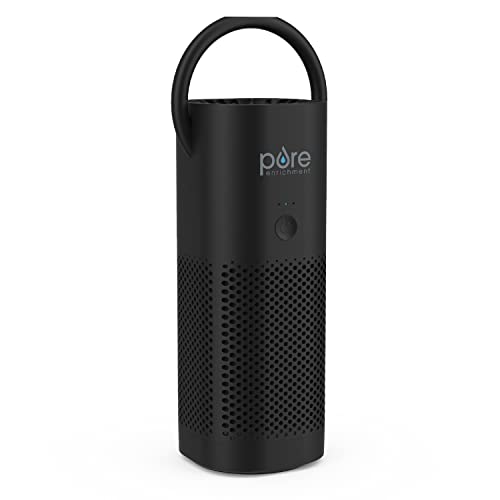
- Pure Enrichment PureZone Mini Portable Air Purifier — a rechargeable mini purifier built for cars, desks, and carry-on bags, and the closest living relative of the PB-P01 idea. Check price on Amazon
- Levoit Core Mini Air Purifier (Core Mini-P) — a compact mains-powered purifier for a bedside table or dorm desk, with a fragrance sponge for a light scent if wanted. Check price on Amazon
- Pro Breeze PB-P01 (prose only) — the original mini unit — covered in full below, but not linked, because no verified unit listing was available when this guide was prepared.
Notice what neither alternative claims, at least not in the wording of its verified listing: whole-house coverage, medical benefits, or transformation of a large room. That restraint is a useful tell. In a category where unknown brands print heroic coverage figures on machines the size of a mug, the listings that talk about the air close to you are the ones describing reality. Keep that lens on as the PB-P01 itself comes under the microscope next, because its reputation suffers precisely from buyers who expected the heroic version.
The Pro Breeze PB-P01 itself: what it is and how it behaves
The PB-P01 is a cylinder small enough to wrap a hand around, powered through USB, and built around a compact replaceable filter with an activated carbon element. Pro Breeze, a British brand better known for dehumidifiers and fans, positioned it for personal spaces: the desk in a home office, the bedside table, the car. There is no room-size rating worth the name, no sensor, no auto mode, and no app — a fan, a filter, a power button, and a choice of speeds are the whole proposition, and at its original modest tier that simplicity was the appeal.
In use, owners’ experiences divide cleanly by expectation. Placed within roughly an arm’s length, the PB-P01 visibly reduces the dust that settles on a desk and softens cooking or traffic smells drifting across a small room; people who work beside one often describe the effect as a fresher immediate environment rather than cleaned air in any measurable whole-room sense. Placed across a bedroom and asked to handle a partner’s hay fever overnight, it disappoints, because the air it processes in an hour is a small fraction of the room’s volume and the rest never passes through its filter at all.
The ownership details matter more than the specifications at this size. The filter is proprietary and small, so its useful life is measured in a few months of regular use, and once it loads up the little fan’s output falls away quickly. That is why the survival of the PB-P01’s filter listings, even as the unit listing fades, cuts both ways: existing owners can still feed their machines, which is good, but anyone buying old stock of the unit itself should confirm filter availability first, because a purifier whose cartridge cannot be replaced is a purchase with an expiry date built in.
Why, then, does this small machine hold a review slot at all? Because the question it raises — how small can a purifier be before it stops being one? — is the right question for the whole mini category, and the PB-P01 is its most searched-for example. The honest answer developed through this guide is that the boundary is not size but honesty of purpose: a mini purifier used as a personal-space device earns its money, and the same device sold or bought as a room purifier is a misunderstanding with a power cable. The PB-P01, used as intended, was a decent little machine. The market’s problem was never really the machine.
The verified alternatives in detail
Each alternative below was confirmed against its live Amazon listing for this guide, image included, and each is linked so you can check its current price and filter costs before deciding. They were chosen because they cover the two genuine use cases the PB-P01 served — portable personal air, and a fixed bedside unit — rather than because they merely share its size.

Pure Enrichment PureZone Mini Portable Air Purifier
Verified alternative — cordless, travel-first design
The PureZone Mini takes the PB-P01 concept and removes its most annoying tether: the cable. A rechargeable battery drives the fan, so the unit can sit in a car cup holder, on a train tray table, or on the corner of a desk far from any socket, running for hours between charges. That freedom changes how the device gets used in practice — instead of living wherever the USB port happens to be, it lives wherever you happen to be, which is precisely the point of a personal-space purifier.
Its filter is a small HEPA-type cartridge, and the listing describes it as helping to eliminate the great majority of dust, odours, and allergens close to the user — note the honest qualifier in that phrasing, close to you, which is the correct way to think about everything in this class. Two fan speeds trade cleaning rate against noise and battery life. In a car on a pollen-heavy commute, or beside a laptop in a stuffy office, that close-range bubble is a real and perceptible thing: less dust settling on the screen, a fresher smell in the immediate air, fewer of the irritants that make a long drive home feel longer.
The compromises are the class compromises, worn openly. The filter is small, so it loads faster than a room unit’s cartridge and wants replacing on schedule if performance is to hold up. Battery power means a charging habit to maintain, and the highest fan speed is audible in a quiet room, though at desk distance the low setting fades into ordinary office background. As the direct modern answer to the question the PB-P01 posed — can a purifier this small be worth carrying? — this is the machine that answers it most completely.
At a glance
- Format: cordless mini purifier, rechargeable battery
- Intended spaces: car, desk, bedside, travel
- Filter: replaceable HEPA-type cartridge
- Speeds: two fan settings
- Maker framing: cleans the air close to the user
Strengths
- Battery freedom places it anywhere, including cars
- Small enough for a carry-on or a cup holder
- Honest personal-space positioning from the maker
Trade-offs
- Small filter loads quickly and needs scheduled replacement
- Charging becomes another household routine
- No app, sensor, or auto mode at this size
Best for: commuters, frequent travellers, and desk workers who want a portable bubble of cleaner air that follows them.
Not suited for: anyone expecting whole-room purification from a device that fits in a hand.

Levoit Core Mini Air Purifier (Core Mini-P)
Verified alternative — bedside specialist from Levoit
Where the PureZone Mini chases portability, the Levoit Core Mini settles down. It is a small plug-in cylinder designed to live on a bedside table, a dorm desk, or a nursery shelf and stay there, quietly filtering the air around a single sleeper or worker. Coming from Levoit — whose larger Core models anchor many of the purifier guides on this site — it benefits from a filter supply chain that is easy to find and a design language that will look familiar if you already own one of its bigger siblings.
The listing highlights a fragrance sponge, a small pad inside the unit that accepts a few drops of essential oil so the outgoing air carries a light scent. Treat that as a lifestyle extra rather than a cleaning feature; the actual work is done by the filter cartridge, which the maker positions against smoke, allergens, pet dander, odour, and dust in the immediate area. For a student in a dorm room that smells of the previous tenant, or a spare bedroom that hosts the cat’s favourite chair, that combination of modest filtration and optional scent is a sensible, unpretentious package.
Set against the PB-P01, the Core Mini is the more domesticated object: no battery to nurse, a brand with a deep replacement-filter catalogue behind it, and a shape that sits happily among bedside clutter. It shares the class limit — this is a one-person radius of cleaner air, not a room solution — and it asks for wall power, so it will not follow you into the car. Households choosing between the two linked alternatives are really choosing a lifestyle: carry the bubble with you, or plant it where you sleep. Both answers are legitimate; the wrong answer is expecting either machine to purify the whole flat.
At a glance
- Format: compact plug-in desktop purifier
- Intended spaces: bedroom, dorm, nursery, office desk
- Filter: replaceable cartridge with fragrance sponge
- Maker framing: smoke, allergens, dander, odour, dust nearby
- Brand: Levoit Core family, filters widely stocked
Strengths
- Bedside-friendly size and simple controls
- Replacement filters easy to source from a major brand
- Fragrance sponge adds optional light scent
Trade-offs
- Needs a wall socket; not a travel device
- Personal radius only, despite the room words in listings
- Scent feature is cosmetic, not additional filtration
Best for: a bedside table, dorm room, or nursery corner where one sleeper wants a quieter, fresher pocket of air.
Not suited for: cars, travel bags, or any space larger than a small single room.
What a mini purifier can and cannot do
Air cleaning is, at bottom, arithmetic: the volume of air a fan pushes through a filter per hour, set against the volume of the space. A full-size purifier turns over a bedroom’s air several times an hour. A mini unit turns over the air in a small bubble around itself at a similar rate, and barely touches the rest of the room. This is not fraud; it is physics, and it explains why the same device earns a delighted review from a desk worker and a furious one from someone who placed it in a lounge. The machine did the same thing in both homes. Only the expectation differed.
Within its bubble, a HEPA-type filter genuinely captures the particles that pass through it — pollen grains, dust mite debris, pet dander, the fine fraction of traffic dust — and a carbon element takes the edge off odours. For a person whose desk sits near a window that must stay open, or whose car journey crosses a pollen-heavy valley every morning, that local capture is not nothing; it is a measurable reduction in what lands on the desk and what reaches the nose during the hours spent in that spot. Comfort, not clinical protection, is the honest promise, and this guide will keep repeating that distinction because the category’s marketing so often blurs it.
What a mini purifier cannot do is protect a room. It cannot keep a bedroom’s air clean overnight for two sleepers and a dog, cannot handle wildfire smoke events, and cannot substitute for ventilation or for a properly sized HEPA machine where someone in the household has serious respiratory concerns. If those are your needs, the money earmarked for a mini is better saved toward a room unit; the guides linked at the foot of this page cover that class in depth. The mini’s kingdom is real but small: a desk, a pillow’s surroundings, a car seat’s worth of air.
Buying guide for the mini class
Power supply decides the lifestyle
Battery, USB, or wall plug — this choice quietly determines whether the purifier gets used or gathers dust. A USB model like the PB-P01 depends on whatever port or power bank feeds it, which suits a desk with a hungry hub and frustrates everyone else. A rechargeable model like the PureZone Mini trades that tether for a charging routine. A plug-in model like the Levoit Core Mini never travels but never runs flat either. Decide where the machine will actually live, count the sockets and ports honestly, and let that answer pick the power type before any other feature is considered.
Filter supply is the real specification
In this class, the filter is not an accessory; it is the product’s lifespan. Before buying any mini purifier, find its replacement cartridge, confirm it is genuinely in stock from the maker or a reputable seller, and note the replacement interval the maker suggests. A cheap machine with an orphaned filter is expensive within a year, while a slightly dearer machine with a stocked, sensibly priced cartridge — the situation both linked alternatives enjoy — is the rational purchase. The PB-P01’s own story, unit listing faded while filters linger, is the cautionary tale that proves the rule.
Noise at pillow distance
A fan that sounds modest across a showroom becomes the loudest object in a silent bedroom. Mini purifiers run small fans at high speeds, which produces a higher-pitched note than the low whoosh of a large machine, and pitch matters to sleep as much as volume. If the unit is destined for a bedside table, favour models with a genuinely low bottom speed, plan to run it faster in the hour before bed and slower overnight, and be honest about your own sensitivity — a machine switched off for noise cleans nothing at all.
Scent features and other garnish
Fragrance sponges, mood lights, and aroma pads decorate this category because the core hardware is simple and makers need shelf appeal. None of them clean air, and scent in particular divides households: delightful to one sleeper, a headache trigger to the partner. If a fragrance feature matters to you, the Levoit Core Mini builds it in cleanly; if it does not, ignore it entirely and judge on filter, power, and noise. What should never happen is paying a premium for garnish while the cartridge underneath is undersized or unsourceable.
Coverage language, translated
When a mini purifier’s packaging mentions a room size, ask what air-change rate that figure assumes and over what period. Some makers quote the area a unit might freshen across an entire day of running, which is technically defensible and practically misleading beside a full-size machine quoting several complete air changes per hour. The listings verified for this guide talk instead about the air close to the user, and that phrasing — modest, local, specific — is the pattern to trust wherever you shop in this class.
Placement and care: getting the bubble right
Where to put a mini purifier
Place the unit inside the bubble you want cleaned, not at the room’s edge pointing hopefully inward. On a desk, that means beside the keyboard or monitor, close enough that its outflow washes across your breathing zone without blowing papers or drying your eyes. On a bedside table, it means at pillow height and within easy reach, angled slightly away so the airflow does not strike your face directly all night. In a car, the cup holder or a stable spot on the centre console keeps it inside the front-seat bubble where its work is felt.
Keep the intake unobstructed — these little machines breathe through vents that a stack of notebooks or a trailing scarf can half-block without anyone noticing — and give the outflow a clear path rather than a wall six inches away. Height helps: a mini purifier on the floor cleans the floor’s air, which is the least valuable air in the room. The PB-P01’s small footprint made all of this easy, which was a genuine virtue of the design, and the same placement logic applies unchanged to both linked alternatives.
Looking after filters and batteries
Vacuum or brush the exterior vents every couple of weeks, because the pre-filter layer on mini units is often just the cartridge’s outer surface, and a matted layer of household fluff throttles airflow long before the filter media itself is spent. Replace the cartridge on the maker’s schedule rather than by smell or guesswork; a loaded HEPA-type filter fails silently, passing less air while the fan note stays the same, so the calendar is a more reliable instrument than your nose.
Battery models reward a shallow-discharge habit: top up after heavy use rather than running the cell to empty every time, and do not leave a cordless purifier baking in a parked car through a summer afternoon, which ages both battery and filter. Mains models ask for less — a dusted vent, a cartridge on schedule, and a cable that is not being crushed by the bedside table’s leg. None of this is burdensome, but all of it is the difference between a mini purifier that still works in year two and one that became desk clutter by spring.
Mistakes that make mini purifiers seem useless
The first mistake is placement by furniture logic instead of airflow logic: the purifier tucked on a bookshelf across the room because it looks tidy there, then condemned for doing nothing. The second is buying on a coverage claim fit for a machine ten times the size, a mistake the category’s wilder marketing invites and this guide exists to prevent. The third is forgetting the filter — running a mini for a year on its factory cartridge and concluding the whole concept is a placebo, when in fact the concept was fine and the cartridge was finished months ago.
A fourth mistake is subtler: running the unit only when symptoms flare. Air cleaning is preventive by nature; the pollen that woke you at dawn entered the room yesterday evening. A bedside mini earns its keep running through the evening and night, quietly maintaining its bubble, not summoned like a medicine after the sneezing starts. Households that build it into the bedtime routine — purifier on, blinds drawn, window checked — report the class far more kindly than households that treat it as an emergency appliance. A related habit separates satisfied owners from the rest: they switch the machine on before they need it. A bedside bubble established during the evening’s reading hour is worth far more at midnight than a unit started in desperation in the small hours, because the air immediately around the pillow has had time to pass through the filter several times over. Small machines reward foresight precisely because their throughput is small; planning ahead is the owner’s half of the bargain, and it costs nothing but a place in the evening routine. Keep that routine through the season and the little machine quietly justifies itself, night after night, in the only currency this category honestly trades in: slightly easier evenings in the one seat that matters to you.
How the alternatives compare with the PB-P01
Against the original machine, the PureZone Mini is best read as the PB-P01 idea matured: same personal-space mission, same class of filter, but freed from the cable and backed by a current, verifiable listing. Anyone who liked the Pro Breeze concept and wants to buy that concept today, with a filter supply that is easy to confirm, is looking at the natural successor. The Levoit Core Mini answers a different reading of the same need — not a bubble that travels, but a bubble that waits by the bed — and brings the filter logistics of a much larger brand to a very small machine.
What neither alternative does is rescue the PB-P01’s weakest point, because that weakness belongs to the class rather than the model: the bubble is small, the filter is small, and physics is unimpressed by branding. If your need is genuinely a room — a child’s bedroom through pollen season, a lounge in smoke season — then the correct conclusion of a pro breeze review is to not buy a mini at all, and to put the budget toward a compact room purifier instead. The linked guides below include room-class options for exactly that reader, and there is no failure in being that reader; there is only failure in buying the wrong class for the job. If you take one practical step away from this page, let it be the filter check: whatever mini you buy, from whichever maker, put its replacement cartridge in the same order or confirm its stock the same day. That single habit prevents more regret in this category than any other decision discussed here, and it costs nothing but two minutes of attention at the moment when attention is cheapest.
Living with a mini purifier: a month in the life
Week one with any mini purifier is mostly novelty and placement experiments. The unit migrates from desk to bedside to car and back as its owner tests where the effect feels strongest, and the honest answer that emerges — usually the desk, where the same person sits in the same chair for hours — becomes its permanent home. This settling matters, because a mini purifier’s value compounds with hours spent inside its bubble; a machine that travels constantly serves three spaces thinly, while one that owns a single workstation serves it well.
By the second week the effect, such as it is, becomes background: a desk surface that needs dusting a little less often, a car that smells neutral rather than faintly of yesterday’s commute, a bedside where the air feels less close on warm nights. Owners who expected a dramatic transformation have usually returned the unit by now, which is why this category’s review pages split so sharply between the delighted and the scornful. The machine did not change between those two households. The expectations, and the placement discipline, did.
The month mark brings the first maintenance reality: a cartridge that has visibly greyed on its intake face, and a small decision about whether the replacement schedule in the manual is honest or pessimistic. In a pet household it is honest. The households that keep a spare cartridge in a drawer — bought when the machine was new, while the listing and the part number were in front of them — sail through this moment; the households that must hunt the part number from scratch experience the category’s most common and most avoidable frustration.
None of this is an argument against the class. It is an argument for buying it the way you would buy a desk lamp: for a defined spot, a defined job, and a defined person, with the consumable it needs already identified. Bought that way, a mini purifier is a small, steady comfort that asks very little. Bought as a lottery ticket against a whole home’s air, it is a disappointment scheduled in advance, and no brand in the category — Pro Breeze included — can repeal that arithmetic.
The PB-P01 in its competitive moment
To understand the PB-P01’s reputation fairly, it helps to remember the moment it sold into: a period when working from home turned millions of spare corners into offices overnight, and when a small, inexpensive device that promised cleaner air at the desk it was aimed at an enormous, anxious audience. Against that backdrop its proposition was perfectly tuned — no installation, no filter the size of a suitcase, no commitment. Many of the people who bought one were buying their first purifier of any kind, and the PB-P01 became, for better or worse, their reference point for the entire category.
That history explains the strange afterlife of the model in search results. People look it up years later because theirs is still running on a desk somewhere, because a filter needs replacing, or because a friend recommended the tiny purifier they bought during the home-office rush. A review written now therefore has a duty the original launch reviews did not: to separate the machine’s genuine, modest merits from the inflated hopes of its moment, and to point the reader at what the same money buys today, with support, from a live listing.
It also explains why the alternatives linked in this guide are framed the way they are. The PureZone Mini and the Core Mini are not random small purifiers; they are the two shapes the mini idea has settled into since the PB-P01’s moment passed — one that travels, one that stays. The category grew up a little. The personal-space promise survived, the whole-room implications were quietly dropped by the reputable makers, and the machines got easier to live with. That is a healthy trajectory, and the PB-P01 deserves a footnote in it as one of the devices that taught the market what a mini purifier is actually for.
When to skip the mini class entirely
Some readers should close this page without buying anything in it, and a trustworthy review should name them plainly. If a household member has a diagnosed respiratory condition and a clinician has advised air cleaning as part of managing it, the correct purchase is a properly sized HEPA room purifier, full stop — a mini is a comfort device, not a medical one, and this guide makes no health claims for it. If the problem is wildfire smoke, cooking fumes in an open-plan flat, or a musty whole house, the same advice applies with even more force.
If the problem is a single desk in a dusty office, a car commute through pollen country, or a bedside that feels stuffy in a small room, the calculus reverses: a full-size purifier would be overkill in money, space, and noise, and the mini is the proportionate tool. Proportionality is the whole wisdom of this category. The PB-P01’s fans and its detractors were both, in their way, responding to the same small machine; the difference was whether the job they handed it matched the job it was built to do.
Reading mini-purifier listings like an editor
Spend enough time with this category’s product pages and certain phrases start to glow. Anything that pairs a tiny machine with a large room figure deserves immediate suspicion, as does any claim about viruses, medical relief, or laboratory percentages quoted without a test standard attached. The reputable listings in this class — including the two verified for this guide — describe a filter type, a space the size of a desk or a car, and an effect on the air close to the user. That modesty is not a lack of ambition; it is the signature of a maker describing a real device.
Photographs deserve the same scepticism. Mini purifiers are routinely pictured on empty desks in vast, bright rooms, a composition that quietly implies the machine is responsible for the whole serene space. Look instead for the details that survive editing: the cable or its absence, the size of the unit against a hand or a mug, the filter door, the control layout. Those details predict your ownership experience far better than the lifestyle scene around them, and they are the details this review has tried to keep in front of you throughout.
Finally, read the filter page before the product page. The cartridge’s price, availability, and replacement interval tell you what the machine costs per year and whether the maker expects it to have a future. A purifier is a small appliance married to a consumable, and the marriage, not the wedding, is what you live with. The PB-P01’s fading unit listing beside its surviving filters is the category’s standing illustration of that truth, and it is why this guide checks the consumable first and the gadget second.
Cars, desks, and dorms: the three homes of the mini class
The car is the mini purifier’s most defensible habitat. A vehicle’s cabin is a genuinely small volume, its occupants sit within a metre of any dashboard or cup-holder device, and its air arrives through vents that pass traffic dust and pollen on every journey. A cordless unit like the PureZone Mini, sized for exactly this, can make a perceptible difference to a commuter’s morning — not by transforming the car into a cleanroom, but by trimming the dust and odour load in the one cubic metre its driver actually breathes. Secure the unit so it cannot become a projectile under braking, and bring it indoors to charge rather than leaving it to bake.
The desk is the second habitat, and the one the PB-P01 was born into. Its virtues there are proximity and permanence: eight hours a day in the same chair means eight hours inside the bubble, the longest exposure any purifier in the home can claim. Its limits are equally specific — a desk mini does nothing for the colleague across the room, nothing for the meeting room, and nothing overnight. Households evaluating the class should ask which single seat in their lives is worth a cleaner bubble, and buy for that seat alone, rather than imagining a benefit that diffuses politely across the whole property.
The dorm room and the small rented bedroom form the third habitat, where the mini’s competition is not a full-size purifier but nothing at all — no space for one, no budget for one, no permission to install anything. In that setting a Core Mini on a bedside table is not a compromised purifier; it is the only purifier the room was ever going to get, and judged against the alternative of unfiltered air it earns its shelf space honestly. Context, as ever in this category, is the difference between a sensible purchase and a silly one, and the same machine can be either depending on the room it lands in. That is also why this review resists ranking the class with a single winner. A traveller, a desk worker, and a student in a bedsit are three different readers wearing one search term, and each deserves a different answer rather than a podium. The quick list at the top of this page is deliberately short for that reason: two machines, two honest jobs, and a subject whose real legacy is teaching buyers to ask which job is theirs.
What we checked, and what we could not
A word about method, since this review’s central fact is an absence. The products linked in this guide were each confirmed against a current Amazon listing, with the maker’s own product title and an official product image, before being written about. The PB-P01 was searched for directly, more than once, and what came back was its replacement filters rather than the machine itself. Rather than link a filter as if it were the purifier, or borrow a listing from another marketplace and hope, this guide links nothing for the subject and says so in the open — because a review that quietly links the wrong product has failed at its only job.
What that method cannot do is tell you the PB-P01 is discontinued everywhere, forever. Regional stock, marketplace sellers, and bundle listings come and go, and a reader who finds the unit listed tomorrow should apply the tests this guide has used throughout: is the seller credible, is the filter in stock beside it, and is the price sane against the verified alternatives? If all three answers are yes, the little machine remains what it always was. If any answer is no, the alternatives above exist precisely for you. The same transparency applies to the two alternatives: both were live, listed, and pictured when this guide was prepared, and both links lead to the maker’s current product page where the price of the day and the price of its filters can be checked side by side. Listings change, seasons change, and stock changes, which is why this review describes designs and behaviour — things that stay true — and leaves every figure that can move to the listing itself, one click away.
Final recommendation
If the PB-P01 itself is what you came for, the fair summary is this: a likeable, simple, genuinely tiny purifier that did its small job decently, let down less by its engineering than by the expectations stacked on it, and now difficult to buy with confidence because its own listing has faded while its filters remain. Existing owners should keep feeding theirs filters and enjoy them. New buyers should not chase old stock at inflated prices when the same idea is available, verified and supported, in the alternatives above.
Choose the PureZone Mini if your air problem travels with you — the car, the desk, the hotel room. Choose the Levoit Core Mini if it sleeps in one place — the bedside, the dorm, the nursery shelf. And if your problem is a whole room, close this tab with our blessing and go and read a room-purifier guide instead; the most useful sentence in any pro breeze review is the one that tells you when not to buy the category at all. Either way, buy the spare cartridge early, place the machine inside the bubble you actually occupy, and let a small device do a small job well — that discipline, more than any badge on the box, is what separates the owners who praise this class from the owners who mock it.
Frequently asked questions
Is the Pro Breeze PB-P01 still worth buying?
Only at a genuinely low price, from a seller you trust, and after confirming that replacement filters are in stock — because the unit listing itself could not be verified for this guide, which suggests the model is being phased out or sold inconsistently. At anything like a premium price, the verified alternatives reviewed above offer the same personal-space cleaning with current listings, clearer support, and filters you can reorder without detective work. Nostalgia for a neat little design is understandable; paying over the odds for orphaned hardware is not. If you do find one cheaply with a sealed spare filter in the box, it remains a perfectly serviceable desk companion, and nothing in this guide should talk you out of a bargain that clear-eyed. The warning is aimed at the inflated listings that appear whenever a discontinued gadget trends again on social media.
Can a mini purifier like the PB-P01 clean a bedroom?
Not in the sense a bedroom usually needs. Across a night, a mini unit processes a small fraction of a bedroom’s air, so the room as a whole — the far corners, the air around a second sleeper, the dust raised by bedding — is largely untouched. What it can do is keep the air immediately around one pillow noticeably fresher, which some light sleepers find genuinely worthwhile. If the goal is a clean bedroom rather than a cleaner pillow zone, a compact room purifier with a proper HEPA cartridge is the correct class of machine. Readers who need that room-class machine on a budget should look at the compact end of the room category rather than at two minis in the same room, a combination that costs similar money while still leaving the corners of the room unserved and doubling the filter bills.
How long does a mini purifier filter last?
Makers of this class typically suggest a few months of regular use per cartridge, and the small size of the filter is the reason: there is simply less media to load before airflow and capture fall away. Homes with shedding pets, open windows on dusty roads, or a smoker nearby will exhaust a cartridge faster than a quiet, pet-free flat. Because a spent filter fails silently, replace on the calendar the maker gives rather than waiting for a smell or a symptom to announce the cartridge is done. Keeping the old cartridge’s part number photographed on your phone, and a calendar reminder set for the week it falls due, removes the two frictions that most often turn a working mini purifier into an abandoned one.
Are USB-powered purifiers safe to leave running overnight?
A USB purifier draws very little power and generates negligible heat, so the electrical risk profile is low provided the power source is sound — a proper mains adapter or a healthy computer port, not a damaged cable or a bargain-bin charger of unknown provenance. The practical overnight issue is not safety but usefulness: a mini on a bedside table running at its low speed is exactly the use case this class was designed around, and both linked alternatives are equally at home in that role. As with any small appliance, keep the cable or charging lead away from bedding and out of walkways, and give the unit the clearance its vents ask for; small machines forgive a great deal, but a fan buried under a pillow is being asked to fail.
Will a mini purifier help with pet hair on a desk?
It will reduce the fine dander and dust that drift through the air near the desk, and you may notice the surface staying cleaner a little longer between wipes. It will not catch the visible hair itself, which mostly travels ballistically from cat to keyboard without ever floating through a filter. A desk-side mini plus a lint roller remains the honest two-part solution; anyone promising that a purifier of any size will end pet hair on furniture is selling something other than filtration. What a bedside mini can do for pet households is reduce the airborne dander load in the sleeper’s immediate zone, which some owners find makes mornings easier — a comfort effect, reported as such, and the most this guide will claim for it.
What is the difference between the two alternatives linked here?
Power and purpose. The PureZone Mini is cordless and rechargeable, built to move — car, office, travel — and to clean the air around a person wherever that person lands. The Levoit Core Mini is a plug-in fixture for one spot, the bedside or dorm desk, with the deeper filter catalogue of a major brand and a fragrance sponge for those who enjoy a scented room. Neither out-cleans the other in any dramatic way; choose by where the machine will live, and the choice makes itself. Households that genuinely need both behaviours usually end up owning one of each, bought at different times for different rooms, which is a more sensible outcome than compromising on a single machine that neither travels well nor settles well.