Disclosure: As an Amazon Associate, dailyhomedecorating.com earns from qualifying purchases. Links on this page are affiliate links; they cost you nothing extra. Prices and availability change often, so check the current Amazon listing before you buy.
This philips 900 series review opens with the finding that shapes everything after it. Philips’ compact 900 Series purifiers — the AC0950 and AC0917 family — are exactly the kind of machine a design-conscious household goes looking for: small, quiet-spoken, and from a maker whose air-care name carries weight. But when we checked Amazon’s product data for this review, twice, the 900 Series unit itself did not come back. Only its replacement filters appeared. A review that proceeded to quote you the unit’s specifications, noise figures, and prices as if a listing stood behind them would be inventing its evidence, so this article takes the honest route instead: the 900 Series is discussed in full as a design and a proposition, with its verification status stated plainly, and two compact purifiers that could be verified — the PuroAir 240 and the Bionaire True HEPA 360 — are reviewed in detail as the purchasable alternatives serving the same rooms.
That is not a consolation structure. The compact end of the purifier market is where most households actually shop, and the questions a 900 Series searcher is asking — how much machine does a bedroom need, what does a sensor-driven auto mode change, how quiet is quiet enough — are answered completely by the comparison below, whichever badge the eventual purchase wears.
Philips 900 Series Review: The Machine as Designed
The 900 Series represents Philips’ compact philosophy: a small-footprint purifier for bedrooms and personal spaces, built around HEPA filtration, automatic sensing of the room’s air, and the restrained industrial design the maker is known for. Machines of this family are sold on the proposition that a bedroom purifier should be nearly invisible — compact enough for a crowded floor, quiet enough for a light sleeper, and automatic enough that its owner never develops a relationship with its controls. The replacement filters circulating in retail channels confirm an installed base of owners living that proposition today. What the missing unit listing means practically is narrower than it sounds: the machine may be sold through the maker’s own channels, through regional catalogues, or in a listing arrangement the retailer’s data did not return on the days checked. It does mean that this review cannot verify a current price, a current specification sheet, or current availability for the unit, and it will not pretend otherwise. Owners will find their guidance in the sections on filters and upkeep; shoppers will find two verified machines that compete for the same nightstand-adjacent floor space, reviewed without favour.
In this guide
Key Takeaways
- The Philips 900 Series unit was not returned by Amazon’s product data in two checks; only its replacement filters appear, so the unit is treated as prose-only here.
- The series’ proposition is compact, automatic, design-led purification for bedrooms and personal spaces.
- Two verified alternatives cover that proposition today: the sensor-driven PuroAir 240 and the 360-degree Bionaire True HEPA.
- Compact purifiers should be judged at the speed a household can sleep beside, not at their maximum output.
- Owners of the Philips unit should buy filters by exact part number and hold a spare.
The Verified Alternatives at a Glance
| Machine | Design idea | Coverage claim in its listing | Defining feature |
|---|---|---|---|
| PuroAir 240 | Sensor-driven compact | Rooms up to 1,000 square feet | PuroIQ sensor with auto mode, certified HEPA plus carbon filter |
| Bionaire True HEPA 360 | All-around intake tower | Rooms up to 840 square feet | 360-degree intake, true HEPA, UV technology per its listing |
The pairing is instructive because the two machines answer the compact brief with different philosophies. The PuroAir bets on sensing: a sensor watches the room and an automatic mode spends fan speed only when the air earns it. The Bionaire bets on geometry: an intake that draws from every direction, so placement in the middle of a room’s life rather than against a wall becomes natural. The Philips design, as described by its maker, leans toward the first philosophy with a stronger accent on industrial design. A shopper who understands which philosophy suits their room has effectively made the decision before reading another word.
How the Alternatives Were Chosen
The selection rule mirrors the rest of this series: a machine earns a linked review only when the retailer’s own data returns it with an exact title and an official image, so every claim in its section can be traced to a listing the reader can open. Beyond verification, each alternative had to serve the 900 Series’ own territory — bedrooms, nurseries, offices, and modest living spaces — with HEPA filtration at its core and a manufacturer whose replacement filters circulate openly. Several other compact machines were checked in the same pass and set aside for this article on evidence grounds alone. The Philips unit itself is the article’s subject in prose precisely because it could not clear the bar its alternatives cleared, and that asymmetry is stated wherever it matters.

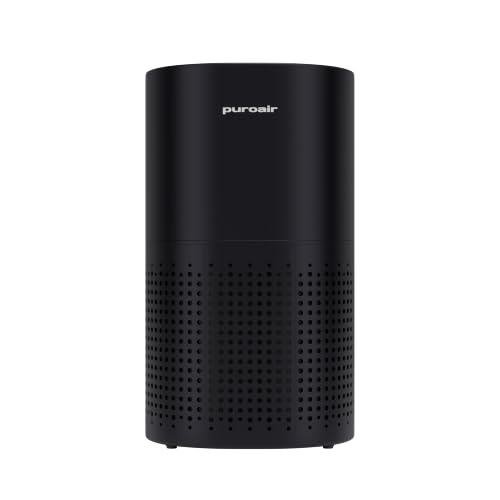
PuroAir 240: The Sensor-Driven Compact
Badge: the verified alternative that automates the bedroom. The PuroAir 240’s listing describes a compact machine with ambitions: a certified HEPA filter paired with a carbon stage, coverage claimed up to a thousand square feet, a trademarked sensor system driving an automatic mode, a quiet sleep mode, and an intake that draws around its full perimeter. In a black finish, it is styled as a deliberate object rather than as an appliance to be hidden, which puts it in direct conversation with the design-led proposition the Philips series represents.
Filtration: certified HEPA plus carbon filter per the listing. Coverage claim: rooms up to 1,000 square feet. Controls: PuroIQ sensor with auto mode per the listing. Modes: quiet sleep mode per the listing. Intake: 360-degree per the listing. Colour: black.
Strengths
- The sensor and auto mode spend the machine’s effort when the air needs it, which is the correct behaviour for a bedroom.
- A carbon stage alongside the HEPA filter gives it an answer to household odours that particle-only compacts lack.
- Its stated coverage gives it headroom over the small rooms it will mostly serve, which expresses itself as quieter working speeds.
Trade-offs
- Coverage claims at this size should be read as headroom rather than as a promise for a single huge room.
- The black, object-like styling is a deliberate presence; rooms wanting invisibility may prefer a paler machine.
- Sensor-driven ownership still requires filter discipline, since no sensor can clean a saturated cartridge’s air.
Imagine the 240 across a pollen-season fortnight in a primary bedroom. Its working pattern is the one the Philips proposition promises: a low, steady presence through the night, a responsive climb when the evening’s door-openings and the dog’s arrival load the room, and a settling back down as the air clears — all without its owner developing opinions about fan speeds. That is the actual product being sold by every automatic compact, and the PuroAir’s listing makes the sensing the headline, which is the correct priority. Owners migrating from a Philips compact will find the philosophy familiar and the execution, on the evidence of the listing, complete.
Best for: bedrooms and living spaces wanting automatic, sensor-led operation. Not suited for: buyers who prefer the plainest possible appliance or pale styling. Check price on Amazon
Bionaire True HEPA 360: The All-Around Intake
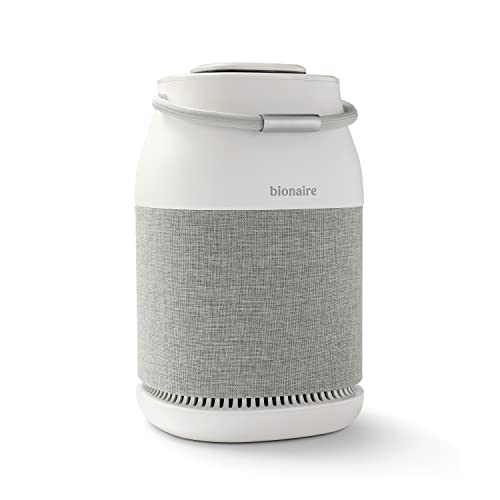
Badge: the verified alternative built on geometry. Bionaire is one of the older names in home air treatment, and this model’s listing describes its wager plainly: true HEPA filtration capturing the overwhelming majority of airborne pollutants down to the fine fraction, an intake that draws from all directions, coverage for rooms up to 840 square feet, and ultraviolet technology included in the design. Where the PuroAir leads with its brain, the Bionaire leads with its lungs.
Filtration: true HEPA per the listing, capturing up to 99.97 percent of airborne pollutants as small as 0.3 microns per the listing. Coverage claim: rooms up to 840 square feet. Intake: 360-degree. Additional technology: UV per the listing. Colour: white.
Strengths
- All-around intake frees placement from the wall, suiting rooms where the machine must live mid-space.
- True HEPA specification is stated in the classic terms, with the fine-particle capture figure in the listing itself.
- An established maker’s filter ecosystem stands behind the machine.
Trade-offs
- Its feature emphasis is filtration and airflow rather than sensor-driven automation.
- The ultraviolet element is a secondary technology; the HEPA stage does the measurable work, as in every machine here.
- A tower drawing air from all sides needs clearance on all sides, which some tight corners cannot offer.
The Bionaire suits the room whose layout defeats wall-hugging machines: the open bedroom where the only free floor is beside the bed’s foot, the office whose walls are all bookcase, the nursery whose corners are spoken for. Its 360-degree appetite turns those placements from compromises into the design’s home ground. Households that value a maker’s longevity and a specification stated in the traditional vocabulary will also feel recognised here; this is a purifier from the category’s establishment, specified the way the establishment learned to specify.
Best for: rooms needing mid-space placement and buyers who value an established maker. Not suited for: tight corners or automation-first shoppers. Check price on Amazon
The Compact Brief: What a Bedroom Purifier Must Actually Do
Strip the category to its job description and a compact purifier has four duties, in an order that surprises shoppers raised on coverage figures. First, it must be tolerable at night, because the bedroom machine’s longest shift is worked beside a sleeping person, and a unit that is turned off or exiled has a coverage of exactly zero. Second, it must run steadily rather than heroically, since air cleaning accumulates across repeated passes and the closed bedroom door gives it the whole night to work. Third, its filter must be sized and priced for the room’s real load, because compact machines in pet-adjacent or high-pollen homes consume cartridges faster than their gentlest estimates. Fourth, and only fourth, comes headline capacity, which matters as headroom — the ability to do the first three duties at low, quiet speeds — rather than as a claim about enormous rooms. Judge the Philips design, the PuroAir, and the Bionaire all by that ordering and the category becomes legible: each is a different wager on which duty deserves the engineering emphasis, and a household that knows its own ordering can choose among them in minutes.
Buying Guidance for the Compact Class
Measure the room, then subtract your illusions about it. A bedroom’s purifier serves the room with its door closed, which is the kindest possible assignment in the category, so honest sizing is easy: a compact machine with headroom, run steadily, will hold a bedroom’s air beautifully. Nurseries add a preference for machines whose controls can be locked into a quiet pattern and whose cabinets sit stably on the floor away from curious hands’ exploration of cords. Offices add a daytime duty cycle and often a preference for a machine that can work harder during occupied hours without becoming a colleague. Living spaces at the top of the compact class’s reach deserve the headroom models — the two alternatives here both claim coverage well beyond a bedroom, which in practice buys quiet rather than square footage. Then apply the consumable test that governs this entire series of reviews: find each candidate’s replacement filter in a live listing, note its price and stated life, and let the yearly figure sit beside the machine’s price in your comparison. For the Philips unit specifically, that test currently returns filters without a machine, which is a fine answer for owners and an incomplete one for shoppers — and shoppers should weight it accordingly.
Setup and Nightly Use
Set a compact purifier up as a piece of bedroom infrastructure rather than as a gadget. Choose its position for airflow and for sleep: a spot where air can reach its intake, far enough from the pillow that its working voice is a room tone rather than a presence, and not behind the curtain whose fabric it will otherwise spend its life cleaning at point-blank range. Remove the filter’s transit wrapping before the first run — the compact class ships its cartridges bagged, and the bag defeats the machine completely while looking like diligence. Run the unit continuously through its first nights so the room reaches its cleaned equilibrium, then settle into the household pattern: automatic where the machine offers it, or a fixed sleep-tolerable speed where it does not. Keep the first stage clean on the maker’s schedule, since a bedroom’s lint and hair load is steady and unglamorous. And record the filter’s part number somewhere more durable than the box, because the box will be recycled and the part number will be needed.
Mistakes in the Compact Class
The first is buying by maximum coverage and discovering that the figure was achieved at a speed no bedroom tolerates, leaving the machine’s real, quiet coverage unexamined. The second is placing the unit for the photograph — tucked, hidden, starved — and concluding that purifiers are ineffective. The third is neglecting the filter until the machine’s output smells of its input, then blaming the brand. The fourth is expecting a compact to serve an open-plan floor because its claim mentioned a large number, when the claim described a closed room’s arithmetic. The fifth, specific to machines with quiet listings like the Philips unit, is buying the unit through an unverifiable channel without securing the filter and the return path in writing. Each is avoidable with the measurement, the filter check, and the nightly-speed test this article has described, and together those three habits are worth more than any single model recommendation.
Final Recommendation
The Philips 900 Series remains, on the evidence available, a well-conceived compact proposition whose current unit listing this review could not verify — a status that owners can live with comfortably, thanks to its circulating filters, and that shoppers should weigh honestly. For a purchase today, the PuroAir 240 is the recommendation for households that want the sensor-driven, automatic version of the compact idea, with a carbon stage for odours and headroom to spare. The Bionaire True HEPA 360 is the recommendation for rooms whose layout rewards an all-around intake and for buyers who value an established maker’s traditional specification. Either machine serves the bedroom brief the Philips series defined, from a listing that can be checked, with filters that can be bought — and in this category, that combination is the recommendation.
Philips as an Air-Care Maker: Context for the Series
Philips occupies a distinctive position in this category: a large, diversified maker whose air-care line borrows credibility from a much wider engineering organisation, and whose compact machines are typically exercises in restraint — restrained size, restrained styling, restrained claims presentation. That restraint is part of the 900 Series’ appeal to its intended buyer, who is often furnishing a considered home and wants appliances that behave like part of its calm. The restraint also explains the series’ retail pattern: makers of this scale distribute through many channels, vary ranges by region, and refresh compact lines without ceremony, which is why a series can be simultaneously a live product in the maker’s own store and an absent listing in a given retailer’s data on a given week. None of that rescues a shopper who needs a verifiable listing today, and this review does not pretend it does. It does mean the series should be judged as a design within a large maker’s ecosystem — where filters and support are organisational habits — rather than as a fragile startup product whose absence from one catalogue implies fragility everywhere.
Sensor Automation Versus Fixed Speeds: The Compact Class’s Real Argument
The two verified alternatives embody the compact class’s central design argument, and it is worth having explicitly. The fixed-speed philosophy holds that a purifier’s job is simple enough to be set once: choose the speed the room tolerates, run it constantly, and let accumulation do the work. Its virtues are predictability, a constant acoustic signature that sleepers habituate to, and one less system to misunderstand. The sensor philosophy holds that air quality is a variable, not a constant, and that a machine should spend its noise and its filter life in proportion to the load: idling through clean hours, climbing through events, and proving its activity on a display that turns air into information. Its virtues are responsiveness and efficiency, and its cost is complexity — a sensor that must be kept clean, a display that may glow in a dark room, an automatic behaviour the owner must learn to trust. Neither philosophy wins in the abstract. Light sleepers often prefer the fixed machine’s constancy; households with pets, cooking drift, or a pollen-sensitive member often prefer the sensor’s vigilance. The Philips design, as its maker presents it, belongs to the sensor camp with a designer’s accent, the PuroAir belongs to it outright, and the Bionaire represents the filtration-first temperament that regards the argument as secondary to the filter itself. A shopper who can name their camp has effectively chosen their machine.
The Nursery’s Special Case
One room deserves separate treatment in any compact review, because its requirements reorder the priorities. A nursery needs a machine that runs at a genuinely sleep-safe volume for a sleeper far lighter than any adult, that sits stably where it cannot be pulled over by a cruising toddler, and whose cord management does not create a hazard in a room increasingly explored at floor level. It also needs parents to hold realistic expectations: the machine will reduce the room’s airborne dust and the pollen that drifts in, which is a reasonable comfort goal, and it is not a medical device and should never be bought as one. Within those terms, the compact class is the nursery’s natural machinery, and the choice among the Philips proposition and its two verified alternatives should be made on night noise at working speed, cabinet stability, and the parents’ preference between automation and simplicity. Place the machine early, run it before the baby ever sleeps in the room so its sound is part of the room’s original furniture, and keep its filter calendar with the household’s other infant-era logistics, where it will actually be kept.
Frequently Asked Questions
Is the Philips 900 Series discontinued?
The evidence supports a narrower statement: the unit did not appear in Amazon’s product data across two checks for this review, while its replacement filters did. Makers sell through their own stores, regional catalogues, and channels that a single retailer’s data does not capture, and listings also pause and resume. Treat the series as unverified through this channel rather than as cancelled, and if you find the unit sold by a channel you trust, apply the filter and returns checks described in this article before buying.
What size room does a compact purifier like this actually serve?
A closed bedroom, a nursery, or a home office is the class’s home ground, and within that ground the honest figure is the coverage achieved at a sleep-tolerable speed rather than the maximum on the box. Both verified alternatives here claim coverage extending well beyond bedroom scale, which should be read as headroom: the capacity to hold a modest room at low, quiet settings, and to serve a larger closed room at moderate ones. Open-plan spaces remain the territory of larger machines regardless of any compact’s headline number.
Do I need a sensor and automatic mode in a bedroom purifier?
It is the feature most owners of automatic compacts end up valuing, because a bedroom’s air load arrives in events — the evening’s entrances, the pet’s arrival, the window opened onto a pollen-heavy dusk — and a sensor-driven machine answers events in the moment instead of at a fixed guess. A disciplined household can replicate much of the benefit manually with a fixed moderate speed. A busy or light-sleeping household will find the automation is the difference between a machine that is used well and one that is merely present.
How quiet does a bedroom purifier need to be?
Quiet enough that its working speed disappears into the room’s ordinary night sounds, which is a household-specific threshold rather than a universal number. The reliable method is to judge any candidate by its noise at the speed you will actually run overnight, and to be suspicious of comparisons made at either extreme of a machine’s range. Sleep modes in this class are engineered for exactly that overnight setting, often steadying the fan at a constant level, since a fan that hunts up and down disturbs light sleepers more than a fan that simply hums.
Can I still get filters for the Philips 900 Series?
Replacement filters for the series appear in current retail search results, which is the encouraging fact for owners. Buy by the exact part number from your manual or the installed cartridge, because compact Philips families span variants whose filters are not interchangeable. Owners would be wise to hold one spare filter in reserve: for a machine whose unit listing is quiet, the spare converts any future filter scarcity from an emergency into an errand.
Which alternative is closer to the Philips approach?
The PuroAir 240 is the closer philosophical relative, since both designs lead with sensing and automatic operation in a compact, styled cabinet. The Bionaire is the closer relative for households whose priority is an established maker’s traditional HEPA specification and placement freedom. Neither is a substitute for the Philips unit in any literal sense; they are the verified machines competing for the same rooms, and the choice between them is a choice of temperament rather than of quality.
Placement in Small Rooms: A Craft of Centimetres
Small rooms punish careless placement more than large ones, because every position is close to something — a wall, a curtain, the bed itself. The craft is to find the spot where the machine breathes the room’s air rather than a microclimate. Keep the intake a honest distance from walls and soft furnishings, since a compact pressed against a curtain will clean the curtain’s immediate neighbourhood with great commitment and the room hardly at all. Keep it out of the direct line between an open window and the door if the window is a pollen source, or the machine will spend its life fighting the outdoors at point-blank range while the bed’s air waits its turn. Keep it far enough from the pillow that its voice is ambience, and close enough to the room’s traffic path that it intercepts the air the occupants actually stir. Then leave it there for a week before judging, because a bedroom’s air is a slow system and its improvement announces itself in mornings and in dusting intervals rather than in a single evening’s impression. Households that treat placement as an experiment with two or three candidate spots routinely extract more performance from a compact machine than a careless household extracts from a larger one, which is the small-room version of this category’s oldest lesson.
The Year’s Rhythm in a Small Room
A bedroom purifier’s workload follows the calendar as faithfully as a large machine’s does, in miniature. Spring is its season of consequence, when pollen turns the closed bedroom into the household’s refuge and the machine’s steady night work is the difference between sleeping in the season and sleeping through it badly. Summer tests its discipline against open windows, and the wise household treats the window and the machine as alternating shifts rather than as simultaneous ones. Autumn is its efficient season, the natural moment for the annual filter decision while loads are low and the choice can be made calmly. Winter seals the bedroom around its occupants for the longest nights of the year, and the compact machine becomes the room’s quiet ventilation, cycling air that would otherwise be breathed in circles until morning. An owner who anticipates that rhythm — filter ordered in autumn, placement checked in spring, window discipline agreed in summer — will get from any well-made compact, the Philips design included, the full value its engineering contains. An owner who treats the machine as set-and-forget furniture will get a fraction of it and blame the fraction on the badge.
Running Costs and the Honest Total
Compact machines are cheap to run and still worth costing honestly, because their owners keep them for years and run them for most of every day. The electricity is the smallest element: a compact at its working speeds draws modestly, and even continuous use is a minor item in a household’s energy account. The filter is the real budget line, and it behaves like a subscription the machine imposes — priced per cartridge, consumed on a schedule set by the room’s load, and unavoidable for as long as the machine is to remain a purifier rather than a fan. The correct comparison between the machines in this article is therefore a three-year total: purchase, plus cartridges at each household’s realistic consumption rate, plus the negligible electricity, compared like for like. Run that total and the compact class’s bargains occasionally invert, while machines with sane cartridge pricing — a property of established makers more often than of newcomers — justify their shelf position. For the Philips unit, the cartridge side of that ledger is presently the only side a shopper can verify, which is one more reason this review routes today’s purchase through the two alternatives whose whole ledgers are open.
What to Do While a Listing Is Quiet: A Shopper’s Playbook
Readers who arrived set on the Philips unit deserve a practical playbook rather than a shrug. First, check the maker’s own store and authorised channels, where compact ranges from large makers often live independently of any single marketplace. Second, if you find the unit, run the verification this series applies everywhere: exact model designation, the filter’s own listing and price, the seller’s identity, and the return terms in writing. Third, price the verified alternatives in this article on the same day, so the Philips is chosen against live competition rather than against a memory of its reputation. Fourth, if the unit cannot be verified anywhere you trust, buy the alternative whose philosophy matches the Philips proposition — for most such shoppers, the sensor-driven PuroAir — and keep the Philips in mind for the household’s next room, by which time its listing may have resumed its ordinary life. None of that is a counsel of perfection; it is how a careful household handles any product whose retail presence flickers, and it protects the purchase completely in either outcome.
The Design Question, Taken Seriously
Because the Philips proposition leans on design, the design question deserves a direct answer rather than the category’s usual embarrassment about it. A bedroom purifier is looked at every day and listened to every night, and its appearance and voice are therefore functional properties in the only sense that matters: they decide whether the machine is placed well, run constantly, and kept for its full life, or resented, relegated, and replaced. A compact machine with a calm cabinet and a steady voice will out-clean a technically superior machine that its owners cannot stand to have in the room, because cleaning happens in homes rather than in test chambers. That is the legitimate core of the design-led proposition, and it applies to the alternatives as well — the PuroAir’s deliberate black object and the Bionaire’s clean white tower are both, in their different accents, attempts to be livable. Judge design as livability and it becomes a specification like any other. Judge it as decoration and it becomes a tax. The Philips series, on its maker’s presentation, was designed by people who understood the distinction, and a shopper who shares that understanding will recognise the intent in whichever of this article’s machines they eventually bring home.
A closing note for the two audiences this article has carried throughout. Owners of the Philips unit: your machine’s proposition remains sound, its filters remain findable, and the spare-filter discipline in these pages is the whole of your homework. Shoppers: the compact brief the 900 Series articulates — quiet, automatic, considered — is alive and purchasable in the two verified machines above, and a household that chooses between them by temperament and by filter ledger will sleep behind clean air tonight rather than behind a search result. Either way, the room the search began with gets its machine, which was always the point.
Troubleshooting a Compact That Seems to Do Nothing
Before any compact purifier is condemned, it deserves the short diagnostic this category has taught its support desks. Confirm the filter’s transit wrapping is actually removed, since a sealed cartridge produces exactly the symptom of a machine that blows and never cleans, and it does so in a surprising fraction of homes. Confirm the machine is running at a speed with a purpose — a compact left on its faintest setting in a large room is performing to its instructions, not failing them. Confirm the room is the room the machine was sized for, with its door in the position the sizing assumed. Give the setup a full week of continuous running, because the category’s effects accumulate and announce themselves across days. And check the filter’s age against its calendar and its smell, because an exhausted cartridge converts a purifier into a recirculator with complete mechanical reliability. Work that list and most silent machines confess their small, fixable secret; the few that do not have earned their warranty conversation.
Gifting a Compact Purifier Well
Compact purifiers have become a standard gift for students, new parents, and relatives in their first flats, and the class’s quiet-listing lesson applies to gifts with special force: the recipient did not choose the machine and will not research its consumables with a buyer’s motivation. Give the machine whose filter you have verified is stocked, include the first spare cartridge in the box, and write the part number and the replacement rhythm on the card. A gifted purifier with its consumable secured is a maintained system; a gifted purifier without one is an appliance with an expiry date nobody mentioned. The two verified machines in this article both pass that gifting test today, which is a practical reason, beyond their specifications, that this review is comfortable recommending them for other people’s bedrooms as well as for your own.
How This Review Will Treat the Series Going Forward
Reviews of unverified products carry an update obligation, and this one states its terms plainly. If a 900 Series unit listing becomes verifiable through the retailer’s data — exact model, specifications, official imagery — the machine earns the detailed, linked treatment its alternatives received here, judged on the same criteria of night noise, filter ledger, and room fit. If the maker’s own channels establish the series as a direct-purchase product with filters and documentation in the open, that too changes the calculus for a determined buyer. Until then, the article’s position stands as written: the design proposition is respected, the ownership guidance is offered in full, and today’s purchase is routed through machines whose evidence is complete. That is not a verdict against the series. It is the standard every product in this series of reviews is held to, applied without exception to a famous name — which is rather the point of having a standard.
One more practical thought belongs to households furnishing several rooms over time, because compact machines multiply. Standardising on one maker’s compact across the bedrooms simplifies filters, controls, and the household’s collective knowledge, and it is a legitimate reason to prefer a verified alternative’s family over a marginally preferred single machine. The Philips proposition would have offered that standardisation inside a large maker’s ecosystem; the alternatives offer it inside theirs. Whichever family a household standardises on, the standardisation itself — chosen deliberately, with the filter ledger open — is worth more than the last few percent of any single machine’s specification.
The Office and the Guest Room: Two More Compact Postings
Two further rooms round out the compact map. The home office asks its purifier to work a daytime shift among electronics and paperwork, where dust is the dominant load and the machine’s voice must stay below the threshold of a video call’s microphone; both verified alternatives fit that posting, with the choice turning on whether the worker wants the sensor’s visible reassurance on the desk-side or the tower’s quiet geometry in the corner. The guest room asks for the opposite virtue: a machine so simple that a visitor can operate it without instruction and so steady that it can be left running between guests at a minimal setting to keep the room’s air from going stale in its vacancy. Guest rooms are where households most often deploy the machine displaced by an upgrade, and a displaced compact with a fresh filter serves that room honourably for years. Noting these postings matters because compact purchases are rarely single: the household that buys one good machine for the bedroom is usually, within a year, furnishing a second room, and buying the first machine as the founding member of a small fleet — filters shared, controls familiar — is the mark of a household that has understood the category.
Finally, let the record show the simplest summary this long review can offer. The 900 Series asked the right question — how quietly, automatically, and beautifully can a small room’s air be kept — and its maker may yet put its answer back on the shelf in verifiable form. In the meantime the question itself is fully answered by the machines that could be checked, and a household that buys one of them has not settled for a substitute so much as it has bought the same idea with its paperwork in order.
A Buyer’s Checklist for the Compact Class
Compress the review into the lines a shopper can carry and it reads as follows. Name the room and close its door in your mind, because that is the machine’s real workplace. Judge noise at the overnight speed, never at the extremes. Require the filter’s own listing, price, and stated life before admiring the machine’s price. Choose a philosophy — sensor automation or filtration-first simplicity — and buy the machine that embodies yours. Place for airflow, record the part number, and set the filter calendar on installation day. And for any model whose listing is quiet, including this article’s subject, add the sixth line: verify the seller and the returns in writing, or buy the verified alternative and sleep behind it tonight.
One last encouragement, addressed to the reader who feels the category has become homework. The compact decision is genuinely small once the philosophy is chosen: two verified machines, one room, one filter ledger. Make it this week, while the reasoning is fresh, and let the machine’s first pollen season — rather than another month of comparison pages — be the thing that teaches you the rest.
Expectations, Calibrated
End with the expectation that makes owners of any compact machine happiest, because the category suffers more from inflated hopes than from weak engineering. A compact purifier will not transform a home’s air in an afternoon, will not substitute for cleaning, ventilation, or medical care, and will not announce its work dramatically. What it will do, night after night, is lower the particle load of one closed room by a margin its occupants feel in their mornings, their dusting cloths, and their pollen seasons. Bought for that promise — by a household that measured its room, chose its philosophy, and keeps its filter current — a compact machine is one of the most reliably satisfying appliances in the home. Bought for a transformation, it is a disappointment with a fan. The Philips design and its two verified alternatives in this review all belong to the first kind of purchase, and the choosing, as ever, is the reader’s.
Second-Hand and Hand-Me-Down Compacts
Compact purifiers circulate generously — to students, to siblings, to the spare room — and a used 900 Series or a used alternative deserves the same three checks wherever it surfaces. Verify the filter first, by exact part number, from a live listing, because the machine’s value is its remaining filtration life and that life is bought by the cartridge. Run the unit through its speeds and listen, since bearings and fans are the components that age audibly. Then price the whole proposition honestly: the machine, plus a fresh cartridge, plus the electricity of a season, against a new verified alternative with its warranty intact. Sometimes the hand-me-down wins that arithmetic outright and should be accepted with gratitude. Sometimes it reveals itself as a fan with a famous name. Either discovery is a good outcome, because it was made with the evidence assembled — which is the entire method this review has tried to teach, applied one last time.
And if the hand-me-down is the Philips itself, accept it with the owner’s discipline from these pages already attached: order the spare cartridge the week it arrives, write the part number into the household records, and give the machine a clean filter and a good position before judging a single breath of its output. A compact purifier judged after that courtesies are paid is being judged fairly, and most well-made compacts, this series included, pass a fair judgement comfortably.
The Wider Lesson of a Quiet Listing
Step back from the series itself and its situation teaches something useful about modern retail. Large makers now run ranges the way airlines run routes — seasonally, regionally, and across so many channels that any single catalogue is a partial map. A product’s absence from one map square is information, but it is weak information, and the strong information remains the old kind: whether the thing can be inspected, whether its consumables are sold in the open, whether a named seller stands behind it. Shoppers who navigate by the strong information will buy well in categories far beyond this one, including categories where the famous name is present and the consumable is the thing that has quietly vanished. The 900 Series happens to be this article’s example. The habit it teaches — verify the machine, verify the filter, verify the seller, in that order — is the article’s actual recommendation, and it will outlast every model named in it.
With the habit learned, the immediate decision can be made in a sentence. Owners, keep the Philips running and its spare filter stocked. Shoppers, choose the PuroAir for automation or the Bionaire for geometry, place the winner where the room’s air actually travels, and let the first quiet night make the rest of the argument.
A Final Word on Patience and Timing
Households that can wait hold one advantage in a flickering-listing situation: time resolves ambiguity. A series sold through many channels tends to resurface in any given one, and a shopper with a functioning interim arrangement — a borrowed machine, an older unit pressed back into service — can afford to let a season pass and check again with the verification standard unchanged. Households that cannot wait lose nothing by buying the verified alternative now, because the alternative was chosen to embody the same proposition rather than to approximate it. Either way, the decision is made by the household’s calendar rather than by a listing’s mood, and that is the correct order of authority in any purchase.
And when the machine — whichever of the three this long review leaves in your room — has run its first month, do the small thing that closes the loop: write down what its filter costs, when it will need the next one, and where the spare is kept. That note is the difference between a household that owns a purifier and a household that operates one, and operating is where the clean air lives.
What a Filter-Only Listing Tells a Careful Buyer
Return, at the end, to the evidence that defined this article: a current replacement filter, sold openly, for a machine that could not itself be found. That single artefact supports a surprisingly complete reading of the Philips 900 Series’ present position. A filter in production means an installed base worth supplying, which means the machines are out there in numbers, in homes, still working. A filter sold under two model designations means the maker’s own naming has forked, which explains some of the search confusion without any seller misconduct. And a machine absent from the same catalogue that stocks its consumable means the channel has moved on to newer models while the obligation to the old ones continues — the ordinary, even honourable, late chapter of an appliance’s commercial life. Buyers who learn to read that chapter can shop the whole refurbished and remaining-stock market more shrewdly, because they know which questions the artefact answers — the machine was real, was sold, is supported — and which it cannot, beginning with the only one that matters at the till: what, exactly, is in the box being offered today.
Owners of the 900 Series who are running their machines today should take one action from this article regardless of the replacement question: confirm, this week, that the filter their unit needs is the one in the listing recorded here, and consider holding a spare. A supported machine becomes an unsupported one the day its consumable’s production quietly ends, and the owners who fare best in that transition are always the ones who saw it as a possibility while the shelf was still stocked.
Related Guides
bedroom purifiers compared quiet machines for light sleepers desktop and personal purifiers HEPA filtration in depth the same maker’s espresso machine reviewed the same maker’s grooming review another compact subject with a quiet listing