Disclosure: As an Amazon Associate, dailyhomedecorating.com earns from qualifying purchases. Links on this page are affiliate links; they cost you nothing extra. Prices and availability change often, so check the current Amazon listing before you buy.
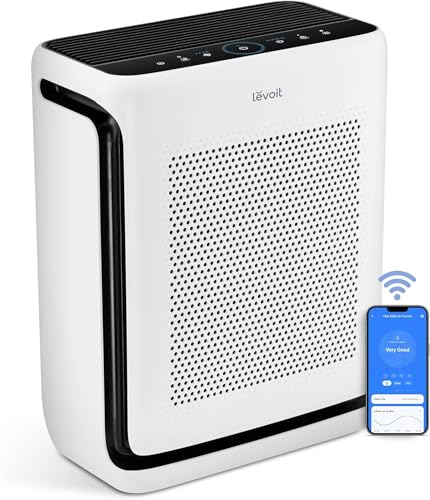
Levoit’s Vital line is the family’s pet-first branch, and this levoit vital 100 review covers its founding machine: the Vital 100, an AHAM-verified purifier with a washable pre-filter, built for the rooms where the animals actually live. It is a manual machine in a smart range — no sensor, no app — and its case rests on the oldest truth in this cluster’s pet coverage: animal hair is a coarse-stage problem, and a coarse stage you can wash is worth more, across a decade of shedding, than a smarter machine whose first stage dies in every cartridge. The Vital 100S below it in the range adds the sensing; the Vital 100 keeps the husbandry. This review arbitrates between them for the pet household’s actual rooms.

Hair first: the pet room’s real filtration problem
Every purifier in a pet house spends its life in two wars: the visible war against hair and dander’s coarse fraction, and the invisible war against the fine fraction and the smells. Marketing fights the second war in the headlines; the first war is the one that consumes filters, clogs intakes and decides what a machine costs to keep. The Vital 100 is designed from the first war backwards — a washable pre-filter as the front line, vacuumed and rinsed on the shedding calendar, protecting a genuine main stage behind it. In a two-dog household the arithmetic is not subtle: the coarse stage that a cartridge machine throws away monthly-ish is, here, a stage that is washed for years. The review’s honesty requires the corollary: households whose pet problem is primarily odour, or whose animals are hairless aristocrats, gain less from the design, and the carbon-first machines elsewhere in the cluster may serve them better. For the shedding majority, the Vital’s founding insight stands.

Levoit Vital 100 — the pet room’s workhorse
Best for shedding households that maintain by hand and wash without complaint
The listing’s specification: pet-focused purification, AHAM verification, and the washable pre-filter. Its parish is the animal’s own room — the family room with the dog beds, the cat’s corridor, the rabbit’s corner of the kitchen — and its covenant is the manual one at its most justified: the owner who washes the coarse stage monthly owns a machine whose expensive stages live their full lives, in the heaviest coarse weather any domestic machine faces. Verified delivery underwrites the husbandry; the combination is the Vital line’s founding offer, and it remains, in the record, a durable one.
- Model: Vital 100
- Verification: AHAM VERIFIDE, per its listing
- Stages: washable pre-filter plus main filtration
- Brief: pet hair and the pet room’s air
- Control: manual — no app, no sensor
Strengths
- The shedding house’s correct first stage, washable for years.
- Verified delivery at a workhorse’s toll.
- No account, no app, no display — nothing to go obsolete.
Trade-offs
- Fully manual governance in a sensing range.
- The wash is a rite the owner must actually keep.
- Odour-first households are served better elsewhere.
Best for: shedding pets in family rooms and animal corners. Not suited for: the owner who wants the machine to notice the litter tray itself — its successor’s brief.

Levoit Vital 100S-P — the sensing successor
Best for the pet household that wants the machine to react on its own
Reviewed in full beside this article: the same pet-first brief with a smart monitor added, AHAM-verified, claimed to 1,073 square feet, in white or black. The 100S governs the litter-tray hour and the post-walk shake without being asked, and its review makes that case; here it is the comparison’s other pole. The choice between the Vitals is the cluster’s oldest choice in pet dress: husbandry by hand, with a washable stage and no electronics to age, against governance by sensor, with a cartridge’s simpler rhythm and a display’s narrative. Pet households divide by temperament exactly as large-room households divided between the Everest and the 600S, and the review refuses, as those reviews refused, to rank the temperaments.
- Model: Vital 100S-P
- Verification: AHAM VERIFIDE, per its listing
- Coverage: up to 1,073 sq ft claimed
- Sensing: smart air quality monitor
- Finishes: white or black
Strengths
- Pet-first filtration that reacts by itself.
- The room’s narrative, displayed.
- Verified scale for the serious bedroom or family room.
Trade-offs
- No washable stage — the cartridge takes the coarse war whole.
- A premium over the workhorse for the sensing.
- Electronics age in a way a dial does not.
Best for: pet households that delegate. Not suited for: the washer-by-choice — the original’s congregation.

Levoit Core 200S-P — the bedroom alternative
Best for the pet-free bedroom in a pet household
The border, posted plainly: where the animal does not sleep, the Vital’s pet-first design buys little, and the Core 200S — the family’s smart bedroom standard, reviewed in full in this cluster — governs the human bedroom better and more quietly. Mixed fleets are the pet household’s normal end-state: a Vital where the hair is, a Core where it is not, and the file keeping both rhythms without confusion. This review’s subject should be bought for the rooms the animals own, and only for those.
- Model: Core 200S-P
- Verification: AHAM VERIFIDE, per its listing
- Control: app, Alexa, sensor governance
- Coverage: up to 969 sq ft claimed
- Brief: the human bedroom, smartly governed
Strengths
- The bedroom’s own standard, sensor and all.
- Quieter manners for the sleeping room.
- The fleet’s natural second machine.
Trade-offs
- No washable stage for the hair war.
- No pet-first design of any kind.
- A single room’s governor.
Best for: the animals-excluded bedroom. Not suited for: the dog’s own room — the Vital’s parish.
In this guide
A shedding year, honestly totalled
Spring is the coat-blowing season, and the washable stage earns its design brief weekly: the pre-filter comes out furred like a pelt, rinses clear in minutes, dries, and returns — a rhythm the household folds into the same afternoon as the dogs’ own brushing, one husbandry among several. Summer is the open-window season, the machine’s coarse war joined by the garden’s pollen, and the stage’s cadence holds. Autumn is the wet-dog season, when the Vital’s honest limit shows: hair it handles, but the smell of a rained-on retriever is a carbon-and-ventilation matter, and the review repeats its corollary — odour-first households should read the carbon coverage before this one. Winter is the closed-house season, the dander’s long accumulation governed at the stage’s steadiest rhythm. Across the year the main stage, protected, lives the life its maker intended — which is the whole of the founding machine’s argument, proven at the sink.
Final word
The Vital 100 is the pet line’s founding workhorse: verified, washable-staged, manual, and correct about which war consumes a pet house’s filters. Buy it for the shedding rooms if washing a stage sounds like husbandry rather than tax; buy its sensing successor if you want the machine to notice the animals’ hours itself; and keep the human bedroom for the Core. Hair first is not a slogan. In the houses this machine serves, it is the arithmetic.
The wash, as a rite among rites
Pet households are already liturgical — feeding times, walk times, the brush, the litter round — and the Vital’s wash succeeds because it joins a liturgy rather than founding one. The stage’s monthly (in spring, fortnightly) appointment sits naturally beside the animals’ own maintenance, performed by the same hands in the same spirit: keeping the creatures’ environment as the creatures are kept. Owners describe the discovery with mild surprise — the purifier is the only appliance in the house whose maintenance feels like pet care — and the description explains the machine’s loyalty better than its specifications do. Appliances that join the household’s existing rites are kept; appliances that demand new rites are neglected, in every category this site reviews, and the Vital 100 was designed, consciously or not, on the right side of that law.
The law of existing rites
The law deserves its own paragraph because it reaches far beyond this machine: a product that attaches itself to a rhythm the household already keeps will be maintained; a product that demands a new rhythm will be maintained for a month. The Vital’s wash attaches to the grooming round. The Everest’s wash attaches to the first-of-the-month round. The cartridge machines demand no rhythm at all and are the correct purchase for the rhythm-less — which is most households, most of the time, and why the sealed line outsells the washable one. The review’s service is to help the reader locate their own household on that map honestly: a liturgy kept is the Vital’s whole economy, and a liturgy imagined is its whole risk.
The wash itself, done properly: water, patience and no detergents
Since the whole covenant of this machine rests on one recurring act, the act deserves a protocol rather than a gesture. Take the pre-filter out over a bin or, better, outdoors, and knock the loose load off it before water is involved — a dry stage sheds half its burden to a few firm taps, and the sink then deals with the finer half rather than a slurry of both. Rinse under a gentle stream, from the clean side toward the dirty side, so the flow pushes the trapped material out the way it came in rather than driving it deeper into the mesh. Plain water is the whole recipe. Detergents leave residues that the mesh then perfumes the room with for days, fabric softeners coat the fibres in exactly the kind of film the stage exists to intercept, and a pressure jet — from a shower head on its hardest setting or, worse, a garden hose — can distort the mesh’s weave in ways the eye will not catch and the airflow will.
Drying is the step owners rush and the step that matters most. A stage returned damp to the machine makes the housing smell like a wet dog’s towel within the day, and in a warm room it can mildew in its frame. Shake the water off, stand the stage where air moves around it — a windowsill, a rack over the bath — and give it hours, not minutes; in a humid house in winter, overnight is the honest interval, which is why experienced owners wash on a morning when the machine can stand idle, or keep the household’s rhythm by washing two stages’ worth of patience into one: the vacuum between washes, described next, exists precisely to stretch the intervals so the full wash never has to be hurried.
Between washes: the vacuum pass that doubles the interval
The washable stage’s working life divides into two services: the deep service of the rinse, and the light service of the vacuum cleaner that most owners discover by accident in their second year. A brush-attachment pass over the stage’s face, in place, with the machine off — thirty seconds, no removal, no drying — lifts the surface mat of hair that does most of the airflow’s throttling, and restores the machine’s breathing to something close to its post-wash state. Done fortnightly in a shedding house, it halves the number of full washes the year demands, which halves the drying logistics, which is the difference between a covenant owners keep and one they quietly abandon by the second spring.
The pass has one technique worth stating: work across the mesh, not along it, and let the brush’s bristles do the lifting rather than pressing the nozzle flat, which mats the hair tighter into the weave. The hair that comes off a double-coated dog’s stage in a spring fortnight can be a startling object — a grey felt with the structural integrity of a small rug — and owners who see it once stop wondering whether the machine is doing anything. That felt, multiplied across the year, is the material the main filter never had to eat. The arithmetic of this machine is visible in the vacuum cleaner’s bin, and it is the most persuasive evidence in the whole review.
Coats and their loads: what different animals actually ask of the stage
Not all shedding is the same weather, and the Vital’s keeper benefits from knowing which kind their house makes. The double-coated breeds — the shepherds, retrievers, huskies and their many cousins — produce the dramatic load: a seasonal blowout in spring and autumn when the undercoat leaves in visible drifts, and a steady background fall between. For these houses the stage’s cadence is set by the blowouts, and the wise keeper washes ahead of the season rather than during it, starting spring with a clean stage and an empty vacuum. Long single coats shed less by volume but mat more readily on the mesh, favouring the vacuum pass over the rinse. Short, harsh coats — the terriers and smooth hounds — produce the least visible load and the most misleading one, since their hair works into the mesh rather than felting on its face, and their keepers should judge the stage by airflow and the fan’s note rather than by appearance.
Cats are a separate entry, as they are in every paragraph of pet keeping. A cat’s contribution is lighter in hair and heavier in the fine fraction — the dander that rides the room’s currents rather than falling in drifts — which means a cat house’s stage looks cleaner than a dog house’s while its main filter ages at a comparable rate. Multi-species houses should plan by the dog’s calendar and the cat’s cartridge: washes keyed to the visible load, main-filter judgements keyed to the invisible one, assessed by the outlet’s air and the room’s morning smell rather than by the stage’s innocent face. Hairless breeds, finally, invert the whole review — their houses have almost no coarse load at all, and for them this machine’s founding advantage is worth least, a border this article has posted since its first sections and posts again here without embarrassment.
Placement in the animal’s room: near the source, out of the weather
A pet purifier’s placement follows a rule the generalist machines’ advice only half states: the machine belongs near the source of its load, because hair and dander are heaviest where they are made and dilute with every metre of travel. The dog’s bed, the cat’s tree, the litter corner — the machine stands in that neighbourhood, at the room’s breathing height rather than on the floor it is cleaning up after, and with its intake facing the traffic between the animal’s furniture and the door. A Vital exiled to the room’s far corner, behind the sofa, spends its life filtering the room’s cleanest air and wondering why the household is unimpressed. The same machine two metres from the dog bed, in the open, transforms the room’s evidence within a week — the windowsill’s dust, the dark furniture’s tell-tale film, the visitor’s first breath.
Near the source has one exception, and it is the litter tray. A machine placed immediately beside the tray spends its stage’s life in the tray’s kicked litter dust, a fine mineral load that loads a pre-filter faster than hair does and helps nothing; a metre or two of separation — same corner’s neighbourhood, different weather — is the correct distance. Water bowls set the other boundary: a purifier is an electrical appliance in a room where an animal drinks enthusiastically, and the splash radius of a large dog’s bowl is a planning fact, not a worry. Place for the source, respect the tray’s metre and the bowl’s radius, and give the intake its clearance from walls and curtains, and the placement is done — to be revisited only when the animal’s own furniture moves, which in most houses is the true beginning of each season.
The smell question, in full: what this machine can and cannot promise
Pet odour is the subject on which purifier marketing is least trustworthy, and this review’s position has been stated in pieces; here it is whole. A purifier addresses the airborne fraction of a pet house’s smell: the dander-borne and hair-borne components that ride the room’s currents, which this machine intercepts honestly and which, in many houses, are the difference between a room that smells of dog and a room that smells of a house where a dog lives. It does not address the reservoir fraction — the smell stored in the rug’s pile, the sofa’s foam, the dog bed’s filling — which re-emits into cleaned air indefinitely and yields only to washing, extraction and time. And it addresses the event fraction — the wet dog, the litter tray’s fresh use, the accident on the carpet — only as fast as its airflow can cycle the room, which is to say partially and after the fact.
The practical consequence is a division of labour the honest keeper accepts: the machine for the air, the washing machine and the extraction cleaner for the reservoirs, ventilation for the events, and the carpet guide linked in this article’s reading list for the accidents. A household that assigns the whole problem to the purifier will conclude, wrongly, that purifiers do not work; a household that assigns the purifier its fraction will find the fraction was worth having — most visitors, most mornings, most of the year. The Vital’s carbon stage contributes to the airborne work within its capacity, and its keeper should hold it to that standard and no other: the standard of the air, honestly kept, in a house whose soft furnishings are being kept by other means.
The reset weekend: the pet room’s annual deep arrangement
Once a year, in the households that keep this machine best, the pet room gets a reset that the machine alone could never perform, and the Vital’s role in it is worth describing because it is the machine’s finest hour. The sequence runs over a weekend. The animal’s bedding is laundered, the beds themselves vacuumed to their seams or replaced if their years are done; the rug or carpet is extraction-cleaned; the hard floors are washed; the curtains, if the room has them, come down and go through the machine. Through all of it the purifier runs at its highest speed in the disturbed room, eating the aerosolised history that every one of those operations shakes loose — the reset’s paradox being that a deep clean makes the air worse for a day in order to make the room better for a year, and the purifier is what makes the day bearable.
The reset ends with the machine’s own service: the stage washed and dried in the spring air if the season allows, the housing vacuumed inside and out, the main filter judged with the room’s new baseline in mind — many keepers discover at the reset that a main filter they were about to replace was innocent, and the room’s tiredness was the reservoirs’ all along. A household that performs the reset annually will get the longest honest life from every stage of this machine, because the machine thereafter works against the room’s present load rather than its accumulated archaeology. It is the largest single piece of advice in this review, and it costs one weekend a year.
Puppies, kittens and the housetraining season
A young animal changes a room’s air in ways the adult animal does not, and the Vital earns a specific posting during the housetraining months that this review should record. The young animal’s accidents are frequent, localised and — in the first weeks — a daily event fraction that no purifier can outrun; what the machine does in that season is hold the background down while the household’s other defences (the enzyme cleaner, the washable mats, the patience) deal with the events. Placed near the puppy’s pen or the kitten’s tray-and-bed corner, on a speed the household can live with at night, it keeps the room’s resting state noticeably closer to neutral than the season would otherwise allow, and visitors in the housetraining months are the ones who say so.
The season has one machine-specific caution: young animals chew, climb and investigate with their mouths, and a purifier’s cord in a puppy’s parish is a hazard to be routed out of the world entirely — behind furniture, in a cord cover, anywhere but across the pen’s floor. The machine itself should stand where a climbing kitten cannot topple it and where its intake is above the splash and scatter zone of a tray used by an animal still learning its geometry. Survive the season with those arrangements, and the machine graduates with the animal: the pen comes down, the dog takes its adult place in the room’s geography, and the Vital’s parish settles into the long ordinary service the rest of this review describes.
Senior animals: the last years’ air
At the other end of the animal’s life, the room’s needs change again, and an honest review should follow them there. The senior dog sheds differently — a thinner coat, more dander per hair — and sleeps more, which means the room’s load concentrates at the bed for more hours of the day; the senior cat’s tray habits may become less precise, and the household’s event fraction rises. The machine’s response is mostly positional: closer to the bed than it stood in the animal’s vigorous years, its speed set for the long sleeping hours rather than the active ones, its stage washed on the calendar of a load that has become steadier and finer. None of this is sad, exactly; it is the same husbandry, adjusted, that the household has practised all along, and the machine that has served the animal’s whole life is the right instrument for its last chapter — familiar in sound, which matters to an old animal more than any specification, and already woven into the room’s routines.
When the animal dies, as the household’s animals eventually do, the machine’s parish enters the strange interval every pet owner knows: a room suddenly easier to clean and impossible to enjoy cleaning. The review’s only counsel is practical and brief — wash the stage, change or rest the machine as the household prefers, and let the decision about a successor wait until the house knows whether another animal is coming. A Vital kept washed and stored dry will wait a year without harm. The habits it taught, as this article has said of the discontinued machines elsewhere in the cluster, are the household’s to keep regardless.
When one machine is not enough: scaling the pet house
There is a household size at which a single Vital stops being the answer, and its keeper deserves the arithmetic rather than a sales pitch. One machine governs one room’s air completely; a second room’s air it touches only through doorways and time. A house with animals in two principal rooms — the family room and the bedroom the dog has annexed — is a two-machine house, and the second machine is most sensibly the fleet this article’s pick blocks describe: the sensing successor where delegation helps, the Core where the room is the people’s. A house with three or more shedding animals in open plan is a different problem again, and its honest answer is the larger class — the Vital 200S scale named in this cluster’s succession writing — placed at the open plan’s mixing point, with the original Vital retained in the animals’ own room where its washable stage still earns.
The scaling error to avoid is the duplicate purchase made from loyalty alone: two identical manual machines in two rooms means two washes, two calendars, and no machine anywhere that notices anything. Fleets work when their members differ by parish, as households differ by room. The Vital 100’s place in a grown fleet is secure — it remains the best answer yet devised in this range for the room where the hair actually falls — but it is a place, not a monopoly, and the keeper who understands that will build the rest of the fleet around it without a wasted purchase.
Hosting the allergic guest in a house with animals
Most pet households eventually host someone for whom the animals’ air is a genuine discomfort, and the Vital’s part in that hospitality is worth setting out carefully, in the comfort framing this site keeps for such topics. A purifier does not make a pet house safe for an allergic visitor, and this review will not pretend otherwise; what it can do, run at full speed in the guest room for a day before arrival with the door closed, is lower that room’s airborne load to the house’s minimum, and what the household’s other work does — the reset protocol applied to the guest room, the animals kept out of it for the visit’s duration, the bedding laundered hot — completes a courtesy that most guests experience as a comfortable stay rather than a managed one. Guests with serious allergies should be making their plans with their clinician’s advice in hand, and the honest host says so when the invitation is made, not when the guest arrives sneezing.
The machine’s specific contribution is its washable stage, again: a guest room’s machine can be brought to a genuinely clean start — stage washed and fully dried, housing vacuumed — in a way a cartridge machine at the end of its filter’s life cannot match without a new consumable. Hosts who keep a Vital learn to time the guest room’s wash to the visit, the way they time the clean sheets. It is husbandry as hospitality, and it is the most attractive form of the covenant this machine asks: the same acts, performed for someone else’s breathing, on a schedule set by affection rather than by the indicator.
Judging the main filter behind the washable stage
The stage gets the attention in this machine’s design, but the main filter behind it is where the fine work happens, and its keeper needs a way to judge it that does not depend on the stage’s misleading face. Three signs, in the order they usually arrive. First, the room’s evidence changes: dust reappears on surfaces sooner after cleaning than the household is used to, at the same stage-washing cadence — the fine fraction is getting through or around. Second, the outlet’s air loses its neutrality, taking on the faint, sweetish tiredness that a loaded carbon stage exhales. Third, the fan’s note at a familiar speed grows effortful in a way that a freshly washed stage does not cure — the machine is pulling against resistance that lives deeper than the wash reaches. Any two of the three together are the verdict, and the change that follows is the standard operation: the maker’s own cartridge, matched by model, seated with its seals checked by hand around the whole frame.
The interval between main filters is the number prospective buyers most want and honest reviews least provide, because it is a property of the house, not the machine. A single-cat flat with hard floors may run a main filter for the better part of two years behind a washed stage; a three-dog house with carpets may spend one in eight months. What the washable stage guarantees is not a number but a direction: whatever the house’s interval would have been with an unprotected cartridge, the protected one runs longer, and the keeper who writes the change dates on the frame — as this cluster’s filter-log advice recommends — will know their own house’s true interval by the second change, which is the only interval that was ever going to matter to them.
Second-hand Vitals: the washable stage is the tell
A used Vital 100 announces its history in its pre-filter more honestly than any other used purifier in this cluster, because the washable stage is a diary that cannot be reset. Inspect it first. A stage whose mesh is evenly greyed but supple, with its frame true and its weave undistorted, has been washed and worked in about the right proportions. A stage stiff with impacted fines that no rinse has ever disturbed tells you the machine has been run as a cartridge machine by an owner who never read the manual — and that its main filter, whatever is claimed for it, has eaten the load the stage was meant to carry, and should be priced as spent. A stage warped or torn at a corner tells of a dropped machine or a forced fitting, and the fan should then be listened to at full speed with particular care.
The rest of the used checks are the cluster’s standard ones — the fan’s rhythm at the top speed, the controls’ response, the housing’s cracks — with the price set, as always, as a shell plus a new main filter, the stage’s condition deciding whether it too joins the replacement list. A sound used Vital, so priced, is one of the rational buys of the pet-appliance world: its one sophisticated component is a fan, its covenant is visible in its diary of a stage, and its remaining life is limited mainly by the supply of a main cartridge that its maker still sells. Buy the diary, not the story, and the purchase will read well for years.
The Vital against the Core 400S for the family room
One comparison remains that the pick blocks only sketched, and it is the one a growing pet household actually faces: the family room has outgrown the Vital’s comfortable scale, and the choice is between stepping up within the pet line — the 200S class — or across to the family’s generalist keystone, the Core 400S, reviewed in full in this cluster. The Core’s case is governance: a sensor, an auto mode, an app, and a verified delivery at a similar parish scale, in a machine designed for a room the family owns and the animals visit. The pet line’s case is the load’s character: where the animals live in the room — beds in the corner, hair in the upholstery’s weave, the tray in the adjoining utility space — the coarse fraction dominates the room’s filtration economics, and a washable first stage or a pet-tuned cartridge earns its design brief every week of the year.
The deciding question is the one this cluster’s Vital coverage has asked from its first article: whose room is it? Walk into the family room and count the animal’s furniture against the people’s. If the dog’s bed, the cat’s tree and the toy basket outnumber the sofa’s cushions in the room’s corners, the pet line owns the room and the step up should stay within it. If the animals are honoured guests in a human room — present, beloved, and shedding on someone else’s territory — the Core’s governance serves the room better, and the Vital retires to the animal’s own quarters, where its parish was always truest. Either way the Vital is not discarded by the decision; it is placed by it, which is the fate this review has recommended for it in every section.
A decade with one dog: the machine across a single animal’s life
The truest test of this machine’s design is not a season but a lifespan, and it is worth following one, in outline, because the Vital was quite literally designed to be bought once per animal. Year one is the housetraining posting: pen-side, cord armoured, stage vacuumed weekly against a load of accident dust and shredded toys. Years two to five are the vigorous plateau — the adult coat at full production, the dog bed established as the room’s second hearth, the wash a monthly appointment so routine it happens while the dog is brushed, the main filter changed on the household’s learned interval and the date written on its frame. Years six to nine bring the grey muzzle and the slower shedding; the stage’s load lightens and fines, the machine’s speed drops a notch for the long sleeping afternoons, and the keeper who has kept the log can watch the intervals lengthen in their own handwriting. The last years are the senior posting described above, the machine drawn close to the bed, its familiar hum part of the room’s comfort for an animal that startles at changes.
Set against that decade, the machine’s economics explain themselves without a single price being named. A cartridge-only rival would have consumed its consumables at the unprotected rate for ten years; the washable stage’s decade of rinses is the difference, and it compounds like any other household saving into a sum that buys the successor outright when the animal’s successor — for many households there is one, in time — arrives as a puppy and the cycle begins again at the pen. A machine that can be inherited by the next dog, washed and ready, has a claim on a household’s loyalty that no specification in this cluster’s survey quite matches. The Vital 100 is that machine, and this review’s long argument reduces, in the end, to the decade it was built to span.
The keeper’s card, for the utility cupboard door
The whole method of this machine, compressed to the card its keepers pin where the animal’s supplies live, runs in this order. Vacuum the stage’s face fortnightly, across the mesh, with the brush attachment. Wash it monthly — ahead of the blowout seasons, not during them — in plain water, clean side to dirty side, and dry it for hours until it is dry to the frame’s core. Keep detergents, softeners and pressure jets away from it entirely. Place the machine near the animals’ furniture, a metre from the tray, outside the water bowl’s splash radius, with its intake clear. Judge the main filter by the room’s dust, the outlet’s neutrality and the fan’s effort — any two together — and write its change date on its frame. Reset the whole room once a year with the machine running interference. That card, kept, is the difference between the Vital as its designers intended it and the Vital as a merely adequate box; the machine supplies the stage, and the keeper supplies everything else, which was the covenant from the first day.
What the Vital’s owners know that the specifications cannot say
End the substantive argument with the knowledge that accumulates in a machine’s congregation and never reaches a listing. Owners of this machine know that a purifier can be part of the animal’s routine rather than the house’s infrastructure — that the wash happens while the dog dries from its bath, that the stage’s felt in spring is a kind of harvest report on the winter’s coat, that a machine’s sound becomes one of the sounds an old dog sleeps to. They know the difference between a room that is filtered and a room that is kept, and that the second is the first plus a household’s recurring attention, which no sensor has yet been built to supply. And they know the machine’s limit in their bones, because the limit is the covenant itself: stop washing, and the finest pet purifier in the range becomes an ordinary one within a season.
That is the complete case, for and against, in a single paragraph’s compass. The Vital 100 asks for a household’s hands and repays them across an animal’s lifetime; it asks nothing of a household’s attention that the animals were not already asking. Readers whose hands are willing will find no better instrument in this cluster’s pet coverage. Readers whose are not have the successor and the Core waiting in the pick blocks above, recommended by this same review without a shadow of reluctance — because the point was never the machine. The point is the animal’s air, governed one way or another, for all the years the animal is given.
A practical note on spare stages
The washable stage is a part, not a consumable, but it is not immortal: a mesh torn by a caught claw or distorted by one hot wash too many should be replaced rather than mended, since a holed stage is a bypass the fan will use exclusively. A keeper who buys one spare stage gains a second convenience — the washed stage can dry at leisure while its twin works — which converts the drying interval from a scheduling problem into a rotation, and is the single upgrade this article recommends to every heavy-shedding household.
And on the machine’s place in a flea season
A household treating the animals for fleas will shake out bedding, vacuum daily and wash everything washable for a fortnight, and the purifier’s part in that campaign is the airborne fraction: run it high in the animal’s room while the vacuuming disturbs the carpet’s population, and vacuum its own stage at the campaign’s end, since it will have eaten a share of everything the fortnight raised. The machine treats no animal and kills nothing; it simply keeps the room’s air honest while the household’s real weapons do their work.
A last note on puppies and cords
It bears repeating outside the housetraining section, because it is the one safety item in this review: route the cord as if the animal’s whole ambition were to reach it. Covers are cheap, furniture is heavy, and a pup’s chewing season is short — but it only has to overlap the cord’s exposure once. The machine’s other puppy-proofing is placement, and placement, like the wash, is a habit formed once and kept without thinking thereafter.
Frequently asked questions
How should the Vital 100’s washable pre-filter fit a shedding season?
Shorten the interval before the dog shortens it for you. When the spring coat blows out, the pre-filter’s screen loads visibly within weeks, and a quick rinse under the tap, dried completely before it goes back, restores the intake that the main filter depends on. Work it into an existing rhythm — the same morning as the bedding wash suits most pet households — so the habit survives the season. While the screen dries, run the machine only once it is refitted; the main filter is not built to take the raw hair load directly. Owners who keep this small liturgy find the expensive inner filter living its full span; owners who discover a matted screen twice a year are paying for the lesson in consumables.
Where should a Vital 100 stand in a cat owner’s bedroom?
Between the litter corner and the bed, closer to the source than to the sleeper. feline dust and dander rise where the cat digs and shakes, and a machine placed across the room meets that load only after it has crossed the sleeper’s pillow. A spot along the wall the litter tray shares, with clearance around the intake and the cord kept out of the cat’s play paths, lets the 100 intercept the room’s dirtiest air first. Keep the top grille clear of the cat itself, however appealing a warm perch it makes; a sitting cat is a blocked outlet and a hair delivery system in one. The bedroom stays the machine’s parish, governed at the source end. During the deepest shed, a hand vacuum passed over the dry screen between washes buys the rinse schedule a few extra days without letting the mat build.
Vital 100 or Vital 100S?
Hand or sensor, as the pick blocks framed it: the washable stage and the manual covenant against the smart monitor and the cartridge. Shedding households that already keep a maintenance liturgy take the original and save the difference for years; households that want the machine to react to the litter hour and the post-walk shake take the successor. Both reviews are written to be believed.
How often does the pre-filter need washing in a pet house?
Monthly in an ordinary shedding house, fortnightly at the coat-blowing peaks — judged by its visible loading, which in a pet room is never ambiguous. Dry it completely before it returns, as with every washable stage in this cluster, and vacuum it between washes when the season is heavy.
Does it handle pet odour?
It handles the dander and the hair-borne fraction honestly; a room whose problem is primarily smell — the litter corner in a small flat, the wet-dog hour — is a carbon problem, and the cluster’s carbon coverage and the sensing successor’s faster reactions serve it better. This review’s corollary has been stated in every section: know which war your room is fighting.
Is it suitable for a bedroom?
For the bedroom the animal owns — the dog that sleeps in, the cat’s chosen room — yes, and its washable stage earns doubly there. For the animals-excluded bedroom, the Core 200S linked above is the better-governed, quieter choice, and mixed fleets are the norm in the record.
What size room does it serve?
The pet room’s scale — the family room, the animal’s own quarters, the serious bedroom — under its AHAM verification. The open plan’s whole weather outruns it, as it outruns every machine of its class, and the Vital 200S named in the PUR131 succession is the line’s answer at that scale.
What is this review’s one-line verdict?
The pet room’s workhorse: verified, washable-staged and manual, for the shedding household that keeps a liturgy. Every delegating pet brief belongs to its successor, and every pet-free bedroom to the Core.