Disclosure: As an Amazon Associate, dailyhomedecorating.com earns from qualifying purchases. Links on this page are affiliate links; they cost you nothing extra. Prices and availability change often, so check the current Amazon listing before you buy.
The second of this cluster’s two discontinued-machine articles begins with the same honesty as the first: this levoit pur131 review covers the LV-PUR131, a well-regarded bedroom-and-living-room purifier of Levoit’s earlier smart generation, and the programme’s own verification found what it found for the H133 tower — the listings that persist under the name are its replacement filters, not a purchasable unit. So this article does the two honest jobs: it keeps the survivors (a keeping guide for the many households still running a PUR131), and it names the succession — which for this machine is unusually clear, because Levoit’s own range answers it twice over, in the Vital 200S for the living-room parish and the Core 200S for the bedroom the PUR131 so often served.
The machine that was
The PUR131 was, in its day, the thoughtful household’s Levoit: smart before the family’s smart line had fully formed, sized for the serious bedroom or the modest living room, and built around a proper filter architecture rather than a novelty’s cartridge. Its owners’ record is warm — the machine introduced many of this cluster’s households to governed air, and its app-era conveniences made it the first purifier in those houses that felt like infrastructure rather than appliance. That warmth is precisely why its discontinuation stings, and why this article refuses the swamp’s two lies about it: the lie that it can still be bought new (it cannot, through any listing this programme could verify), and the lie that its owners were foolish to love it (they were not; it earned the love in the only currency that matters, a decade of evenings).
In this guide
For owners: the keeping of a PUR131
The keeping follows the discontinued machine’s liturgy, familiar now from the tower’s article but with this model’s own accent: the PUR131’s filter is its heart and its clock, the genuine replacements are the ones still listed under its name, and the day they become scarce is the machine’s true retirement notice — whatever the app still cheerfully reports. Until then: the pre-filter’s regular attention, the main filter’s dates in the household file, the sensors wiped gently on the schedule the manual prescribes (a sensed machine’s keeping includes its senses), and the unit’s post kept clear of the room’s damp corners. An evening’s audit applies as it did for the tower — airflow, sound, smell, and the file — and two signs together mean the succession should move from pencilled to planned.

Levoit Vital 200S-P — the living-room successor
Best for PUR131 households whose machine served the family room, the pets and the open door
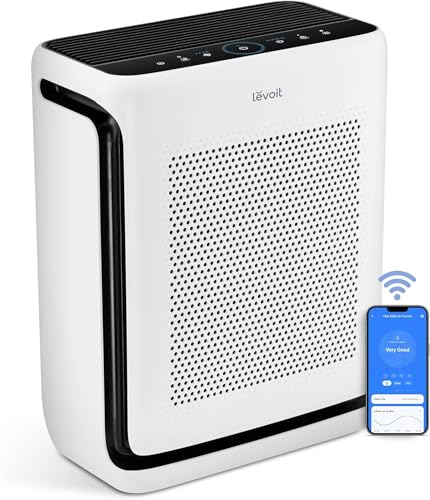
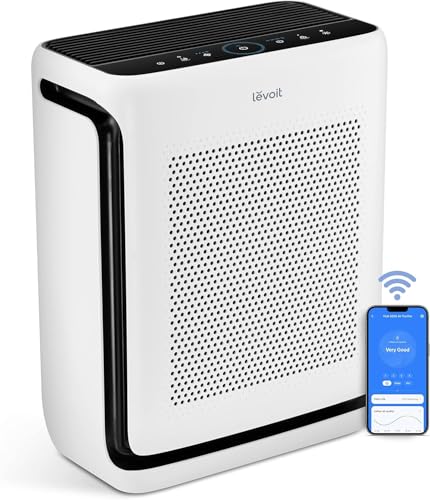
The Vital line is Levoit’s pet-and-family branch, and the 200S is its flagship of the middle scale: AHAM-verified, claimed to 1,875 square feet, quiet to a listed 27 dB at its floor, with the smart sensing and governance the PUR131 pioneered in its day, matured. For the household whose PUR131 stood in the living room — governing the dog’s weather, the door’s traffic, the family’s evenings — the 200S is not merely the replacement but the lineal descendant, and its pet-first filtration answers the parish’s actual air more directly than the PUR131’s generalism could. The Vital family’s own reviews in this cluster carry the line’s detail; here the 200S stands as the first successor.
- Model: Vital 200S-P
- Verification: AHAM VERIFIDE, per its listing
- Coverage: up to 1,875 sq ft claimed
- Noise: as low as 27 dB, per its listing
- Line: Vital — the family’s pet-and-family branch
Strengths
- The PUR131’s living-room parish, answered pet-first.
- Sensing and governance, matured a generation.
- Verified scale with bedroom-grade quiet at its floor.
Trade-offs
- A cartridge citizen, like all the current line.
- More machine than a small bedroom needs.
- The pet brief is wasted on a pet-free room.
Best for: the family room’s succession. Not suited for: the small bedroom — the second successor’s parish.

Levoit Core 200S-P — the bedroom successor
Best for PUR131 households whose machine served the main bedroom
Reviewed in full as this cluster’s first Levoit article: the family’s smart bedroom standard, sensor-governed, app-and-voice fluent, claimed to 969 square feet and quiet enough for the nightstand’s parish. A PUR131 that stood in the bedroom was, in truth, often more machine than the room required — the era offered nothing smaller with its brains — and its succession is the pleasant discovery that the bedroom’s own rung now exists, cheaper to buy and to feed, and governed better. Downsizing, in this one succession, is the upgrade.
- Model: Core 200S-P
- Verification: AHAM VERIFIDE, per its listing
- Control: app, Alexa, sensor governance
- Coverage: up to 969 sq ft claimed
- Filtration: family 3-in-1 architecture
Strengths
- The bedroom’s own rung, at last.
- The PUR131’s brains, matured and miniaturised.
- A kinder toll in price and in filters.
Trade-offs
- No answer for the living room’s scale.
- A single room’s governor, by design.
- The tower’s physical presence is not inherited.
Best for: the main bedroom’s succession. Not suited for: the family room — the first successor’s parish.
For shoppers: the redirection, and its reasons
Anyone who arrived here to buy a PUR131 has met the swamp the tower’s article described — filter listings in the machine’s clothes, remainders at sentimental prices, reviews pretending the shelf is stocked. This article’s policy is the cluster’s: say the verified truth in the first paragraphs, link only what exists, and spend the rest of the page on keeping and succession. The PUR131’s succession is genuinely good news, which softens the redirection: few discontinued machines are answered as completely as this one is, by name and by parish, in the maker’s own current range. A shopper redirected to the Vital 200S or the Core 200S has lost nothing but a model number, and gained a generation.
Final word
The PUR131 was the thoughtful household’s Levoit, and its article is written in that spirit: keep yours genuinely while genuine lasts, audit it honestly each season, and when the succession comes, divide it by the room it served — the Vital 200S for the family room, the Core 200S for the bedroom. The machine itself cannot be bought, and this page will not pretend otherwise; what can be bought is its inheritance, which is — unusually, and creditably to its maker — better than the original in every respect except the one that never transfers: familiarity, earned nightly, in rooms the PUR131 made governable for the first time.
A decade that taught a house to breathe deliberately
The PUR131’s historical role deserves its paragraph, because it explains its owners’ loyalty better than its specifications do. For a generation of households it was the first purifier that reported — the first machine in the house that treated air as information — and the habit it taught, of checking the room’s state and governing against it, is now the whole family’s design philosophy. Owners who learned that habit on a PUR131 are the Eleva’s natural readers and the 300S’s natural governors; the machine educated its own succession’s customers. Products that educate are rarer than products that serve, and their discontinuation is a small cultural event in the households they taught — which is why this article, like the tower’s, is written as a valediction rather than as a redirect with apologies.
The teacher’s retirement
Retirement suits teachers differently from servants, and the PUR131 — which taught its house to read its air — retires as a teacher does: into a smaller role, with its lessons loose in the building. The lessons are visible everywhere in the houses it served: the file by the filters, the sensor wiped on schedule, the succession chosen by parish rather than by panic. A household that learned those habits will keep every later machine better, which is the sense in which the PUR131 goes on governing long after its own fan stops. This article has treated the machine accordingly — not as a listing that failed, but as a tenure that completed — and the distinction, here as in the tower’s article, is the whole of its respect.
Two valedictions, one shelf
This cluster now holds two discontinued Levoits — the tower and this machine — and the pair teach the same lesson from different ends of the house: the tower from the manual era, the PUR131 from the smart era’s dawn. Between them they bracket the family’s whole modern history, and a reader who works through both articles holds that history entire: how the parish was governed by hand, how it learned to report, and how it is governed now by the sensed and sealed machines that fill the rest of the survey. Histories are usually written about the survivors; this cluster’s small distinction is to have written its elders with the same rigour as its flagships, because the elders are where the survivors came from — and where, in their season, the survivors will go.
The lessons, loose in the building
Loose lessons are a retired teacher’s real estate, and the PUR131’s are itemisable: read the room before governing it; feed the machine genuine or not at all; write the dates down; plan the ending at the purchase. Every one of those lessons appears, in other words, in every other article of this cluster — the guides assume them, the flagships presuppose them, the instrument’s columns reward them — and tracing them back to a discontinued bedroom machine is this article’s quiet pleasure. Lineages matter in a family’s range because they explain the present’s design: the Vital’s pet-first honesty and the Core’s sealed simplicity are both answers to questions the PUR131’s generation first asked. The article, its lineage traced, can rest the case there.
The right picture
Pictures end articles in this cluster the way successions end tenures — by making the transfer visible — and the PUR131’s picture, the governed bedroom under its familiar machine, is the survey’s second valedictory image: no unboxing, no novelty, only an arrangement still working and a household still fluent in it. Fluency is the picture’s real subject. The machine taught it, the successors presuppose it, and the household that holds it will never again buy a purifier the way it bought its first one — by hope. Hope was the PUR131’s era; evidence is its legacy, and the article honours the legacy by practising it in every paragraph.
Checking a PUR131 filter listing before you pay for it
Because the machine is discontinued, its filters now sell through a mixture of the manufacturer’s remaining stock, third-party brands and marketplace sellers of varying seriousness, and the keeper’s first skill is telling them apart before money moves. A genuine Levoit filter for this machine is sold under the model’s own replacement-filter naming, arrives in branded packaging with the part number printed on the box and on the filter frame itself, and — the detail counterfeiters most often skip — has its pleats evenly spaced and its sealing gasket continuous, without gaps or glue blobs at the corners. A listing that shows only a generic white rectangle, names three different purifier models as compatible, and cannot show the frame’s printed side is asking you to fund an experiment.
The in-hand checks take a minute. The frame should be rigid, not flexing like card; the gasket should compress and recover under a thumb; the pleat pack should not rattle in its frame; and there should be no chemical sweetness to its smell — a new filter smells of almost nothing, and a perfumed one is telling you what it will do to your room’s air. None of this guarantees a genuine article, but a filter that fails two of the checks has told you enough. Keepers who find a trustworthy source tend to buy their remaining stock from it consistently rather than re-rolling the dice each season for a small saving.
The app question, answered for the years that remain
The PUR131 was a connected machine, and its owners reasonably ask what happens to the connection across a long retirement. The honest answer has three parts. The machine’s physical controls work without any network at all, and nothing about its filtration depends on a server: fan speeds, the timer and the filter indicator are all on-device functions. The app adds remote control, scheduling and the air-quality history, and those features depend on the manufacturer’s cloud continuing to support a discontinued model — which it has done to date, and which no reviewer can promise for a specific future year. The prudent keeper therefore learns the machine’s own panel properly now, while the app still exists to be compared against it, rather than discovering the panel’s logic on the evening the cloud eventually forgets the model.
In practice the panel covers everything a bedroom machine needs: speed selection, a sleep setting, timed shutoff and the reset procedure after a filter change. What would be lost with the app is convenience and the record, not governance. Owners who value the history can keep their own in the filter log this article recommends elsewhere — dates and changes in a notebook are immune to server decisions. The machine’s last years are best planned as manual years with connected bonuses, and planned that way, no announcement from any company can strand the household mid-season.
Which room gets succeeded first
A household retiring a PUR131 rarely replaces every purifier at once, and the order matters more than the timing. The rule this article gives keepers is to succeed by exposure, not by convenience: the room where people spend the longest continuous hours — almost always the main bedroom — gets the successor first, because that is where a tired machine’s declining margin costs the most sleep-adjacent air. The PUR131 then steps down to the second room, where its remaining competence is more than sufficient: the guest room, the study, the child’s room with the door open to the landing. Each step down extends its useful life in a parish that asks less of it, and a machine can serve two or three such demotions across as many years.
The family room is the exception to plan separately. It is the largest and most various air in most houses — cooking drift, visitors, the dog, the door — and it is where the Vital 200S successor recommended in this review earns its scale. If the budget allows only one new machine this year, the honest choice is between the bedroom-first rule and the family-room exception, and it turns on where the household actually lives its evenings. What the plan should never do is succeed the easiest room first merely because the swap is quick: convenience ordering leaves the most-breathed air with the oldest machine, which is precisely backwards.
Running the old machine and its successor side by side
There is an overlap season in most successions when the new machine has arrived and the old one has not yet left, and keepers often ask whether running both is wasteful or wise. It is wise, briefly, for a specific reason: the overlap is the only honest comparison the household will ever get. Run the successor in the PUR131’s room for a fortnight while the older machine covers the second room, and the differences stop being specifications — the successor’s quieter night speed, its faster answer to a cooking event, the old machine’s familiar hum at the setting you have used for years. Households consistently report that the fortnight settles arguments the listings could not, including the argument about whether the second room needs a new machine at all.
After the fortnight, the overlap should end on purpose. Two machines in one house drift into two maintenance calendars, two filter economies and a permanent ambiguity about which room is whose responsibility. The succession plan this article recommends — bedroom first, step-downs after, family room on its own track — is designed to give each machine one parish and one keeper. The PUR131’s dignity in retirement is a defined job in a defined room, not a general floating reserve that everyone assumes someone else is maintaining.
Signs the fan itself, not the filter, is ending
Filters are consumables and everyone expects them to finish; the machine’s own moving parts finish too, and their symptoms are worth knowing so a keeper does not spend a filter’s price diagnosing a bearing. A healthy PUR131 changes pitch smoothly between speeds and holds each speed without wavering. A fan near the end of its life announces itself in three ways: a cyclical grinding or ticking that rises and falls with rotation, a pitch that hunts — speeding and slowing slightly on a fixed setting — and vibration that walks the machine a few millimetres across a hard floor over a week. Any one of these, confirmed over several days, is the machine retiring itself, and no filter change addresses any of them.
The distinction matters because the two endings call for opposite spending. A spent filter in a sound machine deserves one more genuine cartridge if the household’s plan still has a parish for the machine. A sound filter in a dying fan deserves nothing further spent at all — the cartridge money belongs to the successor’s first spare. Keepers who learn to hear the difference save exactly one filter’s price at exactly the moment it matters, and they retire the machine with the gratitude this article has recommended rather than the resentment of money spent into a failing hum.
How many spare filters is a sane stockpile
Discontinuation tempts keepers into hoarding, and the mathematics of this machine argues for a specific, modest number. A PUR131 in ordinary bedroom service takes roughly one filter a year; a household that has planned its succession across two further years of step-down service needs, at most, two more cartridges beyond the one installed — one for the coming change, one as insurance against a listing disappearing mid-plan. Three or more spares stops being insurance and becomes a bet that the machine will outlive its fan, its app and the household’s own patience, and it is a bet whose losing outcome is a cupboard of cartridges for a machine nobody owns.
The stockpile has a storage condition as well as a number. Filters wait best in their sealed packaging, in a dry cupboard away from the garage’s damp and the loft’s heat, because an unsealed cartridge spends its waiting years quietly adsorbing the cupboard’s own air. Write the purchase date on each box when it arrives, rotate the oldest to the front, and let the succession plan — not anxiety — set the quantity. A keeper who follows the plan in this article will finish the machine’s life with the stockpile at zero or one, which is the sign the planning was right.
Cleaning the sensor lens, and what a dirty one does
The PUR131 reads its room through a small infrared sensor, and like every optical instrument it slowly clouds. The symptom of a clouded lens is not failure but flattery: the machine reports the air as better than it is, because less scattered light reaches the detector, and it governs accordingly — staying quiet through events it would once have answered. Keepers notice it first as a personality change, a machine that seems to have become lazy in its middle age. Before concluding the sensor has died, clean it: the lens sits behind a small cover on the machine’s side or rear depending on production run, and a dry cotton bud, turned gently against the lens without any liquid, removes the film of household dust that causes most of the drift.
Make the cleaning part of the filter-change ritual, since the housing is open and the machine is already unplugged and moved. While there, vacuum the sensor chamber’s intake slots and the main air intake grille, which load with the same dust. A sensor cleaned yearly reads honestly for the machine’s whole life; a sensor never cleaned gives the keeper a decade of gradually more optimistic fiction, and the fiction is worst in exactly the dusty households that bought the machine most hopefully. The two minutes are the cheapest accuracy the machine will ever be given.
The PUR131 in a pet household, looking back
A large share of these machines were bought for pet rooms, and their retirement raises a pet-specific point the successors’ reviews also make: the dander load that the PUR131 has been carrying does not retire with it. The room’s soft furnishings — the dog’s bed, the rug, the upholstered chair the cat owns — hold a reservoir that any successor will spend its first weeks drawing down, and keepers who swap machines without washing the reservoir conclude wrongly that the new machine is no better than the old. The succession weekend is the moment to launder the pet bedding, vacuum the upholstery with the hose attachment rather than the robot, and wipe the hard surfaces the hair migrates to, so the successor starts against the room’s present load rather than its accumulated history.
For the step-down years, the same logic favours keeping the PUR131 in a pet parish rather than promoting it to a pristine one. A machine whose seals and pre-filter have spent years in hair-bearing air carries some of that history in its housing no matter how it is cleaned, and its remaining service is most honestly spent where that history matches the room. The pristine bedroom, if the household has one, is the successor’s fresh start. Assigning the old machine to the animal’s room and the new machine to the clean room is not sentiment; it is the correct matching of two machines’ conditions to two rooms’ loads.
Power draw, timers and the cost of a decade of nights
Keepers occasionally ask whether retiring the machine early would pay for itself in electricity, and the honest answer is that purifiers are small loads and the arithmetic rarely justifies the swap on energy alone. A machine of this class draws, at its middle speeds, roughly what a modest lamp draws, and its sleep speed a fraction of that; across a year of nights the total is real but modest, and a successor’s efficiency advantage is measured in small coins per month rather than in sums that retire machines. The timer and sleep settings matter more as air management than as economy: running the machine through the evening’s active hours and the night’s first half, then letting it rest in the small hours, matches its work to the room’s actual occupancy.
Where energy thinking does help a keeper is in the step-down plan. A retired-to-the-guest-room PUR131 that runs only when the room is occupied costs almost nothing and delivers its remaining filtration exactly when the room has lungs in it. The wasteful configuration is the forgotten one — a machine left on turbo in an empty room for a season because nobody reassigned it after the successor arrived. Succession, in this article’s repeated phrase, is a defined job in a defined room; the energy version of the same rule is a defined schedule in an occupied room, and both are set once, in the filter log, on the day the new machine arrives.
Selling or passing on a used PUR131, honestly
Some keepers will not run the machine to its end; they will upgrade early and face the question of the old unit’s next home. The honest listing — the kind this article would want its readers to write — states the model’s discontinued status in the first lines, states that filters remain available but are a legacy purchase, gives the machine’s age and the installed filter’s age separately, and demonstrates the fan on its highest speed in any handover, since that is where a tired bearing confesses. Priced as what it is — a sound used machine with a finite, plannable future — a PUR131 is a fair purchase for a buyer who has read an article like this one and wants two good years in a second room.
What the honest seller does not do is describe it as current, bundle it with a compatible-in-name-only filter, or let the buyer discover the discontinuation from a search after the sale. The machine’s whole story in this review has been that its value is real but bounded, and a sale that respects the bound protects both parties: the buyer plans correctly, and the seller’s description cannot come back as a grievance. Passing it to family is the same transaction with warmer feelings and identical duties — plus, ideally, a note of the filter’s part name and the date it was last changed, which is the most useful single sentence the new keeper will receive.
The habits, made concrete: what the teacher actually taught
This review has called the PUR131 a teacher in its earlier sections, and the claim deserves its evidence in plain practices rather than in metaphor. Households that lived with one of the first widely owned sensing purifiers learned, in order: that a room’s air has events, and that cooking, vacuuming and a dog’s arrival are among them; that a filter is a consumable with a calendar, not a component with a lifetime; that the machine belongs where the breathing is, not where the socket is spare; and that a number or a colour on a display is a prompt to open a window or move a litter tray, not a verdict to admire. Those four lessons, learned on this machine, transfer entire to every successor in this cluster’s reviews — which is the precise sense in which the discontinued model is still instructing the range that replaced it.
The transfer has a practical corollary for shoppers arriving from a PUR131: you need less machine than the flagship pages suggest, because you already own the expensive part, which is the habit set. A Core 200S in the bedroom of a PUR131 graduate will be placed correctly, fed genuine filters on time and read with informed scepticism from its first evening — treatment that no specification can substitute for. The succession sections of this review are written for that reader: the machine is discontinued, the education is not, and the education is the larger half of what the original purchase bought.
Placement in its final rooms: corners, clearance and the step-down flat
A machine being demoted usually travels to a smaller room, and smaller rooms punish the placement habits that a large bedroom forgave. The PUR131 draws air from its sides and rear and returns it upward, so the step-down room’s corner — the tempting spot, out of the way — needs a hand’s breadth of clearance on the intake sides or the machine spends its retirement breathing a cushion of its own exhaust. In a guest room that is used monthly, place it where it will actually be switched on: beside the bed rather than behind the door, visible to the arriving guest rather than hidden behind the wardrobe. A purifier’s first specification is that somebody turns it on, and retirement rooms fail that specification more often than any other.
Hard floors change the retirement calculation slightly in the machine’s favour. On carpet, a tower of this age sits in the room’s deepest dust reservoir and its intake loads faster; on boards or tile, the same machine runs cleaner between filter changes and its small vibration, if the fan has developed any, is audible sooner — which, as the fan section above argued, is diagnostic information a keeper wants early rather than late. If the step-down room offers a choice of surfaces, the hard floor is the kinder parish for an old machine, in both directions at once.
The filter log: one page that runs the whole retirement
Every plan in this article — the stockpile number, the succession order, the sensor cleaning, the step-down schedule — collapses into a single page kept with the machine, and it is worth describing the page exactly because its simplicity is the point. Five columns suffice: the date, the room the machine is serving, what was done (filter fitted, sensor cleaned, machine moved), the filter’s source, and the next action with its rough season. A page begun today, on a machine already years old, starts with an honest reconstruction — installed filter’s approximate age, last known cleaning — marked as approximate, because a log that admits its estimates is trusted in a way a falsely precise one is not.
Keep the page in the room, not in a phone: taped inside the cupboard door nearest the machine, or folded into the manual if the manual survives. The person who needs it is whoever opens the machine next, and that person may be a partner, a housesitter or the buyer of an honestly sold unit, none of whom has your apps or your memory. The PUR131 generation taught households to keep such records for the first time — its filter indicator was, for many owners, the first maintenance prompt any appliance had ever given them — and the log is that lesson outliving the indicator, which is the whole retirement in miniature.
What a PUR131 household should not buy next
Succession advice usually lists what to buy; for this machine’s graduates, the negative list is at least as useful. Do not buy a second discontinued model as the successor, however fond the household is of the type — one retirement to manage is a plan, two is a hobby. Do not buy a machine whose filters are proprietary, expensive and sold by exactly one marketplace seller, since the PUR131’s own late-life lesson is that a purifier is only ever as current as its filter supply. Do not buy raw capacity far beyond the room — a flagship sized for an open-plan floor, installed in a bedroom, spends its life idling at its lowest speed where its sensor resolution is poorest, and costs flagship money for the privilege.
And do not buy on the strength of an air-quality display alone. The PUR131’s display was, in its day, the reason for the purchase, and its graduates know what the display is worth once the habits are learned: a convenience, not a capability. The successors linked in this review were chosen on the unglamorous criteria the teacher itself taught — verified delivery, a sane filter economy, a parish matched to the room — and a graduate who shops by those criteria will choose well even if they choose a machine this review never mentioned.
End of life: recycling, parts and the last filter
When the fan finally confesses or the last genuine filter is spent, the machine’s disposal deserves the same orderliness as its keeping. The spent filter goes with household waste in most municipalities — it is, by design, a concentrated sample of the room’s own dust — but the machine itself is electronic waste: its motor, board and fan belong in the e-waste stream, where the copper and steel are recovered, rather than in landfill. Many retailers who sell the successor will take the old unit at delivery; ask when ordering, because the arrangement is far easier made then than improvised later with a tower in the hallway.
Before it goes, two salvage courtesies. The power cord and any undamaged housing panels are occasionally wanted by the remaining keeper community — a listing in a local reuse group, honestly described as parts from a discontinued machine, will usually find them a home within the week. And the filter log page, if the machine is passing to another keeper rather than to recycling, goes with it, as the selling section above recommended. A machine that leaves the house with its records is the final form of the article’s whole argument: the PUR131’s value was never only the air it cleaned, but the order it taught, and the order is transferable even when the machine is not.
A keeping calendar for the machine’s remaining years
Retirement runs better on a calendar than on intentions, and the PUR131’s is short enough to hold in one view. Monthly, in any month the machine is in service: vacuum the intake grille and the pre-filter area, and glance at the filter indicator with the scepticism this article has taught — the indicator counts hours, not dust, and a dusty house spends its filter faster than the counter knows. At each filter change, roughly yearly in a bedroom and sooner in a pet parish: the full ritual — genuine cartridge, sensor lens cleaned with the dry bud, seals checked for the gaps that let air bypass the pleats, and the log page updated in the room where the machine stands.
Yearly, on a date the household chooses once and keeps — the filter log’s anniversary is as good as any — review the succession plan itself rather than the machine: which room it serves now, whether the step-down is due, whether the stockpile still matches the plan, and whether the successor shortlist in this review is still the right one. Machines age in one direction and households in several, and the annual review is where a new baby, a new dog or a house move gets written into the plan before it ambushes the plan. Ten minutes a year is the entire administrative cost of the retirement this article has described, which is a fair price for never being surprised by a machine again.
Two households, two retirements
Consider, first, a couple in a two-bedroom flat whose PUR131 has served the main bedroom for six years, through one dog and one house move. Their plan, following this article’s rules, took a single evening to write: the Core 200S succeeds in the bedroom this spring; the PUR131 steps down to the second bedroom, which is a study nine days in ten and a guest room on the tenth; the stockpile is one spare cartridge, already in the cupboard; the log page moves with the machine and gains a line for the study’s lighter duty — filter checks at eighteen months rather than twelve, since the room’s air is mostly books and a desk. Nothing in the plan is dramatic, which is the point: the machine’s remaining three or four years are fully employed, fully costed, and nobody will think about it again except at the annual review.
Consider, second, a family house where the PUR131’s parish was the open family room and the machine is, frankly, undersized for the space it has bravely served. Their succession runs the other way: the Vital 200S takes the family room at full scale, and the PUR131 retires not downward in size but upward in intimacy, to the parents’ bedroom, where its capacity is suddenly generous for the room and its familiar hum is a feature the household has slept to for years. The lesson of the pair is that step-down is a direction of duty, not of dimension — the right final parish is the room whose load the machine can still carry completely, wherever that room sits in the house’s geography.
The last word on keeping it, from the record
Everything this article has recommended can be compressed into the order in which a keeper actually meets the decisions. Feed it genuine filters while they exist, and verify them as the checking section describes. Clean the small lens that tells it the truth about the room. Give it a defined parish and a written page. Plan the succession by exposure, run the overlap fortnight, and let it step down with its dignity and its log intact. Retire it to the e-waste stream when the fan or the filter supply ends, and keep the habits — they were always the larger purchase. A machine kept on those terms will have given its household a decade of governed air and an education in governing it, and there is no model in the current range, at any price this review is permitted to discuss in the abstract, that offers more than that.
A note for readers who arrived owning two
A small but real constituency owns a pair of these machines, bought in the years when a two-room household standardised on one model, and their retirement is simpler in one way and harder in another. Simpler, because the two machines can be consolidated: the better fan and the cleaner housing become the surviving unit, the other becomes its parts reserve — a spare grille, a spare cord, a housing panel — before it goes to the e-waste stream. Harder, because consolidation feels like a ending in a way a single retirement does not, and households postpone it past the point where both machines are limping. The rule is the same as everywhere in this article: decide by the fan test and the filter arithmetic, write the decision in the log, and let one strong machine do one defined job rather than two tired ones doing two vague ones.
Frequently asked questions
What records should a PUR131 owner keep before retiring the machine?
A short handover note, written while the knowledge is still in the house. Record which filter type the unit last took and where it was sourced, the speeds the household actually lived on, and the room dimensions the machine served, because its successor will be chosen against exactly those facts and memory edits them within a year. If the PUR131 passes to another household member or a second room, that note travels with it and saves the next owner the archaeology. Photograph the rating label inside the unit before it leaves service; discontinued models’ details vanish from listings quickly, and the label is the one document that never lies about what the machine was.
How does a PUR131’s room usually change under its successor?
The successor is normally asked to do the same job with better information. Owners stepping to a sensed machine discover their old room had daily rhythms they never saw — the cooking-hour dip, the morning dust peak — because the PUR131 simply ran, blind and faithful, through all of it. Expect a short period of watching the new display the way one watches a new weather station, then a settling into trust. The room itself rarely needs rearranging: the successor inherits the tower’s corner, its socket and its sightlines. What changes is the household’s literacy about its own air, and most owners, asked afterwards, name that — not raw power — as the upgrade they actually feel.
Can I still buy an LV-PUR131?
Not as a new unit through any listing this programme could verify — what persists under the name is its replacement filters. A remainder or used example should be priced as the unsupported machine it is, and the two successors linked above are the recommended purchases for anyone shopping today.
Are its filters still available?
Genuine filters under the model’s name are the listings that remain, and the keeping section’s counsel applies: one spare set is prudence, a stockpile is a bet against a succession better planned calmly. Verify the listing’s fit language carefully — the era’s model names are close cousins, and the fit is the whole point.
Which successor is right for my PUR131’s room?
By the room it served: the family or living room passes to the Vital 200S, the main bedroom to the Core 200S. If the PUR131 served both by being carried — some did, in smaller flats — the bedroom successor is the honest primary, and the living room’s evenings will tell you within a season whether a second machine is wanted.
When should I stop feeding it and succeed it?
When the evening audit accumulates — airflow thinning on a fresh filter, new sounds, smells surviving a change, sensors drifting against a handheld reference — or when genuine filters grow scarce. One sign is a note; two are the notice; and the succession, planned in advance, should then be an errand rather than an emergency.
Is a generic filter acceptable meanwhile?
The cluster’s standing answer is no: the machine’s seals and its sensor’s calibration were built around the genuine article, whose tolerances imitators never received. A loose filter in a sensing machine corrupts both the air and the readings — the two things the PUR131 exists to keep honest.
What is this article’s one-line verdict?
Keep the PUR131 genuinely while genuine lasts, honour it as the machine that taught its house to read its air, and succeed it by parish — Vital 200S for the family room, Core 200S for the bedroom. It cannot be bought new, and any page implying otherwise is selling you a filter.
Should the retired PUR131 be kept as a second machine?
While its genuine filter lasts, demotion is honourable — the spare room, the study, the corridor parish — and the file should record the new post as faithfully as the prime years. When the last genuine filter is spent, the retirement is complete and the e-waste route is the tidy ending the tenure earned.
A note on its app-era data
Owners sometimes ask whether the machine’s app history is worth exporting before the succession. The honest answer is that the readings were always the room’s diary rather than the household’s asset — interesting for a season, decisive never — and the file’s paper record of filters and dates is the part worth keeping.