Disclosure: As an Amazon Associate, dailyhomedecorating.com earns from qualifying purchases. Links on this page are affiliate links; they cost you nothing extra. Prices and availability change often, so check the current Amazon listing before you buy.
This glass food storage containers buying guide is for the moment a kitchen outgrows its tangle of stained plastic tubs and mismatched lids. Glass promises a cleaner, calmer kind of storage: food you can see at a glance, bases that go from fridge to oven to table, and containers that still look respectable after years of tomato sauce. The catch is that glass sets differ far more than their tidy product photos suggest. Lids seal in completely different ways, bases nest or refuse to nest, and one household’s perfect set is another household’s heavy, chipped disappointment. This guide separates the decisions that actually matter, then walks through the leading sets and the homes each one suits.
A useful way to frame the whole category before any detail: a glass container is really two products bought together. The base is a small oven dish that happens to live in your fridge, and the lid is a sealing system that happens to fit that dish. Most regret in this category comes from judging the base, which is honestly hard to get wrong, and ignoring the lid, which is where leaks, smells, warped seals and lost lids all originate. Keep that split in mind through every section that follows and the right choice becomes much easier to see.
Key Takeaways
- Judge the lid system first and the glass second; leaks and lost lids cause almost all regret in this category.
- Match the set to everyday duty — leftovers, lunches and reheating — rather than to specialist freezer-only storage.
- Borosilicate and tempered soda-lime glass behave differently under sudden temperature change; know which you are buying.
- Measure fridge depth, shelf height and your usual batch sizes before choosing a set shape.
- Plastic lids never go in the oven, and chipped glass should always be retired, however small the chip looks.
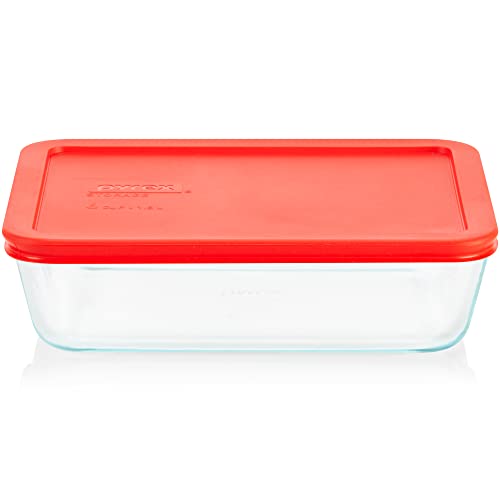
Glass Food Storage Containers Buying Guide: What a Set Actually Does
At its simplest, a set of glass food storage containers replaces the disposable and semi-disposable plastic that accumulates around leftovers. Cooked food goes in after dinner, the sealed container goes into the fridge, and the same base later reheats the food and carries it to the table. That single journey — cook, store, reheat, serve — is the entire reason glass exists in this category, and it is why this cluster focuses on everyday food, ordinary meal prep and oven-friendly reheating rather than on deep-freeze archiving, which is a different job with different demands.
Because the base is oven-safe in a way plastic never is, glass changes small kitchen habits in ways that add up. Lasagne can be assembled in the container it will be stored and served in. Soup can be reheated without decanting into a second dish and creating extra washing up. A marinade can sit in a container that will not absorb its colour or smell. None of these moments is dramatic, but together they explain why households that switch rarely switch back: the container stops being packaging and becomes cookware.
Glass also changes how a fridge feels to use. Clear bases stacked in a row show their contents instantly, so leftovers get eaten instead of forgotten, and a quick visual inventory replaces the archaeological dig through opaque tubs. For households trying to waste less food, that visibility is not a cosmetic bonus; it is the mechanism. You cannot plan around food you cannot see, and glass makes seeing effortless every time the door opens.
What glass does not do deserves equal honesty. It does not make food last dramatically longer than a well-sealed plastic container does, it does not forgive being dropped on tile, and it does not lighten a lunch bag. Its advantages are hygiene, heat tolerance, clarity and longevity of appearance. If your storage life is mostly dry pantry goods or rough transport, other materials compete hard, and the later sections of this guide say so plainly rather than pretending glass wins everywhere.
In this guide
What Are the Main Types of Glass Food Storage Containers?
Everyday Leftover Sets With Snap or Press-On Lids
The classic format is a mixed set of round and rectangular bases in graduated sizes with either press-on plastic lids or simple snap lids without locking tabs. These are the workhorses of family fridges: big rectangles for casseroles and roasts, medium rounds for soups and salads, small rounds for sauces and half an onion. Their lids are quick to use one-handed, which matters at the end of a long evening, and the bases usually nest inside each other when empty. The trade-off is sealing force: press-on lids resist splashes and slow drying, but they are the most likely to weep in a tilted lunch bag.
Locking-Lid Sets With Silicone Gaskets
Locking sets add hinged tabs on four sides that clamp the lid down onto a silicone gasket. The seal is stronger and far more leak-resistant, which makes these the natural choice for lunches, soups and anything that travels. The costs are small but real: tabs take two hands and a moment longer, hinges collect grime if they are never fully opened and washed, and the lids themselves do not nest as neatly. Households that commute with food usually accept those costs gladly; households storing food that never leaves the fridge often find the extra hardware unnecessary.
Meal Prep Sets With Matching Uniform Bases
Meal prep sets use several identical bases, often with one or two compartments, designed so a week of lunches stacks into a tidy fridge grid. Uniformity is the whole point: every lid fits every base, portions look consistent, and reheating times stay predictable. The compromise is flexibility, because a uniform set handles a leftover roast or a family casserole badly. Many households end up owning both systems — uniform bases for the weekday rhythm and a mixed leftover set for everything else — and this guide treats that pairing as normal rather than as duplication. For a narrower look at the uniform format, see glass meal prep containers buying guide alongside this guide.
Bake-and-Store Dishes With Lids
At the larger end sit lidded baking dishes: rectangular and oval bases that roast, bake and then accept a lid for the fridge. They blur the line between cookware and storage, and for households that batch-cook traybakes, gratins and roasts they can replace several single-purpose dishes. They are heavy, they dominate a shelf, and their lids are usually simple press-on designs rather than travel seals. Buy them deliberately for cook-and-store duty rather than expecting them to behave like a lunch system.
Top Picks at a Glance
The six sets below are presented as prose-only recommendations while independent verification is completed, so each is positioned by tier and role rather than by any linked listing. Read the table as a map of the category: an everyday anchor set, a leak-resistant traveller, a modular system, a premium sealing set and two meal-prep-leaning options. The mini-reviews later in this guide explain who each one genuinely fits.
| Set | Badge | Tier | Best role |
|---|---|---|---|
| Pyrex Simply Store | Best Overall | Mid | Everyday leftovers and family fridges |
| Anchor Hocking TrueSeal | Best for Baking Households | Mid | Cook-store-serve in the same dish |
| IKEA 365+ Glass | Best System Builder | Entry | Modular, expandable everyday storage |
| OXO Good Grips Smart Seal Glass | Best Seal Design | Premium | Careful sealing and tidy stacking |
| Rubbermaid Brilliance Glass | Best for Travel | Premium | Leak-resistant lunches and commuting |
| PrepNaturals Glass | Best for Meal Prep | Mid | Uniform bases for weekly prep |
A note on badges: they describe roles, not rankings carved in stone. The best overall set is simply the one whose compromises suit the widest range of ordinary kitchens. If your life involves a train commute with soup, the travel pick outranks it for you personally, and the use-case section later in this guide is designed to help you re-rank this table around your own week rather than accepting it as printed.
Which Glass Should You Choose: Borosilicate or Tempered Soda-Lime?
Two glass families dominate this category and they are not interchangeable. Borosilicate glass, the material of laboratory glassware and classic European bakeware, tolerates sudden temperature change unusually well because it expands very little as it heats. Tempered soda-lime glass, used by most large American storage brands, is strengthened by heat treatment that makes it tougher against knocks and drops, but it asks for more care around abrupt temperature swings. Neither is simply better; they are optimised for different risks — thermal stress on one side, impact on the other.
In daily use the difference shows up as a set of habits rather than a specification to memorise. Borosilicate bases are the calmer choice if you regularly move food between freezer, oven and table, though even borosilicate has limits and deserves the gradual transitions described in the safety section. Tempered soda-lime bases reward households that are harder on their containers physically — stacking, clattering into sinks, busy family use — provided the cook respects preheating and cooling steps. Read the maker’s own guidance for the set you choose and follow that, not generic internet folklore.
Whichever family you buy, treat marketing language cautiously. Words like thermal and shatter-resistant describe tendencies, not guarantees, and no food storage glass is unbreakable. The honest buying question is which failure you are more likely to invite: sudden temperature change or physical impact. Kitchens that bake from frozen lean one way; kitchens full of children, stone counters and hurried washing up lean the other. Let your real kitchen answer, and the glass choice mostly makes itself.
How Much Capacity Do You Actually Need?
Capacity mistakes in this category are almost always about shape, not volume. A set can hold plenty in total and still fail you because its largest base is too shallow for a chicken, its rounds waste fridge corners, or its small pots are so small they only ever hold a spoonful of sauce. Start instead from your three most common storage moments: the weeknight leftover, the batch-cooking session and the packed lunch. The right set is the one whose sizes map onto those three moments without forcing food into awkward splits.
Rectangles use fridge space honestly, stack without rocking and suit casseroles, sliced meats, cheese and prepped vegetables. Rounds suit soups, salads, dough and anything you stir or whisk in the container itself, and they clean without corners for food to lodge in. Squares split the difference and stack beautifully in pantries and freezers. Most balanced sets mix rectangles with a few rounds; sets that are all one shape usually reflect a photo shoot rather than a cooking life.
Think about lids as capacity too. A set whose sizes share lids is effectively larger than its piece count, because the right lid is always findable. A set with a unique lid for every base shrinks in practice the first time a lid goes missing. When comparing sets, count distinct lid sizes as carefully as you count bases. It is a boring detail that decides whether a set still works smoothly in year three, long after the unboxing satisfaction has faded.
Does the Lid Seal Well Enough for Your Food?
One safety habit matters more with glass than with any other storage material: respect thermal shock. Glass expands and contracts as its temperature changes, and when one part of a container changes temperature much faster than another part, the stress can crack or even shatter the base. Never move a container straight from the freezer into a hot oven, and never set a hot glass dish down on a cold, wet or stone surface that will chill one patch of its base instantly. Let a frozen container stand at room temperature for a while first, let a hot container cool before it goes into cold water, and place hot glass on a dry trivet, wooden board or folded dry towel. Before every use, run a fingertip slowly around the rim and look at the corners and base in good light: chips, hairline cracks and deep scratches are retirement signals, not battle scars to ignore, because damaged glass fails unpredictably under heat and stacking pressure. Finally, remember that on almost every set in this category the lid is plastic or silicone-trimmed plastic, and lids do not go in the oven, under a broiler or on a hob, whatever the glass base can handle. Remove the lid before reheating, vent it loosely in the microwave if the maker allows microwave lid use at all, and let steam escape away from your hands when you lift any lid from hot food.
Seal quality is the lid question underneath every other lid question. A gasket seal, where a silicone ring is compressed evenly around the rim, is the strongest design in this category and the one to insist on for soups, sauces and anything carried in a bag. Simple press-on lids rely on friction and a flexible rim; they are faster and perfectly adequate for solid leftovers that stay upright in your own fridge. Between the two sit snap lids without gaskets, which improve on friction alone but still trail a true gasket when a container tips.
Test your own priorities honestly. If a container will ever travel tilted, commute in a backpack or be handed to a child, buy the gasket and the locking tabs and accept the extra seconds they cost. If containers move only from counter to fridge shelf, a simpler lid is not a compromise at all; it is the faster tool for the job. The mistake is buying one system for the other life, then blaming glass itself when the mismatch leaks.
Will It Fit Your Fridge, Cupboards and Life?
Measure before you buy: fridge shelf height with the door bins in place, the depth from door to back wall, and the cupboard where empty bases will live. Glass sets store in two states — nested empties in a cupboard and filled containers in a fridge — and a set must work in both. Bases that nest deeply save remarkable cupboard space; bases that barely nest can consume an entire shelf while holding nothing at all. Lids need a home as well, ideally a vertical file-style slot or a shallow drawer, because a loose pile of lids is where sets go to die.
Weight belongs in this section too, because it is a fit question disguised as a material fact. A large filled glass base is genuinely heavy, and for cooks with limited grip strength, wrist problems or high shelves, that weight decides whether the set gets used or quietly avoided. Smaller bases, two-handled bake dishes and a willingness to split big batches across two containers are all legitimate design answers. The best set is the one your hands are happy to use on a tired Tuesday, not the one that looks strongest in a showroom.
How to Prioritise by Use Case
The Family Leftover Household
Your fridge is a rotating cast of half casseroles, roast vegetables, pasta and tomorrow’s lunches. Prioritise a mixed mixed-shape set with at least two genuinely large rectangles, lids that go on fast with full hands, and bases tough enough for daily stacking. Press-on or light snap lids are fine because the food rarely travels. This household is the natural home of the anchor sets in this guide, and it should spend its budget on size range rather than on premium travel seals it will never test.
The Weekly Meal Prepper
Your Sunday produces a grid of identical lunches and your fridge works like a warehouse. Prioritise uniform bases that stack in a stable tower, gasket lids that survive a week of opening and closing, and a footprint that matches your fridge shelf exactly. Add a couple of large bases for the cooking itself, but let uniformity rule the purchase. The dedicated comparison in are glass food storage containers worth it walks through whether the prep routine repays the switch from plastic in your specific case.
The Commuter Who Carries Lunch
Your container travels tilted, warms in a shared microwave and comes home in a bag with your laptop’s neighbours. Prioritise the strongest seal you can find, a size that fits your bag upright, and lids whose tabs you can open without a struggle at a desk. Accept the weight as the price of a leak-free bag, and consider keeping glass at the office end of the journey if the commute itself is rough. For this profile the travel-oriented pick in this guide outranks every generalist set.
The Small-Kitchen Minimalist
Your storage must earn its shelf. Prioritise a compact modular system whose bases share lids, nest deeply and double as serving pieces so they replace other dishes rather than adding to them. A smaller count of well-chosen sizes beats a sprawling set you cannot house. Glass earns its place here precisely because each piece does three jobs — cook, store, serve — and a minimalist should judge sets by jobs per shelf, not pieces per box.
The Picks in Detail

Pyrex Simply Store — Best Overall
The Simply Store family is the set most households picture when they picture glass storage: clear round and rectangular bases in a sensible spread of sizes, with simple coloured press-on lids that go on quickly and come off without a fight. Its strength is the absence of friction in daily life. Lids are easy for children and grandparents, bases double as mixing and serving bowls, and replacements are easy to find because the line is a long-running staple. Best for: family leftovers, fridge organisation and gentle everyday reheating. Not suited for: tilted transport of soups, where its friction lids are the weakest link in this line-up.
Strengths and trade-offs in brief: the size range covers nearly every ordinary leftover; the bases nest well and clean easily; the whole system feels familiar within a day. On the other side, the lids are the part you will replace over the years, the seal is a stay-at-home seal rather than a travel seal, and the round-heavy mixes waste some fridge corner space. As an anchor set for a first move into glass, its compromises are the easiest to live with, which is exactly what best overall should mean.
Anchor Hocking TrueSeal — Best for Baking Households
Anchor Hocking builds its storage line from the bakeware side of the kitchen, and it shows in bases that feel at home in an oven and lids designed to grip more positively than basic press-on designs. The TrueSeal approach aims at a firmer, more deliberate closure, suiting households that bake, store and serve in one dish as a matter of routine. Best for: bakers, casserole households and anyone whose storage begins in the oven. Not suited for: minimalists counting every ounce of cupboard space, because bake-led bases tend to be generous in footprint.
Its trade-offs mirror its origins. Oven confidence and sturdy bases are the strengths, together with lids that feel secure on solid and semi-liquid foods. The compromises are weight, a footprint that asks for real shelf room, and a size range tilted toward cooking rather than toward tiny sauce pots. If your kitchen already revolves around lidded baking dishes, this set extends a system you trust instead of asking you to adopt a new one.

IKEA 365+ Glass — Best System Builder
The IKEA approach treats storage as a system rather than a set: bases in repeatable shapes, lids sold and replaced separately, and the freedom to buy exactly the sizes your kitchen uses and skip the rest. That modularity is quietly radical. Most households use three sizes constantly and the rest rarely, and a system lets your money follow that reality. Best for: small kitchens, growing households and anyone who wants to replace one lost lid without replacing a set. Not suited for: shoppers who want one box to solve everything in a single purchase.
The strengths are control and continuity: you build slowly, replace individually and keep footprints consistent so stacking stays tidy. The trade-offs are the effort of choosing, the temptation to under-buy lids, and a seal that is good everyday engineering rather than the strongest travel closure here. For the systematic buyer, though, this is the set most likely to still be growing, coherently, five years from now. Shoppers organising the surrounding shelves often pair it with best storage baskets for the dry goods that stay in the pantry.

OXO Good Grips Smart Seal Glass — Best Seal Design
OXO brings its ergonomics obsession to the lid: a gasketed, locking design intended to seal evenly and open without a wrestling match, on borosilicate-style bases positioned for oven and table use. The result is the set in this guide that feels most engineered, in the good sense — closures that inspire confidence and stacking that feels deliberate. Best for: careful cooks, soup carriers who still want a premium everyday set, and households that value lids as much as bases. Not suited for: entry-tier budgets or anyone who knows they will lose lids regardless of quality.
Strengths: the seal, the thoughtful lid mechanics and the general sense that every piece was designed as part of one system. Trade-offs: it sits at a premium tier, replacement lids are a deliberate purchase rather than a supermarket grab, and the locking routine, while smooth, is still a routine. If you have been burned by leaky lids before and want the problem designed away, this is the set aimed at you.

Rubbermaid Brilliance Glass — Best for Travel
Brilliance Glass is built around its latching, gasketed lid and a notably clear, polished look that carries from fridge to table without apology. The latches close with a positive action, the seal is designed for leak resistance, and the bases are shaped to stack and to present food well. Best for: commuters, lunch carriers and anyone whose containers regularly leave the house. Not suited for: buyers who prioritise the lowest tier or who store mostly dry goods that never test a seal.
Its strengths are exactly the travel brief: closure confidence, clarity and tidy stacking. Its trade-offs are the two-handed latching ritual, lids that ask to be stored with a little care, and a premium position in the category. Judged as a lunch system it justifies itself quickly; judged as a static fridge set it is more engineering than you strictly need, and the honest guide says so.
PrepNaturals Glass — Best for Meal Prep
PrepNaturals leans into the uniform-base philosophy: matching containers, often with compartment options, locking lids and a stack designed to turn a fridge shelf into a week of lunches. The appeal is rhythm — cook once, portion evenly, grab without thinking on weekday mornings. Best for: dedicated meal preppers and portion-controlled lunches. Not suited for: varied family leftovers, where identical mid-size bases leave big and small foods homeless.
Strengths: uniformity, stacking discipline and lids that suit repeated daily use. Trade-offs: the very sameness that makes prep easy makes the set narrow, and most owners eventually add a mixed set beside it. Bought with eyes open as one half of a two-system kitchen, it is excellent; bought as an only set, it frustrates. The fuller debate sits in glass food storage containers pros and cons.
First Setup and Care Essentials
Wash every base and lid before first use, then run one deliberate practice stack in your fridge and cupboard before food is involved. You will immediately learn which bases nest, which lids file neatly and whether the largest base fits your shelf with its lid on — discoveries that are free now and annoying later. Label a small number of lids and bases with a removable marker for the first month if your household is learning a new system; matching practice removes the daily lid hunt that makes people abandon good sets.
Daily care is simple and mostly about the lids. Wash gaskets and the grooves they sit in, because trapped moisture and food residue in a seal groove are where smells and mould begin. Let lids dry fully before stacking them away. In the dishwasher, give glass bases room so they do not knock against heavier items, and keep plastic lids on the gentler rack away from heating elements that can warp a seal out of true. A warped lid, not a failed base, is the usual reason an older set starts to leak.
Store empty bases nested with a soft layer — a paper towel or cloth — between them if they will be moved often, and never force a stack that resists. Chips most often happen rim-to-rim in cupboards and sinks, not in ovens. A calm storage habit protects the set more than any material upgrade can, and it costs nothing but a few seconds of attention at the end of washing up.
Mistakes to Avoid
The first mistake is buying by piece count. A large count often means many tiny bases you will rarely fill, while the two or three sizes you need daily are in the dishwasher when you need them. Buy by size map instead: list the foods you actually store in a normal week and match the set to that list. The second mistake is ignoring the lid ecosystem — how lids store, whether they are replaceable and whether sizes share them. Sets fail socially, in the drawer, long before they fail physically.
The third mistake is thermal carelessness in the first week: a frozen base straight into a hot oven, a hot base under a cold tap, a lid left on in the oven because the photo showed it that way. Read the safety guidance in this guide and the maker’s own instructions, and build the pause — rest, temper, then heat — into your routine. The fourth mistake is expecting glass to solve a fridge organisation problem on its own. Glass shows you the food; you still have to eat it. Pair the set with a simple first-in shelf habit and the visibility advantage becomes real savings. Readers reorganising the fridge itself may also find best mini fridges useful for overflow and drinks, and best vacuum storage bags for the non-food storage competing for the same cupboards.
How Does Glass Compare With Plastic and Stainless Steel for Everyday Food?
Plastic is light, cheap to replace and forgiving of drops, and for dry pantry goods, children’s rough use and situations where a container might not come home, it remains a rational choice. Its weaknesses appear with heat and time: it stains, it holds the smell of last month’s curry, it warps in hot washing, and it should not carry food into an oven. A household that reheats in the container, rather than on a plate, will feel plastic’s ceiling quickly, and that single habit is the clearest dividing line between the materials.
Stainless steel is the durability champion: nearly unbreakable, light for its strength and excellent for transport, packed lunches and freezer-adjacent duty. Its limits are visibility and heat in the microwave — you cannot see contents without opening it, and it cannot reheat in a microwave at all. Steel suits the commuter who reheats on a workplace plate and the camper who drops things. Glass suits the cook who wants one vessel to travel from oven to fridge to table while showing its contents the whole way.
The mature kitchen rarely picks a single winner. A common, sensible end state is glass for home leftovers, reheating and serving, steel for the roughest transport, and a small amount of plastic for dry goods and lending. This guide focuses on glass because the keyword asks about glass, but it does not pretend the other materials vanish. Judge each material by the journey your food actually takes, and the mixed answer stops looking like indecision and starts looking like design.
A Simple Two-Week Transition Plan From Plastic to Glass
Week one is observation, not shopping. Note the five foods you store most often, the sizes you reach for daily and the moments plastic frustrates you — the stained curry tub, the lid that no longer sits flat, the container you cannot put in the oven. That short list becomes your size map, and it protects you from buying a handsome set that solves a kitchen you do not have. Photograph your fridge shelf and measure its height and depth while you are at it; future you, standing in a shop or reading a listing, will be grateful.
Week two is a partial switch. Buy the anchor sizes only — the large rectangle, the everyday mediums and the small rounds from your map — and run them alongside your best remaining plastic for a fortnight of real life. Pay attention to weight with full hands, to how the lids behave when you are tired, and to whether the stack in your fridge stays calm. If the trial sings, complete the system with confidence and recycle or repurpose the tired plastic. If it grates, you have learned cheaply which lid style or shape to change, instead of learning it across a whole set at once.
Throughout the transition, move your safest habits first. Start glass with solid leftovers and oven-bound dishes, where it shines immediately, and keep your most violent transport duty on your toughest old container until you trust your new lids. Keep one familiar container for lending food to neighbours, because lent glass has a way of emigrating. Small, staged changes like these are why some households convert happily in a month while others buy everything at once, drop one large base in week one, and wrongly conclude that glass itself was the mistake.
How Should You Read a Set’s Composition Before Buying?
Set descriptions reward careful reading. A headline piece count usually counts every base and every lid separately, so a generous-sounding bundle may contain half as many usable containers as the number suggests. Translate every set into three honest figures before comparing it with anything else: how many bases, how many distinct sizes, and how many distinct lid sizes. Those three numbers predict daily usefulness far better than the headline count, and they expose sets padded with tiny pots that photograph well and store almost nothing.
Next, imagine the set on its worst day rather than its best. Two bases are in the fridge full, one is in the dishwasher and one lid is missing. Does the remainder still cover tonight’s leftovers? Sets with shared lids and duplicated everyday sizes survive that day gracefully; sets built as one-of-everything collapse into improvisation. Duplication of your most-used size is not waste — it is the difference between a system and a display. When two sets look equal on paper, choose the one that duplicates the middle sizes you live in.
Finally, check the replacement story while you are still a buyer, not after the first loss. Are lids sold separately, are individual bases available, and has the line existed long enough that parts are likely to remain findable? A slightly plainer set with an easy replacement path will outlive a more exciting set that becomes unusable when one proprietary lid cracks. Longevity in this category is a supply question as much as a materials question, and it deserves a minute of your attention before any money moves.
One last buying lens is worth applying to every set in this guide: imagine handing it to your future self on an ordinary, tired evening two years from now. The novelty is gone, one lid has been replaced, and dinner needs storing before anyone sits down. Does the set still feel like help? Sets built on sensible sizes, honest seals and findable lids pass that test easily. Sets bought for a photograph, a headline piece count or a single clever feature usually do not. Buy for that tired evening, and the rest of this guide is simply detail in service of that one decision.
It is also worth deciding, before you buy, where the finished system will visibly live. A set that stacks into one calm fridge column and one nested cupboard pile quietly encourages the habits that make glass worthwhile: leftovers get stored properly, lids return to their file, and the oldest food sits at the front where it will be eaten first. A set scattered across three cupboards and a drawer of loose lids creates friction at exactly the moment you are tired and hungry. Layout is not an afterthought to the purchase; in a real kitchen, layout is half of what you are actually buying, and the sets in this guide were judged with their storage footprint in mind as surely as their seals.
Keep the receipt-side details in mind as well: keep the maker’s care guidance with the set, not in a recycling pile, because oven limits, lid rules and freezer guidance differ between brands that look nearly identical on a shelf. When two similar sets sit side by side in your kitchen — a common result of gradual buying — a small mark on the base can prevent the expensive mistake of treating one brand’s base by another brand’s rules.
Related Guides in This Cluster
This buying guide is the map; the companion pieces go deeper on single questions. The head-to-head evaluation in glass food storage containers review and the wider roundup in glass food storage containers reviews test the same sets from different angles, so read the one that matches how you like to decide. For the kitchen textiles that live alongside containers, best waffle kitchen towels and best glass cleaning towels cover the drying and polishing side of glass care.
Putting the Shortlist to Work: A First-Month Reality Check for Your Glass food storage containers
A buying guide can rank features, but a glass food storage containers only proves itself once it is living in your food storage & organization routine. The first month is the honest test period: the novelty fades, the daily habits settle in, and the small mismatches between a listing photo and your room become impossible to ignore. Use the weeks after delivery as a structured trial rather than a victory lap. Keep the packaging until you have lived with the glass food storage containers through ordinary weekdays and one busy weekend, because the two situations stress very different qualities. What follows is a practical way to judge whether the model you chose is genuinely right, and what to adjust while adjusting is still easy.
Week One: Fit, Clearance and the Walk-Past Test
Start with movement. Walk the routes you actually use — carrying laundry, a tray, a vacuum, or shopping bags — and notice whether the glass food storage containers narrows any of them. Open every door, drawer, lid or panel to its full travel and check it against walls, skirting and neighbouring furniture. Sit or stand where you will normally use it and look at it from that height, not from the doorway: proportions that looked balanced in a listing can feel top-heavy or lost once your eye level changes. If something feels awkward now, it will not improve with familiarity; small placement changes made in week one are far easier than returns made in month three.
Weeks Two to Four: Load It the Way You Really Live
Most glass food storage containers disappointments come from a gap between the staged use in photographs and the untidy reality of a working home. So load it honestly. Put the heavy, awkward, everyday items in first, not the photogenic ones, and leave it that way for a fortnight. Watch for the early warning signs that matter: flexing, wobbling, sticking, fading, lingering odours, or parts that need constant re-adjusting. Note which features you reach for daily and which you have not touched at all, because that pattern tells you what to prioritise — and what to ignore — if you ever buy a second one for another room.
Before the trial month ends, run through this short decision checklist for your glass food storage containers:
- Photograph the glass food storage containers in place from the doorway and from your usual seat, and judge the proportions from the pictures rather than from memory.
- Check every fixing, joint and moving part once by hand, and tighten or adjust anything that has settled after the first days of use.
- Move one item you use every day to the most reachable position, and one rarely used item to the least reachable, then see whether the layout still makes sense.
- Clean the glass food storage containers once using only the method the maker recommends, and note how long it honestly takes you.
- Write down the single change you would make if you bought again — size, finish, layout or configuration — while the reasoning is still fresh.
Consider the glass food storage containers from the perspective of the person who cleans around it, because designs that trap dust, block access or demand special products quietly tax every week of ownership. Think about noise, light and heat as neighbours of the glass food storage containers, not afterthoughts, since a choice that performs well but disturbs the room around it rarely stays popular for long. Remember that guests experience your glass food storage containers without instructions, so anything that needs explaining, warning or demonstrating is worth simplifying before it is worth defending. Plan for the glass food storage containers to be moved at least twice in its life — for cleaning, redecorating or a change of room — and favour designs that forgive being shifted, tilted or carried.
If the glass food storage containers passes the month with only minor grumbles, you have bought well, and the remaining niggles are usually arrangement problems rather than product problems. If it fails on fit or on daily friction, act while the return window is open instead of hoping the irritation will fade. Either way, the trial turns a hopeful purchase into a known quantity, and that knowledge is what makes the next food storage & organization decision faster and calmer.
Frequently Asked Questions
Can glass food storage containers go from the freezer straight into the oven?
No, and this is the most important safety answer in the guide. A frozen base moved directly into a hot oven faces exactly the sudden temperature contrast that causes thermal shock, even in glass marketed for freezer and oven use. Let the container stand at room temperature first, or thaw it in the fridge, and put a room-temperature base into a preheating rather than fully hot oven when the maker’s guidance allows oven use at all. The pause costs minutes; a shattered base costs the meal and the container.
Are the plastic lids oven-safe or microwave-safe?
Plastic and silicone-trimmed lids are not oven-safe and should never go under a broiler or onto a hob, regardless of what the glass base can handle. In the microwave, follow the specific maker’s guidance: many lids may rest loosely vented, others should be removed entirely. When in doubt, remove the lid and cover the base with a microwave-safe plate instead. The lid’s job is sealing cold and room-temperature food; heat belongs to the glass alone.
How do I know when a glass container should be retired?
Inspect rims, corners and bases in good light and by touch. Any chip, however small, a crack of any length, or deep scratching that catches a fingernail means the base should leave food service. Damaged glass can fail without warning under heat, cold or stacking pressure, and it can shed fragments into food. Retiring one base is a small loss; using a damaged one is a genuine hazard. Undamaged bases from the same set remain perfectly safe to keep using.
Do glass containers keep food fresh longer than plastic?
Not dramatically, and any guide claiming otherwise is overselling. Freshness is governed mainly by the seal, the temperature and the food itself. A gasketed glass lid and a gasketed plastic lid perform similarly on freshness. Glass pulls ahead on hygiene over time — it does not stain or hold smells — on reheating in the same dish, and on visibility that helps you eat food before it spoils. Buy it for those reasons and you will be satisfied; buy it expecting extra days of freshness and you may not be.
What sizes should a first glass set include?
For most households: two large rectangles for casseroles and roasts, three or four medium bases for everyday leftovers and lunches, and two or three small rounds for sauces, dips and half ingredients. That map covers the ordinary week without forcing splits or leaving food stranded in an oversized base. Add uniform prep bases later only if a real prep routine emerges. Buying the map first and the extras second is cheaper than buying a giant set and discovering your true sizes by neglect.
How should lids be stored so they stop disappearing?
Give lids one vertical home: a shallow drawer, a rack or a container where they stand on edge like files, grouped by size. Vertical storage lets you see every lid at a glance and pull one without collapsing a pile. Keep the lid home next to the nested bases, never in a separate room or a high shelf. Most lost lids are not lost at all; they are at the bottom of a pile nobody wants to excavate at the end of a long day.


