Disclosure: As an Amazon Associate, dailyhomedecorating.com earns from qualifying purchases. Links on this page are affiliate links; they cost you nothing extra. Prices and availability change often, so check the current Amazon listing before you buy.
Weighing up glass food storage containers pros and cons sounds simple until you notice that most lists are written by people selling one side of the argument. This article refuses both sales pitches. Glass storage has genuine, daily advantages that plastic cannot copy — and genuine, physical disadvantages that no amount of enthusiasm should talk you out of seeing. The honest verdict, in advance, is that glass is the right material for the home-centred kitchen that reheats what it stores, and the wrong material for rough daily transport and for hands that cannot comfortably lift it. Everything below is the full ledger behind that sentence, pro by pro and con by con, so you can weigh it against your own kitchen rather than against a stranger’s enthusiasm.
Who this suits, in one breath: cooks who reheat in the container, households tired of stained and smelly plastic, bakers who want one dish to cook, store and serve, and anyone whose fridge needs visibility to stop food being forgotten. Who should pause: daily commuters carrying liquids in a bag, households with very limited grip strength or very high storage, and bulk freezers whose storage life is measured in months rather than in a fridge week. If you recognise yourself in the first group, the pros will feel personal; if you recognise yourself in the second, the cons deserve your full attention before any money moves.
Key Takeaways
- The biggest pro is the loop: one glass base cooks, stores, reheats and serves, with less washing and no decanting.
- The biggest con is physical: glass is heavy and breakable, and it demands thermal discipline every single time.
- Glass never stains or holds smells, and its clarity quietly reduces forgotten leftovers and food waste.
- Lids, not bases, are the weak and replaceable part of every glass system, whatever the tier.
- Most cons shrink with the right habits and the right set; the weight and breakability cons never fully disappear.
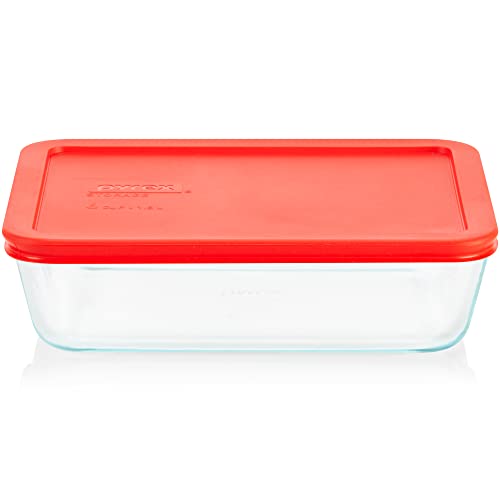
Glass Food Storage Containers Pros and Cons: The Pros
Pro: One Dish Cooks, Stores, Reheats and Serves
This is the advantage from which all others grow. A glass base is a small oven dish, so food can be baked in it, lidded for the fridge, reheated in it and carried to the table without ever changing vessel. Each avoided transfer saves washing, saves the food scraped away between containers, and saves the low-grade friction that makes storing leftovers feel like a chore. Households consistently underestimate this pro before owning glass and overestimate almost every other feature; after a month, the loop is what they describe first. No plastic container can enter an oven, and no steel container can enter a microwave, so the full loop belongs to glass alone among common materials.
Pro: Nothing Stains and Nothing Smells
Glass is non-porous, which in kitchen language means curry stays in the curry. A base that held a tomato stew, a beetroot salad or a fiercely spiced marinade washes back to genuinely neutral, ready for a rice pudding or a fruit salad without carrying a ghost of last week. Plastic, by contrast, slowly becomes a diary of everything it has held, written in orange. This pro compounds over years: a glass set smells as neutral in year five as in week one, while a plastic fleet’s background aroma is one of the quiet reasons households replace it. For cooks who store strong flavours often, this pro alone can justify the switch.
Pro: You Can See Everything, So Less Food Is Wasted
A clear fridge is an honest fridge. Leftovers in glass announce themselves at every opening, get planned around, get eaten. The same leftovers in opaque tubs become archaeology. This sounds like a small organisational nicety until you follow it into behaviour: visible food is inventoried food, and inventoried food is bought less duplicatively and wasted less carelessly. Owners rarely cite visibility as their reason for buying glass and almost always cite it, a year later, as the benefit they would least give back. Among all the pros in this article, it is the one with the strongest claim to paying for the set over time.
Pro: The Bases Age Gracefully and Last for Years
A glass base does not warp in hot washing, does not cloud into permanent dinginess and does not absorb the micro-scratches that make old plastic look tired and harbour grime. Treated with ordinary care, bases measure their service in years and plausibly in decades, with lids replaced occasionally along the way. That longevity changes the economics of the whole category: the set is bought rarely and maintained cheaply, rather than rebought in a slow drip of stained tubs and lost lids. Longevity is also the honest core of glass’s environmental case — not that glass is impact-free, but that a durable object used daily for years displaces a long line of short-lived ones.
Pro: Reheating Feels Cleaner and Food Presents Better
Reheating dinner in the dish it was stored in, then serving from that same dish, is a small domestic pleasure that owners mention with surprising warmth. Glass presents food like food: a salad looks like a salad, a gratin looks like a gratin, and a container taken to a neighbour or a shared table needs no apology or transfer. For households that entertain, batch-cook for family or simply care how the table looks on an ordinary Tuesday, this presentational pro is real. Storage that doubles as serveware also quietly reduces the total number of dishes a kitchen needs to own, which small kitchens feel as space returned.
Pro: A Stable, Rigid Stack That Behaves in the Fridge
Rigid bases stack like bricks rather than like cushions. A glass tower does not slowly bow, lean and crush the soft food at the bottom, and a heavy base placed on a lighter one does not deform the lid beneath it. The fridge stays calmer, denser and more legible as a result, and delicate foods — a dressed salad, a frosted bake, soft fruit — survive storage in better condition. This pro is easy to miss in a list because it is really the absence of a familiar annoyance, but anyone who has excavated a squashed container from the bottom of a plastic stack will recognise it instantly.
In this guide
Glass Food Storage Containers Pros and Cons: The Cons
Con: Glass Is Heavy, and the Weight Is Not Negotiable
Begin the cons with the one no habit can cure. A large glass base filled with food is a genuinely heavy, two-handed object, and a shelf of filled glass is a serious load. For cooks with arthritis, wrist injuries, reduced grip or high storage, this is not an inconvenience but a design barrier, and this article will not minimise it. Smaller bases, splitting batches and keeping glass on low shelves all mitigate the con; none abolishes it. If lifting a full casserole dish is already difficult in your kitchen, be honest about that here, because a storage system you avoid using is worse than a lighter system you use daily.
Con: Glass Breaks, and It Breaks Without Negotiation
Drop a plastic tub and it bounces; drop a glass base on tile and the storage question is over. Glass’s breakability is total and occasionally dramatic, and it concentrates in predictable places — rim chips from stacking against heavy pans, corner damage from knocks, and failures of already-damaged bases kept in service too long. Households with stone floors, hurried washing-up and many hands in the kitchen will meet this con more often than calm households will. The mitigation is real but behavioural: careful stacking, soft layers, prompt retirement of chips. A household unwilling to adopt those habits should weight this con heavily, because the material will not adapt to the household; the household must adapt to the material.
Con: Thermal Shock Demands Discipline Every Time
One safety habit matters more with glass than with any other storage material: respect thermal shock. Glass expands and contracts as its temperature changes, and when one part of a container changes temperature much faster than another part, the stress can crack or even shatter the base. Never move a container straight from the freezer into a hot oven, and never set a hot glass dish down on a cold, wet or stone surface that will chill one patch of its base instantly. Let a frozen container stand at room temperature for a while first, let a hot container cool before it goes into cold water, and place hot glass on a dry trivet, wooden board or folded dry towel. Before every use, run a fingertip slowly around the rim and look at the corners and base in good light: chips, hairline cracks and deep scratches are retirement signals, not battle scars to ignore, because damaged glass fails unpredictably under heat and stacking pressure. Finally, remember that on almost every set in this category the lid is plastic or silicone-trimmed plastic, and lids do not go in the oven, under a broiler or on a hob, whatever the glass base can handle. Remove the lid before reheating, vent it loosely in the microwave if the maker allows microwave lid use at all, and let steam escape away from your hands when you lift any lid from hot food.
This discipline is the price of the oven-to-table pro, and the two cannot be separated. Households that want a container they can treat carelessly at temperature extremes should hear this con at full volume: glass will forgive many things, but a freezer-to-flame shortcut is not among them, and the failure, when it comes, can be sudden. Cooks who build the pause into their routine stop noticing it within weeks; cooks who resent it should choose another material and be happy.
Con: Lids Are the Weak Part of Every Glass System
It is one of the category’s ironies that a system bought for permanence depends on its most perishable part. Lids flex, relax, warp in heat, tire at hinges and eventually stop sealing as they should — years before the bases beneath them show any age. Simple lids are cheap in spirit to replace but must actually be replaced; locking lids seal better and cost more care and more money to renew. Either way, the buyer of glass is really buying bases for the long term and lids as a managed consumable, and any pro list that omits this is hiding the ownership pattern. Budget your expectations accordingly and the con becomes a schedule rather than a surprise.
Con: Simple Lids Are Not Travel Seals
The classic everyday glass set seals for a shelf, not for a journey. Tilted in a bag, entrusted with soup, a press-on lid will eventually weep, and the resulting mess in a work bag is the single most common story of glass disappointment. The con is avoidable — locking gasket sets exist precisely to answer it — but it belongs on the ledger of the standard format, because buyers routinely discover it experimentally. Judge your own food’s journey honestly: if containers travel tilted more than occasionally, the con is decisive and you should buy the locking answer from the start rather than upgrading after the first leak.
Con: Glass Costs More Up Front and Takes More Room
A glass set sits at a higher tier than the plastic it replaces, and its rigid bases, especially bake-led ones, claim real cupboard volume. For a household replacing storage on a tight budget or storing it in a genuinely tiny kitchen, both halves of this con matter. The defence is time — the set is bought rarely — and dual use, since bases replace baking and serving dishes. But a defence is not a denial: the money leaves now, the shelf space is occupied now, and households for whom now is the constraint should consider a smaller modular start rather than a full set, growing the system as the budget and the cupboard allow.
What the Trade-Offs Mean for You
For the family leftover household, the ledger is lopsided in glass’s favour. The loop, the visibility and the stain-free washing are met at every meal, while the cons are met rarely: the food stays home, the lifting is shared among able hands, and the thermal pause becomes a family habit taught once. This household should buy glass without anxiety and spend its attention on size fit rather than on the material question, which for them is already answered.
For the daily commuter, the ledger genuinely balances, and the deciding entries are the travel-seal con and the weight con, both met every single morning. The resolution is not to abandon glass but to buy its travelling form — a locking gasket set, sized for a bag — or to split the system and keep glass at the destination. Commuters who buy the classic set for the commute are the source of most of this category’s unhappy stories, and every one of those stories was preventable at the point of purchase by reading the cons as carefully as the pros.
For the older cook and the cook with limited grip, the weight con moves to the top of the ledger and may outweigh every pro in this article. The honest options are smaller glass bases used in pairs, glass reserved for oven-to-table dishes that never travel far, or a deliberate choice of a lighter material for daily storage with glass kept for baking. There is no virtue in struggling with a beautiful system; the best storage is the storage your hands trust, and this article’s pros were never meant to argue anyone out of their own physical reality.
For the bulk freezer household, the ledger tilts away from everyday glass for a different reason: specialism. Glass freezes occasional soups and sauces perfectly well with headroom and patience, but a season of bulk freezing rewards dedicated freezer containers designed for that single job. The pros of glass — visibility, reheating, presentation — matter least in a chest freezer, and its cons of weight and thermal care matter most at the freezer-to-oven boundary. Split the jobs, and both systems will feel like pros.
Glass in Context: Two Alternatives Weighed
Against plastic, glass wins on heat, hygiene, longevity and presentation, and loses on weight, breakability, upfront tier and careless handling. The comparison is often presented as a moral contest; it is actually a journey contest. Food that is cooked, stored, reheated and served at home belongs in glass. Food and drink that are lent, dropped, carried by children or abandoned in bags forgives plastic’s weaknesses and punishes glass’s. Most mature kitchens end with glass dominant at home and a little plastic retained at the margins, and that mixed end state is wisdom, not inconsistency.
Against stainless steel, glass wins on visibility and microwave reheating, and loses on toughness and transport weight-for-strength. Steel is the material of the rucksack and the building site; glass is the material of the oven and the table. A commuter who reheats on a workplace plate may rationally choose steel and never miss glass, while a home cook who reheats in the container will find steel’s microwave ban a daily tax. Neither alternative makes glass’s pros smaller; they define the borders inside which those pros are decisive. The fuller six-set comparison behind this ledger sits in glass food storage containers reviews.
How to Buy Smart If the Pros Win
Buy the size map before the brand: two large rectangles, a working set of mediums, a few small rounds, matched to a real week of your food. Choose the lid for your food’s journey — simple for the shelf, locking for the road — and check that lids are replaceable and sizes share them where possible. Handle the largest base, filled in imagination, and be honest about the lift. Read the maker’s heat guidance before the first use, not after the first incident, and decide the lids’ vertical home before the set comes out of its box. Each of these steps is small; together they are the entire difference between the households in the pro stories and the households in the con stories. The step-by-step framework is expanded in glass food storage containers buying guide, and the value question underneath it all is taken apart in are glass food storage containers worth it.

A Sensible Starting Point: Pyrex Simply Store
For households whose ledger favours the pros, the Simply Store pattern is the natural first set: wide sizes, simple lids, mid tier, easy replacements. Best for: family leftovers and first conversions from plastic. Not suited for: daily liquid commuting. It embodies the classic ledger exactly — all the loop and visibility pros, with the travel-seal con present and honestly labelled.

If Travel Is Your Deciding Con: Rubbermaid Brilliance Glass
Where the travel con dominates, the Brilliance pattern answers it with latching, gasketed lids and presentation-grade clarity, at a premium tier and with a two-handed ritual as its own small con. Best for: commuters and lunch carriers. Not suited for: buyers seeking the simplest lid in the category. Choosing it is the pros-and-cons method working exactly as intended: one decisive con, deliberately bought away.

If Space Is Your Deciding Con: IKEA 365+ Glass
Where the room con dominates, the modular IKEA approach answers it by letting you own only the sizes you use, nesting deeply and replacing parts singly. Best for: small kitchens and systematic growers. Not suited for: one-box shoppers. Its presence in this article is a reminder that several glass cons are not material facts at all, but set-design facts — and set design can be chosen. Kitchen organisers extending the same logic to shelves often start with best storage baskets.
Setup and Care That Reduce the Cons
Most cons in this article shrink under specific habits, and this section collects them. Against breakage: store nested bases with a soft layer, keep glass away from the heaviest pans in the sink, and retire chips the day they appear. Against thermal shock: temper, rest, lid off, dry trivet — the four-word version of the safety rule, worth teaching to everyone in the house. Against lid ageing: wash grooves and gaskets, dry lids fully, store them vertically and unstacked where possible, and replace a relaxed lid promptly rather than forcing it and blaming the seal. Against the weight con: keep filled storage low, split big batches and choose two medium bases over one heroic one.
What care cannot do should be stated as plainly as what it can. It cannot make glass light, unbreakable or indifferent to a freezer-to-oven leap. A care section that promised otherwise would be marketing. The realistic claim is narrower and still valuable: good habits move glass’s cons from frequent events to rare ones, leaving the pros — which need no habits at all — to dominate daily experience. That asymmetry, pros by default and cons by exception, is the strongest honest summary of owning this material. For the washing-up side of the routine, best absorbent kitchen towels covers the towels that keep glass drying safely rather than chipping on a crowded rack.
The Fridge Week Versus the Freezer Month: Where the Ledger Shifts
Most storage arguments dissolve once you separate the fridge week from the freezer month, because glass’s pros and cons swap weights between the two. In the fridge week — leftovers eaten within days, lunches reheated, dishes served — visibility is priceless, the loop runs constantly, and the cons barely appear. In the freezer month — bulk batches stored for a season, thawed in bulk, rarely presented — visibility frosts over, the loop is irrelevant, and weight plus thermal care move to the centre. A household can therefore be entirely right to choose glass and entirely right to keep it out of the deep freezer, and many do exactly that.
This is also why the neighbouring freezer category deserves its own guides rather than a footnote here. Dedicated freezer storage is designed around expansion, stacking density and long cold, and it earns its place beside glass rather than beneath it. Readers whose storage life is freezer-led will find the freezer storage containers cluster on this site the more relevant read, while fridge-led readers should stay with the ledger in this article. Knowing which week your food lives in — the fridge week or the freezer month — is the fastest honest shortcut in this entire decision.
Children, Guests and Shared Kitchens: The Social Ledger
Add a social column to the ledger and glass gains a pro that pure performance lists miss: legibility to other people. A guest can open a glass fridge and help; a partner who did not cook can find, reheat and serve without a briefing; a teenager can see what is available instead of asking. Opaque storage privatises knowledge in one cook’s memory, and households feel the cost of that at every shared meal. Glass socialises the fridge, and in busy family kitchens that is a weekly, sometimes daily, benefit.
The social cons are equally specific. More hands mean more knocks, more creative lid storage and more occasions where the thermal rules live in one person’s head while another person does the reheating. The fix is social too: teach the four-word rule — temper, rest, lid off — to everyone who uses the kitchen, and put the lids in one obvious home. Households that make the rules communal report that glass survives family life far better than its fragile reputation suggests; households that keep the rules private meet the breakage con at the rate the reputation predicts.
For households with young children, the balanced practice is graduated access rather than exclusion. Cold, small containers can be fetched and opened by children learning kitchen independence; hot, heavy and oven-bound glass stays adult work. That division respects both the pro — simple lids children can genuinely operate — and the con — weight and heat that small hands should not manage. It also teaches the inspection habit early, which is the closest thing to a lifetime warranty this category offers.
The Environmental Ledger, Kept Honest
On the pro side: a durable set used daily for years displaces a long succession of short-lived plastic tubs, the bases are made from abundant raw materials, and glass recycles cleanly where facilities accept it. On the con side: glass is heavy to transport and energy-hungry to manufacture, and a set broken early through mismatch or carelessness wastes that investment entirely. The honest environmental verdict therefore depends on longevity in your hands, which returns the question, once again, to fit. A well-matched glass set is an environmental pro; a mismatched one is a con wearing a halo.
The larger environmental entry is not the container at all but the food inside it. Wasted food dwarfs packaging in impact, and a storage material that helps a household see, use and enjoy its leftovers attacks the bigger problem. That is the deepest version of the visibility pro, and it is why this article ranks visibility so highly despite its softness as a specification. Households choosing glass partly for environmental reasons should therefore optimise for the system they will actually keep organised — sizes that fit, lids that file, a fridge that stays legible — because the greenest container is the one that prevents the most waste, and waste prevention is a behaviour before it is a material.
Two household projects often travel with a glass conversion and are worth linking while you reorganise. Overflow cold storage and drinks are handled in best mini fridges, while the non-food clutter competing for the same cupboards is tackled in best vacuum storage bags and best under-bed storage. A calmer cupboard is not a pro of glass itself, but conversions that seize the moment tend to keep their new habits, and habits, as this whole article argues, are where the pros and cons are truly decided.
Myth-Checking the Loudest Claims on Both Sides
Myth one, from the pro side: glass keeps food fresher for longer. As the FAQ in this article states, freshness is a property of seal, cold and food, and glass holds no meaningful advantage there. The myth survives because glass owners genuinely throw away less food, and attribute to preservation what actually belongs to visibility. Correcting the myth does not weaken the case for glass; it relocates it to the true mechanism, where it is stronger. Buy glass expecting to see your food, and you will waste less of it. Buy it expecting the material to slow time, and you will be disappointed by physics.
Myth two, also from the pro side: glass is the automatically greener choice. As the environmental ledger above shows, that depends entirely on service life in your kitchen. A decade of daily use makes the claim comfortably; a year of breakage and abandonment reverses it. The myth matters because it licenses careless buying — any glass, any size, any fit — when the environmental benefit lives precisely in careful buying. The greenest sentence in this article is not about material at all: it is the advice to buy the size map you will use for years.
Myth three, from the con side: glass is too fragile for family life. The evidence of ordinary kitchens says otherwise, provided two habits hold — inspection and retirement of damage, and a lids-and-stacking system that keeps rims from clattering against heavy pans. Families are not inherently careless; they are inherently busy, and busy households succeed with glass when the system is designed for tired people. The sets that fail in family kitchens are usually the ones with complicated lids and nowhere to store them, which is a design failure wearing a material’s reputation.
Myth four, also from the con side: the lids prove glass is a bad system. The lids prove that glass systems are two-material systems, with a permanent part and a renewable part, like a razor and its blades or a pan and its coating’s lifespan. Judged as a permanent purchase with zero maintenance, lids disappoint; judged as the scheduled consumable they are, they are unremarkable. Most ownership anger in this category is a category error — expecting the lid to share the base’s lifespan — and it evaporates once the pattern is named, which is why this article names it in the cons, the care section and the FAQ alike.
Clearing those four myths leaves the ledger in its true, quieter shape. Glass is neither a freshness miracle nor a green halo nor a fragile luxury nor a system betrayed by its lids. It is a durable, visible, heat-capable material with real weight, real breakability and a real need for thermal manners, attached to lids that will need renewing. Households do not need a more exciting truth than that; they need exactly that truth, applied to their own week, which is what the bottom line of this article exists to help them do.
A Worked Example: Scoring One Real Week
Abstractions persuade poorly, so here is the ledger applied to one ordinary week in a household of four. Monday’s roast becomes Tuesday’s sandwiches and Wednesday’s soup base, all in glass, all visible, none forgotten: three pro entries for the loop and visibility before midweek. Thursday’s curry reheats in its base and washes clean without staining: the hygiene pro, again. Friday’s bake goes from oven to table to fridge in one dish: the loop pro at its most satisfying. Against that, the week’s cons: one heavy lift of the full Sunday dish that an older wrist noticed, one lid hunt on a tired evening, and one moment of discipline — a frozen sauce left to temper while a hungrier plan waited. Five days, a clear pattern.
Now run the same week for a commuter household of one. Monday’s soup, in a press-on lidded base, weeps slightly in a cycle bag: the travel con, immediately and memorably. Tuesday’s salad travels fine because salads forgive. Wednesday’s reheating at a shared office microwave is pleasant, and the visibility pro operates at home in the evening when the fridge is inventoried. Thursday brings a chipped rim discovered at washing-up — retired, correctly, but a base down. The pattern is mixed in a way the family pattern was not, and the correct purchase for this household is visibly the locking form of glass, not the classic form and not an apology for it.
The point of the worked example is not the scores; it is the method. Any household can run its own last week through the pros and cons in this article in five honest minutes, and the resulting pattern will predict satisfaction more reliably than any ranking, badge or recommendation — including this article’s own bottom line. Pros and cons lists are often read as verdicts. Read this one as a worksheet, and it becomes the most useful page in the cluster: the one where the decision is made by the only kitchen that matters, which is yours.
One more consideration belongs in the ledger before the verdict, because households raise it constantly and lists rarely answer it: what happens when — not if — the first piece breaks? The honest answer is that a well-chosen system absorbs it. A modular or long-running line replaces the base; a mixed set continues around the gap; the household’s habits, not its luck, determine whether the break is a footnote or a turning point. Buyers who fear the first break disproportionately often end up keeping fragile plastic systems that fail slowly and constantly instead. Glass fails rarely and completely; plastic fails constantly and quietly. Reasonable households can prefer either pattern, but they should choose it knowingly, and that knowing is the entire purpose of weighing pros and cons in the first place.
So the final weighing advice is procedural. Read the pros and mark the ones your week will actually meet. Read the cons and mark the ones your kitchen cannot mitigate. If your marked pros are daily and your marked cons are rare or mitigable, the decision is made and the remaining work — sizes, lids, shelf — is detail. If a marked con is daily and unmitigable, no accumulation of pros should talk you out of it. That discipline, applied calmly, is worth more than any individual entry in this long ledger, because it converts a generic list into a personal decision, which is the only kind that survives contact with a real kitchen.
It is worth adding, as the ledger closes, that the pros and cons of glass have been stable for as long as the material has been made, which is itself useful information. This is not a technology awaiting a breakthrough that will make it light or unbreakable; the glass in a modern set is better made than its ancestors, but its character is the same character cooks have weighed for generations. A decision made on this ledger will therefore age well. You are not betting on a product cycle; you are choosing a material’s permanent personality, and permanent personalities, honestly weighed, make for the most durable purchases a kitchen ever makes.
And a last word for readers who finish the ledger genuinely undecided, because the pros excite them and one con — usually weight or breakage — worries them in equal measure. Indecision of that kind is information: it usually means the household sits near the border where set design decides. In that territory, start small and modular, live with a few bases for a month, and let your own kitchen cast the deciding vote with evidence no article can supply. A month of real use outweighs a library of other people’s ledgers, including, respectfully, this one.
Whichever way your own weighing lands, keep the worksheet. Kitchens change — children grow, jobs change, wrists and households change — and the household that re-weighs the ledger when life shifts will keep a storage system that fits, instead of defending a decision made for a kitchen that no longer exists. The pros and cons themselves will not have moved; glass sees to that. What moves is you, and a good ledger is one you can return to, which is why this article was written to be re-read at the next change as usefully as it is read at the first purchase.
Finally, a note on proportion for anyone who has read this entire ledger and feels the decision growing heavier than it should. These are containers. Every serious option in the category will store dinner safely, and a slightly imperfect choice can be corrected with one later purchase, as the worked examples showed. The weighing matters because habits and fit matter, not because the stakes are high. Weigh honestly, decide calmly, and then go and cook something worth storing — the ledger will still be here, unchanged, whenever the kitchen changes enough to need it again.
Bottom Line
The pros of glass food storage containers are daily, compounding and unique to the material: the oven-to-table loop, the stain-free and smell-free hygiene, the visibility that quietly cuts waste, and bases that serve for years. The cons are physical, honest and partly manageable: weight, breakability, thermal discipline, mortal lids and a higher starting tier. Households whose food lives at home will meet the pros at every meal and the cons at rare intervals, and for them the bottom line is a clear yes. Households whose food lives in transit, or whose hands cannot comfortably lift the material, should let the cons speak at full volume and choose accordingly — either glass’s locking travelling form, or another material entirely, chosen without regret. The single-format deep dive in glass food storage containers review shows what the yes looks like in daily practice.
Living With the Trade-Offs: How the Glass food storage containers Balance Plays Out Over a Season
A pros and cons list is a snapshot, but a glass food storage containers is a long-term housemate. Advantages that look decisive on paper can shrink once the seasons turn, and drawbacks that seem minor in a showroom can grow teeth in February or during a busy holiday week. The fairest way to weigh a glass food storage containers is to follow one full season of ordinary use and ask how each side of the ledger behaves when the weather, the light and the household routine all change. This section does exactly that, so the balance you act on reflects lived experience rather than first impressions.
When the Advantages Grow — and When They Fade
The strengths of a good glass food storage containers tend to compound quietly. A design that saves steps, stores more, or cleans easily gives that benefit back every single day, and over a season those small repayments add up to the real value of the purchase. By contrast, advantages based on novelty — an unusual finish, a fashionable shape, a feature you showed to guests twice — fade within weeks. When you re-read any pros list, sort each point into one of those two families: daily-compounding benefits deserve heavy weight, while novelty benefits deserve almost none, however attractive they looked at the point of ordering.
When the Drawbacks Bite Hardest
Weaknesses in a glass food storage containers rarely bite at random; they bite at predictable pressure points. Guests arriving, a seasonal deep clean, a heatwave, a power cut, a house move, or a child or pet entering a new stage will each stress a different limitation. Think through those moments for the glass food storage containers you are considering and ask whether the drawback is an occasional annoyance you can plan around or a recurring friction you will meet every week. An occasional annoyance is a fair price for a strong advantage elsewhere; a weekly friction almost never is, and it is the single most common reason owners replace a glass food storage containers long before it wears out.
Use these seasonal pressure tests to judge the trade-offs in any glass food storage containers:
- Picture the glass food storage containers during your busiest week of the year and decide whether its main drawback would matter more, less, or about the same.
- Picture it during the opposite season from now — high summer if it is winter, the dark months if it is spring — and re-check light, heat, moisture and ventilation around it.
- Ask who else in the household touches the glass food storage containers most, and weigh the cons from their height, strength and habits rather than your own.
- Separate the drawbacks you can fix with an accessory or a habit change from the ones built into the design itself.
- Give the glass food storage containers a simple verdict for each season rather than one verdict for the year, and only buy when it passes the seasons you care about most.
Notice which parts are replaceable and which are not; a glass food storage containers whose wear parts can be swapped cheaply often outlasts a sealed design twice its price in spirit, if not in years. Consider the glass food storage containers from the perspective of the person who cleans around it, because designs that trap dust, block access or demand special products quietly tax every week of ownership. Think about noise, light and heat as neighbours of the glass food storage containers, not afterthoughts, since a choice that performs well but disturbs the room around it rarely stays popular for long. Remember that guests experience your glass food storage containers without instructions, so anything that needs explaining, warning or demonstrating is worth simplifying before it is worth defending. Plan for the glass food storage containers to be moved at least twice in its life — for cleaning, redecorating or a change of room — and favour designs that forgive being shifted, tilted or carried.
Judged across a season, most glass food storage containers choices become clearer, not harder. The right model is rarely the one with the longest pros list; it is the one whose drawbacks land in the moments you can tolerate and whose strengths land in the moments you repeat every day. Hold any candidate up against your own calendar before you commit, and the pros and cons stop being abstract and start being a forecast you can trust.
Frequently Asked Questions
What is the single biggest advantage of glass food storage containers?
The oven-to-fridge-to-table loop in a single dish. Baking, storing, reheating and serving in one base removes transfers, washing and serving dishes from the everyday routine, and no other common storage material can complete the whole loop — plastic cannot take the oven and steel cannot take the microwave. Visibility and stain-free hygiene run a close second and third, and many owners eventually rank visibility first, but the loop is the advantage that exists nowhere else.
What is the single biggest disadvantage?
For most households, breakability combined with weight: glass is heavy to lift and unforgiving when dropped or knocked, and damaged pieces must be retired rather than tolerated. Thermal shock discipline runs close behind, because it asks for a habit at exactly the hurried moments when habits slip. Which of the two tops your own ledger depends on your kitchen — stone floors and many hands argue for breakability; a freezer-to-oven cooking style argues for thermal care.
Do glass containers keep food fresh longer than plastic?
Not meaningfully, and this article lists that as a neutral rather than a pro. Freshness is governed by the seal, the cold and the food itself, and a good plastic seal performs like a good glass one. Glass’s real freshness advantage is indirect: you can see the food, so you eat it sooner. Anyone selling glass on extra days of freshness is overselling; anyone buying it for visibility, hygiene and reheating is buying the genuine article.
Are glass containers safe in the oven, freezer and microwave?
The bases are designed for all three within each maker’s guidance; the plastic lids are for none of the heat. Safety is procedural: temper a cold base before the oven, leave headroom for freezing liquids, remove or vent lids as directed for the microwave, and never move a base straight from freezer to hot oven. Follow those rules and glass is a safe, ordinary material. Ignore them and the same base can crack — the safety lives in the habits, not in a promise printed on a box.
How long do glass food storage containers last?
The bases, treated with ordinary care, last for years and often far longer, because glass does not warp, stain or wear out in normal kitchen service. The lids set the maintenance schedule: expect to replace them during the bases’ life as they relax or tire. A set should therefore be judged as a long-lived base collection with a renewable lid supply, and buyers should favour lines whose lids are easy to replace. That pattern is a pro with a small recurring footnote, not a hidden flaw.
Who should not buy glass food storage containers?
Daily commuters carrying liquids who are unwilling to buy the locking form, cooks for whom the weight is a genuine physical barrier, and bulk freezers whose storage is measured in months. Also, households that know they will not adopt the two core habits — tempering before heat and retiring chips — should choose a more forgiving material. Glass rewards a small amount of respect very generously, but it does insist on the respect, and there is no honest version of this article that pretends otherwise.


