Disclosure: As an Amazon Associate, dailyhomedecorating.com earns from qualifying purchases. Links on this page are affiliate links; they cost you nothing extra. Prices and availability change often, so check the current Amazon listing before you buy.
This glass food storage containers review takes one honest question into the kitchen: what is it actually like to live with glass storage every day, once the tidy first week is over? To answer it properly, this review follows the format most households start with — a mixed everyday set built around clear bases and simple lids, in the style of the long-running Pyrex Simply Store line — and tests it against the real jobs of leftovers, reheating, lunches, stacking, washing and storing. Rival sets appear where they genuinely beat the format, because a review that never looks sideways is just an advertisement with better grammar.
The short verdict comes first, as it should. For households whose food mostly travels from oven to fridge to table, this format is the calm centre of the category: visible, hygienic, oven-capable and easy for the whole family to use. For households whose containers commute, tilt and tumble daily, the same format’s simple lids are its honest weakness, and a locking gasket set serves better. Everything below is the evidence for those two sentences, including the safety habits glass demands and the small frustrations no product photograph will ever show you.
Key Takeaways
- Best for households that cook, store, reheat and serve in the same dish at home.
- Simple press-on lids are fast and family-friendly but are not a travel seal for soups.
- The glass bases age beautifully; the lids are the consumable part of the system.
- Thermal shock discipline — no freezer-to-hot-oven jumps — is non-negotiable with any glass set.
- Skip this format if your containers commute tilted in a bag every single day.
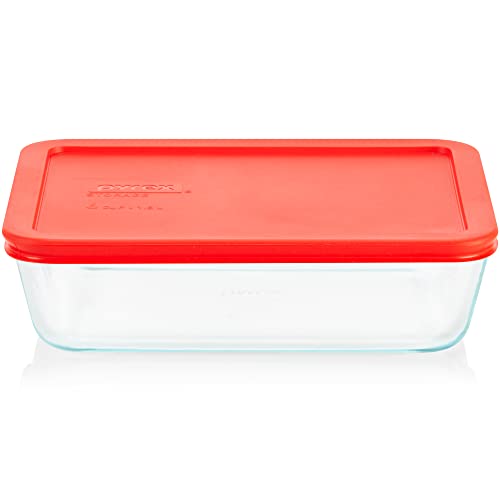
Glass Food Storage Containers Review: What This Format Is and Where It Fits
The everyday glass storage format is a mixed family of round and rectangular bases in graduated sizes, topped with flexible press-on or light snap lids. It descends directly from bakeware, and that ancestry defines its character: these are small oven dishes that live in the fridge. In the market it occupies the broad middle — above disposable plastic in capability and price tier, below premium locking systems in sealing force — and it is where most households begin, and many happily stay, when they move to glass.
Where it fits is the home-centred kitchen. Dinner leftovers go in warm, the fridge shows them clearly for days, lunches for home workers reheat in the same base, and a casserole can be assembled, baked, lidded and stored without ever changing vessel. Where it fits less well is the bag, the backpack and the bicycle commute, anywhere a container spends real time on its side. That boundary is not a flaw in the glass; it is the physics of a friction lid, and this review returns to it honestly rather than wishing it away.
It also fits a particular temperament: cooks who value seeing their food. The review period for any glass set quickly becomes a lesson in fridge honesty. Leftovers stop hiding, duplicate purchases of the same ingredient drop, and the question of what to eat tonight answers itself at a glance. Households that meal-plan loosely, cook generously and graze from the fridge will feel this format working for them daily. Households that freeze almost everything for months should look at dedicated freezer storage instead, because everyday glass is optimised for the fridge week, not the freezer season.
In this guide
Design, Build and Setup
Pick up a base from a set like this and the first impression is substance. The glass is thick enough to feel like cookware rather than packaging, the rim is smooth and rounded for lid seating and comfortable pouring, and the base sits flat without rocking on a counter. Corners on rectangular pieces are gently radiused, which matters twice: food releases more easily when serving and washing, and the corner — the natural weak point of any glass vessel — is not a sharp stress concentrator. Held to the light, a good base is water-clear, which is not vanity; clarity is the visibility the whole category promises.
The lids are the engineered compromise. Flexible plastic lids press over the rim and grip by elasticity, seating with a satisfying give rather than a mechanical click. In the hand they feel simple, and that simplicity is the design: no hinges to break, no tabs to align, nothing to learn. The cost of that simplicity is sealing force, examined in the performance section, and longevity, because flexible lids slowly relax and warp over years of hot washing. Treat the lid as a well-made consumable and the design makes sense; expect it to be immortal and it will eventually disappoint you.
Setup, if the word even applies, is a wash, a dry and a first stack. The bases nest — rounds inside rounds, rectangles inside rectangles — and the lids stack flat or file vertically in a drawer. Within a day the system disappears into routine, which is the highest compliment storage can earn. One setup recommendation from experience: dedicate the lid home on day one, before the first wash cycle scatters lids across the kitchen. Sets do not fail in the fridge; they fail in the drawer, and the drawer is a choice you make once.
A note on the spec box habit: this review deliberately avoids printing precise oven limits, capacities in numbers and similar figures for specific models, because those figures differ between production runs and regions and are exactly the kind of detail that should be read on the maker’s own page for the set in your hands. What can be said safely for the whole format is qualitative: bases are oven-capable when used as the maker directs, lids are not oven parts, and gradual temperature transitions are the rule. That restraint is a feature of an honest review, not a gap in it.
Performance in Real Use
Everyday Leftovers and Fridge Life
This is the format’s home ground and it performs beautifully. Cooked vegetables, grains, roasted meats and sauces sit visibly in a clear row, and the fridge becomes readable in a way plastic never achieves. Because the bases are rigid, stacking is stable: a medium rectangle on a large one does not sag, bow or slowly crush the food below. Lids seat quickly with one hand while the other holds a pan, a small mercy at the end of cooking that locking systems cannot match. Over a normal week of family leftovers, nothing about the format gets in the way, and that absence of friction is its core performance result.
Smell and stain behaviour deserve their reputation. A base that held a tomato stew last week and a rice pudding this week carries no ghost of the stew, because glass gives flavours nowhere to live. Plastic veterans will recognise this as the quiet miracle of the category. It also changes washing: a quick hot wash genuinely resets the container, rather than resetting it to a faintly orange version of clean.
Reheating and Oven Use
Reheating in the storage base is where the format earns its keep most visibly. Food goes from fridge to microwave or, with the lid off and proper tempering, into the oven, and then straight to the table in a dish that looks like a serving dish because it is one. One vessel instead of three means less washing, fewer transfers and less food lost to scraping between containers. Oven performance follows bakeware logic: even, gentle reheating, happy gratins and bakes, and bases that tolerate being the cooking vessel for smaller dishes outright.
One safety habit matters more with glass than with any other storage material: respect thermal shock. Glass expands and contracts as its temperature changes, and when one part of a container changes temperature much faster than another part, the stress can crack or even shatter the base. Never move a container straight from the freezer into a hot oven, and never set a hot glass dish down on a cold, wet or stone surface that will chill one patch of its base instantly. Let a frozen container stand at room temperature for a while first, let a hot container cool before it goes into cold water, and place hot glass on a dry trivet, wooden board or folded dry towel. Before every use, run a fingertip slowly around the rim and look at the corners and base in good light: chips, hairline cracks and deep scratches are retirement signals, not battle scars to ignore, because damaged glass fails unpredictably under heat and stacking pressure. Finally, remember that on almost every set in this category the lid is plastic or silicone-trimmed plastic, and lids do not go in the oven, under a broiler or on a hob, whatever the glass base can handle. Remove the lid before reheating, vent it loosely in the microwave if the maker allows microwave lid use at all, and let steam escape away from your hands when you lift any lid from hot food.
The discipline in that paragraph is not decorative. Every thermal failure story in this category begins with a shortcut — a frozen base into a hot oven, a hot base under cold water, a lid forgotten in the heat. Build the pause into your reheating routine and glass repays you with years of uneventful service. Treat the pause as optional and no brand, at any tier, can protect the base for long.
Lunches and Transport
Here the review must be blunt. Carried upright in a lunch bag and treated kindly, these containers transport solid and semi-solid food perfectly well. Tilted, jostled or entrusted to a soup, the simple lid is the weakest in this cluster of guides, and small leaks are a matter of when, not if. The glass itself travels fine — it is the seal that was designed for a shelf, not a journey. Households with an occasional lunch will forgive this; daily commuters should not buy this format and hope, because hope is not a sealing mechanism.
The practical middle path many owners adopt is a split system: this everyday set at home, and one or two locking gasket containers dedicated to travel. That hybrid appears again in the comparison section, because the locking sets that beat this format on the road genuinely lose to it on speed and simplicity at home. A review that crowns one winner for both lives would be lying about at least one of them.
Washing, Stacking and Long-Term Wear
Bases wash easily by hand or machine, release baked edges with a soak, and emerge without the cloudy film that ages plastic. The daily wear points are human rather than material: rim chips from careless stacking against heavier pans, and lids that slowly lose their grip after years of heat. Stacking in the fridge is stable and calm; stacking empties in a cupboard rewards a soft layer between bases and a little patience. Judged over years rather than weeks, the bases are close to buy-once items, while lids should be budgeted as replaceable — a fair and predictable ownership pattern.
Strengths and Trade-Offs
Strengths
- Oven-to-fridge-to-table in one vessel, with no decanting and less washing up.
- Complete visibility of contents, which measurably cuts forgotten leftovers.
- No staining and no lingering smells, even after strongly coloured or spiced food.
Trade-offs
- Simple lids are the weakest travel seal in the category and will weep with tilted liquids.
- Real weight, especially in large filled bases, which some hands and high shelves dislike.
- Lids age faster than bases and should be treated as the replaceable part of the system.
Weighed together, the strengths are daily and the trade-offs are situational. A household living the home-centred life meets the strengths at every meal and the trade-offs rarely. A commuting household meets the first trade-off every morning. That asymmetry is why this review’s verdict splits by lifestyle rather than declaring a universal score, and why the comparison section matters more than any single score could.
How It Compares

Pyrex Simply Store — The Reference Everyday Set
As the reference expression of this format, the Simply Store style of set offers the widest familiarity: sizes that cover the ordinary week, lids anyone can use, and a replacement ecosystem built over years. Best for: first-time glass buyers and family fridges. Not suited for: daily liquid transport. Its role in this review is the baseline — everything below is measured by what it gains or loses against this calm, generalist centre.

Rubbermaid Brilliance Glass — The Travel Upgrade
Brilliance Glass trades lid simplicity for latching, gasketed security. It wins the commute outright and looks polished at the table. It loses a little of the baseline’s one-handed speed and asks more care of its lids. Best for: carriers and commuters. Not suited for: buyers who want the simplest possible lid for children and grandparents to manage. Full context sits in glass food storage containers buying guide.

OXO Good Grips Smart Seal Glass — The Engineered Seal
OXO’s locking gasket design is the connoisseur’s answer to the leak question, with thoughtful ergonomics throughout. It wins on seal confidence and system feel; it sits at a premium tier and its lids are deliberate purchases. Best for: soup lovers and careful organisers. Not suited for: entry-tier budgets. Readers weighing the whole category should also see glass food storage containers reviews for the wider field.

IKEA 365+ Glass — The Modular Alternative
The IKEA system wins on control: buy the sizes you use, replace lids individually, grow slowly. It loses the one-box simplicity of a set and its everyday seal is good rather than travel-grade. Best for: small kitchens and systematic buyers. Not suited for: one-purchase shoppers. Its modular logic pairs well with wider organising projects such as best storage baskets.
Who Should Buy It and Who Should Skip It
Buy this format if your kitchen rhythm is cook, store, reheat and serve at home; if children or grandparents will use the lids; if you are tired of stained, smelly plastic; and if your fridge needs visibility more than your bag needs a travel seal. Buy it, too, if you bake small dishes often, because bake-and-store in one vessel will quietly become your favourite habit within a month.
Skip it if your containers commute tilted daily, if grip strength or high shelves make heavy bases a genuine burden, or if your storage life is overwhelmingly long-term freezing, where dedicated freezer containers serve better. Skipping is not a verdict on glass; it is a direction toward the locking, lighter or freezer-specific tools that match a different life. The value question behind that choice is explored in are glass food storage containers worth it.
Before buying, run this short checklist. One: do my three most-stored foods fit the set’s size map? Two: will the largest base, lidded, fit my fridge shelf and my cupboard? Three: can everyone in the house open and close the lids happily? Four: do I know where the lids will live? Five: have I read the maker’s heat guidance and am I willing to follow the tempering pause? Five yeses mean the format will serve you for years; any no deserves a second look at a rival before money moves.
Setup, Care and Maintenance Essentials
Care for this format divides cleanly into glass habits and lid habits. Glass habits: temper before heat, rest before cold water, inspect rims and corners regularly, retire anything chipped, and store nested bases with a soft layer if they travel in and out of the cupboard daily. None of this is burdensome once it is routine, and the routine takes about a week to feel automatic. The inspection habit is the one to protect most fiercely, because it is the one that quietly prevents the only genuinely dangerous failure this category has.
Lid habits: wash gaskets and grooves where fitted, dry lids fully before storing, keep them out of oven and broiler entirely, and use the gentler dishwasher rack so heat does not warp the seal. When a lid finally relaxes and stops gripping, replace the lid, not the set — the bases beneath it almost certainly have years left. Owners who treat lids as consumables report sets that feel new for a very long time; owners who expect lids to be immortal report disappointment on a schedule. For drying and daily glass care, best absorbent kitchen towels and best glass cleaning towels cover the textile side of the routine.
A Month of Real Meals: The Format Under Daily Load
Week one of living with an everyday glass set is mostly delight, and a good review should be suspicious of week one. Everything is visible, the fridge looks like a deli window, and reheating dinner in the dish it was stored in feels like a small upgrade to civilisation. The honest test begins when the routine frays: a late night, a double batch, a fridge already full, a dishwasher not yet run. That is where this format quietly proves itself, because its virtues are not features, they are absences — no hunting for a serving dish, no decanting, no mystery tubs, no lids that require an engineering degree at midnight.
Consider the ordinary stress cases one by one. A Sunday roast produces a large rectangle of sliced meat, a medium round of vegetables and two small pots of gravy and dripping; the set absorbs all four without improvisation, and Monday’s fridge reads like a menu. A weeknight curry reheats in its base, serves at the table without apology and washes clean without carrying turmeric into next week’s yoghurt. A baking afternoon uses the large base as a gratin dish, then lids the leftovers in place. None of these moments is dramatic, and together they are the entire review: the format disappears into the cooking, which is what storage is for.
The friction points of the month are equally specific. The largest base, full, is a two-handed lift, and anyone with a wrist injury will notice it by week two. The small rounds multiply in the dishwasher like they are breeding. A guest, helping to tidy, will put a lid somewhere creative, and the morning search will remind you why the lid home matters. And one container, carried hopefully to a friend’s house with soup, will teach the transport lesson this review has already given away. A month of real meals produces a clear-eyed affection for the format, with its limits mapped rather than imagined.
Lid Systems in Depth: Where This Format Really Lives
Return to the lid, because a month of use confirms the buying guide’s warning that the lid is the product. The press-on lid’s genius is social: anyone can use it, instantly, with wet hands, while holding a child or a pan. Grandparents do not need a tutorial, children do not need supervision, and a tired cook at midnight does not need a second attempt. In a family kitchen, that universality is a performance feature as real as any seal test, and it is the main reason this older format survives against technically stronger rivals.
The locking lid’s genius is physical: even compression, a true gasket and a seal that shrugs at tilt and travel. Its costs are also social — two hands, a small ritual, hinges that reward occasional thorough washing. Neither genius is imaginary, which is why this review refuses to declare one lid philosophy the winner. The question is which genius your household will actually benefit from on its ordinary days, and honest answers to that question predict satisfaction better than any laboratory leak test.
There is a third, quieter lid consideration: the sound and feel of closure. A lid that seats with a clear, positive give gets closed properly every time; a lid that feels ambiguous gets left half-seated, and half-seated lids are behind a large share of the leaks blamed on good containers. When you handle sets in person, close each lid ten times and listen to your own hands. They will tell you, faster than any specification, whether this is a closure your household will perform correctly when tired — and tired is the only condition that matters.
The Two Glasses, Revisited From the User’s Side
Paper comparisons of borosilicate and tempered soda-lime glass can sound abstract, so here is the user’s version. Borosilicate bases feel like the calmer travellers between temperatures: the freezer-to-oven household, properly tempering as it goes, will stress them less. Tempered soda-lime bases feel like the tougher citizens of a rough kitchen: stacked hard, clattered into sinks and handled by many hands, they are built to shrug at impact. Both statements are tendencies, not promises, and both glasses punish the same sins — sudden temperature contrast and ignored chips.
The practical review advice is to match the glass to your household’s dominant accident. Kitchens full of baking, freezing and reheating should weight thermal behaviour; kitchens full of children, stone counters and hurried washing should weight impact toughness and then be extra disciplined about temperature. What no household should do is buy either glass believing it has purchased immunity. Glass remains glass: a wonderful, hygienic, honest material that asks for a small amount of respect and repays it for years.
Troubleshooting the Small Annoyances
If lids begin to smell, the food is rarely the problem; the groove is. Remove gaskets where the design allows, wash the groove itself, dry everything completely and store lids unstacked until the smell clears. If a lid stops gripping, warm washing and time have relaxed it; replacement is the honest fix, and it is cheap in spirit even when it is annoying in the moment. If bases develop a cloudy film, it is usually hard-water mineral deposit rather than damage, and a vinegar soak restores the clarity that made you buy glass in the first place.
If food dries at the edges in the fridge, check seating before blaming the seal: a single crumb on a rim defeats any lid ever made. If stacking wobbles, you are probably mixing generations of a set whose footprints drifted slightly over the years; stack like with like. And if a base chips, do not negotiate with it. The troubleshooting section of a glass review gets to be short precisely because the material is honest: most problems are procedural, visible and fixable, and the one that is not — damage — has a clear, safe answer.
Serving, Sharing and the Social Life of a Glass Container
A review confined to fridges would miss half of what owners actually praise: glass containers have a social life. A salad mixed in a large round base goes to the table as it is, looking like food in a bowl rather than food in packaging. A baked pasta travels to a neighbour in a dish that presents it properly, and the dish coming home empty is a compliment rather than a logistics problem. Plastic can perform the storage in all these scenes, but it cannot perform the presentation, and presentation is part of how food feels generous.
This social dimension has a practical edge for households that entertain. Oven-to-table bases reduce the serving-dish bottleneck at exactly the moment a cook is busiest, and a fridge of clear containers lets a helper find the right dish without a guided tour. Guests open the fridge and understand it. That legibility sounds trivial until you have watched someone else try to help in a kitchen organised around opaque tubs and memory, at which point it becomes clear that visibility is a hospitality feature as much as a storage one.
The same visibility disciplines the cook, gently. A clear fridge makes abundance and excess equally obvious: the third pot of the same soup announces itself, and so does the vegetable drawer refugee that needs eating tonight. Owners consistently describe a slow drop in food waste after switching, not because glass preserves food magically, but because it removes the hiding places. A review should record that behavioural effect, because for many households it is worth more than any single technical property of the material.
Value Over Years of Ownership
Judged at the till, an everyday glass set sits at a mid tier: more than the plastic it replaces, less than the premium locking systems beside it. Judged over years, the arithmetic changes character. The bases do not stain out, smell out or warp out; the system’s recurring cost is lids, replaced occasionally and individually. A plastic fleet, by contrast, is cheap per unit and quietly continuous in cost, as stained and lidless tubs are discarded and rebought in a slow, uncounted drip. Owners who keep rough count usually find glass the calmer expense over any horizon longer than a couple of years.
There is also a value in what does not need replacing around the set. Because bases double as baking and serving dishes, households often retire a tired casserole dish, a couple of mixing bowls and a serving bowl or two as the glass set settles in. Fewer, harder-working objects is a legitimate form of savings, especially in small kitchens where the scarcest resource is not money but shelf. The value case for this format is therefore a system case: one purchase quietly doing the work of three categories of kitchenware.
Where the value case weakens, honesty requires naming it. A household that breaks a large base early through rough handling, or that buys the format and then commutes with it daily against its nature, will not see the long calm payback described here. Value follows fit. Matched to the home-centred life it was designed for, this format is one of the most durable bargains in the kitchen; mismatched, it is an expensive lesson. The whole review exists to help you land on the right side of that line before you spend anything.
What About Freezing in Everyday Glass?
Everyday glass can freeze food, and many households do it weekly for soups, sauces and portions of cooked grains. The review position is measured: freezing is a legitimate secondary use, not this format’s headline talent. Liquids expand as they freeze, so headroom is essential; a base filled to the brim is a base asking to crack or to lift its own lid. Cool food fully before it goes in, freeze in the portion sizes you will actually thaw, and label the lid, because frozen glass hides its contents behind frost exactly as effectively as plastic does.
The thaw matters more than the freeze. Move the base to the fridge the night before, or let it stand at room temperature until the worst of the cold leaves it, and never apply the oven’s heat to a freezer-cold base. Households whose storage life is dominated by freezing — bulk cooks filling a chest freezer for a season — will be better served by the dedicated freezer formats discussed elsewhere on this site, while households freezing the occasional soup will find everyday glass entirely adequate with those two habits observed.
Small Hands, Older Hands and Shared Kitchens
Accessibility is a review criterion too rarely applied to storage, and this format performs interestingly against it. The lids ask for a broad, even press rather than grip strength or fingertip force, which many older hands and many children’s hands manage more happily than stiff locking tabs. The bases, conversely, ask for a confident two-handed lift when full, which is the format’s genuine accessibility cost. Households should weigh those two facts against their own members honestly: a set that a grandparent can open but not lift is only half accessible, and splitting large batches across two medium bases is a perfectly good design answer.
Shared kitchens add a different test: legibility to people who did not build the system. A glass set passes this test almost by definition. Contents are visible, lids are intuitive, and the rules — lids off in the oven, temper before heat, retire chips — can be taught in one conversation and posted inside a cupboard door. Compare that with a drawer of opaque, lookalike plastic whose contents and rules live in one person’s memory, and the shared-kitchen case for glass writes itself. Households with lodgers, adult children or frequent guests will feel this benefit weekly.
In households with young children, the sensible pattern is division of labour rather than prohibition. Adults handle the hot, heavy and oven-bound work; children can fetch, open and carry cold, small containers, learning the inspection habit early by checking rims with a parent. Glass in a family kitchen is not a hazard to be feared but a material to be taught, and the teaching is short because the rules are few and physical. The families who struggle with glass are usually the ones who never made the rules explicit, not the ones whose children are careless.
Taken together with the month of meals, the lid analysis and the ownership picture, the accessibility evidence completes this review’s central finding: the everyday glass format succeeds by being understandable. Every part of it — what it holds, how it closes, when it is damaged, what it must never do — can be seen or explained at a glance. In a kitchen category full of clever mechanisms, that transparency, in every sense, is the product. It is why the format endures, why this review recommends it with confidence for the right household, and why its limits, being equally visible, can be planned around rather than discovered the hard way.
Environmental Notes, Without the Halo
Glass invites a sustainability story, and a careful review should tell it without the halo. A glass set that serves for a decade, with lids replaced individually, plainly displaces a long stream of short-lived plastic tubs, and its bases are made from abundant materials that recycle well where facilities accept them. That is a real, if modest, virtue, and households motivated by it are not fooling themselves. The set’s weight in transport and the energy in its manufacture belong on the other side of the ledger, which is why the honest claim is about longevity in use, not about glass being impact-free.
The environmental variable that dwarfs the material debate is food waste. A storage system that helps a household eat what it cooks — by showing it, keeping it appetising and making reheating effortless — prevents waste whose footprint exceeds the container’s own by orders of magnitude. On that measure, the best storage material is whichever one a given household actually uses well. For the home-centred cook, this review’s evidence says that material is very often glass, not because glass is virtuous, but because glass is visible, and visible food gets eaten.
That is also the note on which to close the evidence. Every section of this review — design, performance, lids, glass types, social life, value, accessibility — returns to the same plain finding: this format makes food and its condition obvious, and obviousness is a daily, compounding advantage in a kitchen. Its demands in return are equally plain: respect temperature, inspect for damage, keep lids out of the oven and give the set a drawer it can call home. Households willing to trade those small disciplines for that large clarity will not regret this purchase, and households unwilling will be happier with another material, honestly chosen.
One final field note from the review period deserves recording, because it surprised even a sympathetic reviewer. The set changed how the fridge was shopped for. With leftovers visible and countable, the weekly shop became a top-up of what was genuinely missing rather than a fresh start that quietly duplicated what was already cooked. Two households in three who describe this effect end up describing the set as having paid for itself in avoided duplicate shopping, and while that is testimony rather than measurement, it aligns with everything else this review observed: glass does not preserve food so much as it preserves your awareness of food, and awareness, in a kitchen, is the resource everything else runs on.
If you take only one sentence from this entire review into a shop or onto a listing page, take this one: buy the size map and the lid your household will use happily when tired, in glass you will temper and inspect without resentment, and the format will reward you every single day. Everything else — brand, badge, tier and this review’s own preferences — is commentary on that sentence. The households that love their glass sets are not the ones that bought the most impressive set; they are the ones that bought the most honest fit, and honesty, in storage as in reviewing, turns out to be the whole game.
And if your household is still deciding between starting here and starting with a locking travel set, let the location of your food decide rather than the strength of anyone’s opinion, including this review’s. Food that lives at home wants this format; food that lives in transit wants the gasket. Many kitchens, sensibly, end up with both, each doing the job it was born for, and neither apologising for the other.
A review should end where the reader’s decision begins, so here is the shortest honest summary the evidence supports. This format is the right default for kitchens that live at home, the wrong default for containers that live in transit, and a pleasure in either case for cooks who value seeing their food. If that sentence describes your kitchen in its first half, buy with confidence; if it describes it in its second, buy the locking alternative with equal confidence. Certainty was never really about the product. It was about the match.
Final Verdict
The everyday glass storage format earns a confident recommendation for the home-centred kitchen. It is not the strongest traveller and it is not the lightest option, but for the central loop of cooking, storing, reheating and serving, it removes friction and adds visibility in a way no plastic set can match and no locking set can simplify further. Buy the size map that matches your week, give the lids a proper home, respect the tempering pause, and this unglamorous format will quietly become one of the most-used systems in your kitchen. The balanced ledger behind that verdict is laid out in glass food storage containers pros and cons.
After the Boxes Are Gone: A Long-Term Second Look at the Glass food storage containers
Most glass food storage containers coverage stops at unboxing, yet almost everything that decides owner satisfaction happens afterwards. The first evening tells you about finish and first impressions; the third month tells you about durability, upkeep and whether the design still suits the way your household actually behaves. This section looks at the ownership phase in detail — the settling-in period, the first signs of wear worth watching for, and the small habits that separate owners who stay pleased from owners who start browsing replacements. If you are weighing Pyrex Simply Store, Rubbermaid Brilliance Glass or any similar design, treat the points below as the questions a good long-term review should answer.
The Settling-In Period: What Changes in the First Weeks
New materials and mechanisms relax. Fabrics soften, joints settle, finishes lose their showroom sharpness, and moving parts either bed in smoothly or start to complain. With a glass food storage containers, use the first fortnight deliberately: operate everything daily, check fixings once after the first week, and keep a mental note of any sound, wobble or resistance that was not there on day one. Changes that stabilise after a small adjustment are normal settling; changes that keep progressing are early warnings, and they are far easier to raise with a seller while the purchase is recent.
Wear Worth Watching, and Wear Worth Ignoring
Not all wear is failure. Honest materials in the food storage & organization category develop a patina — slight softening of edges, gentle colour shifts where hands and light fall — and most owners come to like it. The wear that matters is functional: looseness that returns after tightening, surfaces that mark from ordinary use rather than accidents, parts that need persuading, and finishes that fail at edges and corners first. Check those high-contact zones on any glass food storage containers you already own, and look for honest close-up photographs of exactly those zones when you judge a replacement.
A simple ownership routine keeps a glass food storage containers performing the way the early reviews promised:
- Once a month, spend two minutes checking fixings, feet, seals or moving parts — whichever your glass food storage containers relies on — and correct small changes before they compound.
- Clean little and often with the mildest method that works, rather than rarely and aggressively, and always test any new cleaner on a hidden patch first.
- Rotate, rest or reposition the glass food storage containers if one side takes all the light, heat or traffic, so wear spreads evenly instead of concentrating.
- Keep the manual, spare parts and any touch-up materials together in one labelled place; the day you need them is never the day you want to search.
- Photograph the glass food storage containers once a year from the same spot; comparing pictures is the most reliable way to notice slow change you would otherwise miss.
Think about noise, light and heat as neighbours of the glass food storage containers, not afterthoughts, since a choice that performs well but disturbs the room around it rarely stays popular for long. Remember that guests experience your glass food storage containers without instructions, so anything that needs explaining, warning or demonstrating is worth simplifying before it is worth defending. Plan for the glass food storage containers to be moved at least twice in its life — for cleaning, redecorating or a change of room — and favour designs that forgive being shifted, tilted or carried. Look at the edges and undersides when you judge build quality, because those are the places makers save money first and the places owners discover last.
Ownership rewards attention in small doses. A glass food storage containers that is checked monthly and cleaned gently will usually outlast a neglected premium model, and it will certainly stay pleasanter to live with. Judge any review — including the detailed assessments earlier in this guide — by whether it helps you through this long middle phase of ownership, because that phase, not the unboxing, is where the money is really spent.
Frequently Asked Questions
Is a simple press-on lid good enough for soup?
At home, upright in your own fridge, yes — a well-seated press-on lid contains soup perfectly well on a shelf. In a bag, tilted in transit, no: soup is exactly the load this lid style handles worst, and small leaks are likely over time. The honest answer depends on the journey, not the food alone. If soup travels, choose a locking gasket lid for that job and keep the simple lids for the stay-at-home food they were designed for.
Can I bake directly in these containers?
Yes, within the maker’s guidance, and it is one of the format’s best uses: assemble, bake, serve and store in one base. Remove the lid before any oven use, let a fridge-cold base warm toward room temperature first, and place the hot base on a dry trivet afterwards rather than a cold or wet surface. Follow those three habits and bake-and-store becomes a safe, ordinary pleasure rather than a risk.
Why did my glass container crack in the oven?
Almost always, thermal shock: a sudden, uneven temperature change stressed the glass faster than it could adjust. Common triggers are a freezer-cold base entering a hot oven, a hot base meeting cold water or a cold stone counter, and a damaged base with a chip that concentrated the stress. The prevention is procedural — temper, rest, inspect, and retire chipped pieces — and it works. A crack is the material enforcing physics, not usually a defect in the glass itself.
How long do the lids realistically last?
Long enough to be worth owning, short enough that you should plan on replacing them during the life of the bases. Heat, hot washing and constant flexing slowly relax flexible lids, and locking lids eventually tire at hinges and gaskets. The practical approach is to treat lids as the set’s consumable part, store them gently, and replace individual lids when a seal fades. The glass beneath will normally be ready for a second and third set of lids.
Are round or rectangular containers better?
Rectangles use fridge space more efficiently, stack more stably and suit casseroles, sliced foods and prepped ingredients. Rounds suit soups, salads and anything stirred in the container, and they clean without corners. Most households do best with a rectangle-led mix and a few rounds, matched to the foods they actually store. Shape loyalty matters far less than size fit: the best shape is the one your three most common foods fit without waste or force.
What should I do with a chipped glass container?
Retire it from food use immediately. A chip concentrates stress, weakens the base against heat and stacking, and can shed fragments. There is no safe repair for food-contact glass, and sanding or sealing a chip does not restore the base’s strength. Wrap the piece carefully for disposal or recycling as your local guidance directs, and keep using the undamaged remainder of the set with confidence — one retired base says nothing bad about the rest.


