Disclosure: As an Amazon Associate, dailyhomedecorating.com earns from qualifying purchases. Links on this page are affiliate links; they cost you nothing extra. Prices and availability change often, so check the current Amazon listing before you buy.
So, are glass food storage containers worth it? The short answer: worth it if you cook and reheat at home most days, if your fridge hides food from you in opaque tubs, and if you are tired of replacing stained plastic — because glass repays those households daily, for years, in saved dishes, saved food and a calmer fridge. Not worth it if your containers commute tilted with liquids, if lifting a full glass dish is a genuine struggle, or if your storage life is bulk freezing measured in months. Worth-it questions are never really about the product; they are about the match between a product’s permanent character and a household’s actual week, and this article works through that match in full — what you actually get, what it really costs beyond money, who it pays off for, who should skip it, and how to extract full value if you buy.
Worth it if: you reheat leftovers in the container they were stored in, or wish you could. Worth it if: your fridge regularly contains a mystery tub whose contents and age nobody can swear to. Worth it if: your plastic fleet smells faintly of everything it has ever held. Not worth it if: a container leaving the house in a bag is your normal morning. Not worth it if: your hands already negotiate carefully with a full casserole dish. Keep those five sentences in mind and the rest of this article is simply the evidence, the costs and the decision tools arranged around them.
Key Takeaways
- Glass pays off through the daily loop — cook, store, reheat, serve in one dish — not through any single feature.
- The real costs are weight, shelf space, lid replacements and a small thermal habit, not just the purchase tier.
- It pays off fastest for home-centred cooks, batch cookers and households wasting food they cannot see.
- It pays off slowest — or never — for daily liquid commuters and bulk freezer households.
- Bought in the right size map and kept with two simple habits, a set can serve for years and justify itself many times over.
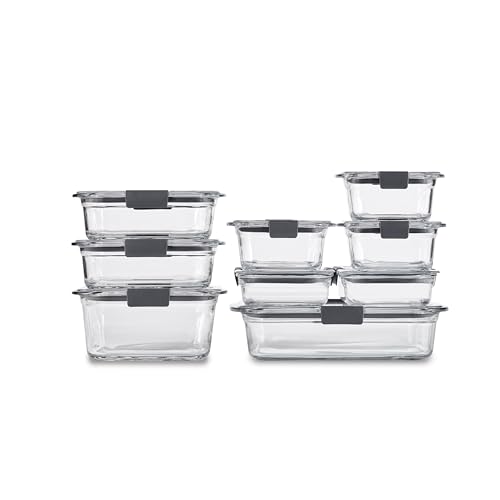
Are Glass Food Storage Containers Worth It: What You Actually Get
Strip away the marketing and a glass set buys you four concrete things. The first is a fleet of small oven dishes that live in your fridge: vessels that bake, store, reheat and serve, collapsing four kitchen jobs into one object. The second is visibility — a fridge whose contents can be read at a glance, every time the door opens, without opening a single lid. The third is hygiene that does not decay: bases that wash back to neutral after any food, in year five as in week one, with no staining and no retained smells. The fourth is time — not dramatic time, but the small daily currency of fewer transfers, fewer dishes, fewer decisions and fewer forgotten leftovers turning into waste.
Put a rough shape on the value without inventing figures. A household that cooks most nights stores food most nights, reheats most days and washes up constantly. Glass touches every one of those events. A feature used three times a day does not need to be miraculous to be worth buying; it needs to be slightly better, hundreds of times a year, for years. That is the arithmetic of this category, and it is why owners’ enthusiasm sounds disproportionate to outsiders. They are not praising a container. They are praising the removal of a daily friction so complete that they only notice it when they cook in someone else’s kitchen.
What you do not get deserves the same clarity, because worth-it disappointments are born from imaginary benefits. You do not get meaningfully longer freshness; a good seal is a good seal in any material. You do not get an unbreakable or carefree container; you get a durable one that asks for thermal manners. You do not get a lighter kitchen; you get a heavier, calmer one. Buy the four real things and the purchase will feel honest every day you use it. Buy the imaginary ones and no set, at any tier, will ever feel worth it.
In this guide
The Real Costs Beyond Money
The first real cost is space, paid in two currencies: cupboard room for rigid, nesting bases and fridge room for a system that rewards being kept visible rather than buried. Small kitchens feel this cost most, and it is why the modular, buy-only-what-you-use approach exists. The second cost is weight, paid by arms and shelves: filled glass is heavy, high storage becomes unfriendly, and some households will rationally cap their largest base size because of it. Neither cost appears on a receipt, and both are charged daily, which is exactly why a worth-it analysis must list them beside the price tier rather than beneath it.
The third cost is attention, in two small denominations. There is the thermal habit — temper before heat, rest before cold, lids never in the oven — which costs seconds and a little mindfulness at the hurried end of cooking. And there is the inspection habit — a glance and a fingertip around rims — which costs half a minute at washing-up and buys the category’s entire safety margin. One safety habit matters more with glass than with any other storage material: respect thermal shock. Glass expands and contracts as its temperature changes, and when one part of a container changes temperature much faster than another part, the stress can crack or even shatter the base. Never move a container straight from the freezer into a hot oven, and never set a hot glass dish down on a cold, wet or stone surface that will chill one patch of its base instantly. Let a frozen container stand at room temperature for a while first, let a hot container cool before it goes into cold water, and place hot glass on a dry trivet, wooden board or folded dry towel. Before every use, run a fingertip slowly around the rim and look at the corners and base in good light: chips, hairline cracks and deep scratches are retirement signals, not battle scars to ignore, because damaged glass fails unpredictably under heat and stacking pressure. Finally, remember that on almost every set in this category the lid is plastic or silicone-trimmed plastic, and lids do not go in the oven, under a broiler or on a hob, whatever the glass base can handle. Remove the lid before reheating, vent it loosely in the microwave if the maker allows microwave lid use at all, and let steam escape away from your hands when you lift any lid from hot food. Households that happily pay attention in these two small coins will find glass cheap to own. Households that know they will not pay it should count that honestly as a cost they are declining, and choose a more forgiving material without shame.
The fourth cost is the lid economy: lids are consumables on a slow schedule, and owning glass means occasionally replacing one, storing them properly in the meantime and accepting that the system’s permanence lives in its bases. There is also a learning cost in the first fortnight — new stacking, new reheating manners, a household taught new rules — after which the system disappears into routine. Total the real costs honestly and they are modest but non-zero, which is precisely the shape of a purchase that is worth it for the right household rather than for everyone.
Who It Pays Off For
The Home-Centred Family Cook
This is the household glass was born for, and its payoff is the fastest and largest in this article. Dinner leftovers store visibly, tomorrow’s reheating happens in the same dish, children and grandparents operate the simple lids without instruction, and the fridge becomes a shared, legible system instead of one cook’s private memory. The costs land lightly here: many hands share the lifting, the food rarely travels, and the thermal rules are taught once to a household that cooks together. If this profile is yours, the worth-it question is barely a question — the remaining work is choosing sizes, which the companion glass food storage containers buying guide handles in full.
The Batch Cooker and Meal Prepper
For the cook who makes Sunday produce the week’s lunches and dinners, glass pays off through rhythm and reheating. Uniform or mixed bases portion a big cook into a calm fridge grid, every portion reheats in its own dish, and nothing carries yesterday’s flavour into today’s lunch. The payoff grows with the seriousness of the routine, which is why this profile should buy for the routine it demonstrably keeps rather than the one it resolves to start. A three-week-old prep habit earns four bases; a year-old habit earns the full uniform system, and the difference between those purchases is the difference between value and clutter.
The Household That Wastes Food It Cannot See
Some households’ storage problem is not storage at all; it is amnesia. Food goes into opaque tubs, disappears from memory, and is rediscovered as waste. For this household, glass’s visibility is not a convenience but a correction, and its payoff is measured in food eaten rather than binned and in duplicate shopping avoided. This profile often reports the most startling value of all, because the set pays for itself out of the grocery budget rather than the kitchenware budget. If your bin regularly contains forgotten leftovers, read the pros ledger in glass food storage containers pros and cons and count how many entries describe your fridge.
Who Should Skip It
Skip the classic glass set if your containers commute. A daily bag, tilted, with liquids, is a life the simple lids were not built for and the weight does not help; you will spend the set’s life managing its two worst traits. Your honest options are glass’s locking travelling form, considered below, or a lighter material for the road with glass kept at home. Skip it, too, if lifting is a genuine constraint in your household and smaller sizes cannot solve it: a storage system that hurts to use will be avoided, and avoided storage is worth nothing at any tier.
Skip it if your storage is overwhelmingly bulk freezing. A chest freezer filled for a season rewards dedicated freezer containers — designed for expansion, density and long cold — in ways everyday glass does not attempt, and glass’s signature benefits barely operate behind frost. Keep glass for the fridge week it masters. Finally, skip it if you know, honestly, that the thermal and inspection habits will not happen in your kitchen. Glass does not punish malice; it punishes hurry and inattention, and a household at war with hurry should choose the material that forgives it. Skipping for any of these reasons is not a failure of taste; it is the worth-it method working correctly.
The Strengths and Trade-Offs of Owning Glass
Strengths of owning
- A daily loop with less washing, less decanting and fewer dishes owned overall.
- Hygiene that does not decay: no stains, no smells, no tired-looking bases, year after year.
- Visibility that converts directly into less wasted food and less duplicate shopping.
Trade-offs of owning
- Weight in the hand and on the shelf, every day, with no habit that removes it.
- A small, permanent tax of attention: tempering before heat and inspecting for chips.
- Lids on a replacement schedule, and a higher starting tier than the plastic being replaced.
Read those two lists as a contract. The strengths are automatic — they arrive with the material and ask nothing. The trade-offs are conditional — most shrink under habits and set design, except the weight, which simply is. A purchase is worth it when the automatic strengths serve your daily life and the conditional trade-offs are ones your household can genuinely meet. That is the whole analysis, and every profile above is just that contract read aloud in a different kitchen’s accent.
Alternatives to Consider

If You Commute: Rubbermaid Brilliance Glass
The commuter’s alternative is not to abandon glass but to buy its travelling form. The Brilliance pattern’s latching, gasketed lids answer the leak problem directly and its clarity presents food beautifully at a desk or a shared table, at a premium tier and with a two-handed ritual as the entry fee. Best for: daily lunch carriers who still want glass’s reheating and hygiene. Not suited for: anyone whose real problem is weight, since travelling glass is still glass. For this buyer, the worth-it answer flips from no to yes on the strength of one changed variable: the seal.

If Space or Budget Is Tight: IKEA 365+ Glass
The modular IKEA system is the alternative for households whose objection is not glass itself but the size and commitment of a boxed set. Buy two or three bases, live with them, expand only where a real gap appears: the worth-it question becomes small, reversible and empirical. Best for: small kitchens, cautious switchers and systematic growers. Not suited for: shoppers who want the decision finished in one purchase. Many households that would answer a full set with a no answer this system with a yes, which is exactly what a good alternative is for.
If Your Life Is Meal Prep: PrepNaturals Glass
For the committed prepper, uniform PrepNaturals-style bases convert the worth-it question into a rhythm question: identical containers, predictable reheating, a fridge grid that makes weekday mornings thoughtless. Best for: established weekly prep routines. Not suited for: varied family leftovers as an only system. Bought at the size your proven routine needs, it is one of the clearest yeses in this cluster; bought aspirationally at full size, it is the clearest warning. The head-to-head evidence across all these alternatives is gathered in glass food storage containers reviews.
How to Get the Most Value If You Buy
Value in glass is extracted through fit and habits, in that order. Fit first: buy the size map of your real week, duplicate the everyday mediums, and let the largest base be only as large as your heaviest real dish and your most comfortable lift allow. Choose the lid for the journey your food takes, give the lids a vertical home on day one, and favour lines whose lids you can replace singly. Each of those decisions is free at purchase time and expensive to reverse, which is why the buying guide in this cluster spends its length on them.
Habits second: temper, rest, lid off, inspect. Four small disciplines that protect the entire investment and take a fortnight to become automatic. Add the fridge habit that unlocks the visibility dividend — oldest food at the front, one calm column, a glance before every shop — and the set begins paying its second, quieter dividend in uneaten-then-eaten food. Households often discover that the value of glass was never mainly in the containers; it was in the small system of behaviours the containers made natural. Buy the behaviours along with the boxes and the worth-it answer compounds. For the daily care that keeps the system new, best glass cleaning towels and best waffle kitchen towels cover the cloth side, and best storage baskets helps the surrounding cupboards keep up.
The Payoff, Season by Season
In the first week, the payoff is novelty with substance: a fridge you can read, leftovers reheated without a transfer, a table served from the dish the food was cooked in. Enjoy it, but do not judge the purchase yet, because week one is the honeymoon every storage system enjoys. The honest judging window opens in the second month, when the routine has frayed at least once — a huge cook, a full dishwasher, a missing lid, a late night — and the system either absorbs the fraying or adds to it. Glass, in a well-fitted household, absorbs it: the stack stays calm, the lids are findable, the food is visible, and the fraying stays where it belongs, in the schedule rather than in the storage.
By the first season’s end, the quieter dividends have usually posted. The bin contains less forgotten food. The weekly shop has become a top-up rather than a restart, because the fridge can be inventoried at a glance before a list is written. A plastic tub or two has been retired without replacement, and nobody has missed it. None of these entries arrives with a fanfare, and together they are the season’s real return — the purchase quietly reorganising behaviour around itself, which is the most durable kind of value a household object can produce.
By the end of the first year, the set has usually sorted its owners into the two honest camps this article has described all along. In fitted households, the set has become infrastructure: unremarked, constantly used, expanded once perhaps, with a lid replaced without resentment somewhere along the way. In misfitted households, it has become a cupboard of good intentions, routed around by the plastic it was meant to replace. The material is identical in both stories. The variable was never the glass; it was the match, which is why this article has spent its length on profiles, journeys and habits rather than on the containers themselves.
Worth It Compared With What? The Doing-Nothing Option
Every worth-it question hides a comparison, and the most common hidden comparison is dishonest: glass against an idealised version of your current plastic. The real doing-nothing option is your actual fleet — the stained tubs, the lids that almost fit, the container that cannot go in the oven, the mystery box at the back of the fridge. Priced honestly, doing nothing costs a slow drip of replacements, a steady trickle of wasted food and a small daily friction at reheating time. It is not free; it is merely unbilled. Glass looks expensive only until the incumbent is charged its true running costs, at which point the comparison becomes the fair one this article has been making all along.
The other honest comparison is with the neighbouring materials, each of which wins somewhere. Plastic wins the bag, the school run and the lending economy. Steel wins the rucksack and the building site. Glass wins the oven, the table and the fridge door’s daily inventory. A household is allowed — encouraged — to hold a portfolio: glass dominant at home, a little plastic and steel at the rough margins. Worth-it purists who demand one material for every journey end up serving one journey badly. The portfolio answer is not a fudge; it is what kitchens that have thought about this actually look like, from the inside of their cupboards.
There is also a comparison with the neighbouring specialism this cluster deliberately keeps separate: dedicated freezer storage. If your overflow problem is a chest freezer rather than a fridge, the money may be worth more spent there first, with glass following when the fridge week is the remaining friction. Households reorganising the whole cold chain often pair that decision with best mini fridges for drinks and overflow, and clear the competing cupboard clutter with best vacuum storage bags and best under-bed storage before judging any set by the space it needs.
How the Answer Changes as Life Changes
A worth-it verdict is a snapshot, and households are films. The couple who found glass a pleasant luxury may find it essential when children arrive and the fridge becomes a shared, high-turnover system that several people must be able to read. The family that thrived on glass may find the answer wobble when a job change puts a daily commute into the week, until a locking pair restores the fit. The keen prepper whose routine lapses is left with a uniform set whose value has quietly expired, while the neighbour who inherits it mid-routine finds it priceless. None of these reversals indicts the original decision; they indict the idea that the decision is permanent.
The practical habit that follows is a light-touch review whenever the kitchen’s life genuinely changes: a move, a new household member, a new job, a new dietary rhythm. Re-run the checklist in this article, notice which answers flipped, and adjust the system at the margin — a travel pair added, a prep stack passed on, a modular expansion where the family has grown. Small corrections keep the original investment earning. Households that never re-ask the question end up defending a verdict their life has already overturned, surrounded by excellent containers for a household that no longer exists.
This is also the kindest frame for a household whose first answer was no. No, for now, is a complete and respectable verdict when the profiles do not fit. If the life changes — the commute ends, the cooking grows, the fridge amnesia worsens — the question can be asked again with new evidence, and glass will be there, materially unchanged, ready to be worth it then. Good worth-it analysis does not pressure; it timestamps. This article’s verdicts should be read with their date attached, and re-read, without embarrassment, whenever the household they describe has become a different household.
The Gift, the Rental and Other Edge Cases
A few edge cases test the verdict in useful ways. As a gift, a modest glass set is one of the safer kitchen presents: universally usable, free of taste risk, and genuinely likely to be in service a decade later — provided the giver resists the giant set and chooses the anchor sizes the recipient’s kitchen can actually house. In a rental with a tiny kitchen and a short tenancy, the modular start wins again, because the system can be small now and travel to the next kitchen intact. In a holiday home or a second kitchen, a duplicate of the anchor pattern earns its place by familiarity alone: the same lids, the same habits, no relearning at the start of every stay.
For the cook who sells or shares food — the baker supplying a school fair, the neighbour famous for a casserole — glass’s presentation quietly becomes part of the product, and its worth includes the impression it makes in other people’s kitchens. That is a legitimate entry in the ledger, not vanity: food given in a dish that honours it is received differently, and the dish coming back is a relationship maintained. Edge cases like these rarely decide a purchase alone, but they break ties honestly, and a worth-it article should admit them to the record rather than pretending value is only ever measured at one’s own table.
Three Households, Three Verdicts, Worked in Full
Household one: two adults, one child, cooking five nights a week, leftovers eaten at home, a fridge that regularly hides food. Their checklist scores six yeses without effort — reheating is daily, amnesia is documented, lifting is shared, travel is rare, habits are teachable, shelf exists. They buy a mixed anchor set at a mid tier. Within a season the set has reorganised their fridge, cut their forgotten-food waste visibly and retired most of their plastic without a ceremony. Verdict: unambiguously worth it, and the only surprise is that they describe the purchase, a year later, as having been about the fridge rather than about containers at all.
Household two: one adult, a cycle commute, lunches carried daily, a small studio kitchen. The checklist splits: reheating and visibility score yes; travel and space score a hard no for the classic format. Following this article’s logic, they do not buy the anchor set. They buy two locking glass containers for the commute and one modular base for home baking, and keep a light steel box for the roughest journeys. Total glass owned: three pieces. Verdict: worth it in miniature, precisely because the purchase was shaped by the noes instead of despite them. This household is the proof that a worth-it article’s job is sometimes to sell less glass, better aimed.
Household three: a keen bulk cook filling a chest freezer monthly, reheating family portions at weekends, hands that find a full casserole a real negotiation. Their checklist scores lowest of the three: the freezer dominates, the lifting cost is daily, the fridge week is a minor part of their storage life. They invest first in dedicated freezer storage, keep two medium glass bases for the weekend’s cook-serve-store dishes where glass’s loop still shines at the table, and decline the full set without a backward glance. Verdict: not worth it as a system, worth it as a cameo — and a household entirely at peace with the answer, because it was reached by evidence about their own kitchen rather than by anyone’s enthusiasm, including this article’s.
Lay the three verdicts side by side and the article’s thesis stands up on its own. The same material, at the same tiers, is essential, miniature and marginal in three real kitchens, and in each case the household that reasoned from its own week is satisfied. Worth-it was never a property of the glass. It is a property of the match, and matches can be assessed before money moves — which is, in the end, the only reason articles like this one exist.
What Skeptics Get Right, and What Converts Them
Skeptics about glass usually raise three objections, and a worth-it article should grant each its full force before answering. First: it is just a box, and boxes should be cheap. True, and if a household’s storage really is just boxing — food in, food out, nothing reheated, nothing presented — the objection stands and plastic wins. The answer is not that the box is magical but that for reheating households the object is not just a box; it is cookware, serveware and storage in one, and it should be priced against all three. Second: it breaks. True, occasionally, and the inspection habit exists precisely because of it; the counterweight is that the plastic alternative also fails, constantly and quietly, in stains, warps and lost lids. Third: the lids will need replacing, so the permanence is a story. Half true — and this article has told that half itself, in the costs section, because a worth-it case that hides its recurring costs deserves the skepticism it gets.
What converts skeptics, in practice, is rarely argument. It is a month in a fitted kitchen: a friend’s fridge that reads like a menu, a leftover reheated and served in its own dish at someone else’s table, a borrowed base that washes clean of a fierce curry as if nothing happened. This article cannot manufacture that month for you, which is why its most repeated advice is the small start — a few anchor bases, honestly lived with — as the cheapest available substitute for conversion by experience. Arguments end debates; evidence ends doubts, and a three-piece experiment produces evidence about the only kitchen whose verdict matters.
If, after all of this, your answer remains no, let it stand with confidence. A well-reasoned no protects money, shelf and temper better than a hesitant yes, and the households in this article who skipped glass for cause are presented as successes of the method, not failures of persuasion. The worth-it question has done its job the moment it is answered from your own week’s evidence — whichever way the answer falls, and however often life asks you to revisit it.
One more form of value deserves a paragraph before the checklist, because households mention it constantly and analysts rarely count it: the pleasure of a system that looks and feels settled. A row of clear, matching bases in a fridge and a nested, lidded order in the cupboard produce a small, recurring satisfaction that is not frivolous. Kitchens are workplaces we live in, and tools that feel resolved make the work feel lighter. Economists may decline to price that satisfaction, but owners pay for it knowingly in every category from knives to cookware, and there is no reason storage should be the one category forbidden from counting it. If the sight of a calm fridge genuinely pleases you, that pleasure is a real dividend — modest, daily and honestly yours to include in the weighing.
Balance that paragraph with its necessary twin: pleasure is a dividend, not a foundation. A set bought mainly for the photograph of a tidy fridge, in sizes the household does not use, will stop pleasing the moment the routine exposes the mismatch, because unused beauty in a kitchen curdles into clutter faster than anywhere else in the house. Let pleasure tip a close decision between two well-fitted options; never let it substitute for fit. The households in this article who stayed pleased are the ones whose sets are used to exhaustion daily — beauty in service, which is the only kind a kitchen can sustain.
A closing reflection on the question itself. Worth-it questions are the most honest questions in buying, because they admit that value lives in use rather than in objects. Nobody asks whether a container is good in the abstract for long; they ask whether it will earn its shelf in their kitchen, against their habits, inside their week. Glass food storage containers answer that question with an unusually legible offer: daily visibility, a complete reheating loop, hygiene that does not decay, in exchange for weight, care and a lid schedule. Legible offers make for confident decisions, in either direction. Whatever you decide after this article, you will know exactly what you accepted and exactly what you declined — and a decision that clear is, by itself, already most of the way to being worth it.
And if you are the reader who skipped to the end for a verdict to borrow, borrow this one and then test it against your own checklist before spending anything. For a household that cooks, stores, reheats and serves at home, glass food storage containers are worth it — not as a luxury, not as a statement, but as a durable piece of kitchen infrastructure that removes a small friction hundreds of times a year and quietly returns food, time and calm in exchange. For a household whose food travels, freezes in bulk or must be lifted lightly, they are not, and the same money spent on the right alternative will feel worth it instead. The verdict was always going to be about the match. Make the match honestly, and the containers will do the rest.
One practical promise to end on, for buyers who have decided yes and feel the familiar worry about choosing wrong within the category. The differences between the reputable sets in this cluster are smaller than the difference between a fitted size map and an unfitted one. Choose the map first, the lid for your journey second and the brand third, keep the two habits, and there is very little left to get wrong. Perfection is not available in storage, and it is not needed: a good set, honestly matched, disappears into the cooking within a month, and a purchase that disappears into daily use has answered the worth-it question in the only language that finally counts.
Finally, remember that worth-it is allowed to be revisited cheaply. A household that starts with three bases has not failed to commit; it has bought information at the lowest available price, and the information — how the weight feels, how the lids behave, how the fridge changes — is exactly what a confident full decision requires. Treat the small start as research you get to eat from, expand only on evidence, and the question in this article’s title will answer itself in your own kitchen’s handwriting, which no reviewer, however thorough, can forge on your behalf.
That is the spirit in which to use the checklist below: not as a gate that keeps you out of a purchase, but as a mirror that shows you your own kitchen clearly enough to buy once, buy fittingly, and then get on with the cooking the containers were always meant to serve.
Use it once now, and once again whenever the household changes shape.
The Decision Checklist
Answer honestly, yes or no. One: do I reheat leftovers at home at least a few times a week? Two: does food regularly get forgotten in my fridge? Three: can everyone who will lift a full large base do so comfortably? Four: does my food mostly stay home rather than commute in a bag? Five: will my household actually temper before heating and retire chipped pieces? Six: do I have a shelf and a lid home the set can genuinely occupy? Seven: am I buying for the routine I have, not the routine I am resolving to start?
Score it plainly. Five or more yeses: glass is worth it for you, and the only remaining question is which set and sizes. Three or four: worth it in a targeted form — modular, locking or small — chosen against your specific noes. Two or fewer: skip it without regret and spend the money where your kitchen’s real friction lives. A checklist cannot cook, but it can prevent the two classic errors of this category: buying a daily pleasure you will never use, and refusing one you would have used every day. The single-format experience behind these questions is documented in glass food storage containers review.
The Break-Even Question: When a Glass food storage containers Earns Its Space, and When It Honestly Does Not
Worth it is a personal verdict dressed as a product question. The same glass food storage containers can be money well spent for one household and an expensive ornament for another, and the difference is almost never quality — it is frequency of use, fit with the space, and what it replaces. This section gives you a break-even way of thinking about the glass food storage containers: a simple accounting of cost per use, space per benefit, and effort per result, plus the honest signs that your household should skip it, borrow it, or buy the simpler version instead. Run your own numbers through it before you decide.
The Arithmetic That Actually Matters
Start with cost per use. Take the full cost of owning the glass food storage containers — purchase, any consumables, any accessories you genuinely need, and the space it occupies valued honestly — and divide it by a realistic count of uses in its first two years. Realistic is the key word: count the uses your calendar supports, not the uses your intentions promise in January. Then compare that figure with the alternatives you would actually use — hiring, borrowing, a service, or the simpler item you already own. A glass food storage containers that wins that comparison on your real schedule is worth it almost regardless of its badge; one that only wins on an imagined schedule is not.
The Signs on Each Side of the Line
On the worth-it side: you already do the task or feel the gap weekly; you have measured the space and it fits with room to live around; someone besides the buyer will use it too; and you can name what it replaces or retires. On the skip-it side: the purchase is motivated by a rare event, a visitor, or a version of your routine you have never actually kept; the space only works if something else is moved into storage; or the honest plan is to change your habits first and buy later. Neither list is a judgement — households change, and a glass food storage containers that fails the test this year may pass it easily after a move, a new job or a new family member.
Before you buy the glass food storage containers, answer these five questions out loud or on paper:
- How many times did I genuinely need this in the last three months — not wished for it, needed it?
- What exactly does it replace, retire or stop me paying for, starting in its first month?
- Where does it live when idle, measured and checked, and what currently in that spot gets moved?
- Who else in the household will use it without being asked, and who will maintain it?
- If it stopped working in a year, would I replace it immediately, manage without, or feel quietly relieved?
A tape measure, a spirit level and ten patient minutes prevent more glass food storage containers regrets than any amount of comparison shopping after the fact. When a listing is vague about a dimension, material or included part that matters to you, treat the vagueness itself as information and look for a clearer seller. Photograph your room at the time of day you will use the glass food storage containers most, and compare candidates against that light rather than against bright midday photographs. Small households should weight compactness and easy storage more heavily, while large households should weight durability and simple operation, because the failure modes differ. If the glass food storage containers will serve children or older relatives, test the key actions with the weakest grip and the shortest reach in the house in mind. Leave a little capacity unused — in size, storage or power — because a glass food storage containers run permanently at its limit ages faster and annoys sooner than one with headroom. Notice which parts are replaceable and which are not; a glass food storage containers whose wear parts can be swapped cheaply often outlasts a sealed design twice its price in spirit, if not in years. Consider the glass food storage containers from the perspective of the person who cleans around it, because designs that trap dust, block access or demand special products quietly tax every week of ownership. Think about noise, light and heat as neighbours of the glass food storage containers, not afterthoughts, since a choice that performs well but disturbs the room around it rarely stays popular for long.
The last question is the sharpest: immediate replacement means the glass food storage containers has become infrastructure in your home, and purchases like that are almost always worth it. Quiet relief means the opposite, however good the reviews were. Decide with your own arithmetic and your own answers, and whichever way the verdict falls you will have bought — or saved — with your eyes open, which is the only definition of value that survives contact with real life.
Frequently Asked Questions
Are glass food storage containers worth the higher upfront cost?
For home-centred households, yes, because the cost is paid once and the return is daily and long-lived: bases that serve for years, reheating without extra dishes, and food wasted less often because it stays visible. The honest comparison is not glass against one plastic set but glass against the slow, repeated replacement of a plastic fleet over the same years. Households that travel with their containers or freeze in bulk should run the same comparison for their own pattern before concluding, because for them the return is smaller and the answer can legitimately differ.
How long does it take for a glass set to pay off?
In convenience, immediately: the first reheated-in-the-dish leftover is the product working as promised. In waste terms, within the first months for households that were forgetting food, because visible leftovers get eaten and shopping gets sharper quickly. In pure replacement terms, over the years a plastic fleet would have been renewed. There is no single payback date because the dividends arrive in different currencies, but households that fit the profiles in this article rarely describe the set as still needing to justify itself after the first season.
Is glass worth it for meal prep specifically?
Yes, when the prep routine is real and recurring, because uniform glass bases portion cleanly, stack into a calm grid, reheat predictably and never carry one day’s flavours into the next. The value scales with the routine’s honesty: a proven weekly prep earns a full uniform system, while a new resolution earns a few bases and a month of evidence. Meal prep is also where the weight cost is most visible, since a bag of glass lunches is a serious carry, so commuters should weigh the travelling form or a split system.
Are glass containers worth it for small kitchens?
Often yes, and sometimes more than for large kitchens, because each base replaces a baking dish, a storage tub and a serving bowl at once. The condition is discipline in size: a small, modular collection matched to real needs, rather than a sprawling boxed set that consumes the cupboard it was meant to organise. Small kitchens should buy slowly, duplicate nothing without evidence, and let dual use do the saving. Bought that way, glass returns shelf space instead of taking it.
What if I break a piece in the first month?
Treat it as information, not as a verdict on the material. Ask where it happened — stacking against heavy pans, a hurried sink, a chipped base kept in service — and fix the habit or the storage that produced it. A well-chosen line lets you replace the single base, and the rest of the set is unaffected. Households that abandon glass after one early break usually discover the same handling pattern waiting for whatever material they buy next. One accident is tuition; the lesson is cheap if you learn it once.
Can I start small instead of buying a full set?
Yes, and for uncertain households it is the recommended route. Buy the anchor sizes — a large rectangle, a couple of mediums, a small round or two — and run them beside your best existing containers for a month of real life. Your hands, your fridge and your washing-up will deliver a verdict no article can, and expansion afterwards is targeted rather than guessed. Starting small converts the worth-it question from a prediction into an experiment, and experiments are how good kitchens are actually built.


