Disclosure: As an Amazon Associate, dailyhomedecorating.com earns from qualifying purchases. Links on this page are affiliate links; they cost you nothing extra. Prices and availability change often, so check the current Amazon listing before you buy.
This glass meal prep containers buying guide is for the moment before the purchase, when the shelf of near-identical clear boxes all claim to be leakproof, oven-safe and life-changing. They are not identical, and the differences that matter are not the ones on the front of the box. This guide works through what a meal prep set actually does, the main types on the shelf, the picks worth shortlisting by tier, and the questions — capacity, lids, footprint, fleet size — that decide whether a set becomes a five-year routine or a cupboard of regrets. Everything is positioned qualitatively, because what a set costs matters less than whether its shape fits your fridge, your bag and your wash cycle.
Key Takeaways
- Buy a system, not a set: one footprint, interchangeable lids, spare lids available.
- Divided bases for composed plates; deep single bases for soups, stews and curries.
- Locking gasket lids for commuting; simple snap lids are fine for home-only prep.
- Size the fleet from your wash cycle — enough mains for the days between washes, plus spares.
- Every glass base needs gradual temperature changes and a chip check before reheating.
What Glass Meal Prep Containers Do and the Main Types
A meal prep container has one job: hold a planned portion from the moment of cooking to the moment of eating, through fridge, journey and reheat, without leaking, staining or confusing anyone about what is inside. That sounds like storage, and it is — but portioned, uniform and repeated, which is what separates this category from general glass food storage containers across the aisle. Those store whatever the week produced. These store decisions: five lunches, portioned on Sunday, eaten on schedule. The types below divide by layout and lid, and choosing between them is choosing which lunches your week will contain.
Divided Bases for Composed Plates
Compartments are not a gimmick; they are texture management. A divided glass base keeps a sauce pooled beside the grain it will eventually meet, keeps roasted vegetables away from the moisture of a dressed salad, and keeps anything crisp out of the steam cloud of anything hot. Reheating respects the divisions too — a cook can lift out the component that should stay cool, warm the rest, and recombine a plate that still resembles the meal that was planned. The cost is real: dividers eat a little capacity, corners hold sauce through the wash, and a divided base is a worse soup vessel than a plain one. Preppers who eat composed plates swear by them. Preppers who eat stews should ignore them entirely and buy deep single compartments.
Single-Compartment Bases for Wet Dishes
Soups, stews, curries, braises and anything that reheats as one dish belong in deep single bases, where a spoon can stir, the microwave can work evenly, and washing is one smooth surface instead of a landscape of corners. The mistake is forcing a fleet to be all one type: divided-only households end up serving soup from a divided tray like a school canteen, and single-only households watch their salads drown in dressing by Tuesday. A working fleet mixes both, weighted honestly toward the meals that dominate your real week — which, for most preppers, means more divided plates on workdays and one or two deep singles permanently assigned to the soup rotation.
Locking Gasket Lids Versus Simple Snap Lids
Lid architecture is the second decision and the one that decides your commute. Locking lids with silicone gaskets are the travellers: they seal against a clean rim, tolerate a bag carried flat, and shrug off saucy food. Simple snap lids are the homebodies: faster, cheaper in tier, perfectly good in a fridge, and not to be trusted tilted with soup. Between them sit vented designs made to loosen for microwave reheating. Match the lid to the journey honestly — a home worker needs no gasket heroics, a train commuter needs nothing less — and remember that lids are replaceable wear parts while bases are the long-term fleet, so a system with available spare lids is worth real preference.
In this guide
Glass Meal Prep Containers Buying Guide: Top Picks at a Glance
| Criteria | What it means | Why preppers care |
|---|---|---|
| Best overall system | Divided bases, locking gaskets, extendable range | The default weekly routine |
| Best for saucy commutes | Premium gasketed seal, polished lids | Food that must not escape into a bag |
| Best modular build | Bases and lids sold separately, one footprint | Growing or repairing a fleet piece by piece |
| Best value fleet | Many portioned bases at an entry-to-mid tier | First routines and solo preppers |
| Best for home workers | Simple lids, fridge-first design | No commute to survive |
Best Overall Direction: PrepNaturals Glass Meal Prep Containers
PrepNaturals built its name squarely on this job: divided glass bases made for portioned weekly prep rather than general storage. The appeal is the layout. Divided bases keep a protein, a grain and a vegetable in their own zones through the fridge and the reheat, so a sauce stays beside the rice instead of soaking into it, and textures arrive at lunch closer to how they left the pan. The lids follow the locking, gasket-sealed pattern this end of the market expects, which suits a container that travels flat in a work bag. Treat it as the keen prepper’s format: excellent when your week genuinely runs on planned portions, more container than a casual leftovers household needs, and happiest in a kitchen where the same sizes repeat in tidy stacks.

Best for Saucy Commutes: Rubbermaid Brilliance Glass
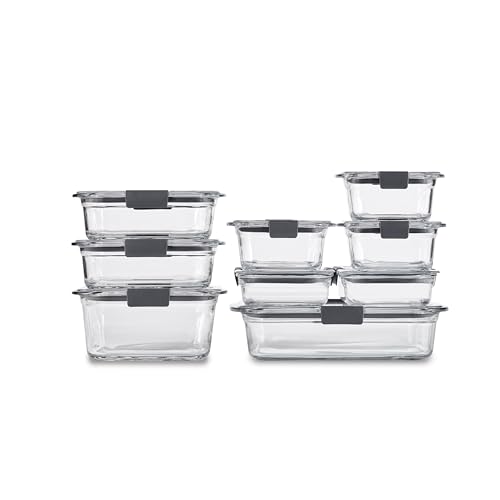
Brilliance Glass earns its following on one trait: trust. The latching, gasket-sealed lids are the ones preppers reach for when the lunch is a curry, a dressed salad or anything with ambitions to escape, and the glass bases are clear enough to make portion-checking a glance rather than an excavation. In a weekly routine the system stacks tightly, reheats kindly and washes up without holding smells from last week’s garlic. The costs are tier and lid complexity — there is more to rinse, more to dry, and the full set is an investment rather than an impulse. Households burned by one leaked bag too many tend to decide that trade in about four seconds, and they are not wrong.

Best Modular Build: IKEA 365+ Glass Containers
The IKEA 365+ glass line is the modular thinker’s meal prep option. Rather than one fixed set, it is a family of bases and lids bought piece by piece, so a prepper can standardise on one or two footprints, replace a single lid years later, and add capacity only where the routine actually needs it. The glass is honest, oven-friendly utility glass and the snap lids are simple rather than gasket-luxurious, which makes the system brilliant for fridge-based prep, home workers and anyone whose lunch travels upright and gently. Sauce-heavy commuters should note the simpler seal and pack accordingly. Judged as an ecosystem rather than a box, 365+ is one of the smartest ways to build a portioning kit slowly, cheaply in tier terms, and without orphan sizes.
Best Value Fleet: KOMUEE Glass Meal Prep Containers
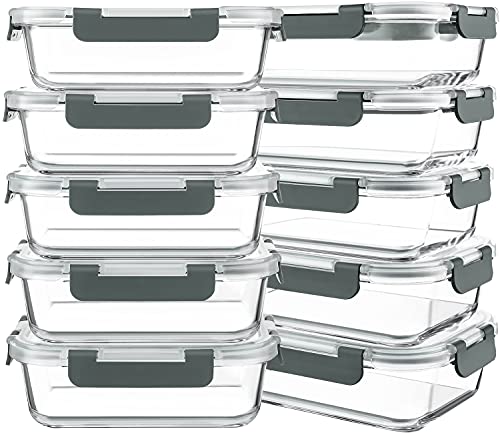
KOMUEE sets are built for the value-conscious prepper who wants the divided-container format without ceremony: glass bases in portioned layouts, locking lids with gaskets, and set compositions aimed at covering a working week for one person in a single purchase. The glass is clear and kitchen-honest, the compartments handle the standard protein, staple and vegetable arrangement, and the lids seal with the firm click this style is known for. As with most value-tier glass, the ownership contract is care — inspect edges, avoid thermal shocks, treat lids as the wear part — and in exchange the cost per prepped lunch falls fast. For a student, a first job or a first serious prep routine, KOMUEE is a sensible, unpretentious place to start.
How Much Capacity Do You Need?
Let the meal decide rather than a chart. A composed plate of protein, grain and vegetables wants a divided base that holds a satisfying portion without cramming, because crushed food reheats unevenly and eats sadly. Soups and stews want a deeper single compartment with headroom for stirring. If you consistently scrape the base clean and stay hungry, size up; if food regularly comes home uneaten, size down and add a small snack box instead. Buying one or two test sizes before committing to a full fleet is the cheapest research in this whole category.
Set composition deserves a sceptical read. A big headline count often includes small snack pots and lids counted as pieces, so translate every set into the number of full lunch-sized bases it actually gives you, in the layouts you will use. A solo prepper needs mains first and snack pots rarely; a family needs multiples of the same main size above variety. Divided and single bases should both appear in a serious fleet, weighted toward the meals you genuinely eat. And prefer systems you can extend later — a footprint still sold next year is worth more than a discontinued bargain, because meal prep fleets grow by accretion, one matching pair at a time.
Which Lid Type Fits Your Journey?
Leak discipline is mostly rim discipline. A gasket seals against the rim of the base, so a rim carrying a smear of sauce, a grain of rice or a film of oil is a leak waiting for a bump. Wipe the rim, close the lid on a cool or vented box rather than a steaming one, press or clip in the maker’s sequence, and carry the box flat with the lid up. Do that and even dressed, saucy preps travel quietly. Skip it and the finest locking lid in the world will weep into your bag and take the blame for a process failure. New sets deserve a sink test with water before their first curry — two minutes that tell you exactly how much trust your particular lids have earned.
Weight is the trade glass never hides. A week of lunches carried daily is a real load, and preppers solve it logistically rather than heroically: a batch delivered to the office fridge on Monday by car, a single box a day on the train, a spare set that lives at work and rotates home for washing. Once the logistics settle, the weight stops being a daily decision and becomes invisible infrastructure. What remains is the upside that caused the switch — food that reheats properly at work, in the same clear box it travelled in, with no stained plastic tang in the background of every bite.
How Many Containers Make a Working Fleet?
Work backwards from your routine. A solo weekday prepper who cooks once and washes once usually needs enough mains for the days between washes, plus a couple of spares for breakfasts, snacks or a partner’s portion. Couples and families should think in multiples of a shared menu rather than doubling everything blindly. Standardising on one or two footprints matters more than raw count, because matching bases stack, matching lids interchange, and a uniform fleet is calmer to store, wash and replace than a drawer of beautiful one-offs.
People also under-buy lids and over-buy bases, then wonder why the fleet feels chaotic by month two. The wash cycle, not the fridge, sets the working size of a prep system: enough lids and bases to cover the days between washes, plus spares for the box that is always somehow still in the work bag. And preppers routinely forget the destination end of the journey — the office microwave’s size, the desk drawer where a clean fork lives, the bag’s flat pocket that a rectangular base fits and a round one fights. Meal prep is a chain, and the container is only its most visible link.
What Glass and Safety Standards Should You Check?
Glass quality is judged by edges and honesty rather than slogans. Look for smooth, well-finished rims with no gritty or sharp patches, bases that sit flat without rocking, and lids whose clips close with even pressure on all sides. Makers differ in the glass they use and the temperatures they certify, so read the maker’s own directions for oven, freezer and microwave use and treat those, not habit or hope, as the specification. A base that arrives with any chip or crack goes back immediately, unheated and unused — that is not fussiness, it is the one inspection that genuinely matters with this material.
Thermal shock is the one genuine hazard of glass, and it is entirely manageable with habits rather than fear. Glass cracks when one part of it expands or contracts much faster than another — a freezer-cold base meeting a hot oven, a hot base set onto a wet, cold counter, cold water hitting a dish fresh from reheating. The defences are boring and total: thaw before reheating, rest hot bases on dry cloth or wood, let hot glass cool before washing, and keep glass away from broilers and direct flame. Every reputable maker prints guidance along these lines, and a base that is treated this way can serve for years. Treat the rules as part of the product, like a lid, and glass stops being fragile and starts being merely particular.
One rule outranks every other in this category: the lid is a fridge and transport device, never a cooking part. Plastic and silicone lids stay off in the oven without exception, and in the microwave they come off or vent only in the exact way the maker directs — some designs are made to loosen and shield, others must be removed outright, and guessing wrong warps lids and pressurises boxes. Build the habit at the prep session itself: lids live in one drawer, bases do the cooking and reheating, and the two meet only when food is cool and travelling or storing. Households that internalise that single separation get years from both halves of the system; households that bake a lid once usually understand immediately why the rule exists.
How to Prioritise by Use Case
The office prepper is the natural glass citizen: a Sunday session, five clear boxes in the fridge, one travelling flat each morning to a desk, a microwave and a proper lunch hour. For this profile the divided base and the gasketed lid were basically invented, and the fleet can be small, uniform and excellent. The home worker is the second natural fit, with an even easier life — no commute to survive, reheating in the same base at a real table, and simple snap lids suddenly entirely sufficient. For both profiles, glass turns lunch from a daily negotiation into a decision made once, on Sunday, in bulk.
The batch-cooking parent runs the largest fleet and gets the largest return: family-sized cooking portioned into individual glass bases means teenagers reheat their own dinners, partners working late find a labelled-by-visibility plate waiting, and the fridge stops containing anonymous foil parcels. Weight and breakage risks rise with young children, so many families run glass for the adults and the fridge shelf, plastic for the school bags — a split that is not inconsistency but good engineering. The student or first-job prepper is the fourth profile: budget tight, routine new, and a value-tier divided set that turns cheap batch cooking into a week of lunches is one of the highest-return purchases in a first kitchen.
The Shortlist, Reviewed in Miniature

The Sensible Starter: Bayco Glass Meal Prep Containers
Bayco sets sit at the practical, value-leaning end of the glass meal prep shelf, and their pitch is simple: proper glass bases with divided and single layouts, lids that lock down for the commute, and a set sized for someone building a weekly routine for one or two people. The glass feels reassuringly plain in the best way — clear, smooth, easy to wash, indifferent to tomato sauces and turmeric — and the divided options cover the classic protein, grain and greens plate without improvisation. Bayco is rarely the most refined option on the shelf, and its lids reward a firm, deliberate press rather than a casual one, but as a first full prep system bought at a sensible tier it covers the fundamentals honestly.

The Polished Seal: OXO Smart Seal Glass Containers
OXO’s Smart Seal glass line brings the brand’s grip-and-seal discipline to meal prep: locking lids with a proper gasket, bases shaped for neat stacking, and a general feeling that every edge was considered twice. For portioned lunches the appeal is confidence — a sealed box of dressed grains or a saucy stew rides to work without perfuming the bag — and the glass reheats and serves as well as anything in this guide. The set leans premium in tier and the lids are a little more deliberate to close, which some households love and others find fussy at the end of a long prep session. If your prep is generous, saucy and mobile, Smart Seal is the polished end of the category and behaves like it.
Whichever direction the shortlist pulls you, run it against the head-to-head in glass meal prep containers versus plastic meal prep containers before spending, and use the step-by-step choice walkthrough to size the final fleet. The deep single-format test lives in our glass meal prep containers review.
First Setup and Care Essentials
Glass is the easiest material in the kitchen to keep genuinely clean, and the washing routine for a prep fleet is mostly about the lids. Bases go through the dishwasher or the sink without holding colour or smell, and a baked-on edge softens in a soak rather than needing a scour. Divided bases ask for one extra pass along the divider walls where sauces dry into the corners. Lids and gaskets want the attention: prompt washing, a proper dry, and no sealing away while damp. Build the rhythm into the week — tonight’s box washed tonight, not discovered on Friday — and a glass fleet stays as clear in year three as it was in week one, which is more than any plastic collection has ever claimed.
Every glass prepper should understand the freezer-to-oven rule before their first cracked base teaches it expensively. Frozen food goes into the fridge to thaw first — overnight for a dense portion — and only then into an oven or microwave for reheating. A base that has been at room temperature briefly, filled with cool rather than icy food, placed into an oven that is not at maximum blast, lives a long life. The reverse journey matters too: a hot base goes onto a dry board, cools at its own pace, and only then meets the fridge or the sink. These pauses feel fussy for exactly one week. After that they are simply how glass is handled, the way cast iron people dry their pans without thinking about it.
Mistakes to Avoid
The classic beginner’s error is sealing hot food. Steam trapped under a lid condenses, sogs anything crisp, warms the fridge shelf, and slowly warps the lid and tires the gasket. Portion into the bases, let them stand until the steam stops, then lid and refrigerate. The second error is the temperature jump — freezer to hot oven, hot base to cold wet counter — which is how sound glass cracks. Third is overfilling a travel box to the brim, leaving the gasket to seal against food instead of glass. Fourth is treating lids as cooking equipment. Every one of these mistakes is a habit, not a purchase, which is the good news: they are all free to fix tonight.
Another common failure is buying variety instead of a system: three brands, four footprints, lids that fit nothing else, a cupboard that becomes a matching puzzle with missing pieces. Meal prep rewards boring uniformity almost embarrassingly well. A subtler mistake is portioning by optimism — boxes filled for the appetite you wish you had at lunch, food returning home uneaten until the routine is abandoned as not for me. Portion for the real eater, add a snack box if afternoons run long, and let the system fit the life rather than the aspiration. Finally, do not skip the ten-second chip check before reheating. It is the cheapest safety habit in the kitchen and the one most often skipped precisely because it is cheap.
More Practical Notes on Living With Glass Meal Prep Containers
The workflow difference glass makes is easiest to feel at the end of a prep session, when tired cooks do sloppy work. Portioning into clear bases, you see the week equalise in real time — this box short on vegetables, that one heavy on rice — and you fix it in seconds. Plastic hides those mistakes until Wednesday. Glass also imposes one useful discipline: because you should let food cool before sealing and refrigerating, the boxes sit in a cooling row first, which is exactly when you notice the portion that needs eating tonight instead. Meal prep fails through waste and boredom far more often than through cooking, and a transparent, orderly system quietly defends against both failure modes at once.
It is worth drawing the line between meal prep glass and freezer storage containers clearly, because using each for the other’s job breeds disappointment. Freezer containers are built for the long, cold archive: flexible walls that tolerate expansion, seals designed for months, shapes that stack in a chest freezer. Meal prep glass is built for the weekly cycle — portion, refrigerate, transport, reheat, wash, repeat — and its talents are clarity, reheating and table service. It can freeze a portion happily for a short spell, cooled first, with headroom left for expansion and a fridge thaw before reheating. Ask it to be a three-month freezer archive and you are using a bicycle as a lorry: possible, briefly, and not what it was designed for.
The hygiene argument for glass is not marketing; it is surface physics you can feel with a fingertip. A smooth glass wall gives oils and pigments almost nothing to grip, so the turmeric test that permanently tattoos plastic simply rinses away, and the garlic test that haunts plastic lids never reaches the base at all. For meal prep this matters beyond aesthetics: a prepper cycles the same boxes through strongly flavoured food weekly, and a container that carries no memory of last week’s curry makes this week’s salad taste like salad. Keep the gaskets honest with real drying and the whole system stays flavour-neutral, which is a phrase no one has ever truthfully applied to an old plastic box.
Transport is where meal prep containers earn or lose their reputation, and glass asks for a slightly more adult commute. Carried flat, upright, in a bag that is not being swung around a bicycle courier’s back, a gasketed glass box is a model citizen — no leaks, no smells escaping, no sauce tattoo on the work shirt. It is also heavier than plastic and honest about it, and it will not survive the drop onto platform concrete that a plastic box shrugs off. The match to make is between container and journey: train, car and desk-to-desk office moves suit glass beautifully, while cycling in traffic, hiking and small children with throwing arms remain plastic’s home turf. Most converts keep both and stop seeing that as a compromise at all.
Think of a divided base as three small promises kept separately. The protein stays in its juices instead of leaking them into the rice. The grain stays fluffy instead of steaming itself soft against hot vegetables. The fresh element — slaw, salad, pickles — stays fresh because it never shared a sealed, warm space with cooked food. None of this requires culinary talent; it requires geometry. The limits deserve honesty too: dividers are fixed, so a meal that wants a different ratio has to negotiate with the moulding, and very saucy dishes will migrate over a divider on a bumpy journey whatever you do. Choose divided bases for structured plates, and keep plain bases for everything that pours.
Visibility sounds like a small virtue until you count what it prevents. Food waste in most kitchens is not spoilage by surprise; it is forgetting — the container pushed to the back, the leftovers nobody could identify without opening. Glass ends the identification problem completely. A prepper can stand at the open fridge and plan the day by looking, assign the chicken to today and the lentils to tomorrow, and spot the empty slot that means Thursday needs a plan B. Households that track such things consistently find the clear fleet pays for itself in uneaten-then-binned food alone, long before anyone discusses the pleasures of reheating in glass.
The value case for glass meal prep is built from repetition. A plastic fleet is cheap to buy and quietly expensive to own: stained, warped and smell-haunted boxes get replaced in rotation, forever. A glass fleet costs more in tier at the start and then mostly stops costing — bases serve for years, and the ongoing spend shrinks to an occasional replacement lid. Against that, count what the system replaces outside the kitchen cupboard: the weekday lunches not bought at a counter, the leftovers actually eaten because they were visible, the takeaway not ordered because Thursday’s lunch was already made and looked good. Meal prep economics were always mostly about the food, and glass is the container material that makes the food habit stick.
Another common failure is buying variety instead of a system: three brands, four footprints, lids that fit nothing else, a cupboard that becomes a matching puzzle with missing pieces. Meal prep rewards boring uniformity almost embarrassingly well. A subtler mistake is portioning by optimism — boxes filled for the appetite you wish you had at lunch, food returning home uneaten until the routine is abandoned as not for me. Portion for the real eater, add a snack box if afternoons run long, and let the system fit the life rather than the aspiration. Finally, do not skip the ten-second chip check before reheating. It is the cheapest safety habit in the kitchen and the one most often skipped precisely because it is cheap.
Marinating is a side talent of glass bases that preppers underuse. A portion of chicken or tofu can sit in its marinade inside the very base it will later be cooked and stored in, because glass neither absorbs the marinade’s flavours nor surrenders any of its own, and the clear wall shows the coverage honestly. The same neutrality makes glass the right home for pickling quick vegetables, storing cut citrus, or holding a strongly spiced curry overnight without the container joining the recipe. Plastic absorbs; glass abstains. Across a year of strongly flavoured batch cooking, that abstinence is a large part of why glass fleets still look and smell new while plastic collections quietly retire themselves piece by piece.
Grip and lids matter more than brochures admit, especially for households cooking for older relatives or anyone whose hands are not at full strength. Locking clips vary widely in the force they demand, and a lid that a strong prepper finds reassuringly firm can be a daily frustration for arthritic fingers. The honest advice is tactile: where possible, handle the lid style before committing a fleet to it, favour wide tabs and simple snap designs for the boxes destined for weaker hands, and reserve the firmest gaskets for the commuter boxes those same hands will never open. A container that cannot be opened is a container that will not be used, whatever its seal can do.
Dishwasher strategy sounds trivial until a fleet is large. Bases stack into racks happily and emerge spotless, but lids and gaskets reward a top-rack, uncrowded wash and a complete air-dry before storage — heat and compression are their enemies, and a gasket dried bent will seal bent. Many households hand-wash lids while the bases ride the machine, a thirty-second compromise that noticeably extends lid life. Whichever rhythm you choose, the rule that outranks the rest is dryness before sealing: a fleet put away fully dry stays fresh-smelling indefinitely, while a fleet sealed damp once can carry the memory for weeks, in the gaskets, where smells always live.
Cupboard storage for the empty fleet deserves one deliberate decision. Nesting bases inside each other saves space but risks rim chips if glass knocks glass carelessly, so nest with a cloth or paper layer between bases, or stack flat with lids filed separately in a drawer or a vertical rack. Lids stored clicked onto bases keep gaskets compressed and age them early; lids stored loose stay springy and ready. The fleet that is pleasant to put away is the fleet that stays in service, because meal prep already asks enough of a Sunday afternoon without adding a cupboard avalanche to the bargain. Small storage kindnesses compound exactly like small annoyances do.
A second-hand glass fleet is tempting and mostly safe, with two inspections. Glass bases age gracefully and a used base with a perfect rim is a bargain; run the fingertip test around every edge and reject any base with a chip, however small, because its history of drops is unknown. Lids are the opposite bargain: used gaskets carry unknown smells, warps and fatigue, so price any second-hand set as bases only and expect to buy fresh lids. Makers who sell spare lids make second-hand fleets genuinely viable; makers who do not turn a cheap set into a disposable one. The rule generalises: in glass meal prep, always ask what the lids will cost you, in money or in trouble, before celebrating what the bases saved.
When a glass base does break, the ending should be as deliberate as the ownership was. Wrap fragments carefully, keep them out of the sink and the food waste, and check the maker’s guidance on whether the glass belongs in household recycling in your area, since heat-resistant glass often cannot join bottle glass in the same stream. Then do the useful thing: note what killed it. A drop argues for a storage change, a thermal crack argues for a habit change, and a chip argues for more honest inspections. Fleets managed this way shrink their losses year by year, because every breakage is converted into information instead of repeated as tuition.
Travel and holidays test a prep system differently. A glass fleet is home infrastructure, not luggage: for a self-catering week away, two or three bases in a padded box serve brilliantly for market salads, leftovers and beach picnics, while the full fleet stays home. At home, the holiday pattern reverses — the fleet earns its keep before departure, portioning the perishables that must be eaten first, and after return, taming the first shop back into routine. Preppers who travel often sometimes keep a small satellite set for the purpose. The mistake is only ever the same one: asking one fleet, unmodified, to be both a daily system and a suitcase, and being annoyed at glass for the laws of physics.
Gym and evening-activity lunches are the border country of this category. A glass box carried in a car to a desk after training is fine; the same box in a kit bag thrown into a boot, a locker and a bus floor is living dangerously. The mature solution is assignment rather than abstinence: the day’s most robust journey gets the plastic box, the desk days get glass, and nobody’s principles are troubled. Preppers who insist on one material for every journey tend to convert after the first breakage or the first stained, warped plastic box, depending on direction. Assignment by journey is not a compromise of the glass idea. It is the glass idea, applied with a map.
Reheating mixed portions well is a small craft worth learning once. Dense items — a thick stew, a packed grain — want a stir halfway and a standing rest; delicate items — greens, a soft egg, anything crisp — want to sit out the microwave entirely and join the plate after. Divided bases make this choreography easy because components can be lifted apart, and glass’s even heating shortens the whole process compared with plastic. A splash of water over grains, a loose cover against splatter where the maker allows, and a cloth for the hot base: four habits, learned in a week, that raise every reheated lunch a full grade for the rest of the fleet’s life.
Finally, there is the matter of enough. Container collections grow by optimism — a new size for a hypothetical meal, a second brand for a hypothetical routine — until the cupboard holds a museum and the prepper uses the same four boxes. The discipline that keeps a fleet honest is the one-in-one-out review each season: which bases actually worked, which lids are limping, which size has not left the shelf since spring. Retire, replace lids, resist novelty. A glass meal prep system is at its best when it is small, uniform and used to exhaustion, because the value was never in the glass. It was in the weeks the glass made predictable.
Breakfast is the meal prep beginners forget, and glass handles it with particular grace. Overnight oats portioned into small single bases, egg bakes cut and boxed for the week, yoghurt and fruit kept in separate small pots until the morning — all of it reads clearly through glass at the half-awake hour when decisions are worst. The divided principle applies here too: anything crisp, like granola, lives apart from anything wet until the moment of eating. A prepper who boxes breakfasts as faithfully as lunches removes two daily food decisions instead of one, and the small bases that sets include as filler pieces suddenly become the hardest-working members of the fleet.
Sauces and dressings deserve their own strategy, because they are where good meal prep goes soggy. The rule is separation until service: dressings travel in their own small sealed pots, sauces sit in the divided zone designed for them, and anything meant to be poured hot gets reheated in its own base and added at the desk. Glass helps twice here — small glass pots do not hold the flavour of last week’s vinaigrette, and a sauce reheated in glass tastes like sauce rather than like warm plastic. Preppers who master the sauce separation habit report the single biggest jump in how fresh a five-day-old lunch can taste, and it costs nothing but one extra small pot per box.
Before You Commit: A Hands-On Fit and Compatibility Check for Glass Meal Prep Containers
This section exists to treat this as the final check before money changes hands, the point where a shortlist stops being a list of features and becomes a decision about one specific home. It adds a layer that a feature list cannot give you, grounded in the food storage & organization context this glass meal prep containers will actually live in. Where this guide names examples such as PrepNaturals Glass Meal Prep Containers, Rubbermaid Brilliance Glass Food Storage, IKEA 365+ Glass Food Containers, use them as test cases for the checks below rather than as shortcuts past them.
Next, rehearse the week, not the ideal day. Picture the glass meal prep containers inside a full weekly shop, leftovers from two dinners, and the odd bulky item that never quite fits the neat plan. Most disappointment comes from buying for the best-case scenario: the tidy version of the household, the motivated version of yourself, the weather or the guest list you hope for rather than the one you usually get. If the glass meal prep containers only makes sense when everything goes to plan, it is the wrong size, the wrong format or the wrong purchase for now. If it still looks useful on the tired, rushed, slightly chaotic version of the day, it has passed the most honest test there is, and the remaining questions are about detail rather than direction.
Pay close attention to the recurring friction points, because they compound. With a glass meal prep containers, owners tend to run into lids, seals and containers drifting apart in a drawer until nothing matches anything else. None of these is dramatic on its own, and that is exactly why they get underestimated at buying time. Ask how the design you are considering handles each one: can the wearing part be replaced, can the awkward part be reached without tools, does the job take two minutes or twenty. A glass meal prep containers that makes its own upkeep easy gets maintained; one that makes upkeep a project gets neglected, and neglected products perform badly in ways that then get blamed on the original purchase.
Use the listings as a checklist rather than as entertainment. For each glass meal prep containers you shortlist, note the exact variant, the included parts, what is sold separately, and which photographs show the item in a setting like yours rather than in a studio. If a model named elsewhere in this guide catches your eye, treat it as a worked example for this process: run it through the same measurements, the same weekly rehearsal and the same friction list before letting familiarity turn into preference. Consistency is the whole trick. Shoppers go wrong not by choosing the objectively weaker glass meal prep containers, but by judging one contender on features, the next on looks and the third on a single enthusiastic anecdote.
Think about who else has a vote. A glass meal prep containers is usually shared, moved, cleaned or complained about by more than one person, and the second user’s priorities are often the ones that surface after the return window closes. Check height, weight, reach, noise, heat, sharp edges or sheer visual presence, whichever apply, against the smallest, oldest or least enthusiastic person who will live with it. If you are buying for a household that includes children, pets, elderly relatives or lodgers, run the clumsy scenario too: the spill, the knock, the curious tug, the door left open. A robust glass meal prep containers choice survives other people; a fragile one only survives its buyer.
Frequently Asked Questions
Can glass meal prep containers go in the oven?
The glass bases generally can, once the plastic lid is removed completely — lids are never oven parts, whatever the brand. Let a cold base warm up a little before it meets a hot oven, put it on a dry, room-temperature surface when it comes out, and never move glass straight from freezer to oven. That temperature jump, called thermal shock, is how good containers crack. Always follow the maker directions for your exact set, and treat any base with a chip or crack as retired, not brave.
How do I stop glass containers cracking from thermal shock?
Think in gentle steps instead of jumps. Let frozen meals thaw in the fridge before reheating, let a hot base cool before it goes under cold water or into the freezer, and set hot glass on a dry cloth or wooden board rather than a cold stone counter or a wet sink. Avoid broiler heat and direct stovetop flames entirely. Most cracks blamed on faulty glass are really one violent temperature change, and the habit of pausing between extremes is the cheapest insurance a prepper can buy.
Do glass meal prep containers leak in a work bag?
The glass never leaks; the lid decides everything. Locking lids with a silicone gasket, closed on a clean dry rim, travel very well, especially carried flat and upright. Simple snap lids are fridge seals, not commute seals, and soups will eventually prove it. Wipe the rim before closing, do not overfill, let hot food cool and vent before sealing for transport, and give any new set a water test over the sink before its first real journey. A separate small bottle still beats any container for thin dressings and broths.
Can I freeze meals in glass meal prep containers?
Yes for short, planned freezing, with respect for the rules: cool the food first, leave headroom because liquids expand, seal once cold, and thaw in the fridge before reheating rather than shocking the glass. For deep, months-long freezer banking, dedicated freezer storage containers are the better tool — they are shaped and sealed for that job. Meal prep glass earns its keep on the weekly cycle of fridge, bag and reheat; treat freezing as an occasional extra, inspect the base before and after, and retire anything that comes out chipped.
Why do my lids stop sealing after a while?
Because lids are the wear part of every glass system. Gaskets collect moisture and food oils, plastic ages with heat, and a lid sealed away damp will smell before it fails. Wash lids promptly, remove gaskets for a proper clean if the design allows, dry everything fully before stacking, and store lids loose or separately rather than clicked down for weeks. When a gasket stays compressed or a clip loses its bite, replace the lid if the maker sells spares — the glass base underneath usually has years of life left.
Do glass meal prep containers stain or hold smells?
The glass itself essentially does not — tomato sauces, turmeric and beetroot rinse out of a smooth glass base in a way plastic never quite manages, and yesterday’s garlic does not ghost into today’s lunch. Smells that linger in a glass system live in the lid and gasket, not the base. Wash lids promptly, dry gaskets fully, and give an occasional deeper clean to the seal channel. This is one of the quiet reasons preppers convert to glass and then refuse to go back: the container stops tasting like its own history.
Related Reading
Keep exploring the system around the containers: the step-by-step how-to-choose guide; the worth-it value analysis; storage baskets for the pantry staging shelf; absorbent kitchen towels for prep-day counters; glass cleaning towels.


