Disclosure: As an Amazon Associate, dailyhomedecorating.com earns from qualifying purchases. Links to Amazon on this page are affiliate links; they cost you nothing extra. Prices and availability change often, so check the current Amazon listing before you buy.
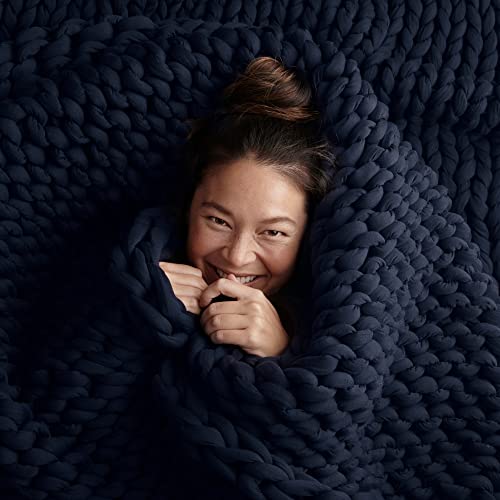
Choosing the best yarn for blankets decides how your finished blanket feels, drapes, washes, and survives — long before the first stitch. This guide is written for makers: it compares yarn fibers and weights as prose-only recommendations, because our verified product pool for this topic contains finished blankets, not yarn, and we will not invent yarn listings or specifications. One finished blanket is linked as a reference point — a hand-knit cotton weighted blanket that shows what a well-chosen blanket yarn becomes — while the six picks below are yarn types described qualitatively: acrylic workhorses, cotton for summer throws, wool for heirloom warmth, chenille for plush speed, blends for balance, and chunky yarn for fast finishes. If your project is crochet-specific, continue to Best Yarn For Blankets Crochet; for knitting, see Best Yarn For Knitting Blankets.
Every blanket yarn decision is a trade among softness, durability, washability, warmth, stitch definition, and cost per finished blanket — a throw can consume a surprising yardage, so fiber economics matter. The right answer also depends on the recipient: a baby blanket, a dorm throw, and a wedding heirloom should not be made from the same skein. The picks and buying guide below walk through those decisions in the order experienced makers make them.
Where to Buy
Yarn picks in this guide are prose-only styles with no affiliate links, by design: check Amazon and your preferred craft retailers for current yarn listings, colors, and availability before you buy. As a finished-blanket reference for what hand-knit cotton becomes, see the Bearaby Cotton Hand-Knit Weighted Blankets for Adults – Chunky Knit Blanket – Sustainable — Check on Amazon. For finished summer and winter blankets to compare against making your own, browse Best Blankets For Summer and Best Throw Pillows Under $100 for coordinated home textiles.
In this guide
Quick Picks
| Pick | Badge | Why it earns its place |
|---|---|---|
| Premium Acrylic Blanket Yarn (prose-only) | Best Overall | Washable, affordable at blanket scale, soft modern formulations, huge color ranges. |
| Cotton and Cotton-Blend Blanket Yarn (prose-only) | Best for Summer Throws | Breathable, defined stitches, cool hand feel for warm-weather and baby blankets. |
| Wool and Wool-Blend Blanket Yarn (prose-only) | Best Premium | Warmth, elasticity, and heirloom character; superwash versions add washability. |
| Chenille and Velvet Blanket Yarn (prose-only) | Best for Plush Throws | Fast, cloud-soft blankets with minimal stitch visibility — forgiving for beginners. |
| Chunky and Bulky Blanket Yarn (prose-only) | Best for Fast Finishes | Blankets in weekends, not months; dramatic texture with simple stitches. |
| Bearaby Cotton Hand-Knit Weighted Blankets for Adults – Chunky Knit Blanket – Sustainable | Best Finished Reference | A linked, verified example of hand-knit cotton as a finished blanket. |
Key Takeaways
- For most blankets, premium acrylic in worsted or bulky weight is the practical winner: washable, durable, and affordable at blanket yardage.
- Choose cotton for summer, baby, and stitch-definition projects; choose wool (ideally superwash) for warm heirlooms.
- Buy the whole blanket’s yardage in one dye lot, plus one extra skein — running short mid-blanket is the classic maker heartbreak.
- Swatch and wash the swatch before committing: blanket yarns must survive laundering, not just feel good on the skein.
- Chenille and chunky yarns finish fast and hide uneven tension, making them the friendliest first-blanket choices.
How These Picks Were Chosen
Because the verified pool holds finished blankets rather than yarn, this guide follows the brief’s prose-only path: yarn recommendations are fiber-and-weight types described from general craft knowledge, with no invented brand specifications, no prices, and no ratings. The single linked product, the Bearaby hand-knit cotton blanket, is included transparently as a finished reference, not as a yarn. Picks were organized by the decisions makers actually face — fiber first, then weight, then care — and weighted toward yarns that survive blanket-scale use: abrasion, frequent washing, and years of couch and bed duty. Specialty and novelty yarns that shed, pill rapidly, or cannot be washed were excluded from recommendation for blankets, however attractive they are for small accessories. Crochet stitch behavior is covered separately in Best Crochet Stitches For Blankets.
The 6 Best Best Yarn for Blankets — Reviewed
Premium Acrylic Blanket Yarn (Prose-Only)
Our badge: Best Overall
Premium acrylic is the default blanket yarn for good reason. Modern premium acrylics — a qualitative category spanning many makers — feel soft rather than squeaky, hold color through repeated washing, resist moths and moisture, and cost a fraction of natural fibers at the yardage a blanket demands. In worsted weight it gives defined stitches and moderate speed; in bulky weight it builds throws quickly with a cozy, even fabric.
Strengths
- Machine washable and dryable in most formulations — essential for family blankets.
- Consistent yardage and color across large purchases, with wide retail availability.
- Forgiving for beginners: even tension, visible stitches, easy frogging and rework.
Trade-offs
- Less breathable than cotton or wool; very warm sleepers may find acrylic throws warm.
- Can pill over years of heavy use, though premium lines pill far less than bargain acrylic.
- Lacks the elasticity and memory of wool for highly textured stitch patterns.
For a first blanket, a gift blanket, or any blanket destined for kids, pets, dorms, or donation, start here. Buy yardage generously — blankets routinely consume more yarn than patterns estimate once borders and gauge differences accumulate — and keep the ball bands until the project is finished and washed. If softness is your worry, handle skeins in person where possible and choose the premium tier over the bargain bin; the difference compounds across a whole blanket. Choose acrylic for practicality without apology. Skip it only when breathability or natural-fiber character is the project’s whole point.
Within acrylic, learn to read the construction, because “acrylic” covers a wide quality range. Multi-ply yarns with a firm twist pill less and show stitches better than loosely spun single-ply yarns, which can look fuzzy and worn within a season of couch duty. Anti-pill formulations exist specifically because blanket-scale abrasion is acrylic’s weak point, and for a throw that will live on a family sofa they are worth seeking out. Another practical distinction: acrylic softens noticeably with its first wash and a low-heat dry, so judge a skein’s hand feel as a preview, not a verdict — a slightly crisp premium acrylic often finishes softer than a skein that felt luxurious in the shop but was surface-treated. Finally, acrylic holds saturated color beautifully, which makes it the right fiber for bold colorwork blankets — stripes, graphs, and team colors — where cotton would fade and wool would break the budget.
Best for: family, gift, donation, and first blankets / Not suited for: heirloom natural-fiber purists
Choose premium acrylic for the most forgiving blanket yarn. No Amazon link is provided for this prose-only pick by design.
Cotton and Cotton-Blend Blanket Yarn (Prose-Only)
Our badge: Best for Summer Throws
Cotton yarn makes blankets that breathe: cool to the touch, crisply defined in stitch patterns, and comfortable against skin in warm rooms and warm climates. Pure cotton has weight and drape that suit summer throws, baby blankets, and market-style home textiles; cotton blended with acrylic or bamboo-derived fibers adds softness, lightness, and easier care while keeping the breathable character.
Strengths
- Excellent stitch definition — cables, lace, and textured stitches read clearly.
- Cool, absorbent, and skin-friendly for summer and sensitive-skin recipients.
- Durable fabric that softens with washing and holds its shape without stretching out.
Trade-offs
- Inelastic: cotton shows every tension variation and can tire hands on long sessions.
- Heavy at blanket scale, especially in worsted and bulky weights — plan the finished weight.
- Pure cotton can fade with harsh washing; gentle care preserves color.
Choose cotton when the blanket’s job is warm-weather comfort or when the stitch pattern is the star. Work a generous swatch, wash it, and measure again — cotton relaxes differently from acrylic and wool, and blanket dimensions amplify small gauge shifts. For baby blankets, cotton’s washability and smooth surface make it a perennial favorite among experienced gift-makers. The finished-blanket reference later in this guide — hand-knit cotton — demonstrates the material’s calm, breathable result at scale. Choose cotton for summer and definition. Skip it for cozy winter warmth.
Cotton itself comes in forms worth distinguishing. Mercerized cotton has been treated for strength and a slight sheen; it shows stitch definition at its sharpest and resists fuzzing, which suits patterned throws and table-adjacent textiles. Unmercerized cotton is softer and more matte, with a friendlier hand for baby blankets and skin-contact throws, at a small cost in crispness. Long-staple cottons pill less and feel smoother than short-staple budget cotton, and at blanket scale that difference is visible within a year. Blends solve cotton’s two honest problems — weight and inelasticity: cotton-acrylic cuts finished weight and adds forgiveness, while cotton-bamboo adds drape and a cooler touch. If your hands tire, work cotton in shorter sessions, choose a blend, and use hooks or needles with ergonomic handles; the fiber rewards the adjustment rather than forgiving the strain.
Best for: summer throws, baby blankets, and stitch showcases / Not suited for: warm winter blankets or makers with hand fatigue
Choose cotton for breathable, defined blankets. No Amazon link is provided for this prose-only pick by design.
Wool and Wool-Blend Blanket Yarn (Prose-Only)
Our badge: Best Premium
Wool is the heirloom blanket fiber: elastic, warm without clamminess, naturally flame-resistant in character, and possessed of a memory that keeps textured stitches springy for decades. Superwash wool adds machine washability and is the practical premium choice for blankets that will be used, not just admired. Wool-acrylic and wool-nylon blends trade a little character for durability and easier care at lower cost.
Strengths
- Superb warmth-to-weight and temperature regulation for winter blankets.
- Elasticity forgives uneven tension and makes textured stitches pleasurable to work.
- Long-lived fabric that, with gentle care, becomes a genuine keepsake.
Trade-offs
- Highest cost at blanket yardage; budget honestly before casting on.
- Non-superwash wool felts with heat and agitation — care discipline required.
- Some recipients are sensitive to wool against skin; know your recipient.
Reserve wool for blankets with a story: a wedding throw, a cabin blanket, a grandchild’s keepsake. Buy the best you can afford in a single dye lot, swatch for felting behavior if any machine washing is planned, and include care instructions with the gift — a small card saves heirlooms. Makers who love wool’s hand feel but need washability should start with superwash blends and graduate to pure wool for low-wash display throws. Choose wool for warmth and legacy. Skip it for donation or dorm blankets that need carefree laundering.
Understanding superwash helps you buy wool without fear. The treatment smooths or coats the fiber’s scales so they cannot lock together and felt in the wash; the yarn keeps wool’s elasticity and warmth while tolerating gentle machine cycles. The trade is subtle: superwash wool can stretch more in blocking and sometimes feels slightly slicker than untreated wool, so swatch and block exactly as you plan to finish. Breed character matters too, in general terms: fine, soft wools suit skin-contact throws, while sturdier, longer-staple wools wear like iron in high-use blankets but feel more rustic. A wool-nylon blend borrows sock-yarn logic — nylon reinforcement at stress points of the fabric — and is an underrated choice for blankets that will be dragged, folded, and fought over daily. Whichever wool you choose, buy the care card with the yarn, metaphorically: the blanket’s decades depend on its first five washes.
Best for: winter heirlooms and textured stitch blankets / Not suited for: carefree family laundry or wool-sensitive recipients
Choose wool for blankets meant to last decades. No Amazon link is provided for this prose-only pick by design.
Chenille and Velvet Blanket Yarn (Prose-Only)
Our badge: Best for Plush Throws
Chenille and velvet-style blanket yarns build the plush throws everyone reaches for: cloud-soft, visually forgiving, and fast to work because the pile hides stitch detail — and stitch mistakes. Typically worked in bulky to jumbo weights with simple stitches, chenille blankets are the weekend-project heroes of the blanket world and a gentle introduction for new makers.
Strengths
- Unmatched plush softness that recipients love instantly, especially kids and couch nappers.
- Simple stitches look luxurious; uneven tension disappears into the pile.
- Fast progress in bulky weights keeps motivation high for beginners.
Trade-offs
- Stitch definition is nil — do not choose chenille to showcase lace or cables.
- Some chenilles shed or worm (loops pulling loose); quality varies, so handle and tug-test skeins.
- Finished blankets can be warm and heavy; less suited to hot climates.
Work chenille with a larger hook or needles than instinct suggests, keep tension relaxed, and weave ends generously — pile yarns reward secure finishing. Wash finished blankets gently and expect the first wash to teach you the most about your chosen yarn’s shedding behavior; a test swatch washed in advance is the professional move. For recipients who value cozy over craft-visible, chenille is often the most-loved blanket in the house. Choose chenille for plush speed. Skip it for stitch artistry.
Chenille’s known failure mode — worming, where loops of pile work loose and dangle — is manageable once you understand it. It happens because the pile is held by a core thread, and loose gauge plus friction lets loops migrate. Work chenille at a firmer gauge than the ball band suggests, avoid very open stitches, and secure ends with extra-long tails woven in two directions, since short ends vanish into the pile and then work free. A quick pre-project test helps: crochet or knit a small square, tug it firmly, and wash it; a chenille that worms in the swatch will worm at blanket scale, while a well-made one stays put. Also store chenille blankets folded rather than hung, since their own weight slowly stretches the core. Chosen with these disciplines, chenille is not a fragile novelty — it is the plush specialist of the blanket shelf.
Best for: plush throws, beginner blankets, and cozy gifts / Not suited for: stitch-pattern showcases
Choose chenille for the softest fast blanket. No Amazon link is provided for this prose-only pick by design.
Chunky and Bulky Blanket Yarn (Prose-Only)
Our badge: Best for Fast Finishes
Chunky yarn — whether acrylic, wool blend, or the tube-style jumbo yarns used for arm knitting — turns blankets into short projects with bold, modern texture. The category overlaps the dedicated guide Best Chunky Yarn For Blankets, where weights and hand-knitting methods get full treatment; here it earns its place as the speed-and-drama option for makers who want a finished blanket this month.
Strengths
- Dramatic progress per hour; throws finish in days to weekends.
- Bold texture makes even basic stitches look designed.
- Arm-knitting and large-hook methods welcome makers who dislike small tools.
Trade-offs
- Finished blankets are heavy and bulky to wash, store, and ship as gifts.
- Yardage per skein is short; total project cost surprises makers who count skeins, not yards.
- Gaps in very jumbo weaves reduce warmth despite the thick appearance.
Calculate chunky projects by total yardage and finished weight, not by skein count, and confirm your washing machine’s capacity before choosing a jumbo weight for a bed-size blanket. A couch throw is the sweet spot: maximum drama, manageable laundry. Choose chunky for speed and statement. Skip it for lightweight, packable, or intricately patterned blankets.
Chunky yarns divide into families that behave very differently. Traditional plied bulky yarn — acrylic or wool blend — works like ordinary yarn, only bigger: it can be knitted or crocheted with large tools, washed with reasonable care, and repaired invisibly. Tube yarns, a fabric casing filled with light stuffing, make the smooth, marshmallow ropes of arm-knit blankets; they are light for their size but the casing can snag and they resist fine stitch work. Unspun roving-style jumbo yarn looks spectacular in photographs and pills, sheds, and mats fastest of all — choose it only for decorative, low-use pieces. For a chunky blanket that will actually be lived under, plied bulky is the professional choice; for a weekend of arm-knitting fun with a forgiving result, tube yarn; for a photo prop, anything. Match the family to the blanket’s real life before the skeins are in your basket.
Best for: fast gifts, modern textured throws, arm knitting / Not suited for: lightweight or travel blankets
Choose chunky yarn to finish fast and bold. No Amazon link is provided for this prose-only pick by design.
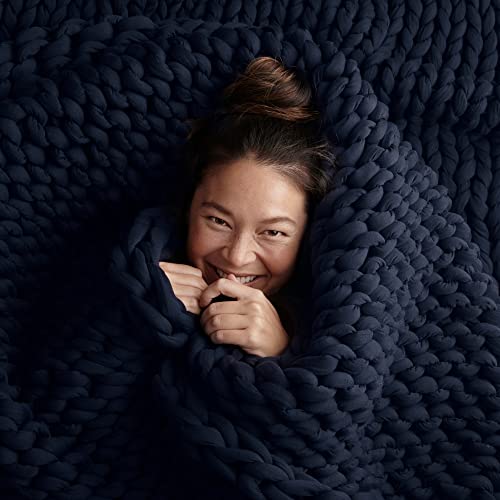
Bearaby Cotton Hand-Knit Weighted Blankets for Adults – Chunky Knit Blanket – Sustainable
Our badge: Best Finished Reference
The Bearaby Cotton Hand-Knit Weighted Blankets for Adults – Chunky Knit Blanket – Sustainable is included as this guide’s single linked product — not as yarn, but as proof of concept: a finished blanket hand-knit entirely from cotton, whose weight and texture come from the yarn and loops themselves rather than from added fill. Studying a finished object like this teaches gauge, drape, and the presence a chunky cotton knit achieves better than any skein description.
Strengths
- Demonstrates hand-knit cotton’s breathability and substantial drape at blanket scale.
- Organic cotton construction with no fillers — the yarn is the whole story.
- Machine washable finished blanket, showing cotton’s care practicality.
Trade-offs
- It is a finished weighted blanket, not a yarn purchase — do not mistake its role in this guide.
- Weighted and personal-sized; not a template for lightweight throws.
- Open loops snag more readily than tight weaves, a lesson for chunky-knit makers too.
| Color | Midnight Blue |
| Size | 15 lbs (40”x72”) |
| Weight | 15 pounds |
For makers, the Bearaby answers the question every yarn buyer asks — what will this become? — in cotton’s case: a breathable, sculptural, quietly luxurious blanket whose character is entirely fiber and stitch. If you love the result but want it lighter, choose a cotton or cotton-blend yarn in a smaller weight and a tighter stitch; if you love the weight, chunky cotton is your direction. Everyone else should treat this listing as the guide’s visual anchor and buy yarn by the fiber guidance above. Choose to view the Bearaby as inspiration and benchmark. There is no skip line for a reference pick — simply use it to calibrate your yarn choice.
Best for: makers wanting to see hand-knit cotton as a finished blanket / Not suited for: shoppers expecting a yarn listing
One more lesson makers can take from this reference: the entire blanket’s character comes from a single yarn worked in a single stitch idea, repeated with discipline. Beginners often assume a beautiful blanket requires many yarns and techniques; the Bearaby demonstrates the opposite — that fiber quality, consistent gauge, and one confident construction decision outperform complexity. When you choose your own blanket yarn, borrow that discipline: one fiber story, one stitch story, executed evenly. The blankets people keep for decades are rarely the most complicated ones; they are the ones where the yarn was right for the job and the maker finished.
View the Bearaby as the finished-cotton reference. Check on Amazon
Comparison Table
| Pick | Fiber character | Washability | Best blanket use | Check price on Amazon |
|---|---|---|---|---|
| Premium Acrylic | Soft synthetic, consistent | Machine wash and dry (typical) | Family and first blankets | Check price on Amazon |
| Cotton / Cotton Blend | Cool, defined, inelastic | Machine wash gentle (typical) | Summer and baby blankets | Check price on Amazon |
| Wool / Wool Blend | Warm, elastic, heirloom | Superwash: gentle machine; else hand wash | Winter keepsakes | Check price on Amazon |
| Chenille / Velvet | Plush pile, forgiving | Gentle wash (typical) | Cozy throws | Check price on Amazon |
| Chunky / Bulky | Bold, fast, heavy | Varies; check capacity | Fast statement throws | Check price on Amazon |
| Bearaby Cotton Blanket (reference) | Hand-knit organic cotton | Machine washable | Finished weighted blanket | Check price on Amazon |
How to Choose the Best Yarn for Blankets
Start with the recipient and the laundry
Who receives the blanket and who washes it outrank every other factor. Babies, dorms, donations, and busy families need machine-washable acrylic, cotton blends, or superwash wool. Heirlooms for careful adults can carry pure wool. Decide care first and half the yarn shelf eliminates itself — correctly.
Match weight to timeline and warmth
Worsted weight balances speed, drape, and stitch visibility for most blankets. Bulky and chunky weights finish fast and sleep warm and heavy. Fingering and sport weights create exquisite, slow, lightweight blankets for patient makers. Be honest about your timeline: a blanket finished beats a blanket perfected in a project bag.
Buy by yardage and dye lot
Patterns estimate; blankets consume. Calculate total yardage, buy it in one dye lot, and add one spare skein for borders, repairs, and gauge surprises. Keep bands and receipts until the blanket is washed and gifted. Running out of a discontinued dye lot three rows from the edge is preventable every time.
Swatch, wash, and measure
Make a generous swatch in your blanket stitch, wash and dry it exactly as the finished blanket will be treated, then measure and handle it. Pilling, fading, stretching, and softening all reveal themselves in the swatch — at swatch cost instead of blanket cost. This single habit separates durable blankets from disappointing ones.
Consider finished weight and drape
A queen blanket in bulky cotton can become surprisingly heavy. Weigh your swatch and extrapolate before committing, drape it over a chair back, and imagine it on the actual bed or body. Makers who check drape early rarely unravel late. For drape-critical projects, revisit fiber choice with Best Material For Blankets in mind — fiber behavior in yarn mirrors fiber behavior in finished blankets.
Protect your hands across a long project
A blanket is a marathon of identical motions, and yarn choice is an ergonomic decision. Inelastic fibers like cotton transmit more force to fingers and wrists; slippery fibers demand a tighter grip; very bulky yarns worked on oversized tools load the shoulders instead. Rotate strategies across a long project: work in timed sessions, alternate the blanket with a smaller project in a different fiber, and pay attention to the first ache rather than the tenth. Makers who plan ergonomics finish blankets; makers who push through pain finish courses of rest instead. If you know your hands are sensitive, let that knowledge rank the fibers — springy wool and forgiving acrylic blends first, pure cotton in shorter daily sessions, and chenille’s relaxed tension as a genuine kindness.
Read weight labels like a system, not a suggestion
Yarn weights follow a standard numbering system from fine to jumbo, but the same number spans a range in practice, which is why wraps per inch and the ball band’s recommended gauge are your real tools. Two worsted yarns can differ enough in thickness to change a blanket’s width by inches across a full project. When substituting yarn in a pattern, match the band’s stitches per four inches in your blanket stitch — not just the weight number — and confirm with your washed swatch. Keep a notebook entry for every blanket: yarn, weight class, gauge before and after washing, total yardage used. That private database becomes more valuable than any generic chart after two or three projects.
Understand twist, ply, and stitch definition
How a yarn is built predicts how your blanket looks and lasts. Tightly twisted multi-ply yarns give crisp stitch definition and resist pilling and abrasion — the workhorse construction for blankets that will be washed often. Loosely spun singles feel soft and haloed but wear faster and can bias or skew in large flat pieces. Chainette constructions, where yarn is knitted into a small tube, give bulky warmth at lighter finished weight — useful when a big blanket must stay manageable in the wash. Run a new yarn between your fingers and untwist it slightly: if the plies separate easily and the fibers look short and fuzzy, expect a soft, shorter-lived blanket; if it feels springy and coherent, expect definition and durability.
Plan color the way you plan yardage
Color behaves differently at blanket scale than in a single skein. A variegated yarn that charms in the ball may pool into blotches across a wide blanket; test it in a swatch as wide as you can manage, or reserve variegated yarns for narrower stripes and smaller blankets. Solid and heathered yarns show stitch patterns best, while busy colorways hide both patterns and minor tension flaws — match the color plan to the stitch plan deliberately. For stripes, buy the accent colors generously: running out of the main color is a planning failure, but running out of the one-ridge accent that ties the design together is the more common heartbreak. Photograph your swatch in daylight before committing; phone screens flatter colors that real rooms will judge more honestly.
How to Estimate Yarn for a Blanket Without Running Short
Start from the pattern’s yardage at its stated gauge, then add ten to fifteen percent for your personal tension, borders, and swatching. If you are designing without a pattern, work a measured swatch, weigh it, and scale by area: blanket area divided by swatch area, times swatch yarn weight, plus the safety margin. Round up to whole skeins in the same dye lot. Record the math in the project bag; future repairs and matching pillows will thank you.
Problem: You ran out of yarn near the end. — Finish with a deliberate contrast border in a coordinating color rather than hunting a mismatched dye lot; designed contrast looks intentional.
Problem: The blanket is heavier than expected. — You chose a dense fiber at a heavy weight. For the next project, step down a weight or blend cotton with lighter fibers; for this one, reserve it for winter use.
Problem: Stitches look uneven. — Switch to a more forgiving yarn (acrylic or chenille) or a textured stitch that hides variation, and check that your hook or needle size suits the yarn.
Problem: The finished blanket pills quickly. — Fiber and twist matter: tightly twisted, longer-staple yarns pill less. Wash inside a large laundry bag and avoid abrasive loads.
Problem: Joins keep showing or coming undone. — Join new skeins at the edge of a row whenever possible, leave tails of at least six inches, and weave them in three directions. In plied yarns, a Russian join or a felted join for wool hides the transition entirely; in chenille and tube yarns, overlapping tails woven generously are the secure option.
One more estimation habit separates calm projects from anxious ones: weigh the project at the halfway point of the fabric and compare it with the yarn remaining. If you have used more than half your yardage before the halfway row, you learn it while a same-dye-lot reorder is still possible — or while a planned contrast border can still be introduced gracefully. Makers who weigh as they go are never ambushed by the last ten rows.
Fiber Care: Making a Handmade Blanket Last
Handmade blankets die in laundry rooms more often than on couches. Wash by fiber: acrylic tolerates the most, cotton wants gentleness with color, wool wants cool water and minimal agitation unless superwash, and chenille wants a protective bag and low heat. Dry flat or on low heat as the ball band directs, store folded with air circulation rather than sealed in plastic, and mend snags immediately by pulling loops through to the back instead of cutting them. Include a care card with every gifted blanket — recipients cannot follow instructions they never received. A well-cared acrylic or cotton blanket should serve for years; a wool blanket, for decades.
Storage deserves its own paragraph because blankets spend half their lives stored. Natural fibers want protection from moths: store wool blankets clean — moths target soiled fibers — with cedar or in sealed bins once fully dry. Acrylic and cotton are moth-proof but not mildew-proof; a blanket stored even slightly damp in a warm closet will announce it at first unfolding. Rotate stored blankets out for an airing twice a year, refold along different lines to avoid permanent creases, and keep a note with each stored blanket listing its fiber and wash method. Future you, or the relative who inherits the blanket, will be grateful for the label more than for any other kindness.
Repair is part of care, and blankets are unusually repairable textiles. Keep the spare skein and one ball band from every project, and most damage — a pulled loop, a worn corner, a moth nibble in wool — can be mended invisibly with duplicate stitch or a small woven patch in the original yarn. Mend early: a single broken loop left alone ladders into a hole across a season of washing. For acrylic and cotton blankets in family service, a five-minute mend each spring extends life by years. This is one more argument for buying the extra skein at the start — repair yarn in the correct dye lot cannot be bought later at any price.
Blanket Sizes and Yarn Planning by Project
A baby blanket asks for softness, washability, and modest yardage — cotton blends and premium acrylic shine. A couch throw is the versatile middle: any fiber, generous texture, finished size that covers legs and laps for two. A bed blanket multiplies yardage and weight, rewarding lighter fibers and simpler stitches that will not exhaust the maker or the washing machine. A donation or shelter blanket — see also the comfort priorities in Best Blankets For Homeless for what recipients need — must be warm, washable, and durable above all, which points firmly to premium acrylic. Plan fiber by project size and your blankets will finish on time and serve as intended.
Sizing has one more trap: blankets shrink or relax differently by fiber, so finished size is a post-wash measurement, not an off-the-needles one. Cotton blankets may tighten slightly in the first dry; superwash wool can relax longer; acrylic often “kills” into permanent drape with heat in the dryer, gaining softness and losing spring. Plan your target dimensions from the washed swatch’s gauge, and if the blanket is a gift with a deadline, finish it a week early so the first wash — the one that reveals its true size and hand — happens in your home, not the recipient’s. A blanket that has survived its first wash in your laundry is a gift you can give with confidence.
Common Buying Mistakes
Buying pretty skeins without a yardage plan
Three gorgeous skeins do not make a blanket. Yardage math comes before color joy, or the project becomes a cushion cover by necessity.
Mixing dye lots invisibly
Dye-lot shifts hide on the shelf and announce themselves across a finished blanket in daylight. Buy once, buy together, and alternate skeins if you must blend lots in large flat pieces.
Choosing novelty yarn for a workhorse blanket
Eyelash, loosely spun roving, and delicate novelty yarns shed, snag, and age badly at blanket scale. Save them for trims and small accents.
Skipping the wash test
A yarn that felts, bleeds, or stretches in the swatch wash will do it at blanket scale with blanket consequences. Fifteen minutes of testing protects months of work.
Ignoring the colorfastness test for bold colors
Deep reds, navies, and blacks in any fiber can crock or bleed in early washes, turning a striped blanket’s pale sections pink or grey. Wash dark swatches with a white cloth in the test load; if color transfers, plan separate first washes for the finished blanket and warn gift recipients. Colorwork blankets deserve this fifteen-minute insurance more than any other project.
Final Recommendation
For most makers, buy premium acrylic in worsted or bulky weight for your next blanket — it is the most forgiving, washable, and economical path to a finished, loved blanket. Choose cotton for summer and baby projects, wool for heirlooms, and chenille or chunky yarn when speed and plushness lead. Keep the finished reference in mind — the Bearaby Cotton Hand-Knit Weighted Blanket — as a reminder that fiber choice is destiny: Check on Amazon to see hand-knit cotton at its best, then buy your yarn by the guidance above and start swatching.
Frequently Asked Questions
What yarn weight is best for blankets?
Worsted (medium) weight is the most versatile: reasonable speed, good drape, clear stitches. Bulky and chunky weights finish faster and warmer; lighter weights make finer, slower, more delicate blankets. Match weight to your timeline and the blanket’s season.
How much yarn do I need for a throw blanket?
It varies widely with weight, stitch, and finished size — textured stitches and bulky yarns consume far more than plain worsted work. Always calculate from a pattern’s yardage or a weighed swatch, then add a safety margin and one spare skein in the same dye lot.
Is acrylic or cotton better for a baby blanket?
Both work. Premium acrylic is softest, lightest, and most carefree; cotton and cotton blends breathe better and feel cooler. Either way, choose smooth yarns without loose fibers or novelty textures for baby projects, and wash the finished blanket before gifting.
Can I mix fibers in one blanket?
Yes, if their care needs match — never combine a feltable wool with machine-wash acrylic in a blanket you plan to machine wash. Mixed-fiber stripes and borders are a classic way to use special skeins safely.
What is the most durable blanket yarn?
Tightly twisted acrylics and cotton blends with synthetic reinforcement generally outlast loosely spun natural yarns under frequent washing. Durability also depends on stitch density: a firm gauge outwears a loose, drapey one in any fiber.
Should beginners start with chunky yarn?
Chunky yarn is an excellent first-blanket choice: stitches are easy to see, progress is fast, and simple patterns look impressive. Just budget by yardage and confirm the finished blanket’s washing plan before you begin.
What does dye lot actually mean, and how much does it matter?
A dye lot is one batch of yarn dyed together. Even with modern controls, batches differ slightly in depth and undertone — invisible when skeins sit side by side in store light, obvious across a large flat blanket in daylight. It matters most for solid-color blankets in smooth stitches, and least for heathered, tweedy, or strongly variegated yarns, which forgive lot differences. If you must blend lots, alternate skeins every row or two across a wide band so the shift reads as gradual shading rather than a line.
Does yarn choice affect how warm the finished blanket is?
Yes, through both fiber and fabric. Wool traps air in its crimp and insulates best per weight; cotton conducts heat away and feels cool; acrylic sits between, warmer than cotton and less breathable than wool. Just as important is the stitch fabric you build: a dense stitch in any fiber sleeps warmer than an open, lacy one, because still air is the real insulator. Choose fiber for the season, then tune warmth with stitch density rather than expecting fiber alone to do both jobs.
What yarn should I choose for a donation or shelter blanket?
Premium acrylic in worsted or bulky weight, in a forgiving stitch, sized generously. Donation blankets face institutional laundry, hard daily use, and recipients who need warmth and dignity rather than delicacy — so washability, durability, and cheerful color outrank fiber prestige entirely. Avoid wool (allergy and care unknowns), avoid novelty textures, and weave ends extra securely. A blanket that survives a hundred washes is the kindest specification of all.
How do I substitute a different yarn in a blanket pattern?
Match three things, in this order: the pattern’s gauge in the pattern stitch after washing, the fiber’s care profile (never substitute a hand-wash-only yarn into a blanket that will be machine washed), and the total yardage at your gauge — not the number of skeins the pattern names, since skein sizes differ across brands. Drape is the fourth check: a stiff cotton worked at a drapey pattern’s gauge gives correct dimensions and the wrong blanket. If your swatch matches gauge but feels wrong over a chair back, trust the drape test and choose a different yarn.
Is bamboo or plant-fiber yarn good for blankets?
Bamboo-derived and other plant-fiber yarns bring a cool touch, beautiful drape, and a soft sheen that suits summer throws and lightweight lap blankets. Their honest limits are weight, stretch, and cost: plant-fiber blankets can grow in length under their own weight and may need firmer stitch patterns to hold shape. Blended with cotton, they are easier to manage and keep most of the cool, silky character. Swatch, wash, and hang-test a corner before committing a full blanket.


