Disclosure: As an Amazon Associate, dailyhomedecorating.com earns from qualifying purchases. Links to Amazon on this page are affiliate links; they cost you nothing extra. Prices and availability change often, so check the current Amazon listing before you buy.
The best yarn for blankets crochet has to survive crochet’s specific demands: crochet fabric is thicker and hungrier than knitting, stitches must stay visible enough to find with a hook, and a blanket’s worth of yarn must slide smoothly for thousands of repetitions without splitting, squeaking, or exhausting your hands. This guide recommends yarn types as prose-only picks — our verified pool contains finished blankets, not yarn, and we will not invent yarn listings — with one linked finished cotton blanket as a texture reference. The six picks cover smooth acrylic for stitch work, cotton for defined summer blankets, anti-pilling acrylic for family throws, chenille for fast plush projects, wool blends for textured heirlooms, and bulky yarn for weekend granny-square and ripple blankets. General fiber background lives in Best Yarn For Blankets; stitch selection lives in Best Crochet Stitches For Blankets.
Crochet changes the yarn calculus in three ways makers must respect. First, yardage: crochet typically consumes noticeably more yarn than knitting for the same area, so blanket budgets must be generous. Second, structure: crochet stitches build height and texture, rewarding yarns with good stitch definition and punishing splitty, fuzzy, or very dark yarns when you need to count stitches. Third, drape: crochet fabric runs firmer than knit fabric in the same yarn, so softer, lighter yarns and slightly larger hooks often produce the blanket drape you imagined.
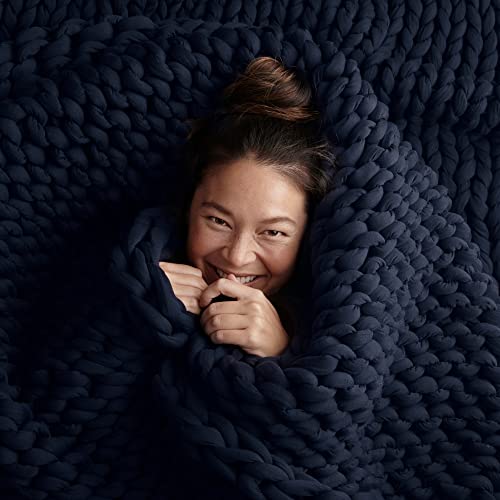
Where to Buy
Yarn picks here are prose-only with no affiliate links; check Amazon and craft retailers for current yarn listings and colors. For a finished hand-worked cotton reference, see the Bearaby Cotton Hand-Knit Weighted Blankets for Adults – Chunky Knit Blanket – Sustainable — Check on Amazon. Finished-blanket alternatives for non-makers are in Best Blankets For Sleeping, and coordinated home textiles appear in Best Throw Pillows Under $100.
In this guide
Quick Picks
| Pick | Badge | Why it earns its place |
|---|---|---|
| Smooth Worsted Acrylic Crochet Yarn (prose-only) | Best Overall | Visible stitches, smooth hook glide, washable at blanket scale. |
| Cotton Crochet Yarn (prose-only) | Best for Stitch Definition | Crisp stitches for cables, shells, and summer blankets. |
| Anti-Pilling Acrylic Crochet Yarn (prose-only) | Best for Family Throws | Built to survive frequent washing and heavy couch use. |
| Chenille Crochet Yarn (prose-only) | Best for Beginners | Plush, fast, and forgiving while you learn blanket rhythm. |
| Wool-Blend Crochet Yarn (prose-only) | Best Premium | Elasticity and warmth for textured heirloom blankets. |
| Bearaby Cotton Hand-Knit Weighted Blankets for Adults – Chunky Knit Blanket – Sustainable | Best Finished Reference | Linked example of hand-worked cotton as a finished blanket. |
Key Takeaways
- Smooth, firmly twisted worsted acrylic is the most reliable crochet blanket yarn for most makers and most stitches.
- Budget extra yardage: crochet eats yarn, and textured stitches eat more — buy the full project in one dye lot plus a spare skein.
- Avoid very fuzzy, splitty, or near-black yarns for stitch-heavy patterns; save them for simple-stitch throws.
- Go up a hook size when drape feels stiff — crochet fabric firms up fast, especially in cotton.
- Swatch in the actual blanket stitch and wash the swatch; crochet gauge lies in yarn-band gauges.
How These Picks Were Chosen
Following the brief’s prose-only path for pool gaps, yarn picks are fiber-and-construction types judged on crochet-specific criteria: hook glide, split resistance, stitch visibility, drape at crochet gauges, yardage economy, and wash survival. No brand specifications, prices, or ratings were invented. The Bearaby listing is linked transparently as a finished reference only. Yarns that are beautiful for knitting but frustrating for crochet — loosely plied, halo-heavy, or prone to splitting — were demoted here even where the general yarn guide treats them kindly, because the hook is less forgiving than needles. Knitters should use Best Yarn For Knitting Blankets instead of borrowing this ranking.
The 6 Best Best Yarn for Blankets Crochet — Reviewed
Smooth Worsted Acrylic Crochet Yarn (Prose-Only)
Our badge: Best Overall
A smooth, round, firmly plied worsted acrylic is the crochet blanket default: the hook finds every stitch, textured patterns read clearly, frogging is painless, and the finished blanket machine washes for family duty. Choose the premium tier of any maker’s line — the smoother twist and softer finish compound over thousands of stitches and years of washing.
Strengths
- Best stitch visibility for learning patterns and catching mistakes early.
- Smooth glide reduces hand fatigue across long blanket sessions.
- Widest color availability for stripes, motifs, and colorwork blankets.
Trade-offs
- Firmer drape than knit fabric; size hooks up for softer blankets.
- Bargain-tier acrylic can squeak on hooks and pill — tier matters.
- Less breathable than cotton for summer-specific blankets.
Work this yarn for ripples, granny variations, shells, and mixed-stitch samplers — the patterns that make crochet blankets joyful. Keep tension even by keeping the yarn path consistent, and block finished blankets lightly to open stitch patterns and even edges. For a first crochet blanket, this yarn plus a simple ripple or moss stitch is the highest-success combination in this guide. Choose smooth acrylic unless your project has a specific fiber reason to do otherwise. Skip it only for heirloom natural-fiber ambitions.
Crochet-specific detail worth knowing: crochet stitches wrap yarn around the hook repeatedly, so a yarn’s ply structure works harder than in knitting. A smooth worsted acrylic with a balanced, round ply resists untwisting as you pull loops through loops — you will feel the difference by row fifty, when a loosely plied yarn has begun to split and fray at the hook tip. Right-handed and left-handed crocheters also stress twist in opposite directions, which is why the same yarn can feel silky to one maker and splitty to another; if a yarn fights you, it is information about the pairing, not about your skill. Keep one ball band taped to the project bag with your hook size and gauge notes: when the blanket returns from a month’s pause, that card restarts you in minutes instead of an evening of forensic swatching.
Best for: most crochet blankets, patterns, and colorwork / Not suited for: ultra-drapey or natural-fiber-only projects
Choose smooth worsted acrylic for reliable crochet blankets. No Amazon link is provided for this prose-only pick by design.
Cotton Crochet Yarn (Prose-Only)
Our badge: Best for Stitch Definition
Cotton gives crochet its crispest voice. Post stitches, cables, bobbles, and lace stand in relief, summer blankets breathe, and baby blankets wash beautifully. Mercerized cottons add sheen and strength; unmercerized cottons feel softer and more matte. Blends with acrylic lighten cotton’s weight and add forgiveness for long projects.
Strengths
- Unmatched stitch definition for showcase patterns.
- Cool, absorbent finished blankets for warm climates and summer gifting.
- Durable, low-pill fabric that softens with washing.
Trade-offs
- Inelastic yarn shows tension differences and can tire hands; pace long sessions.
- Heavy at bed-blanket scale — calculate finished weight from a weighed swatch.
- Some cottons split; choose tightly plied constructions for hook work.
Crochet cotton at a slightly looser gauge than instinct suggests, and let blocking do the final shaping. Filet, lace, and textured cotton blankets reward patient makers with heirlooms that breathe — a rare combination. If hands ache, alternate cotton sessions with an acrylic project rather than forcing through. Choose cotton when the stitch is the star and the season is warm. Skip it for cozy winter throws.
Cotton rewards a few crochet-specific techniques. Because the fiber has no give, your turning chains and foundation row set the blanket’s fate: work the foundation chain with a hook one size larger, or use a foundation stitch, so the starting edge does not pull tighter than the fabric above it — the classic banana-shaped first blanket is almost always a foundation problem, not a counting problem. Cotton also shows increases and decreases plainly, which lace makers love and ripple makers must respect: count peaks and valleys aloud for the first pattern repeats until the rhythm is in your hands. When the blanket is done, wet-block cotton firmly; it relaxes into its final dimensions more honestly than acrylic and holds the blocked shape through washing, which is why cotton lace blankets keep their points and scallops for years.
Best for: textured, lace, summer, and baby crochet blankets / Not suited for: warm winter blankets or makers prone to hand strain
Choose cotton for defined, breathable crochet. No Amazon link is provided for this prose-only pick by design.
Anti-Pilling Acrylic Crochet Yarn (Prose-Only)
Our badge: Best for Family Throws
Anti-pilling acrylics are engineered for exactly what family blankets endure: daily couch use, pet contact, frequent washing, and years of folding and refolding. For crochet — whose raised stitch texture catches abrasion on every ridge — pill resistance preserves both looks and hand feel longer than standard acrylic.
Strengths
- Keeps textured crochet looking fresh through heavy use and washing.
- Soft hand feel that survives the laundry better than standard acrylic.
- Ideal for donation, dorm, and living-room blankets with hard lives.
Trade-offs
- Costs more than standard acrylic at blanket yardage (compare current listings).
- Color ranges can be narrower than flagship acrylic lines.
- Still a synthetic: warm sleepers should prefer cotton for bed blankets.
Pair anti-pilling yarn with a dense, low-profile stitch — moss, linen, or half-double crochet fabrics — for the ultimate workhorse throw. These are the blankets to crochet for shelters, college send-offs, and family rooms, echoing the durability priorities in Best Blankets For Homeless. Choose anti-pilling acrylic when the blanket’s life will be busy. Skip it for display heirlooms where fiber character matters more than endurance.
One honest note on anti-pilling claims: no acrylic is pill-proof forever, and crochet’s textured surface gives pills more high points to form on than flat knit fabric. What anti-pilling fibers buy is time and grace — the blanket stays presentable through the years when a standard acrylic would look tired, and a quick pass with a fabric shaver restores the surface because the underlying yarn has not thinned. For donation blankets this matters ethically as well as practically: a blanket that still looks cared-for after fifty institutional washes respects its recipient. Pair the yarn with an equally durable finishing routine — woven ends of at least six inches, a firm border round to armor the edges — and the whole object is engineered for its real life rather than its first photograph.
Best for: high-use family, donation, and dorm blankets / Not suited for: natural-fiber heirloom projects
Choose anti-pilling acrylic for blankets that must endure. No Amazon link is provided for this prose-only pick by design.
Chenille Crochet Yarn (Prose-Only)
Our badge: Best for Beginners
Chenille in crochet is pure comfort math: bulky plush yarn plus the simplest stitches equals a blanket people fight over. Work half-double or double crochet in a forgiving rhythm, watch rows grow visibly each session, and let the pile hide every uneven stitch while you build skill and confidence.
Strengths
- Fastest satisfying blankets for new crocheters.
- Plush results with beginner-level stitches only.
- Warm, weighty throws that feel generous as gifts.
Trade-offs
- Stitches are hard to see — count by feel and use stitch markers religiously.
- Never choose chenille for patterns you need to read visually row by row.
- Quality varies; tug-test for shedding and secure ends generously.
Beginners: start with a light color (visibility), a large hook, and a stitch-marker in every tenth stitch. Experienced makers use chenille for baby blankets and quick gifts, keeping patterns deliberately plain. Wash finished chenille gently and dry on low heat. Choose chenille to finish a beloved blanket early in your crochet journey. Skip it when the pattern is the point.
Chenille technique in crochet differs from plied-yarn technique in one crucial habit: you find stitches by feel, not by sight. Slide the hook along the top of the previous row and let it drop into each gap your fingers locate; forcing the hook where a stitch should be, visually, is how loops get split and worming begins. Work in good light anyway — dark chenille in a dim room defeats even experienced fingers — and choose a pale color for a first chenille blanket so the row structure stays faintly visible while your hands learn. Keep your stitch count sacred: place a marker at every tenth stitch and count at each row’s end, because in chenille a lost stitch cannot be spotted later by eye. These small disciplines are the whole difference between a plush blanket that looks store-bought and one that quietly narrows into a trapezoid.
Best for: beginners, quick gifts, and plush throws / Not suited for: stitch-pattern work
Choose chenille for soft, fast crochet success. No Amazon link is provided for this prose-only pick by design.
Wool-Blend Crochet Yarn (Prose-Only)
Our badge: Best Premium
Wool blends bring elasticity that crochet secretly loves: stitches spring into place, textured patterns gain depth, and finished blankets regulate temperature like only wool can. Superwash wool-acrylic blends are the practical premium — heirloom character with survivable laundry — while pure wool suits display throws for careful households.
Strengths
- Elastic, pleasurable hook work with excellent stitch recovery.
- Warm, breathable finished blankets for winter and cabins.
- Blocks beautifully, opening lace and evening textured fabrics.
Trade-offs
- Premium cost multiplied by crochet’s generous yardage appetite.
- Care discipline required unless superwash; include care cards with gifts.
- Wool sensitivity rules it out for some recipients.
Reserve wool blends for blankets with names and occasions: the wedding ripple, the cabin throw, the first-grandchild heirloom in superwash. Swatch and block before committing — wool’s bloom after blocking transforms stitch appearance. Choose wool blends for legacy crochet. Skip them for carefree family laundry.
Wool’s elasticity changes crochet math in your favor: textured stitches that would fight you in cotton — post-stitch cables, bobbles, popcorns — pull into place cooperatively, and minor tension wobbles relax out in blocking instead of telegraphing across the fabric. That forgiveness has a price in planning, though. Because wool blooms and relaxes, a swatch measured straight off the hook lies about final size; block the swatch, let it dry completely, and measure again before calculating yardage for a bed-size piece. Also respect wool’s memory when choosing construction: one-piece wool blankets hold their shape beautifully, while wool motifs joined loosely can grow unevenly — join firmly and block the assembled blanket as a whole. Treat wool crochet as a two-stage craft, hook work then water work, and the heirloom results follow.
Best for: heirloom and textured winter crochet / Not suited for: budget or carefree-wash projects
Choose wool blends for crochet meant to last. No Amazon link is provided for this prose-only pick by design.
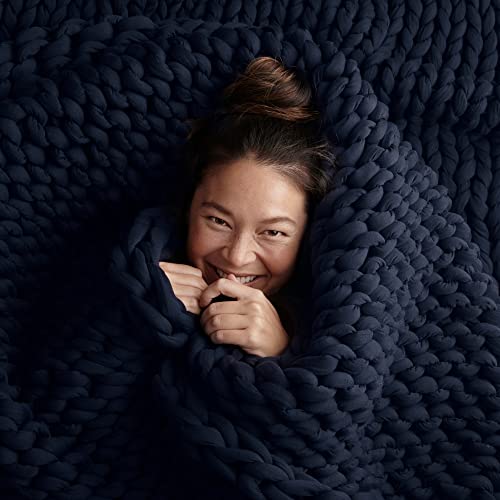
Bearaby Cotton Hand-Knit Weighted Blankets for Adults – Chunky Knit Blanket – Sustainable
Our badge: Best Finished Reference
The Bearaby Cotton Hand-Knit Weighted Blankets for Adults – Chunky Knit Blanket – Sustainable appears here, as in the general yarn guide, strictly as a linked finished reference: hand-worked cotton loops forming a complete blanket, useful for judging what chunky cotton handwork looks and drapes like at full scale. It is knit rather than crocheted — noted honestly — but its fiber lesson transfers directly to chunky crochet planning.
Strengths
- Shows chunky cotton’s sculptural texture and breathable openness.
- Organic cotton with no fillers — fiber and stitch do all the work.
- Machine washable finished piece demonstrating cotton’s practicality.
Trade-offs
- A finished weighted blanket, not yarn — a reference, not a supply.
- Weighted and personal-sized, unlike typical crochet throws.
- Open structure snags more than tight crochet fabrics.
| Color | Midnight Blue |
| Size | 15 lbs (40”x72”) |
| Weight | 15 pounds |
Crocheters planning a chunky cotton blanket should study this reference for loop scale and drape, then choose a tightly plied chunky cotton yarn and a simple stitch that closes the gaps more than knitting does — crochet’s structure will give you a firmer, warmer result from the same fiber idea. Choose to use the Bearaby as your visual benchmark. Buy yarn by the fiber guidance above.
Best for: visual reference for chunky hand-worked cotton / Not suited for: shoppers expecting a yarn product
Notice, too, what the reference teaches about scale in handwork: at chunky gauge, every loop is visible and every inconsistency shows, which is why chunky projects are simultaneously the easiest to execute and the hardest to make look refined. Crocheters working chunky cotton should steal the lesson — slow down slightly, keep loop heights metronome-even, and let the fiber’s quality carry the design. If your first chunky swatch looks rustic rather than sculptural, the fix is usually tension consistency, not a different yarn.
View the Bearaby as the finished-cotton benchmark. Check on Amazon
Comparison Table
| Pick | Stitch visibility | Drape in crochet | Best project | Check price on Amazon |
|---|---|---|---|---|
| Smooth Worsted Acrylic | High | Moderate, firms up | Patterned blankets | Check price on Amazon |
| Cotton | Highest | Crisp, heavier | Lace and summer blankets | Check price on Amazon |
| Anti-Pilling Acrylic | High | Moderate | Family workhorse throws | Check price on Amazon |
| Chenille | Low (by design) | Plush, fluid | Beginner plush throws | Check price on Amazon |
| Wool Blend | High after blocking | Elastic, warm | Heirloom textures | Check price on Amazon |
| Bearaby Reference | Chunky loops | Heavy, open | Finished weighted blanket | Check price on Amazon |
How to Choose the Best Yarn for Crochet Blankets
Let the stitch choose the yarn
Textured and lace stitches demand smooth, light-colored, definition-friendly yarn. Simple stitches forgive — and showcase — plush, variegated, and chunky yarns. Decide stitch first (see Best Crochet Stitches For Blankets), then buy the yarn that flatters it. Reversing the order is how beautiful yarn becomes an unreadable blanket.
Calculate crochet yardage honestly
Find the pattern’s yardage at your gauge, add a margin for tension and borders, and buy it all in one dye lot with a spare skein. If adapting a knit yardage estimate, increase it substantially for crochet and verify with a weighed swatch before the full purchase when possible.
Test hook glide and splitting
Crochet a swatch with your actual hook. Yarn that splits, catches, or squeaks for ten minutes will torment you for forty hours. Smooth, round, firmly plied yarns pass this test; loosely plied and halo yarns often fail it for crochet while remaining lovely for knitting.
Manage drape deliberately
If your swatch stands up like cardboard, go up one or two hook sizes or step to a softer yarn construction. Blankets should fold, drape over laps, and soften with washing. Record hook size on the project card — mid-blanket hook swaps are invisible in yarn and obvious in fabric.
Twist direction matters more in crochet than in knitting
Yarn is spun with a final twist that leans one way or the other, and crochet’s loop-pulling motion either tightens or loosens that twist depending on your dominant hand and how you wrap the yarn. The practical translation: if a yarn keeps splitting or untwisting on your hook while reviewers call it smooth, you have found a twist mismatch, not a bad yarn. Firmly plied yarns with multiple plies forgive both directions, which is one more reason they anchor this guide. When a beloved yarn does fight you, a crochet hook with a more rounded, inline head often catches plies more kindly than a sharply tapered one — test hooks against the yarn in the swatch, not just yarn against the pattern.
Choose hook and yarn as one tool
Hook material changes yarn behavior. Polished metal hooks glide through acrylic and cotton with the least friction and suit fast, rhythmic blanket work. Wooden and bamboo hooks grip slippery yarns gently and slow the work down in a way many makers find relaxing for wool and blends. Ergonomic handles matter more than material at blanket scale: forty hours of gripping argues for the handle shape your hand forgets. Whatever you choose, commit to one hook for the whole blanket and write it on the project card; hooks of the same nominal size vary slightly between brands, and a mid-blanket brand swap can ripple a careful gauge.
Think about the border when you buy the yarn
Borders are not an afterthought purchase. A firm border in the main yarn, or a deliberate contrast, finishes edges, hides minor row waviness, and armors the blanket’s hardest-working perimeter. Include border yardage in the original dye-lot purchase — a common heartbreak is a finished center field with no matching yarn left for its frame. If you love contrast borders, buy the contrast at the same time too, so the color relationship is chosen in daylight rather than negotiated later with whatever remains in the shop.
Swatch in the blanket stitch, at blanket width habits
A swatch in plain double crochet tells you almost nothing about a ripple, a shell fabric, or a post-stitch texture — each stitch family consumes yarn and relaxes differently. Swatch in the actual stitch pattern, including at least two full repeats, then wash and block it exactly as the blanket will be treated. Measure stitch gauge across the pattern’s center, not at its edges, where every fabric lies. This is also the moment to time yourself: rows per hour in the real stitch converts directly into a finishing date, and knowing that date in week one is the difference between a planned gift and an apologetic one.
Left-handed crocheters: mirror the advice, keep the standards
Left-handed makers work every stitch in mirror image, which changes two practical things. First, twist behavior flips: a yarn that untwists for a right-handed crocheter may tighten pleasantly for you, so trust your own swatch over any review written from the other hand. Second, directional stitch patterns — ripples lean, shells slant — will lean the opposite way from pattern photographs; the blanket is not wrong, it is mirrored, and it will look intentional as long as you are consistent. Buy yarn by the same standards as everyone else — ply firmness, washed gauge, dye-lot discipline — and let your swatch, crocheted with your own hand, arbitrate every pairing.
How to Keep Crochet Blanket Edges Straight
Count stitches at the end of every row for the first ten rows, then every few rows once rhythm sets in; use a stitch marker in the first and last stitch of each row; turn chains count or do not count as stitches — follow your pattern consistently; and block the finished blanket to coax remaining waviness flat. Most edge disasters are counting disasters in the first evening, when confidence outruns attention.
Problem: The blanket gets narrower as you work. — You are missing the last stitch, which hides in the turning chain. Mark it, count rows early, and frog back to the last correct row rather than compensating.
Problem: Fabric feels stiff and heavy. — Hook up a size or two, loosen tension consciously, or switch from cotton to a lighter blend for the next project.
Problem: Yarn keeps splitting. — Change to a blunter hook tip and a more firmly plied yarn; splitting rarely improves with practice alone.
Problem: Colors pool unattractively in variegated yarn. — Alternate skeins every two rows or switch to a stitch with varied stitch heights to break pooling.
Problem: One edge is longer than the other (a trapezoid blanket). — Your tension loosens as rows progress or your turning chains vary. Re-anchor with markers, keep chain tension deliberate, and block firmly; if the difference is large, frog to where the shape was true — blocking cannot rescue geometry that is inches apart.
A final edge habit: weave ends as you finish each skein rather than saving a hundred tails for the end. The blanket stays tidy in progress photos, no tail gets crocheted over accidentally (which locks in a weak join), and the finishing session at the end is a pleasant border round instead of an evening of archaeology. Makers who weave as they go finish more blankets — the last session never becomes the reason a project stalls.
Crochet Blanket Construction: One Piece, Motifs, or Strips?
One-piece blankets give seamless drape and no assembly, at the cost of hauling a growing, warming blanket on your lap for months. Motifs — granny squares and their descendants — travel anywhere, use scraps gloriously, and demand a joining plan and many ends woven. Strips split the difference: portable pieces, modest seaming, striking color play. Choose construction by lifestyle as much as aesthetics: commuters crochet motifs, homebodies crochet one-piece, and everyone should count the ends before choosing a hundred-square design. Yarn choice follows construction — motif blankets forgive dye-lot adventures that would ruin one-piece work.
Construction choice also decides how the blanket ages. One-piece blankets wear evenly and repair invisibly, but a snag in year three means surgery on a large object. Motif blankets localize damage — a ruined square can be replaced — yet every join is a future weak point and the seams feel different under a sleeper than seamless fabric. Strips age gracefully in the middle: a worn strip can be unpicked and reworked if you kept matching yarn. None of this argues for one winner; it argues for matching construction to the blanket’s expected life. A baby blanket destined for a decade of dragging wants motifs or strips in washable acrylic; a wedding blanket destined for a guest bed can be one seamless wool field. Decide the life first, then the layout.
Color Planning for Crochet Blankets
Photograph candidate yarns together in daylight and in the room where the blanket will live; store lighting lies about color relationships. Limit most blankets to three to five colors plus a unifying border color, repeat each color at least three times for rhythm, and place the darkest or brightest shade deliberately rather than randomly. For stitch-definition patterns, value contrast matters more than hue contrast — squint at your swatch: if the pattern disappears, the colors are too close in value regardless of how different they look on the shelf.
Crochet adds one color behavior knitters rarely face: stitch height changes color rhythm. A variegated yarn that stripes politely in single crochet may pool in double crochet because each taller stitch consumes more yarn per color segment. If a variegated colorway matters to the design, swatch it in the actual blanket stitch at the actual width of a repeat — small swatches hide pooling that a full row reveals. Self-striping yarns are the safer drama: their long color runs are engineered to sequence across wide work, though even they shift character between a narrow scarf gauge and a blanket’s width. When in doubt, let stripes you control — joined at row ends with planned sequences — carry the color story, and keep variegated yarns for motifs and accents where pooling reads as texture.
For gift blankets, add one more color consideration: the recipient’s room, not your stash, should arbitrate. A blanket in colors the recipient already lives with gets used daily; a blanket in your favorite palette gets folded into a closet in their home. When the gift is a surprise, neutrals warmed by one personal accent color are the safest sophisticated choice, and a border in the recipient’s dominant room color can domesticate almost any center field. Photograph the yarn against a photo of their sofa if you have one — color decisions made against the real destination rarely embarrass anyone at the unwrapping.
Common Buying Mistakes
Buying knit yardage for a crochet project
Crochet consumes more. Underbuying guarantees a dye-lot scramble or a smaller blanket than planned. Always use crochet-specific estimates.
Choosing fuzzy yarn for a textured pattern
Halo and pile erase stitch work. If you paid effort for cables and bobbles, buy smooth yarn that shows them.
Ignoring hand fatigue
Inelastic cotton, tight gauges, and small hooks punish hands at blanket scale. Alternate projects, size hooks ergonomically, and take the swatch session seriously as a comfort test.
Falling for a single perfect skein
One skein is a swatch, not a blanket. Fall in love after the yardage math confirms the affair is possible.
Skipping the foundation-row plan
More crochet blankets are doomed in the first row than in any other. A tight chain makes a blanket that flares; a careless count makes one that narrows. Use a larger hook for the chain or a foundation stitch, count twice, and measure the first three rows against your target width before investing an evening. Ten careful minutes at the start are worth ten frogged hours later.
Final Recommendation
Buy smooth worsted acrylic for your next crochet blanket unless your project gives you a specific reason not to — it is the most successful crochet blanket yarn for the most makers. Step to cotton for definition and summer, anti-pilling acrylic for hard family use, chenille for plush beginnings, and wool blends for heirlooms. Use the Bearaby Cotton Hand-Knit Weighted Blanket as your finished-texture reference — Check on Amazon — then swatch in your chosen stitch before the full yarn purchase.
One sequencing tip before you buy: if this is your first crochet blanket, spend the first evening with a single skein and your chosen stitch, working a wide practice piece you are fully willing to unravel. That one skein teaches you the yarn’s glide, your natural tension, the stitch’s rhythm, and whether your hands enjoy the pairing — every variable that decides a forty-hour project — for the cost of an evening rather than a blanket’s worth of yarn. Makers who run this rehearsal almost never abandon blankets; makers who skip it supply the craft world’s unfinished-project statistics. When the rehearsal feels good, buy the full yardage in one dye lot with a clear conscience and start the real foundation row.
Frequently Asked Questions
What yarn is easiest to crochet a blanket with?
Smooth worsted acrylic in a light-to-medium solid color: stitches are visible, glide is easy, mistakes frog cleanly, and the finished blanket washes without drama. Beginners who want plush results fast can start with chenille and simple stitches instead.
How much yarn does a crochet throw need?
Far more than intuition suggests, varying with weight, stitch texture, and finished size. Always work from a crochet pattern’s yardage or a weighed swatch, add a margin, and buy one dye lot with a spare skein.
Why does my crochet blanket feel stiff?
Usually gauge: too-small hook for the yarn, tight tension, or a dense stitch in inelastic fiber. Go up hook sizes, choose a more open stitch, or switch to a softer yarn construction for the next blanket — and block the current one, which relaxes most fabrics noticeably.
Is cotton yarn good for crochet blankets?
Excellent for summer, baby, lace, and textured blankets where definition and breathability lead. Less ideal for cozy winter throws or makers with hand fatigue, due to weight and inelasticity.
Can I crochet a blanket with chunky yarn?
Yes — chunky yarn plus simple stitches is the fastest route to a finished crochet blanket. See Best Chunky Yarn For Blankets for weights and methods, and budget yardage by total yards rather than skein count.
What hook size should I use?
Start with the yarn band’s suggestion, then adjust for drape: up for softer blankets, down for firmer ones. Your swatch in the blanket stitch — not the band — has the final vote.
Why does crochet use more yarn than knitting for the same blanket?
Geometry. A crochet stitch wraps yarn around the hook and through multiple loops, building a thicker, more three-dimensional fabric than a knit stitch of similar height. Each row literally contains more yarn. That extra yarn is also why crochet blankets feel substantial and hold textured relief so well — the consumption is the texture. Budget for it honestly and the cost stops being a surprise and becomes the price of the fabric you actually wanted.
Can I mix yarn brands in one crochet blanket?
Yes, with discipline: match weight class, fiber care profile, and — critically — your washed gauge in the blanket stitch for each yarn, because two worsted yarns can crochet to visibly different fabrics. Mixed-brand stripes and motif blankets are a classic stash strategy. Keep one brand for any large single-color field, where differences would show, and test the combination in a joined swatch that goes through the wash before the real blanket begins.
How many blankets should a beginner plan before a big heirloom project?
One. A single finished throw in smooth worsted acrylic teaches gauge discipline, edge control, yardage reality, and your own session stamina — the four skills every heirloom demands. Crocheters who jump straight to the wedding blanket in premium wool usually finish neither the blanket nor the lesson. Graduate deliberately and the heirloom becomes a pleasure instead of an inheritance of guilt.
Is it worth buying yarn online without touching it?
For a first blanket in a yarn line, buy one skein in person or order a single skein ahead of the full purchase — hand feel, true color, and hook glide cannot be judged from a product photo, and return shipping on twenty skeins erases any online saving. Once a line has earned your trust through one finished project, reordering it online in new colors is reasonable, with the usual dye-lot discipline. Treat the single-skein audition as a fixed cost of online yarn shopping and the math stays honest.
What if I run out of a discontinued yarn mid-blanket?
Do not panic-buy a near match — under room light the difference will read as a stain. Better exits, in order: finish early with a generous border if the blanket is within a few rows of a usable size; introduce a planned contrast section (a wide stripe or a color-block end) that makes the change look designed; or, for motif blankets, redistribute the remaining yarn evenly across the remaining squares so every square shares the shortage symmetrically. All three beat the mismatched dye-lot patch, and experienced makers have used every one of them.
How do I care for a finished crochet blanket by fiber?
Follow the yarn’s ball band first and these crochet-specific cautions second. Wash large blankets supported — a wet crochet blanket is heavy, and lifting it by one corner stretches stitches unevenly; use a mesh bag or cradle it in a towel. Dry flat or on low heat as the fiber allows, reshaping to your recorded finished dimensions. Store folded with the weight distributed, not hung, and refold along new lines each season. A crochet blanket’s stitches are tiny locked loops; treated gently, the structure outlasts almost every other textile in the linen closet.
Should I block a crochet blanket, and does yarn choice change blocking?
Yes — blocking is crochet’s finishing step, not an optional polish. Acrylic responds to gentle steam or a wash-and-pin that sets the stitches (aggressive heat permanently relaxes acrylic, a one-way door, so test on the swatch first). Cotton and wool wet-block beautifully and hold their opened lace and evened textures. Chenille should be blocked minimally, by washing and drying flat to shape, since its pile dislikes pinning and steam. Whichever fiber you chose, the blocked blanket is measurably flatter, wider, and more professional than the one that came off the hook — budget the hour it takes.
How do I stop my tension changing across a long blanket?
Expect it to change — most makers crochet tighter when learning a stitch and looser as it becomes automatic, and tired evening sessions differ from fresh morning ones. Counter it with structure: re-measure width every ten rows against your target, keep a small gauge ruler in the project bag, and if a drift appears, adjust hook size by half a step for a few rows rather than frogging a week of work. Working at similar times of day, on similar chairs, sounds fussy until you see two halves of a blanket meet at a visible tension seam. Consistency of circumstance is a real gauge tool.
What is the best yarn for a crochet baby blanket?
A smooth, soft, machine-washable yarn with no loose fibers: premium acrylic for carefree softness or a cotton blend for breathability. Avoid halo, eyelash, and chenille with insecure pile for the youngest recipients, choose light-to-medium colors that show the stitches (and the stains, honestly), and wash the finished blanket before gifting. The best baby-blanket yarn is the one the parents can launder at 2 a.m. without reading a care essay.


