Disclosure: As an Amazon Associate, dailyhomedecorating.com earns from qualifying purchases. Links to Amazon on this page are affiliate links; they cost you nothing extra. Prices and availability change often, so check the current Amazon listing before you buy.
The best blankets for homeless outreach, shelters, and donation drives are not the softest blankets in a store — they are the warmest blankets that survive industrial laundry, pack and distribute efficiently, and serve people sleeping in genuinely hard conditions. This guide is written for donors, outreach teams, shelters, faith groups, and mutual-aid organizers choosing blankets that respect recipients: durable fleece and sherpa layers that wash hot and often, a queen fleece that covers fully, light throws that layer and travel, and wool discussed honestly for the specific roles where its damp tolerance helps. If you are buying for your own home, these same durability standards apply, but start with Best Blankets For Cold Weather instead. Donation coordinators should confirm each shelter’s current needs and laundry specifications before bulk buying — needs vary, and the best donation is the one the organization can actually use.
Dignity is a specification. A blanket given to someone without housing should be new or like-new, clean, full-sized enough to wrap a body, warm enough for the local climate’s worst nights, and free of conditions or messaging that makes receiving it feel like advertising. The picks below are judged on warmth per dollar of ongoing cost (including laundry survival), distribution practicality, and the likelihood that the blanket is still serving in month six — not just on distribution day.
Where to Buy
All picks are sold on Amazon, where bulk quantities and consistent models simplify organizational buying; check listings for current price and stock depth before committing a drive. Lead pick for distribution: the Exclusivo Mezcla Soft Large Fleece Throw Blanket for Couch — Check on Amazon. The others are the Bedsure Fleece Bed Blanket — Check on Amazon; the Bedsure GentleSoft Sherpa Throw — Check on Amazon; the Bedsure Faux Fur Sherpa Blanket — Check on Amazon; the Bedsure Cooling Cotton Waffle Blanket (for warm-climate programs) — Check on Amazon; and the Tache Cotton Quilt (for transitional housing and family programs) — Check on Amazon. Outreach teams coordinating full kits can add basics from Best Throw Pillows Under $100 only for housed program settings, not street distribution.
In this guide
Quick Picks
| Pick | Badge | Why it earns its place |
|---|---|---|
| Exclusivo Mezcla Soft Large Fleece Throw Blanket for Couch | Best Overall | Light, durable, fast-drying fleece that distributes and launders at scale. |
| Bedsure Fleece Bed Blankets Queen Size Grey – Soft Cozy Warm Winter Blanket Christmas Than | Best for Shelters | Full queen coverage for shelter beds and family rooms. |
| Bedsure GentleSoft Sherpa Fleece Throw Blanket for Couch | Best for Warmth | Sherpa-backed warmth for cold-climate distribution. |
| Bedsure Faux Fur Fluffy Fleece Sherpa Blanket Couch Throw Grey 50″x60″ | Christmas Fuzzy P | Best for Family Programs | Plush comfort for transitional housing and family shelters. |
| Bedsure Cooling Cotton Waffle Blanket for Hot Sleepers | Best for Warm Climates | Breathable cotton layer for hot-region outreach and summer programs. |
| Tache Cotton Patchwork Quilt Blanket Country Farm Cottage Vintage Antique Ditsy Floral Pai | Best for Transitional Housing | A home-like cotton quilt for programs where people are settling in. |
Key Takeaways
- Confirm needs with the receiving organization first — size, laundry, storage, and climate specs differ by program.
- Fleece wins donation math: warm, light, fast-drying, and survivable in institutional laundry.
- Buy consistent models in quantity so shelters can sort, wash, and replace predictably.
- New, clean, full-coverage blankets communicate dignity; avoid cast-offs you would not sleep under yourself.
- In cold climates, layering two mid-weight blankets serves better than one bulky blanket that cannot be washed or carried.
How These Picks Were Chosen
Donation fitness required machine washability without delicate handling, durability under frequent laundry, warmth appropriate to stated climates, distribution-friendly weight and bulk, and sizes that cover adults. Heated blankets were excluded (no power access, safety in uncontrolled settings), weighted blankets were excluded (weight, washing, and appropriateness), and delicate heirloom wool was excluded from primary picks while wool’s damp tolerance is discussed as context for specialized programs. Specs are pool-verified only; no bulk pricing is stated because organizational pricing must be checked live. This guide addresses material aid logistics only and defers to local organizations on all service questions. Related hard-use durability thinking appears in Best Blankets For Cold Weather Camping.
The 6 Best Best Blankets for Homeless — Reviewed

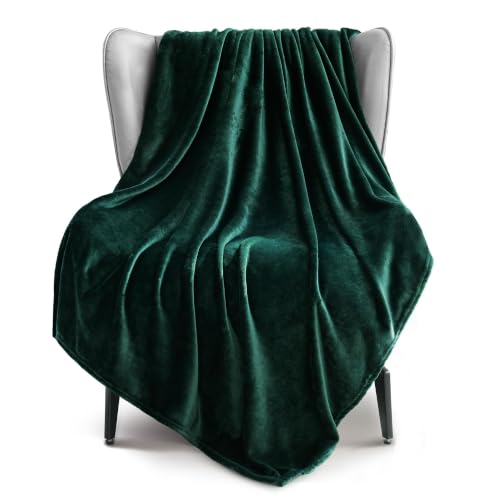
Exclusivo Mezcla Soft Large Fleece Throw Blanket for Couch
Our badge: Best Overall
The Exclusivo Mezcla Soft Large Fleece Throw Blanket for Couch leads distribution lists for practical reasons: double-sided brushed flannel fleece at 50 by 70 inches, just 1.55 pounds, with maker-emphasized reinforced stitching and resistance to shrinking, pilling, and shedding through repeated washing. It packs flat in distribution bins, dries fast after shelter laundry, layers over or under other blankets, and works as a sole layer in mild weather or a warmth multiplier in cold.
Strengths
- Distribution geometry: light, flat, stackable, one-person generous.
- Laundry survival designed for frequent, unsentimental washing.
- Versatile across street outreach, shelters, vehicles, and disaster kits.
Trade-offs
- Throw dimensions cover one adult as a wrap; tall recipients may want the queen fleece.
- Light insulation alone in severe cold — distribute in pairs or with sherpa in winter climates.
- Solid colors vary by listing; bulk buyers should confirm color consistency if programs sort by type.
| Color | Forest Green |
| Size | Throw XL (50″ x 70″) |
| Weight | 1.55 pounds |
Outreach teams value the Exclusivo’s carry math: a volunteer can transport dozens, a recipient can carry one all day without it becoming a burden, and a shelter can turn a full laundry load around same-day. That logistics chain — buy, move, give, carry, wash, repeat — is the real product in donation work. Choose it as the default distribution blanket. In cold regions, budget it in pairs or alongside the sherpa pick below.
Best for: street outreach and general distribution / Not suited for: sole insulation in severe winter without layering
Choose Exclusivo for scalable, dignified distribution. Check on Amazon

Bedsure Fleece Bed Blankets Queen Size Grey – Soft Cozy Warm Winter Blanket Christmas Than
Our badge: Best for Shelters
The Bedsure Fleece Bed Blankets Queen Size Grey – Soft Cozy Warm Winter Blanket Christmas Than serves shelter beds and family rooms where full coverage matters: queen dimensions in light flannel fleece, soft enough for skin contact, durable in seams, and simple to launder at institutional tempo. A shelter bed made with a real bed blanket — sized, tucked, complete — is a small restoration of normalcy that throw-sized donations cannot provide.
Strengths
- Full bed coverage for shelter cots, bunks, and family rooms.
- Light for its size, easing bulk laundry and storage.
- Neutral grey suits institutional sorting and hides wear gracefully.
Trade-offs
- Bulkier to transport than throws for street distribution.
- Passive warmth only; cold-climate shelters layer it with sherpa.
- Queen size may overwhelm narrow cots — confirm bed dimensions with the program.
| Color | Grey |
| Size | Queen (90″ X 90″) |
| Weight | 3.19 pounds |
Shelters replacing bedding stock should standardize on one model like this so every bed matches, every laundry load behaves identically, and replacements blend invisibly. Family programs gain most: parents can make a real bed for children, possibly for the first time in months. Choose the queen fleece for housed-program bedding. For street kits, choose the Exclusivo’s portability instead.
Best for: shelters, family programs, transitional housing beds / Not suited for: lightweight street kits
Choose the queen fleece for real beds in programs. Check on Amazon

Bedsure GentleSoft Sherpa Fleece Throw Blanket for Couch
Our badge: Best for Warmth
The Bedsure GentleSoft Sherpa Fleece Throw Blanket for Couch adds the warmth tier cold-climate programs need: flannel on one face, sherpa pile on the other (maker-stated 220 and 260 GSM), in a personal throw that layers over a fleece base or stands alone on moderately cold nights. Its maker notes family and pet versatility and gift-ready presentation; for donation, the relevant virtues are warmth, durability stitching, and washability.
Strengths
- Warmest distribution-friendly layer in this guide.
- Reversible faces adapt to wind side and skin side needs.
- Durable construction for repeated institutional washing.
Trade-offs
- Bulkier per unit than flat fleece — fewer per bin and per volunteer load.
- Sherpa dries slower than flat fleece in shelter laundry.
- Warm-climate programs should choose the waffle pick instead.
| Color | 01 – Grey |
| Size | Throw (50″ X 60″) |
| Weight | 2.03 pounds |
Cold-climate math: one sherpa plus one flat fleece per person outperforms one heavy blanket per person on warmth, washing, drying, and carrying — layers separate for laundry and combine for cold. Programs in northern winters should budget the pair as the unit. Choose GentleSoft sherpa as the warmth tier of a layered donation. Skip it for summer or hot-region drives.
Best for: cold-climate layering and winter drives / Not suited for: hot climates or tightest packing
Choose sherpa warmth for winter distribution. Check on Amazon

Bedsure Faux Fur Fluffy Fleece Sherpa Blanket Couch Throw Grey 50″x60″ | Christmas Fuzzy P
Our badge: Best for Family Programs
The Bedsure Faux Fur Fluffy Fleece Sherpa Blanket Couch Throw Grey 50″x60″ | Christmas Fuzzy P brings comfort that reads as care: shaggy faux fur and sherpa in a plush throw the maker positions as giftable and pet-friendly. In family shelters and transitional housing — where children especially register texture as safety — a blanket that feels like a gift rather than surplus changes the emotional temperature of a room.
Strengths
- Plush comfort with real insulating pile for family spaces.
- Gift-quality presentation supports dignity-centered programs.
- Machine washable on gentle cycles for program laundry.
Trade-offs
- Gentler laundry needs than flat fleece — confirm program capacity.
- Not a street-distribution workhorse; pile suffers in rough, damp conditions.
- Throw size suits couches and kids’ beds more than adult bed coverage.
| Color | 01- Tie Dye Grey |
| Size | Throw (50″ X 60″) |
| Weight | 2.73 pounds |
Assign faux fur where people are landing, not passing through: family rooms, women’s and children’s programs, holiday distributions where the gift quality is the point. Pair with the queen fleece for the bed itself. Choose faux fur for comfort-forward family giving. Skip it for street kits and disaster bulk.
Best for: family shelters and transitional housing comfort / Not suited for: street outreach bulk
Choose faux fur where comfort itself is the donation. Check on Amazon

Bedsure Cooling Cotton Waffle Blanket for Hot Sleepers
Our badge: Best for Warm Climates
The Bedsure Cooling Cotton Waffle Blanket for Hot Sleepers corrects a common donation error: shipping winter fleece to hot places. In warm regions and summer programs, a breathable cotton-bamboo waffle blanket provides night coverage without heat burden, absorbs and dries in humid conditions, and washes durably. Heat is a health hazard for people without housing too, and appropriate blankets are protective equipment in Phoenix as surely as sherpa is in Minneapolis.
Strengths
- Climate-appropriate coverage for hot regions and summer everywhere.
- Absorbent, quick-turnaround laundry behavior.
- Full queen size serves shelter beds in warm facilities.
Trade-offs
- Insufficient alone for cold nights anywhere — climate honesty required.
- Cotton dries slower than fleece when fully soaked.
- Light color shows institutional wear sooner.
| Color | 01 – Ivory |
| Size | Queen (90″ X 90″) |
| Weight | 3.8 Pounds |
Regional programs should stock waffle as the summer standard and rotate fleece back in for winter — the same seasonal discipline as home bedding, applied at organizational scale. Cooling-center and heat-relief distributions are this blanket’s finest hour. Choose waffle where heat is the threat. Skip it for winter drives in cold states.
Best for: hot climates, summer programs, cooling centers / Not suited for: cold-weather distribution
Choose waffle for climate-honest warm-region giving. Check on Amazon

Tache Cotton Patchwork Quilt Blanket Country Farm Cottage Vintage Antique Ditsy Floral Pai
Our badge: Best for Transitional Housing
The Tache Cotton Patchwork Quilt Blanket Country Farm Cottage Vintage Antique Ditsy Floral Pai serves the moment after shelter: a real cotton patchwork quilt, home-like and personal, for transitional apartments and family reunification settings where a blanket that looks like it belongs in a home helps a space become one. It is the least institutional textile in this guide, deliberately.
Strengths
- Home character that supports settling-in and family dignity.
- Breathable cotton layer for year-round apartment use.
- Meaningful housewarming-tier gift for program graduations.
Trade-offs
- Delicate washing and throw size unsuit institutional bulk roles.
- Light insulation — a layer and a symbol, not winter equipment.
- Individual styling varies the uniformity programs often need.
| Color | Burgundy |
| Size | 50×60 |
Programs celebrating moves into housing can pair the Tache with the queen fleece bed blanket: one for the bed’s warmth, one for the home’s heart. Donors giving individually to a family they know will find the quilt communicates what bulk fleece cannot. Choose Tache for transitional moments. Skip it for any high-volume, high-laundry role.
Best for: transitional housing and family milestones / Not suited for: bulk shelter stock
Choose the Tache quilt where a blanket should feel like home. Check on Amazon
Buying New in Bulk for Outreach: What Coordinators Check First
When a group buys new blankets for outreach, the coordinator’s checklist differs from a home buyer’s in instructive ways. Uniformity matters: identical items simplify distribution fairness, laundry, and replacement, so bulk buyers choose one or two proven models in quantity rather than a sampler of deals. Wash tolerance at facility scale matters: the blanket must survive the shelter’s actual machines and temperatures, which the coordinator confirms with the facility before ordering, not after delivery. Size honesty matters: listings that promise generous dimensions and deliver less are a fairness problem when fifty people compare what they received. Packaging matters more than anyone expects — individually bagged blankets distribute cleanly and store without contamination, while a compressed bulk bale that must be sorted, aired, and inspected on arrival consumes the staff hours the donation was meant to save. Finally, timing matters: bulk orders placed in early fall arrive before the need peaks, while the same order placed during the season’s first cold snap joins every other urgent order in a queue. Coordinators who internalize this checklist become the donors shelters call first when a specific need arises — which is, in the end, the most effective position a giver can occupy.
Comparison Table
| Pick | Size | Weight | Program role | Check price on Amazon |
|---|---|---|---|---|
| Exclusivo Throw | Throw XL 50″ x 70″ | 1.55 pounds | Street distribution | Check price on Amazon |
| Bedsure Fleece Bed | Queen 90″ X 90″ | 3.19 pounds | Shelter beds | Check price on Amazon |
| Bedsure Sherpa Throw | Throw 50″ X 60″ | 2.03 pounds | Cold layering | Check price on Amazon |
| Bedsure Faux Fur | Throw 50″ X 60″ | 2.73 pounds | Family comfort | Check price on Amazon |
| Bedsure Waffle | Queen 90″ X 90″ | 3.8 Pounds | Warm climates | Check price on Amazon |
| Tache Quilt | 50×60 | — | Transitional housing | Check price on Amazon |
How to Choose the Best Blankets for Homeless Outreach and Shelters
Ask the organization, then buy exactly that
Call or message the shelter or outreach team before purchasing: bed sizes, laundry temperatures, storage space, climate priorities, and current surplus all change the right order. Many organizations publish wish lists with specific blanket types. A smaller donation of exactly-right blankets beats a truckload of approximately-right ones that consume storage and staff time.
Standardize models for institutional sanity
One or two consistent models per program simplifies sorting, washing, folding, and replacement. Mixed random donations create laundry roulette — delicate items destroyed, sizes mismatched to beds. Bulk consistency is a kindness to staff as much as to recipients.
Budget the full lifecycle, not the unit price
A blanket that survives fifty institutional washes costs less per night than a cheaper blanket that dies in ten. Durability stitching, fade resistance, and fast drying are financial specs in donation math. Include delivery, storage, and laundry reality in the plan, and prefer fewer, better blankets when budgets force the choice.
Respect carrying reality for unsheltered recipients
People without storage carry their bedding. Light, compact, layerable blankets that dry fast after rain serve better than one heavy luxury blanket that becomes a burden by noon. Ask outreach workers what recipients actually keep — retention is the metric that matters.
Children, Families, and Older Adults: Needs That Generic Drives Miss
Homelessness includes children, parents, and older adults, and each group’s blanket needs bend the generic advice in specific directions. Families in shelters need blankets sized for children as well as adults, in condition beyond reproach, because a parent accepting a blanket for their child applies a standard no coordinator can relax: clean, intact, and ordinary, the blanket a housed child would use. Family shelters also run through blankets at child speed — spills, accidents, illness — so washable durability outranks heirloom warmth in their stockrooms. Older adults and people with limited mobility need warmth without weight they cannot manage, layers they can arrange from a seated position, and blankets without tripping bulk when they move through crowded shelter spaces at night. People sleeping outdoors with mobility devices need compact, carryable layers that travel on a chair or cart without dragging. A drive that asks its receiving organization one extra question — who are you serving this season that generic donations miss? — can aim a portion of its collection at exactly these needs, and that aimed portion is often remembered longest by the staff who distribute it. Specificity, offered humbly and confirmed with the people who know, is the mature form of generosity this guide keeps recommending.
How to Run a Blanket Drive That Helps
Partner with one organization and publish its exact spec (model class, size, new-only if required). Set a quantity goal tied to the partner’s confirmed need, not to a round number. Collect funds or identical new blankets rather than mixed household cast-offs unless the partner explicitly accepts used items in good condition. Arrange delivery in one coordinated drop, offer volunteers for sorting and laundry if the partner wants them, and report results honestly to donors — including what was learned for next time. Repeat annually with the same partner and the drive becomes infrastructure.
Problem: Donated blankets arrive dirty or damaged. — Publish new-or-like-new standards with inspection at intake, and give donors a dignified redirect for items that miss the bar (animal shelters often welcome them).
Problem: The shelter is flooded with throws but needs bed blankets. — Spec discipline failed upstream. Re-ask, re-publish the exact need, and convert cash donations to the missing size.
Problem: Recipients trade or abandon heavy blankets. — Weight and bulk exceeded carrying reality. Shift the mix lighter and more layerable next round, and treat feedback as expertise.
Problem: Laundry destroys mixed donations. — Standardize to laundry-tough models and attach a simple care card for program staff volunteers.
Inspecting a Blanket Before It Is Given: The Two-Minute Standard
Every blanket in a donation should pass the same two-minute inspection, performed by the giver rather than outsourced to the shelter. Hold it to the light and look for thinning, holes, and seam failures, especially at corners and edges where wear concentrates. Smell it after washing, not before: a blanket that retains odor after a proper wash will retain it in service, and odor is the single most common reason shelters must discard donations they wanted to use. Check for the failures that matter outdoors — broken zips or closures on any sack-style item, elastic that has died, waterproof coatings that are flaking away — and test any strap, buckle, or carrying feature the item claims. Then ask the question that summarizes this entire guide: would I hand this, without apology or explanation, to someone I respect who is having the hardest month of their life? If the answer requires a sentence of justification, the blanket belongs in a textile-recycling stream, not in a donation bag. Two minutes per blanket, applied by thousands of donors, is the difference between shelters spending their hours distributing warmth and spending them disposing of other people’s closet guilt.
What Not to Donate: A Short, Important List
Do not donate heated blankets (power and safety), weighted blankets (weight, washing, appropriateness), air mattresses or bedding with missing parts unless requested, heavily worn or stained items, strong fragrances embedded in fabric, or anything you are donating primarily to avoid your own disposal effort. Do not donate blankets with corporate or campaign branding for recipients to carry publicly unless the organization explicitly accepts them. The test is simple: would this blanket, in this condition, honor the person receiving it on their hardest night? If the answer hesitates, do not donate it.
Distribution Day: How Blankets Reach People Well
How a blanket is handed over matters almost as much as which blanket it is. Programs that distribute with dignity share recognizable habits: recipients choose where choice exists — size, color, weight — rather than receiving whatever the top of the pile holds, because choosing is a small restoration of control in a life short on it. Distribution happens predictably, at known times and places, so people can plan around it instead of encountering generosity by luck. Volunteers learn names where names are offered, keep conversations ordinary, and never make a blanket conditional on a story, a photograph, or gratitude performed for an audience. Donors supporting distribution should respect the same boundaries: no photography of recipients for social media without genuine, unpressured consent, no publicity that trades on someone’s worst season, and no surprise visits that disrupt a program’s rhythm. If your giving cannot survive those rules, the rules are not the problem. The programs worth funding — and the standard this guide recommends attaching your blankets to — treat warmth as a service delivered to neighbors, not as an event staged by the warm.
Layering Kits: How Programs Assemble Warmth
Effective cold programs distribute kits, not items: a flat fleece base, a sherpa warmth layer, and — through partner organizations — socks, hats, and ground insulation where possible, since ground cold defeats top blankets as surely in encampments as in camping (see Best Blankets For Cold Weather Camping for the same physics). Kits in bags that recipients can carry, sized consistently, with no paperwork burden attached, respect both thermodynamics and dignity. Donors funding kits rather than single blankets multiply their impact without multiplying cost proportionally.
What Outreach Workers Actually Ask For, Season by Season
The most reliable way to give blankets well is to ask the people who distribute them, and their answers follow the calendar more than the catalog. In deep winter, outreach teams ask for the warmest durable layers in the largest practical sizes, because a blanket in January is survival equipment: it goes over shoulders, under sleepers on cold ground, and around people waiting for shelter doors to open. The guidance in Best Blankets For Cold Weather about ground insulation applies with even greater force outdoors, where there is no heated room underneath — a blanket paired with anything that separates a sleeper from pavement or frozen ground does double work, and kits that include that separation respect physics as well as people. In shoulder seasons, teams ask for midweight, quick-drying blankets that survive rain weeks, because a wet blanket that cannot dry becomes a burden its owner must carry or abandon. In summer, the request surprises new donors: light layers still matter, for cool nights, for padding on hard surfaces, for privacy and shade, and for the dignity of having something of one’s own — but summer asks emphasize clean, light, and easy to carry over maximum warmth.
Asking first also prevents the two classic mismatches: the beautiful, delicate blanket that cannot survive a week outdoors, and the bulk purchase of identical items when the shelter’s actual shortage was children’s sizes, or large sizes, or blankets that fit a washing machine the facility really owns. A two-minute conversation with a shelter coordinator or outreach lead outperforms any amount of donor intuition, and it builds the relationship that makes the next donation better than this one. Donors who ask, listen, and return season after season become part of a community’s safety net; donors who drop and disappear provide blankets. Both are welcome, but the first kind changes what is possible, and this guide is written in the hope of recruiting more of them.
Carrying, Storing, and Living With a Blanket When Home Is Uncertain
Every blanket in this guide will be carried, and carrying is a design constraint that housed donors easily forget. A person moving between shelter, work, appointments, and outdoor rest carries their belongings all day; a blanket that is warm but enormous and heavy competes with food, documents, medication, and clothing for the same shoulders. This is why outreach-experienced buyers weight packability and dry weight alongside warmth, why a blanket that rolls or folds compactly can be the kinder gift than a marginally warmer one that does not, and why straps, bags, and simple carrying solutions included with a blanket are thoughtful rather than decorative. Storage tells the same story from the other side: a blanket that mildews in a damp bag, holds odor permanently, or disintegrates at its seams after a month of outdoor laundry realities fails the person who can least afford replacement. Durability in this category is not a premium feature; it is the entire ethical content of the purchase, because the recipient’s margin for a failed blanket is zero.
Dignity lives in these practical details. A clean, intact, ordinary-looking blanket lets its owner rest in public without advertising their circumstances, enter a shelter or a library without embarrassment, and make choices — keep it, trade it, wash it, carry it — that are theirs to make. Giving that preserves choice and ordinary appearance respects the person; giving that is stained, broken, or emblazoned with messaging treats the person as a billboard or a disposal route. The standard this guide applies throughout is simple enough to say and demanding enough to matter: donate only what you would hand to a neighbor you respect, in condition you would accept without a flicker of hesitation, and let the recipient’s judgment — not the donor’s sentiment — decide what happens next.
Common Buying Mistakes
Donating cast-offs instead of equipment
Thinning, stained household rejects transfer your disposal problem to a shelter’s staff. Donate blankets you would hand to family — or donate funds for the organization to buy them.
Ignoring climate in either direction
Winter fleece to desert summers and cotton quilts to northern winters both miss. Climate-match every drive as carefully as a home purchase.
Buying variety for its own sake
Ten models in ten sizes paralyze institutional laundry and storage. Consistency is a feature recipients feel as reliability.
Forgetting to ask about laundry
If the program washes hot and dries hard, delicate picks die in week one. Laundry specs are product specs in this category — get them in writing before bulk orders.
For Groups: Churches, Schools, Workplaces, and Clubs That Give Together
Group giving multiplies blankets and, without coordination, multiplies mistakes just as efficiently. The groups whose drives outreach teams praise share a structure: one coordinator talks to the receiving organization before anything is collected, the drive requests a defined item in a defined condition window — new or like-new, washed, specific sizes — and volunteers inspect every blanket at collection rather than passing the inspection burden to the shelter. A short, kind quality standard, stated on the drive’s flyer, protects everyone’s dignity: donors are told plainly that stained, torn, or pet-saturated blankets cannot be accepted, which prevents the hurt feelings and the disposal costs that vague drives generate. Groups should also decide the unglamorous logistics in advance — who washes the borderline items, who transports, who stores overflow until the shelter can receive it — because a drive that ends with forty blankets in a coordinator’s garage for a month has solved the wrong half of the problem.
The best group drives also give twice: once in blankets, and once in the ongoing relationship they build. A school that returns each winter, a workplace that adopts a shelter’s seasonal list — the full arc in Best Blankets For Winter thinking applied to giving — a congregation that funds the laundry and storage costs alongside the textiles: these become infrastructure a community can plan around. If your group can sustain only one drive, make it excellent and well-timed rather than annual and chaotic; if it can sustain a rhythm, tell the shelter the rhythm and keep it. Reliability, in the world this guide serves, is a form of respect that recipients and coordinators both recognize immediately.
A Closing Word on Consistency: The Donation That Happens Every Year
Shelter directors plan around the donors who return. A modest annual commitment — the same month, the same coordinator conversation, the same quality standard — lets a program forecast its winter, order its gaps instead of its duplicates, and spend its scarcest resource, staff attention, on people rather than on processing surprises. If this guide moves you to give once, it has done its work; if it moves you to give on a rhythm, it has done more. Set the rhythm you can honestly keep, write it where your household keeps its other commitments, and let each year’s conversation with the receiving organization refine it. Blankets wear out; relationships compound. The warmest outcome this article can produce is not a single well-chosen blanket, excellent as that is, but a community in which well-chosen blankets arrive, season after season, because people like you decided that warmth was a standing obligation rather than an occasional impulse.
Start wherever you are. A single household can wash and inspect the blankets it already owns and give the best of them this week, while arranging one conversation with a local shelter about what next season actually requires. A workplace can appoint its coordinator before it prints its first flyer. A faith community can pair its textile giving with the laundry funding its shelter quietly needs. None of these beginnings requires permission, scale, or ceremony, and each of them models the standard this guide has argued from its first section: give what you would be glad to receive, through people who know the need, at the season when the need is real, in condition that honors the person who will sleep under it. Everything else — the picks, the tables, the checklists — is commentary on that sentence. If you remember nothing else when you stand in a shop or in front of your own linen closet, remember the sequence: ask the people who distribute, choose for durability and dignity, inspect like it matters, deliver through channels that work, and come back next season. A community’s warmth is built out of exactly such unremarkable, repeated competences, and every reader who adopts them becomes part of the infrastructure that the coldest nights test.
If you coordinate giving for a group, keep a one-page record of each season’s conversation with your receiving organization: what was asked for, what was delivered, what was declined and why, and what next season’s coordinator should know. Groups lose their hard-won competence every time a coordinator changes and the knowledge leaves with them; the page prevents that, and it models for new volunteers the standard this guide has argued throughout — that good giving is a discipline with a memory, not a mood with a budget. File the page where the group’s other commitments live, review it before the next drive is announced, and let each year’s giving be visibly better than the last. That improvement, compounded quietly across a community, is how blanket drives grow into the kind of infrastructure that outreach teams build their winters around — and how a reader who arrived looking for a blanket recommendation leaves as part of the reason a stranger, next winter, sleeps warm.
Final Recommendation
For most programs, standardize on the Exclusivo Mezcla Fleece Throw for distribution and the Bedsure queen fleece for beds — Check on Amazon — layered with sherpa in cold climates and waffle in hot ones. Confirm the spec with your partner organization first, buy consistently, and let durability carry your generosity through the whole season.
Giving Cash, Time, and Skills Alongside Blankets
Blankets are one line in a shelter’s budget, and donors who understand the whole budget give more effectively. Facilities wash constantly, and laundry — water, power, detergent, machine repair — is a real and fundable cost that a cash gift earmarked for operations can carry more flexibly than a fiftieth blanket in a month when storage is full. Storage itself is a cost: shelving, space, and the staff time to sort, inspect, and rotate stock. Volunteering that time — sorting donations, running the laundry, driving distribution routes — is giving in its most literal form, and outreach teams consistently rank reliable volunteers alongside their most generous donors. Skills give well too: the person who can repair a washer, build storage shelving, or organize a spreadsheet of seasonal needs has something a blanket drive cannot buy. None of this diminishes the blanket itself, which remains the item this guide exists to choose well. It places the blanket in honest context: warmth, given in the right item, at the right season, through a channel equipped to deliver it, supported by the unglamorous resources that make delivery possible. Give the blanket, by all means — and when you can, give the system around it a share of the same generosity.
Pairing Blankets With Socks, Hats, and Hygiene: The Kit Donors Ask About
Donors often want to give a kit rather than a blanket alone, and coordinators welcome kits that are assembled to a program’s actual list. The items outreach teams request alongside blankets are consistent across communities: new socks, which wear out faster than any other clothing and protect feet that walk everywhere; warm hats and gloves in the cold season; basic hygiene supplies in travel sizes that fit a carried life; and, where programs request them, simple rain protection and reusable bags that make carrying possible. What makes a kit good is not abundance but fit — every item usable, carryable, and chosen from the receiving program’s stated needs rather than from a donor’s imagination of them. Assemble kits only when the program wants kits; some shelters prefer bulk items they can distribute by individual need, and their preference governs. When kits are welcome, keep them uniform and complete rather than deluxe and few: ten people fully kitted serves a community better than three people lavishly kitted, and uniformity is its own form of fairness on distribution day. Ask, assemble to the answer, and deliver on the program’s schedule — the kit version of this guide’s whole philosophy.
Frequently Asked Questions
What blankets do shelters need most?
It varies — ask your local shelter. Commonly: new, washable, twin-to-queen fleece blankets that survive institutional laundry, in consistent models. Many organizations publish exact wish lists; follow them over any general guide, including this one.
Are used blankets acceptable to donate?
Only where the organization explicitly accepts them, and only in clean, excellent condition. Many programs require new items for hygiene and dignity. When in doubt, ask — or donate funds instead.
Is fleece or wool better for donation?
Fleece for almost all programs: washable, light, affordable at scale, fast-drying. Wool’s damp tolerance suits a few specialized outdoor programs but its cost and care exclude it from bulk donation math.
How many blankets should a drive aim for?
The number the partner organization confirms it can distribute and maintain — no more, no less. Surplus without storage becomes waste; a fully absorbed smaller drive is a complete success.
Can I donate heated or weighted blankets?
No. Heated blankets need power and controlled conditions; weighted blankets are heavy, hard to launder, and inappropriate for general distribution. Both are declined by most programs.
What else pairs well with blanket donations?
Ask the organization — commonly socks, hats, gloves, and ground pads are requested alongside blankets. Bundling what is asked beats improvising generosity.


