Disclosure: As an Amazon Associate, dailyhomedecorating.com earns from qualifying purchases. Links to Amazon on this page are affiliate links; they cost you nothing extra. Prices and availability change often, so check the current Amazon listing before you buy.
The best blankets for cold weather keep working when the bedroom is drafty, the cabin is unheated until the fire catches, and the wind finds every gap in a lesser blanket. This guide ranks six verified cold-weather performers by insulation strategy: a 100 percent wool blanket that breathes while it warms, two heated blankets for beds in cold houses, and three fleece-sherpa layers that trap air and shrug off rough use indoors and out. Cold weather is not just winter with better marketing — it includes shoulder-season camping, cold-climate travel, power outages, and homes where heating is expensive or uneven. If your cold is specifically a bed problem, start with Best Winter Blankets For Bed; if it involves tents and campsites, continue to Best Blankets For Cold Weather Camping after this guide.
Insulation works by trapping still air. Wool crimp, sherpa pile, fleece loft, and heated elements all serve that physics differently: wool and fleece hold air in fiber structure, sherpa adds a deep plush trap, and electric heat replaces lost warmth actively. Wind defeats all of them by stripping the air layer, which is why cold-weather technique — layering, tucking, blocking drafts — matters as much as blanket choice. Each review below names the conditions its pick actually handles, including the ones it does not.
Where to Buy
All picks are sold on Amazon; check current listings for price, size, and availability. Lead pick: the Pendleton National Park Blanket — Check on Amazon. The others are the Beautyrest Heated Blanket — Check on Amazon; the Sunbeam Heated Blanket — Check on Amazon; the Bedsure Faux Fur Sherpa Blanket — Check on Amazon; the Bedsure Sherpa Fleece Throw — Check on Amazon; and the Bedsure Fleece Bed Blanket — Check on Amazon. Layer living spaces with Best Throw Pillows Under $100 for a complete cold-weather room.
In this guide
Quick Picks
| Pick | Badge | Why it earns its place |
|---|---|---|
| Pendleton National Park Blanket | Best Overall | Wool insulation that breathes — home, cabin, and camp in one blanket. |
| Beautyrest Reversible Heated Blanket | Best for Cold Bedrooms | King heated control for houses where the bed must do the heating. |
| Sunbeam Electric Heated Blanket Royal Luxe Microplush Beige Full 84×72 | 12 Heat Settings | Best for Solo Sleepers | Flexible heated warmth with a long auto-off window for cold rentals and rooms. |
| Bedsure Faux Fur Fluffy Fleece Sherpa Blanket Couch Throw Grey 50″x60″ | Christmas Fuzzy P | Best for Layering | Deep plush-sherpa air trap for shoulders and laps in drafty rooms. |
| Bedsure GentleSoft Sherpa Fleece Throw Blanket for Couch | Best Budget | Reversible flannel-sherpa warmth that travels room to room and house to car. |
| Bedsure Fleece Bed Blankets Queen Size Grey – Soft Cozy Warm Winter Blanket Christmas Than | Best for the Bed | Queen fleece coverage for layered cold-weather beds without cords. |
Key Takeaways
- Wool is the cold-weather all-rounder: insulating, breathable, and useful from bed to campsite.
- Heated blankets solve cold bedrooms, not cold outdoors — they need power and flat, indoor use.
- Layering beats thickness in wind and drafts: a wind-blocking outer layer over insulation outperforms any single blanket.
- Coverage is insulation: gaps at shoulders and feet leak more heat than thin fabric does.
- Keep a cord-free cold-weather option ready for outages, when heated blankets go silent.
How These Picks Were Chosen
Cold-weather fitness meant insulation per realistic condition: still cold air (fleece, sherpa, wool), moving cold air (wool plus layering technique), and cold rooms with power (heated picks). Cooling, waffle, and lightweight summer products were excluded. The Pendleton leads because it is the only pick that performs across home, cabin, and outdoor contexts; heated picks are ranked for indoor cold only and labeled as such. Specs are pool-verified only. Wool’s outdoor depth is expanded in Best Wool Blankets For Camping. No blanket here is rated for survival or extreme expedition use, and this guide does not claim otherwise — for sub-freezing outdoor sleep systems, use purpose-built outdoor gear guidance alongside blanket layering.
The 6 Best Best Blankets for Cold Weather — Reviewed

Pendleton National Park Blanket
Our badge: Best Overall
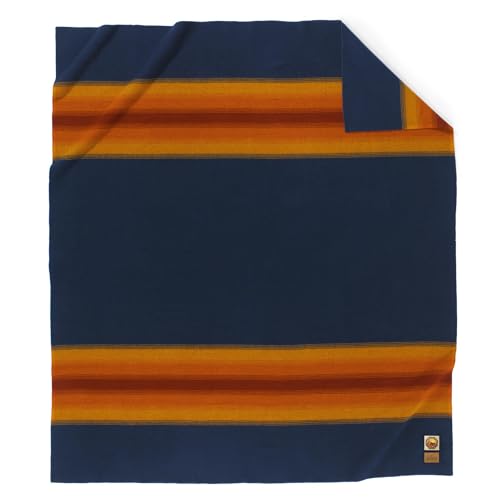
The Pendleton National Park Blanket earns the cold-weather crown the way wool has earned it for centuries: crimped 100 percent wool fibers trap insulating air, manage moisture without clamminess, and keep working in the drafty, damp-edged conditions where synthetics feel cold once they feel wet. At queen size and 6.2 pounds with a napped finish, it is equally at home as a bed’s top insulator, a cabin staple, and a camp blanket around shoulders at a fire.
Strengths
- Breathable insulation that resists the sweat-then-chill cycle.
- Versatility across bed, travel, and outdoor shoulder use — one purchase, many colds.
- Heritage durability measured in years of hard service.
Trade-offs
- Premium cost; treat as equipment, not a seasonal accessory.
- Gentle care only — cold-weather workhorse, laundry-room prima donna.
- Needs a wind layer over it in strong outdoor wind, like all insulation.
| Color | Grand Canyon Navy |
| Size | Queen (90″ x 90″) |
| Weight | 6.2 pounds |
Use the Pendleton as your cold system’s core: over cotton in bed, over fleece in a cabin bunk, around shoulders over a jacket at camp. Its National Park stripes are not nostalgia decoration — they mark a blanket designed to be kept, repaired, and handed on, which is the correct economics for cold gear. Choose wool when cold is a season-long fact of life. Skip it if every textile you own must survive a hot weekly wash.
Cold-weather ownership of wool has a rhythm worth adopting. Air the blanket on dry, cold days — wool refreshes in moving air and needs washing far less than synthetics, which is a genuine advantage in homes where winter laundry dries slowly. Inspect edges and any moth-prone storage each autumn, store it clean, and mend small damage early, since wool repairs beautifully and a patched Pendleton is a badge of use rather than a defect. Around a fire, keep a respectful distance: wool resists a stray spark better than melting synthetics, but no blanket is fireproof and none belongs near open flame. Treated as equipment with a maintenance calendar, this single purchase can anchor a household’s cold defense for a generation.
Best for: cold homes, cabins, and versatile outdoor layering / Not suited for: carefree laundry or expedition extremes
Choose Pendleton as your cold-weather core blanket. Check on Amazon

Beautyrest Reversible Heated Blanket
Our badge: Best for Cold Bedrooms
The Beautyrest Reversible Heated Blanket answers a specific cold: the bedroom that never warms up. King size, 20 settings, 10-hour auto shut-off, dual control on larger sizes, and plush-sherpa faces that insulate even unplugged. In cold houses where heating the bed is cheaper and kinder than heating empty rooms, it converts a punishing bedroom into the warmest place in the home.
Strengths
- Active heat defeats room cold that defeats passive blankets.
- Dual-zone peace for couples with different cold tolerance.
- Unplugged insulation still outperforms most passive throws.
Trade-offs
- Indoor, powered, flat use only — no camping, no outages, no folding in use.
- Bulk and cord management at king scale.
- Overkill for well-heated homes.
| Color | Ivory |
| Size | King (90 in x 100 in) |
| Weight | 9.53 pounds |
Pre-warm, sleep low, and keep a passive layer in the house for the night the power fails — cold-weather planning assumes outages rather than being surprised by them. The maker’s safety-testing emphasis and even-wire design matter most exactly here, where the blanket works hardest. Choose Beautyrest when the bedroom itself is the cold problem. Skip it for any outdoor ambition.
The energy argument deserves its honest boundary. Heating the bed instead of the whole house saves real energy on the nights you would otherwise raise the thermostat for one cold bedroom — but a heated blanket is not a substitute for safe minimum temperatures in the home itself, particularly where pipes, elders, or children are involved. Use it as targeted comfort within a safely heated house, and its economics and comfort both hold up. Within that boundary, the dual-zone design is the feature that pays: two sleepers at two temperatures stop negotiating a single compromise setting that satisfied neither, and the household’s coldest room becomes its most requested guest room.
Best for: cold bedrooms and energy-conscious heating / Not suited for: outdoor or outage use
Choose Beautyrest to heat the bed, not the house. Check on Amazon

Sunbeam Electric Heated Blanket Royal Luxe Microplush Beige Full 84×72 | 12 Heat Settings
Our badge: Best for Solo Sleepers
The Sunbeam Electric Heated Blanket Royal Luxe Microplush Beige Full 84×72 | 12 Heat Settings scales heated cold defense to one person: full size, 12 settings, a 1-to-12-hour selectable auto-off, heat-sensing technology as the maker describes it, and a backlit dial for dark, cold rooms. For the solo renter in a drafty building, it is the difference between enduring winter and sleeping through it.
Strengths
- Auto-off flexibility matches naps, nights, and pre-warm-only strategies.
- Manageable size and weight for one person’s washing and storage.
- Microplush face feels warm on contact in a cold room.
Trade-offs
- Single zone and full size limit shared larger-bed use.
- Power-dependent like all heated picks.
- Warmth is local — it will not fix a cold living room.
| Color | Mushroom |
| Size | Full |
| Weight | 4.63 pounds |
Cold-room solo strategy: insulate the bed’s underside with a mattress pad if you can, pre-warm with the Sunbeam, and keep the fleece bed blanket in reserve for outages. That trio handles everything from October drafts to January snaps without heating the whole unit. Choose Sunbeam for personal cold defense. Skip it for couples on queen or king beds.
Renters in cold buildings should note what this blanket does not require: no landlord permission, no installation, no modification to the room. It plugs into the outlet you have and leaves with you in spring, which makes it the highest-impact cold purchase available to anyone who cannot insulate walls or replace windows. Pair it with the renter’s other reversible tricks — heavy curtains, draft stoppers, a rug between bed and cold floor — and a punishing bedroom becomes survivable without a single permanent change. When you move, the blanket moves; few cold-weather investments are that portable, which is why it anchors so many first-apartment winters.
Best for: solo sleepers in cold rooms and rentals / Not suited for: shared large beds or outdoor use
Choose Sunbeam for solo cold-room mastery. Check on Amazon

Bedsure Faux Fur Fluffy Fleece Sherpa Blanket Couch Throw Grey 50″x60″ | Christmas Fuzzy P
Our badge: Best for Layering
The Bedsure Faux Fur Fluffy Fleece Sherpa Blanket Couch Throw Grey 50″x60″ | Christmas Fuzzy P traps air twice: in 1.5-inch shaggy faux fur and in its sherpa reverse. As a cold-weather layer — over shoulders in a drafty room, over legs at a desk, over a bed’s top half at the coldest hour — that double trap delivers warmth out of proportion to its throw size. It is the blanket cold air meets first, and first layers matter.
Strengths
- Deep pile insulation for targeted, movable warmth.
- Reversible textures adapt from plush display to sherpa snug.
- Machine washable on cold gentle, so draft duty does not ruin it.
Trade-offs
- Throw size: a layer and a local warmer, never whole-body bed coverage.
- Pile needs gentle drying to stay plush.
- Wind strips its loft outdoors unless covered by a shell layer.
| Color | 01- Tie Dye Grey |
| Size | Throw (50″ X 60″) |
| Weight | 2.73 pounds |
Station this throw where cold finds you sitting still — desk, couch, reading chair — because still bodies cool fastest and complain loudest. In bed, fold it over the shoulder line, the classic leak point of every bedding system. Choose the faux fur for layered, movable cold defense. Skip it as a standalone bed or camp blanket.
Desk workers in cold homes are this throw’s secret constituency. Remote work means hours of stillness in one chair, and stillness is when cold wins — shoulders hunch, feet chill, and the heating bill tempts. A deep-pile throw over shoulders and lap, with the sherpa side in, creates a personal microclimate that lets the house stay cooler and the worker stay comfortable; it is the same targeted-warmth logic as the heated bed, applied to the working day. Choose its station deliberately — the chair where you spend the cold hours, not the couch where you spend the warm ones — and rotate it to the bed’s shoulder line at night if your bedroom needs the reinforcement.
Best for: drafty rooms and targeted layering / Not suited for: sole bed or outdoor coverage
Choose the faux fur throw as your first cold layer. Check on Amazon

Bedsure GentleSoft Sherpa Fleece Throw Blanket for Couch
Our badge: Best Budget
The Bedsure GentleSoft Sherpa Fleece Throw Blanket for Couch is cold weather’s utility player: flannel on one side, sherpa on the other (220 and 260 GSM as the maker states), 50 by 60 inches, just over two pounds, no electronics, no special care, endless assignments — car blanket, office blanket, pet-warmer, guest rescue, outage layer. Cold preparedness is mostly having enough decent layers in enough places, and this throw is how households achieve that affordably (check current pricing).
Strengths
- Deployable everywhere: buy multiples and station them by room and vehicle.
- Durable stitching and fade resistance for rough, frequent use.
- Warmth without weight for elders, kids, and travel.
Trade-offs
- Moderate insulation alone; in serious cold it is one layer among several.
- Throw dimensions limit bed use to singles and supplements.
- Synthetic pile can static in dry winter air.
| Color | 01 – Grey |
| Size | Throw (50″ X 60″) |
| Weight | 2.03 pounds |
Cold-weather veterans own throws the way sailors own rope. Keep one in the car through winter (with the usual safety kit), one in the living room, one in the coldest bedroom. When the power fails or a guest arrives shivering, distributed layers beat one heroic blanket in a closet. Choose GentleSoft throws for prepared, layered warmth. Skip expecting any single throw to heat a bed alone.
Multiples strategy has one refinement: buy the same throw, not a variety pack of almost-right ones. Identical throws simplify laundry (one care routine), simplify replacement (any throw can serve any station), and look intentional when several are visible across a room. Label the car throw mentally as sacrificial — it will absorb spills, road salt, and emergency duty — and rotate a fresher twin into the car each autumn so the vehicle never carries the household’s most degraded layer. When a throw finally thins past living-room dignity, it graduates to pet duty or garage duty rather than the bin; cold-weather textiles earn retirement in stages.
Best for: distributed household and car preparedness / Not suited for: sole insulation in severe cold
Choose GentleSoft for layers everywhere cold finds you. Check on Amazon

Bedsure Fleece Bed Blankets Queen Size Grey – Soft Cozy Warm Winter Blanket Christmas Than
Our badge: Best for the Bed
The Bedsure Fleece Bed Blankets Queen Size Grey – Soft Cozy Warm Winter Blanket Christmas Than closes the guide as the passive bed foundation: queen fleece coverage that layers under wool, over cotton, or alone in heated homes, washing at bed scale without drama. In a cold-weather system it is the layer that touches skin and takes the laundry, protecting premium insulators above it.
Strengths
- True bed coverage for passive, cord-free cold defense.
- Soft skin layer that makes wool and heated layers above it more comfortable.
- Year-round versatility beyond the cold season.
Trade-offs
- Passive only: in unheated rooms it needs wool or heated help above it.
- Less breathable than wool in swing temperatures.
- Plain styling relies on top layers for looks.
| Color | Grey |
| Size | Queen (90″ X 90″) |
| Weight | 3.19 pounds |
Every cold bed in this guide works better with this blanket in it: under the Beautyrest it softens contact, under the Pendleton it carries the wash load, alone it handles the heated home’s ordinary winter. Buy it as infrastructure, not as the headline, and your whole cold system improves. Choose the fleece bed blanket as the foundation layer. Skip it as your only defense in unheated rooms.
Foundation layers fail quietly, so inspect this one like infrastructure. Each spring, check the fleece for thinning at the foot and center, where friction concentrates; a foundation that has gone thin in patches creates cold stripes that residents misdiagnose as room problems. Rotating the blanket head-to-foot monthly evens that wear, and retiring a tired foundation to couch duty while a fresh one takes the bed is cheap insurance. Because it washes so easily, it also serves as the system’s hygiene guarantor — the layer whose cleanliness you never have to ration. Infrastructure thinking is unglamorous, and cold houses run on it.
Best for: layered bed foundations in any cold home / Not suited for: sole layer in unheated bedrooms
Choose the fleece bed blanket to build cold beds on. Check on Amazon
Comparison Table
| Pick | Size | Weight | Cold strategy | Check price on Amazon |
|---|---|---|---|---|
| Pendleton Wool | Queen 90″ x 90″ | 6.2 pounds | Breathable wool insulation | Check price on Amazon |
| Beautyrest Heated | King 90 x 100 in | 9.53 pounds | Active electric heat | Check price on Amazon |
| Sunbeam Heated | Full | 4.63 pounds | Active solo heat | Check price on Amazon |
| Bedsure Faux Fur Throw | Throw 50″ X 60″ | 2.73 pounds | Deep pile layer | Check price on Amazon |
| Bedsure Sherpa Throw | Throw 50″ X 60″ | 2.03 pounds | Distributed layers | Check price on Amazon |
| Bedsure Fleece Bed | Queen 90″ X 90″ | 3.19 pounds | Bed foundation | Check price on Amazon |
How to Choose the Best Blankets for Cold Weather
Name the cold precisely
Cold bedroom, cold house, cold campsite, and cold car are four different problems sharing an adjective. Heated blankets solve the first two with power. Wool and layers solve all four within reason. Survival cold is a fifth problem that blankets alone do not solve — respect that boundary and equip accordingly with purpose-built gear.
Insulate, then block wind and gaps
Trapped air insulates; moving air steals it. Indoors, that means tucking edges, covering shoulders, and closing the bedroom door on drafts. Outdoors, it means an outer layer over insulation and a barrier beneath you, since ground and mattress cold conduct upward relentlessly. Technique doubles the value of every blanket in this guide at zero cost.
Layer by function
Soft washable layer against skin, insulator in the middle (wool, fleece, sherpa), active heat or wind block on the outside as conditions demand. Assigning functions prevents the classic error of stacking three similar fleece layers and wondering why wind still wins. Our bed-system detail is in Best Winter Blankets For Bed.
Prepare for the power to fail
Every heated strategy needs a passive understudy: wool or fleece layers stored where the bed can reach them in the dark. Cold-weather households audit this before winter, not during the outage. The same layers serve guests, cars, and emergencies without extra purchases.
Protect the household’s vulnerable sleepers first
Cold planning is triage. Elders feel cold more deeply and recover from it more slowly; their beds get the heated systems, the pre-warming, and the first check during outages. Children need washable, cord-free layers and supervision around any heated product, which stays an adult-operated tool. Anyone who cannot easily get up, adjust layers, or call for help should sleep where the household can reach them on the coldest nights. Assign blankets by vulnerability before assigning them by preference — the comfortable can adapt, the vulnerable should not have to.
Do not forget pets in the cold plan
Pets seek the warmest layer in the house and will find your best blanket; plan for it rather than fighting it. Give animals their own washable sherpa layer in their usual sleeping spot, keep heated blankets for human beds where cords and controls can be supervised, and remember that a pet under your blanket adds real heat — and real laundry. In outages, a pet in the shared nest is an asset to everyone, provided the arrangement is calm and voluntary on the animal’s part too.
How to Stay Warm When the Power Goes Out
Close off one small room, dress in dry layers, and build one shared insulated nest rather than heating bodies separately: mattress or padding below for ground insulation, fleece against skin, wool or sherpa above, throws sealing gaps at shoulders and feet. Cover heads and hands if cold deepens, keep everyone hydrated and fed normally, and never use outdoor combustion heaters or grills indoors — carbon monoxide kills faster than cold. Check on elderly neighbors and anyone living alone. Blankets are excellent outage tools precisely because they need nothing but bodies and patience.
Problem: Warm in bed, freezing the moment you get up. — Station a sherpa throw and warm layers at the bedside; cold mornings are a logistics problem, not an insulation failure.
Problem: Blanket feels warm but shoulders stay cold. — Coverage gap, not insulation gap. Size up, tuck the top edge, or add a shoulder throw layer.
Problem: Damp cold defeats fleece at the cabin. — Switch the outer insulator to wool, which handles moisture character better, and dry fleece layers near (never on) the heat source.
Problem: Heated blanket plus cold room equals warm torso, cold face and air. — Lower the room’s draft load: door draft stopper, heavier curtains, and a throw for evening sitting so the bed is not your only warm territory.
Problem: The outage nest is warm at midnight and cold by 4 a.m. — Body heat leaks steadily; add the reserve throw at the first chill rather than after everyone is cold, keep the nest’s room door closed, and resist opening the layered system to “check” — every opening dumps the warm air you spent hours trapping.
After any outage, wash and fully dry the nest layers before returning them to storage or beds. Outage bedding absorbs more moisture and odor in two nights than ordinary bedding does in two weeks, and storing it unwashed guarantees next winter’s emergency begins with stale textiles. Treat the post-outage reset as part of the protocol, not an optional epilogue.
Cold Weather at Home vs. Away: Different Kits
Home cold rewards systems: heated beds, layered foundations, throws by room. Away cold — cabins, campsites, relatives’ spare rooms — rewards portability and forgiveness: wool that works anywhere, a sherpa throw that compresses into a car corner, and no dependence on unfamiliar outlets or other people’s laundry. Build the home system first, then assemble the away kit from its most versatile members (in this guide: Pendleton plus GentleSoft). One kit serving both, bought deliberately, beats two kits bought in seasonal panic. For tent-specific layering, the camping companion guide goes deeper.
Away kits fail most often at the destination’s edges: the relative’s spare room with one thin blanket, the cabin whose bedding is a rumor, the red-eye arrival into a cold rental. The discipline is to pack the layer you control — the compressible sherpa throw travels, the wool rides in the car — and to ask hosts one question in advance: how cold does the guest room get? Nobody is offended by the question, and the answer determines whether your away kit is a comfort or a rescue. Cold weather away from home is a communication problem as much as a textile one.
Understanding Warmth Without Numbers Games
Blankets carry no universal warmth rating comparable across brands, so shoppers must read construction instead: fiber (wool insulates and breathes; synthetics trap air cheaply), loft (pile and fleece thickness), coverage (dimensions and drape), and system (what layers surround it). A thin wool blanket in a good system outwarms a thick fleece in a bad one. Be skeptical of any single-number warmth promise, including in our own comparison tables — the attributes there are verified facts, while warmth itself is always fiber plus fit plus technique. Buy construction, build systems, and cold becomes manageable.
One construction detail separates serious cold blankets from decorative ones: edge finishing. Cold finds the edges first — a blanket whose binding is tight and whose pile or weave stays dense to the border insulates to its full dimensions, while one that thins at the edges effectively sleeps a size smaller. When comparing listings, look at edge and corner photographs the way you would inspect a jacket’s cuffs. It is unglamorous evidence, and in cold weather, unglamorous evidence is the kind that keeps you warm.
Common Buying Mistakes
Taking heated blankets outdoors
Heated blankets are indoor, flat, powered products. Camping and outage plans built on them fail exactly when cold peaks. Wool and layers are the outdoor answer.
Buying one giant blanket for every cold
Cold is plural. A bed system, a living-room layer, and a car throw solve more cold per dollar than any single premium blanket locked in one room.
Ignoring the layer beneath you
Mattresses, cots, and ground conduct cold upward. If you are cold from below, no top blanket fixes it — add insulation underneath first.
Waiting for the first freeze to shop
Cold-weather buying in a panic produces wrong sizes and indoor products for outdoor problems. Audit in autumn, buy deliberately, and test the system on a merely chilly night.
Trusting a summer-weight blanket because the room felt fine in October
Cold weather is a season, not a night. October’s adequacy is January’s misery, and the swap always happens during the coldest week when delivery is slowest. Equip for the season’s worst ordinary week, and let mild nights be solved by removing a layer — subtraction is free and instant; addition in a cold snap is neither.
Final Recommendation
Anchor cold weather with the Pendleton National Park Blanket for versatile wool insulation, add the Beautyrest where bedrooms need active heat — Check on Amazon — and distribute sherpa throws until no room, car, or guest is more than an arm’s reach from a layer. That combination handles cold weather as it actually arrives: variously, and usually at night.
Buy in triage order: first the bed of the household’s coldest sleeper, then the shared living space, then the car and guest contingencies. A household that equips in that order is never caught with a luxurious couch throw and a freezing elder. Cold weather rewards households that plan like quartermasters — inventory, assign, test, store — and the planning costs nothing but an autumn afternoon.
Frequently Asked Questions
What is the warmest blanket material for cold weather?
Wool for breathable insulation that handles moisture; deep sherpa and fleece for trapped-air warmth at lower cost; electric heat where power and indoor use allow. Warmest depends on whether the cold is dry, damp, windy, or indoors.
Can I use an electric blanket during a power outage?
No — it will not operate, though its passive insulation still helps as a layer. Keep wool or fleece alternatives at the bed for outages, and never run heated bedding from improvised power setups against the maker’s instructions.
How many blankets do I need for a cold night?
Most sleepers need a system, not a count: one skin layer, one insulator, one gap-sealer. In severe indoor cold, that may total three layers; in a heated home, one good insulator suffices. Add layers by function, not by habit.
Is a throw enough for cold weather?
For sitting, layering, and gap-sealing, yes. For sleeping through cold nights, no — bed-size coverage is required. Throws are cold-weather tools with a defined job; respect the job description.
What should stay in a car for winter?
A durable sherpa or fleece throw (the GentleSoft class), plus your vehicle’s normal safety kit. A blanket you would not miss is the right car blanket — it will live a hard, useful life there.
Why does wool stay warm when other blankets feel cold and damp?
Wool fibers absorb moisture vapor into their structure while feeling dry and continuing to insulate, unlike many synthetics that hold moisture on the surface. That character is why wool remains the outdoor and cabin standard.
Do cold-weather blankets make good gifts?
Throws and wool do; sized bed systems and heated blankets require knowing the recipient’s bed, outlets, and habits. A sherpa throw is the safe generous default — it needs no measurements, fits every household’s layer system, and gets used the night it arrives. Gift the Pendleton when you know the household keeps things; it is the rare present still in service a decade later.
When is cold beyond blankets?
When indoor temperatures fall toward unsafe levels, when anyone in the home is medically vulnerable to cold, or when the plan involves improvised heating — blankets have reached their honest limit. At that point the correct purchases are heating repairs, utility assistance, or a warm place to stay, and local services exist for exactly this. This guide equips households for cold weather, not for housing emergencies, and confusing the two helps no one.
How much should a household spend on cold-weather blankets?
Stage it by triage rather than chasing a total: the coldest sleeper’s bed first, shared spaces second, contingencies third, checking current listings for each layer as you go. Wool and heated systems are the considered purchases; throws and foundations are modest and multiply well. A household that equips in this order, across one autumn, typically spends less than the household that panic-buys premium everything in the season’s first cold week — and sleeps warmer for the discipline.
What is the single most useful cold-weather blanket habit?
Make the layers up in the morning, every morning. A made system traps its structure — layers aligned, gaps closed, throws stationed — while a chaotic bed must be rebuilt nightly by a cold, tired person who will do it badly. Ninety seconds of morning order buys a warm entry every night of the season. Every other habit in this guide is a variation on that theme: cold rewards preparation and punishes improvisation.
How do I keep cold-weather blankets from smelling stale by mid-winter?
Air them. Wool refreshes on a dry cold day over a railing; fleece and sherpa benefit from the same treatment between washes. The stale smell of mid-winter bedding is trapped moisture and room air, not the blanket failing — and the households that air their layers monthly rarely need aggressive washing, which extends every blanket’s life. Never store a blanket that is even slightly damp, in winter or out of it.
Is it worth repairing a cold-weather blanket?
For wool, almost always — darning and edge repair are traditional, effective, and far cheaper than replacement. For fleece and sherpa, repair seams and small tears, but accept that lost loft cannot be sewn back; a compressed, thinned synthetic has retired itself. Judge by function: if the repair restores the layer’s assigned job, do it; if the job itself is gone, replace the layer and demote the old one to car or pet duty.
Can one blanket handle both a cold house and a cold campsite?
Wool comes closest — it insulates the bed at home, travels without complaint, and works around shoulders at camp with a shell layer against wind. Heated blankets cannot make the trip, and delicate display throws should not. If your life genuinely includes both settings weekly, the wool-first kit in this guide is built for exactly that double duty; if camping is a once-a-year rumor, do not let it distort a home purchase.
What should I do if my blanket is warm but my feet are always cold?
Feet are the far district of every blanket system: farthest from the core, first to exit the coverage, and slowest to warm. Fold a throw across the foot of the bed, confirm the blanket’s length actually reaches beyond your feet with drape to spare, and insulate beneath the mattress’s foot if the floor is cold. Warm socks to bed are not a defeat — they are the oldest layering technology in this entire guide.
How long do cold-weather blankets last?
Wool, cared for as this guide describes, is measured in decades. Fleece and sherpa serve several hard seasons before loft tiredness retires them to secondary duty; heated blankets should be inspected each season and retired at any sign of cord wear or erratic behavior, regardless of age. Longevity is mostly storage and washing discipline — the households whose blankets last are the ones that store them clean and never discover damage during a cold snap.
What is the best blanket for a cold dorm room or first apartment?
One versatile insulator that works on a twin bed, a couch, and shoulders — wool if budget allows, a sherpa throw plus a fleece bed blanket if it does not — and nothing that depends on the building’s unreliable systems. Small spaces reward multi-role gear, and the first apartment’s cold lesson is always the same: buy the blanket that serves three rooms, because you effectively live in all of them at once.
Should cold-weather blankets be heavier to be warmer?
Not necessarily — warmth comes from trapped still air, and construction traps air more cleverly than raw mass does. A lofty sherpa can out-warm a dense, heavy, compressed blanket while being kinder to arthritic hands, small laundry machines, and children. Weight matters for feel (some sleepers settle better under settled weight) and for staying put in drafts, but shop construction and coverage first and let weight be the consequence, not the target.
How do I handle cold weather in a home with both very cold and mild rooms?
Zone the house the way heated blankets zone a bed. The cold rooms get the systems — foundations, insulators, gap-sealers — and the mild rooms get single versatile layers; throws migrate between zones as weather swings. Resist averaging: a house equipped for its average room is under-equipped exactly where its coldest sleeper lies. Map your rooms on the first cold night of autumn, while the information is free.
What blanket is best for cold weather with a baby or toddler in the house?
Adult beds and living spaces follow this guide; infants and toddlers are different — loose blankets are not recommended for infant sleep spaces, so keep the household’s cold strategy in adult bedding, room warmth, and appropriate sleep clothing for the child, and ask your pediatrician about safe sleep specifics for your child’s age. Toddlers in their own beds do well with a light washable layer they cannot tangle in. Cold-weather comfort never outranks safe-sleep rules.
How do I stop cold air from pooling around the bed?
Cold air sinks and collects at floor level, then seeps up around low beds. A rug under and around the bed, a bed skirt or stored items beneath the frame to block the under-bed channel, and drape that reaches well down the sides all interrupt the pool’s access to sleepers. If your feet are cold while your shoulders are warm, suspect this floor-level reservoir before blaming the blanket’s insulation.
How should I prepare blankets before the first cold snap?
Wash washable layers, air the wool, test heated blankets on a mild evening (run a full cycle, confirm even heat and auto-off), and station throws in cars and cold rooms. A system tested in October fails privately; a system first used in a January snap fails publicly, at 2 a.m., with everyone watching.
What is the best blanket setup for a cold cabin weekend?
Bring the versatile core: wool as the main insulator, a sherpa throw for shoulders and gap-sealing, and your own washable skin layer so cabin bedding of unknown history never touches skin directly. Add insulation beneath you if the cabin’s mattresses are thin or the bunks sit over cold floors. That kit handles cabins from merely chilly to genuinely cold without electricity or optimism.
How do I keep pipes-and-house cold separate from sleeper cold?
Blankets solve sleeper cold only. A house cold enough to threaten pipes, or rooms where vulnerable people spend waking hours, needs the heating system addressed — blankets are not a safe substitute for minimum safe indoor temperatures. Use heated beds and layers to make a safely heated house comfortable and economical, and treat any plan that relies on blankets to protect the building itself as a plan to discuss with a heating professional instead.


