Disclosure: As an Amazon Associate, dailyhomedecorating.com earns from qualifying purchases. Links to Amazon on this page are affiliate links; they cost you nothing extra. Prices and availability change often, so check the current Amazon listing before you buy.
The best wool blankets for camping earn their reputation the old way: they insulate when the tent is cold, stay comfortable when the night turns damp, shrug off sparks and rough ground better than synthetics, and double as fireside wraps, picnic layers, and emergency warmth in the car. Our verified pool contains two genuinely wool blankets — a heritage 100 percent wool camp blanket and a merino-organic-cotton blanket sized for smaller campers and kids — so this guide links those two with full reviews and completes the six with four prose-only wool camp styles described qualitatively, without invented listings or specifications: heavyweight military-style wool, midweight blended camp wool, washable superwash-style wool for family camping, and compact travel wool for backpacking-adjacent use. If your camping is specifically cold-weather, read Best Blankets For Cold Weather Camping next; for home cold systems, see Best Blankets For Cold Weather.
Wool’s camping virtues are physical, not nostalgic. Wool fibers absorb moisture vapor while continuing to insulate, resist odor across multi-day trips, and tolerate campfire proximity better than melt-prone synthetics (no fabric is fireproof — keep all blankets at safe distances from flames). A wool blanket is also honest weight: it will not compress like down or puff like synthetics, which is why this guide separates car camping, where wool reigns, from backpacking, where every ounce argues against it.
Where to Buy
The two linked wool picks are sold on Amazon; check listings for current price and availability. Lead pick: the Pendleton National Park Blanket — Check on Amazon. The second linked pick is the Woolino Merino Wool and Organic Cotton Blanket — Check on Amazon. Four prose-only wool styles follow without links. Camp-adjacent home layers are in Best Throw Pillows Under $100 for the cabin, not the tent.
In this guide
Quick Picks
| Pick | Badge | Why it earns its place |
|---|---|---|
| Pendleton National Park Blanket | Best Overall | 100 percent wool, queen coverage, heritage durability for car camping and cabins. |
| Woolino Toddler Blanket – Merino Wool and Organic Cotton Baby Blanket for Girls and Boys – | Best for Kids | Merino-cotton regulation in a child-manageable size for family camping. |
| Heavyweight Military-Style Wool Blanket (prose-only) | Best for Durability | Dense, hard-wearing wool for truck beds, ground layers, and emergencies. |
| Midweight Wool-Blend Camp Blanket (prose-only) | Best Budget | Wool character with blend practicality for casual campers. |
| Washable Wool Camp Blanket (prose-only) | Best for Families | Machine-washable wool logic for muddy, frequent family trips. |
| Compact Travel Wool Blanket (prose-only) | Best Compact | Thinner wool that packs smaller for road trips and light carry. |
Key Takeaways
- For car camping and cabins, a full wool blanket like the Pendleton is the most versatile cold tool you can pack.
- Wool insulates when damp and resists trip odors — the two failures that end synthetic blankets’ camping careers.
- Insulate beneath you first: ground and cot cold conduct upward, and no top blanket fixes a missing pad.
- Backpackers should treat wool as a car-camp luxury; its weight-to-warmth loses to modern insulation on foot.
- Buy wool camping blankets to keep: repair edges, store clean and dry, and they outlast tents.
How These Picks Were Chosen
Wool content was the gate: only the pool’s two wool-containing blankets are linked, with fiber stated exactly as the pool verifies (Pendleton 100 percent wool; Woolino merino lining with organic cotton outer per the maker). Four prose-only styles complete the guide under the brief’s pool-gap rule, described by construction class without invented brands or specs. Non-wool fleece and heated products were excluded from picks — fleece appears only as layering context — because this keyword asks for wool specifically. Camping judgments assume blanket-as-system (over sleep clothing, with ground insulation), not blanket-as-sole-shelter, and no expedition or survival claims are made. Material science background is in Best Material For Blankets.
The 6 Best Best Wool Blankets for Camping — Reviewed

Pendleton National Park Blanket
Our badge: Best Overall
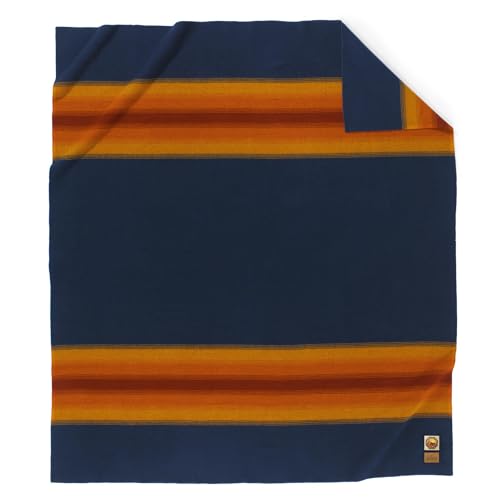
The Pendleton National Park Blanket is the wool camp blanket against which others are measured: 100 percent wool in a generous queen size (90 by 90 inches), napped for a softer hand, substantial at 6.2 pounds, and woven with National Park stripes — this listing in Grand Canyon Navy — that were designed for exactly the landscapes you will camp in. The maker positions it for home and outdoor adventure alike, and camping is where its size becomes strategy: wrap a whole bench of people at the fire, line a tent floor’s living area, or sleep under real coverage.
Strengths
- Full wool insulation that breathes and handles damp nights gracefully.
- Queen dimensions serve as blanket, wrap, ground cover, and shared fireside layer.
- Heritage construction built to be treasured and repaired, not replaced.
Trade-offs
- Car-camping weight and bulk; backpackers should admire it from the parking lot.
- Premium cost and gentle care — mud season demands patience at home.
- Too beautiful for some owners to use roughly; decide it is equipment and use it.
| Color | Grand Canyon Navy |
| Size | Queen (90″ x 90″) |
| Weight | 6.2 pounds |
Camp technique with the Pendleton: pair it with a sleeping pad or cot insulation beneath you, wear dry sleep layers, and let the wool be the top system in cool-to-cold car camping, supplemented by a sleeping bag as temperatures drop toward freezing — a blanket alone is not a winter sleep system, and this guide will not pretend otherwise. At the fire, wool’s relative spark tolerance is a comfort, not a permission: keep distance, shake off embers promptly. At home it returns to bed and couch duty, amortizing its cost across twelve months. Choose Pendleton for a lifetime camp blanket. Skip it for ultralight ambitions.
Best for: car campers, cabins, and fireside evenings / Not suited for: backpacking or expedition winter sleep
Choose Pendleton as your heirloom camp blanket. Check on Amazon
Woolino Toddler Blanket – Merino Wool and Organic Cotton Baby Blanket for Girls and Boys –
Our badge: Best for Kids
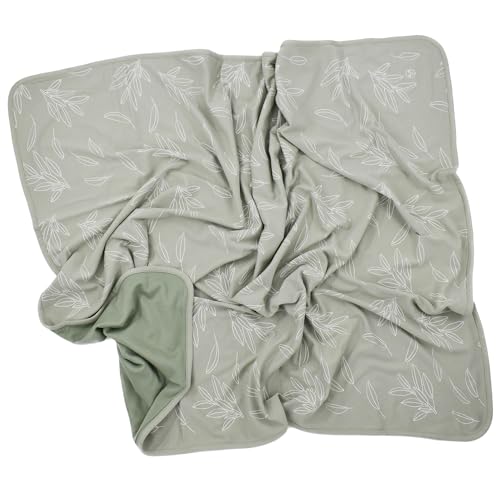
The Woolino Toddler Blanket – Merino Wool and Organic Cotton Baby Blanket for Girls and Boys – brings wool camping to the smallest campers: an Australian merino lining that regulates temperature in both directions, a GOTS-certified organic cotton outer per the maker, and a child-manageable size (about 52.5 by 40 inches) at a Sage color that hides camp dust gracefully. For toddlers and young kids in family tents, merino’s forgiveness — warm when the night drops, cool when the tent warms — solves the blanket-kicking, blanket-begging cycle parents know well.
Strengths
- Temperature regulation reduces kids’ overnight overheating and chilling.
- Right-sized for children to carry, arrange, and own proudly.
- Machine washable per the maker — family camping’s non-negotiable.
Trade-offs
- Child dimensions only; adults need their own wool layer.
- Premium pricing among kids’ blankets (verify on the listing).
- A layer within a child’s sleep system, not a sole winter solution.
| Color | Sage |
| Size | 40 inch |
Pack the Woolino as the child’s personal camp blanket: over sleep clothing inside a kid’s sleeping bag on cold nights, as the stroller and car-seat travel layer (used safely, never behind an infant in a car seat in ways that affect harness fit — follow car-seat guidance), and as the fireside wrap that makes a toddler feel like a real camper. Its nursery role is covered in Best Blankets For Newborns; camping simply extends the same regulation logic outdoors. Choose Woolino for young campers. Skip it as adult equipment.
Best for: toddlers and young kids in family camping / Not suited for: adult sleep systems
Choose Woolino for the youngest camper’s wool layer. Check on Amazon
Heavyweight Military-Style Wool Blanket (Prose-Only)
Our badge: Best for Durability
The military-style wool blanket — dense, heavy, often in olive or grey, described qualitatively with no link or invented specifications — is camping’s workhorse class: ground cloth under a tent, truck-bed layer, emergency car blanket, and rough fireside wrap that improves with abuse rather than retiring from it. Wool content in this class varies by maker, so the shopping skill is reading fiber percentages and choosing the highest wool content your budget allows.
Strengths
- Maximum abrasion tolerance for ground and vehicle duty.
- Dense weave blocks wind better than lofty home blankets.
- Typically the most affordable entry into real wool (compare listings).
Trade-offs
- Rough hand feel against skin; layer over clothing or a liner.
- Heavy and bulky — vehicle camping only.
- Surplus and replica quality varies wildly; inspect fiber content and stitching.
Own one as infrastructure: it lives in the vehicle, lines the tent, and comes home for a shake, an airing, and occasional gentle washing. Paired with a softer blanket for skin contact, it forms the classic two-blanket camp system. Choose military-style wool for durability-first kits. Skip it for comfort-first glamping.
Best for: vehicles, ground layers, emergency kits / Not suited for: skin-contact luxury
Choose military-style wool for indestructible camp infrastructure. No Amazon link is provided for this prose-only pick by design.
Midweight Wool-Blend Camp Blanket (Prose-Only)
Our badge: Best Budget
Wool-blend camp blankets — wool combined with synthetic fibers for strength and cost control, described without link or specs — bring genuine wool character to casual campers at gentler prices and with easier care. The blend trades some of pure wool’s moisture and odor performance for durability and washability, a trade many weekend campers should make gladly.
Strengths
- Real wool warmth and breathability at accessible tiers.
- Blends resist wear and simplify washing for frequent trips.
- Lighter than heavyweight wool for roof-box and tote packing.
Trade-offs
- Lower wool percentages dilute the fiber’s signature virtues — read labels.
- Synthetic content reintroduces melt sensitivity near fires; keep distance.
- Less heirloom longevity than 100 percent wool benchmarks.
Choose a blend with wool as the clear majority fiber, test its hand feel in person if possible, and assign it the same system role as pure wool: top insulation over ground padding. For twice-a-year campers, this class is the rational summit. Choose blends for balanced camp value. Skip them if you are buying a lifetime blanket — save for the Pendleton class instead.
Best for: casual and budget-conscious car campers / Not suited for: buy-it-for-life shoppers
Choose wool-blend for practical camp warmth. No Amazon link is provided for this prose-only pick by design.
Washable Wool Camp Blanket (Prose-Only)
Our badge: Best for Families
Family camping generates mud, spills, and mysterious stickiness at industrial scale, so this prose-only class honors wool designed or treated for machine washing — including superwash-style wools — described qualitatively without link or specifications. The value proposition is simple: wool’s camp performance with a laundry exit strategy that a parent will actually use on Sunday night.
Strengths
- Wool benefits without hand-wash dread after muddy trips.
- Kid and dog duty becomes sustainable across a whole season.
- Encourages owning wool as the primary camp blanket, not a precious spare.
Trade-offs
- Washable treatments vary; follow each maker’s cycle guidance exactly.
- Often midweight — pair with pads and bags in deep cold.
- Fewer heirloom-grade options in this class.
Verify washability claims on the specific listing (cycle, temperature, drying) rather than trusting a headline, and wash before the first trip to learn the blanket’s behavior at home. Choose washable wool for family basecamps. Skip it if your camping is adult, careful, and infrequent — pure wool’s longevity serves you better.
Best for: family camping with real laundry needs / Not suited for: heirloom-focused buyers
Choose washable wool for mud-season sanity. No Amazon link is provided for this prose-only pick by design.
Compact Travel Wool Blanket (Prose-Only)
Our badge: Best Compact
The compact travel wool class — thinner, tightly woven wool blankets that fold or roll small, described without link or specs — serves road trips, van life, and the lightest car-camping kits. It will not out-insulate a Pendleton, but it rides along on trips where the big blanket stays home, and a present blanket beats a perfect absent one in every cold snap.
Strengths
- Packs small enough to live in the vehicle permanently.
- Wool’s odor and moisture virtues survive the diet.
- Doubles as picnic, stadium, and emergency layer year-round.
Trade-offs
- Thin insulation: a layer and a wrap, not a cold-night sleep system.
- Tight weaves feel less cozy than napped wool.
- Quality varies; thin and cheap is just thin — judge fiber content first.
Keep the compact wool in the car with the sherpa throw from our cold-weather guide and you own a complete mobile warmth kit. Choose it for readiness. Skip it as your primary camp blanket for cold destinations.
Best for: road trips, van kits, permanent car layers / Not suited for: primary cold-night insulation
Choose compact wool to always have wool with you. No Amazon link is provided for this prose-only pick by design.
Buying Wool Secondhand and Judging Wool in Person
Wool’s longevity creates a real secondhand market — estate sales, surplus stores, and resale listings carry camp-worthy wool at fractions of new prices — and judging it in person is a learnable skill. Start with the label, if it survives: fiber percentage first, then care instructions, then size. Unlabeled wool can still be judged by hand and eye: wool feels springy and slightly resilient when squeezed, recovers from compression rather than staying flat, and has a matte, slightly textured surface rather than a synthetic sheen. Hold the blanket to the light to find thin spots, moth damage, and repairs; check edges and corners, where wear concentrates; and smell it — stored wool should smell like textile, not mildew, and a mildewed blanket is a project, not a purchase, unless the price reflects hours of airing and gentle washing with uncertain results. Weigh it in your hands against its size: camp wool should feel substantial for its dimensions, and a large blanket that feels suspiciously light is usually a low-wool blend trading on appearance.
New wool deserves the same hands-on skepticism wherever you shop. Read the fiber percentage on the actual listing or label rather than the headline, because headlines say wool while labels confess blends. Check the return policy before a first wool purchase in a new class: hand feel is personal, and a blanket you will handle nightly should please your hands, not merely satisfy a specification. For gifts, the Pendleton class carries the safest combination of verified fiber, generous size, and presentation, while the military-style class makes a practical gift for new drivers and new homeowners as vehicle equipment. In every case, buy the highest wool content the role and budget allow, in the size the role demands, from a listing that states both plainly — wool shopping rewards literal-mindedness, and vague listings are vague for a reason.
Sizing for two people deserves explicit guidance, because couples routinely under-buy. A throw covers one seated person well and two people badly; a queen like the Pendleton wraps two at a fire and covers two sleepers as a top layer over individual bags or pads. If the blanket’s main job is shared fireside and shared sleep in a car-camping tent, buy queen without hesitation. If its job is one sleeper who wraps and rolls, a generous throw or twin can actually perform better, with less excess fabric to manage. Solo campers who use the blanket as tent-floor living space should also size up: the floor role consumes dimensions that sleeping math alone would call surplus. Measure your tent’s living area and your cot or pad width before ordering, and let those numbers, not generic size charts, settle the choice.
Comparison Table
| Pick | Wool content | Size class | Camp role | Check price on Amazon |
|---|---|---|---|---|
| Pendleton National Park | 100% wool | Queen 90″ x 90″ | Primary blanket + wrap | Check price on Amazon |
| Woolino | Merino + organic cotton | Child ~52.5 x 40 in | Kids’ layer | Check price on Amazon |
| Military-Style (prose) | High wool, varies | Large | Ground + emergency | Check price on Amazon |
| Wool-Blend (prose) | Wool-majority blend | Throw to bed | Primary, casual | Check price on Amazon |
| Washable Wool (prose) | Wool, wash-treated | Throw to bed | Family primary | Check price on Amazon |
| Compact Travel (prose) | Wool, thin weave | Compact | Vehicle + wrap | Check price on Amazon |
How to Choose the Best Wool Blankets for Camping
Decide car camping versus carrying honestly
Wool’s weight is a feature in a vehicle (stability, durability, no compressing) and a flaw on your back. Car campers should buy the best wool they can keep for decades. Backpackers should enjoy wool at the trailhead and carry modern lightweight insulation on the trail. Van and cabin campers split the difference with midweight and compact classes.
Read wool percentage like it matters — it does
One hundred percent wool performs the full fiber symphony. Wool-majority blends keep most of it with easier care. Wool-minority blends are synthetic blankets with wool seasoning — price and expect accordingly. The percentage is the product; everything else is styling.
Build the sleep system, not just the blanket
Ground pad or cot insulation below, dry base layers on skin, wool above, and a sleeping bag joining as temperatures demand. In shoulder seasons, wool over a bag extends comfort and protects the bag from damp and sparks. In deep cold, wool is a layer within a rated system, never the system itself. Cold-system depth is in Best Blankets For Cold Weather Camping.
Plan care for camp reality
Shake and air wool after every trip, spot-clean promptly, wash gently and rarely, and store fully dry with airflow. Camp wool that is stored damp returns as a science project. Keep one trip per season as the deep-clean trigger rather than washing after every weekend — wool’s odor resistance exists to be used.
Understand weight as information, not just burden
In wool, weight per size tells you about density, and density tells you about wind resistance, ground-duty tolerance, and how the blanket will drape and stay put on a sleeper who moves. A substantial blanket settles over the body and resists being kicked off in the night, which is a genuine sleep-quality feature in a tent where re-tucking at 2 a.m. means waking fully in the cold. That same weight becomes a liability only when you carry it on your back or pack it in a volume-limited van, which is why this guide keeps returning to carry method as the first decision. Weigh your current home blanket if you need a reference point, compare it honestly with the 6.2-pound Pendleton class, and decide with numbers rather than with surprise at the trailhead. Campers who make this decision deliberately almost never regret wool; campers who discover wool’s weight in a parking lot sometimes do, and the blanket was never the problem.
Match the nap and weave to skin contact
Napped wool, brushed to raise a softer surface, suits skin-contact roles: sleeping under it in light clothing, wrapping bare shoulders at the fire, covering children. Tightly woven, un-napped wool suits infrastructure roles: ground layers, vehicle duty, wind-exposed wrapping over clothing. The Pendleton’s napped finish is part of why it can serve both bed and camp, while the military-style class’s tighter, rougher weave is part of why it survives ground duty that would pill a napped surface. If one blanket must do everything, choose napped and protect it with a ground cloth; if two blankets are affordable, let each specialize. Hand feel is not vanity in this decision — a blanket whose texture irritates you will be left folded while you shiver under something worse, and the best blanket is unfailingly the one that gets used.
How to Use a Wool Blanket Around a Campfire Safely
Sit with the blanket over legs and shoulders at a respectful distance — wool tolerates stray sparks better than synthetics but burns and chars with direct flame or ember contact, so treat every blanket as flammable in practice. Keep edges out of fire rings and cooking zones, shake the blanket out away from the fire after use to dislodge embers, and never dry a wet blanket draped over flames or a stove. Store the night’s blanket inside the tent or vehicle, not by the fire pit, and teach kids the same distances you keep yourself.
Problem: You wake cold despite a heavy wool blanket. — Cold is coming from below or from gaps. Add ground insulation, seal shoulder gaps, and add a bag layer before blaming the wool.
Problem: The blanket feels damp by morning. — Tent condensation is the usual source. Vent the tent, keep the blanket off tent walls, and air it at breakfast — wool handles this cycle better than any alternative here.
Problem: Wool smells like campfire for weeks. — Air it outside for a full day, store with airflow, and reserve deep washing for true need. Smoke odor fades from wool faster than from synthetics.
Problem: The blanket is too bulky for the car. — Roll rather than fold, use it as the packing layer around fragile gear, or step down to the compact class for that vehicle.
Wool Blanket Care for Campers: The Seasonal Ritual
After the season’s last trip: shake, air for a day, inspect edges and thin spots, mend small damage promptly (wool repairs graciously), wash gently only if needed, dry completely, and store loose in a breathable bag in a dry place. Note repairs and trip lessons in the storage bag — next season’s packing list writes itself. Wool treated this way does not merely last; it accumulates the patina and trip history that make a camp blanket a family artifact. The Pendleton class rewards this ritual most, but every wool class here benefits.
One more care distinction matters for campers who also use their wool at home: home use is gentle, camp use is abrasive, and rotating a single blanket through both without inspection lets camp damage hide until it spreads. After each trip, run the quick check — edges, thin spots, ground-side debris shaken out fully, dampness aired away — before the blanket returns to the bed or couch. Keep a simple mental ledger of which role each wool blanket played on the trip, because the ground-duty blanket needs washing and inspection sooner than the sleep-duty blanket, even when they look similar folded. Households with two wool blankets should assign permanent roles for exactly this reason: infrastructure wool and comfort wool age at different speeds, and mixing their roles randomly ages both at the faster speed. Clear roles, like clear storage, are unglamorous habits that quietly decide whether wool ownership feels effortless or disappointing over a decade of trips.
Layering Wool With the Rest of Your Kit
Wool plays well with others: over a fleece mid-layer for trapped-air depth, under a wind shell or tarp edge when breeze strips loft, over sleeping bags for damp protection, and under sleepers as a tent-floor living layer (with a ground cloth beneath to protect it). Avoid sealing wool inside waterproof layers on damp nights, where its moisture management suffocates — wool wants to breathe even while it works. The best camp systems in this series pair wool with the distributed sherpa throws from Best Blankets For Cold Weather for sitting warmth, reserving the wool for sleep and fire duty.
Real Nights Out: How Wool Performs Across a Full Trip
A single cold night flatters almost any blanket; a four-night trip tells the truth, and wool’s advantages compound over days. On night one, the Pendleton over a pad feels simply warm. By night three, the differences that matter are the ones synthetics struggle with: the wool does not carry the accumulated stuffiness of three nights of body moisture, it does not smell like a closed tent, and it has not developed the static crackle that makes fleece unpleasant in dry mountain air. Shake it out each morning, drape it over a camp chair or a line in the sun while you make breakfast, and it resets in a way that takes a washing machine to achieve with most alternatives. That daily reset ritual takes two minutes and is the real reason experienced car campers stay loyal to wool long after lighter, cheaper options appear: the blanket manages the trip’s moisture and odor budget for you, quietly, every single day.
Damp trips separate wool from the field even more clearly. Coastal camping, river valleys, and shoulder-season trips where dew settles on everything test a blanket’s damp behavior nightly. Cotton fails this test badly, chilling as it absorbs water. Down loses loft when wet. Wool absorbs vapor into the fiber while the surface still feels comparatively dry, and it keeps insulating through that process, which is why a wool top layer over a sleeping bag is such a reliable damp-night strategy: the wool takes the condensation that would otherwise settle into the bag. If the blanket itself gets genuinely wet — rain through a vent, a spilled bottle — wring it, hang it where air moves, and expect it to keep providing usable warmth while it dries, rather than demanding to be dried before it can be used. At home after a wet trip, dry it completely before storage without exception; wool forgives damp nights outdoors far better than damp weeks in a sealed bin.
Wind is the third test, and it favors dense weaves. On exposed sites, a lofty blanket can feel warm in still air and useless in a breeze that strips its trapped air. The heavyweight military-style class and the Pendleton’s substantial weave resist that stripping better than light throws, especially when tucked around the sleeper or wrapped over shoulders at the fire. For fireside use specifically, learn to wrap with the blanket’s bulk at your back, facing the fire: your front takes radiant warmth, your back is sealed against the cold air behind you, and the blanket becomes a personal microclimate. Rotate people, not blankets — a shared queen wool at the fire covers a bench more democratically than three thin throws, and its weight keeps it in place when wind gusts through camp. These are small techniques, but wool rewards technique because its performance ceiling is high; a well-used wool blanket outperforms a carelessly used technical system on most car-camping nights.
Choosing Wool by Trip Type: A Field Guide Within the Guide
Festival and campground camping — drive-in sites, neighbors nearby, short walks to facilities — is the Pendleton’s home turf, with washable wool close behind for families. Weight is irrelevant, laundry is close, and the blanket doubles as picnic layer, concert wrap, and tent-floor rug. Buy coverage and durability here, and do not apologize for the premium class; cost per night collapses over a decade of festivals. Dispersed and forest-service camping adds rough ground, longer drives, and fewer facilities: add the military-style blanket as ground and vehicle infrastructure, because the good wool should not be the layer that meets gravel and pine sap directly. Hunting and fishing camps prize the same pairing for a different reason — wool is quiet. It does not rustle or swish like synthetic shells, it tolerates cabin woodstove sparks within safe-distance rules, and it works as an extra layer during long, still sits in cold blinds when worn over clothing, though it never replaces rated cold-weather clothing systems.
Beach and desert camping invert the usual assumptions and still suit wool surprisingly well. At the beach, a wool blanket is not the sand layer — sand shakes off wool reasonably well, but a dedicated ground cloth protects it — it is the after-sunset layer when ocean wind turns a warm day cold in twenty minutes, and its breathability prevents the clammy chill that synthetic throws develop in salt air. In the desert, wool manages the extreme day-night swing: nights cold enough to want real insulation, mornings warm enough that you want the blanket to breathe rather than bake. Van lifers and overlanders should weight the compact and midweight classes more heavily, because storage volume, not vehicle payload, is their constraint; a compact wool that lives permanently in the van beats a queen wool that gets left behind for space on half the trips. Winter car camping deserves its final word: wool belongs in the system — over the bag, at the fire, across the tent floor — but the system itself must be rated for the temperatures, with pad insulation, bag rating, clothing, and shelter all doing their jobs. Wool’s honesty is part of its appeal: it never claims to be a survival product, and neither does this guide.
Finally, consider who else uses the blanket. Dogs claim camp blankets completely, and wool tolerates that claim better than most textiles: hair shakes out more readily than from fleece, odor washes out with airing, and the weave survives claws that shred lofty quilts. Assign the dog the military-style or washable layer and protect the Pendleton’s fireside dignity, or accept a shared-blanket household and choose washable wool as the primary. Either decision is fine; drifting into it without deciding is how the heirloom ends up as the mud mat. Kids follow the same logic with the Woolino as their owned layer — a blanket that is theirs gets carried, arranged, and cared for with a pride that borrowed adult blankets never inspire, and building that ownership early is worth more than the blanket itself.
Common Buying Mistakes
Buying wool-minority blends at wool prices
Read the percentage before the price tag impresses you. Majority wool or walk away — the fiber is the entire point of this keyword.
Taking a home wool blanket backpacking
Queen wool weighs pounds that modern insulation measures in ounces. Match the blanket to the carry method without nostalgia.
Sleeping on cold ground under great wool
Conduction defeats insulation from below. A pad is not optional equipment that a better blanket replaces.
Storing camp wool damp or sealed
Mildew and odor move into damp sealed wool within days. Dry fully, store breathable, and air before each season.
Repairs, Storage, and Handing a Wool Blanket Down
Wool is one of the few camp textiles that rewards repair instead of punishing it. A small moth nibble, a snagged edge, or a worn corner on a wool blanket can be darned, patched, or rebound by any tailor — and by many owners with a needle and patience — returning the blanket to full service rather than to a landfill. Act on damage early: a tiny hole ignored through a season of folding and packing becomes a tear, while the same hole darned in ten minutes disappears into the napped texture. Keep a small repair habit alongside the seasonal care ritual: inspect edges where folding stress concentrates, check for thinning where the blanket meets cot frames or tent floors, and rotate how you fold it so the same creases do not bear every trip. The Pendleton class justifies professional care — rebinding an edge after a decade is maintenance, not extravagance — while military-style wool invites owner repairs without preciousness.
Storage decides whether repairs ever get the chance to matter. Store wool clean, completely dry, and loosely folded or rolled in a breathable cotton bag, in a dry place with some air movement. Sealed plastic bins trap residual moisture; crowded closets crush the nap; garages swing temperature and invite pests. If your storage area has a history of moths, use the protective measures your local extension or textile-care guidance recommends for wool, and inspect stored blankets mid-season rather than discovering damage at the trailhead. A blanket pulled from good storage needs only an airing before the first trip; a blanket pulled from bad storage needs a rescue. Over years, this storage discipline is the entire difference between a wool blanket that becomes a family artifact — the one in decades of camp photos — and one that survives three seasons. Both started as the same purchase; only the Sundays at home differed.
Final Recommendation
Buy the Pendleton National Park Blanket as your car-camping and cabin wool standard, add the Woolino for young campers — Check on Amazon — and fill utility roles with military-style or washable wool classes as your trips demand. Build the pad-below, wool-above system, and cold camps become the trips you retell fondly.
Frequently Asked Questions
Why is wool good for camping?
Wool insulates while managing moisture, resists odor across days, tolerates rough use and campfire proximity better than melt-prone synthetics, and works as blanket, wrap, and ground layer in one durable textile.
Can a wool blanket replace a sleeping bag?
In mild car camping with proper ground insulation and clothing, a heavy wool blanket can serve. In cold conditions, no — use a rated sleeping bag system and let wool supplement it. This guide never rates blankets for survival temperatures.
How do I wash a wool camp blanket?
Rarely, gently, and exactly per its label: cool water, minimal agitation, flat or low-heat drying as directed. Shake and air after most trips instead. Washable-wool classes exist for families who need more frequent laundry.
How should I pack a wool blanket for a car-camping trip?
Roll it tightly and use it as structure in the vehicle: rolled wool fills dead space between bins, cushions fragile gear, and unrolls without the sharp creases that folded synthetics keep for days. Pack it last-in, first-out if it is your fireside layer, so the evening setup does not require unloading the car to reach it, and pack it on top of the sleep system if it is your primary top insulation. Keep it in the cabin or a dry cargo area rather than an open truck bed unless weather is certain, and carry a simple dry bag or tote for the military-style ground layer, which collects the most dirt and should travel separated from skin-contact textiles. On the drive home, the same discipline in reverse — damp or dirty wool rides in the tote, not sealed against clean gear — prevents the entire load from smelling like the trip for a week.
What size wool blanket is best for camping?
For solo car camping, throw-to-queen sizes all work; queen (like the Pendleton) maximizes wrap, sharing, and ground uses. For kids, child sizes they can manage themselves build better campers than adult hand-me-downs.
Should I bring a wool blanket on a trip where rain is forecast every day?
Bring it as your in-tent and in-vehicle layer, and protect it in transit with the dry tote described earlier. Wool’s damp tolerance makes it the best blanket for exactly this forecast, provided the shelter itself is sound — no blanket compensates for a tent pitched in a depression or a failed rainfly. Set camp so the blanket lives off the ground on a cot or pad, air it under shelter whenever rain pauses, and give it the full home drying ritual after the trip. Forecast rain is a reason to manage wool carefully, not a reason to leave your most damp-capable textile at home.
Does wool keep you warm when wet?
Wool retains more insulating character when damp than cotton (which chills badly) and feels less clammy than many synthetics — a key reason campers trust it. It is not magic: dry layers and shelter still decide cold nights.
How long will a wool camp blanket last?
With seasonal care, a quality 100 percent wool blanket lasts decades and multiple tents. Blends and washable classes trade some lifespan for convenience. Longevity is wool’s core economics. Judge that economics honestly when prices surprise you: divide the Pendleton-class cost by twenty seasons of car camping, cabin weekends, home winter use, and vehicle emergencies, and compare the result with replacing an inexpensive synthetic throw every few seasons as its loft dies and its odor becomes permanent. Wool also holds resale and hand-me-down value in a way synthetics do not, because its performance does not depend on fragile loft or coatings. The blanket that costs the most on purchase day is very often the blanket that costs the least per night of actual warmth — provided, always, that its weight and care fit the way you truly camp, which is the judgment the rest of this guide exists to help you make before you spend anything.


