Disclosure: As an Amazon Associate, dailyhomedecorating.com earns from qualifying purchases. Links to Amazon on this page are affiliate links; they cost you nothing extra. Prices and availability change often, so check the current Amazon listing before you buy.
The best wool blankets for survival earn that label in the worst conditions you own a blanket for: a power outage in a cold snap, a car stranded overnight, a wet camping trip where everything else you packed is damp. Wool dominates emergency kits for reasons that are material science, not nostalgia. Its fibers insulate in crimped air pockets, absorb a remarkable amount of moisture vapor while still feeling comparatively dry and warm, resist flames rather than melting like synthetics, suppress odor across days of use, and keep working when dirty in ways that lofted synthetic fills do not. A wool blanket is also dual-purpose in a way emergency gear should be: it is a bed blanket at home, a wrap at a cold game, a ground layer, an improvised stretcher or carry cloth, and a signal-visible layer depending on color.
This guide reviews the verified wool options in our pool — one outstanding 100 percent wool bed blanket and one merino-and-organic-cotton blanket — and completes the six with prose-only descriptions of the classic survival wool formats (military-style, high-wool-content utility, emergency twin-pack, and heavyweight camp wool) that preparedness buyers compare, with no links and no invented specifications for those. You will also find the honest limits: wool is heavy, good wool is an investment, and a wool blanket is one layer of a survival system, not the system itself. For the home-bed side of wool, see also Best Warm Blankets For Bed and Best Outdoor Blankets For Cold Weather.
Where to Buy
The two linked picks are sold on Amazon, where you can check the current price, sizes, and colors. Start with the benchmark, the Pendleton National Park Blanket — Check on Amazon. The other linked pick: Woolino Merino Wool and Organic Cotton Blanket — Check on Amazon. The four prose-only survival formats are described in their review blocks with the construction features to look for at any retailer.
In this guide
Quick Picks
| Pick | Badge | Why it earns its place |
|---|---|---|
| Pendleton National Park Blanket | Best Overall | 100 percent wool, queen size, napped finish — heirloom insulation for home and emergency use. |
| Military-Style Wool Blanket (prose-only) | Best Classic Survival Pick | The traditional high-wool utility format: tough, compact for its warmth, endlessly repurposed. |
| High-Wool-Content Utility Blanket (prose-only) | Best Budget | Wool-rich blends that keep most of wool’s wet-weather virtues at an accessible tier. |
| Woolino Toddler Blanket – Merino Wool and Organic Cotton | Best for Kids’ Kits | Merino-lined organic cotton sized for children — the family kit’s small-person layer. |
| Heavyweight Camp Wool Blanket (prose-only) | Best for Camping | Maximum-density wool for vehicle kits, cabins, and cold-weather camping systems. |
| Emergency Wool Twin-Pack Format (prose-only) | Best for Multiple Kits | Value multi-packs that put a wool layer in every car and bag rather than one perfect blanket at home. |
Key Takeaways
- Wool content is the first spec: higher wool percentages keep more of wool’s wet-warmth and flame-resistant character.
- Wool insulates when damp and resists odor and flame — the three survival virtues synthetics struggle to match together.
- Weight is the trade: wool warmth is heavy warmth, so place blankets in cars and cabins rather than counting on carrying them far.
- One excellent wool blanket at home plus simpler wool layers in each vehicle beats a single perfect blanket for real emergencies.
- A wool blanket is a layer in a system — shelter, ground insulation, and dry clothing matter as much as the blanket.
How These Picks Were Chosen
From the verified pool we selected the two genuinely wool-built blankets and reviewed them with their real specifications: a 100 percent wool full-size blanket and a merino-lined organic cotton children’s blanket. The classic survival formats that dominate this keyword’s market — military-style and utility wool — are not in the pool, so they appear as prose-only picks described by construction and role, without links or fabricated specifications. Evaluation criteria for the category: wool percentage, density and weight for warmth, size for full-body coverage, edge finishing for durability, and versatility across home, vehicle, and camp use. We excluded fleece and synthetic emergency blankets from the picks because the keyword asks for wool, while noting in the guide where synthetics legitimately complement a kit. No ratings or prices were used.
The 6 Best Best Wool Blankets for Survival — Reviewed

Pendleton National Park Blanket
Our badge: Best Overall
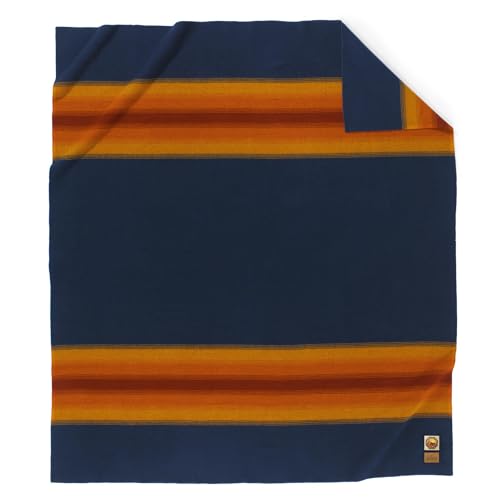
The Pendleton National Park Blanket is 100 percent wool in a queen 90 by 90 inch format weighing 6.2 pounds, with a napped texture and the National Park stripe designs. For survival purposes its virtues are purity and coverage: no synthetic dilution of wool’s moisture and flame behavior, and enough size to wrap an adult fully, double as a two-person couch layer in an outage, or serve as an insulating ground or vehicle layer. At home it is simply a superb bed blanket, which means it will be maintained, located, and ready — the unglamorous readiness factor that defeats most dedicated emergency gear stored forgotten in a garage.
Strengths
- Pure wool performance: insulation when damp, natural flame resistance, odor resistance.
- Full queen coverage for wrapping, sharing, and improvised uses.
- Heirloom construction from a specialist wool maker — decades of service life.
Trade-offs
- Premium investment tier compared with utility wool formats.
- Heavy and bulky for backpacking; it is a home, cabin, and vehicle blanket.
- Too beautiful for some owners to abuse in mud-and-ground duty — a real psychological limit on emergency use.
| Color | Grand Canyon Navy |
| Size | Queen (90″ x 90″) |
| Weight | 6.2 pounds |
The dual-use doctrine favors this blanket strongly: gear that serves weekly gets inspected, cleaned, and kept accessible, so on the one night the power fails in a storm it is on the bed already. Use it as the household’s primary cold-weather blanket, keep a utility wool blanket in each car for the away-from-home scenarios, and the system covers both theaters. Care follows wool rules — air it, clean it gently and rarely per its label, store it clean and dry with ventilation. Choose Pendleton as the home-base wool layer of a serious preparedness setup. Skip it if you need several cheap blankets for multiple kits — that is the twin-pack format’s job.
Best for: Home and cabin primary wool layer, vehicle kits for one main car / Not suited for: Ultralight backpacking or multi-kit budgets
Choose it as the flagship wool layer; skip it for bulk kit building. Check on Amazon
Military-Style Wool Blanket
Our badge: Best Classic Survival Pick
The military-style wool blanket is the format that built this category: a dense, tightly woven blanket in olive, grey, or navy, traditionally high in wool content with stitched or whipped edges, sized around a twin-cot format and built to be rolled, strapped, and abused. Genuine surplus varies in condition; modern reproductions vary in wool percentage, which is the specification to interrogate hardest when shopping this format anywhere. This pick is prose-only — not in our verified pool — so judge candidates by declared wool content, weight in hand, edge finishing, and smell (heavy chemical odor suggests treatments you may not want against skin for days).
Strengths
- Dense, hard-wearing weave that tolerates ground use, sparks, and rough storage.
- Rolls compactly relative to its warmth — the classic bedroll and vehicle format.
- Simple construction with no fills or electronics to fail in the field.
Trade-offs
- Can feel coarse against skin compared with napped bed wool; many users pair it with a liner or clothing layer.
- Wool percentage varies wildly in this format — low-wool versions lose the wet-weather virtues.
- Surplus condition is a lottery; inspect for moth damage and thin spots.
In use, this is the blanket that lives in the truck, goes to deer camp, wraps pipes in a freeze, and pads a tailgate, accumulating the honorable scars of utility. Its toughness invites uses you would never ask of a Pendleton. If you buy one, wash it gently once, air it thoroughly, and store it where it will actually be grabbed — the hall closet by the door beats the attic. Choose the military style for vehicle and camp utility at the rugged end of the spectrum. Skip it as a primary bed blanket if skin feel matters to you nightly.
Best for: Vehicle kits, camps, and rough utility duty / Not suited for: Sensitive-skin nightly bed use
Choose it for rugged duty; skip it for plush bed comfort.
High-Wool-Content Utility Blanket
Our badge: Best Budget
Between pure wool and pure marketing sits the wool-rich utility blanket: a blend in which wool remains the majority fiber, partnered with synthetics that add tear strength and reduce cost. Done well, these retain most of wool’s insulation-when-damp and flame behavior while surviving harsher washing and handling. Done badly — wool as a minor ingredient — they are polyester blankets with a story. The shopping skill for this prose-only format is percentage literacy: insist on a declared wool content, treat vague wool-blend language as a low percentage until proven otherwise, and weigh the blanket in hand, since density is hard to fake.
Strengths
- Most of wool’s survival virtues at a tier that allows multiple purchases.
- Synthetic partners can add tear resistance and easier care.
- The rational choice for outfitting several kits and several family members.
Trade-offs
- Performance scales with wool percentage; low blends disappoint in wet cold.
- Quality control varies; edge stitching and shedding differ widely.
- Some blends feel scratchier than either pure wool or pure fleece.
For families building kits on a budget, this is the workhorse decision: a wool-rich blanket in every car and every bedroom closet protects more people than one perfect blanket in one location. Test yours before you need it — a cold night on the porch in October teaches you more than any label. Choose wool-rich utility for coverage across people and places. Skip ultra-cheap versions whose wool content cannot be verified.
Best for: Budget multi-kit building with real wool performance / Not suited for: Buyers who cannot verify wool percentage
Choose it for affordable coverage; skip unverifiable blends.
Woolino Toddler Blanket – Merino Wool and Organic Cotton
Our badge: Best for Kids’ Kits
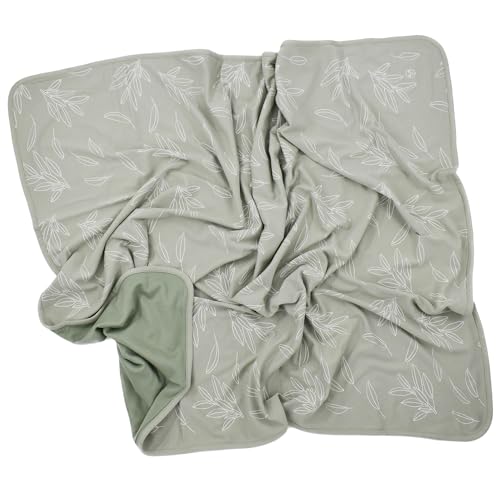
The Woolino Toddler Blanket – Merino Wool and Organic Cotton Baby Blanket pairs an Australian merino wool lining with a GOTS-certified organic cotton outer at 52.5 by 40 inches, in Sage. In a family preparedness plan, children need their own sized layers: an adult wool blanket overwhelms a small child, drags, and cannot be managed by its user. This merino-lined blanket gives a toddler or small child wool’s temperature regulation — warm in cold, not stifling in mild — in a soft, itch-free, machine-washable format designed for young skin.
Strengths
- Merino’s natural regulation suits children who cannot articulate too hot or too cold as clearly.
- Organic cotton outer is gentle, washable, and free of the coarseness of utility wool.
- Right-sized for small users, car seats on cold mornings, and family vehicle kits.
Trade-offs
- Children’s size only — it is a family-kit component, not an adult solution.
- Merino-cotton construction is less rugged than dense utility wool for ground duty.
- Premium materials tier for a blanket children outgrow.
| Color | Sage |
| Size | 40 inch |
Keep it with the child’s things — in the family car, the travel bag, the bedroom — so the layer is where the child is. In an outage it becomes the inner wrap under a shared adult blanket, a combination that keeps a small body warm efficiently. Follow all safe-sleep guidance for infants; blankets of any kind are for appropriate ages, and vehicle use should never interfere with harness fit — place blankets over a buckled harness, never under it. Choose Woolino to complete the family kit for its smallest members. Skip it if your kit serves adults only.
Best for: Toddlers and small children in family kits and cold-weather travel / Not suited for: Adult coverage or rough ground use
Choose it for the kids’ layer; skip it for adults. Check on Amazon
Heavyweight Camp Wool Blanket
Our badge: Best for Camping
The heavyweight camp blanket is the maximum-density end of the wool family: thick, heavy, often in plaids or solid outdoors colors, designed to be the insulating heart of a cold-weather sleep system on the ground or in a cabin bunk. Paired with a ground pad — insulation beneath you matters more than above you on cold ground — it has kept campers warm for generations before technical sleeping bags existed. Prose-only here, this format should be shopped by weight and density: a camp wool blanket should feel almost inconveniently heavy in the hand, with tight weaving you cannot easily see light through.
Strengths
- Maximum wool warmth and durability for static camp and cabin use.
- Tolerates sparks, ground use, and years of rough handling better than fills and shells.
- Silent and simple — no zippers, shells, or loft to manage in the dark.
Trade-offs
- Far too heavy for any real backpacking distance.
- Slow to dry once thoroughly wet; plan camp routines accordingly.
- Coarse finishes are common; a liner improves skin comfort significantly.
Camp craft multiplies this blanket’s value: fold it as a ground layer under a pad, wrap it burrito-style with the edges tucked to seal drafts, or pair two for deep cold. Around the fire it shrugs off the sparks that would perforate a synthetic bag — one of wool’s oldest field virtues. Choose heavyweight camp wool for vehicle-based camping, hunting camps, and cabins. Skip it for anything carried on your back beyond a short walk.
Best for: Car camping, cabins, and hunting camp sleep systems / Not suited for: Backpacking or fast-and-light travel
Choose it for static cold camps; skip it for the trail.
Emergency Wool Twin-Pack Format
Our badge: Best for Multiple Kits
The final format is a strategy disguised as a product: wool or wool-rich blankets sold in pairs or multi-packs at accessible tiers, intended to seed every location that needs one — each car, the workplace bag, the kids’ rooms, the in-laws’ spare bed. Individually they are rarely the finest blankets; collectively they solve the actual distribution problem of emergencies, which happen where you are, not where your best gear is stored. Shop packs by the same percentage and density checks as the utility format, and inspect every blanket on arrival, since pack quality can vary within a bundle.
Strengths
- Coverage across locations and people — the metric emergencies actually grade.
- Accessible tier makes annual kit-building realistic for families.
- Spares enable lending, layering, and replacement without a shopping trip.
Trade-offs
- Individual quality and finish sit below single premium blankets.
- Wool content must be verified pack by pack; some packs are mostly synthetic.
- Storage discipline is on you — a pack in a damp garage degrades together.
Label each blanket’s destination when the pack arrives and distribute them the same day; a twin-pack that stays shrink-wrapped in one closet is a single point of failure wearing a costume. Recheck kits each autumn: confirm the blankets are present, dry, and undamaged, and rotate the car blankets through a wash and airing. Choose the pack format to finish a household’s coverage map. Skip it if your locations are already covered and you are upgrading quality instead.
Best for: Completing coverage across cars, rooms, and family members / Not suited for: Buyers seeking one heirloom-grade blanket
Choose it for distribution; skip it for heirloom quality.
Comparison Table
| Pick | Size | Weight | Color | Check price on Amazon |
|---|---|---|---|---|
| Pendleton National Park Blanket | Queen (90″ x 90″) | 6.2 pounds | Grand Canyon Navy | Check price on Amazon |
| Military-Style Wool Blanket (prose-only) | — | — | — | Check price on Amazon |
| High-Wool-Content Utility Blanket (prose-only) | — | — | — | Check price on Amazon |
| Woolino Toddler Blanket – Merino Wool and Organic Cotton | 40 inch | — | Sage | Check price on Amazon |
| Heavyweight Camp Wool Blanket (prose-only) | — | — | — | Check price on Amazon |
| Emergency Wool Twin-Pack Format (prose-only) | — | — | — | Check price on Amazon |
How to Choose the Best Wool Blanket for Survival
Wool Percentage Is the Master Specification
Everything wool is famous for — insulation when damp, flame resistance, odor suppression — scales with how much wool is actually in the blanket. Pure wool maximizes it. Majority-wool blends keep most of it. Minority blends are synthetics with garnish. Demand the number, and be suspicious of any listing that will not state it. Where a percentage cannot be verified, judge by weight, density, and a burn-adjacent skepticism toward marketing words like wool-style.
Size for Wrapping, Not Just Covering
In the field you wrap: shoulders sealed, edges tucked, sometimes two people under one blanket in a vehicle. Twin-cot sizes are the survival minimum for an adult; bed sizes give real wrapping margin. A blanket that only covers a torso leaves the shoulders — the draft gap — exposed, and field warmth is lost at the gaps.
Density and Edge Finishing Predict Lifespan
Hold the blanket to the light: dense wool shows little light through the weave. Check edges for stitching or whipping that will survive being dragged, folded, and sat on. Thin, loosely woven wool pills, tears at folds, and disappoints in its first real winter. In survival gear, boring construction quality is the feature.
Plan Placement Before Purchase
Decide where each blanket lives — main bed, each vehicle, cabin, go-bag (only if weight allows) — and buy formats to match: napped pure wool where comfort matters, dense utility where abuse is expected, small merino where children are the users. A blanket without an assigned place becomes garage clutter; a blanket with a place becomes a system.
Build the System Around the Blanket
Ground insulation (a pad or layered materials beneath you) prevents the cold ground from defeating any blanket. A wind and rain shell — even a simple tarp — multiplies wool’s value by keeping it drier. Dry base layers and a hat transform the same blanket’s performance. Buy the blanket as the core of a small system, not as a solo talisman.
How to Use and Care for Wool Blankets in the Field and at Home
In use, keep wool as dry as circumstances allow — it performs when damp, but drier is always warmer — and shake and air it whenever sun and wind permit, since wool releases moisture and odor readily to moving air. Seal drafts by tucking edges under the body or sitting on the blanket’s margins; around a fire, keep a respectful distance even though wool resists sparks better than synthetics. At home, wash wool rarely and gently with wool-appropriate detergent or per the maker’s label, dry it with airflow rather than high heat, and store it clean, fully dry, and ventilated, with protection against moths for long storage. Inspect stored blankets each autumn for moth damage and mildew, because the time to discover a ruined blanket is October, not during the outage. Repair small holes promptly; wool darns well, and a repaired blanket loses little performance.
Problem: The wool blanket feels scratchy — Use a liner layer — a cotton sheet, a base layer, or a light blanket — between skin and wool; napped and merino wools are the low-itch upgrades for nightly use.
Problem: The blanket got soaked — Wring gently without twisting hard, hang it with maximum airflow and support, and expect slow drying; wool’s virtue is that it still insulates while you wait.
Problem: Musty or smoky smell after an event — Air outdoors in shade for a day or more; wool releases odors remarkably well. Wash gently only if airing fails.
Problem: Moth holes found in storage — Isolate the blanket, clean it, repair the holes, and review storage: clean wool, ventilated space, and moth deterrents for long-term storage.
Problem: The blanket is warm but the sleeper is still cold from below — Ground conduction is defeating it. Add insulation beneath — a pad, layered blankets, or any thick barrier between body and ground or cold surface.
What Makes Wool Different: The Fiber Science Behind the Reputation
Wool’s survival reputation is not folklore; it rests on measurable fiber behavior that no common synthetic fully imitates. A wool fiber can absorb a remarkable share of its own weight in moisture vapor — drawn into the fiber’s core rather than sitting on its surface — while still feeling comparatively dry to the touch and, crucially, still trapping air in the fabric’s structure. Insulation is trapped air, so a fabric that manages moisture internally instead of collapsing around it keeps insulating in damp conditions that defeat cotton completely and compromise synthetics. That absorption is also mildly exothermic: as wool takes up moisture it releases a small amount of heat, a subtle effect outdoorspeople have described for generations as wool feeling warm the moment it goes on in cold, damp air. Add wool’s natural crimp, which gives woven blankets a springy, air-holding loft that resists packing flat, and its inherent resistance to odor over multi-day use, and the material case is complete: wool is the blanket fiber engineered by evolution for exactly the conditions emergencies produce — cold, wet, dirty, and prolonged.
Two further properties matter in genuine hardship. Wool is naturally flame-resistant in a way synthetics are not: it chars and self-extinguishes rather than melting, and it does not drip molten material onto skin, which is why wool blankets have been standard issue around campfires, wood stoves, and vehicle kits for a century. A spark that burns a hole in a wool blanket melts a fleece blanket into a hard, sharp-edged scar and can injure the sleeper. Wool also endures: a dense, well-woven wool blanket tolerates years of being rolled, strapped, sat on, and stored in imperfect conditions, emerging shabby but functional, where synthetic piles crush and technical coatings peel. None of this makes synthetics useless — they are lighter, cheaper, and dry faster, and the next section weighs them fairly — but it explains why experienced preppers, sailors, and rural households keep returning to wool for the layer that absolutely has to work. The same fiber logic governs comfortable beds at home, which is why wool anchors so many picks in Best Warm Blankets For Bed as well as in emergency kits.
Wool vs. Synthetics in an Emergency Kit
Synthetic emergency gear has real virtues: space blankets weigh nothing, synthetic fills insulate cheaply, and fleece is soft and fast-drying. Their failure modes are wool’s strengths — synthetics melt near flame, many lose warmth or feel clammy when wet, and thin emergency films tear and rustle miserably through a long night. The mature kit uses both: a wool blanket as the durable, reusable core layer, synthetics as supplements (a film blanket in every glove box costs almost nothing in space). Weight is wool’s honest cost, which is why wool belongs to home, vehicle, and cabin kits rather than distance backpacking, where modern technical gear wins on grams. Judge your own scenarios — a stranded car, a winter outage, a cold cabin — and you will find wool’s weight is rarely the binding constraint in the emergencies households actually face. That realism is also why wool appears in our Best Fabric For Blankets analysis as the temperature-range champion among traditional fibers.
Judging a Wool Blanket in Hand: Weave Density, Wool Content, and the Blend Question
Survival marketing makes heavy use of the word wool, so buyers need tests that work at the listing page and in the hand. The first is wool percentage. A blanket that is mostly wool behaves like wool; a blanket with a minority wool content blended into acrylic or polyester behaves largely like its majority fiber, gaining a wool label more than wool performance. For a primary survival blanket, shop in the high-wool ranges and treat low-percentage blends as household blankets with a wool accent — fine on a couch, not the layer to stake a cold night on. The second test is weave density. Hold the blanket toward light: a survival-grade weave shows a tight, even structure with little light passing through, while a loose, gauzy weave will wind-whistle outdoors and wear quickly. Density is also why two wool blankets of identical size can differ by pounds — the heavier one usually carries more fiber per square yard, and for stationary kits in homes and vehicles, that weight is warmth and durability rather than a drawback.
The third judgment is finish. A napped or felted surface feels kinder against skin and traps air well; a hard, flat military-style weave shrugs off dirt, sparks, and abrasion best and can be shaken clean in the field. Neither is wrong — they are tools for different kits, the napped blanket for the home emergency closet and the bedroom, the hard weave for the truck box and the camp. Finally, test the edges and the smell. Bound or densely stitched edges survive years of rolling; a faint natural lanolin scent is normal in minimally processed wool and fades with airing, while a strong chemical odor suggests heavy finishing that will also fade — judge after a day of airing, not out of the packet. Buyers who learn these four checks stop gambling on labels, and they will find the same checks useful when reading the fiber discussion in Best Fabric For Blankets, where wool’s household grades are compared against cotton and fleece for everyday beds.
Preparing the Household: Kits by Location
Walk your own map. The bedroom: the Pendleton-class layer on the bed, plus knowledge of where flashlights and warm clothing live. The main car: a dense wool blanket, water, and the basics, checked each autumn — a stranded night is the most common real survival scenario in this entire guide. The second car and the workplace: utility or pack-format wool, because emergencies do not check whose vehicle you took. The cabin or family property: heavyweight camp wool on the bunks. Children’s rooms: their own sized layers, merino-soft, where they sleep. This distribution thinking — coverage over perfection — is the difference between preparedness as a hobby and preparedness as an outcome, and it is achievable at almost any budget by sequencing purchases across a year: home first, main car second, the rest as sales and seasons allow. Review the map every autumn with the same seriousness as changing detector batteries, and your wool will be where your people are when it matters.
Using a Wool Blanket Well Outdoors: Layering, Shelter, and Ground Insulation
A blanket is only half a sleep system outdoors, and the half most beginners neglect is underneath them. Cold ground conducts heat away from a sleeper far faster than cold air does, so the classic field arrangement puts insulation below first — a pad, a thick layer of dry natural material where appropriate, or at minimum the blanket doubled so half lies beneath — and only then worries about coverage above. Inside a vehicle stranded overnight, the same principle applies against cold seats and floors: sit and lie on insulation, then wrap. Above the sleeper, the wool blanket performs best as the outer or middle layer of a system rather than the only layer: a lighter blanket or clothing layers beneath trap air in stages, and the wool’s wind resistance and moisture handling protect the whole stack. This staged thinking is identical to the cold-weather kit building in Best Outdoor Blankets For Cold Weather, where ground insulation and wind management decide comfort before blanket choice is even discussed.
Around camp, the wool blanket earns secondary duties that synthetics handle poorly. It is the safe blanket near a fire — the one that can be worn while cooking and tending flames with the least worry about sparks, and the one to throw over a smoldering spot in an emergency. It makes a serviceable windbreak hung on the sheltered side of a camp, a ground cloth for sorting gear on damp earth, and a wrap for protecting fragile supplies in a vehicle. In a home power outage — the emergency most households will actually face — its duties simplify: beds get the wool layers, the family consolidates into one warm room, and the blanket that lives in the car kit comes inside as a spare. Practicing these arrangements once, on an ordinary camping night or a deliberate home drill, converts a stored blanket into a known tool. Gear you have used is gear you trust, and trust, in a cold and stressful night, is worth as much as insulation.
Common Buying Mistakes
Buying Wool-Blend Without a Percentage
A blanket that is mostly polyester with a whisper of wool will not insulate when wet or resist flame like wool. The consequence appears exactly when the blanket is needed most. Verify wool content or do not buy.
One Perfect Blanket, Wrong Location
An heirloom blanket at home does nothing for a breakdown forty miles away. Distribution beats perfection in emergency planning; cover the map first, upgrade later.
Ignoring Ground Insulation
Sleepers blame the blanket while cold ground drains their heat from below. Any blanket fails that test. Pair wool with a pad or layered ground barrier in every cold scenario.
Storing Wool Dirty or Damp
Moths, mildew, and fiber damage accumulate silently in storage. The blanket discovered ruined during an outage is a planning failure, not bad luck. Clean, dry, ventilate, inspect annually.
Expecting a Blanket to Be the Whole Plan
Warmth is one survival need among water, shelter, light, and communication. A wool blanket inside a thoughtless kit is a warm person with no water. Build the small whole system.
Storing a Survival Blanket for Years Without Ruining It
A survival blanket’s most dangerous environment is not the field; it is the closet, the garage shelf, and the vehicle trunk where it may sit untouched for years between needs. Wool’s great storage enemy is the clothes moth, whose larvae feed on keratin — and a blanket stored with body oils, food traces, or household dust in its fibers is a stocked pantry. The protocol is unglamorous and absolute: store wool clean. Wash or thoroughly air and brush the blanket before long storage, dry it completely, and fold it loosely in a breathable cotton bag or a sealed hard container where rodents and insects cannot reach, in the coolest, driest place available. Cedar and lavender deter moths mildly and are pleasant, but they are supplements to cleanliness and sealing, not substitutes for them. Check stored blankets twice a year — unfold, inspect for larvae or webbing at the folds, air in daylight, refold along different lines so creases do not become permanent weak points.
Vehicle kits impose harsher conditions: heat cycles in summer, cold in winter, and humidity year-round. Wool tolerates this better than most fibers, which is one more reason it dominates vehicle kits, but even wool benefits from an annual rotation — the car blanket comes inside for inspection and airing each spring, and any blanket showing early moth or mildew damage is replaced before it is needed at a roadside at midnight. Home kits stored indoors in stable conditions last longest, and the household that treats its emergency blankets like the household in Best Blankets For All Seasons treats its bedding — inventoried, rotated, inspected on a schedule — will find, on the one night a decade when the power fails in a storm, that every blanket in the house is clean, sound, and exactly where it is supposed to be. That quiet readiness, not any single specification, is what survival gear is actually for.
Final Recommendation
Anchor the home with the Pendleton National Park Blanket — pure wool, full coverage, and a bed blanket you will maintain because you use it weekly — then distribute utility: a military-style or wool-rich blanket in each vehicle, heavyweight camp wool where you camp, pack formats to finish the map, and the Woolino merino layer for the smallest family members; compare the children’s pick here: Check on Amazon. Verify wool percentages on every prose-only format you shop, pair every blanket with ground insulation in your planning, and inspect the whole system each autumn. That is what best means for survival: not the finest blanket, but the right wool, in the right places, ready.
Frequently Asked Questions
Why is wool better than fleece for survival?
Wool insulates when damp, resists flame rather than melting, suppresses odor over days, and tolerates dirt and rough use. Fleece is lighter and softer for everyday comfort, which is why many kits carry wool as the core and fleece as a comfort supplement.
What wool percentage should I look for?
As high as your budget allows. Pure wool maximizes wool’s properties; majority-wool blends retain most of them. Treat any product that will not declare its wool percentage as a low-content product.
Does wool really keep you warm when wet?
Wool fibers absorb moisture vapor into their structure while their crimped air pockets continue insulating, so wool feels warmer and drier in damp conditions than cotton or most synthetics. It is not magic — a soaked blanket still needs drying — but the margin is real and historically proven.
How heavy is a survival wool blanket?
Substantial: full-size pure wool in this guide is over six pounds, and utility formats are comparably dense. That is why wool belongs in home, vehicle, and cabin kits rather than long-distance packs.
How do I stop wool blankets smelling musty in storage?
Store them clean and completely dry in a ventilated space, air them outdoors periodically, and inspect each autumn. Mustiness is a storage report card: fix airflow and dryness, not the blanket.
Can children use wool blankets in emergencies?
Yes, with right-sized layers like the merino-lined Woolino for small children, adult supervision, and all ordinary safe-sleep and car-seat rules respected. Children lose heat quickly and cannot always say so — check them, do not just cover them.
How many wool blankets does a household actually need for emergencies?
Work per person rather than per room. One substantial wool blanket per household member covers the realistic scenarios — a winter power outage, a vehicle stranding, an evacuation night — with the household’s ordinary bedding as the second layer beneath them. Add one spare for the vehicle that gets the most winter use and one for the main living space if your emergency plan gathers everyone in a single room. Beyond that, additional blankets add storage burden faster than they add safety; money is better spent making sure the blankets you own are high-wool, sound, clean, and stored where you can reach them in the dark. A smaller number of genuinely good blankets, inspected twice a year, outperforms a closet of bargain blankets nobody has unfolded since purchase — in an emergency you will trust the gear you know, and knowing your gear starts with owning a manageable amount of it.
Is a wool blanket enough on its own in freezing weather?
On its own, no single blanket of any fiber is a complete answer to severe cold — and honest guidance matters more here than salesmanship. A wool blanket is the strongest single textile layer you can own, but freezing-weather safety comes from a system: insulation beneath you against ground or mattress cold, wind protection around you, dry clothing, a covered head, and shelter from precipitation. Within that system the wool blanket does the heaviest lifting of any layer. Outside that system — alone, on cold ground, in wind — even the best blanket only delays the cold. Build the system, respect its limits, and let the wool blanket be the reliable core it has been for generations of people who slept outdoors by necessity rather than choice. If you take one habit from this guide, make it rehearsal: spend one ordinary night using your kit at home, because the time to discover a torn strap, a musty blanket, or a missing layer is a calm evening in October, not the emergency itself.


