Disclosure: As an Amazon Associate, dailyhomedecorating.com earns from qualifying purchases. Links to Amazon on this page are affiliate links; they cost you nothing extra. Prices and availability change often, so check the current Amazon listing before you buy.
The best outdoor blankets for cold weather face a harder job than any indoor blanket: wind that strips warmth through ordinary fabrics, ground cold that conducts heat away from beneath you, damp grass and stadium concrete, sparks from the fire, and temperatures that fall through the evening just as the event gets good. Indoor blankets fail outdoors in predictable ways — they soak up ground moisture, flap and billow because they are too light, shed their warmth to the wind, and come home smelling of smoke with grass woven into their pile. An outdoor blanket earns its name through insulation that survives wind, enough weight or design to stay in place, tolerance for dirt and damp, and warmth you can wrap, sit on, or share across two people’s knees at a cold game.
This guide reviews four verified blankets that genuinely work outdoors — led by a pure wool blanket that has been the outdoor standard for a century — plus two prose-only formats (waterproof-backed picnic-style blankets and battery-heated outdoor blankets) that complete the category honestly, since our pool’s heated models are corded indoor products we will not pretend belong at a campsite. Whether your cold weather is a November sideline, a porch in January, or a tent in the mountains, the right layer is below. For vehicle and emergency placement of the same fabrics, see Best Wool Blankets For Survival.
Where to Buy
The four linked picks are sold on Amazon, where you can check the current price, sizes, and colors. Start with the outdoor benchmark, the Pendleton National Park Blanket — Check on Amazon. The other linked picks: Bedsure Faux Fur Fluffy Fleece Sherpa Blanket — Check on Amazon; Bedsure GentleSoft Sherpa Fleece Throw Blanket — Check on Amazon; Bedsure Fleece Bed Blanket — Check on Amazon. The two prose-only outdoor formats are described in their review blocks with the features to look for anywhere you shop.
In this guide
Quick Picks
| Pick | Badge | Why it earns its place |
|---|---|---|
| Pendleton National Park Blanket | Best Overall | 100 percent wool: warm when damp, spark-tolerant, wind-worthy, and big enough to share. |
| Bedsure Faux Fur Fluffy Fleece Sherpa Blanket | Best for Stadium and Porch | Deep dual pile that swallows cold air at games and on evening porches. |
| Bedsure GentleSoft Sherpa Fleece Throw Blanket for Couch | Best for Campfires | Sherpa warmth in a washable throw you will not mourn when it smells of woodsmoke. |
| Bedsure Fleece Bed Blankets Queen Size Grey | Best Budget | Queen-size fleece coverage for groups, car kits, and ground layers at an easy tier. |
| Waterproof-Backed Outdoor Blanket (prose-only) | Best for Wet Ground | Insulated top with a waterproof underside for damp grass, snow, and cold bleachers. |
| Battery-Heated Outdoor Blanket (prose-only) | Best Active Warmth | Portable powered heat for stationary cold — sidelines, hunting stands, ice fishing. |
Key Takeaways
- Wool is the outdoor gold standard: it insulates when damp, tolerates sparks, and blocks wind better than piles.
- Ground cold defeats blankets from below — sit on insulation, or double the blanket, whenever the surface is cold or wet.
- Size is warmth outdoors: a blanket must wrap shoulders and tuck under legs, or wind will find every gap.
- Keep one blanket system for outdoors only; smoke, grass, and damp should not rotate into the bedroom.
- Corded indoor heated blankets do not belong outdoors — portable battery formats are the safe active-heat route.
How These Picks Were Chosen
We evaluated the verified pool for outdoor cold duty: insulation under wind, moisture tolerance, size for wrapping and sharing, weight for staying put, and washability after smoke and dirt. Pure wool leads because its outdoor virtues are structural. Plush fleece and sherpa throws follow for stationary, dry-ish settings like stadiums and porches, with their limits stated. Two category essentials — waterproof-backed groundsheets-blankets and battery-heated outdoor models — are absent from the pool and appear prose-only; the pool’s corded heated blankets were deliberately excluded from outdoor recommendation on safety grounds, a choice explained in the heated camping context of Best Heated Blankets For Camping. No ratings or prices influenced the ranking.
The 6 Best Best Outdoor Blankets for Cold Weather — Reviewed

Pendleton National Park Blanket
Our badge: Best Overall
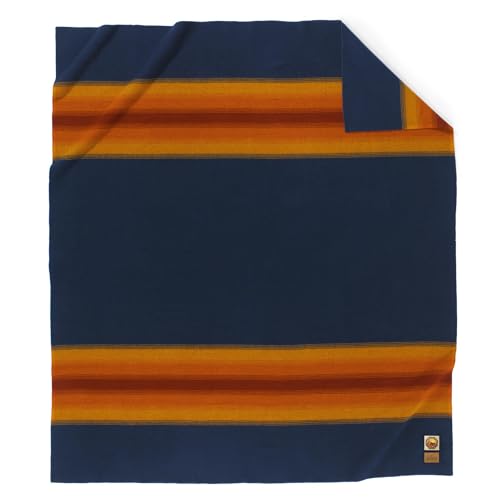
The Pendleton National Park Blanket is 100 percent wool at queen size (90 by 90 inches) and 6.2 pounds, with a napped finish and park-stripe designs. Outdoors, wool’s resume is unmatched by the synthetics in this guide: it keeps insulating when dew or drizzle dampens it, it does not melt when a campfire spark lands, its dense weave resists wind penetration, and it releases the day’s dirt and smoke odors to fresh air instead of holding them. The size wraps two people on a bleacher or one person completely, shoulders sealed, at a winter campsite.
Strengths
- Warm-when-damp insulation and natural spark tolerance — the two field virtues that matter most.
- Dense, wind-resistant weave with genuine weight that stays where you put it.
- Queen coverage for sharing, wrapping, and ground-layer duty.
Trade-offs
- Heavy and bulky — a car, cabin, and stadium blanket, not a hiking one.
- Premium tier; owners may hesitate to use it on wet ground (a groundsheet partner solves this).
- Slow to dry if fully soaked; plan around heavy rain rather than through it.
| Color | Grand Canyon Navy |
| Size | Queen (90″ x 90″) |
| Weight | 6.2 pounds |
Use it as the top insulating layer over a waterproof-backed blanket or tarp on damp ground, as the shared wrap at cold games, and as the cabin bunk’s main blanket. It is the blanket generations of campers have trusted because its failure modes are graceful: damp wool is still warm wool. Care is airing more than washing — shake it, hang it in moving air after trips, and clean it gently and rarely per its label. Choose Pendleton as the serious outdoor layer. Skip it for ultralight travel, where weight rules everything.
Best for: Camping, stadiums, cabins, and any cold outdoor sitting / Not suited for: Backpacking or heavy rain without a shell layer
Choose it as the outdoor standard; skip it for ultralight kits. Check on Amazon

Bedsure Faux Fur Fluffy Fleece Sherpa Blanket
Our badge: Best for Stadium and Porch
The Bedsure Faux Fur Fluffy Fleece Sherpa Blanket pairs 1.5-inch faux fur with sherpa at 50 by 60 inches and 2.73 pounds. For stationary outdoor warmth — a bleacher seat, a porch swing in November, a patio dinner that runs long — deep dual pile traps an impressive amount of still air, and still air is insulation. It is also, frankly, the blanket that makes cold outdoor socializing feel luxurious rather than endured, which keeps people outside longer and happier.
Strengths
- Deepest pile warmth here for seated, stationary use.
- Looks and feels like an occasion, elevating porch and patio evenings.
- Machine washable cold gentle — smoke and outdoor smells wash out on schedule.
Trade-offs
- Long pile collects grass, leaves, and damp eagerly; keep it off wet ground.
- Wind penetrates pile more than dense wool — pair with a windproof layer on exposed seats.
- Synthetic pile near open flame must keep a safe distance; no spark tolerance claims here.
| Color | 01- Tie Dye Grey |
| Size | Throw (50″ X 60″) |
| Weight | 2.73 pounds |
The stadium method: fold it pile-in across two laps, or wrap it sherpa-side-out around shoulders with the fur against the body. On porches it lives in a basket by the door from October to April. Wash it after smoky evenings and dry it fully before storage, since pile holds outdoor moisture. Choose it for social outdoor warmth in dry cold. Skip it for ground duty and fire-adjacent camping, where wool and waterproof backs rule.
Best for: Stadiums, porches, and patios in dry cold / Not suited for: Wet ground or campfire proximity
Choose it for seated luxury outdoors; skip it for the ground. Check on Amazon

Bedsure GentleSoft Sherpa Fleece Throw Blanket for Couch
Our badge: Best for Campfires
The Bedsure GentleSoft Sherpa Fleece Throw Blanket for Couch — 220 GSM flannel over 260 GSM sherpa, 50 by 60 inches — is the campfire blanket of the group precisely because it is washable, replaceable, and warm rather than precious. Every campfire blanket absorbs smoke; the question is whether that ruins your evening or just schedules a wash. This throw goes in the machine cold, comes out fresh, and returns to the fire ring without ceremony. Keep it at a safe distance from flames, as with all synthetics — it is a warmth layer for people near a fire, never a fire accessory.
Strengths
- Sherpa-grade warmth in a blanket you can wash after every smoky night.
- Reversible textures adapt to wind: flannel side out sheds breeze better.
- Accessible tier supports the outdoor-only blanket system without guilt.
Trade-offs
- Synthetic pile must keep clear of sparks and flame — position accordingly.
- Throw size serves one person wrapped or two people’s laps.
- Not waterproof in any direction; damp seats need a barrier beneath.
| Color | 01 – Grey |
| Size | Throw (50″ X 60″) |
| Weight | 2.03 pounds |
Assign it permanently to the outdoor kit — car trunk, porch box, camper — so smoke never migrates to indoor bedding. It is also the blanket to hand the coldest guest, since its warmth is immediate and its replacement cost is low if the evening gets adventurous. Choose it for fireside and backyard duty. Skip it for wet-ground or deep-cold camping systems, where it is a supplement, not the core.
Best for: Campfire evenings, backyards, and washable outdoor duty / Not suited for: Wet ground or expedition cold
Choose it for the fire ring; skip it for serious expeditions. Check on Amazon

Bedsure Fleece Bed Blankets Queen Size Grey
Our badge: Best Budget
The Bedsure Fleece Bed Blanket is queen-size flannel fleece — 90 by 90 inches, 3.19 pounds — and outdoors that size is a system: a ground layer for a group on cold grass (folded double), a wrap for two on a bench, a car-kit blanket that covers whoever the cold surprises. Fleece dries faster than any other fabric here, shrugs off washing after muddy duty, and at its tier can be bought specifically for the trunk without a second thought.
Strengths
- Queen coverage for groups, ground layers, and emergency car warmth.
- Fastest drying and easiest washing of any pick here.
- Light for its size — easy to keep in every vehicle.
Trade-offs
- Wind cuts through fleece more than wool; on exposed seats, layer it under a shell or sit out of the wind.
- Not waterproof — on wet ground it becomes the cold, damp layer itself.
- Thin for deep cold alone; it is a component, not a winter system.
| Color | Grey |
| Size | Queen (90″ X 90″) |
| Weight | 3.19 pounds |
The car-kit doctrine makes this blanket a quiet hero: folded in the trunk with water and a flashlight, it is the difference between a miserable breakdown wait and a merely annoying one. At events, fold it double under you — insulation beneath beats insulation above on cold surfaces. Choose it as the affordable outdoor utility layer. Skip it as your only blanket for a cold camping night.
Best for: Car kits, group ground layers, and budget outdoor coverage / Not suited for: Solo deep-cold insulation
Choose it for coverage and cars; skip it as a solo winter system. Check on Amazon
Waterproof-Backed Outdoor Blanket
Our badge: Best for Wet Ground
The missing half of most outdoor blanket setups is a dry underside. Waterproof-backed blankets pair a fleece or insulated top with a water-resistant or waterproof bottom layer, so damp grass, snowy benches, and cold bleachers stop conducting the ground’s temperature and moisture into you. This format is prose-only — absent from our verified pool — and it is the natural partner to every linked pick above: wool or plush on top for insulation, waterproof back beneath for ground defense.
Strengths
- Solves the ground problem: moisture barrier plus insulation in one piece.
- Folds into its own carry format in many designs — the picnic and sideline standard.
- Keeps premium blankets like wool off direct wet ground, extending their lives.
Trade-offs
- Insulation is usually mid-weight; deep cold still needs a serious top layer.
- Waterproof coatings age and crack if stored folded in heat for years.
- Crinkly undersides in cheap versions annoy on quiet evenings.
Shop this format by the backing’s honesty: taped or sealed constructions outlast sprayed coatings, and the top fabric should still be comfortable against skin and clothing. Size up — these blankets work best with margin to sit, sprawl, and wrap edges under legs against wind. Choose the waterproof-backed format as your ground foundation. Skip it if your outdoor life is all porches and stadiums with dry seats, where pure insulation picks serve better.
Best for: Damp grass, snow, beaches in winter, and cold bleachers / Not suited for: Maximum insulation per se
Choose it for the ground game; skip it for dry-seat warmth.
Battery-Heated Outdoor Blanket
Our badge: Best Active Warmth
For stationary cold that defeats passive layers — ice fishing, hunting stands, wheelchair users at winter events, long sideline sits — battery-heated outdoor blankets add powered warmth through USB or dedicated battery packs, with heating zones across the lap and torso. This format is prose-only here, deliberately: the heated blankets in our verified pool are corded indoor models, and recommending corded electric blankets outdoors would be unsafe and wrong. Shop portable heated formats by battery runtime at your temperature, washable design with removable power, and weather-appropriate shells.
Strengths
- Active heat for stationary cold where passive blankets plateau.
- Portable power frees you from outlets — sidelines, stands, and ice.
- Adjustable zones let users warm the lap without overheating the whole body.
Trade-offs
- Runtime is finite; extreme cold drains batteries fastest exactly when heat matters most.
- Electronics and moisture demand careful handling and storage.
- Premium tier, and a supplement to — never a replacement for — real insulation and clothing.
Use portable heat as the booster in a passive system: proper clothing, an insulating blanket, ground insulation, then powered warmth on top of that foundation. Carry the spare battery; cold is a battery tax. Choose battery-heated formats for stationary extremes and for users who feel cold most. Skip them for active outdoor pursuits, where your own movement is the heater and passive layers suffice.
Best for: Stationary extreme cold and cold-sensitive users / Not suited for: Active pursuits or wet-weather immersion
Choose it for stationary extremes; skip it for active days.
Comparison Table
| Pick | Size | Weight | Color | Check price on Amazon | |
|---|---|---|---|---|---|
| Pendleton National Park Blanket | Queen (90″ x 90″) | 6.2 pounds | Grand Canyon Navy | Check price on Amazon | |
| Bedsure Faux Fur Fluffy Fleece Sherpa Blanket | Throw (50″ X 60″) | 2.73 pounds | 01- Tie Dye Grey | Check price on Amazon | |
| Bedsure GentleSoft Sherpa Fleece Throw Blanket for Couch | Throw (50″ X 60″) | 2.03 pounds | 01 – Grey | Check price on Amazon | |
| Bedsure Fleece Bed Blankets Queen Size Grey | Queen (90″ X 90″) | 3.19 pounds | Grey | Check price on Amazon | |
| Waterproof-Backed Outdoor Blanket (prose-only) | — | — | — | Check price on Amazon | |
| Battery-Heated Outdoor Blanket (prose-only) | — | — | — | — | Check price on Amazon |
How to Choose the Best Outdoor Blanket for Cold Weather
Define Your Outdoor: Seated, Ground, or Moving
Seated warmth (stadiums, porches) rewards pile and coverage. Ground use demands a waterproof back and insulation beneath you. Moving use (walking events, festivals) rewards lighter wraps you can carry and wear. Most blanket disappointment is a category error — the plush stadium blanket taken camping, the ground blanket brought to a wedding. Name your outdoor first.
Fight Wind and Ground Before Air Temperature
Wind strips the warm air layer your blanket traps; dense weaves (wool) and windproof shells resist it, loose piles surrender to it. Ground cold conducts relentlessly; a folded blanket or waterproof-backed layer beneath you is worth two layers above you. Solve these two physics problems and ordinary blankets suddenly perform.
Size for Wrapping and Tucking
Outdoors, a blanket must go around shoulders and under legs or seat edges to seal drafts. Throws serve one seated person; queen sizes serve two or wrap one completely. When sharing, width is kindness. When alone in deep cold, excess blanket folds into extra layers — there is no such thing as too much blanket in a stationary cold sit, only too little.
Moisture Honesty
Dew falls on evening events even under clear skies. Wool tolerates damp and keeps working; fleece dries fast after; cotton (absent from these picks for cause) becomes a cold liability outdoors. Match fabric to the damp you will actually meet, and keep a waterproof layer in the system for ground and drizzle.
Fire Awareness
Near campfires and heaters, distance is the rule for every blanket, and wool’s natural resistance to sparks is a margin, not permission. Synthetics melt; keep them well back, never drape any blanket over a heat source, and assign one washable blanket to fire duty so smoke and the occasional ember hole land on a replaceable textile.
Sizing for the Outdoors: One Person, Two People, and the Ground Beneath
Outdoor blanket sizing follows different arithmetic from bed sizing, because the blanket must wrap bodies in three dimensions — over shoulders, across laps, and tucked under legs against a bench — rather than drape a flat mattress. A standard throw that covers a couch lap adequately will leave an outdoor sitter’s shoulders or feet negotiating for coverage, and in wind the uncovered part becomes the cold part. For solo use at events and campsites, choose a size you can wrap fully around yourself with overlap at the front; the overlap is the seal, and a blanket that merely meets at the chest leaks warmth with every movement. For two people sharing — the classic stadium and campfire arrangement — go genuinely large or accept the better engineering of two individual blankets, because a shared blanket in wind behaves like a sail with two victims, each person’s adjustment exposing the other. Couples who attend outdoor events together season after season usually migrate to matched individual blankets for exactly this reason, keeping one shared oversized layer in the kit for still, mild evenings when sharing is pleasure rather than compromise.
Ground use has its own sizing rule: the blanket must exceed the sitter’s footprint with margin, because edges that end exactly at the body wick ground moisture inward and let cold creep under compressed insulation. When a blanket doubles as a ground layer, its underside becomes a sacrificial surface — another argument for the tough, washable constructions this guide favors outdoors and against pressing your best indoor textiles into field service. Children change the arithmetic again: they lose heat faster, fidget coverage off, and need blankets sized so an adult can re-wrap them completely, with hoods, hats, and warm drinks doing the supporting work no blanket can. Size generously, tuck deliberately, and remember that outdoors, coverage is insulation — the warmest fiber in the world cannot warm the shoulder it does not reach.
How to Use and Care for Outdoor Blankets
Build the sit in layers: waterproof or folded layer beneath, main insulation around, edges tucked under legs and seat to seal drafts, and a hat and warm socks doing more per ounce than any blanket upgrade. After use, shake blankets out outdoors, air them fully before storage (smoke and damp both fade with airflow), and wash only as needed per their labels — wool rarely, fleece as often as it asks. Store outdoor blankets in their own bin or car kit so indoor bedding stays fresh, and inspect before each season: a blanket discovered holed at the trailhead is a planning failure. Keep car blankets with the car kit year-round; cold emergencies do not respect the calendar, and the blanket’s weight in the trunk costs nothing until the night it is priceless — the same readiness logic as Best Warm Blankets For Bed applied to the guest room, transferred to the road.
Problem: Warm on top, freezing from below — Ground conduction. Add a folded blanket, a waterproof-backed layer, or any pad beneath you; bottom insulation outperforms more top layers.
Problem: Wind cuts through the blanket — Reposition out of the wind, put a dense layer (wool) or a jacket shell outside the pile layer, and tuck edges to stop flapping that pumps warm air out.
Problem: The blanket smells of smoke for weeks — Air it outdoors across several days; wool and fleece both release smoke to moving air. Wash fleece on schedule; reserve one blanket for fire duty permanently.
Problem: Damp blanket at bedtime in camp — Keep the sleeping blanket sealed in the tent or car until use, layer it over, never under, ground moisture barriers, and air it at midday whenever sun appears.
Problem: Sparks holed a synthetic throw — Retire it from fire duty, move synthetics farther from flames, and let wool take the fireside position with distance still respected.
What Cold Actually Does Outdoors: Wind, Ground, and Damp — the Three Enemies Ranked
Indoor cold is a single problem — low air temperature — and a warm blanket answers it directly. Outdoor cold is three problems wearing one coat, and a blanket that answers only the first will disappoint in the field. Wind is the most underestimated enemy: moving air strips the warmed layer from a blanket’s surface continuously, and a porous, lofty blanket that feels magnificent in a still room can feel strangely thin in a stadium breeze or on an exposed hillside. Wind resistance lives in tight weaves, dense shells, and smooth outer faces, which is why the outdoor picks in this guide favor constructions that present a closed surface to the weather rather than deep, open pile. Ground cold is the second enemy, and for anyone sitting or lying outdoors it is often the largest heat loss of all: cold benches, frozen earth, and vehicle beds conduct warmth away from compressed insulation relentlessly. The fix is architectural — insulation beneath you that resists compression, with the blanket’s loft preserved above — and experienced outdoor users pack for the ground first and the air second.
Damp is the third enemy and the one that changes fiber rankings. Cotton, the hero of indoor bedding, absorbs water and loses its insulating structure when wet, feeling clammy and cold against the body; it has no place as a primary cold-outdoor layer. Wool absorbs moisture into its fibers while retaining loft and much of its warmth, which is why it anchors the survival discussion in Best Wool Blankets For Survival as well as this guide’s cold-weather picks. Synthetics split by construction: fleece retains useful warmth when damp and dries quickly, while down — supreme in dry cold — collapses when wet unless expensively treated, and cheap synthetic fills vary enormously. Judge every outdoor blanket against the three enemies in order of your actual exposure: a football spectator fights wind and bench cold, a camper fights ground and damp, a porch sitter on a still evening fights only the air. The blanket that wins your scenario is rarely the one with the thickest pile in the photograph, and learning to read conditions before products is the skill this entire guide is quietly teaching.
Building the Complete Cold-Outdoor Kit
A blanket performs inside a kit. The minimum cold-outdoor system: ground insulation, a main blanket matched to your setting, a waterproof layer, warm hat and socks, and a hot drink — the last being morale equipment of the first order. Vehicle kits add water, light, and a phone charger. Cabin kits add spare blankets for guests, because the host’s blanket always migrates to the coldest visitor. Stadium kits add seat cushions, which are ground insulation by another name. Review the kit each autumn, wash and repair in September rather than November, and replace the weakest layer while choices are plentiful. This systems thinking is what separates people who are warm outdoors from people who own warm blankets — the gear is similar; the layering is the difference.
Choosing by Scenario: Stadium, Campsite, Porch, and Car
Scenario-first shopping prevents the classic error of buying one outdoor blanket to do four jobs and watching it do three of them badly. The stadium and outdoor-event scenario rewards compact warmth: the blanket must travel easily, deploy across laps in a row of seats, resist spilled drinks and damp bleachers, and shrug off being dropped on concrete. Water-resistant shells, mid-weight synthetic insulation, and sizes that cover two laps generously define the winners here, and washability matters more than pedigree because event blankets live hard, public lives. The campsite scenario rewards the opposite virtues — maximum insulation per decision, ground-duty toughness, and fibers that forgive damp — because the blanket may serve as sleep-system supplement, sitting insulation, and emergency layer across a single weekend. This is wool’s and the heavier synthetics’ home ground, and the blanket can be bulky because the car, not your shoulder, does the carrying.
The porch, patio, and garden scenario is the gentlest and the most aesthetic: cold here arrives in still evening air, the blanket returns indoors nightly, and looks compete with warmth in the buying decision. This is where beautiful wool throws and handsome fleece earn their keep, stored in a basket by the door and rotated like the indoor layers in Best Blankets For All Seasons. The car scenario is the most serious and the least decorative: a blanket kept in the vehicle is emergency equipment, judged by whether it performs after two years in a trunk, in the dark, in the worst weather of the year. Choose for the car the way the survival guides choose — high-performing fibers, no dependence on electricity, nothing that mildew or heat cycles will quietly ruin — and inspect it on the same twice-yearly rhythm as the rest of the kit. One caution belongs in every scenario and bears repeating here: heated blankets and electric throws are indoor appliances designed for a bed and a wall outlet, and they are not outdoor or tent equipment. Cold-weather comfort outside comes from insulation, wind management, and ground separation — the unglamorous trio this guide is built on — not from carrying household electrics into the weather.
Outdoor Blankets for Groups and Events
Hosting outdoors in cold weather is a blanket logistics exercise. Provide more blankets than guests — people layer, share unevenly, and claim spares — in washable, replaceable tiers, and keep your one heirloom wool for yourself or the guest of honor. A visible blanket station (a basket or ladder by the door) invites use better than a closet ever will. For events like outdoor movies, weddings, and holiday markets, queen fleeces folded as seat pads plus throws for laps cover the most bodies per blanket. Afterward, the outdoor-only bin receives everything for washing in one load rhythm. Hosts who master this discover their outdoor season extends by months, which in northern climates is not a small thing — it is a second living room reclaimed from the cold.
Layering Outdoors: How a Blanket Fits Into Clothing, Shelter, and Fire
An outdoor blanket performs inside a system, and the system thinkers stay warm while blanket-only thinkers shiver under excellent fleece. Clothing is the first layer of that system and the blanket assumes it: base layers that manage moisture, insulation that traps air close to the body, and a windproof outer layer where conditions demand. The blanket then serves as the shared, adjustable surplus — wrapped over laps and shoulders when seated, because seated bodies generate little heat and lose it steadily; opened across two people, where shared coverage plus shared warmth outperforms two separate thin layers; and folded as a seat pad or ground layer when the cold is coming from below rather than above. Worn well, a large blanket mimics a poncho or cloak, sealing at the neck with a hand or a clip, and that sealing is worth more than another inch of loft, because escaping warm air at the neck is the leak every outdoor layer shares with the bed blankets in Best Warm Blankets For Bed.
Shelter and fire complete the system, and both interact with blanket choice. A windbreak — a wall, a vehicle, a tarp line, even the arrangement of chairs — multiplies any blanket’s effectiveness by removing its chief enemy, which is why experienced campers pitch seating in the lee before they unpack a single layer. Fire warms gloriously and endangers synthetics: fleece and nylon shells melt and can injure, while wool chars and self-protects, so the blanket assigned to fireside duty should be the wool one, kept at respectful distance regardless. Hot drinks, food, and movement are unglamorous system components too — a body generating heat needs less insulation than a cooling one — and the honest guide admits that the warmest outdoor evenings are engineered from all of these together. Buy the blanket as the system’s most flexible layer, deploy it with wind, ground, and neck-seal in mind, and it will feel twice as warm as its specifications promise.
Common Buying Mistakes
Taking the Indoor Throw Camping
A thin decorative throw meets ground cold, dew, and wind and fails at all three by midnight. The consequence is a ruined night and a ruined opinion of camping. Buy or assign a real outdoor layer.
Ignoring the Ground
Shoppers compare top insulation while the cold arrives from beneath. Bleachers, grass, and tent floors are heat sinks. Bottom insulation is the highest-value layer in the system.
Using Corded Electric Blankets Outdoors
Indoor heated blankets plus moisture, extension cords, and outdoor outlets are a safety failure, not a hack. Portable battery formats or passive layers are the only correct answers.
Buying One Small Blanket for Two People
Sharing a 50-inch throw in the cold is a negotiation, not warmth. Size for the actual bodies and the tuck, or bring two.
Storing the Outdoor Blanket Damp
Mildew and coating damage accumulate in a sealed bin. Air fully, dry completely, then store — the ten minutes that save the blanket.
Care After the Trip: Drying, Washing, and Storing Outdoor Blankets
Outdoor blankets die at home, not in the field — specifically, they die in the twenty-four hours after use, when a damp blanket is wadded into a bag, a trunk, or a garage corner and left to mildew while its owner recovers from the weekend. The first rule of outdoor blanket care outranks all others: dry it completely before anything else happens. Hang it over a rail, a fence, or a shower rod until it is dry through its full thickness, not merely at the surface, and only then wash or store it. Washing follows the fiber logic of this guide — wool rarely and gently, with airing preferred; synthetics thoroughly and without fear, since field dirt, smoke, and spilled drinks are their natural laundry load — and technical shells with water-resistant finishes should be washed with detergents that will not strip those finishes, then dried in the manner the maker specifies to reactivate them.
Storage separates blankets that last a decade from blankets that last two seasons. Store clean and bone-dry, folded loosely or rolled — rolling suits outdoor blankets particularly well, preventing the hard creases that stress shells and coatings — in a breathable bag or bin inside the house rather than in a damp garage or a heat-cycling trunk, except for the dedicated car blanket, which accepts trunk conditions as its posting and is inspected on schedule instead. That inspection rhythm, shared with the household readiness habits in Best Blankets For All Seasons, is simple: twice a year, every outdoor blanket comes out, gets shaken, aired, checked for mildew, seam damage, and thinning, and returns to storage only when it passes. Repair small damage at inspection, when it is cheap and unhurried — a loose edge re-stitched, a shell re-proofed — rather than discovering it at a campsite. Treated this way, a good cold-weather outdoor blanket is a ten-year companion, present for a decade of matches, trips, porches, and one or two genuine emergencies, which is the real return on buying quality in this category.
Final Recommendation
Make wool your outdoor foundation: the Pendleton National Park Blanket handles wind, damp, sparks, and sharing better than any synthetic here, and it will outlast a decade of Novembers. Add the washable sherpa for fire duty and the queen fleece for groups and car kits — compare the fleece here: Check on Amazon — then complete the system with a waterproof-backed ground layer and, for stationary extremes, a battery-heated booster. Layer ground-first, tuck against the wind, keep synthetics back from the fire, and cold weather becomes a venue instead of a veto.
Frequently Asked Questions
What is the warmest outdoor blanket material?
Dense wool, layered over ground insulation, is the warmest passive system here — and it keeps working when damp. Deep sherpa piles feel warmer initially in still air but lose more to wind and moisture.
Can I use a regular fleece blanket outside in winter?
Yes, for seated, dry settings — porches, stadiums, car kits — especially layered and tucked against wind. For ground use or camping systems, add a waterproof-backed layer beneath and treat fleece as one component.
How do I stay warm sitting outside for hours?
Insulate beneath you first, wrap and tuck the main blanket to seal drafts, wear a hat and warm socks, and add hot drinks. Stationary cold is a systems problem; the blanket is the largest single piece, not the whole answer.
Are heated blankets safe outdoors?
Corded indoor models: no. Purpose-built battery-powered outdoor blankets, used per their instructions and kept from immersion, are the correct format for powered outdoor warmth.
How do I get campfire smell out of a blanket?
Air it outdoors in moving air for a day or more — most smoke dissipates. Wash fleece and sherpa on their normal gentle cycles; wool usually needs only airing. Reserve one blanket for fire duty so the smell has a permanent, acceptable home.
What blanket should live in my car for winter?
A large, washable, replaceable one: the queen fleece in this guide is ideal, with wool as the upgrade. Pair it with water, a light, and warm extras, and check the kit every autumn.
Can I use a heated blanket in a tent or at a campsite?
No. Heated blankets are household appliances designed for a bed, a flat indoor surface, and a wall outlet, with controllers and wiring that are not built for damp ground, uneven surfaces, or outdoor power improvisation. Tent and campsite warmth should come from insulation — a proper sleeping pad beneath you, a sleeping bag or layered blankets rated for the conditions, and clothing that stays dry. If a site offers powered pitches, that still does not convert a bed appliance into camping equipment; follow the maker’s indoor-use guidance and let the insulation system in this guide do the outdoor work it is designed for.
How do I keep an outdoor blanket from blowing away?
Weight, sealing, and sitting strategy — in that order. A blanket with some substance in its fabric resists lifting better than an ultralight one, and tucking the edges beneath your legs and seat converts your own body weight into the anchor, which is why experienced spectators sit on the blanket’s lower third rather than merely draping it. Clip or hold the top edge at the chest rather than letting it flap at the neck, keep the blanket’s smooth, wind-resistant face outward, and position your seat out of the direct wind line whenever the venue allows it — behind a wall, a vehicle, or other spectators. A blanket managed this way stays a blanket; a blanket merely laid over knees in a gale becomes a kite with a person attached, and no fabric upgrade fixes what deployment decides.


