Disclosure: As an Amazon Associate, dailyhomedecorating.com earns from qualifying purchases. Links to Amazon on this page are affiliate links; they cost you nothing extra. Prices and availability change often, so check the current Amazon listing before you buy.
Ask ten people about the best fabric for blankets and you will get ten confident, contradictory answers, because the honest answer depends on what the blanket has to do. Fabric decides how a blanket breathes, how it washes, how it feels against skin at 2 a.m., how long it survives a household with pets and weekly laundry, and whether it still looks decent in three years. Cotton breathes and washes like a champion but will never feel plush. Fleece feels plush immediately and costs little, but traps heat and builds static. Wool regulates temperature across the widest range of any fiber here and asks for more careful care. Modern cooling fabrics feel cold to the touch in a way no natural fiber can match, then behave like ordinary lightweight blankets once they have absorbed your heat. There is no single winner — there is a best fabric for your climate, your skin, your laundry habits, and your bed.
This guide explains each major blanket fabric plainly, then reviews six real blankets that each showcase one fabric family at its best: a cotton-rich waffle weave, a 100 percent wool blanket, a fleece bed blanket, a hand-knit organic cotton weighted blanket, a performance cooling blanket with a cotton reverse, and a sherpa-faced throw. Read the fabric sections to decide what you want, then use the reviews to see what that fabric looks like in a product you can actually buy. If your search is narrower — say Best Cotton Blankets For Beds or the materials behind Best Wool Blankets For Survival — those guides go deeper on single fibers.
Where to Buy
Every example blanket in this guide is sold on Amazon, where you can check the current price, sizes, and colors before you buy. Start with the most versatile fabric example, the Bedsure Cooling Cotton Waffle Blanket for Hot Sleepers — Check on Amazon. The other fabric examples: Pendleton National Park Blanket in 100 percent wool — Check on Amazon; Bedsure Fleece Bed Blanket — Check on Amazon; Bearaby Cotton Hand-Knit Weighted Blanket — Check on Amazon; Elegear Double-Sided Cooling Blanket — Check on Amazon; Bedsure GentleSoft Sherpa Fleece Throw Blanket — Check on Amazon.
In this guide
Quick Picks
| Pick | Badge | Why it earns its place |
|---|---|---|
| Bedsure Cooling Cotton Waffle Blanket for Hot Sleepers | Best Overall Fabric | Cotton-rich waffle weave: the most balanced fabric for breathability, care, and skin feel. |
| Pendleton National Park Blanket | Best Wool | 100 percent wool with a napped finish — the benchmark for natural temperature regulation. |
| Bedsure Fleece Bed Blankets Queen Size Grey | Best Fleece | Flannel fleece done well: soft, light, durable, and easy to wash in a true bed size. |
| Bearaby Cotton Hand-Knit Weighted Blanket | Best Knit Cotton | Organic cotton yarn as both fabric and weight — no fillers, maximum airflow. |
| Elegear Double-Sided Cooling Blanket for Hot Sleepers | Best Cooling Fabric | Arc-Chill cool-touch face with an Egyptian cotton reverse for two fabric experiences in one. |
| Bedsure GentleSoft Sherpa Fleece Throw Blanket for Couch | Best for Couch Comfort | Velvety flannel face with a sherpa reverse — the plushest hand-feel in this guide. |
Key Takeaways
- Cotton (especially open weaves) is the best all-round blanket fabric for most homes: breathable, absorbent, washable, and kind to skin.
- Wool is the best fabric for temperature range — warm in cold rooms, surprisingly comfortable in mild ones — if you accept gentler care.
- Fleece and sherpa win on instant softness and easy care, and lose on breathability and static; they suit cold sleepers and couches best.
- Cooling performance fabrics genuinely feel cold on contact, but the effect is front-loaded; pair them with breathable bedding.
- Weave and weight change a fabric’s behavior as much as the fiber itself — judge fiber, weave, and weight together.
- Blends are not cheating: the best blankets here use each fiber where it performs best.
How These Picks Were Chosen
Because the keyword asks about fabric, we chose example products the way a fabric guide should: one strong representative per fabric family, each with verified specifications we could quote honestly. The families covered are cotton-rich woven (waffle), pure wool woven, polyester flannel fleece, knitted organic cotton, engineered cooling fabric with a natural cotton reverse, and dual-face fleece with sherpa. We excluded fabrics we could not exemplify from the verified pool — linen, silk, and down-filled constructions are discussed in the buying guide as category knowledge, but no product is linked for them because we will not attach a purchase link to a fabric a product does not actually demonstrate. Within each family, the chosen product had to be a blanket people genuinely use in the role its fabric suits: bed sizes for bed fabrics, throw sizes for couch fabrics. We ignored ratings and prices entirely; fabric quality shows in construction, fiber content, and care requirements, not in a number that changes weekly.
The 6 Best Best Fabric for Blankets — Reviewed

Bedsure Cooling Cotton Waffle Blanket for Hot Sleepers
Our badge: Best Overall Fabric
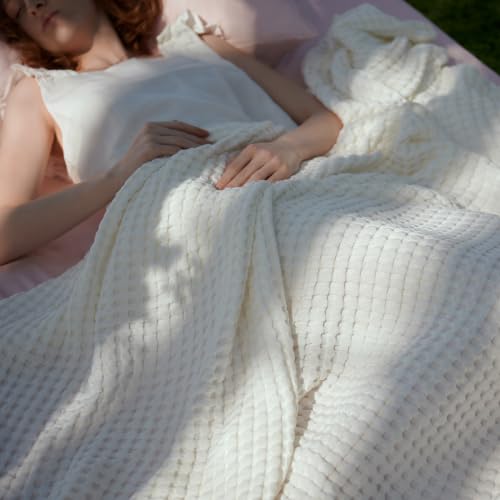
The Bedsure Cooling Cotton Waffle Blanket for Hot Sleepers demonstrates why cotton remains the default blanket fabric: a 50 percent cotton, 50 percent bamboo-derived rayon blend woven into a waffle texture, in a true queen size. Cotton brings absorbency and a dry, natural hand-feel; the rayon adds softness and moisture handling; the waffle weave adds the air channels that make the fabric breathe. It is a case study in how fiber, blend, and weave cooperate.
Strengths
- Breathable, absorbent cotton-rich face that feels dry rather than clammy in humidity.
- Waffle structure works across seasons — ventilating in summer, trapping a light air layer under a duvet in winter.
- Simple machine care and seams finished to resist fading and shrinking under normal washing.
Trade-offs
- Not 100 percent cotton; the rayon half trades a little long-term abrasion resistance for softness.
- Open weave can snag on rough items in the wash.
- Feels pleasantly textured rather than plush; fleece fans may find it plain at first touch.
| Color | 01 – Ivory |
| Size | Queen (90″ X 90″) |
| Weight | 3.8 Pounds |
As a fabric lesson, this blanket teaches the most transferable rule in this guide: when in doubt, choose the breathable natural-rich fabric in an open weave, because you can always add warmth with layers but you cannot subtract trapped heat. On the bed it behaves exactly as cotton should — it absorbs a little night moisture instead of sealing it in, it washes without drama, and it softens with use. It is the fabric we recommend to people furnishing a first apartment, a guest room, or a child’s bed, because it offends no skin type and survives real laundry. Readers comparing it with the tie-blanket fabrics in Best Fabric For Tie Blankets will notice the same principle at work: stable, washable, skin-friendly fabrics win for blankets that get used daily. Choose this fabric if you want the balanced default. Skip it if plushness is your top priority.
Best for: Most sleepers wanting a breathable, washable, natural-rich blanket fabric / Not suited for: Anyone whose first priority is a plush, fuzzy hand-feel
Choose cotton waffle for the everyday bed; skip it for maximum plush. Check on Amazon

Pendleton National Park Blanket
Our badge: Best Wool
The Pendleton National Park Blanket is 100 percent wool, woven with a napped texture and the iconic park stripes, in a queen size that weighs a substantial 6.2 pounds. Wool is the fabric traditionalists defend for good reason: its fibers absorb moisture vapor while feeling dry, release heat slowly, resist odor, and insulate across a wider comfort range than any other fiber in this guide. This blanket shows wool in its classic form — no blends diluting the lesson.
Strengths
- Pure wool temperature regulation: warm on cold nights without the sealed-in feeling of synthetics.
- Napped finish softens the hand-feel compared with scratchy utility wool blankets of the past.
- Dense, heirloom-grade weaving from a maker known for blankets that last for decades.
Trade-offs
- Wool asks for gentler care than cotton or fleece; check the care label and expect to wash less often.
- Heavier and more structured drape; not the choice for people who like a light, floaty cover.
- Some wool-sensitive sleepers still prefer a cotton layer between skin and blanket.
| Color | Grand Canyon Navy |
| Size | Queen (90″ x 90″) |
| Weight | 6.2 pounds |
Wool’s reputation for itch comes mostly from coarse, short fibers in cheap blankets; a napped, well-finished wool like this one feels far kinder, especially over a cotton sheet. Use it as the main blanket in cold bedrooms, as a cabin and camping layer, or as the bed’s visible top layer in winter. It also demonstrates why wool dominates outdoor and emergency contexts — a theme explored in Best Outdoor Blankets For Cold Weather — because it keeps insulating value and comfort in damp, cold conditions where cotton feels chilly. The trade is care and a higher tier of investment. Choose wool if temperature range and longevity top your list. Skip it if you need to machine-wash bedding weekly without thinking.
Best for: Cold bedrooms, cabins, and buyers who value natural regulation and longevity / Not suited for: Weekly hot washing or wool-sensitive skin in direct contact
Choose wool for range and durability; skip it for effortless laundry. Check on Amazon

Bedsure Fleece Bed Blankets Queen Size Grey
Our badge: Best Fleece
The Bedsure Fleece Bed Blanket represents polyester flannel fleece at its best: an upgraded premium microfiber fleece, queen size at 90 by 90 inches yet only 3.19 pounds, soft on both sides with neat stitching rated to resist fading and shedding. Fleece’s fabric story is warmth-to-weight and instant softness. Brushed polyester traps air in its pile, feels warm the second it touches skin, dries quickly, and shrugs off stains and frequent washing.
Strengths
- Immediate plush warmth at a very light weight — easy to move under and easy to make the bed with.
- Forgiving care: machine washable, quick drying, resistant to fading and shedding in this construction.
- True bed sizing, which many fleece blankets skip in favor of throw dimensions.
Trade-offs
- Polyester breathes poorly compared with cotton or wool; hot sleepers will overheat under it in warm rooms.
- Static buildup in dry winter air can make it cling and spark.
- Pile can flatten and look tired sooner than a good woven cotton or wool ages.
| Color | Grey |
| Size | Queen (90″ X 90″) |
| Weight | 3.19 pounds |
Fleece is the right fabric more often than fabric snobs admit. For a cold sleeper in a drafty house, a teenager’s bed that gets washed constantly, a pet-friendly household, or anyone who wants softness without a premium budget, fleece delivers. Its weaknesses are thermal, not tactile: pair it with cotton sheets so the layer against your skin breathes, and in summer swap it for the waffle blanket above. Households with dogs often land on fleece for exactly these durability reasons, a pattern you will also see in Best Pet Blankets For Couch shopping. Choose fleece for softness, lightness, and easy care in cool rooms. Skip it as a summer bed fabric.
Best for: Cold sleepers, busy households, and pet-friendly beds needing easy-care softness / Not suited for: Hot sleepers or warm-climate summer use
Choose fleece for plush easy warmth; skip it when nights run warm. Check on Amazon
Bearaby Cotton Hand-Knit Weighted Blanket
Our badge: Best Knit Cotton
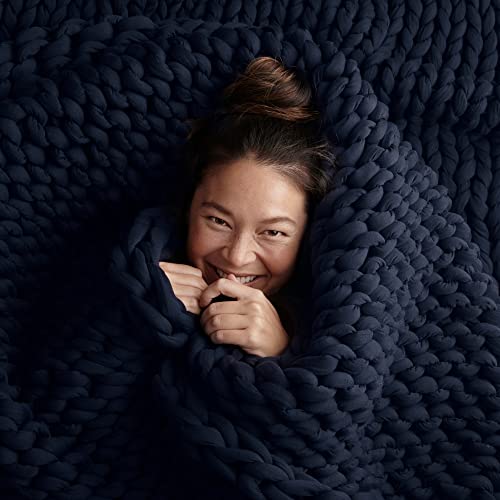
The Bearaby Cotton Hand-Knit Weighted Blanket shows a fabric construction most buyers never consider: knitting as structure. Thick organic cotton yarn is hand-knit into chunky loops, and the yarn itself provides the blanket’s 15 pounds — no fill, no shell, no beads. As a fabric, it is cotton at maximum airflow: the open knit ventilates continuously, drapes in heavy folds, and presents a textured, sculptural surface that woven blankets cannot imitate.
Strengths
- Organic, OEKO-TEX certified cotton with nothing synthetic and no loose fill to shift or leak.
- Open knit breathes better than any closed fabric here — weight without insulation.
- Machine washable as one piece, unusual for a blanket of this weight.
Trade-offs
- Knits stretch and need flat storage; hanging storage distorts the loops over time.
- The chunky texture is a bold look and feel that will not suit everyone or every bed.
- Premium tier pricing reflects hand-knit construction and certified cotton.
| Color | Midnight Blue |
| Size | 15 lbs (40″x72″) |
| Weight | 15 pounds |
The lesson this blanket teaches is that construction is fabric. The same cotton, woven tightly, would sleep warm and flat; knitted openly, it sleeps cool and heavy. If you like the idea of weight as comfort — steady, even pressure as part of a relaxing evening routine — this is the most breathable way to get it, and the most fabric-honest: what you see is literally all there is. It also connects to the handmade end of the blanket world covered by Best Knitting Stitches For Blankets, where stitch choice changes warmth and drape just as dramatically. Choose knit cotton for breathable weight and natural materials. Skip it if you want a smooth, flat, lightweight cover.
Best for: Warm sleepers who want weighted comfort in a natural, breathable knit / Not suited for: Anyone wanting a light, smooth everyday blanket
Choose the knit for weight with airflow; skip it for a simple flat layer. Check on Amazon

Elegear Double-Sided Cooling Blanket for Hot Sleepers
Our badge: Best Cooling Fabric
The Elegear Double-Sided Cooling Blanket for Hot Sleepers is this guide’s engineered-fabric example. One face uses Arc-Chill 3.0 cooling fabric with a Q-Max above 0.5, designed to feel cold on contact and draw heat away from skin; the reverse is 100 percent natural Egyptian cotton for nights when active cooling is unnecessary. At 79 by 86 inches and just over three pounds, it is a full bed blanket built from two fabrics with opposite personalities.
Strengths
- Genuine cool-to-the-touch effect on contact, which no natural fiber can replicate.
- Cotton reverse keeps the blanket useful beyond peak summer — two fabrics, one purchase.
- Lightweight and machine washable, with durable stitching for frequent summer laundering.
Trade-offs
- The cooling effect is strongest initially and after resting in a cool room; it is not air conditioning.
- The performance face feels slick and synthetic, which some natural-fiber fans dislike.
- Too light to serve as a cold-weather blanket on its own.
| Color | Light Grey |
| Size | Full/Queen (79″ x 86″) |
| Weight | 3.26 pounds |
Cooling fabrics answer a specific fabric failure: the moment a hot sleeper gets into bed and every natural fabric feels warm within minutes. A high Q-Max face breaks that moment. The honest framing is that these fabrics manage the first phase of sleep — falling asleep cool — while breathability manages the rest of the night, which is why the cotton reverse matters. This dual approach is the same logic behind most picks in Best Cooling Blankets For Summer. Choose a cooling fabric if you run hot, live without air conditioning, or sleep in a warm climate. Skip it if your bedroom is cool year-round, where the effect is wasted.
Best for: Hot sleepers and warm climates needing active cool-touch comfort / Not suited for: Cold bedrooms or buyers avoiding synthetic face fabrics
Choose cooling fabric for hot nights; skip it where nights are already cool. Check on Amazon

Bedsure GentleSoft Sherpa Fleece Throw Blanket for Couch
Our badge: Best for Couch Comfort
The Bedsure GentleSoft Sherpa Fleece Throw Blanket for Couch pairs two fleece faces with different textures: 220 GSM velvety flannel on top and 260 GSM soft sherpa on the reverse, in a 50 by 60 inch throw. Sherpa — a brushed, curly-pile polyester that imitates shearling — is the fabric of maximum coziness per dollar. It feels warm instantly, looks plush on a couch, and forgives spills, pets, and constant use.
Strengths
- Two distinct plush textures in one throw, both warm on contact with no cold initial feel.
- Thick, cozy pile that reads as a decor piece as much as a blanket.
- Durable stitched construction rated to resist fading and shedding, and fully machine washable.
Trade-offs
- The least breathable fabric in this guide; genuinely hot on warm evenings.
- Sherpa pile can mat over time if washed hot or dried aggressively.
- Throw size only — a couch and lap fabric, not a bed solution.
| Color | 01 – Grey |
| Size | Throw (50″ X 60″) |
| Weight | 2.03 pounds |
Sherpa fleece is the fabric of the couch, the reading chair, and the movie night — contexts where breathability matters less than the feeling of being enveloped. It is also a forgiving first blanket for kids’ rooms and dorms because it washes easily and hides wear. The fabric lesson is context: the least technical fabric here is the best fabric for its job. If your blanket lives on a sofa, judge it like this throw — pile, softness, washability — rather than by bed-blanket criteria. Choose sherpa fleece for living-room comfort. Skip it for sleeping through warm nights.
Best for: Couches, reading chairs, and cold-room lounging where plushness rules / Not suited for: Sleeping through warm nights or hot sleepers
Choose sherpa for the couch; skip it for the summer bed. Check on Amazon
Comparison Table
| Pick | Size | Weight | Color | Check price on Amazon |
|---|---|---|---|---|
| Bedsure Cooling Cotton Waffle Blanket for Hot Sleepers | Queen (90″ X 90″) | 3.8 Pounds | 01 – Ivory | Check price on Amazon |
| Pendleton National Park Blanket | Queen (90″ x 90″) | 6.2 pounds | Grand Canyon Navy | Check price on Amazon |
| Bedsure Fleece Bed Blankets Queen Size Grey | Queen (90″ X 90″) | 3.19 pounds | Grey | Check price on Amazon |
| Bearaby Cotton Hand-Knit Weighted Blanket | 15 lbs (40″x72″) | 15 pounds | Midnight Blue | Check price on Amazon |
| Elegear Double-Sided Cooling Blanket for Hot Sleepers | Full/Queen (79″ x 86″) | 3.26 pounds | Light Grey | Check price on Amazon |
| Bedsure GentleSoft Sherpa Fleece Throw Blanket for Couch | Throw (50″ X 60″) | 2.03 pounds | 01 – Grey | Check price on Amazon |
How to Choose the Best Fabric for a Blanket
Match Fabric to Your Sleeping Temperature
Temperature is the first filter because it is the failure people feel nightly. Hot sleepers: cotton in open weaves, cotton knits, or engineered cooling faces. Cold sleepers: fleece, sherpa, or wool with real weight. Average sleepers in climate-controlled homes have the widest freedom — choose by care and feel. Be honest about your bedroom, not the showroom: a fabric that feels perfect under store air conditioning can be wrong at home.
Judge the Weave and Weight, Not Just the Fiber
Two cotton blankets can sleep five degrees apart because one is a waffle and the other a dense flannel. As a rule, open weaves and lighter weights (roughly two to four pounds in bed sizes) ventilate; tight weaves, brushed piles, and heavier weights insulate. When a listing gives fabric weight in GSM, higher numbers generally mean a denser, warmer fabric. Combine fiber, construction, and weight before predicting comfort.
Be Realistic About Laundry
The best fabric is partly the one you will actually wash correctly. Fleece and cotton tolerate frequent machine washing; wool prefers less frequent, gentler washing; knits need flat storage and care not to stretch; sherpa wants cool washing to protect its pile. Households with babies, pets, allergies, or illness should weight washability heavily — a blanket that stays clean beats a theoretically superior fabric that sits unwashed.
Consider Skin Sensitivity and Static
Natural fibers — cotton, wool from quality makers, and linen in the wider market — generally feel kinder to sensitive skin and build little static. Polyester piles can irritate some sleepers and generate noticeable static in dry air, though they are hypoallergenic in the sense of not harboring dust mites as readily in the pile itself. If you react to fabrics, prioritize a natural layer against the skin even if the outer blanket is synthetic.
Think About Lifespan and Aging
Wool and good cotton age slowly and gracefully, softening over years. Fleece starts at maximum softness and slowly declines as pile flattens. Cooling fabrics depend on their engineered finish and structure; follow care labels to preserve the effect. If you buy blankets rarely and keep them for a decade, natural fibers repay their higher tier. If you refresh decor often, fleece’s easy softness is a rational choice.
How to Wash Each Blanket Fabric Without Ruining It
Cotton: wash warm or cool, dry low to medium; avoid chlorine bleach and heavy softener, which coats the fibers. Wool: wash rarely, cool and gentle with wool-safe detergent, or follow the specific label; air the blanket between uses, since wool resists odor naturally. Fleece and sherpa: wash cool, separately at first, and dry low — high heat melts pile tips and causes matting and pilling. Knits: wash gentle in a large bag if the label allows machine washing, reshape, and store folded. Cooling fabrics: wash cool and avoid softeners and dryer sheets that can coat the surface and blunt the cool-touch effect. Across all fabrics, wash blankets separately from items with zippers and hooks, and never store any blanket until it is completely dry.
Problem: Fleece blanket crackles with static — Dry air plus polyester is the cause. Reduce dryer time, add a humidifier to the bedroom, and layer the fleece over cotton sheets so skin contact is with cotton.
Problem: Sherpa side looks matted — Heat in washing or drying flattened the pile. Brush the dry pile gently with a soft clothes brush and wash cool on gentle cycles going forward.
Problem: Wool blanket smells musty — Air it outdoors in shade for several hours; wool usually releases odor without washing. Wash only if the label permits, cool and gentle.
Problem: Cotton blanket lost absorbency — Softener and detergent buildup coat the fibers. Run a hot rinse cycle with no detergent and halve your detergent dose in future washes.
Problem: Cooling blanket no longer feels cold — Surface coatings from softener are the usual culprit. Rewash without softener and let the blanket rest in a cool room before use so the fabric starts below skin temperature.
Reading a Blanket Label Like a Fabric Buyer: Weight, Weave, and Finish
Most blanket disappointment is a labeling problem, not a fabric problem. Listings lead with the softest adjective they can defend, while the information that predicts performance sits further down: fiber percentages, fabric weight, weave type, and finishing treatments. Learning to read those four items takes minutes and permanently improves your hit rate. Start with fiber percentages, and be suspicious of any blanket whose headline fiber is a minority of the blend — a blanket sold on the word cotton that is mostly polyester will breathe, wash, and age like polyester, whatever the photograph suggests. Percentages also explain price: moving from a minority-cotton blend to a cotton-rich or pure construction costs the maker real money in raw fiber, so a suspiciously cheap all-natural claim deserves a second look at the fine print.
Fabric weight, usually expressed in grams per square meter for fleeces and throws, is the closest thing blankets have to a warmth rating. Light fleeces in the low two hundreds feel like a soft sheet with ambitions; mid-weight fabrics in the high two hundreds to mid three hundreds are the versatile middle most bed blankets occupy; heavy sherpa, dense wool, and thick knits climb well beyond that and behave as true winter insulation. Weight interacts with weave, though. A waffle weave at moderate weight ventilates like a lighter fabric because so much of its surface is air channel, while a brushed flannel at the same weight sleeps warmer because its raised fibers trap still air against the skin. This is why two blankets with identical fiber and similar weight can feel a full season apart, and why the reviews in this guide keep returning to construction rather than fiber alone.
Finishes are the invisible third factor. Anti-pill treatments slow the bobbling that makes fleece look old, but they wash out gradually, which is why a fleece blanket’s second year rarely matches its first. Softening finishes make cotton and blends feel luxurious on day one and can mask a mediocre base fabric until the third wash. Cooling finishes differ from cooling fibers: a finish sits on the surface and fades with laundering, while an engineered cooling yarn keeps its behavior much longer. When a listing is vague about which one it uses, assume the finish — and assume gentle washing matters. Finally, look at edge construction, the part of the label nobody reads. Bound, hemmed, or self-edges survive years of washing; thin overlocked edges on cheap fleece are where blankets begin to unravel, literally, at the seams of your satisfaction.
Natural vs. Synthetic Blanket Fabrics: An Honest Scorecard
Natural fibers win on breathability, moisture handling, odor resistance, aging, and end-of-life biodegradability. Synthetics win on price per unit of softness, stain resistance, drying speed, and consistent supply in every color imaginable. The interesting middle ground is blends and dual-fabric designs, which dominate this guide’s picks for a reason: a cotton-rich blend gains softness from its partner fiber, and a cooling blanket gains year-round usefulness from its cotton back. Judge any blanket by asking which fabric touches your skin, which fabric does the insulating, and which fabric faces the room — better blankets assign each job deliberately rather than using one cheap fabric for all three. Also consider microfiber shedding: polyester piles release tiny fibers in washing, one more reason to wash fleece in a full, gentle load and not more often than needed.
Fabric Choices for Special Jobs Around the House
Different rooms quietly demand different fabrics. Guest rooms favor cotton: universally tolerated, easy to wash between visitors, neutral in feel. Children’s rooms favor fleece and cotton blends that survive constant washing and dragging around the house. Couples with different temperatures do best with a breathable shared base plus individual throws in each person’s preferred fabric. Pet zones favor short-pile fleece and tightly woven cotton that release hair in the wash and resist claw snags better than open knits. Allergy-conscious homes favor washable fabrics above all — a cotton blanket washed monthly serves better than a luxurious wool one washed yearly. Even your decor layers follow fabric logic: pair a smooth cotton base with a textured knit or patterned quilt so the bed reads as designed, a styling point that also appears in coordinated throw pillow room schemes. Fabric is never just fabric; it is a maintenance plan, a temperature plan, and a style plan in one decision.
How Blanket Fabrics Behave Across a Full Year of Real Use
Fabric guides usually describe blankets as they feel on the day they arrive. Households live with what fabrics become, and each family in this guide has a recognizable aging curve worth knowing before you buy. Cotton starts slightly crisp, softens steadily through the first dozen washes, and then holds a long plateau of comfortable, matte reliability. Its decline, when it comes, is graceful: colors mellow, open weaves relax, and the blanket reads as a beloved household staple rather than a worn-out one. Cotton is also the most repairable fabric here — a loose seam or small tear can be stitched invisibly, and the blanket returns to service without looking patched.
Fleece runs the opposite curve. It is never softer than the day it arrives, because its comfort lives in raised pile, and pile is a surface that friction, heat, and time all work against. Expect the first year to be excellent, the second to show flattening where bodies press nightly, and cheaper fleeces to pill at friction points. You can slow this considerably: wash inside out, keep loads gentle, dry on low, and avoid washing fleece with rough items like jeans and towels. Wool ages the slowest of all when it is cared for correctly — quality wool blankets are routinely measured in decades — but its failure mode is sudden rather than gradual: one hot, agitated wash can felt it, which is why wool ownership is really a care commitment. Airing instead of washing, storing with airflow, and spot-cleaning small marks keeps wool in its long, flat prime for years.
Knits and engineered fabrics have their own timelines. A chunky cotton knit will relax under its own weight, growing slightly longer and drapier; stored folded and rotated end to end occasionally, it keeps its shape well, but hung over a rail for months it will stretch unevenly. Cooling fabrics keep their cool-touch character longest when softeners and dryer sheets stay away from them, since surface coatings are their main enemy. Sherpa’s curly pile mats first where it is sat on rather than slept under, so couch throws benefit from an occasional gentle brushing once fully dry. None of these curves make a fabric good or bad; they make it matched or mismatched to your habits. A household that washes everything weekly on warm should buy cotton and fleece without a second thought. A household that enjoys caring for fewer, better things will get more from wool and knit cotton than any easy-care fabric can offer.
Common Buying Mistakes
Choosing by First Touch in the Store
Every fleece feels wonderful for ten seconds. First touch tells you nothing about breathability at hour six or pile condition at month six. Judge fabric by fiber, weave, and weight — and by the job — not by the showroom squeeze.
Treating Microfiber as a Premium Fiber
Microfiber is a fiber diameter, not a quality grade. Fine polyester can be excellent fleece or flimsy and hot. Look at construction, stitching, and fabric weight rather than the word microfiber itself.
Ignoring Blend Percentages
A blanket marketed as a cotton blanket may contain a minority of cotton. Percentages change breathability, care, and price fairness. Check the actual fiber split before assuming natural-fiber performance.
Buying Wool and Washing It Like Cotton
Hot, agitated washing can felt and shrink wool. The consequence is a stiff, smaller blanket and an unfair conclusion that wool is bad fabric. Wool is excellent fabric with different rules.
Expecting One Fabric to Win Every Season
Most homes need at least two fabric behaviors across the year. A cotton or cooling layer for summer plus a fleece or wool layer for winter costs less frustration than one compromise blanket that is mediocre in both.
Fabric Decisions for Tricky Briefs: Allergies, Pets, Kids, and Shared Beds
The Allergy-Conscious Household
When dust and frequent washing drive the decision, fabric choice becomes a care-schedule choice. Cotton wins because it tolerates the most frequent, thorough washing of any fiber here without special products, and a cotton blanket washed on a steady rotation simply spends its life cleaner than a delicate blanket washed rarely. Wool complicates the picture in a useful way: it resists odor and does not need constant washing, but households whose plan is wash everything, wash it often should not build the bed around a fiber that prefers to be aired instead. Fleece sits in the middle — fully washable, quick to dry — though its pile should be washed separately from cotton bedding so lint transfer does not dull both fabrics.
The Pet Household
Pets test fabric in three ways: claws, hair, and accidents. Claws punish open knits and loose weaves first, pulling loops that then run; tight weaves and short-pile fleece survive paws best. Hair behaves counterintuitively — smooth cotton releases hair in the wash and with a lint roller, while deep sherpa pile traps hair tenaciously and needs a rubber brush before washing. Accidents reward whatever dries fastest and tolerates repeat washing without complaint, which again favors fleece and cotton over wool. Many pet households sensibly run a two-fabric system: a durable, washable blanket as the pet-facing layer over a better blanket reserved for human-only hours.
Kids, Teens, and Blankets That Travel Around the House
A child’s favorite blanket is not bedding; it is furniture, costume, fort roof, and comfort object in rotation, and its fabric must survive being dragged across floors and washed at short notice. Cotton and fleece both cope; pure wool and chunky knits do not enjoy that life. Teens add a different demand — the blanket migrates between bed, desk chair, and floor — which favors lighter fleece and cotton blends that wash without a family negotiation. For shared adult beds, the fabric answer is often structural rather than material: one breathable cotton base layer both partners accept, plus a personal throw in each sleeper’s preferred fabric folded on their own side. That arrangement ends more blanket disputes than any single perfect fabric ever has, because the disagreement was never really about the blanket — it was about two different bodies sharing one thermostat.
Final Recommendation
If you remember one rule, make it this: buy the fabric for the job. For the widest range of beds and sleepers, that means the cotton-rich waffle of the Bedsure Cooling Cotton Waffle Blanket for Hot Sleepers — breathable, washable, and season-flexible. For maximum natural temperature range and longevity, the wool Pendleton is the connoisseur’s choice, and you can compare its current listing here: Check on Amazon. Choose fleece or sherpa when plushness and easy care outrank breathability, choose an engineered cooling fabric when heat is the enemy, and choose knit cotton when you want weight with airflow. Get the fabric right and almost any blanket in that fabric will satisfy you; get it wrong and no amount of stitching quality will save the purchase. For whole-room fabric coordination ideas, see Black Friday Throw Pillow And Blanket Deals during seasonal events.
Frequently Asked Questions
What is the warmest blanket fabric?
For warmth per layer, wool and thick sherpa fleece lead, in different ways: wool insulates while regulating moisture, sherpa traps air in deep pile. In very cold rooms, layering a wool or fleece blanket under a duvet outperforms any single blanket.
What is the most breathable blanket fabric?
Open-weave cotton and open-knit cotton breathe best among traditional fabrics, with linen (in the wider market) a close rival. Engineered cooling fabrics feel colder on contact but rely on breathable bedding partners for all-night comfort.
Which blanket fabric is best for sensitive skin?
Smooth cotton is the safest default. Quality napped wool suits many people over a sheet, while some sleepers react to synthetic piles or static. If you are unsure, keep a cotton layer against the skin.
Which fabric lasts the longest?
Well-made wool and cotton blankets commonly serve for many years, improving in softness early in life. Fleece typically looks its best in year one and gradually flattens. Care habits matter as much as fiber choice.
Is fleece or cotton better for a baby or child’s blanket?
Both are used widely; cotton breathes better and washes hotter when needed, while fleece is softer and lighter. Follow current safe-sleep guidance for infants, and choose washable, appropriately sized blankets for toddlers and older children.
Do cooling fabrics really work?
They genuinely feel cold on contact and can lower the initial skin-contact temperature noticeably, which helps hot sleepers fall asleep. They do not cool a room, and their benefit pairs best with breathable sheets and a cool bedroom.
How can you tell a good blanket fabric before the first wash?
Three checks predict most of a fabric’s future. First, hold the blanket up to light: an even weave or pile with no thin, translucent patches signals consistent construction, while visible irregularity forecasts uneven wear. Second, rub the surface firmly with a dark cloth — heavy lint transfer on day one usually means heavy shedding and pilling later, especially with fleece and sherpa. Third, read the fiber percentages and care label together rather than separately: a genuinely good fabric’s care instructions sound confident and specific, while vague labels often hide blends or finishes the maker would rather not discuss. None of these checks requires expertise, and together they take less than a minute at the listing page or in the store.


