Where to buy
Check the latest price, availability and delivery on Amazon. Orders are placed on Amazon. We may earn a commission from qualifying purchases.
- Best overall for a bedroom: Philips Hue Solo Lightstrip Base Kit, 33 ft, White and Color Ambiance — Check on Amazon
- Govee COB LED Strip Light Pro, 16.4 ft, RGBICW with Matter — Check on Amazon
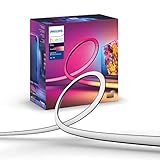
- Philips Hue Play Gradient Lightstrip, 65-inch TV — Check on Amazon
- Govee RGBWWIC Strip Light 2 Pro with Matter, 16.4 ft — Check on Amazon
See 2 more Amazon options
- Govee LED Strip Light M1, 16.4 ft, RGBICW with Matter — Check on Amazon
- PAUTIX Addressable CCT Smart IC COB LED Strip Lights, 32.8 ft, 2700K–6500K, Alexa Voice Control — Check on Amazon
Read the full guide ↓
Disclosure: As an Amazon Associate, dailyhomedecorating.com earns from qualifying purchases. Links to Amazon on this page are affiliate links; they cost you nothing extra. Listing details such as price and availability change often, so check the current Amazon listing before you buy.
A bedroom is the room where a smart light strip stops being a decoration and starts being part of how you sleep and wake — and $300 is the first budget in this series that can finish one properly. Not with a strip: with a system. Start with the finding this guide is built on: there is effectively no single smart light strip on Amazon that sits in the $200 to $300 band on its own. We swept every major brand’s flagship lines looking for one. The most expensive room strips we could verify sit below that band — Philips Hue’s Gradient lightstrip at the top of the single-strip range, Govee’s newest COB flagship just below it, Hue’s longest Solo lightstrip, and Govee’s COB Strip Light Pro. Above those, the shelf is bare until one specialty family — Hue’s Play Gradient strips, built for televisions — and that family is a TV product, not a bedroom one, as its review below explains. So in a bedroom, $300 buys layers: a main run behind the headboard that glows instead of glares, a second run under the bed frame that lights the 3 a.m. path at a few percent brightness, and — on the Hue route — the Bridge that unlocks the real Wake Up sunrise routine. Every pick below is presented as the system it actually is, and a central section works through five complete bedroom plans.
Bedrooms also judge strips by criteria that barely matter in a kitchen or a gaming room, and this guide scores them in that order. First, real white: a strip that fakes white by mixing red, green and blue throws a cold, blue-leaning wash — exactly the light you do not want in the last hour before sleep or the first minute after waking. Every color pick here carries a dedicated white channel. Second, deep, smooth dimming: a bedroom strip lives at 1–10% brightness, and that is where weak drivers step or flicker instead of fading. Third, what the strip does when you are not watching it — whether its control box leaks a standby glow into a dark room, and what happens when the power blips at 3 a.m.: a strip that returns at full brightness after an outage is a genuine failure in a bedroom, so power-restore behavior is treated here as a setup step, not a footnote. Brightness figures are reported as the maker’s rating — no common measurement standard stands behind this category’s lumen numbers — and density is scored at pillow distance. The room-neutral version of this budget, with the same verified picks scored for general use, is Best Smart Light Strip Under $300.
Two configuration warnings belong up front. The Hue Solo pick is the 33 ft size on its listing family — select it before ordering, because the same family sells shorter 10 ft and 16 ft kits that belong to lower-budget guides; check the current price on Amazon for the configuration you choose, since the price changes with length. And the Govee M1’s value in this guide depends on checking its live listing — its positioning moves between its regular tier and a lower promotional tier, so check price on Amazon before planning a two-kit build around it.
Quick Picks
Each row below names a bedroom buyer type and the strip that suits it, with a link to the listing.
| Buyer type | Pick | Why it stands out | Link |
|---|---|---|---|
| Best overall for a bedroom | Philips Hue Solo Lightstrip, 33 ft | The longest premium room strip Hue sells — with a Bridge, the sleep-and-wake system fits inside this budget with room to spare; check price on Amazon | Check on Amazon |
| Best at pillow distance | Govee COB LED Strip Light Pro, 16.4 ft | 1,260 LEDs per meter of RGBICW COB with a real warm-white channel — a dotless line behind the headboard; check the current price on Amazon | Check on Amazon |
| Best under-bed layer | Govee Strip Light 2 Pro, 16.4 ft | 60 LEDs per meter of RGBWWIC with Matter — positioned low enough in its tier that this budget can buy the headboard run and the under-bed run; check price on Amazon | Check on Amazon |
| Best two-zone value | Govee LED Strip Light M1, 16.4 ft | Govee’s proven Matter flagship — two kits can run two independent bedroom zones inside this budget; check the current price on Amazon | Check on Amazon |
| Best white-only bedroom | PAUTIX Addressable CCT Smart IC COB Strip, 32.8 ft | Thirty-two feet of dotless, animated tunable white — warm for the evening, bright for the morning, with a second run still fitting this budget; check price on Amazon | Check on Amazon |
| Only for a TV bedroom | Philips Hue Play Gradient Lightstrip, 65-inch | Blended color zones shaped for a 65-inch TV — a television product whose sync needs a Bridge and a Sync Box (see its review); check the current price on Amazon | Check on Amazon |
How These Picks Were Chosen
The first filter was the budget, applied the way this tier demands: not “which strip costs $300” — none does — but “which strips anchor a complete $300 bedroom.” Every strip below has a real Amazon listing, and each passed a systemic test: either it is one of the most expensive single smart strips that genuinely exists (the Solo 33 ft, the COB Pro, the Play Gradient), or its honest role at this budget is as part of a layered bedroom plan — doubled into two zones, extended, or paired with the hub that completes it (the Strip Light 2 Pro, the M1, the PAUTIX). Positioning is described in tier terms rather than fixed figures, because length and configuration change what any given listing costs. The Play Gradient sits in a premium tier and its positioning is notably volatile. The M1 moves between its regular tier and a lower promotional tier. The PAUTIX is the volatile one in its own lower tier — check the current price on Amazon on the day you plan a build around any of them. The COB Pro sits near the top of the single-strip range for its length; confirm its live listing before ordering.
The second filter was the bedroom itself. A bedroom strip is judged first on its white — whether it comes from a dedicated white emitter or from red, green and blue arguing with each other, because the mixed kind reads cold and blue at night. It is judged second on behavior at the bottom of its dimming range and inside routines: a sunrise wake-up is only worth having if the fade is gradual and the low end is smooth, which is why the Hue route’s value here is not the strip but the Bridge behind it — routines, grouping and the Wake Up automation live there. And it is judged third on manners in the dark: control-box standby lights and power-restore behavior after an outage. Control still matters, rung by rung — Bluetooth works across one room; Wi-Fi adds voice and schedules that run while you are out; Matter adds cross-platform reach and then, on the Govee strips below, quietly reduces a segmented strip to a single-color one outside its maker’s app, because the standard still has no vocabulary for segments or effects. Density is scored where bedroom eyes actually are: at arm’s length, 60 LEDs per meter still reads as beads; COB at 560–1,260 LEDs per meter reads as a line.
We did not use these strips ourselves. We read the maker listings, manuals, datasheets and specification pages, and compared what decides whether a smart strip works in a bedroom: the footage in the box; the power arrangement (every pick runs on a 24V adapter included in the box); whether white is produced or mixed; how the strip behaves in a routine and after a power cut; and whether it can be cut at marked points — on every pick, a cut-off section cannot be reconnected and lit again. Adhesive got the same honesty pass: peel-and-stick backing is the weakest part of every strip here, and behind a headboard — where a fallen strip lands on pillows — clips or channel are part of the purchase.
Two strips you may expect here are discussed in prose rather than linked, for verification reasons, not quality. Hue’s Gradient lightstrip — the 80-inch multi-color sibling of the Solo, positioned at the very top of the single-strip range at lighting retailers — is arguably this tier’s natural best pick, but its current US Amazon listing could not be pinned to our two-source standard, so it appears in the plans section with no purchase link. Govee’s newer COB Strip Light 2 Pro (1,344 LEDs per meter; a flagship-tier model sold through Govee’s own store) is in the same position.
The 6 Best Smart Light Strips for Bedrooms Under $300
Philips Hue Solo Lightstrip Base Kit, 33 ft
Who it suits: Bedroom buyers who want the sleep-and-wake system, not just the light — a room that dims itself down at night and fades itself awake in the morning, with the budget to buy the Bridge in the same order.
The Solo 33 ft is the strip this tier exists for, and its review starts with the configuration warning from the introduction: this recommendation is for the 33 ft size — select it on the listing before ordering, and check the current price on Amazon for that configuration. The same listing family sells shorter 10 ft and 16 ft kits; those belong to lower-budget guides. In a bedroom, the 33 ft length is a floor plan: ten meters runs behind the headboard, along a wall or under the bed frame, and still reaches the outlet — one continuous wash instead of two kits arguing about tone. The strip is RGBWW in a silicone sleeve that diffuses the emitters into a soft line, rated by Signify at 1,700 lumens at 4000K and 1,500 at 2700K — a first-party figure, reported as the maker’s rating. The whites are the Hue argument in miniature: dedicated white emitters alongside the color ones, so evening and morning whites are produced rather than mixed, with no blue-leaning cast. Power is a proper 24V adapter in the box; the strip trims at roughly 13-inch intervals and runs over Bluetooth in the Hue app out of the box.
Then the Bridge changes it from a strip into the bedroom system this budget is really buying. The Bridge is Hue’s hub, sold separately through Hue’s own store and on Amazon — check price on Amazon for the strip and consider the Bridge as the second part of the same system purchase. Together, the strip plus Bridge fit comfortably inside this budget. What the Bridge unlocks is precisely the bedroom feature set: routines that run on schedule, grouping, out-of-home control, Matter — and the Wake Up automation, which fades the strip up gradually instead of snapping it on. A gradual sunrise fade is the most bedroom-specific feature in this guide, and it lives behind the Bridge, not in the strip. The Bridge is also where you set the strip’s power-on behavior after an outage — in a bedroom, make that setting on day one, before the first 3 a.m. blip decides for you. Here the Bridge is not a warning but a line item, with headroom left in the budget for the channel this strip’s adhesive reputation demands.
- The longest premium smart room strip: 33 ft of RGBWW in a diffusing silicone sleeve, maker-rated at 1,700 lumens — enough for a headboard run and an under-bed run in one piece; check price on Amazon for the 33 ft configuration.
- The Bridge fits the budget: strip plus Bridge form a complete system inside this tier, unlocking routines, grouping, Matter — and the gradual Wake Up sunrise fade.
- Real white from dedicated white emitters, so evening and morning whites carry no blue-leaning RGB mix; cuttable at roughly 13-inch marks, 24V adapter included.
Honest limitation: One color along its whole length — no segments or gradients, so the headboard and the under-bed path always match whether you want them to or not; it cannot be extended, cut sections cannot be reconnected, and its adhesive is the line’s most-complained-about part, so plan on channel or clips. Order the 33 ft configuration specifically.
Choose it if you want one long, consistent run and the complete Hue sleep-and-wake system inside one budget. Skip it if you want the headboard and the floor path lit differently at the same time — that takes two zones, and the Govee pairs below do it within this budget.

Govee COB LED Strip Light Pro, 16.4 ft
Who it suits: Quality-first bedroom buyers with one short, close, visible run — the headboard above all — who want the smoothest line of light Govee makes, speaking Matter to any platform, no hub required.
The headboard is the hardest place in the house to put a strip: your eyes rest a meter from it, in the dark. That is exactly the COB Pro’s brief. COB construction packs 1,260 LEDs into every meter under a continuous phosphor inside a soft silicone sleeve — more than twenty times the density of conventional premium strips — so there are no dots to count from the pillow; the strip is a single unbroken line of light. The chips are RGBICW: segmented addressable color with a dedicated warm-white emitter alongside, so the strip can do its color scenes and then settle into a warm white that is produced by a white diode instead of approximated by red, green and blue. For a bedroom, that warm-white channel is the feature: it is the difference between a headboard glow you can read against and a tinted wash. Control is the full modern set — the Govee Home app over Wi-Fi, Alexa and Google voice, and Matter, which joins the strip to Apple Home and SmartThings — with the standing caveat that Matter carries a single color while the gradients and scenes live in Govee’s app. The box is complete: strip, control box, 24V adapter and manual. For its length, this is a premium-tier strip — among the highest per-foot positioning in this guide — so check the current price on Amazon before ordering. The proposition, stated plainly: the fewest feet, the finest light — spent where your eyes actually are.
The compromises are flexibility and finality. Flexibility first: unlike the M1 and the Strip Light 2 Pro, this line has no extension path — 16.4 ft is what there is, so a bedroom plan needing a second run needs a second kit or a different pick for the under-bed layer. Finality second: it trims at its cut marks, and the cut-off piece cannot be reconnected and lit — measure twice, because the offcut of a premium strip is expensive waste. The Matter caveat deserves its plain words again: over Matter it behaves as a single-color strip; the segmented effects that justify its positioning live only inside the Govee app. One bedroom-specific setup note: test its behavior after a power cut before trusting it overnight — pull the plug once, restore it, and see what it does; if it returns brighter than you left it, a smart plug on a schedule is the workaround. Govee publishes no CRI figure we could verify, and its brightness figures are maker figures.
- Truly dotless at pillow distance: COB construction at 1,260 LEDs per meter under a continuous phosphor — no diodes to see from the bed.
- RGBICW chips with a real warm-white channel for evening light, segmented effects for everything else, and Matter over Wi-Fi alongside the Govee app and voice control — no hub required.
- Complete kit: strip, control box and 24V adapter in the box; cuttable at the marks.
Honest limitation: Sixteen feet is the whole run — no extensions exist for this line, so it cannot cover a headboard and an under-bed path alone; cut pieces cannot be reconnected; and over Matter it is a single-color strip — check price on Amazon and confirm the live listing before ordering.
Choose it if the headboard run deserves the finest light Govee makes. Skip it if your bedroom plan measures past 16 ft in a single run — the Strip Light 2 Pro extends, and the Solo starts at 33.

Philips Hue Play Gradient Lightstrip, 65-inch
Who it suits: Exactly one bedroom buyer: the one whose bedroom is built around a 65-inch TV and who already owns a Hue Bridge and a Play HDMI Sync Box. For every other bedroom, this review is a signpost pointing back to the picks above.
The Play Gradient is the only strip family here that ever genuinely belonged to a premium tier above the ordinary room strips: it is a flagship television product. The strip itself is genuinely excellent at its actual job — a shaped, diffuser-sleeved strip built to mount on the back of a 65-inch television with the included brackets, producing several blended colors at once, so the wall behind the screen washes in gradients rather than a single flat hue. It covers the top and two sides of the TV — not the bottom, a gap owners notice and the listing does not hide. Check the current price on Amazon, because this pick’s positioning is the most volatile in this guide — treat any figure you see as a live listing to catch, not a fixed number to plan on. None of that makes it a bedroom strip: it is shaped for a screen, sized for a screen, and its one famous feature is synchronizing light with moving pictures.
The compromise is the price of its purpose, and it is disqualifying for anyone starting from zero. The Play Gradient’s headline job — light that syncs with what is on the screen — requires both a Hue Bridge and a Hue Play HDMI Sync Box, each sold separately, as the listing itself states in its own title. The Sync Box is a second, substantial purchase of the same order as the strip itself, and a bundle of the strip with a Sync Box still does not include the Bridge. Add the pieces honestly and the working system lands well past this budget, which means that within this budget, the Play Gradient cannot do the thing it is sold for. What buying the strip alone inside this budget gets you is beautiful static gradients behind a TV, app-controlled color, and a promise the budget cannot keep. If your bedroom genuinely is a TV room and you already own the Bridge and Sync Box, check price on Amazon — for you it is the best TV strip in the guide. If you own neither, read this pick as the strip plus two boxes, and spend the money on the Solo system above, which wakes you up instead of syncing to a screen.
- The best TV light there is: multiple simultaneous blended colors from a diffuser-sleeved strip shaped and bracketed for a 65-inch TV.
- A flagship television strip in a premium tier, with notably volatile positioning — check the current price on Amazon, because timing matters.
- Power supply and mounting brackets in the box; full Hue app and voice control once it is on a Bridge.
Honest limitation: Screen sync — its headline feature — requires a Hue Bridge and a Play HDMI Sync Box, both sold separately; the complete working system costs well over this budget. It also lights only the top and sides of the TV, not the bottom edge, its positioning is the most volatile in this guide, and nothing about it is designed for sleep.
Choose it if your bedroom is a TV room and you already own the Bridge and Sync Box, or are budgeting for them separately. Skip it if the room is for sleeping — every other pick in this guide serves that purpose better, and the Solo system is complete and working within this budget.
Govee Strip Light 2 Pro, 16.4 ft
Who it suits: Layer builders — buyers planning two runs in one room (headboard plus under-bed) or one long run built from a base kit plus extensions, who want near-flagship density and Matter without flagship positioning or any hub.
The Strip Light 2 Pro is Govee’s current mainstream flagship in conventional form: RGBWWIC chips at 60 LEDs per meter — double the density of standard strips, with a dedicated white channel alongside the color emitters — segmented effects, the full Govee Home scene and music library, DreamView sync with other Govee lights, and Matter over Wi-Fi, no hub required. It is sold by Govee’s own storefront on Amazon in a mid-tier position for its class — check price on Amazon for the 16.4 ft configuration — and that positioning is what lets this budget build layers. In bedroom terms, one kit is the under-bed run — mounted on the bed frame, aimed at the floor, run at a few percent brightness as a night path that does not blast your eyes or your partner’s. The 16.4 ft base connects with Govee’s extension sections — short 3.28 ft extensions, sold separately — up to a 32.8 ft maximum, so a complete long build stays well inside this budget. Or the same budget buys two complete kits — headboard and under-bed as two independent zones, each with its own controller and schedule. Two zones is the bedroom pattern this strip exists for: the path light can come on at 3% while the headboard stays dark.
The compromises are the familiar Govee ones, plus one that matters more in a bedroom than anywhere else. The effects live in Govee’s app: Matter carries the strip as a single-color light, so the gradients and music modes depend on Govee’s software staying available and your 2.4GHz Wi-Fi staying up. Extensions are proprietary — only this line’s own sections, only to 32.8 ft — and cutting remains one-way, so settle the build plan before cutting. Density is the honest step down, and the bedroom is where you will see it: 60 LEDs per meter blends well under a bed frame, where the light hits a floor — but behind a headboard at pillow distance, the emitters still read as a beaded line where the COB Pro reads as a bar of light. Assign it the hidden runs and that difference never appears. Govee publishes no CRI figure we could verify.
- Near-flagship light: 60 LEDs per meter of RGBWWIC with a real white channel, segmented effects and Matter — check the current price on Amazon for the base kit and for extensions.
- Built for layers: extends with maker sections toward a 32.8 ft maximum, or doubles as two independent bedroom zones — headboard and under-bed — inside this budget.
- DreamView sync with other Govee lights, the full scene and music library, and voice control — no hub.
Honest limitation: Segmented effects live in Govee’s app — Matter sees a single-color strip; extensions are proprietary and capped at 32.8 ft; and at pillow distance its emitters still bead where the COB Pro’s do not, so keep it on the hidden runs.
Choose it if your bedroom plan is layered — a headboard run plus an under-bed path, independently controlled. Skip it if one short visible run at pillow distance is the whole job and it must be flawless — that is the COB Pro above.

Govee LED Strip Light M1, 16.4 ft
Who it suits: Two-zone and two-room buyers — anyone whose honest answer to “what should $300 of bedroom strip lighting look like?” is a master bedroom done properly plus a guest room, a nursery or a second zone, rather than one room done ultimately.
The M1 returns from the under-$75 guide in a different role: as the unit of the clearest allocation in this guide. The strip itself is unchanged and still excellent — four-in-one RGBICW chips at 60 LEDs per meter with a dedicated warm-white channel, 24V mains power with the adapter included, Matter over Wi-Fi alongside the Govee Home app’s scenes and music sync, and independent testing coverage that called it the brightest strip in its class. It trims at its marked points and extends with Govee’s extension kits toward a 32.8 ft maximum per its manual. Its positioning is the recurring story: a proven flagship that regularly appears in a lower promotional tier — check the current price on Amazon before planning around either level. Two M1 kits can cover a master bedroom with a real-white, Matter-speaking strip and a second room or a second independent zone, each on its own schedule, while staying inside this budget. Either way there is headroom left for channel and clips — the M1 is one of the most honest answers a $300 bedroom guide can give: the budget was never really about one strip.
The compromises carry over from its under-$75 review, and this guide repeats rather than revises them. Over Matter, the M1 behaves as a single-color strip — brightness and white temperature adjustable, but the gradients, segments and music modes that justify its positioning live only inside the Govee app; multiple independent reviews make exactly this point. Cutting is one-way: the manual is explicit that detached pieces cannot be reconnected, so an extended build must be planned as base-plus-extensions, never as cut-and-rejoin. Its per-foot positioning at its regular tier is flagship-level, so the two-zone plan is strongest when its promotional positioning is live; at its regular tier, the Strip Light 2 Pro above can be the better build-out value — compare both live listings. A two-kit bedroom also means two adapters, two control boxes and two app entries — and two standby lights to position out of the sightline from the pillow. Govee publishes no CRI figure we could verify.
- The proven flagship: 60 LEDs per meter of RGBICW with a real warm-white channel, Matter, and the deepest independent testing coverage in its class.
- The allocation pick: two kits can cover a master bedroom plus a second room or zone inside this budget — check price on Amazon for each kit.
- Extendable with Govee kits toward 32.8 ft per run; 24V adapter included; cuttable at the marks.
Honest limitation: Over Matter it is a single-color strip — the segmented effects live only in Govee’s app; cut pieces cannot be reconnected; and the two-zone value depends on its live positioning, since at its regular tier the Strip Light 2 Pro can build out for less.
Choose it if two rooms — or two independent zones — of proven, premium light beat one room of ultimate light. Skip it if the headboard run must be dotless at pillow distance — the COB Pro is the same company’s answer, in a higher per-kit tier.

PAUTIX Addressable CCT Smart IC COB LED Strip Lights, 32.8 ft
Who it suits: White-light bedrooms with long runs — a full perimeter cove, a long wall behind the bed, a dressing area — whose owners have decided, correctly for a sleep space, that color is a novelty and white done well is the luxury.
The strip is 32.8 feet of COB at 560 LEDs per meter — a continuous, dotless line with no diodes to reflect in a wardrobe mirror or a glossy floor — built on addressable IC control, so the white itself can move: slow chasing, flowing and gradient effects rendered in whites from 2700K to 6500K instead of in colors. In a bedroom that range is a daily rhythm: 2700K for the last hour of the evening; a brighter, cooler white for getting dressed in the morning. It is powered by a 24V supply with the maker’s smart controller in the kit and Alexa voice control on top of the app, and it sits in the lowest per-foot tier in this guide by a clear margin — check the current price on Amazon, because this pick’s positioning is volatile. Which is the point of including it at this budget: two of these runs — 65.6 feet of animated, dotless white — still fit comfortably inside the budget, enough for a perimeter cove and a second run under the bed or along a dressing table, with headroom left for channel and a spare supply. For a bedroom that wants light as architecture rather than as a light show, it is the most complete white answer at any tier we have covered.
The compromises are price volatility, platform size and the white-only brief. Volatility first: its positioning moves noticeably within its tier, so check the live listing on the day — even at the higher end of its usual range, a two-kit plan survives inside this budget. Platform second: the effects and voice control run through PAUTIX’s smaller controller-and-app ecosystem rather than in Alexa — and there is no Bridge-style routine engine behind it, so a true gradual sunrise wake-up is Hue’s trick, not this strip’s; what it offers instead is scheduled, animated white at a fraction of a full system build. White-only third: its animation is done in shades of white, which reads as calm in a bedroom and as a limitation at a party. The output and CRI figures are maker figures, attributed rather than endorsed, and a 32.8 ft run deserves mounting clips or channel rather than faith in adhesive.
- Dotless and animated at once: 560 LEDs per meter of addressable COB, with chasing and flowing effects in tunable white, 2700K–6500K — warm for the evening, bright for the morning.
- The coverage pick: 32.8 ft in the lowest per-foot tier here — two complete runs fit inside this budget; check price on Amazon for each run.
- 24V supply, smart controller and Alexa voice control in the kit; the perimeter-and-cove specialist.
Honest limitation: Its positioning is the volatile one — check the current price on Amazon and plan the build on the live listing; effects live in PAUTIX’s app rather than in the voice assistants; it has no routine engine behind it, so it cannot do Hue’s gradual sunrise wake-up; and it is white-only by design.
Choose it if your bedroom wants long, dotless, tunable white — evening-warm and morning-bright — bought twice over. Skip it if you want any color at all, or a real sunrise routine — the Solo plus Bridge plan does the routine.
Comparison Table
| Product | Format & length | Light & control | Best bedroom use | Link |
|---|---|---|---|---|
| Philips Hue Solo Lightstrip, 33 ft | Diffused strip, 33 ft, not extendable | Single-color RGBWW; Bluetooth app, full routines and Wake Up via Bridge | The complete sleep-and-wake system — strip plus Bridge — inside one budget | Check on Amazon |
| Govee COB LED Strip Light Pro | COB strip, 16.4 ft, 1,260 LEDs/m | Segmented RGBICW with real warm-white channel; Matter + Govee app, no hub | The headboard run — dotless at pillow distance | Check on Amazon |
| Philips Hue Play Gradient Lightstrip | Shaped TV strip, 65-inch size | Multiple blended zones; sync requires Bridge + Sync Box | TV bedrooms whose owners already own the Hue sync hardware | Check on Amazon |
| Govee Strip Light 2 Pro | Standard strip, 16.4 ft, 60 LEDs/m | Segmented RGBWWIC; Matter + Govee app, extendable to 32.8 ft | The under-bed layer and two-zone builds | Check on Amazon |
| Govee LED Strip Light M1 | Dense strip, 16.4 ft, 60 LEDs/m | RGBICW with real warm-white channel; Matter + Govee app | Two rooms or two zones of proven flagship light for the price of one system | Check on Amazon |
| PAUTIX Addressable CCT COB Strip | COB strip, 32.8 ft, 560 LEDs/m | Animated tunable white only; app + Alexa voice | Long bedroom perimeters and coves in dotless white, bought twice | Check on Amazon |
What $300 Actually Buys in a Bedroom: Five Plans
Plan 1 — The complete sleep-and-wake system. The 33 ft Solo plus a Hue Bridge — check price on Amazon for the strip and check the Bridge listing separately — form one long run for the headboard wall and the under-bed path, the full Hue routine set including the gradual Wake Up fade, with headroom left in the budget for the channel the strip’s adhesive demands. This is the plan the tier exists for: the only one that buys the routine, not just the light.
Plan 2 — The gradient headboard. Hue’s Gradient lightstrip — 80 inches of blended zones, maker-rated up to 1,800 lumens, extendable toward 33 ft with 40-inch extensions — sits at the top of the single-strip range at lighting retailers; add the Bridge and the system still fits inside this budget. It is prose-only because its current US Amazon listing could not be pinned to our verification standard; at a major retailer, it is a legitimate alternative to Plan 1 for a shorter, effect-led headboard run.
Plan 3 — Two layers, one room. The COB Pro for the headboard — the run your eyes rest a meter from, where dotless matters; check the current price on Amazon — plus a Strip Light 2 Pro under the bed frame as the night path. Two independent zones: the path can glow at a few percent while the headboard stays dark. Headroom remains in the budget for channel and clips.
Plan 4 — Two zones or two rooms. Two Govee M1 kits — check price on Amazon for each kit, since the value is strongest at its promotional positioning — can cover a master bedroom plus a guest room, a nursery, or a second zone in the same room, with a substantial share of the budget unspent. At its regular tier positioning the same plan still fits inside this budget.
Plan 5 — White coverage. Two PAUTIX 32.8 ft runs — check the current price on Amazon for each run — give 65.6 feet of dotless, animated tunable white: a perimeter cove plus an under-bed or dressing-table run, warm at night and bright in the morning. Even at the higher end of this strip’s usual range, the plan fits inside this budget.
The plan that does not belong in a bedroom — the TV trap. The Play Gradient plus a Bridge can look comfortably inside this budget on paper — and the light still does not sync, because the Sync Box is a third purchase, and a bundle of the strip with a Sync Box still leaves the Bridge to buy separately. Unless your bedroom is a TV room and you already own the boxes, that money belongs in Plan 1.
What to do with the leftover. Every plan above leaves money unspent, and the honest instruction is: mostly, keep it. The worthwhile exceptions are unglamorous — channel or clips, and a motion sensor so the under-bed path lights itself at 3 a.m. without a phone. What the leftover should not buy is a third strip. A bedroom has two jobs for strip light — a glow to wind down and wake up by, and a path to walk by — and a third run adds glare, standby lights and app clutter.
One Bedroom Is the Job — Other Rooms Read Differently
The picks above are scored for sleep; the same verified strips score differently elsewhere in the house. Renters should weigh adhesive damage, channel screws and what can be taken down at move-out — the trade-offs are worked through in Best Smart Light Strip For Apartments Under $300. In a modern interior, where the strip is often the only visible light source, the finish of the light itself is the design decision; the style-first shortlist is Best Smart Light Strip For Modern Homes Under $300. And in a small room you are always close enough to see every diode, which pushes density — and the COB picks above — up the order; that shortlist is Best Smart Light Strip For Small Rooms Under $300.
How to Choose a Smart Light Strip for a Bedroom Under $300
Decide the routine before the strip. A bedroom strip’s most valuable trick is not an effect; it is the schedule — dimming down at night, fading up in the morning. On the Hue route, that routine set, including the gradual Wake Up fade, lives behind the Bridge, sold separately through Hue’s store and on Amazon. (The newer Bridge Pro sits in a higher hub tier — a substantial share of this budget on its own, and not the value route here.) Govee’s strips need no hub and speak Wi-Fi and Matter out of the box, but their scenes and schedules live inside Govee’s app. Choose the routine you will actually live with, then the strip inside it.
Understand the Matter asterisk. Matter is genuinely useful — one strip visible to Alexa, Google Home, Apple Home and SmartThings at once. But the current Matter standard treats a strip as one light with one color. Every gradient, segment and chase on the Govee picks is therefore invisible to Matter and lives in the maker’s app. If your household runs strictly on Matter and never opens vendor apps, a segmented strip’s premium buys you a very good single-color strip.
Insist on a real white channel. Plain RGB strips fake white by mixing red, green and blue, and the result is a cold, blue-leaning wash — poor light to end a day with, worse to start one with. Every color pick here carries a dedicated white emitter (RGBWW, RGBICW or RGBWWIC) or is white-only by design (the PAUTIX). That letter W is worth more than any effect library.
Test the bottom of the dimmer. A bedroom strip lives at 1–10% — where weak drivers step visibly instead of fading, and where a sunrise routine succeeds or fails. Spend the first evening inside the return window testing exactly that: set 1%, then 3%, then run the slowest fade the app offers. Smooth at the bottom is the bedroom specification; headline brightness is not.
Match density to pillow distance. A strip hidden under a bed frame or inside a cove can be a spaced-emitter model and still read as a line of light — the surface it hits does the blending. A strip behind a headboard is looked at, from a meter away, in the dark: at that distance 60 LEDs per meter still beads, and COB at 560–1,260 LEDs per meter does not. Spend density money only where eyes will actually be — which, in a bedroom, means the headboard.
Set the power-restore behavior on day one. When power returns after an outage, an unconfigured strip can come back at full brightness at 3 a.m. On the Hue system, set the power-on behavior in the app as part of the install; on the app-controlled strips, test it once — kill the power, restore it, watch. Do the same with placement: a control box’s standby light should sit behind furniture, not in the sightline from the pillow.
Measure the run, respect the cut, budget the install. Every smart strip here trims at marked points, and the cut is final: the offcut cannot be reconnected and lit. Extendable lines (Strip Light 2 Pro, M1) grow only with their maker’s sections, to their stated maximum; non-extendable lines (Solo, COB Pro) make the box length a hard ceiling. And peel-and-stick adhesive is the weakest component in every box — one-shot, heat-shy. Behind a headboard, a fallen strip lands on the pillows; channel or clips, budgeted inside the $300, are part of the purchase.
Common Buying Mistakes
- Buying the Play Gradient for a bedroom. It is a television strip whose headline feature needs a Bridge and a Sync Box. In a sleep space it solves a problem the room does not have; the working sync system costs well over this budget.
- Ordering the wrong Solo. The Solo’s listing family sells 10 ft, 16 ft and 33 ft kits, and the price changes with the configuration — check the current price on Amazon for the size you select. The pick in this guide is the 33 ft configuration — check the size selector before checkout.
- Judging a bedroom strip at full brightness. The showroom test is 100%; the bedroom test is 1–5% at midnight. A strip that steps or flickers at the bottom of its range will annoy you every single night.
- Leaving the power-restore behavior unset. An unconfigured strip can return at full brightness after a 3 a.m. outage. Set it — or test it — on the day you install, not the night it wakes you.
- Trusting the adhesive above a bed. Peel-and-stick backing is one-shot and heat-shy, and a strip that lets go behind a headboard lands on the pillows. A flagship strip deserves channel or clips — budget them inside the $300.
- Spending the leftover on a third strip. A bedroom needs a glow and a path, not a light show.
Final Recommendation
For most bedrooms, the complete Hue system: the 33 ft Solo lightstrip plus a Hue Bridge — check price on Amazon for the strip and check the Bridge listing separately — form one long run with real white, the gradual Wake Up routine, and room left in the budget for the mounting channel the strip needs — Check on Amazon. For households that would rather light two zones or two rooms than perfect one system, two Govee M1 kits can do it inside this budget, especially at the M1’s promotional positioning — check the current price on Amazon — Check on Amazon. Both plans are worked through above, and the step down is equally real — the picks in Best Smart Light Strip Under $100 cover most single-run bedroom jobs for far less.
Frequently Asked Questions
Is there actually a smart light strip that costs $300?
No — not a general-purpose one we could verify. Sweeping the major brands’ flagship lines, the most expensive single room strips sit well below the top of this budget: Hue’s Gradient lightstrip at the top of the single-strip range, Govee’s COB flagship just below it on its maker’s store, and Hue’s 33 ft Solo below that. The only strip family positioned above the ordinary flagship range — Hue’s Play Gradient TV strips — is a television product whose sync feature needs two further boxes. So this guide treats $300 as the budget for one complete bedroom system and works through finished plans instead.
What happens to these strips when the power goes out and comes back?
Whatever their settings tell them to do — which is why this guide treats power-restore as a setup step. On the Hue system, set the power-on behavior in the app when you install. On the app-controlled Govee and PAUTIX picks, test the behavior once by cutting and restoring power before the first night. A strip that returns at full brightness is a rude awakening in a bedroom.
Can I cut these strips to fit, and rejoin the pieces?
You can cut every strip in this guide at its marked points. A cut-off section cannot be reconnected and lit again on any pick here; Hue states it for the Solo, Govee states it for its COB lines, and the M1’s manual is explicit. Extendable strips grow only by adding the maker’s extension sections to the powered run, never by rejoining offcuts. Measure twice and make one cut.
Should I put the Play Gradient lightstrip in my bedroom?
Only if the bedroom is genuinely a TV room — a 65-inch screen the space is built around — and you already own a Hue Bridge and a Play HDMI Sync Box, or are budgeting for them separately. For a room meant for sleeping, its shaped-for-a-screen format buys nothing a headboard run does not do better, and its sync hardware brings cost and standby lights into the one room that benefits from none of them. The Solo system above is the bedroom purchase.