Affiliate disclosure: Daily Home Decorating participates in the Amazon Services LLC Associates Program. As an Amazon Associate, we earn from qualifying purchases. If you buy through links in this article, we may receive a commission at no additional cost to you.
A thin orange film on a cast iron table saw can make stock drag, leave marks on wood, and spread if moisture stays in the shop. The right response depends on the surface: a precision-ground tabletop is not a loose wrench or removable machine part. Choose a method that controls how much cleaner reaches the iron, removes the residue completely, and leaves a compatible rust barrier without making the table slick or transferring oily residue to lumber.
For isolated light rust, a cloth-dampened application of Boeshield Rust Free is a practical cleaner to compare because the maker specifically says it can be used on cast iron, while warning that it can spot the surface and should not be sprayed directly onto cast iron. For regular prevention after cleaning, compare Boeshield T-9 or a tabletop dressing that your saw manual approves. A removable part that can be fully immersed is a different case: a rust-remover soak may suit that part, but it is not a sensible way to treat an assembled table saw.
Do not start by pouring vinegar, acid, or a gallon of soak over the top. Disconnect the machine, consult its manual, test any cleaner in an inconspicuous area, use eye protection and gloves where the product label calls for them, and work in a way that keeps liquid away from electrical and moving components. If rust has pitted the surface or the table is no longer flat, stop before aggressive sanding and ask the saw manufacturer or a qualified repair shop about the finish.
Quick answer: use a controlled cleaner, then protect the iron
For small surface rust on an installed cast iron tabletop, choose a cast-iron-compatible cleaner and apply it to a cloth first if its manufacturer recommends that approach. Boeshield says Rust Free is acidic, can leave white spotting on cast iron, and should be wiped on with a dampened rag rather than sprayed directly; it also says to rinse with soap and water afterward. That makes careful application and complete cleanup essential. For heavier corrosion, follow the cleaner maker’s instructions and your saw manual; do not assume a stronger chemical or a more abrasive pad is automatically safer.
After the top is clean and fully dry, put on a thin, even rust-preventive coating approved for the machine. A dry-film protectant is convenient where oily residue would be unwelcome. Some saw manuals recommend carnauba wax or a purpose-made cast-iron table dressing; others may specify different products. The model’s manual takes priority over generic advice. Before cutting, wipe or buff the surface as directed so the protective layer does not mark the workpiece or compromise control of the stock.
For a small removable component that is safe to immerse, WD-40 Specialist Rust Remover Soak is designed for objects that can be submerged and rinsed. The manufacturer gives different soaking times by rust severity and says to rinse and dry the item afterward. A fixed saw table cannot be submerged or rinsed like a loose part, so this category should not be mistaken for the first choice for an installed tabletop.
Products to compare for cast iron table saw rust
These are products to investigate, not laboratory-ranked winners. We have not performed comparative removal tests, and a product catalog listing does not establish compatibility with every saw finish. Read the latest label, safety data, and model manual before application. Product availability, package size, and Amazon listing details can change.
Boeshield Rust Free: targeted surface-rust cleaner

Boeshield Rust Free, 8 oz
A cleaner listed for cast iron and steel. Boeshield describes it as acidic and warns of spotting or dulling on some polished surfaces. Its published cast-iron guidance is to apply it to a rag instead of spraying the surface, rinse with soap and water, and test a small area first.
This is the most directly relevant cleaner in this comparison because the manufacturer explicitly addresses cast iron. That does not mean it is risk-free on a ground saw table. Avoid treating that product description as a promise that the surface will retain its original appearance: the official instructions caution that it can cause white spotting on cast iron and dull polished surfaces. Use the smallest practical amount on a cloth and test where a small cosmetic change would not affect the work area. If your manual prohibits acidic cleaners or you cannot test safely, use the procedure the saw maker recommends instead.
Rust Free is a cleaning step, not a permanent finish. The manufacturer’s directions include washing after use. On an installed machine, protect nearby components from liquid and follow the saw manual’s cleaning instructions. Dry the tabletop completely, including edges and seams, before applying a compatible rust preventive. Do not leave cleaner residue under a coating: residue can continue reacting with metal, collect grime, or transfer to wood.
Boeshield T-9: dry-film corrosion protection

Boeshield T-9, 12 oz
A protectant intended for tools, machinery, and shop equipment. Compare it for a thin protective film after cleaning and drying. Follow the label for application, ventilation, drying, and any surface-specific use.
A dry-film protectant can be useful when a sticky or visibly oily table would attract dust or stain a board. The key phrase is thin film: excess coating can create drag, collect sawdust, or transfer onto the underside of stock. Apply only as directed, allow the prescribed time to dry, and wipe or buff if the product label or saw manual says to do so. Keep the coating away from the blade, belts, switches, and other parts where it does not belong.
Protection products are not interchangeable just because each one is sold for metal. Some are intended to lubricate moving mechanisms; others leave a wax-like barrier; still others are cleaners. Use a table-top product on the table only if both its own directions and the saw instructions support that use. If you use the saw for a finishing project, take extra care that a protectant does not contaminate wood surfaces that will later be glued, stained, or coated.
Carnauba paste wax: a manual-dependent option
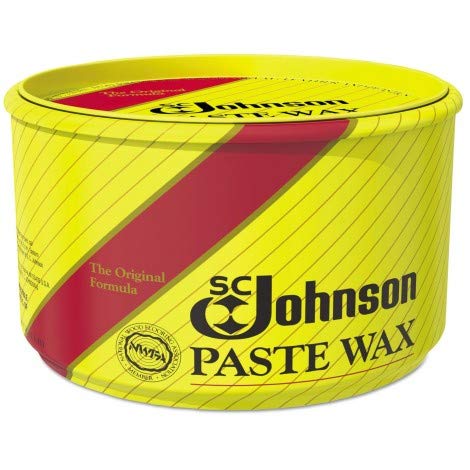
SC Johnson Paste Carnauba Wax, 1 lb
A carnauba paste wax listing to compare only if the saw maker allows this type of wax. Check the current label and formula; avoid substituting a wax with silicone or other ingredients prohibited by the machine manual.
Carnauba wax appears in some woodworking-machine maintenance instructions because a properly applied thin layer can reduce friction and help protect a cast iron surface. That is not a universal endorsement of every paste wax. For example, a Grizzly G1023 manual recommends carnauba wax or a cast-iron table dressing and warns against paraffin-like waxes that leave residue, as well as silicone-based lubricants that can interfere with finishing wood. Other saw manuals may specify something else, so check the documentation for your machine before using this product.
Wax needs careful buffing. A thick or uneven coat may feel slick or leave marks. Apply sparingly, allow the product to haze if instructed, and buff until no excess transfers to a clean cloth. Confirm that the tabletop remains clean and that stock can be controlled securely. Never use a household polish simply because it says “wax” on the package; polish may contain silicone or additives that are undesirable around woodworking.
WD-40 Specialist Rust Remover Soak: for removable parts only

WD-40 Specialist Rust Remover Soak, 1 gal
A ready-to-use soak designed for an object that can be completely immersed. The manufacturer lists time ranges by rust severity and requires rinsing and complete drying afterward. It is not a tabletop spray treatment.
This product makes sense only when the part can be removed safely, the material and finish are compatible, and the whole part can be submerged in a suitable container. The manufacturer’s instructions describe soaking light rust for at least 30 minutes, medium rust overnight, and heavier rust up to 24 hours, followed by rinsing and complete drying. Those directions cannot be translated into “pour it on the saw top and wait.” A fixed table, trunnion, arbor, switch, and motor create a very different cleanup and exposure problem.
Also check the label for finishes or coatings that the product may remove. Do not soak a component with bearings, electrical parts, paint, bluing, or a coating that must remain intact unless the instructions explicitly allow it. For a removable accessory, identify the metal and consult both the saw manual and product maker. Once treated, rinse and dry it completely, then apply a suitable protectant before reinstalling.
How to choose the right approach
The phrase “best product to remove rust” hides several different jobs. A table with a faint orange film may only need controlled cleaning. A table with deep pits has lost material and may need evaluation rather than a stronger cleaner. A removable fence rail, extension wing, or hand tool may tolerate a different method from the permanently assembled tabletop. Start with the condition and the manual, then decide whether a cleaner, a light mechanical aid, or professional service is appropriate.
| Condition | Approach to consider | Key caution |
|---|---|---|
| Light surface haze or a few specks | Manual-approved cleaner applied carefully with a cloth; wipe, rinse if required, and dry | Test first; protect the precision surface from chemical spotting |
| Moderate surface rust without pitting | Manufacturer-approved rust removal with controlled, gentle rubbing | Avoid aggressive abrasives that can alter flatness |
| Deep pits, flaking, or unevenness | Stop and ask the saw maker or a repair professional | Cleaning cannot restore missing cast iron or surface geometry |
| Small removable iron part | Compatible soak or cleaner according to its label | Remove vulnerable coatings and fully rinse and dry |
| Recurring rust in humid storage | Improve humidity control and use approved protective coating | More cleaner will not solve persistent moisture exposure |
How to remove surface rust safely from an installed saw table
- Read the exact saw manual. Find the maintenance section for table, wings, and rust protection. A manufacturer’s instructions for a particular model outrank a generic guide. Confirm which cleaning agents, abrasives, and coatings are acceptable. If the manual is missing, search the manufacturer support site using the complete model and serial information.
- Disconnect power and secure the machine. Unplug the saw or isolate it at the breaker according to the manual. Prevent accidental starting. Remove loose accessories that obstruct cleaning and can be taken off safely. Do not work near an energized blade or reach into the cabinet without following lockout and service instructions.
- Remove dust and loose debris first. Brush or vacuum sawdust away with the machine off. A clean surface makes it easier to see whether corrosion is superficial or pitted and prevents grit from scratching the tabletop during wiping. Do not blow debris into the cabinet or electrical controls.
- Identify the finish and test a hidden spot. Determine whether the table is bare ground cast iron, coated, painted, or treated. Product compatibility matters. Test the chosen cleaner at an inconspicuous edge using the label’s recommended method. If it changes the finish, leaves white spots, or dulls the metal, stop and follow a different manual-approved process.
- Apply the cleaner with control. Use a small quantity on a cloth or applicator if directed. Boeshield specifically advises dampening a rag for cast iron because direct spraying can cause spotting. Avoid flooding seams, miter slots, fence rails, the arbor opening, and cabinet openings. Work a small area at a time so you can remove residue promptly.
- Use only gentle mechanical action when allowed. If the manufacturer permits a nonwoven abrasive pad, use light pressure and keep the pad flat. Avoid coarse sandpaper, powered wire wheels, grinders, and random-orbit sanders on the precision table. Such tools can create scratches, remove material unevenly, round an edge, or change the surface geometry. If the rust does not release with the approved method, stop rather than increasing force.
- Remove cleaner residue as instructed. Some cleaners require a water rinse or soap-and-water cleanup. Follow the cleaner label while preventing liquid from entering the saw. Use a damp, controlled cloth when appropriate, then a fresh cloth to remove residue. Do not neutralize a chemical with another household product unless the manufacturer tells you to.
- Dry completely. Use clean, lint-free towels and allow the metal to air-dry in a dry room. Pay attention to grooves and edges where moisture can linger. Do not apply a protectant over a wet surface. If the environment is humid, use suitable airflow and wait until the surface is fully dry.
- Apply an approved rust preventive. Follow the product instructions for amount, coverage, drying time, and buffing. Thin, even coverage is easier to manage than a heavy coat. Keep the product off the blade and components not listed for treatment. If you use a wax, confirm the manual permits that product category and buff away excess.
- Check before returning to work. Reinstall only removed parts that are dry and correctly fitted. Confirm the table is clean and not oily or slippery. With power still disconnected, verify that no cloth, abrasive, or tool remains in the machine. Then follow the manufacturer’s startup procedure and make a test cut on scrap before important work.
Why table saw rust happens
Cast iron corrodes when moisture and oxygen reach the surface. A cold tabletop in a warm, humid shop can collect condensation even if there is no roof leak. Seasonal humidity, damp concrete, an open garage door, a nearby sink, wet lumber, and temperature swings all contribute. Fine sawdust can hold moisture against the metal, while fingerprints leave salts and oils that create uneven discoloration. A protective coating wears off through use and cleaning, so periodic maintenance matters.
Rust is often first noticed when a board begins to drag or pick up orange marks. That symptom does not always mean the entire table needs chemical treatment. Clean away dust and inspect the surface under good light. Small dots may be surface oxidation; dark low spots or rough pits indicate deeper damage. A straightedge can help reveal whether the top appears uneven, but do not use it as a substitute for a proper machine inspection.
Rust removal versus surface repair
A cleaner can dissolve or loosen surface oxidation. It cannot put metal back where corrosion has eaten into the table. If a tabletop is pitted, visibly wavy, or damaged around the miter slots, abrasive removal may make the problem worse by taking more material from the surrounding high spots. Precision matters because the table supports stock as it approaches the blade; changing the plane can affect cut quality and safe workholding.
For severe rust, first document the condition with photos and contact the saw manufacturer or a qualified machinery repair service. Ask whether the top can be resurfaced and what tolerances or finishing process apply. Do not assume that sanding until the orange color disappears is acceptable. In some cases, replacing a damaged component is safer and more cost-effective than a do-it-yourself attempt to flatten it.
What to avoid on a cast iron saw table
- Do not flood the tabletop. Liquid can run into slots, seams, the arbor opening, and electrical areas. Apply only what the instructions call for.
- Do not use an untested acid. Vinegar, citric acid, and stronger rust removers can react with cast iron, leave discoloration, or be difficult to rinse from assembled machinery. Manufacturer guidance should determine the chemistry.
- Do not reach for an angle grinder or power sander. Fast material removal can scratch or dish the precision surface. Hand methods are not automatically safe either; use only those allowed by the manual.
- Do not use silicone lubricants around work intended for finishing. Silicone can transfer and cause finish defects. Some machine manuals explicitly warn against silicone-based products.
- Do not assume general-purpose water-displacing spray is a rust remover. A protective or lubricating spray may help with moisture management but may not remove existing oxidation. Read the exact product’s stated purpose.
- Do not leave cleaner under wax or oil. Clean, rinse if required, and dry before applying protection.
- Do not put an oily, slick surface straight into service. Excess product can affect stock control or transfer to lumber. Buff or wipe as directed and inspect on scrap.
- Do not mix products. A cleaner, water rinse, protectant, wax, and lubricant each have different purposes. Do not layer them unless the manufacturers say the combination is suitable.
How to keep rust from coming back
Rust prevention starts with controlling moisture. Keep the saw in a dry space, reduce condensation, and avoid storing wet lumber or damp rags on the table. In an unconditioned garage, a small dehumidifier or better ventilation may do more than repeated applications of cleaner. If the machine is near an exterior wall or floor that stays damp, improve the surrounding conditions where practical.
At the end of a work session, brush off sawdust and wipe away fingerprints. Check for water from a drink, wet board, or open door and dry it promptly. Apply the rust preventive specified by the saw maker at the recommended interval. A thin coating that is renewed consistently is easier to manage than a thick layer applied only after corrosion appears.
Before a long period without use, inspect the table, clean it, and protect it according to the manual. For shipping or extended storage, some manuals suggest additional protection such as a rust-inhibiting film; if that coating is heavier or oily, remove it fully before cutting. Keep any temporary cover from trapping condensation against cold iron. A breathable cover and dry storage are generally easier to maintain than wrapping a damp machine in plastic.
Use clean, dry cloths and keep chemicals in their original labeled containers. Mark the maintenance date so you can tell whether rust returns unusually quickly. Recurring oxidation is a clue to inspect the shop’s humidity, roof, plumbing, and storage habits rather than simply changing cleaners. A simple routine reduces the chance that a small spot becomes a broad cleaning project.
Will rust remover damage a table saw’s precision surface?
It can, depending on the chemistry, concentration, exposure time, and finish. Even a product sold for cast iron may cause spotting or dulling; Boeshield’s Rust Free guidance specifically warns about this and recommends a rag application for cast iron. Abrasive tools can also remove or scratch material. That is why a hidden-area test and the saw’s own manual are central to the decision.
Do I need to remove every dark mark?
No. A dark stain can be discoloration, residue, or a shallow corrosion mark rather than active orange rust. Aggressively chasing every mark can remove sound material. Clean what is loose or transferring, inspect the surface, and protect it. If a mark is pitted or affects stock movement, get advice before escalating the treatment.
Can I use WD-40 Rust Remover Soak on a table saw top?
The soak is intended for parts that can be fully immersed in a bath, rinsed, and dried. A fixed tabletop cannot be handled that way without exposing other machine components and creating difficult cleanup. Reserve it for compatible, removable items that the manual allows you to treat, and follow the exact product directions. Do not confuse the soak with another product in the WD-40 family; names and intended uses differ.
Can paste wax prevent rust?
Some machine manuals recommend a thin layer of carnauba wax or a purpose-built cast-iron table dressing. Other products marketed as wax may contain unwanted additives or leave residue. Check the saw manual and the product label, apply sparingly, and buff thoroughly. A wax layer is only one part of prevention; it will not compensate for persistent dampness or standing water.
Should I use steel wool?
Only if the saw maker allows it and you understand the risk of scratches and stray fibers. Abrasives vary in aggressiveness, and a pad that seems gentle can still change the appearance of a polished or ground surface. Use the least aggressive method the manual approves. If light, controlled cleaning does not work, stop and seek model-specific advice instead of stepping up to a powered abrasive tool.
What if rust returns after a few days?
Look for condensation, humidity, wet lumber, damp dust, a leaking roof, or a coating that was removed during cleanup. Make sure the tabletop was fully dry before applying protection and that you buffed or cured it as directed. If the surface is repeatedly wet, a different cleaner will not fix the underlying moisture source. Keep a simple maintenance log and contact the manufacturer if the problem is persistent or the surface appears damaged.
What protective equipment should I use?
Use the cleaner’s current label and safety data sheet to select protective equipment. Boeshield advises protective eyewear and rubber gloves for products such as T-9, and its Rust Free product is acidic. Work with ventilation appropriate to the label, avoid skin and eye contact, and keep products away from children, pets, flames, and food-contact items. Never use a household cleaner in a way that conflicts with its warnings.
Frequently asked questions
What is the best product to remove rust from cast iron table saws?
There is no universal best product for every saw. For an installed surface, start with a cleaner whose maker explicitly addresses cast iron and whose directions fit the saw manual. Boeshield Rust Free is one option to evaluate, but it can spot cast iron; Boeshield says to apply it to a rag, test first, and rinse with soap and water after use. For deep rust or pitting, seek model-specific service advice.
Is WD-40 enough to remove rust?
It depends on which product you mean. The WD-40 Specialist Rust Remover Soak is a separate product intended for immersible objects. A general-purpose water-displacing spray is not the same cleaner and may serve a different role. Read the exact label and use the saw manual to determine whether a product belongs on the tabletop.
How long should rust remover stay on cast iron?
Follow the exact cleaner directions. Boeshield says Rust Free should penetrate for no more than 30 to 60 seconds before wiping; its cast-iron note also advises applying it to a rag, not directly to the surface, and rinsing afterward. Do not transfer soak times from an immersion product to an installed machine top.
Can rust remover be used on cast iron saw wings?
Possibly, if the wing’s finish and the cleaner are compatible and the saw maker allows it. A removed wing may be easier to rinse and dry, but it can still be precision-machined and may have a coating. Check the manual, test an inconspicuous spot, and keep liquid away from mounting surfaces and hardware.
Will a rust preventive make wood oily?
It can if too much is applied or it is not allowed to dry and buff as directed. Use a thin layer and test on scrap. Avoid silicone-containing products around wood that will be stained or finished, and follow the saw manual’s recommendations for the table surface.
Is surface rust dangerous?
Light rust is often first a friction and maintenance problem, but a rough or uneven surface can make stock movement less predictable. Deep pitting or a damaged table can affect support. Do not operate a saw with a surface condition that prevents stable, controlled work; have significant damage evaluated.
Can I use a rust remover on the miter slots?
Only if the product and the machine manual permit it, and only with careful application that keeps liquid out of the cabinet. Slots can hold residue and moisture. Use a small cloth or applicator, remove all cleaner, dry thoroughly, and protect the surface as recommended. If you cannot reach the area without flooding it, ask the manufacturer for an approved maintenance method.
Related guides
- Compare table saw types and features
- Choosing a table saw for a home shop
- See compact benchtop table saw options
- Read about rust protection and care for hand saws
Bottom line
For rust on a cast iron table saw, the safest useful choice is the product and process that match the exact machine manual. A controlled cleaner such as Boeshield Rust Free is a candidate for small surface spots because its maker addresses cast iron, but the same instructions warn about spotting and direct application. Use a cloth, test first, clean up completely, dry the iron, and then apply a compatible rust preventive in a thin layer.
Keep immersion products for compatible parts that can actually be removed, submerged, rinsed, and dried. Avoid aggressive sanding on the precision table, and get help for pitting or unevenness. Most importantly, reduce humidity, clean sawdust, wipe fingerprints, and maintain the protective film before rust returns. These habits protect the machine and keep the tabletop ready for accurate, controlled cuts.
Sources: Boeshield Rust Free product instructions and cast-iron precautions; Boeshield T-9 product information; WD-40 Specialist Rust Remover Soak directions; Grizzly G1023 table and wing maintenance manual. Consult the manual for your specific saw model.
Certain content that appears on this site comes from Amazon. This content is provided “as is” and is subject to change or removal at any time. Product information and images are supplied through Amazon Creators API. Verify current specifications, compatibility, availability, and seller details on the listing and in the product maker’s instructions.