Best Table Saws for Home Shop Use: How to Choose for a Real Workshop
The best table saws for a home shop are the ones that fit the work you actually do and the room you have to do it in. A saw can have a large table and powerful motor yet be a poor fit if there is no safe infeed space, no place for long stock to exit, no practical dust collection, or no electrical supply that meets its requirements. A compact jobsite model may store easily but lack the support or stability wanted for repeated cabinet work. A cabinet saw can offer a substantial stationary platform while demanding more floor space, power planning, and dust infrastructure.
This guide is about how a table saw works as part of a home-shop workflow: where it sits, how material moves around it, what other tools and storage it needs, and how noise, dust, power, and cleanup affect everyday use. It does not rank particular models from hands-on tests or assume that every home shop has a garage-sized footprint. Instead, use the decision framework here to compare saw categories and verify exact specifications in the current manufacturer manual.
Affiliate disclosure: DailyHomeDecorating.com may earn a commission from qualifying purchases through links in this article. This does not change the price you pay.
Amazon product examples to compare

ASIN: B08F9RFJ2K
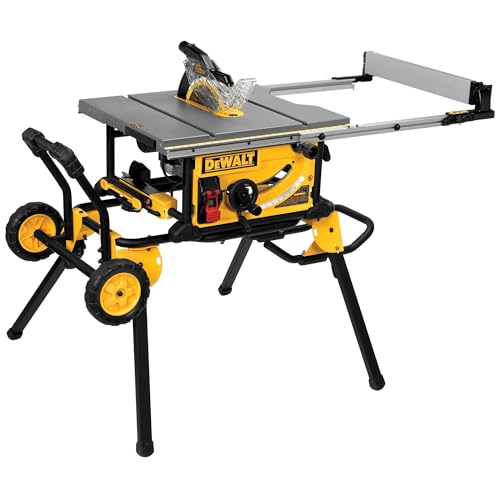
ASIN: B00F2CGXGG

ASIN: B01987G1K8

ASIN: B0GCZS47KK
Certain content that appears on this site comes from Amazon. This content is provided “as is” and is subject to change or removal at any time. Product examples and images are supplied through Amazon Creators API; confirm specifications and availability on the current listing.
Table of contents
- Quick fit check for a home shop
- Start with your shop workflow
- Choose a saw category for the room
- Plan footprint, infeed, and outfeed
- Check electrical needs and motor type
- Plan dust collection and cleanup
- Account for noise, vibration, and neighbors
- Build a safe home-shop layout
- A practical buying and setup process
- Frequently asked questions
Quick fit check: does this saw belong in your home shop?
| Shop condition | What to evaluate | Potential direction |
|---|---|---|
| The saw must be stored between projects | Folded footprint, weight, setup time, wheel locking, accessory storage | Portable or benchtop styles may be easier to stow |
| The saw stays set up for repeated work | Stationary footprint, table support, fence alignment, service access | Hybrid or cabinet designs may suit a dedicated shop |
| Long boards or full sheets are common | Infeed and outfeed clearance, side support, safe handling help | Plan tables, rollers, or a different cutting workflow |
| The shop shares space with a car or household storage | Moving path, parked-car clearance, dust migration, setup and teardown | Mobility and storage may outweigh a larger table |
| Electrical service is limited | Voltage, amperage, plug, circuit, startup load, code requirements | Verify the manual and have electrical capacity assessed before purchase |
| Dust collection is a concern | Cabinet enclosure, port size, guard pickup, collector airflow and filter | Compare the whole collection system, not only the saw port |
A useful purchase decision starts with a tape measure and a project list, not a horsepower comparison. Mark the saw’s actual footprint on the floor, then mark where stock will enter, leave, and turn. Account for your body position, the fence, push devices, dust hose, power cord, and any auxiliary table. If a board cannot be supported without blocking a door or reaching past a blade, the layout needs to change before the machine arrives.
Start with your home-shop workflow
List the work the saw will perform
Write down typical materials and operations: ripping framing lumber, breaking down plywood, cutting cabinet parts, trimming hardwood, preparing shelves, or making occasional repairs. Estimate how often each task occurs and the largest stock size you expect to handle. Include whether the work is rough construction, furniture and joinery, or mixed-purpose. A shop that cuts a few small boards per month has different needs from one that regularly processes sheet goods or long solid stock.
Think about what the table saw will replace or complement. A track saw can break down a full sheet with the sheet lying on foam or a support grid. A circular saw and guide can handle occasional long cuts without reserving permanent floor space. A miter saw may be more efficient for repeated crosscuts. The table saw is strongest at repeatable straight cuts with a fence, but it is not the only way to produce accurate parts. Our general table saw guide covers broad category selection, while this guide focuses on a stationary home-shop workflow.
Separate cutting tasks by tool
Use the table saw for operations it is designed to perform, such as ripping and appropriate crosscut setups. Use a miter saw, track saw, circular saw, band saw, or hand tool when that tool provides a safer or more practical way to handle the work. Long boards can be awkward to crosscut on a table saw, and sheet goods may be safer to break down while supported on a large surface rather than lifted alone over a small table. OSHA’s woodworking guidance notes that long boards create a hazard during table-saw crosscutting and recommends alternative considerations; the material is workplace-focused but useful in understanding handling risks.
Do not assume that buying a larger saw eliminates the need for other equipment. A stable outfeed table, roller stand, panel support, mobile base, dust collector, and push sticks can contribute more to a safe workflow than a larger motor. Budget for those support items and the space they occupy. If the accessories will not fit around the saw, reconsider the room plan or use a more portable workflow.
Plan how materials arrive, get stored, and leave
Home shops often have a material-handling bottleneck before the saw itself. Plywood may arrive in full sheets that cannot pass through a doorway or turn inside the shop. Lumber may be stored across the room, under the saw, or beside a vehicle. Finished parts need a clean landing surface. Sketch these paths and note where stock will be stacked, acclimated, measured, cut, and staged for assembly.
Leave a clear route from the entrance to the saw and to the exit. Do not route long stock over extension cords, hoses, or floor clutter. If a board must pass through a garage door, account for the door track and the position of a parked car. Consider whether a mobile base will let the saw move between storage and operating positions without changing the infeed and outfeed clearances needed for the cut.
Choose a saw category for the room
Portable jobsite saws in a shared or compact shop
A portable table saw can be moved, folded, or stored between uses. That can be valuable in a one-car garage, basement work area, or multi-use room. A stand with wheels may make setup easier, but it still needs a level, stable operating surface and adequate space for stock. Check how the stand locks, whether the saw can be used on a bench, the size of the table, fence adjustment range, and where accessories are stored when folded.
Portability can mean compromises in table size, vibration, fence support, and working height. The actual fit depends on the saw and task; do not generalize from the category alone. If you routinely cut wide panels, determine whether the manufacturer offers compatible side or outfeed supports and how much room they need. For help comparing mobile setups, see our portable table saw guide.
Benchtop saws when storage is the main constraint
Benchtop models can be carried to a work surface and stored on a shelf or under a bench. They may suit small projects and limited storage, but the user must ensure the bench is rigid, level, and secured against movement. The support table needs room for the workpiece and any feed aids. A lightweight saw on an unstable bench can shift while feeding stock, which is both an accuracy and control problem.
Measure the storage opening and path before buying, including handles, fence rails, guards, and cord. Then measure the height and surface strength of the intended bench. If the bench also stores tools below, verify that dust will not contaminate them and that the saw can be secured without blocking drawers or doors. A benchtop design saves space only if it can be brought out and installed without awkward lifting or unsafe shortcuts.
Hybrid and cabinet saws for dedicated stationary use
Hybrid and cabinet saws are intended for a more permanent workshop arrangement, though their dimensions and electrical needs vary by model. They can offer larger work surfaces, heavier structures, and enclosed bases that may support a shop’s dust-collection plan. They also occupy a larger footprint and may require more effort to move, assemble, align, or service. Before selecting one, identify how it will enter the building, where it will sit, and how its cabinet door, motor, trunnions, belt, and dust port can be accessed.
Do not assume that all cabinet-style saws need the same voltage or that all home circuits can support them. Confirm voltage, phase, amperage, plug or wiring requirements, and grounding in the exact manual. Any wiring changes should be assessed and performed by a qualified electrician under local electrical rules. Our hybrid saw guide and cabinet saw guide cover those categories; this article considers how a stationary machine fits into a small-shop system.
Affordable saws and the cost of the full setup
A lower purchase price may leave room for a better blade, dust collector, mobile base, support tables, measuring tools, or electrical work. Compare the saw and required support equipment as one system. Include delivery, assembly, calibration, replacement blades, guard or riving-knife accessories, and any modifications to the room. An economical portable saw may be a better choice than an expensive stationary unit if the latter needs a new circuit and a large collector that do not fit the budget.
Price should not be used as a stand-in for accuracy, safety, or long-term service. Review warranty terms and parts availability, and confirm the fence can be aligned and locked consistently. Our affordable table saw guide covers budget-oriented choices separately; here, total home-shop readiness is the focus.
Plan footprint, infeed, and outfeed
Measure the operating envelope, not only the base
Product dimensions usually describe the machine, stand, or table in a defined configuration. They do not include the full space needed to operate it. A home-shop layout should include the table, fence rails, motor or cabinet access, dust hose, power cord, mobile-base controls, and operator stance. Add the length of the stock you plan to feed and enough space to guide it without striking a wall or storage rack.
Some woodworking references use clearance planning rules, but the actual safe setup depends on the material, cut, operator, feed aids, and any support equipment. Do a physical mockup with cardboard, painter’s tape, or scrap stock rather than relying on a generic number. Simulate a long rip with a board of the maximum length you expect to use, including how you will stand and where the end will go. If a helper or outfeed support is needed, include their position in the plan.
Infeed and outfeed support
Stock must remain supported before it reaches the blade and after it passes the blade. An outfeed table can help keep a board from tipping or dropping, but it must be level with the saw table and positioned so it does not obstruct the operator. A roller stand can support long material but may move or tilt; check its stability with the actual stock. Side support matters when ripping wide panels. A narrow portable table may need compatible extensions or a separate breakdown process.
Do not use a helper as an improvised support without clear communication and training. The person receiving a board must not pull, twist, or reach near the blade. The operator should control the feed and know where the material will land. For large sheets, a track saw or circular saw on supported foam may be safer and easier than lifting a sheet through a home-shop table saw. Our general table saw article provides broader selection criteria, while the workflow decision here focuses on material handling and room constraints.
Mobile bases, storage, and floor condition
A mobile base can reclaim floor area, but moving a saw changes alignment, hose routing, and operating clearance. Verify the base is rated for the saw’s weight and that its locking system holds the saw firmly during use. Make sure the floor is level enough that the machine does not rock. The base should not create an unstable step or catch dust hoses and cords. If the saw needs to be repositioned for every project, account for the time and effort and make sure the route is clear.
Storage should protect the fence, miter gauge, push sticks, blade guard, riving knife, and wrenches. Keep safety devices together with the saw rather than leaving them on a shelf across the room. Avoid stacking lumber where it can fall onto the machine or block access to the power disconnect. Plan the path for cleaning under and behind the saw; a machine that cannot be cleaned is more likely to accumulate dust and offcuts.
Access for assembly and service
Stationary saws may arrive in heavy components or a large crate. Measure doorways, stairs, turns, ceiling height, and garage thresholds. Check whether a pallet jack, dolly, or second person is needed. Before assembly, read the manufacturer’s lifting and installation instructions. Do not lift a heavy saw by a fence rail, motor, or other component not rated as a lifting point.
Leave room to remove the blade, adjust the fence, inspect the riving knife, clean the cabinet, and service the motor. A saw pushed into a corner may have an impressive footprint fit but be impossible to maintain. Also consider where dust collection hoses and electrical connections exit. A flexible hose that is sharply bent or crushed can reduce collection and interfere with mobility.
Check electrical needs and motor type
Read the exact manual before planning a circuit
Table saws vary in voltage, current draw, plug type, phase, motor configuration, and startup demand. A model’s marketing description may not provide enough information to determine whether the home circuit is suitable. Use the nameplate and current manual for the exact model and region. Check the circuit rating, outlet, grounding, cord requirements, and whether other loads share the circuit. Do not remove a grounding pin, substitute an adapter, or assume an extension cord is acceptable.
Some stationary saws may require a dedicated circuit or an electrical connection different from a typical household receptacle. The manual may state that wiring must be completed by a qualified electrician. Follow local electrical codes. If the circuit, breaker, voltage, or conductor size is uncertain, have it assessed before purchase. Changing the saw’s voltage configuration or adding a circuit is not a casual DIY task unless you are qualified and local rules permit it.
Universal motors and induction motors in context
Portable saws commonly use lighter motor systems designed for portability; stationary saws may use heavier induction-motor configurations. These broad categories can differ in sound, starting behavior, maintenance, and power needs, but motor type alone does not tell you how the saw will perform in your shop. The blade, fence, alignment, stock, feed rate, and circuit all matter. Compare the published requirements and intended duty rather than choosing from a single motor label.
For a shared garage, consider when and how long the saw will operate. Starting current can matter if other equipment runs on the same circuit. Dust collectors, heaters, compressors, and lights may all draw power. If you trip breakers or observe dimming, stop and have the electrical setup reviewed rather than repeatedly resetting the breaker or changing to a larger fuse.
Extension cords and cord management
Use an extension cord only if the saw maker permits one and specifies the appropriate type and gauge. A cord that is too long or undersized can heat up and cause voltage drop. Keep the cord fully uncoiled when required and route it away from the blade, stock path, and dust hose. A cord underfoot or across the feed path creates a trip hazard. For a stationary installation, a properly placed outlet may improve both safety and workflow; electrical work should follow local code.
Plan dust collection and cleanup
Compare the saw and collector as a system
Wood dust is an exposure and housekeeping concern in a home shop. A table saw may have a cabinet port, an under-table shroud, a blade guard with an upper dust pickup, or a combination. The saw’s port size alone does not tell you whether a shop vacuum or collector will provide adequate airflow. Check the saw manual for port configuration and compatible collection equipment; check the collector’s operating requirements and filter. A splitter, hose reducer, long duct, or restrictive bend can affect airflow.
NIOSH’s table-saw dust-control material notes that dust from the blade can escape collection through the lower cabinet alone and discusses source capture near the blade. OSHA’s woodworking eTool likewise emphasizes local exhaust ventilation and maintenance. Those industrial resources are useful for understanding why a simple port connection may not capture all dust, though home shops may not be subject to the same workplace rules. Review OSHA’s woodworking dust guidance and the NIOSH/OSHA table-saw dust-control publication.
Dust collection affects room layout
Decide whether the collector will sit beside the saw, in a nearby closet, or outside the work area where permitted. The collector itself needs space for filter cleaning, bag changes, airflow, and maintenance. A mobile collector may make it easier to share between tools but can leave hoses crossing walking paths. Fixed ductwork can reduce hose clutter but takes room and should be designed for the system and material. Do not improvise a collector location that blocks egress or places fine dust and combustible material near an ignition source.
Plan how you will clean the saw cabinet, floor, fence rails, and surrounding benches. Do not blow accumulated dust around with compressed air. Use a suitable vacuum or cleanup method and keep dust from collecting on heaters, motors, outlets, and lights. Fine dust can migrate into the house through an open door or HVAC return, so think about barriers and air movement before the first cut.
Upper and lower capture, guards, and airflow
Some saws support dust collection both below the table and at the blade guard. The upper pickup may require a separate hose, splitter, or collector inlet. Check that the guard and riving knife can be used as intended with the collection arrangement. Do not remove the guard simply because it is inconvenient to connect a hose. If an accessory interferes with the guard, use the manufacturer-approved configuration or choose another appropriate cutting method.
Keep filters and ducts clean. A loaded filter can reduce airflow and let more dust escape. NIOSH and OSHA recommend maintaining local exhaust systems; at home, follow the collector maker’s instructions for filter cleaning, bag changes, and static or grounding considerations. Do not use a household vacuum for fine combustible dust unless it is designed and rated for the application. Check the collector manual and any applicable local fire and electrical rules.
Account for noise, vibration, and neighbors
A table saw can be loud because of the motor, blade, stock, and vibration through the table or floor. A small garage or basement may reflect and amplify sound. If the shop shares a wall with living space, talk through when cutting will happen and consider the room’s construction, doors, windows, and ventilation. Hearing protection is important when operating loud equipment; the required type and use depend on noise exposure and local rules.
OSHA’s woodworking noise guidance discusses source, path, and receiver controls. It notes that frame rigidity, maintenance, and vibration pathways can affect how noise travels. This does not mean that a heavier saw is automatically quiet or that a particular decibel figure from one manufacturer can be compared directly with a different test. Compare measurement conditions, and if noise is a major constraint, try to hear the actual saw under a representative cut before purchase.
Place the saw on a firm, level surface and secure its stand or base as directed. A machine that rocks can produce inconsistent cuts and transmit vibration. Do not mount it to an improvised platform that flexes or resonates. Keep the blade sharp and properly installed; damaged or unsuitable blades can increase noise and vibration. For more context, see OSHA’s woodworking noise overview.
Noise planning also includes neighbors and household schedules. Consider whether a portable saw can be moved outdoors for occasional work where the ground and weather permit, or whether a hand tool or track saw is quieter and more practical for a particular cut. Do not operate a saw outdoors in unsafe weather or where the setup cannot be stabilized. Noise is only one factor; dust, extension cords, and material support still matter.
Build a safe home-shop layout
Keep guards, riving knife, and anti-kickback devices usable
Use the blade guard, riving knife, splitter, and anti-kickback components as directed for the operation. These devices are designed to reduce exposure to the blade and help limit certain kickback situations. Their use and configuration vary by saw and cut. Read the operator manual and do not modify safety equipment. If a cut requires removal of a guard, reinstall it as soon as the operation permits and use the specific alternate setup described by the maker.
OSHA’s table-saw guidance explains point-of-operation hazards, kickback, and the importance of functional guards and push sticks in workplace settings. Its recommendations are not a replacement for the saw manual or training. Review the OSHA table-saw hazards page for context. Keep hands out of the blade line, use a push stick or push block when appropriate, and never reach over a moving blade to clear offcuts.
Leave room for the operator and emergency access
Plan where the operator stands and where they can step away if material binds or shifts. Keep exits and walkways open. Store clamps, push sticks, and measuring tools where they can be reached without crossing the blade path. Do not position the saw so the operator is trapped between the machine and a wall. Keep the power switch accessible and know how to disconnect power safely.
Do not allow bystanders to stand in the material path or behind the operator. If a helper is needed for long stock, agree on roles and signals before turning on the saw. The operator should control feed speed, while the helper supports the material without pulling or steering it. If the material is too large to handle safely, use a different cutting approach or ask for assistance from someone trained in that work.
Calibration and commissioning before first use
After assembly, align the blade and fence according to the manual. Check the riving knife alignment, guard movement, miter gauge fit, fence locking, blade tilt, and table surface. Verify that the saw is stable and level. Use the manufacturer’s procedure for a test cut and measurement; do not rely on a fence scale without checking it against a known reference. Make adjustments with the saw disconnected from power and the blade stopped.
Before every session, inspect the blade, throat plate, fence, guard, push devices, dust hose, cord, and controls. Remove wrenches and setup tools from the table. Do not use a saw with a cracked blade, damaged guard, loose fence, sticky switch, exposed wiring, or other defect. Unplug or isolate power before changing a blade, clearing a jam, or servicing the machine.
A practical buying and setup process
Step 1: Measure your shop and stock
Measure the room, doorways, stairs, and floor area. Note the maximum board length and panel size, then mark a realistic operating envelope. Identify where the saw will sit during use and storage. Include the support tables, collector, hoses, and material racks. If the saw needs to be moved, check that it can pass through the path without being lifted unsafely.
Step 2: Check the electrical and dust systems
Read the model manual for voltage, current, plug, grounding, and dust-port details. Confirm the intended circuit and collector before ordering. If the machine needs a new circuit, electrical conversion, or fixed dust duct, include the cost and time in the project plan. Ask qualified tradespeople to review work that requires licensed electrical or dust-system design.
Step 3: Compare fences, support, and adjustments
Inspect the fence mechanism, rail length, table extensions, blade-height and bevel adjustments, and how accessories mount. Check whether the fence locks consistently and can be aligned. Determine the maximum rip capacity from the current product specification and whether that capacity is useful in your room. A large capacity number is less valuable if there is no safe support for the material.
Step 4: Budget for the complete station
Include blades, push sticks or blocks, outfeed support, side support, mobile base, dust collector, hose, filters, electrical work, and storage. Consider setup and calibration. The least expensive saw may be the best fit if it leaves room for a safe workstation; a premium stationary model may be worthwhile for frequent work only if the shop can support it. Avoid buying accessories that do not fit the exact model.
Step 5: Verify documentation and service support
Download the current manual before purchase. Confirm that the model sold in your region has the same electrical details and accessory compatibility as the manual you found. Check replacement part availability, warranty conditions, and local service options. For a stationary saw, review how the blade guard, riving knife, dust port, belt, motor, and cabinet are serviced. A machine that is difficult to maintain may become a poor long-term choice for a home shop.
How this guide differs from other table-saw roundups
Existing table-saw buying guides often compare broad product categories, affordability, beginner operation, or a specific construction such as a cabinet or hybrid saw. This guide focuses on fitting a saw into a home workshop as a complete station: operator envelope, stock routes, storage, power service, collector placement, noise, cleanup, and support equipment. It does not introduce a new ranked product list or claim a universal best model. Use the linked category guides for additional comparisons: general table saws, portable table saws, hybrid saws, and cabinet saws.
Product information and installation requirements come from manufacturer manuals and official category documentation. OSHA and NIOSH references provide primary safety and dust-control context; their workplace materials should not be mistaken for an assessment of every home-shop legal requirement. This article does not report hands-on tests, measured noise comparisons, or current prices. Verify exact specifications and local electrical and fire requirements before purchase and installation.
Primary references: the OSHA table-saw safety overview, the OSHA woodworking dust guidance, the OSHA woodworking noise overview, and a current Powermatic cabinet-saw manual showing the kind of model-specific dust and electrical information to confirm. Always obtain the manual for the precise saw under consideration.
Frequently asked questions
What type of table saw is best for a small home shop?
It depends on whether the saw must be stored, how often you use it, and what stock you cut. A portable or benchtop model can be easier to move and store; a hybrid or cabinet saw may suit a dedicated room with enough space and electrical capacity. Measure the full operating envelope before choosing.
How much room do I need around a table saw?
There is no single room dimension that suits every saw and cut. You need room for the machine, operator, stock entering and leaving the blade, side support, dust hose, and access to controls. Mock up the longest board or panel you expect to cut and confirm the path is stable and clear.
Can a cabinet saw run on a standard household outlet?
Some models may be configured for common household service, while others require different voltage or a dedicated circuit. Read the exact manual and nameplate. Ask a qualified electrician to assess any uncertain circuit or wiring requirement; do not rely on assumptions based on the saw’s size.
Is a mobile base safe for a stationary saw?
A compatible mobile base can help reposition a saw, but it must be rated for the machine and locked securely during operation. The floor should be level and stable. Check that the base does not rock, interfere with dust hoses, or reduce access for service.
Do I need a dust collector for a home table saw?
Dust collection is strongly worth planning. The saw’s lower port may not capture dust from above the table, and a guard pickup may require a separate hose. Match the collector and duct to the saw’s requirements, and maintain filters. OSHA and NIOSH resources explain why source capture and maintenance matter.
Should a home shop choose a portable or cabinet saw?
Choose portable if storage and mobility are primary and your typical work fits the saw’s support needs. Choose a stationary design if the shop can accommodate its footprint, electrical setup, dust collection, and material-handling envelope. The work frequency and room layout matter more than category prestige.
Can I cut plywood on a home-shop table saw?
Only if the sheet can be supported and guided safely by the operator and the saw’s setup. Full sheets can be unwieldy on a small table. A track saw or circular saw with a guide on a supported surface may be more practical for breakdown, after which smaller pieces can be cut on the table saw.
What should I check before using a new table saw?
Assemble and calibrate it according to the manual. Check blade and fence alignment, guard and riving-knife setup, stability, dust connection, electrical supply, and the operation of controls. Make a test cut with supported stock. Do not use the saw if a guard or safety device is damaged or does not work correctly.
Does a heavier table saw make less noise?
Weight alone does not determine noise. Motor, blade, stock, vibration, room construction, and maintenance all contribute. A stable base can reduce some vibration paths, but compare measured noise only when the methods are comparable. Hearing protection and room planning remain important.
Conclusion
The best table saw for a home shop is the one that fits the room and the way you handle stock. Check the complete operating footprint, support long material, plan safe storage and access, confirm electrical requirements, and design dust collection before choosing between portable, benchtop, hybrid, and cabinet styles. Noise and cleanup affect whether a saw remains practical after the first project.
Compare exact manuals and include the outfeed support, collector, mobile base, blades, and electrical work in your budget. If a sheet or board cannot be handled safely on the proposed layout, use a different cutting method. The right home-shop saw is a capable tool within a workable and well-planned station.
This article is general buying information. Follow the current saw manual, applicable electrical and fire codes, and appropriate training for table-saw operation.