Best Affordable Table Saws Under $1,000: How to Choose Value
The best affordable table saws give a woodworker the core functions needed for accurate ripping and crosscutting while keeping the full ownership cost manageable. A low purchase price alone does not make a saw a good value. Fence movement, stand stability, blade and riving-knife compatibility, dust handling, replacement parts, and the cuts you actually plan to make all affect whether an inexpensive saw is useful and safe over time.
This guide focuses on budget-conscious buyers choosing a table saw for a home workshop, small garage, occasional DIY, or a portable jobsite setup. It explains how to evaluate the saw itself and the costs around it, without repeating a broad overview of every table-saw category. This is a research-based buyer’s guide, not a hands-on ranking: we have not tested models, measured fence accuracy, or compared cut quality. For buyers searching the best table saws under $1,000, treat the limit as a ceiling for the machine and essential setup, then verify the current delivered price and included accessories before ordering. Treat maker specifications as model-specific and confirm them in the current product documentation before buying.
If you want the broader category overview, start with our best table saws guide. For a focus on compact transport and jobsite storage, read best portable table saws. If this is your first saw and learning curve is the main concern, see best table saws for beginners.
Affiliate disclosure: This article may contain affiliate links. If you purchase through one, DailyHomeDecorating.com may earn a commission at no extra cost to you. We aim to frame choices around verifiable features, intended use, and safety.
Amazon product examples to compare

ASIN: B08F9RFJ2K

ASIN: B0842QDW95
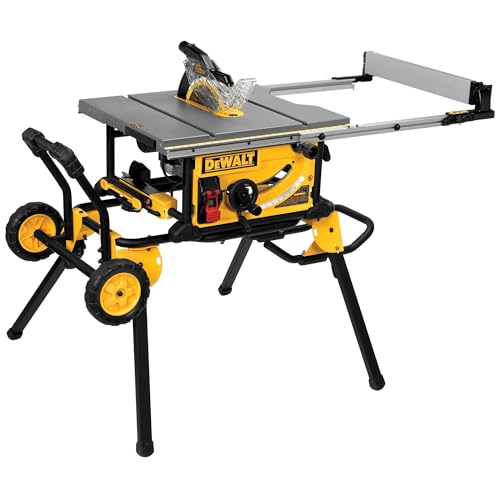
ASIN: B00F2CGXGG

ASIN: B0FRZ35VGS
Certain content that appears on this site comes from Amazon. This content is provided “as is” and is subject to change or removal at any time. Product examples and images are supplied through Amazon Creators API; confirm specifications and availability on the current listing.
Best table saws under $1,000: a dated offer check
To give the budget phrase a concrete meaning without implying permanent prices, we checked Amazon Creators API offers for four saws on November 17, 2026. The returned item-page offers were below $1,000 at that time: SKIL TS6307-00 at $279, DEWALT DWE7485 at $329, Bosch GTS15-10 at $549, and DEWALT DWE7491RS at $699. The Bosch listing showed lead-time availability in the query; the other three showed in-stock availability. These are dated observations, not guarantees or tested-value rankings.
| Model | Observed offer | Buyer check |
|---|---|---|
| SKIL TS6307-00 | $279 | Check stand stability, fence alignment, and included accessories. |
| DEWALT DWE7485 | $329 | Compare compact 8-1/4-inch blade capacity with the work you do. |
| Bosch GTS15-10 | $549 | Check current lead time, stand, and transport needs. |
| DEWALT DWE7491RS | $699 | Include the rolling stand and the space required for its wider rip capacity. |
Offers, availability, shipping, tax, and included packages can change. Confirm the current item page and calculate the complete setup cost before purchase; the offer snapshots do not include tax or project-specific accessories.
Quick answer: prioritize the fence, safety, and stable support
For a value-focused purchase, compare the fence’s locking behavior, table and stand stability, blade size and capacity, and the completeness of the guarding system before comparing extras. A fence that locks squarely and remains parallel to the blade is central to repeatable ripping. A stable saw that does not rock or shift can make careful work easier. A proper blade guard, riving knife, and anti-kickback features are safety essentials when the intended operation permits them; they should not be treated as optional accessories to save money.
Match the saw type to your materials. A compact bench saw may be enough for small parts and occasional projects but may have limited rip capacity and support for wide panels. A jobsite saw can fold or move more easily and may provide a larger table or fence system, but it needs room and a safe stand. A contractor-style or cabinet saw may offer a different working platform but can exceed a budget once electrical, space, and dust requirements are considered.
Set a total budget that includes the saw, stand or bench, suitable blade, push sticks, dust management, measuring tools, and any outfeed support. Keep some allowance for replacement parts and service. A saw with a slightly higher initial price may be a better value if the fence is dependable, parts are available, and essential safety pieces are included.
What “affordable” should mean in a table saw
Affordable should mean that the tool covers a defined range of work with acceptable safety and repeatability at a manageable cost. It does not mean buying the cheapest machine regardless of condition or feature gaps. Some saws are inexpensive because they are compact, simplified, or sold without a stand. Others may be priced low because they lack useful support, have limited capacity, or make adjustments harder. Determine why a model costs less before treating it as a bargain.
Decide on a realistic project set: shelving, small furniture, trim, plywood breakdown, or occasional home repair. Each task places different demands on the fence, table size, rip capacity, motor, and support. If you only make small cuts in a garage, a large saw may be an unnecessary expense. If you regularly rip full sheets or thick hardwood, an entry-level compact unit may frustrate you or prove unsuitable.
Value also includes serviceability. Check whether the maker provides a manual, replacement guard parts, fence hardware, riving knife, blade inserts, and customer support. Accessories that are proprietary or difficult to source can raise the real cost. Read warranty terms carefully and understand that warranty coverage does not replace safe operation or maintenance.
Choose the budget category that fits your work
Compact benchtop saws
A small benchtop saw can be a low-cost entry point for a workshop with limited floor space. It is often lighter and simpler to store than a larger saw. Tradeoffs can include a smaller table, shorter fence travel, reduced support for wide material, and a need to clamp the machine to a sturdy bench. If you choose this category, test how the fence locks and whether the table can support the stock you expect to cut.
Benchtop saws are best considered for modest material sizes and occasional use. They should not be overloaded with large panels that extend unsupported far beyond the table. Add stable side or outfeed support when the manual allows, and ensure the support surface is level with the saw table. A compact saw is not a substitute for a careful panel-cutting plan.
Portable jobsite saws
Jobsite saws typically combine a table, fence, and stand or stand compatibility in a transportable package. They may be a practical home-shop choice when mobility and storage matter. Compare the saw’s folded footprint, stand setup, fence extension, and table support, along with its weight. A portable design can still be awkward to carry, and a stand that is not secured on level ground can shift while feeding stock.
Do not equate “jobsite” with a particular level of cut accuracy or durability. Check the exact fence and adjustment system. Look at the stand’s locking mechanism, wheels, and working height if included. If the saw must be moved often, confirm that one person can handle it safely or plan to move it with a second person.
Contractor and cabinet saws
More substantial saws can provide a larger working surface and heavier construction, but they involve higher purchase and setup costs, space, dust collection, and sometimes electrical considerations. A low-cost model in a larger category may still require a separate stand, mobile base, or electrical work. These saws make sense only if the workshop and projects justify them.
For a budget-first buyer, the purchase price should be only one comparison. Include delivery, assembly, floor space, dust collection, electrical requirements, and the cost to move the saw. If the saw remains unused because it is too large or difficult to set up, it is not an affordable solution in practical terms.
Fence and table quality: where budget value becomes visible
The rip fence guides material parallel to the blade. A fence should lock securely, stay aligned during the cut, and move in a predictable way. A two-point locking system or front-and-rear clamp may help some designs resist skew, but the exact mechanism matters. Do not judge the fence only by whether it looks substantial in photos. Read the manual and, if inspecting in person, unlock, move, and relock it while the saw is disconnected.
Check for a clear measurement scale and an easy way to align the fence. Scales are useful but may need calibration. A fence that flexes, shifts, or is difficult to lock can make repeated cuts inconsistent and tempt users to place a hand close to the blade to compensate. If the model includes a narrow-rip position or auxiliary face, confirm that it is designed for the operation and described in the instructions.
The table should provide a stable surface and allow the stock to travel without catching on gaps or protrusions. Inspect the table insert around the blade and the support surfaces. Extensions can increase capacity, but they must lock securely and remain even with the main table. Long material may need roller stands or an outfeed table; these supports must not push the workpiece out of alignment or create pinch points.
Fence parallelism and calibration
Fence alignment affects cut width and can affect safety. Follow the manufacturer’s calibration procedure and use a reliable measuring method. Check the fence at more than one point if the manual recommends it. Never assume that a scale reading equals the actual cut width until you have verified it. After adjusting, lock the fence and recheck alignment before operating.
If a fence cannot be aligned or locked reliably, contact the manufacturer or service provider rather than improvising a structural modification. A homemade shim or altered locking part may fail under feed pressure. A lower-cost saw should still have a clear, repeatable setup method.
Safety features and setup should stay in the budget
Table saws are among the most hazardous common woodworking tools. A budget purchase should still include a working blade guard assembly, a riving knife or splitter suitable for the saw, and anti-kickback devices where specified. The parts need to fit the blade and install correctly. Check that the guard is included in the exact package and not an optional extra or a part that is unavailable.
A riving knife helps keep the kerf open behind the blade in compatible operations; a blade guard helps reduce access to the rotating blade; anti-kickback pawls can help limit stock movement in their intended uses. No single feature prevents every injury, and their use depends on the operation and manufacturer instructions. Never remove the guard for convenience and then continue without the proper alternative procedure.
Also budget for push sticks or push blocks, eye and hearing protection, a stable support surface, and dust control. The right push device depends on stock size and the operation. Keep hands out of the blade path. Do not use improvised accessories that can catch or interfere with the fence or guard. The OSHA table-saw safety guidance discusses hazards including blade contact, kickback, and flying particles, and emphasizes guarding, correct blades, material support, and safe positioning.
Capacity and cut types: buy for actual material
Rip capacity
Rip capacity usually describes how far the fence can be set from the blade, often with different limits to the left and right. Compare the capacity with your sheet and board sizes. A large advertised number can be less useful if the extension is difficult to deploy or the fence is not stable at full extension. For sheet goods, plan support beyond the table and consider whether a track saw is safer and easier for breaking down full panels.
Blade height and depth
Cut depth depends on blade diameter and saw design. Check capacity at 90 degrees and bevel settings, and verify the allowed blade diameter, arbor, kerf, and riving-knife compatibility. A larger blade may provide depth but may require a larger saw and a matching guard. Never install an oversized blade to increase capacity beyond the tool’s specification.
Bevel range and adjustment
Many table saws tilt the blade for bevel cuts. Compare the available angle and the ease of locking the tilt. Positive stops can speed common adjustments, but verify the setting if accuracy matters. A lower-cost model may have a more basic bevel scale or less convenient control location. The question is whether the mechanism works reliably for your likely projects.
Crosscutting and sleds
A miter gauge or crosscut sled supports stock across the blade. Many saws include a basic gauge, but fit and play vary. A sled can improve control for repeated crosscuts when it is appropriately designed for the saw and operation. Table saws are not ideal for crosscutting long boards without proper support. For frequent accurate crosscuts, a miter saw may be a better companion tool.
Power, blade, and material compatibility
Motor rating alone does not predict cut quality. Consider the saw’s intended duty, blade speed, stock thickness, and the material. A low-cost saw can bog down if pushed through thick or dense stock with a dull or unsuitable blade. Feed steadily; do not force the motor. If the saw is intended for a specific voltage or circuit, follow the product manual and local electrical requirements.
The included blade may be a general-purpose blade intended for initial use, but inspect the product listing and manual. Different cuts benefit from different tooth geometry and count. A blade for ripping is not automatically ideal for crosscutting or plywood. More teeth may improve edge quality in certain materials but can feed more slowly and generate heat. Use a blade suitable for the material and the machine’s arbor, diameter, speed, and riving knife.
Replacing a blade can be an additional cost. Factor in likely replacement and specialty blades rather than assuming the stock blade will handle every task. Avoid buying bargain blades without checking flatness, balance, tooth condition, and fit. Never use a cracked or damaged blade.
Portability, storage, and workshop fit
A portable saw is only useful if you can move, set up, and store it safely. Measure the space for the saw in operating position, not just folded. Account for infeed and outfeed room, fence extension, cord routing, dust collection, and material length. A saw placed against a wall may have no room for long stock or an outfeed table.
Stand design affects both convenience and safety. Check that the stand locks securely and sits level on the surface you use. A stand with wheels can simplify movement but may need to be stabilized before operation. Never feed stock into a saw on an unlevel or rocking stand. If the saw is bench-mounted, secure it as directed and confirm that the bench can support both the machine and the stock.
Storage protects the fence, guard, and table from damage. Keep accessories together and avoid stacking heavy items on the fence rails. If the saw folds, follow its transport procedure and secure moving components. Consider whether assembly requires tools or awkward lifting every time; frequent setup friction can determine whether the tool is actually used.
Calculate the full cost before choosing
A realistic comparison includes more than the base machine. Add the stand if not included, a suitable blade, push sticks, eye and hearing protection, dust collection, stable outfeed support, and measuring tools. If the saw requires a dedicated circuit or extension cord, account for that too. A replacement guard, insert, fence part, or blade can change the ownership cost over time.
Check what comes in the box: blade, miter gauge, fence, blade guard, riving knife, anti-kickback pawls, push stick, stand, extension wings, and wrenches. Package contents can vary by retailer and model number. Verify the exact SKU and current manual rather than relying on a family-level product image.
Used saws can be less expensive, but inspect them carefully. Confirm that the fence locks, blade raises and tilts, guard assembly is complete, and arbor is not visibly damaged. Look for missing parts, cracks, unusual noise, corrosion, and signs of unauthorized modification. Without a manual or parts support, a used machine can become costly. Do not operate a saw with missing safety components merely because replacing them seems inconvenient.
A practical buying framework
- Set a project-based budget. Decide the total amount available for the saw and required setup items.
- List your cuts. Include board widths, sheet sizes, thickness, bevel work, and how often the saw will be used.
- Select a category. Choose benchtop, jobsite, or larger stationary design according to work, space, and mobility.
- Inspect fence behavior. Check lock consistency, alignment method, scale, and support at useful settings.
- Verify the safety package. Confirm guard, riving knife/splitter, anti-kickback devices, and replacement availability.
- Check capacities. Compare rip width, blade depth, bevel limit, and table support with actual material.
- Calculate full ownership cost. Add stand, blade, dust, PPE, push devices, and outfeed support.
- Read the manual. Confirm setup, compatible blades, adjustments, electrical needs, and safe operating instructions.
- Check support and service. Look for available parts and a clear route to repair or warranty support.
- Choose repeatability over extra features. A fence and stand you can set up reliably matter more than an accessory you rarely use.
Research method and sources
This article is a buying framework based on official safety resources and manufacturer manuals. It is not a hands-on review, and it does not rank current product models or claim measured accuracy, durability, cut speed, or value. Model features and prices change, so verify current listings and manuals before purchase.
OSHA’s table-saw machine-guarding guide explains point-of-operation hazards, kickback, guard use, blade selection, material support, and safe work practices. OSHA guidance is written for workplace contexts; home users should also follow the saw manufacturer’s instructions and applicable local rules.
The DEWALT DCS7485 instruction manual offers a model-specific example of table-saw guarding instructions, including use of the guard, riving knife, and anti-kickback devices for through-cuts. It illustrates why buyers should check what the exact machine includes and how the maker expects the system to be used. It is not a substitute for the manual of another saw.
For a portable example, DEWALT’s DWE7491 instruction manual describes its blade guard and riving knife assembly and the need to check alignment and clearance. We use manufacturer manuals to understand the information buyers should review—not to imply that one specific product is the best value.
First setup and calibration
Assemble on a stable base
Follow the manual’s assembly order and use the specified fasteners. Mount or stabilize the saw before installing or aligning components. Verify the stand or bench is level and cannot move. Keep the work area clear, provide infeed and outfeed room, and arrange dust collection without blocking controls or the blade path.
Install and check safety components
Read how the guard, riving knife, and anti-kickback devices attach. Install the correct component for the operation and confirm alignment with the blade. If the guard contacts the blade or does not move freely, stop and correct the problem using the manual. Never operate a saw with missing, damaged, or misaligned guards.
Align fence and blade
Use the manufacturer’s procedure to check blade-to-miter-slot and fence alignment. Make adjustments only while power is disconnected. Tighten adjustment hardware and recheck after changing angles or moving the saw. A square and accurate measuring tool help, but follow the procedure appropriate to the saw design.
Practice on suitable scrap
Before a project cut, use scrap material to confirm fence scale, blade height, and cut quality. Practice using push sticks or blocks at a safe distance, and keep hands out of the blade path. Start with a simple through-rip and learn how the stock feeds. Avoid narrow, short, or warped pieces until you understand the safe procedure and appropriate jig requirements.
Maintenance that protects value
Keep the tabletop clean and dry; remove resin or adhesive with products approved by the manufacturer. Dust can interfere with fence movement, height adjustment, and guard action. Clean vents and dust ports as directed, and inspect the power cord, switch, fence lock, stand, and fasteners periodically.
Inspect the blade for sharpness, cracks, missing teeth, and pitch buildup. A dull blade increases feed pressure and can contribute to binding. Replace blades only with compatible sizes and types. Check the riving knife and guard for damage and alignment after blade changes or transport.
Store the saw where it is protected from moisture and impact. Keep the fence and rails from bending, and secure small safety components so they are not lost. Follow the manual for lubrication and storage. If the saw vibrates unusually, makes new noises, or the fence will not lock, stop using it and contact authorized service.
Frequently asked questions
What is an affordable table saw?
An affordable saw is one that covers the buyer’s planned work with reliable setup, suitable capacity, working safety equipment, and manageable total cost. A low sticker price is not enough if the saw requires missing parts, an unstable stand, or upgrades to perform basic tasks safely.
Are budget table saws accurate enough for furniture?
Some may be suitable for careful woodworking if the fence and blade can be aligned and the stock is supported. Verify the exact saw, calibrate it, and test on scrap. Do not assume accuracy from price or brand category. Fine furniture work may require additional setup and measuring checks.
Should I buy a benchtop or jobsite table saw?
A benchtop saw may cost less and take less storage space but can have limited capacity and support. A jobsite saw may include a stand and a more usable fence or table, but it can weigh more and cost more. Compare actual dimensions, capacities, stability, and package contents.
Does a table saw need a riving knife?
Use the safety components supplied and specified for the saw and operation. A riving knife helps reduce kerf closure and related kickback risk in compatible cuts. The guard and anti-kickback devices also have intended uses. Read the manual and do not remove safety parts simply to make a cut easier.
What should I spend on a table saw blade?
There is no universal price or tooth count that suits every job. Choose a blade compatible with the saw and intended material and cut type. Factor in a suitable rip blade, crosscut blade, or plywood blade if your work requires them, and inspect quality and arbor fit.
Can an affordable table saw cut plywood?
It can if the saw’s capacity, blade, support, and setup suit the panel size. Full sheets are heavy and awkward; plan safe support and consider breaking them down with a guided circular or track saw. Avoid unsupported overhangs or forcing panels through a small table.
Is a used table saw a good deal?
It can be, but only after checking that the fence, blade mechanism, guard, riving knife, switch, stand, and arbor are in good condition and that replacement parts are available. Avoid saws with missing safety components, damaged cords, cracks, or modifications you cannot verify.
How do I choose among the best affordable table saws?
Start with planned cuts and total budget. Compare fence locking and alignment, stability, safety components, capacity, blade compatibility, dust handling, service support, and setup. Read the exact manuals and test adjustments if possible. Choose the simplest saw that covers your work reliably.
Final buying perspective
The best affordable table saws preserve the functions that matter: a fence you can align and lock, a stable work surface, capacity for the materials you use, and complete safety equipment. Spend according to your projects and workshop, not a feature checklist. Include the stand, blade, support, dust management, and replacement parts in the cost. A modest saw that is properly set up and maintained can be a useful tool; a bargain without stable support or working guards is not a good value.