Best Oil for Hand Saws: How to Protect the Blade Without Making a Mess
Affiliate disclosure: Daily Home Decorating participates in the Amazon Services LLC Associates Program. As an Amazon Associate, we earn from qualifying purchases. Product details and availability can change; confirm the current label and manufacturer instructions before buying.
The best oil for hand saws depends on what you want the product to do. For a saw that is clean and dry but going into storage, choose a thin rust-preventive oil or a purpose-made tool protectant that is compatible with the blade material and handle. For a saw you are about to use, a light wipe may be enough, and in many cases you should wipe off excess so oil does not transfer to wood, finishes, glue joints, or your hands. Oil for storing a hand saw is different from lapidary coolant, chainsaw bar oil, or lubricant for a powered blade.
Our most useful starting options are camellia blade oil for light tool care when the saw maker allows it, and a corrosion protectant such as Boeshield T-9 for longer-lasting protection on compatible metal surfaces. Boeshield’s Blade & Bit cleaner is a separate cleaning step, not an oil. For simple pivot or mechanism lubrication on folding saws, a general-purpose oil can suit the joint, but it is not automatically the best coating for the cutting blade. The right choice is a small amount of the right product, applied only where the maker recommends.
For everyday woodworking, the care routine matters at least as much as the bottle: wipe away moisture and resin, keep the teeth protected, store the saw indoors, and follow the instructions for replaceable blades. Hultafors advises wiping a saw dry after use and oiling saws without rust protection if they will be unused for a while. That simple manufacturer guidance explains why an expensive specialty oil is not always necessary for occasional use.
Quick picks
- Best long-term metal protection: Boeshield T-9, when its waxy protective film and solvent-based application are appropriate for the tool and storage conditions.
- Best traditional light blade-care oil: Camellia oil, often used for carbon-steel cutting tools; confirm compatibility and wipe off residue before cutting.
- Best cleaner for sticky residue: Boeshield Blade & Bit, which the maker positions as a cleaner for resin, gum, and pitch on saw blades and other tools. Follow it with a suitable protectant if the blade will be stored.
- Best value for a folding-saw pivot: A drop of compatible general-purpose oil on the hinge, not a heavy coating across the teeth.
These categories serve different jobs. A cleaner does not replace a rust-preventive oil, and a protectant is not necessarily a cutting lubricant. Never assume that an oil suitable for a hand saw can be poured into a powered saw reservoir or used on a lapidary saw.
Verified product examples
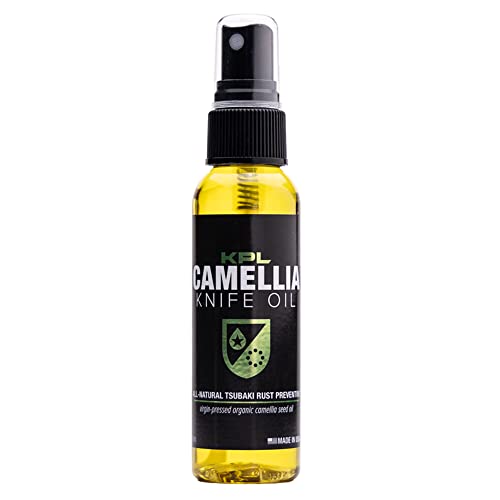
ASIN: B09PSK6WDL. The Amazon Creator catalog describes it as camellia oil for blade cleaning and care. It is a light-oil option to compare for hand-tool storage; check the current label and the saw maker’s material guidance before use.

ASIN: B001447PEK. The manufacturer describes T-9 as a corrosion protectant and lubricant that leaves a waxy film. For a saw, apply sparingly to the blade’s exposed metal only if compatible, keep it off work surfaces, and let the carrier evaporate as the product directions specify.

ASIN: B001DSZVD4. This kit combines the maker’s T-9 protectant, Rust Free, and Blade & Bit cleaner. It is a convenient way to compare a clean-then-protect routine; use each component only as its own label instructs.
Amazon product data and images can change. Verify the exact item and current safety instructions before purchase. For more options, see this Amazon search for camellia oil for woodworking tools or Amazon search for hand-saw blade rust preventives. Search links show current results and are not a claim that a specific product is available in every size or formulation.
First identify the job: preservation or cutting
“Oil for a hand saw” can mean several different things. A user may want to prevent rust during storage, loosen a sticky folding-saw pivot, clean resin from the plate, or make a blade glide through a particular material. Those are not the same task. Before buying, decide where the product will go and when you will apply it. A storage coating belongs on clean exposed metal and should be removed or wiped thin if the saw maker recommends that before use. A pivot oil belongs in the hinge. A cleaner removes buildup. A cutting lubricant is only appropriate if the saw and material call for one.
Many conventional hand saws do not need oil while cutting ordinary dry lumber. A sharp, clean blade, suitable tooth geometry, and a stable workpiece are more important. In some settings a light lubricant can reduce sticking, but it may stain wood or interfere with glue and finish. Test on scrap and wipe the blade before touching a visible surface. Do not flood the teeth, because excess liquid can collect sawdust and make cleanup harder.
Powered saws and specialty saws need their own product instructions. Do not infer that a rust-preventive spray for a hand saw can be used on a circular-saw blade while it is operating, on a table-saw top without checking transfer, or in the coolant bath of a lapidary saw. Our separate guides to lapidary saw cutting oil and two-cycle oil for saws cover different product purposes. Those fluids should not be substituted for hand-tool blade care.
How rust forms on a hand-saw plate
A hand-saw blade is a broad, thin piece of steel with exposed surfaces and sharp teeth. Moisture, fingerprints, damp storage, condensation, and corrosive shop air can create conditions for surface rust. Carbon steel often needs more attention than stainless steel, but any exposed metal can stain or corrode if stored wet or contaminated. Sawdust can hold moisture against the plate, while pitch and resin may trap debris or make it harder to wipe the blade clean.
Rust prevention starts before oil. After use, brush or wipe away dust, then dry the blade. If the saw contacted water or a damp material, dry it promptly and inspect the teeth and plate. Do not leave a saw in a shed, truck, unheated damp basement, or garden shed simply because it has a sheath. A sheath protects teeth from impact, but it does not necessarily manage moisture. Store the saw in a dry indoor location and use its blade cover.
Oil can create a barrier between metal and moisture, but more is not always better. A thick sticky layer may collect dust, transfer to wood, or remain on the teeth. A light film is usually easier to control. If the manufacturer recommends a rust-inhibiting paper, dry storage, or a different treatment, follow that advice. Oil cannot repair pitted teeth or restore a damaged set; it is preventive care, not a sharpening service.
Camellia oil: a light blade-care option
Camellia oil, also called tsubaki oil, is a traditional choice for protecting steel tools and blades. It is often chosen for a thin, low-odor protective wipe rather than a heavy film. Tool-care references describe it as suitable for protecting tool surfaces from corrosion, and saw makers advise oiling certain saws when they will remain unused for a while. The main advantage is controllable, light application: a few drops on a cloth can coat a plate without saturating the teeth or handle.
Not every bottle called camellia oil is identical, and some products are designed for knives, cosmetic use, or another application. Read the ingredient and use information. If the handle includes wood, lacquer, rubber, plastic, or a special coating, keep the oil on the steel unless the maker allows contact with other materials. Do not assume food-safe claims for one product extend to all camellia oils, and do not use food-preparation surfaces for tool maintenance.
Camellia oil is a reasonable comparison option for a clean carbon-steel hand saw that needs a light storage wipe. Apply a small amount to a clean cloth, wipe the blade faces, and avoid dragging the cloth into the teeth. If the saw is used soon after, wipe the plate lightly before cutting. The goal is a barely visible film, not a wet blade. If you use a Japanese pull saw, check the blade maker’s care instructions, especially if the blade has a special coating or replaceable plate.
Boeshield T-9: a durable protective film
Boeshield T-9 is a corrosion protectant and lubricant developed for metal protection. The manufacturer says it uses a solvent carrier and paraffin-wax coating, penetrates crevices, displaces moisture, and dries to a waxy film. This can be useful for a hand saw that will be stored for an extended period or kept in a shop where humidity is a concern. It is more persistent than a quick wipe of light oil, but that persistence can also mean more residue to manage before cutting.
Follow the product directions and safety data sheet. The maker advises protective eyewear and gloves for products such as T-9. Apply in a ventilated area away from ignition sources, allow the carrier to evaporate, and keep the spray off handles, finishes, plastics, workpieces, and floors unless the label says they are compatible. The manufacturer says the coating can be removed with a solvent or emulsifying cleaner; do not choose a cleaner without checking whether it is safe for the saw handle and finish.
A waxy film is not ideal for every use. If the blade will be used immediately on finished lumber, a heavy protective coating can transfer. Wipe the plate according to the label and confirm that the teeth are clear. T-9 should be treated as a metal protectant and lubricant for suitable surfaces, not as a cutting-fluid recommendation for all saws. It is a practical choice for storage only when its residue and application method fit the tool.
Cleaner versus oil: why the distinction matters
Resin, gum, and pitch can accumulate on saw plates and teeth, especially when cutting resinous wood. A cleaner can dissolve or loosen buildup, but cleaning and rust protection are separate steps. Boeshield’s Blade & Bit cleaner is marketed for removing resin, gum, and pitch from saw blades, router bits, drill bits, knives, planer blades, and tool surfaces. The manufacturer recommends applying it, waiting 30–60 seconds, then wiping; heavily gummed areas may need a second coat and a brass-bristle brush.
A cleaner may remove some protective film along with grime. After cleaning, dry the blade and apply a compatible protectant if the saw will be stored. Do not leave solvent or cleaner residue on a blade that will contact food, finished wood, or delicate material. Use gloves and eye protection when the product label requires them. Keep aerosols and solvents away from flame, sparks, heaters, and hot surfaces.
Avoid using steel wool or a harsh abrasive on teeth unless the saw maker recommends it. You could round the cutting edges, alter tooth geometry, or leave particles behind. For surface rust, follow the manufacturer’s cleaning method and inspect the teeth under good light. If rust is deep, the blade is pitted, or teeth are bent or missing, replacement or professional service may be safer than aggressive restoration.
General-purpose oil: helpful at a joint, not always on the plate
A basic multipurpose oil can suit a folding saw’s pivot or a simple mechanical joint, if the saw maker permits it. Apply a tiny drop, work the joint through its travel, and wipe away squeeze-out. Oil at a pivot can attract dust, so clean the area periodically and avoid leaving the hinge wet. Do not apply the same amount across a toothed blade or assume a multipurpose label means the formula is ideal for long-term rust protection.
Some general oils remain wet or leave a residue that picks up fine sawdust. That may be acceptable at a hinge but inconvenient on the blade faces. For storage, a dedicated blade-care oil or corrosion protectant may provide a more appropriate film. Compare the product’s intended use and material compatibility rather than choosing the cheapest oil in the shop.
Do not spray an oil near a saw that is assembled with adhesives, rubber grips, or delicate blade coatings without checking compatibility. Avoid penetrating oil as a routine storage coating when the product is designed primarily to loosen seized parts. A penetrating oil may be more volatile or leave a different residue than a rust-preventive product.
What about dry lubricants and wax?
Some woodworkers use paste wax or dry-film products on tool surfaces to reduce friction or prevent rust. Those can be useful on a saw table or a hand-plane sole, but a tabletop coating is not automatically suitable for a saw blade. Wax may build on teeth or transfer to wood. Check whether the product contains silicone; silicone contamination can create problems with paint and finish adhesion. If the board will be glued or finished, keep the blade clean and avoid transferring oil or wax onto its surface.
A dry lubricant may reduce the wet residue of an oil, but it still needs to be compatible with the tool, material, and finishing process. Aerosol products can overspray and require ventilation. Powder products can create airborne particles. Do not apply a product near a running saw or while handling an exposed blade. Turn off and secure equipment before maintenance, and follow the saw manufacturer’s safety steps.
Buying checklist
- Identify whether you need rust prevention, resin removal, or pivot lubrication.
- Check the saw manufacturer’s care instructions and blade material or coating.
- Confirm whether the product is a cleanable oil, a waxy corrosion film, a cleaner, or a general lubricant.
- Read the current label and safety data sheet for application, ventilation, gloves, and disposal.
- Choose a container you can apply sparingly without overspray or leaks.
- Consider whether oil or wax could transfer to wood, glue joints, finishes, or your hands.
- Look for a cap or applicator that lets you put product on a cloth rather than flooding the blade.
- Keep a separate clean cloth for drying and another for applying protectant.
- Store the saw dry, indoors, and with a blade cover after the coating is applied.
Simple hand-saw care routine
After a dry cutting session
Brush away sawdust with a dry, soft brush or cloth. Wipe the blade plate clean, paying attention to resin near the teeth. If the blade remains clean and the saw will be used again soon in a dry shop, you may not need to add oil after every cut. If you store it for a while, apply a light protective wipe if the manufacturer recommends it. Put the blade guard or sheath on only after the saw is clean and dry.
After contact with moisture
Dry the entire exposed plate promptly, including the area around the handle or blade-locking mechanism. Inspect for water trapped in a sheath, hinge, or handle joint. If the manufacturer approves oil, apply a thin film to the metal and wipe off excess. Never put a wet blade back in a closed sheath. Store the tool indoors until fully dry.
After cutting resinous wood
Use a cleaner intended for saw blades and follow its label. Do not scrub across the teeth with a bare hand. Use an approved brush or tool, work away from sharp edges, and keep the blade secured. After cleaning, wipe off the residue, dry the steel, and add a compatible rust-preventive layer if storage calls for it. The product manufacturer’s instructions take precedence over a generalized routine.
Before the next cut
Check that the teeth are clear and the plate is not greasy. Wipe the surface with a clean cloth if a protectant remains. Clamp the workpiece and start the cut with the correct blade orientation. If the saw binds, wanders, or requires unusual force, stop and assess sharpness, tooth set, work support, and blade alignment. More oil is not a cure for a dull or damaged saw.
Oil choices by saw type
Japanese pull saws
Many Japanese saws use thin replaceable plates, and some have teeth that should not be sharpened by the owner. Follow the blade maker’s directions, wipe the blade dry, and protect it during storage. Use an applicator or cloth rather than spraying directly into fine teeth. Do not force a thick coating into the tooth gullets, and remove any residue before cutting material that will be glued or finished. For saw selection and tooth patterns, our Japanese saw guide covers different styles; this page covers only blade care.
Traditional backsaws and panel saws
Traditional hand saws can have a steel plate and a wood or composite handle. Keep oil on metal and away from the grip unless the handle maker approves it. A brass back may respond differently to cleaner than the steel plate, so test in a discreet area or consult the maker. Store the saw so the plate does not contact other tools, and avoid hanging it where condensation forms.
Folding pruning saws
A folding pruning saw has a joint as well as a blade. Use separate care for each area: a small amount of compatible oil at the pivot and a thin rust-preventive film on exposed steel if the maker allows it. Resin and sap may need a cleaner designed for blades, followed by drying and corrosion protection. A sticky hinge should be cleaned before it is lubricated, not flooded with oil that traps dirt.
Carbon-steel versus coated or stainless blades
Carbon steel may benefit from a protective film, but coatings can change what products are safe to use. Stainless steel is not rust-proof in every condition and still benefits from drying and clean storage, but the maintenance routine may differ. A black oxide, lacquer, PTFE-like coating, or other finish may be affected by solvents. Check the blade maker’s instructions rather than assuming the base metal tells the entire story.
Common mistakes to avoid
- Oiling a dirty blade: debris and resin can be trapped under the film. Clean and dry first.
- Using too much: excess oil collects dust and transfers to wood. Apply a thin coat and wipe.
- Confusing cleaner with protectant: resin remover cleans; a rust-preventive oil protects. Some products do only one job.
- Spraying the teeth directly: overspray can leave slick residue and make handling hazardous. Apply to a cloth when practical.
- Using lapidary or chainsaw oil: those products are formulated for different applications and may be too thick, tacky, or otherwise unsuitable for a hand-saw plate.
- Using a consumer product without its label: a brand name does not tell you whether a specific product is safe for a blade coating, handle, or workpiece.
- Storing a wet saw in a sheath: trapped moisture can increase corrosion risk.
- Cleaning with a running blade: stop and secure the saw before maintenance.
Frequently asked questions
Should I oil hand-saw teeth?
Usually, apply any protective oil sparingly to the blade plate and avoid flooding the teeth. If the saw manufacturer gives a different instruction, follow it. Before cutting visible wood, wipe off excess so the blade does not transfer oil to the workpiece or finish.
What is the best oil for a Japanese hand saw?
A light blade-care oil such as camellia oil is commonly used for tool storage, but the exact saw maker’s care advice comes first. Wipe the plate clean and dry, apply a small amount with a cloth, and keep oil away from the handle and tooth gullets. Some Japanese saw blades are replaceable and should not be sharpened by the user.
Can I use WD-40 or penetrating oil on a hand saw?
Check the product’s current label and the saw manufacturer’s instructions. A penetrating spray may clean or displace moisture but can leave a different film from a dedicated rust protectant. Do not use it as a substitute for blade maintenance without checking how it affects the finish, handle, and the workpiece. Keep aerosols away from sparks and open flame.
How often should I oil a hand saw?
There is no universal schedule. Wipe the blade dry after use and apply a thin protective film when the manufacturer recommends it or when the saw will be stored in a damp environment or for an extended period. Frequent-use tools in a dry shop may need less frequent oil than a carbon-steel saw kept in a humid garage.
Can I use cooking oil on a hand saw?
Do not use kitchen cooking oil as a substitute for tool-care products. Food oils can become sticky or rancid and may attract dirt. Use a product intended for tool or blade care, and keep it separate from food surfaces and utensils.
Is camellia oil safe for all saw handles?
No product should be assumed safe for every handle material. Apply it to the blade with a cloth and avoid contact with wood finishes, rubber grips, plastics, or adhesives unless the maker says they are compatible. Review the label and test only as the manufacturer permits.
Do I need oil if my saw has a blade cover?
A cover helps protect teeth from impact but does not necessarily prevent moisture or corrosion. Clean and dry the saw before covering it. Use the rust-prevention routine recommended by the saw maker, then store it indoors in a dry location.
Bottom line
The best oil for a hand saw is a compatible, easy-to-apply product used in a small amount after the blade is clean and dry. Camellia oil is a traditional light option for storage; Boeshield T-9 leaves a more durable waxy protective film; and Blade & Bit is a cleaner for resin and pitch rather than an oil. Keep lubricants on the parts they are meant for, wipe off excess before cutting, and follow the saw and product manufacturers’ directions. A dry cloth, proper storage, and a blade cover often matter as much as the product you buy.
Sources and further reading
- Hultafors: care for a hand saw, drying and oiling before storage
- Boeshield: T-9 product description, application, and FAQs
- Boeshield: Blade & Bit cleaner for saw blades and tools
- Dictum tool finishing primer: corrosion protection and camellia oil
Certain content that appears on this site comes from Amazon. This content is provided “as is” and is subject to change or removal at any time. Product examples and images are supplied through Amazon Creators API; confirm specifications and availability on the current listing.