Best Japanese Pull Saws
The best Japanese pull saws are hand saws designed to cut on the pull stroke. That simple difference changes how the tool is held, guided, and sharpened, and it makes these saws feel distinct from familiar Western push saws. The thin blade is pulled through the cut rather than pushed away, which keeps it under tension during the cutting stroke. For many woodworkers, that supports a light, controlled feel and a narrow kerf. It also means you need to learn a different rhythm instead of forcing the saw as if it were a push saw.
The three common Japanese woodworking saw families are ryoba, dozuki, and kataba. A ryoba has teeth on both edges and often combines a rip-cut edge with a crosscut edge. A dozuki has a stiffening back that supports a thin blade and is commonly used for fine, controlled cuts. A kataba has a single cutting edge without a back, allowing deeper cuts than a backed saw and greater versatility in stock depth. Each style has tradeoffs; no one design is automatically best for every task.
This guide explains how to choose among these saws, how tooth geometry relates to rip and crosscut work, what the back does, how kerf affects layout, and how to develop a steady pull stroke. It distinguishes general Japanese saws from specialized dovetail saws, which are designed for fine joinery. This is a research-based buying guide, not a hands-on ranking of current products. We do not invent test results, current prices, or unsupported specifications.
Affiliate disclosure: DailyHomeDecorating.com may earn a commission from qualifying purchases made through links. This does not affect the advice in this guide or the price you pay. Product availability and saw configurations can change; verify the current product details and manufacturer instructions before buying or using a saw.
Amazon product examples to compare

ASIN: B0D2QRLYBN
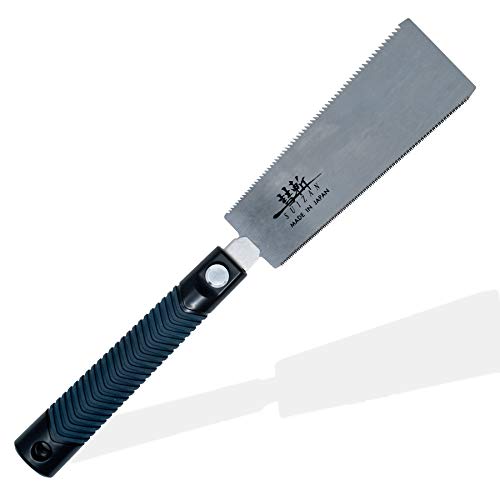
ASIN: B07HGQXXWC

ASIN: B07314SWRF

ASIN: B09NW2R5HQ
Certain content that appears on this site comes from Amazon. This content is provided “as is” and is subject to change or removal at any time. Product examples and images are supplied through Amazon Creators API; confirm specifications and availability on the current listing.
Quick answer: which Japanese saw should you consider?
Choose a ryoba if you want one general-purpose hand saw with separate edges for rip and crosscut work. Choose a dozuki when your work benefits from a thin, well-supported blade and a controlled cut, especially in joinery or smaller stock. Choose a kataba when you need a single-edged saw without a back to reach deeper into a piece or make cuts that a backed blade cannot accommodate. Then compare blade length, tooth style, handle, replaceable versus resharpenable construction, and the materials and cut sizes you expect to handle.
Beginners often benefit from starting with a ryoba or a general-purpose kataba and practicing on scrap. If your primary interest is cutting dovetail tails and pins, a dozuki may be the more specialized fit, but it is not the only possible dovetail saw. Our dovetail saw guide focuses specifically on fine joinery saws and their backing, tooth geometry, and kerf.
How Japanese saws work
A Japanese saw cuts as the blade is drawn toward the user. Many Western hand saws are designed to cut on a forward push. Since a thin blade would buckle more easily under compression, the pull stroke keeps it in tension while it is cutting. The blade can therefore be thinner than a comparable push saw blade, which can reduce the width of the kerf—the slot removed by the saw. This design rewards gentle, controlled movement: a pull saw should be guided, not muscled through the work.
The Japan Woodcraft Association describes Japanese saws, or nokogiri, as pull-stroke tools and identifies ryoba as a double-edged style and kataba as a single-edged style. Lee Valley’s saw-care guide likewise explains that Japanese saws cut on the pull stroke and require a technique different from push saws. The Z-Saw reference tips explain that the teeth cut while pulling and that the return stroke can be light; their exact guidance is specific to their products, so use the instructions for the particular saw.
Why the pull stroke feels different
With a push saw, users may naturally lean into the stroke. With a Japanese saw, the cutting action comes toward the body, so the user must keep the blade aligned and avoid pulling it sideways. A steady, low-effort draw can help the teeth follow the kerf. If the blade is forced or twisted, thin plates can bend, wander, or kink. The saw’s lightness is not a signal to rush; it is an invitation to let the teeth remove material at a controlled pace.
Many pull saws have a long handle that is held with both hands, though compact models may be designed for one-handed use. Follow the manufacturer’s intended grip. Keep the workpiece clamped or otherwise stable, and keep your fingers out of the cut path. Practice on scrap wood before starting a visible or precision cut.
Ryoba, dozuki, and kataba
Ryoba: two edges for general work
A ryoba has teeth along both long edges of the blade. One edge is commonly configured for rip cuts, which run with the grain, and the other for crosscuts, which run across the grain. This gives a woodworker two tooth patterns in one tool and makes the ryoba a versatile starting point. The two edges should be clearly distinguished so the correct one is used for the cut. Follow the maker’s labeling or instructions; tooth designs can vary between saws.
The ryoba has no stiffening back, so it can cut deeper than a backed dozuki. The tradeoff is that its blade can flex more and requires the operator to maintain alignment. The unused toothed edge is also exposed, so use a protective sheath or careful storage. A double-edged saw is not always the best choice in tight or delicate work where the opposite edge might scratch an adjacent surface. For broad home woodworking, however, the two-edge design can reduce the need to switch tools.
Dozuki: a backed saw for supported control
A dozuki has a stiffening spine or back along the blade’s top edge. The back helps keep a thin blade straighter, which is useful for controlled cuts in joinery and smaller work. The stiffening member limits how deep the blade can pass into the workpiece, so the dozuki is not suited to every deep cut. It may be especially useful for shoulder cuts, tenon cheeks, and fine work where the blade’s support helps the operator stay on a line.
The word “dozuki” is often associated with dovetail saws, and many dovetail saws are dozuki-style saws. But not every dozuki is a dedicated dovetail saw, and not every dovetail saw must use the same Japanese pattern. Tooth shape, blade length, plate thickness, handle, and intended use vary. This article treats dozuki as a saw family; the dedicated dovetail saw buying guide narrows the focus to that specific joinery task.
Kataba: a single edge without a back
A kataba has a single toothed edge and no spine along the blade. Without a back to limit travel, it can make deeper cuts than a dozuki. It is available in many tooth styles and lengths for different applications. The open, unbacked plate provides reach but asks the user to guide a more flexible blade carefully. For deeper crosscuts or cuts in thicker stock, a kataba can be more appropriate than a dozuki if its tooth configuration matches the work.
Because kataba is a broad category, do not assume every single-edge Japanese saw is identical. Some are designed for rip cuts, some for crosscuts, and some for general use or flush trimming. Check the manufacturer’s intended material and cut. A flush-cut saw is a specialized variation designed to trim a projection close to a surface; it should not be substituted for a general-purpose saw when the cut direction or clearance is unsuitable.
Tooth geometry and cut direction
Rip teeth and crosscut teeth
Rip cuts follow the grain, while crosscuts sever fibers across the grain. Tooth geometry differs to suit those jobs. Rip-oriented teeth act more like small chisels aligned with the grain; crosscut teeth are shaped to slice fibers from the sides as the saw advances. Some blades combine characteristics for general work. A ryoba commonly places different tooth forms on its opposite edges, while single-edge kataba and dozuki blades may be specialized for one kind of cut or a particular material.
Use the edge or blade the maker identifies for the task. If a saw is labeled “universal,” check what that label means for the specific product. Tooth count alone does not identify whether it is a rip or crosscut configuration. Examine the teeth, read the description, and consult the manual or blade chart. When uncertain, test on scrap with the same species and thickness.
Tooth pitch and finish
Tooth pitch is the spacing between teeth and is often summarized as teeth per inch. Fine pitch is generally associated with a smoother, more controlled cut in small stock; coarser teeth can clear material more quickly in larger stock. However, tooth geometry, set, blade thickness, species, moisture, and technique also affect the result. A very fine saw can clog or cut slowly in thick stock, while coarse teeth can leave a rougher edge in delicate joinery.
Do not compare TPI across unrelated saws as if it were the only performance measure. A manufacturer’s product details and intended-use notes provide context. For a first saw, choose a versatile tooth pattern that matches the cuts you actually make and practice before attempting final joinery. If you need both fast rough cuts and fine flush or joinery cuts, two specialized saws may be easier to use than trying to force one blade to cover every task.
Impulsed-hardened and replaceable blades
Some Japanese saw blades are hardened at the teeth to retain sharpness. Depending on construction, they may not be intended for conventional resharpening and may instead use replaceable blades. Other saws are made to be sharpened by a skilled user. Check what the manufacturer says about sharpening, blade replacement, and the availability of parts. A replaceable blade can be convenient, while a sharpenable saw can suit users who value long-term serviceability and have the skills or access to sharpening.
Replacement blades must fit the exact saw and should be installed according to the maker’s procedure. Handle exposed teeth carefully during removal and storage. Do not bend a thin plate to “straighten” it without manufacturer guidance; damaged or kinked plates can cut unpredictably.
Blade plate, back, and kerf
Why a thin plate matters
The blade plate is the flat steel body behind the teeth. A thin plate can remove less material, making a narrower kerf and wasting less wood. A narrow kerf can be helpful for fine work, but it also leaves less room for the blade to wander without changing the cut. Thin blades are not inherently more accurate; accuracy depends on alignment, tooth geometry, support, and technique. A flexible plate is less tolerant of side pressure, so a beginner should learn to keep the saw in the plane of the cut.
Kerf affects layout. The tooth set extends beyond the plate and determines the actual width of the cut. When cutting to a line, keep the kerf on the waste side if the retained piece must remain at its marked dimension. A very fine kerf can make a clean cut but may take longer. Use a marking knife or pencil line appropriate to the work and make a test cut to understand how the saw tracks relative to the edge of the plate.
What the dozuki back does
The spine on a dozuki stiffens the blade and supports fine, straight cuts. It also limits depth: the spine will contact the top of the work and prevent the teeth from traveling farther. This is useful for repeatable shallow joinery cuts but restricts cuts through thick stock. Consider the back’s length and shape in relation to the workpiece and clamps. Near a shoulder or in a deep recess, the spine may collide with the work before the cut reaches the desired depth.
Unbacked blades and deeper cuts
A ryoba or kataba lacks the dozuki’s spine and can pass deeper into the work. The blade’s flexibility requires more attention to alignment and stroke. If the cut is long, use a guide or a carefully marked line and begin with light strokes to establish the kerf. For a cut where the blade must remain exceptionally straight, a backed saw may be easier if the depth permits it. For a deeper cut, the unbacked style may be necessary.
How to choose the right style
- List your common cuts. Note whether you mostly rip, crosscut, cut joinery, trim flush, or work with thicker stock.
- Choose the family. Ryoba for two-edge versatility, dozuki for supported shallow precision, kataba for unbacked reach with one cutting edge.
- Match tooth design. Confirm rip, crosscut, or general-purpose intent and whether the saw is suited to your wood and cut quality.
- Consider depth. A dozuki spine limits depth; a ryoba or kataba can reach farther but requires more blade control.
- Compare blade length and plate. Longer blades cover longer cuts but may be harder to start in small spaces. Thin plates reduce kerf but require a light hand.
- Check handle and storage. Decide whether a long traditional handle, pistol-grip handle, or folding form suits your stance and storage. Protect exposed teeth.
- Review maintenance. Determine whether blades are replaceable or sharpenable and whether compatible blades are easy to obtain.
- Practice before precision work. Use scrap to learn the pull stroke, kerf offset, and the specific saw’s cut behavior.
A woodworker doing furniture joinery may eventually choose a dozuki and a ryoba, while someone making general repairs may prefer one ryoba. A carpenter cutting larger stock or doing deeper work may reach for a kataba. These are starting points, not rigid rules. The best choice depends on the workpiece, cut direction, required depth, and the operator’s comfort.
Pull-stroke technique
Secure the work and mark the cut
Clamp the workpiece so it cannot move, but avoid placing clamps where they block the saw or force an awkward stroke. Mark the cut clearly. For a rip or crosscut, establish a reference edge and square the line where needed. Identify the waste side. A pull saw can follow a fine line, but only if the work stays still and the initial kerf begins in the correct position.
Start with light strokes
Position the blade at the starting point and draw it gently toward you to establish a shallow kerf. Avoid pressing hard on the first stroke or pushing down on a thin blade. Keep the blade aligned with the cut plane and use the teeth along the working length. A light return stroke helps reset the saw without forcing its teeth backward through the kerf. Follow the saw maker’s guidance for whether the teeth cut only on the pull stroke or have a different pattern.
Use a steady, comfortable pull
Once the kerf is established, lengthen the stroke while keeping the blade aligned. Apply pressure during the cutting stroke, then ease off on the return. Do not twist the handle to steer; if the blade starts to wander, reduce pressure and correct alignment gradually. Keep your wrist relaxed and body stable. A long stroke can be efficient on longer cuts, while shorter strokes may offer better control close to a shoulder or in a confined space.
Let the teeth cut
Forcing a pull saw can flex the blade and widen the kerf. Use the saw’s own weight and a consistent pull rather than a strong downward push. If cutting becomes unusually difficult, check that the blade is appropriate and sharp, the workpiece is not pinching the kerf, and the saw is not being held at an angle. Stop before the end of the cut if the waste piece may break off and tear the edge; support it or finish with a controlled stroke.
Practice to learn the kerf
Before a visible cut, make practice cuts in scrap of similar species and thickness. Observe how much material is removed and how the blade tracks relative to your line. Try a rip and crosscut edge on a ryoba and compare the feel. This simple exercise helps prevent cutting on the wrong side of the line and teaches how little pressure the blade needs. Do not use valuable stock as the first attempt with an unfamiliar saw.
Setup, guides, and accuracy
A Japanese saw is a hand-guided tool, but a simple guide can help a beginner start square. A shooting board, saw guide, or clamped straightedge can provide a reference where suitable. The guide must not interfere with the blade, handle, or pull stroke. Confirm the guide’s position on scrap first. Some jigs are designed for Western saws or a particular blade thickness and may not suit a Japanese saw.
For joinery, use a marking knife and a square to create precise boundaries, then cut just to the waste side. For crosscuts, support the work close to the cut so the fibers do not tear out. A sacrificial backing board can support the exit side for some cuts. For rip cuts, align the blade with the grain and keep the workpiece stable over the full cut length. Check the work from more than one angle; a saw can look aligned from above while leaning out of square.
Accuracy comes from the full setup, not just the saw. A sharp blade, clear marking, stable clamping, appropriate tooth direction, and a practiced stroke matter together. If the cut is repeatedly out of square, check posture, blade alignment, work support, and whether the saw’s geometry is suitable for that depth or stock thickness.
Blade care and storage
Japanese saw plates are often thin, so protect them from bending and impact. Store a ryoba with a sheath or blade guard over both toothed edges. Keep a dozuki or kataba in a protective sleeve that covers the teeth and point. Avoid tossing the saw loose into a drawer where another tool can strike the blade. Keep it dry and clean; remove resin and dust using methods allowed by the manufacturer.
Inspect the blade for bent sections, damaged teeth, rust, or a loose handle connection. If the blade is replaceable, use the correct replacement and follow the manufacturer’s instructions. If the blade is designed to be sharpened, use a qualified sharpening method appropriate to its tooth geometry. Some hardened teeth are not intended for ordinary resharpening. Do not attempt to reshape specialized teeth without knowing the manufacturer’s guidance.
Do not force a blade that binds. Check whether the kerf is closing, whether the workpiece is shifting, whether the blade is aligned, and whether the teeth suit the material. A kinked blade can cut unpredictably; consult the maker about replacement rather than bending it back by guesswork.
Limits and related saw types
Japanese saws are useful for hand-cut woodworking, but they are not universal. A dozuki’s spine limits depth. A thin, unbacked kataba can flex if forced. A ryoba’s second edge can catch nearby surfaces. For intricate internal curves, a coping saw may be a better fit; see our coping saw guide. For pruning branches, Japanese-style garden saws use different blade lengths and tooth designs for green wood; our pruning saw guide covers that separate task.
For dovetailing, choose a saw based on the joint, wood, kerf, and user technique rather than assuming any dozuki is automatically the right choice. Our focused dovetail saw guide discusses backs, plate thickness, tooth geometry, and joinery layouts. The guides overlap in saw families but answer different buying questions.
How this guide was prepared
This research-based guide draws on the Japan Woodcraft Association’s overview of Japanese saw families, Z-Saw’s manufacturer reference tips for pull-saw use, Lee Valley’s Japanese saw care and use material, and the manufacturer’s catalog descriptions for current saw families. These sources explain the distinction between ryoba, kataba, and dozuki styles and the pull-stroke principle. They do not establish a universal best product or replace the instructions supplied with an individual saw.
No hands-on test results, current prices, unverified dimensions, or ASINs are asserted. For a product comparison, check the exact model’s blade type, plate length, tooth configuration, handle design, back or spine, replacement blade availability, and maintenance guidance. Dimensions and intended uses differ across makers and model variants. A buyer should confirm the current product description and practice on scrap before using a new saw for precision work.
Frequently asked questions
What is the difference between ryoba, dozuki, and kataba?
A ryoba has teeth on both edges, commonly with rip and crosscut patterns. A dozuki has a stiffening back that supports a thin blade for controlled, relatively shallow cuts. A kataba is a single-edged saw without a back, allowing deeper cuts but requiring careful blade guidance.
Do Japanese saws cut on the pull stroke?
Most traditional Japanese woodworking saws are designed to cut as they are pulled toward the user. Follow the instructions for the specific saw, because tooth patterns and modern variations can differ. Use a light return stroke rather than forcing the blade in both directions.
Which Japanese saw is best for a beginner?
A ryoba is a versatile starting point for many users because it offers rip and crosscut edges. A dozuki can be a good choice when the main work is fine, shallow joinery, while a kataba suits deeper cuts. The best choice depends on the cuts you expect to make and how the tool feels in your hands.
Is a dozuki the same as a dovetail saw?
Not exactly. Dozuki describes a backed Japanese saw style, and many dozuki saws are used for dovetails. But models vary in blade, tooth geometry, length, and purpose. “Dovetail saw” describes a task-oriented category that can include different saw designs.
What does the back on a dozuki do?
The back stiffens the blade and can help it track in a controlled cut. It also limits how deeply the teeth can pass through the stock because the spine eventually meets the work. Choose an unbacked ryoba or kataba when the required cut depth exceeds that clearance.
Why do Japanese saws have a narrow kerf?
Many Japanese saws use a thin plate and teeth with a relatively narrow set, so they can remove less material than some thicker saws. Actual kerf varies by model and tooth design. A narrow kerf can be useful, but the thin plate should not be twisted or forced sideways.
Can I sharpen a Japanese saw?
It depends on the blade. Some saws are intended to be sharpened by a skilled user; others have hardened teeth and are designed for blade replacement. Check the manufacturer’s instructions and replacement-part availability before buying.
How do I keep the saw from wandering?
Secure the work, mark a clear line, start with light strokes, and keep the blade aligned in the cut plane. Avoid twisting the handle or applying heavy pressure. A compatible guide and practice on scrap can help. Check whether the teeth suit the cut direction and wood.
Can I use a Japanese saw for pruning?
Some pruning saws use Japanese pull-stroke principles, but garden pruning models are designed for branches and green wood, not cabinetmaking. Blade length, tooth geometry, handle, and safety features differ. Use a pruning saw intended for the branch size and follow its instructions.
What should I buy first: a ryoba or dozuki?
Choose a ryoba if you want a general-purpose hand saw for both rip and crosscut work. Choose a dozuki if your immediate priority is controlled shallow joinery where a back is helpful. If possible, handle both styles and consider whether the back will limit the depth of your planned cuts.
Final reminder: choose the saw family around cut direction and depth, then select tooth geometry, blade size, and maintenance style for your actual projects. Keep the work secured, pull with a light steady stroke, and let the teeth do the cutting. A brief practice session on scrap is the most reliable way to learn how a specific Japanese saw behaves.