Disclosure: As an Amazon Associate, dailyhomedecorating.com earns from qualifying purchases. Links to Amazon on this page are affiliate links; they cost you nothing extra. Prices and availability change often, so check the current Amazon listing before you buy.
If you searched for the best paint for mesh chairs, you are probably standing in front of an office chair that still works beautifully but looks tired. The mesh has faded unevenly where the sun hits it, the frame has scuffs from years of rolling against a desk, and the plastic trim no longer matches anything in the room. Replacing a good ergonomic chair because of its color feels wasteful, especially when the tilt, lift, and lumbar support still do their jobs. Painting is the obvious answer, but mesh is one of the trickiest surfaces in the house to paint well, and the wrong product will crack, clog the weave, and make the chair look worse than when you started.
This guide handles the question from both directions. First, it explains which paint types actually bond to mesh, vinyl, plastic, and powder-coated metal, how to prep each surface, and how to spray without sealing the breathable weave shut. Second, it reviews six mesh chairs worth knowing about: chairs whose mesh holds up well, chairs that are realistic candidates for a refresh, and chairs to consider if your current seat is too far gone to save. If your chair search is broader than a refresh project, our notes on Best Task Chairs For Home Office and Best Place To Shop For Office Chairs cover the shopping side in depth.
Where to Buy
Every chair reviewed below is sold on Amazon, where you can check the current price, color options, and availability before you buy. Paint and prep supplies are also easiest to compare there, since listings show finish, coverage, and surface compatibility in one place.
- SIHOO M18 Ergonomic Office Chair — Check on Amazon
- HON Ignition 2.0 Ergonomic Office Chair — Check on Amazon
- Hbada P5 Ergonomic Office Chair — Check on Amazon
- Herman Miller Classic Aeron Chair-Aluminum — Check on Amazon
- Ticova Ergonomic Office Chair — Check on Amazon
- Steelcase Series 1 Ergonomic Office Chair — Check on Amazon
In this guide
Quick Picks
| Pick | Badge | Why it earns its place |
|---|---|---|
| SIHOO M18 Ergonomic Office Chair | Best Overall | Breathable mesh back, adjustable lumbar support and headrest, and a frame layout that makes taping and spraying straightforward. |
| HON Ignition 2.0 Ergonomic Office Chair | Best Budget | Mid-back mesh task chair with adjustable arms and honest, durable construction at the accessible end of the range. |
| Herman Miller Classic Aeron Chair-Aluminum | Best Premium | The original mesh chair, with a Pellicle-style suspension seat and back that set the standard every other mesh chair is judged against. |
| Hbada P5 Ergonomic Office Chair | Best for Small Spaces | Compact mesh chair with a footrest and 2D headrest that suits apartments and spare-room desks. |
| Ticova Ergonomic Office Chair | Best for Long Workdays | High-back mesh with deeply adjustable lumbar support, headrest, and 3D armrests for people who sit eight hours or more. |
| Steelcase Series 1 Ergonomic Office Chair | Best for Easy Assembly | Weight-activated controls and tool-light assembly make it the simplest quality mesh chair to set up and live with. |
Key Takeaways
- Flexible spray paint made for vinyl and fabric, or a plastic-bonding spray used in very light coats, is the realistic choice for mesh; heavy enamel coats clog the weave and crack when the mesh flexes.
- Prep decides the result: degrease, scuff glossy plastic lightly, mask the mesh if you only want the frame painted, and spray several mist coats instead of one heavy coat.
- Mesh itself rarely needs paint for function. Most successful refreshes paint the frame, arms, and base, then clean or dye the mesh rather than coating it.
- If the mesh is torn, sagging, or the lift is failing, paint will not save the chair; one of the six chairs reviewed here is the smarter spend.
- Always test spray on a hidden area first and let the chair cure fully before sitting, or the finish will imprint and peel.
How These Picks Were Chosen
Because this keyword is really two questions — how do I paint a mesh chair, and which mesh chairs are worth painting or buying — the picks were chosen to answer both. Each chair below uses a genuine mesh back (and in the Aeron’s case, a mesh seat as well), because mesh construction determines whether paint is even an option. Chairs were favored when their frames break down into paintable zones: exposed plastic shells, metal bases, and arm assemblies that can be masked or removed without disturbing the mesh panel.
Comfort and adjustability mattered just as much. A chair you plan to refresh and keep for years should have adjustable lumbar support, a headrest that can be positioned rather than endured, and armrests that move out of the way of your desk. Chairs with known weak lifts, thin mesh that sags within a year, or fixed backs that force one posture were filtered out. So were chairs whose mesh is laminated to foam, because laminated panels cannot be cleaned or coated evenly and tend to delaminate.
The research method is stated plainly: these picks come from the verified product pool for this guide, cross-checked against manufacturer specifications for dimensions, materials, and adjustment ranges. No chair here is included because of a rating number or a sales rank; each earned its place because its construction fits the refresh-or-replace decision this article is about. Where a chair has a real limitation — a high price, a firm seat, a size range that excludes taller users — that limitation is stated in its review rather than smoothed over.
The 6 Best Best Paint for Mesh Chairs — Reviewed

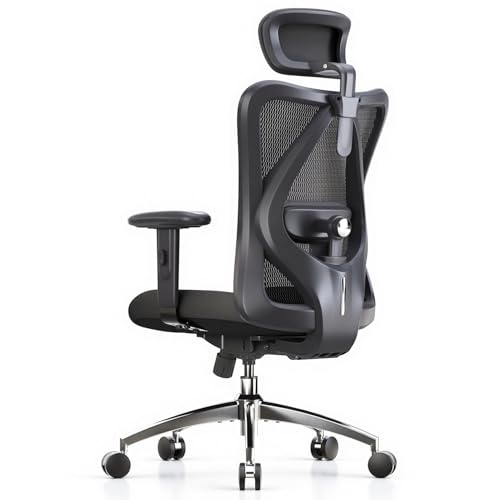
SIHOO M18 Ergonomic Office Chair
Our badge: Best Overall
The SIHOO M18 Ergonomic Office Chair is the chair most readers of this guide should look at first, whether they plan to paint an older mesh chair or replace it. Its premium mesh backrest is a flexible, non-pattern mesh that keeps air moving across your back, and the chair provides four support points — head, back, hips, and hands — with adjustable lumbar support that can be positioned where your lower back actually curves. For a painter, the M18 is also a friendly subject: the mesh panel sits inside a defined frame, so you can mask the weave cleanly and spray the surrounding shell without overspray creeping into the sitting surface.
Strengths
- Breathable mesh back that stays comfortable through long sitting sessions without heat buildup.
- Adjustable lumbar support, headrest, and 2D armrests let the chair fit a wide range of bodies.
- Defined mesh panel borders make masking simple if you ever refresh the frame color.
Trade-offs
- Best suited to users roughly 5’6″ to 6’2″ tall; shorter users may find the seat depth generous.
- The mesh is black or charcoal in most listings, so a full color change still means replacing rather than painting the weave itself.
- Assembly takes eight steps and is easy, but the headrest adjustment range is modest compared with premium chairs.
| Color | Charcoal |
| Size | Pack of 1 |
| Dimensions | 27.5 x 21 x 11 inches |
| Weight | 31.526103466 pounds |
In daily use, the M18 behaves like a chair designed by people who sit for a living. The seat height adjusts to match desks of different heights, the tilt lock lets you settle into a working angle or lean back for a call, and the wide cushion spreads pressure instead of concentrating it at the front edge. The chair passed BIFMA testing and a static pressure test, and it supports up to 150 kg, which puts it ahead of many chairs in its class for durability. That durability is exactly why it anchors this guide: a chair built this solidly is worth refreshing with paint when its finish fades, rather than replacing.
On the painting question specifically, the M18 shows what to look for. Its mesh is a true woven panel rather than a coated fabric, which means spray aimed at the mesh would pass through the weave and coat the frame behind it — a mess. The right approach, on this chair and most others, is to paint the plastic and metal structure and leave the weave alone, or use a fabric-and-vinyl spray in mist coats only if the mesh color itself must change. The M18’s clean panel edges make that masking job a twenty-minute task instead of an afternoon of picking tape out of a weave.
Choose the M18 if you want one chair that answers both halves of this search: a mesh chair comfortable enough for full workdays and sensibly built enough to maintain for years. Skip it if you are well under 5’6″ and prefer a compact seat, or if you want a mesh seat pan as well as a mesh back — that combination lives further down this list.
Best for: Most home-office workers who want a breathable, adjustable mesh chair that is easy to maintain / Not suited for: Very petite users who need a shallow seat depth

HON Ignition 2.0 Ergonomic Office Chair
Our badge: Best Budget
The HON Ignition 2.0 Ergonomic Office Chair is the accessible end of serious mesh seating. HON builds for offices that buy chairs by the dozen, and the Ignition 2.0 shows it: a mid-back mesh panel that promotes airflow, lumbar support that encourages alignment, and height- and width-adjustable arms that adapt to different desks and different people sharing the same chair. If your current mesh chair has failed and the budget for its replacement is tight, this is the chair that keeps you in genuine ergonomic territory without a premium price.
Strengths
- Breathable mesh back with lumbar support designed for computer work and long desk sessions.
- Arms adjust in both height and width, which helps the chair fit narrow desks and broader shoulders.
- Supports up to 300 lb and is backed by the HON Full Warranty for long-term ownership confidence.
Trade-offs
- Mid-back design gives less shoulder and head support than the high-back chairs in this guide.
- The adjustment set is practical rather than extensive; there is no headrest on the standard configuration.
- Styling is corporate and plain, which suits an office more than a styled living space.
| Color | Black |
| Size | Oversized |
| Dimensions | 28.5 x 27 x 44.5 inches |
The Ignition 2.0 earns its keep in shared and hybrid workspaces. Standard tilt encourages small movements through the day instead of locking you into one angle, and the stable rolling base handles the constant repositioning of a chair that gets used for documentation, calls, training sessions, and focused work in rotation. Because it is designed for computer work, desk activities, studying, and administration, it behaves predictably: nothing squeaks for attention, nothing needs re-tightening every month, and the mesh keeps its tension instead of hammocking.
For the paint-minded reader, the Ignition illustrates an important category: the chair that is cheap enough that painting an old one stops making sense. If your current chair is a budget mesh model with a torn panel or a sinking lift, the honest math usually favors replacing it with something like the Ignition and spending your weekend on something else. If, on the other hand, your Ignition’s frame gets scuffed in a move, its simple shell-and-frame layout is one of the easiest to mask and respray, because there are few curves and no laminated panels to protect.
Choose the Ignition 2.0 if you need a dependable mesh task chair for a home office, a study desk, or a shared workspace and want warranty backing behind it. Skip it if you are tall and want head support, or if you plan to recline deeply for reading and calls — a high-back model will serve you better.
Best for: Budget-conscious buyers and shared home offices that need a durable mesh task chair / Not suited for: Tall users who want a headrest and deep recline

Hbada P5 Ergonomic Office Chair
Our badge: Best for Small Spaces
The Hbada P5 Ergonomic Office Chair is the compact option in this lineup, a mesh computer chair with a footrest and a 2D headrest that folds extra comfort into a footprint suited to apartments, dorms, and spare-room desks. Its S-shaped backrest is designed to conform to the curve of your back, and the waist support adjusts up and down so the lumbar contact stays where you need it as you shift between working upright and leaning back.
Strengths
- S-shaped mesh backrest follows the spine and keeps air moving on warm days.
- Retractable footrest and up-to-135-degree recline turn a small desk chair into a break chair.
- Adjustable armrests and a 3.35-inch height range help it fit different desks and users.
Trade-offs
- Sized for users roughly 5′ to about 5’10”; taller users will run out of headrest height.
- The footrest is a rest-and-recline feature, not a substitute for a proper lounge chair.
- Mesh chairs in this class have firmer seats than thick foam chairs, which some people need time to get used to.
| Color | Black |
| Size | 27.56 x 27.56 x 49.41 inches |
| Weight | 44 pounds |
What makes the P5 interesting for this guide is how much chair Hbada fits into a small footprint without giving up the adjustments that matter. The headrest adjusts through a useful height range and swivels up to 40 degrees, so it can meet the back of your head when you recline instead of pushing it forward when you sit up. The armrests raise and lower to clear desk edges, which matters in small rooms where the chair has to tuck fully under the desk to free up floor space. The chair has passed SGS certification and BIFMA testing, which is reassuring in a category where small chairs are often built lightly.
As a painting subject, compact mesh chairs like the P5 are a mixed blessing. There is less frame to spray, so a refresh is quick, but the parts sit close together, so masking has to be careful around the footrest mechanism and the tilt controls. The smarter refresh on a chair this size is usually a deep clean of the mesh, a respray of the base and arm caps only, and a check of the casters, which pick up hair and grit in small apartments faster than anywhere else.
Choose the P5 if your workspace is a corner of a bedroom or a small apartment and you want mesh breathability plus a footrest for breaks. Skip it if you are tall, or if you share the chair with people of very different heights and need a wider adjustment range. Readers furnishing a small room end to end may also like the seating ideas in Best Sofas And Chairs For Small Room.
Best for: Small apartments and spare-room desks that need a compact mesh chair with a footrest / Not suited for: Tall users over about 5’10” who need full headrest travel
Herman Miller Classic Aeron Chair-Aluminum
Our badge: Best Premium
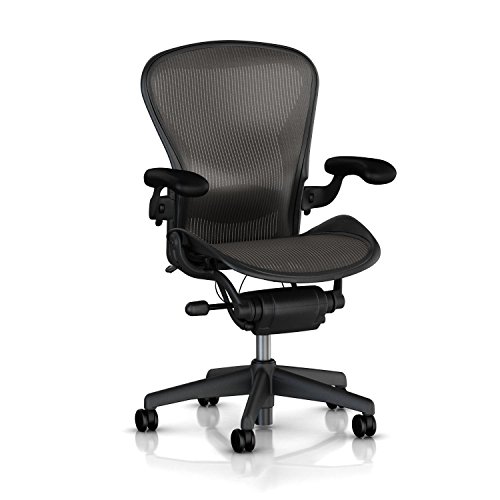
The Herman Miller Classic Aeron Chair-Aluminum is the chair that invented the category this article is about. Its breathable suspension material spans both the seat and the back, so there is no foam to compress and no upholstery to re-cover; the sitting surface is the mesh itself. This Size B (Medium) configuration includes tension control, rear tilt lock, forward tilt, and lumbar support, with hardwood-floor casters, and the aluminum finish gives the frame a look that has stayed current for decades.
Strengths
- Suspension seat and back distribute pressure and dissipate body heat better than any foam chair.
- Fully loaded adjustment set, including forward tilt and a tilt limiter, supports varied working postures.
- Aluminum frame and proven mechanism give the chair an exceptionally long service life.
Trade-offs
- The firm suspension feel divides opinion; people who love plush foam seats may never warm to it.
- Size matters — Size B fits the middle of the population, and the wrong size feels wrong all day.
- Painting an Aeron’s suspension panel is not realistic; refreshes on this chair mean professional parts, not spray cans.
| Color | Black |
| Size | Size B (Medium) |
| Dimensions | 16 x 27 x 41 inches |
| Weight | 50 pounds |
The Aeron matters to a paint guide for a blunt reason: it is the chair people most often try to rescue. Used Aerons circulate for years, and their frames pick up scratches while their suspension panels keep working. The honest advice is that the frame and base can be touched up with care, but the woven panel should never be sprayed — coating it destroys the elasticity that makes the chair comfortable, and replacement panels are the correct fix for a damaged one. Owners who understand that distinction get decades from these chairs; owners who spray the panel get a stiff, cracked seat within months.
As a working chair, the Classic Aeron remains a benchmark. The waterfall front edge takes pressure off your thighs so circulation keeps moving during long sessions, and the tilt mechanism lets your neck, shoulders, hips, knees, and ankles pivot naturally instead of rotating around a single stiff hinge. If you are replacing a failed mesh chair and your budget reaches this level, the Aeron ends the search for most people.
Choose the Aeron if you want the definitive mesh chair and expect to keep it for a decade or more. Skip it if you prefer a soft, cushioned seat, or if you are shopping at the edges of the size range and cannot confirm the fit. It also pairs well with the posture-focused guidance in Best Chairs For Back Posture.
Best for: Long-term owners who want the original mesh suspension chair with full adjustability / Not suited for: Fans of plush foam seats or anyone planning to spray-paint a mesh panel

Ticova Ergonomic Office Chair
Our badge: Best for Long Workdays
The Ticova Ergonomic Office Chair is the high-back mesh option for people whose workdays run long. Its lumbar support adjusts in both height and depth, the headrest adjusts in height and angle, the armrests move in three dimensions with thick, soft padding, and the backrest rocks to 130 degrees with adjustable resistance. The seat is 3.4 inches of high-density foam in a W-shaped, waterfall-edge design that spreads pressure across a larger area — a useful pairing with a breathable mesh back for people who find full-mesh seats too firm.
Strengths
- Lumbar support adjusts in height and depth, which is rare and genuinely useful for dialing in fit.
- 3D armrests with generous padding reduce the shoulder shrug that builds up over long sessions.
- Curved foam headrest and breathable, high-tensile mesh support the neck and back through extended sitting.
Trade-offs
- The many adjustments take time to set up well; expect a few days of tweaking before it feels perfect.
- The foam seat will eventually compress with years of use, unlike a suspension seat.
- At this size, the chair needs a reasonably deep desk area to recline without hitting the wall.
| Color | Black |
| Size | 70D x 26W x 54H cm |
| Weight | 17.5 Kilograms |
Ticova’s design philosophy is adjustability over minimalism, and for the reader of a paint guide, that cuts both ways. More moving parts mean more masking if you ever respray the frame, and the headrest and arm assemblies should be removed before any paint comes near the chair. The payoff is a chair that can be fitted precisely enough that you will want to keep it for years, which is the whole premise of refreshing rather than replacing. The chair passed BIFMA testing and a static pressure test, and the mesh is specified for tensile strength, so the panel should hold its shape rather than sagging into a hammock.
Day to day, the Ticova suits programmers, writers, analysts, and anyone whose chair is effectively their office. The rocking function with adjustable resilience lets you lean back to think without feeling like the chair is tipping, and the waterfall seat edge keeps pressure off the backs of your thighs. If your current chair fails mainly at the seat — compressed foam, torn fabric — while its mesh back is fine, the Ticova shows the hybrid layout to look for in a replacement.
Choose the Ticova if you sit eight hours or more and want maximum adjustment, especially in the lumbar zone. Skip it if you prefer a set-and-forget chair with two levers, or if your desk nook is too shallow for a high-back recline. For more options in this vein, see Best Work From Home Chairs For Back Pain.
Best for: Long-hour desk workers who will use deep lumbar and armrest adjustability / Not suited for: Minimalists who want a two-lever chair and a shallow footprint

Steelcase Series 1 Ergonomic Office Chair
Our badge: Best for Easy Assembly
The Steelcase Series 1 Ergonomic Office Chair brings a research-driven design to a chair that assembles in under two minutes with no tools. Its weight-activated controls respond to your body instead of asking you to memorize tension knobs, the flexible edges and adaptive bolstering keep pressure off your forearms and thighs, and optional 4D arms and an adjustable headrest let you extend the fit. This graphite configuration is specified for carpet floors, which matters if your home office still has pile carpet and standard casters dig in.
Strengths
- Weight-activated controls make the chair comfortable immediately, with almost no setup learning curve.
- Tool-free assembly in minutes, and a compact, space-efficient frame for smaller offices.
- Flexible edges and adaptive bolstering give a pressure-free sit for varied postures.
Trade-offs
- Buyers who like to fine-tune every setting manually may find the automatic approach less satisfying.
- This configuration is for carpet; hard floors need the appropriate caster version.
- The design is restrained and office-like rather than a style statement.
| Color | Graphite |
| Size | Carpet (Pack of 1) |
| Dimensions | 23.75 x 27 x 41.25 inches |
| Weight | 29 pounds |
Steelcase built the Series 1 for people who want ergonomic support without an engineering project, and that philosophy extends to upkeep. The chair’s clean shell and limited trim mean fewer seams to trap dust, and the mesh back wipes down easily. For a refresh project, a chair with this few parts is the easiest kind to work on: remove the arms if fitted, mask the back panel, and the frame is ready for careful spray work in an afternoon.
In use, the Series 1 disappears under you in the best way. It supports productivity-focused work — writing, calls, spreadsheet sessions — without demanding posture discipline, because the back support and arm support move with you. At 29 pounds it is also one of the lightest serious chairs in this guide, which helps in homes where the office chair doubles as extra dining seating and gets carried between rooms.
Choose the Series 1 if you value fast setup, automatic comfort, and a lighter chair that moves easily between rooms. Skip it if you want a headrest included by default or a deeply cushioned seat. If you are comparing office chairs more broadly, Best Rugs For Desk Chairs is a useful companion read for protecting the floor under whichever chair you choose.
Best for: Buyers who want research-backed ergonomics with near-instant setup / Not suited for: Manual-adjustment enthusiasts or hard-floor rooms in this carpet configuration
Comparison Table
| Pick | Color | Dimensions | Weight | Check price on Amazon |
|---|---|---|---|---|
| SIHOO M18 Ergonomic Office Chair | Charcoal | 27.5 x 21 x 11 inches | 31.526103466 pounds | Check price on Amazon |
| HON Ignition 2.0 Ergonomic Office Chair | Black | 28.5 x 27 x 44.5 inches | — | Check price on Amazon |
| Hbada P5 Ergonomic Office Chair | Black | 27.56 x 27.56 x 49.41 inches | 44 pounds | Check price on Amazon |
| Herman Miller Classic Aeron Chair-Aluminum | Black | 16 x 27 x 41 inches | 50 pounds | Check price on Amazon |
| Ticova Ergonomic Office Chair | Black | 27.165354303 x 9.842519675 x 20.866141711 inches | 17.5 Kilograms | Check price on Amazon |
| Steelcase Series 1 Ergonomic Office Chair | Graphite | 23.75 x 27 x 41.25 inches | 29 pounds | Check price on Amazon |
How to Choose the Best Paint for Mesh Chairs — and the Right Mesh Chair
Decide whether your chair should be painted, cleaned, or replaced
Start with structure, not color. Sit in the chair and check four things: does the lift hold your height for a full day, does the mesh still feel taut rather than hammock-like, does the tilt return smoothly, and are there cracks in the plastic shell or the five-star base? If all four pass, the chair is a refresh candidate and paint is a reasonable weekend project. If the mesh is torn or the lift sinks, paint is decoration on a failing chair, and the money is better spent on a replacement from the list above. Faded color, scuffed arms, and a dated frame finish are cosmetic problems; sagging mesh and a dead gas lift are mechanical ones.
Match the paint type to the surface
Mesh chairs have at least four different surfaces, and each wants a different product. Flexible vinyl-and-fabric spray is the only realistic coating for the mesh weave itself, and even then it should be applied in mist coats from a distance so the weave stays open. Plastic shells and arm caps need a plastic-bonding spray or a primer rated for plastic, because standard enamel beads up and peels off smooth polypropylene. Powder-coated metal bases take metal spray paint well after a light scuff and degrease. Foam-padded seats under fabric should not be painted at all; reupholstery or a cover is the honest fix. Reading the surface list on the can matters more than the color name.
Respect the weave: airflow is the whole point
People buy mesh chairs to avoid the heat and pressure of foam. A heavy coat of paint bridges the gaps in the weave, and the chair quietly becomes a plastic chair with worse flexibility. Work in coats so light that the surface looks dusty rather than wet, let each coat dry fully, and hold the finished panel up to the light: you should still see through the weave everywhere. If a section has bridged, a soft brush while the coat is still tacky can reopen it, but prevention is far easier than repair. Chairs like the Aeron, whose seat is also mesh, double the stakes, which is why their panels should be left to professionals.
Plan masking and disassembly before you shake the can
The difference between a clean refresh and a sticky disaster is almost entirely preparation. Remove the armrests, headrest, and casters where the design allows; bag the hardware by assembly so reassembly is not a puzzle. Mask mesh panels with paper and low-tack tape pressed to the frame edge, not to the weave itself, and cover the lift cylinder and tilt mechanism completely, because paint on a gas lift shaft will destroy its seal. Work outdoors or in a ventilated garage, and give parts a full cure — often several days for flexible coatings — before sitting. A chair that feels dry to the touch can still imprint fabric patterns into a soft finish.
If you are replacing, size the chair to your body and floor
Mesh chairs reward correct sizing more than foam chairs do, because the panel tension is tuned to a weight and height range. Check the manufacturer’s suggested height range, the seat depth against your thigh length, and whether the lumbar support lands on your lower back rather than your shoulder blades. Confirm the caster type matches your floor: carpet casters on hardwood roll too freely and can mark the surface, while hard-floor casters on thick carpet feel like pushing through sand. Finally, measure your desk height and knee clearance; a high-back chair that cannot tuck under the desk will colonize a small room. The shopping guidance in Best Online Sofa Stores is about sofas, but its advice on measuring before ordering applies to chairs just as well.
How Do You Paint a Mesh Chair Without Ruining It?
Work in this order: disassemble, clean, repair, mask, prime, spray, cure, reassemble. Wash every part with warm water and a degreasing cleaner, because mesh chairs accumulate skin oils and dust deep in the frame joints, and paint over oil will fisheye and lift. Let everything dry completely — trapped moisture under a coating is a common cause of peeling that people blame on the paint. Scuff glossy plastic with a fine abrasive pad until it looks evenly matte, wipe away the dust with a tack cloth, and only then mask the mesh and mechanisms.
Spray technique matters more than brand. Hold the can at a consistent distance, start and stop each pass beyond the edges of the part, and keep the coat so light that the original color still shows through after the first pass. Three or four mist coats with proper drying time between them will outperform one satisfying heavy coat every time, especially on anything flexible. If you are coating the mesh itself with a flexible vinyl spray, spray from both sides in alternating light passes so no single side carries a thick film, and flex the panel gently between cured coats to confirm it still moves freely.
Problem: Paint cracks across the mesh within a few weeks — The coating was too thick or too rigid for a flexing surface. Strip the failed section, switch to a flexible vinyl-and-fabric spray, and rebuild in mist coats.
Problem: The weave looks sealed and the chair feels hot — Paint has bridged the gaps. While a fresh coat is still tacky, a soft dry brush can reopen bridging; on cured paint, the panel usually needs professional attention or replacement.
Problem: Paint peels off the plastic arms in sheets — The surface was not scuffed or was contaminated with cleaner residue. Sand back to sound material, degrease, use a plastic-rated primer, and respray lightly.
Problem: The finish imprints a fabric pattern after sitting — The chair was used before the coating cured. Flexible sprays can need several days; park the chair and use a spare until the finish is fully hard.
Problem: Overspray reached the lift cylinder — Wipe it immediately with the solvent the paint maker specifies, and mask the shaft completely next time; paint on the shaft damages the lift seal as it cycles.
Mesh, Foam, and Upholstery: Which Chair Surface Ages Best?
Mesh ages in a distinctive way: it does not compress like foam or crack like vinyl, but it can lose tension, fray at the edges where it meets the frame, and hold dust deep in the weave. A quality mesh panel, vacuumed regularly and kept out of harsh direct sun, can outlast two foam seats. Foam ages by compression — the front edge of the seat thins first, and the chair gradually feels like sitting in a bowl. Painted or coated foam is not a real option, which is why foam chairs get reupholstered or replaced, while mesh chairs get cleaned and frame-refreshed.
Upholstered chairs in leather or fabric sit between the two. Fabric can be dyed or sprayed with fabric coatings with modest success, and leather can be recolored with proper leather dyes, but both projects demand more skill than a frame respray. If your household includes several chair types, the mesh chairs are usually the best refresh candidates precisely because their sitting surface needs the least intervention: clean the weave, paint the structure, and the chair reads as new. That is also why the replacement picks in this guide emphasize mesh quality and panel construction over styling.
Keeping a Mesh Chair Looking New After the Refresh
Maintenance is what separates a one-weekend improvement from a lasting one. Vacuum mesh panels monthly with a soft brush attachment, working from both sides so dust does not migrate deeper into the weave. Blot spills immediately; mesh lets liquid through to the frame and floor, which is good for the chair and bad for the rug, so keep a mat or a low-pile rug under a desk chair used for morning coffee. Tighten arm and back bolts every few months, because a chair that flexes at its joints wears its finish at exactly those contact points.
Sunlight is the quiet enemy of both mesh and paint. A chair parked in a south-facing window will fade unevenly, and the faded side is the one people try to paint, which is how this whole project usually starts. Rotating the chair, closing blinds during the harshest hours, or moving the desk a foot or two out of the direct beam preserves both the original finish and any refresh you apply. With those habits, a painted frame should hold its look for years, and the mesh underneath it will still be doing the job it was designed for.
Common Buying Mistakes
Spraying the mesh with regular enamel paint
Standard spray enamel is formulated for rigid surfaces. On a flexing weave it bridges the gaps, kills the airflow, and cracks along every flex line within weeks. The better move is a flexible vinyl-and-fabric spray in mist coats — or, more often, painting only the frame and cleaning the mesh.
Painting a chair that is mechanically finished
A sinking lift, torn mesh, or a cracked base will not be improved by a beautiful finish, and the paint and prep supplies cost real money. Check the mechanics first; if they fail, put the budget toward a replacement such as the SIHOO M18 or the HON Ignition 2.0.
Skipping the scuff-and-degrease step on plastic
Paint does not bond to glossy, oil-contaminated plastic; it sits on top until the first warm day, then peels in sheets. Ten minutes with a fine abrasive pad and a degreaser is the cheapest insurance in the whole project.
Sitting on the chair before the finish cures
Flexible coatings can feel dry while remaining soft underneath. Sitting early imprints fabric texture and can pull the finish away at pressure points. Follow the maker’s full cure time, even when it is measured in days.
Buying a replacement mesh chair without checking the size range
Mesh tension is tuned to a body range, and a chair sized wrong feels wrong in a way no adjustment fixes. Confirm the suggested height range and seat depth before ordering, especially on premium chairs like the Aeron where size variants exist.
Final Recommendation
If your mesh chair is mechanically sound, refresh it: clean the weave, paint the frame with the right product for each surface, and keep the mesh itself uncoated or mist-coated with a flexible spray. If the chair is finished mechanically, replace it with the SIHOO M18 Ergonomic Office Chair, which offers the best balance of breathable mesh, adjustability, and durability in this guide. For a tighter budget or a shared workspace, the runner-up is the HON Ignition 2.0 — take its Check on Amazon listing as your comparison point. Premium buyers who expect a decade of service should look at the Aeron, and small-space buyers at the Hbada P5. Whichever route you take, the goal is the same: a chair that breathes, supports, and looks like it belongs in the room — a goal shared by the seating in Best Sofas For Sunroom and every other corner of the home.
Frequently Asked Questions
Can you paint the mesh on an office chair?
Yes, with limits. A flexible spray made for vinyl and fabric, applied in several very light mist coats from both sides, can change or even out the color of a mesh panel while keeping the weave open. Regular enamel or heavy coats will bridge the weave, block airflow, and crack as the mesh flexes. In most refreshes, the better result comes from painting the frame and arms and simply deep-cleaning the mesh.
What paint sticks to plastic chair frames?
Use a spray formulated to bond to plastic, or a plastic-rated primer under a standard spray color. The surface must be degreased and lightly scuffed first so the coating has something to grip. Paint applied to glossy, unprepared plastic will peel, no matter how good the paint is.
How long should a painted chair cure before use?
Follow the specific product’s directions, but plan on days rather than hours for flexible coatings. A finish that feels dry can still be soft underneath, and sitting on it early imprints texture and weakens the bond at pressure points. Parking the chair in a ventilated room for the full cure period is part of the project, not an optional extra.
Is it worth painting a cheap mesh chair?
Usually not. If the chair cost little, has a sinking lift, or the mesh is torn, the paint, primer, tape, and abrasives can approach the cost of a solid budget replacement like the HON Ignition 2.0, and the result will still be a worn chair. Painting makes sense when the chair’s mechanics and mesh are sound and only the finish is tired.
How do you clean mesh before painting the frame?
Vacuum both sides of the panel with a soft brush attachment, then wipe the frame with warm water and a degreasing cleaner, paying attention to armrests and joints where oils collect. Let everything dry completely before masking or spraying, because moisture trapped under paint causes peeling and bubbling.
Will painting a mesh chair affect its comfort?
Done correctly, no: mist coats on the weave and proper coats on the frame leave the sitting experience unchanged. Done heavily, yes: bridged weave loses airflow and flexibility, and the chair becomes hotter and stiffer. Holding the panel up to the light after each coat — you should still see through it — is the simplest quality check.


