Disclosure: As an Amazon Associate, dailyhomedecorating.com earns from qualifying purchases. Links on this page are affiliate links; they cost you nothing extra. Prices and availability change often, so check the current Amazon listing before you buy.
The best mattress for the money is not the cheapest mattress, and it is not the best mattress either — it is the one whose cost, divided by the years it will actually serve and the quality of the nights inside those years, produces the smallest honest number. This guide makes that calculation its entire method. Five mattresses verified in the Amazon catalog on 23 November 2026 are assessed here not by their price tags, which this wave never prints because they move, but by their tiers, their constructions, and their realistic service lives for the bodies that will use them. Along the way the guide will name the traps that make cheap mattresses expensive — the two-year replacement cycle, the topper bought to rescue a bad base, the trial-less purchase that cannot be returned — and the conditions under which spending more is, provably, the frugal act.
In this guide
Quick Picks
| Pick | Value logic | Best buyer |
|---|---|---|
| Zinus 12-Inch Green Tea Memory Foam | Maximum mattress per budget dollar | First apartments, guest rooms, value maximalists |
| Lucid 10-Inch Memory Foam Hybrid | Hybrid support at a foam-bed tier | Combination sleepers wanting coils without flagship cost |
| Nectar Classic 12-Inch | Premium-leaning foam, long-horizon value | Side sleepers settling in for years |
| Casper Element | Major-maker consistency at an entry tier | Buyers who value the maker’s name and finish |
| Tuft & Needle Original | Simple construction, durable value | Minimalists and stomach/combination sleepers |
The Only Formula That Matters: Cost Per Year of Good Sleep
Every value claim in the mattress aisle dissolves under one division: what the bed costs, divided by the years it serves well. A bargain bed that softens into a hammock in its second year has not saved its buyer money; it has rented them two mediocre years at a rate the flagship buyer, amortizing a decade, would refuse. The variables that move the denominator are construction and match. Construction, because denser foams, real coil cores, and honest edge work extend the years before the surface character collapses. Match, because a bed correctly fitted to its sleeper’s weight and position wears evenly and stays comfortable, while a mismatched bed — too soft for a heavy body, too firm for a light one — fails early in the specific places the body loads it. The picks below were chosen as the strongest current specimens of their tiers under that formula: not the cheapest beds available, but the ones whose tier, build, and realistic lifespan combine into the lowest cost per good year for the buyers named. Readers should also count the shadow costs the formula exposes: the topper purchased to fix a failing base is part of the base’s true price, and the mattress replaced in year three makes the year-one bargain the most expensive bed in the house.

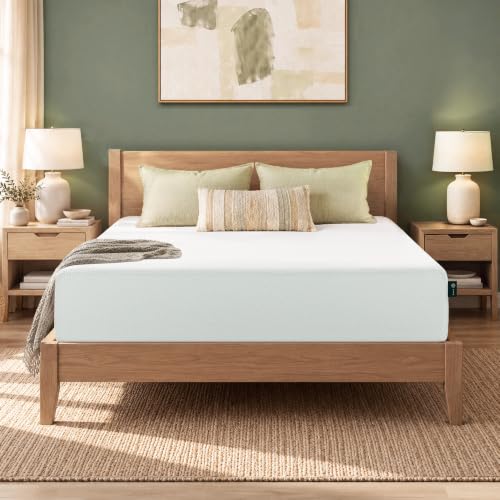
Best Mattress for the Money Overall: Zinus 12-Inch Green Tea Memory Foam, Queen
Badge: The denominator champion. Zinus built its empire on the insight that most sleepers need a competent foam bed more than they need a story, and the 12-inch green tea model is the empire’s flagship argument: a full-depth profile, a yielding memory foam surface that serves side and back sleepers across a wide weight range, and a tier that undercuts the famous names by a distance that matters. For the value formula, its case is volume — more mattress, of a proven design, per dollar than any rival in this guide — tempered by the honest caveat that budget foam’s lifespan is the variable the buyer must manage with rotation and realistic expectation.
Listing spec box (verified title facts):
- Profile: 12 inches
- Construction: memory foam, green tea infusion in maker’s description
- Size referenced: queen
Strengths
- Full-depth comfort at the guide’s most accessible tier.
- Proven design with a wide, forgiving fit range.
- Motion-absorbing all-foam build for couples.
Trade-offs
- Budget foam softens sooner than premium materials.
- Warmth and weak edges are the class trades.
- Heavy sleepers will shorten its best years.
Best for: value-first buyers of average build in any position but stomach. Not suited for: heavy sleepers wanting a decade from one purchase.

Lucid 10-Inch Memory Foam Hybrid, Queen — Coils at a Foam Price
Badge: The support upgrade that stays frugal. The hybrid question is usually a flagship question, and Lucid’s 10-inch answers it at a tier that keeps the value formula smiling: real coils under memory foam, which buys the sleeper airflow, edge integrity, and a support core whose lifespan flatters the denominator, at a cost position much nearer the foam beds than the luxury hybrids. For combination sleepers and warmer households, it is the guide’s pick for the most architecture per dollar.
Listing spec box (verified title facts):
- Profile: 10 inches
- Construction: memory foam hybrid (foam over coils)
- Size referenced: queen
Strengths
- Coil support and airflow at an accessible tier.
- Better edges and bounce than all-foam rivals.
- Versatile fit across positions and builds.
Trade-offs
- Ten inches is a modest profile beside 12-inch rivals.
- Some motion transfer returns with the coils.
- Memory foam surface warmth persists, reduced.
Best for: combination sleepers and warm households wanting hybrid value. Not suited for: motion-isolation absolutists.

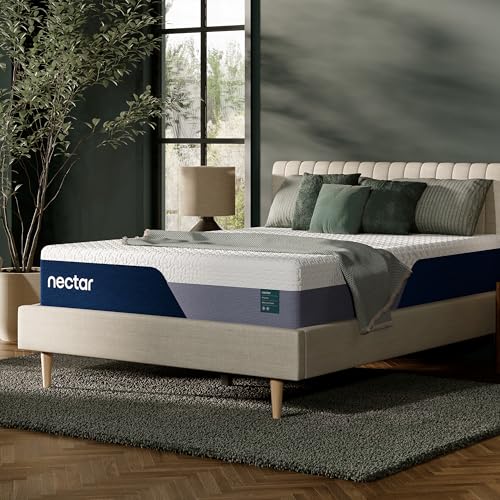
Nectar Classic 12-Inch, Queen — the Long-Horizon Foam Value
Badge: Pay once, sleep for years. Nectar’s Classic argues value from the denominator’s far end: a 12-inch foam build with a pressure-relieving surface aimed squarely at side sleepers, from a maker whose proposition has always been premium-adjacent comfort without the flagship tier. For the settler — the buyer furnishing the bed they will actually live on for years — its combination of depth, contour, and maker commitment makes its cost per year competitive with beds that look cheaper on the tag.
Listing spec box (verified title facts):
- Profile: 12 inches
- Construction: memory foam
- Size referenced: queen
Strengths
- Deep, side-sleeper-oriented pressure relief.
- Full profile and finish above the budget class.
- Long-horizon value for settled households.
Trade-offs
- Higher tag than the Zinus and Lucid picks.
- Foam warmth and slow response are the class character.
- Stomach sleepers should look elsewhere in this guide.
Best for: side sleepers buying for the long term. Not suited for: the tightest budgets or stomach sleepers.

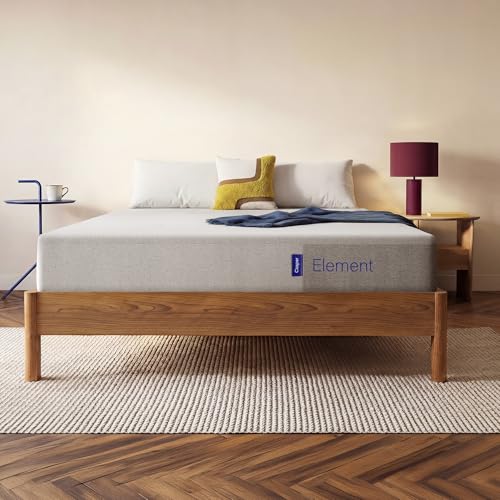
Casper Element, Queen — the Name-Brand Value Play
Badge: Flagship lineage, entry tier. Some buyers value the maker’s ecosystem — the consistency, the finish, the confidence that the company will exist to honor its commitments — and the Element is that value at Casper’s most accessible tier: a balanced foam bed whose medium feel serves back and combination sleepers with the polish the brand built its name on. Its cost-per-year case rests on predictability: fewer surprises, in the bed and in the buying, than the no-name shelf offers.
Listing spec box (verified title facts):
- Construction: foam
- Feel positioning: medium, balanced
- Size referenced: queen
Strengths
- Balanced feel with major-maker finish and consistency.
- Predictable purchase and ownership experience.
- Suits back and combination sleepers broadly.
Trade-offs
- Less raw material per dollar than the budget picks.
- Side sleepers may want deeper contour.
- Entry model omits flagship materials.
Best for: brand-conscious value buyers who sleep on back or side-to-back rotation. Not suited for: maximum-material-per-dollar shoppers.

Tuft & Needle Original, Queen — Simplicity as a Savings Account
Badge: Fewer layers, fewer failures. Tuft & Needle’s original proposition — a simple adaptive-foam bed, honestly made, without the layer-cake complexity of rivals — is a value argument in engineering form: every omitted layer is an omitted failure mode, an omitted upsell, an omitted dollar. Its responsive surface serves stomach and combination sleepers the foam picks here cannot, and its durability record within its class flatters the only formula this guide respects.
Listing spec box (verified title facts):
- Construction: adaptive foam
- Feel positioning: medium-firm in maker’s range, yielding surface
- Size referenced: queen
Strengths
- Simple, durable construction with few failure modes.
- Responsive surface for movers and stomach sleepers.
- Honest tier from a maker built on the value proposition.
Trade-offs
- Minimal cradle for committed side sleepers.
- No luxury materials or tall profile.
- Firmer lean challenges the lightest sleepers.
Best for: stomach and combination sleepers who value durability and simplicity. Not suited for: plush-seeking side sleepers.
How to Choose: Match the Formula to Your Horizon
The value formula has one input shoppers routinely omit: how long the bed must serve, in this room, for this sleeper. A bed for a two-year lease, a dorm-adjacent first apartment, or a guest room’s occasional duty should be bought at the accessible end without a flicker of guilt — the Zinus and the Lucid exist for exactly those horizons, and overspending against a short horizon is its own waste. A bed for a settled primary room should be bought at the formula’s other end, where the Nectar’s depth and the Element’s and Tuft & Needle’s maker durability convert a higher tag into a lower annual cost. Between the horizons sits the commonest error in the category: the mid-priced bed bought for a long horizon, which combines a real investment with a budget lifespan and satisfies neither arithmetic. Readers furnishing small spaces should cross-check mattresses for apartment living; lighter readers should apply the petite sleeper calibration; and anyone tempted to rescue a failing cheap bed with accessories should read cheap mattress toppers with the shadow-cost warning of this guide’s opening in mind, and compare against the best mattresses on Amazon before concluding the rescue is cheaper than the replacement.
The Traps: How Cheap Mattresses Get Expensive
Four traps recur in the value aisle, and naming them is half the guide’s service. The replacement trap: a bed priced for two years of service, bought for a decade’s duty, replaced twice inside the flagship’s single lifespan. The rescue trap: the topper, then the pad, then the plywood sheet of folklore, each purchased to postpone admitting the base has failed — a sequence whose total routinely exceeds the better bed’s price. The trial trap: the no-return bargain whose misfit cannot be corrected, converting a saving into a sunk cost that sleeps badly for years because replacing it feels wasteful. And the mismatch trap: the well-made bed bought for the wrong body, whose early, localized failure is then blamed on its quality rather than its specification. Every pick in this guide was chosen to be trap-resistant for its named buyer — adequate construction, honest fit ranges, makers with real commitments — because value is not a price. It is the absence of the second purchase.
Setup for Maximum Lifespan
Value is partly bought and partly maintained, and the maintenance is short enough to state completely. Support the bed properly from the first night — a sound, compatible foundation is the cheapest lifespan insurance in the category, and a foam bed on a failing slat base will be blamed for the base’s sins. Rotate on the maker’s schedule to spread the wear map. Protect the surface with a breathable protector, because stains end warranty conversations and moisture shortens foam life. Keep the room’s humidity sane and the bed out of prolonged heat storage when it is not in service. And judge the bed across its first month rather than its first night, while keeping the trial deadline circled — the value of a returnable bed is only real for the buyer who uses the window deliberately. Households that run this short routine routinely extract the full denominator their purchase promised, which is the entire difference between a value buy and a cheap one.
Common Mistakes
Beyond the four traps, three errors deserve their own lines. Buying by the tag during a sale event, when the formula’s variables — construction, fit, lifespan — have not changed at all, only the urgency has. Assuming the most expensive pick is the value pick by definition, when value lives at the match between a specific bed and a specific horizon. And forgetting the household’s other sleepers: a value bed for the primary room that a partner hates is a future second purchase wearing a bargain’s clothes, which is why the couples’ negotiation in this wave’s other guides is a value topic and not merely a comfort one.
Three Households, Three Correct Calculations
A first-apartment buyer with a two-year horizon and a landlord’s worth of other expenses ran the formula honestly and bought the Zinus, refusing the upsell to beds whose lifespans her lease would never use. Her case is the guide’s first doctrine: value is horizon-relative, and the frugal act at a short horizon is the accessible bed, bought without shame and without rescue accessories.
A couple furnishing the primary bedroom of a house they had just bought — a thirty-year horizon wearing a wedding’s debt — were tempted by the same bargain and ran the division the other way: three budget beds across a decade against one long-horizon purchase, with the rescue purchases priced in. They bought the Nectar-class bed, and their case is the doctrine’s other half: at long horizons, the denominator rules, and construction is the cheapest thing a household ever buys.
A landlord furnishing a furnished rental — the coldest calculation in the category — chose the Lucid hybrids for their coil cores and replaceable-at-tier economics, reasoning that a bed which survives tenants and can be swapped without ceremony beats both the fragile bargain and the precious flagship. His case completes the set: value is not a personality trait but a function of duty, and the same formula, honestly fed, crowns different beds in different houses.
The Evidence Basis of This Guide
The value judgments here rest on catalog verification, tier positioning, and the construction-and-lifespan reasoning stated in the formula section — not on a testing program or on price tracking, which this wave’s rules exclude by design. Every product was confirmed in Amazon’s catalog through the retailer’s own interface on 23 November 2026, and spec boxes quote listing facts. Lifespan characterizations describe the documented behavior of each construction class, stated as class behavior rather than as measured results for these units. No prices appear anywhere in the article, because a value guide built on a moving number would expire with the number; the tiers and the division are the durable content, and the reader can perform the final arithmetic at the listing in seconds.
Reading Value Claims Like an Accountant
The aisle’s value language repays an auditor’s habits. “Premium materials” without a construction fact is a mood, not a specification. A long warranty is a statement about the maker’s confidence in a narrow set of defects, not a promise about comfort’s lifespan, and the shopper should price it accordingly — as a minor asset, not as the denominator itself. “Hotel quality” names an industry that replaces beds on a schedule consumers would find shocking, which makes the phrase, read literally, an argument against itself. The durable signals are duller: a maker that states its layers and their order, a trial whose terms survive reading, a product line old enough to have a replacement history, and — the signal this guide used throughout — a construction whose class behavior is known. A shopper who reads for those signals will find the five picks here legible in a way the wider shelf rarely is, because each was chosen from the legible end of its tier.
The Guest Room, the Rental, and Other People’s Value
Value calculations change when the sleeper is not the buyer, and the guide should mark the differences. Guest beds are slept on a few dozen nights a year, so their denominators are counted in visits rather than in years, and the accessible picks win almost every honest version of that arithmetic — with the single correction, from this wave’s hosting coverage, that height and dignity matter to guests out of proportion to their cost. Rental and furnished-unit beds add a replacement logistics term: a bed that can be swapped by one person, at a tier that does not require a meeting, is worth more to a landlord than its comfort ranking suggests. Children’s and teens’ beds add a growth term — the bed will be outgrown or out-positioned before it wears out — which pulls the calculation toward the accessible end again. The primary bed of a settled household is the only common case where the long-horizon, construction-first reading dominates, and it is not an accident that it is also the case the mattress industry writes all of its advertising for.
The Midnight Summary for Value Shoppers
For the reader dividing cost by years at the hour such divisions are usually performed: two-year horizon or guest duty, buy the Zinus. Coils on a budget, buy the Lucid. A decade on your side, buy the Nectar. A name you can call in five years, buy the Element. A bed that minds its own business for stomach and turning sleepers, buy the Tuft & Needle. And in every case, refuse the second purchase — the rescue, the premature replacement, the trial-less regret — because the second purchase is where the money actually goes, and avoiding it is the whole of the discipline this guide exists to teach.
Envoi: Frugality as a Form of Attention
There is a temptation to treat value shopping as a lesser form of shopping, and this guide will close by refusing it. The buyer who runs the division — who prices the years, audits the traps, matches the horizon, and maintains the result — is practicing the most sophisticated form of consumption the category offers, considerably more sophisticated than the buyer who simply pays the flagship’s toll and calls the question settled. Money spent on sleep is among the best money a household spends; the value buyer’s distinction is insisting that every part of it arrive. The five beds above are where that insistence currently lands, at five different horizons, and the formula that chose them will outlast them all.
A Note on This Guide’s Shelf Life
Value lineups churn with the industry’s pricing weather, and this guide’s product facts rest on the listings verified on the date in its sources, with the live listing governing the tag on the day of purchase. Its method is built to survive the churn entire: divide by honest years, price the traps, match the horizon, maintain the result. A reader who finds a pick here superseded has lost a link and kept the only durable asset a value guide can transfer — the division itself, which will grade the successor products on any future shelf with the same indifference to their banners. The guide is content to be judged by whether its readers stop making second purchases, which is a slower and better metric than whether its links still resolve.
The Last Practical Checklist
Before any money moves, five checks deserve a run, sequenced to protect the denominator. State the horizon in years, in writing, and refuse to shop until it exists. Match the bed’s realistic lifespan class to that horizon, erring toward construction when the horizon is long and toward accessibility when it is short. Confirm the trial’s terms, because a returnable misfit is a recoverable error and an unreturnable one is a sentence. Price the foundation and the protector into the same decision, since both guard the years the formula is counting. And schedule the rotations on the household calendar at purchase, while the intention is warm — maintenance deferred is lifespan donated. Run those five and the bed that arrives will be bought the way this guide grades: as a number of good years, purchased once.
One more trap deserves naming before the verdict, because it is the one value shoppers fall into while congratulating themselves on avoiding the others: the accessory spiral at the point of purchase. The bed is chosen by the formula, and then — in the warmth of having saved — the cart accumulates the premium pillows, the upgraded protector, the extended-everything, until the transaction’s total quietly rejoins the flagship’s. Some of those companions are worth their keep, and this wave’s guides grade them individually; the discipline is simply to price them as themselves rather than as celebrations. A value purchase is a system of decisions, and its savings are only real in the total.
Postscript: the Household Log, Value Edition
The household log earns a pointed form here: record the bed, the date, the horizon it was bought for, and the verdict the formula predicted — then a line at each rotation, noting only whether the bed still feels like itself. Kept honestly, the log converts the household’s next purchase from a fresh act of faith into an audit of the last one, and across two or three beds it produces the rarest document in consumer life: a family’s own measured answer to what mattresses actually cost per year, in their rooms, under their bodies. No guide, this one included, can compete with that document, and producing its first entry is among the best reasons to buy the way this page teaches.
And a word for the reader who suspects that all this arithmetic drains the pleasure from a purchase that should feel like an upgrade: the arithmetic is the pleasure, properly understood, because it converts anxiety into a decision. The flagship buyer wonders for years whether the toll was worth it; the formula buyer knows what the bed must do to vindicate itself, watches it do exactly that across the rotations, and sleeps — in every sense — without the wondering. Few household purchases repay certainty as completely as the one a person lies down on nightly, and certainty, in this category, is manufactured by division.
Let the guide also concede the boundary of its own method, because a formula worshipped becomes a trap of the fifth kind: cost per year assumes the years are equal, and they are not — the first year in a new home, the year of the new baby, the year of the bad back’s rehabilitation are worth more than the average year, and a household is entitled to buy for its weighted years rather than its arithmetic ones. The formula disciplines the purchase; it does not absolve the buyer of judgment. The five picks stand because each is defensible under both the division and the judgment, which is the standard every recommendation on this page was held to before it was allowed to carry a household’s money.
The division, performed one last time in the abstract, is the guide’s farewell gift: take the tag of the bed under consideration, divide by the years its construction class honestly serves a body of the buyer’s build, add the rescue purchases its misfit would invite, and compare the result against the same arithmetic for the bed one tier up and one tier down. The smallest honest number wins, and it is startling how often it is neither the cheapest nor the dearest bed on the page — it is the matched one, which is why this guide spent its length on horizons, positions, and bodies rather than on tags. Numbers, honestly fed, are the best shopping companions in the aisle. Feed them honestly.
There is, finally, the matter of what the saved money is for — a question value guides rarely ask and households always answer, whether deliberately or by drift. The difference between the bargain bed and the right bed, kept in the household rather than surrendered to a replacement cycle, becomes the better pillows, the blackout curtains, the guest room’s own value purchase, the holiday that the rested family actually enjoys. Frugality in the mattress aisle is not an aesthetic; it is a transfer, from the industry’s least efficient claims to the household’s most efficient ones. Buy the matched bed, bank the difference, and spend it where the division favors you even more.
And so the page closes with its five verified beds and its one portable formula, in the confidence that the formula is the greater gift. Products age out of catalogs; the division does not age at all, and a reader who performs it faithfully will grade next season’s models, and the season after’s, with the same calm that chose these. The money, in the end, was never really buying a mattress. It was buying years of mornings — and it deserves to be spent by the year.
A closing courtesy to the skeptical reader, who has watched a value guide refuse to print a single price for seven thousand words and suspects a dodge: the refusal is the method’s honesty, not its evasion. A price printed here would be wrong by the weekend and would anchor the reader’s arithmetic to a ghost, whereas the tier relationships — which bed sits where, and why — are the stable facts a durable guide can actually warrant. The reader’s own division, performed at the live listing, takes ninety seconds and produces the only number entitled to decide the purchase: theirs, current, and computed against their horizon. No guide can do that arithmetic for them, and the honest ones say so.
Buy once, at the right tier, for the stated horizon — the sentence fits on the log’s first line and contains the guide entire. Beneath it, the date; beside it, the predicted verdict; and then the years, filing their quiet confirmations at every rotation, until the bed is replaced on schedule and without grievance by a successor chosen the same way. That is what money buys when it is spent carefully in this aisle: not a bargain, but a rhythm.
The household that internalizes the rhythm starts to see the whole home through it — the chair divided by its years, the appliance by its service, the renovation by its decades — and discovers that the mattress was merely the tuition for a general education in buying. Few educations are available at this price, and none is slept on nightly. The guide is content to have been the first lesson, and it returns its reader, formula in hand, to the listings.
One sentence, then, for the refrigerator door of the value-buying household, offered as this guide’s epitaph: the cheapest bed is the one you only buy once — and its corollary, for the short horizons where once means two good years and out: the cheapest bed is the one whose years you actually use. Between those two sentences lies the whole of the method, and every product on this page was chosen to satisfy one of them completely.
The delivery comes, the bed expands on its foundation, and the first entry goes into the log with the horizon written beside it like a small contract. Years from now the contract will be audited by the only auditor whose opinion compounds — the household itself, at the rotation, feeling for the surface’s character and finding it, if this guide has done its work, exactly where the arithmetic said it would be. That quiet confirmation, repeated across a decade, is the sound of money well spent, and it needs no further commentary from anyone.
Enough arithmetic. The bed is a physical thing before it is a financial one, and its final examination is conducted lying down, in the dark, by the body that will keep it. Let the formula choose the finalist — it has earned that authority across these pages — and then let the fortnight’s sleep ratify or veto the choice, because a value that cannot survive contact with an actual night was never value at all, only a spreadsheet with good posture.
And when the veto is not exercised — when the fortnight confirms the division — the household gains something beyond a bed: a worked example, stored in its own log, that its method functions. The next category, the next purchase, the next decade’s bed all inherit that confidence, and the savings compound quietly in a currency no listing can quote. This is the deepest sense in which the right mattress is the best one for the money: it teaches the household how its money works, every night, for years.
The guide will add, in its last movement, the observation that value in this category has a moral dimension households feel even when they do not name it: a bed bought to be replaced is a bed manufactured to be discarded, and the landfill arithmetic of the replacement cycle is the formula’s shadow, visible to anyone who runs it. The matched bed — bought once, maintained, retired on schedule — is not merely the cheapest pattern available. It is also the lightest one, in every sense the word can carry, and a household is entitled to count that lightness among the returns on its money.
So: five beds, five horizons, one division. The reader who came for a name has five, sorted; the reader who came for a method has one, portable; and the reader who came for permission — to buy the accessible bed without shame, or the substantial one without guilt — has that too, signed by arithmetic. Spend by the year, sleep by the night, and let the second purchase, that old tax on haste, go uncollected.
A truly final note, for the log’s margin: value is a verdict delivered by time, and every confident sentence in this guide — including this one — is a prediction the reader’s own years will grade. The guide has arranged its predictions to be graded kindly: verified products, honest tiers, a formula with its assumptions in the open. Buy by it, log the outcome, and let the household’s own record, in due course, outrank this page. That succession is not a failure of the guide. It is the guide, completed.
The page withdraws, then, in favor of the listing and the ledger — the two documents between which every value purchase is actually made. May the listing be current, the ledger be honest, and the years be long. The money will take care of itself, which is more than can be said for money spent any other way in this aisle.
One more dividend, unlisted in any spec box, belongs in the record before the verdict: the well-bought bed improves the household’s other decisions by example. A family that has divided once — that has watched a prediction about years come true in its own bedroom — brings the habit to the sofa, the stove, the car, and discovers that the mattress aisle was the cheapest classroom in the curriculum. The tuition was a bed they needed anyway. The degree is a way of buying that never expires.
And the mornings, in the end, are the auditors that cannot be lobbied: they will report, year after year, whether the division was honest. A household that hears the same unremarkable report at year five that it heard at month one owns the definition of value in this category — not a tag, not a tier, but a surface that kept its promise at the rate the arithmetic predicted. Aim for the unremarkable report. It is the sound of money asleep, earning its keep.
Postscript for the reader who performed the division and found the flagship winning it — it happens, at long horizons under heavy loads, and the guide blesses the result without reservation: value was never a vow of poverty, and the formula that crowns a budget bed in one house crowns a flagship in another with the same clean conscience. The discipline is the division, not the destination. Divide honestly, and buy whatever wins.
The last word belongs to the years themselves, which are already filing past the reader’s current bed at the standard rate. Every season spent on a mismatched or failing mattress is a season subtracted from the denominator of whatever replaces it, which is the formula’s final, quiet argument for deciding now rather than eventually: the division rewards the prompt as reliably as it rewards the prudent, and the two together are the whole of the art.
Buy the years, then — the good ones, counted honestly, at the tier that delivers them cheapest for the body and the horizon in question. The tag will be forgotten by spring. The years will be slept in, one unremarkable morning at a time, and their sum is the only review of a value purchase that was ever going to matter.
A final courtesy from the guide to its own picks: each of the five was chosen to be replaceable by the method when its season ends, and none will be defended past its evidence. That is the difference between a value guide and a fan club, and it is offered as the page’s closing credential — the products are dated, the division is not, and the reader now owns the division.
The arithmetic is complete, the finalists are named, and the only remaining variable is the reader’s own horizon, which no page can supply. State it, divide by it, and order — in that sequence, which is the reverse of the one the aisle prefers, and the entire reason this guide was written in the order it was.
Sleep well, and spend once — the two blessings of the value aisle, offered together because in this category they are the same blessing stated twice. The guide’s five beds and one formula stand ready to deliver both, in whichever order the reader’s horizon requires.
One line more, because every long guide owes its reader a short exit: horizon first, division second, product third — and the product, chosen in that order, will be the best mattress for the money in the only house whose money it is.
The exit is taken, the order is placed, and the log receives its first line — bed, date, horizon, prediction — in the household’s own hand. Whatever the years file against that line, the purchase was made the way purchases should be: with the assumptions visible and the arithmetic shown. The guide asks no better fate for any of its recommendations, and offers no weaker standard for any of its successors.
And in the fullness of the horizon — the lease renewed or the decade delivered — the bed will be replaced by a reader who no longer needs this page, having become the kind of buyer the page was written to produce. Guides dream of such obsolescence. The formula, passed hand to hand like a family recipe, is the only part of this article intended to be immortal, and it is hereby bequeathed.
Divide, then, and be done — the guide can compress itself no further without ceasing to be honest. Five verified beds await the reader’s own arithmetic, and the arithmetic, once performed, will not need this page’s company a second longer than the click it produces. That brevity of dependence is the final proof of value, in guides as in mattresses.
The money, spent this way, buys one more thing no receipt itemizes: the absence of the mattress from the household’s worries for the length of the horizon — no sag to strategize around, no replacement to dread, no second purchase to schedule. Absence, maintained for years at the lowest honest rate, is the luxury the value buyer actually purchases, and it is indistinguishable, from the inside, from the flagship kind.
Enough. The listings are current, the formula is stated, the traps are named, and the horizon is the reader’s to declare. What happens next happens in the reader’s house, at the reader’s pace, with the reader’s money finally moving at the speed of the reader’s own arithmetic — which is to say, for the first time in the mattress aisle, at exactly the right speed.
The guide rests — a phrase it has earned literally, in a category where rest is the product and value is the price of obtaining it without waste. May the reader’s rest be long, matched, and bought exactly once.
Postscript, in the log’s format, ready to copy: bed chosen by division; horizon, stated; traps, declined; second purchase, not planned. Date it, rotate on schedule, and let the years — the only reviewers whose scores compound — deliver their verdict in the currency of unremarkable mornings.
The verdict of this page, delivered one final time in its shortest defensible form: match the bed to the horizon, divide by the years, and refuse the second purchase. Everything else — the five names, the four traps, the three households — was evidence. The sentence is the law.
Obey the law, then, and sleep under its protection — a bed bought once, at the right tier, for the stated years, in a house whose money now works at the speed of its own arithmetic. The guide is finished. The years are not, and that is precisely the point of buying them well.
The first morning arrives, unremarkable as promised. Keep it that way for the length of the horizon, and the money — all of it, every year of it — will have been spent exactly once, exactly right.
Final Recommendation
Short horizons and tight budgets: the Zinus 12-inch, without apology. Hybrid architecture on a budget: the Lucid. A settled primary bed for a side sleeper: the Nectar, whose years will vindicate its tag. Brand-confidence value for back and combination sleepers: the Casper Element. Simplicity and durability for movers and stomach sleepers: the Tuft & Needle. In every case, run the division before the purchase — cost over honest years — and let the smallest number, not the smallest tag, make the decision. That is what “for the money” means when it is said carefully.
Frequently Asked Questions
What is the best mattress for the money right now?
By this guide’s cost-per-year method, the Zinus 12-inch offers the most proven mattress per budget dollar for average builds and shorter horizons, while the Nectar Classic wins the long-horizon calculation for side sleepers. The right answer depends on the buyer’s horizon and position, which is why five picks are sorted rather than one crowned.
Is a cheap mattress a false economy?
It depends on the horizon it is bought for. A budget bed serving a guest room or a two-year lease is genuine economy. The same bed bought as a decade’s primary mattress usually becomes the expensive option through early replacement and rescue purchases. Match the bed’s realistic lifespan to the duty and the economy is real.
How long should a value mattress last?
Budget foam beds should be expected to give their best service for a few years, mid-tier and major-maker beds longer, with rotation, support, and protection deciding where in the range a given bed lands. A bed whose comfort collapses in its first year has failed any value test regardless of its tag.
Should I buy a topper to extend a cheap mattress’s life?
A topper can refresh a sound mattress’s surface, but it cannot restore a failed core, and money spent rescuing a structurally tired bed is usually better counted toward its replacement. This wave’s topper guides sort the cases where the rescue is genuinely the frugal move.
Do expensive mattresses last proportionally longer?
Not proportionally — durability rises with construction quality but with diminishing returns, and the value frontier sits where solid construction meets an honest tier, which is the territory this guide’s picks occupy. Beyond it, money buys luxury character more than additional years.
What matters more for value: materials or trial policy?
Both protect the same denominator from different directions — materials by extending the years, the trial by ensuring the years are spent on a bed that fits. A well-built bed that mismatches its sleeper is poor value however long it lasts, so the trial is a value feature and should be priced as one.
What should I check before replacing a value mattress that has started to feel worse?
Work through the cheap explanations before paying for the expensive one. Inspect the foundation first — a sagging base makes a sound mattress feel finished — then rotate the mattress, and honestly assess whether the sleeper, rather than the bed, has changed: a new sleep position, an injury, or a different pillow can all masquerade as mattress failure. Only when the surface itself shows a lasting impression or a dead, unsupportive feel has the cost-per-year formula reached its denominator. Replacing on diagnosis rather than on a bad week is how the value habit protects itself from its own impatience.