Disclosure: As an Amazon Associate, dailyhomedecorating.com earns from qualifying purchases. Links on this page are affiliate links; they cost you nothing extra. Prices and availability change often, so check the current Amazon listing before you buy.
The best mattress for petite sleepers is a correction to an industry habit: firmness is calibrated to an average body that lighter sleepers do not have. A petite sleeper — smaller-framed, lighter in weight — barely dents a medium-firm mattress, so a bed the industry calls balanced sleeps, for them, like a board with good marketing: shoulders that never sink, hips that never settle, pressure that never disperses. This guide selects four mattresses verified in the Amazon catalog on 23 November 2026 whose comfort layers actually engage at light loads, explains the physics of why petite bodies need softer and shallower builds than the averages suggest, and is careful, throughout, to treat petite as a fit specification rather than a category of person — the same bed that fails a light sleeper may be perfect for their heavier partner, and the choosing rules below are written for bodies, not for labels.
In this guide
Quick Picks
| Pick | Profile | Why it suits petite sleepers |
|---|---|---|
| Lucid 10-Inch Memory Foam Hybrid | 10 inch hybrid | Comfort layer engages at light weight |
| Zinus 10-Inch Green Tea Memory Foam | 10 inch foam | Gentle contour without a firm tax |
| Casper Element | Foam, medium feel | Balanced softness, low height, easy edges |
| Tuft & Needle Original | Foam, adaptive | Responsive foam that yields without depth |
The Physics of Being Light on a Mattress
Every mattress comfort layer has an engagement threshold — the load at which it begins to contour rather than merely support — and that threshold is where petite sleepers live or suffer. A body that cannot reach the threshold sleeps on top of the bed in the worst sense: contact area stays small, pressure concentrates at shoulder and hip, and the sleeper wakes with the peculiar soreness of having been held up rather than held. The remedies follow from the physics. Softer comfort layers lower the threshold. Memory foam, which yields to warmth and modest pressure, engages earlier than buoyant materials do. Shallower overall profiles help twice — the comfort layer is a larger share of the bed, and the lower height suits shorter legs at the edge. And the petite sleeper’s traditional enemy, the firm mattress recommended for back health in the abstract, deserves direct address: support comes from the bed’s core keeping the spine level, which a softer surface over a sound core achieves for a light body exactly as a firmer surface does for a heavy one. Firmness is relative to load, and any advice that ignores the load is advice for somebody else.

Best Mattress for Petite Sleepers Overall: Lucid 10-Inch Memory Foam Hybrid, Queen
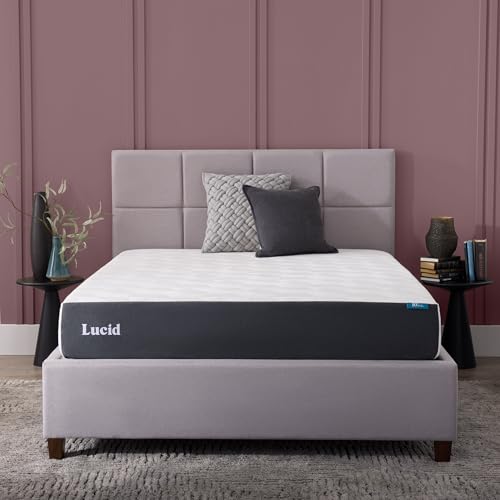
Badge: Contour that starts at a light touch. Lucid’s 10-inch hybrid pairs a memory foam comfort layer with a coil core, and the pairing is the petite brief in product form: the foam engages at low pressure, cradling a shoulder that heavier sleepers would drive straight through to the coils, while the core keeps the light body’s spine level without the board-like resistance of a firm all-foam build. The 10-inch profile keeps the bed’s edge at a height shorter legs forgive, and the hybrid’s airflow answers the warmth memory foam can hold.
Spec box (verified listing facts only):
- Profile: 10 inches
- Construction: memory foam hybrid (foam over coils)
- Size referenced: queen
Strengths
- Pressure relief that engages at petite loads.
- Coil core support without firm-surface punishment.
- Lower profile suits shorter legs and smaller rooms.
Trade-offs
- A much heavier partner will experience a different, deeper bed.
- Memory foam surface feel is not for bounce lovers.
- Ten inches reads modest beside luxury-height beds.
Best for: petite side and combination sleepers wanting hybrid support. Not suited for: sleepers who want a tall, plush, hotel profile.

Zinus 10-Inch Green Tea Memory Foam, Queen — the Gentle Budget Contour
Badge: Softness without a flagship price. Zinus’s green-tea memory foam line has served light sleepers well for a simple reason: its foam yields willingly at low pressure, wrapping a small frame in contour that firmer budget beds withhold. The 10-inch build keeps the profile friendly, the all-foam construction keeps motion out of a partner’s side, and the tier keeps the experiment affordable for a sleeper who has been burned by firm recommendations before and wants proof at a gentle price.
Spec box (verified listing facts only):
- Profile: 10 inches
- Construction: memory foam, green tea infusion in maker’s description
- Size referenced: queen
Strengths
- Willing contour at light loads, especially for side sleepers.
- Quiet, motion-absorbing all-foam build.
- Accessible tier for a first petite-correct purchase.
Trade-offs
- All-foam warmth is the class trade, as ever.
- Edge support is foam-class, which matters for edge sitters.
- Durability at this tier is a seasons-not-decade proposition.
Best for: petite side sleepers on a budget. Not suited for: hot sleepers or edge-of-bed sitters.

Casper Element, Queen — Balanced Softness from a Major Maker
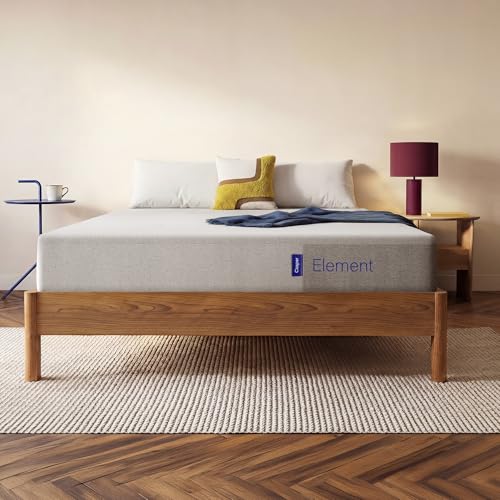
Badge: The mainstream bed that runs gentle. Casper’s Element sits at the softer, simpler end of a famous line, and for petite sleepers that positioning is the recommendation: a medium feel that reads as genuinely cushioning under a light body, a manageable profile, and the finish and consistency of a major maker’s entry model. Back-sleeping petite sleepers in particular — who need contour without a hammock — will find the Element’s balance the most natural fit in this guide.
Spec box (verified listing facts only):
- Construction: foam
- Feel positioning: medium, balanced
- Size referenced: queen
Strengths
- Balanced cushion that suits petite back and combination sleepers.
- Major-maker consistency and finish.
- Profile and weight are apartment- and petite-friendly.
Trade-offs
- Committed side sleepers may want the Lucid’s deeper engagement.
- Entry model means fewer premium materials than flagship siblings.
- Foam warmth applies, mildly.
Best for: petite back and combination sleepers wanting a mainstream name. Not suited for: deep-contour devotees.

Tuft & Needle Original, Queen — Responsive Yield Without Sink
Badge: For the petite sleeper who dislikes memory foam’s hug. Tuft & Needle’s adaptive foam yields under pressure without the slow mold of memory foam, and for a light sleeper the difference is agency: the surface gives where the body asks, then recovers, so turning is easy and the bed never feels like it is holding its occupant in place. Petite stomach and combination sleepers — the positions where deep contour becomes a swayback — are this pick’s natural constituency.
Spec box (verified listing facts only):
- Construction: adaptive foam
- Feel positioning: medium-firm in maker’s range, yielding surface
- Size referenced: queen
Strengths
- Yields at light loads without memory foam’s slow sink.
- Easy movement suits combination and stomach sleepers.
- Simple, durable, two-layer-class construction.
Trade-offs
- Less cradle for the shoulder than the memory foam picks.
- Firmer-leaning feel may still challenge the lightest side sleepers.
- Minimal luxury trimmings by design.
Best for: petite combination and stomach sleepers who dislike sink. Not suited for: cradle-seeking side sleepers.
How to Choose as a Petite Sleeper: Position First, Then Load
The choosing order matters more for this audience than for any other in the wave. Start with position, because it sets the contour requirement: side sleepers need the deepest engagement and should start with the Lucid or the Zinus; back sleepers need balance and should start with the Element; stomach and combination sleepers need yield without depth and should start with the Tuft & Needle. Then adjust for load within the position: the lighter the body, the more the recommendation leans toward the softer end of its category, because engagement thresholds do not care about intentions. Then audit the practicalities that petite sleepers feel disproportionately — bed height against leg length, mattress weight against the strength available for rotations and moves, edge behavior for the sitting that starts and ends every night. A partner of very different build converts the purchase into a negotiation, and the honest instruments are the split arrangements and compromise depths discussed across this wave’s couple coverage, including soft queen mattresses and mattresses for apartment living for the smaller-room version of the brief. Where an existing bed is nearly right, a topper can close the gap at a fraction of the cost — the best latex mattress topper for the durable route, soft mattress toppers for the plush one — because a light sleeper’s missing contour is exactly the thin, well-chosen layer a topper provides.
Setup and the First Fortnight
Give any new bed its expansion time before judging, and judge a petite-fit bed by petite evidence: whether the shoulder actually sinks in side position rather than perching, whether the hip settles level instead of riding high, whether the small of the back in back position is supported without being pushed. Pillow pairing matters more at light loads — a thick pillow on a now-contouring bed can undo the shoulder’s gains by propping the head out of the line the mattress created — so expect to re-tune the pillow in the first fortnight, generally downward in loft. Rotate the mattress on the maker’s schedule, which for a light sleeper is less about wear (light loads wear beds slowly, one of the category’s quiet dividends) and more about keeping the surface’s character even. And keep the trial window in view: the industry’s return policies exist precisely because fit is empirical, and a petite sleeper who has been mis-served by averages is entitled to use the trial as the measurement it is.
Common Mistakes
The governing mistake is buying the firm bed recommended for a generic back, and sleeping on its surface like a guest the bed never expected. The second is assuming petite means soft in every case — a petite stomach sleeper on a deep plush bed trades shoulder pressure for a swayed spine, which is why this guide sorts by position before softness. The third is ignoring the partner’s physics, where a compromise bed can leave two bodies each half-served. The fourth is height blindness: a tall luxury profile that delights a tall sleeper can make a short sleeper’s nightly mount and dismount a small indignity, repeated for a decade. The fifth is dismissing the topper route on a sound existing bed, when a light body’s missing engagement is the cheapest problem in the entire mattress economy to fix.
The Weight-Class Blindness of Mattress Marketing
It is worth pausing on why this guide needs to exist at all, because the reason is structural rather than accidental. Mattress firmness scales were built around a reference body — roughly the statistical middle of the adult weight distribution — and every “medium” on every listing is a measurement against that phantom. Bodies far from the phantom in either direction are served by accident: heavy sleepers learned long ago to shop for reinforced builds and their own guides, while light sleepers were left to discover, one firm disappointment at a time, that the scale’s middle was not calibrated to them. The industry’s slow correction — brands publishing weight-aware guidance, reviewers sorting by body type — is the context this page belongs to, and its method is the correction in miniature: every recommendation here was chosen by asking not “is this bed soft” but “does this bed engage at a light load,” which is the only version of the question a petite sleeper’s body actually asks. Shoppers who internalize that reframing can shop the whole market, including beds this guide never mentions, with the phantom finally exorcised.
Petite Sleepers and the Guest Bed Problem
An underappreciated corollary: petite sleepers suffer disproportionately as guests, because the world’s spare beds skew firm — guest mattresses are bought rarely, chosen defensively, and often inherited from a primary bed’s retirement. The petite traveler who sleeps badly everywhere but home is not fragile; she is a light body on a succession of beds calibrated for nobody in particular. Households that host petite guests regularly can repay this page’s attention in kind: a two-to-three-inch yielding topper on the guest bed, of the kind this wave’s topper guides sort, converts the standard firm spare into a surface a light body can actually engage, at a cost that rounds to nothing against the visit’s other expenses. Hospitality, like mattress design, is a fit exercise, and the hosts who understand load will be remembered by guests who finally slept.
Three Petite Sleepers, Three Correct Beds
A side sleeper of small frame and long standing frustration — three mattresses in six years, each recommended as medium, each slept on like plywood — finally bought by engagement rather than by label and chose the Lucid hybrid. Her report, in the vocabulary of the converted, was that the bed noticed her. The shoulder sank, the hip followed, and the morning soreness she had attributed to aging turned out to have been an address error: her body had been sleeping on beds addressed to someone else.
A petite back sleeper sharing with a substantially heavier partner needed the negotiation model: a core strong enough to keep his side honest, a surface gentle enough to engage hers. The Element’s balance, in a king with the household’s bedding tuned per side, served as the treaty — not a perfect bed for either body, but a just one, which is what shared beds are actually required to be.
A petite stomach sleeper, burned by a plush purchase that swayed her spine, chose the Tuft & Needle for yield without depth and recovered the flat, easy surface her position demands. Her case is the guide’s standing warning against its own headline: petite does not mean softest — it means calibrated, and for her position calibration pointed, correctly, toward restraint.
The Evidence Basis of This Guide
Recommendations here rest on catalog verification and on the load-engagement reasoning stated in the physics section, not on a testing program with weighted rigs. Every product was confirmed in Amazon’s catalog through the retailer’s own interface on 23 November 2026, and spec boxes quote listing facts. Claims about engagement thresholds describe how comfort layers behave under differing loads as a class, stated as reasoning rather than measurement. No prices, ratings, or review counts appear, by this wave’s standing rule. The reader’s own trial — shoulder, hip, and spine reporting across a fortnight — remains the decisive instrument, and the guide’s setup section is written to help them run it cleanly.
Children, Teens, and the Small Sleeper’s First Bed
The petite brief extends, with care, to the household’s youngest sleepers, whose first real beds are usually bought from the same average-calibrated shelf. A child or small teen on a firm adult mattress is the engagement problem in its purest form, and the remedy is the same physics at a smaller scale: a surface that yields to a light body, over support that keeps a growing spine level, at a height a small person can mount without ceremony. This guide’s picks are adult products and are recommended here for adults; for children, the household should apply the principle — engagement at light load, modest profile — within products actually designed and warranted for young sleepers, and should treat any medical or developmental question about a child’s sleep as a pediatric conversation rather than a shopping one. The principle travels even where the products should not, which is the mark of a principle worth teaching.
Reading Firmness Claims as a Light Sleeper
Three habits will protect a petite shopper in any aisle. First, translate every firmness word into a question — firm for whom, at what load — and discount any listing that cannot survive the translation. Second, weight the owner reviews by the reviewers’ builds where they disclose them, and treat a bed praised exclusively by heavier sleepers as unreviewed for petite purposes, however warm the praise. Third, prefer the trial to the testimony: no description of softness, including this guide’s, can substitute for the reader’s own shoulder on the actual surface, and the return window is the petite shopper’s laboratory precisely because the industry’s language was not built for their body. A shopper armed with the three habits will find the four picks here unusually easy to place — each was chosen to engage early, and each listing’s facts survive translation — and will shop the wider market with the phantom reference body finally retired.
The Midnight Summary for Petite Sleepers
Compressed for the reader shopping with a sore shoulder at the hour shoulders complain: if you sleep on your side, buy the Lucid hybrid, or the Zinus if the budget is steering. If you sleep on your back, buy the Element and tune the pillow down a notch in the first fortnight. If you sleep on your stomach or turn all night, buy the Tuft & Needle and enjoy a surface that answers without swallowing. If the bed you own is sound and merely too firm, buy a topper first and keep the difference. And whatever is bought, judge it by whether the bed finally notices your weight — because that noticing, withheld by every average-calibrated bed before it, is the entire product.
Envoi: a Note on Being the Exception That Teaches the Rule
Petite sleepers occupy an instructive position in the mattress economy: their long mis-service by the averages is what exposes the averages as fictions. Every sleeper, in truth, is a specific load on a specific surface, and the industry’s single scale serves the middle by luck and the edges by accident. The reader of this guide, forced by experience to shop by engagement rather than by label, ends up with the skill the whole market’s shoppers need — and in that sense the petite sleeper, so often the afterthought of the showroom, is the most sophisticated buyer in it. May the bed finally be worthy of the buyer.
A Note on This Guide’s Shelf Life
Mattress lines are revised and renamed on the industry’s schedule rather than the reader’s, and this guide’s product facts rest on the listings verified on the date in its sources, with the live listing governing on the day of purchase. Its reasoning rests on ground that does not move: comfort layers engage at thresholds, light bodies reach fewer of them, firmness is a relationship rather than a property, and position outranks softness in the choosing order. A reader who finds a pick here superseded has lost a link and kept a method, and the method — engagement, position, profile, trial — will select the successor bed from any season’s shelf. Guides to fast categories owe their readers that ratio in the open, and this one pays it gladly.
The Last Practical Checklist
Run five checks before ordering any bed, sequenced to prevent the classic petite disappointments. Name the sleep position first and let it choose the category before any brand is entertained. Ask the engagement question of the finalist — will this surface yield under my actual weight — and prefer the pick whose construction answers yes earliest. Measure the total sleeping height against leg length, frame included. Confirm the trial terms in writing, because fit for an off-average body is empirical by definition. And plan the pillow re-tune for the first fortnight, since the mattress that finally engages will change what the head needs. Run those five and the bed that arrives will be the first one in years that was specified, from the first click, for the body that will sleep in it.
One more constituency deserves its paragraph before the verdict: the petite sleeper who has concluded, after years of firm disappointments, that she is simply a bad sleeper. The record should be corrected in her hearing. Bad sleep on miscalibrated equipment is not a trait; it is a measurement, and it changes when the equipment does — as the case histories in this guide, composite portraits of a pattern the industry now acknowledges, are meant to show. The body was never the problem. The phantom was, and phantoms can be retired by a single purchase made on the body’s own evidence.
The Partner Problem, Revisited With Numbers in Mind
Because the petite brief so often arrives attached to a couple, the negotiation deserves one more treatment, this time organized by the size of the difference. Where the partners’ builds are modestly different, a single well-chosen bed — a hybrid with a willing surface over a serious core, which is the Lucid’s exact architecture — usually serves both, because engagement ranges overlap. Where the difference is large, the bed becomes two products sharing a frame in everything but marketing: the heavier partner experiences depth the lighter never reaches, and the honest solutions are structural — split kings where the room allows, differing toppers over a shared sound base where it does not, or a deliberate tilt of the compromise toward the partner whose sleep is more fragile, recorded as the household policy it is. What does not work is averaging: a bed chosen at the midpoint of two distant bodies is a bed calibrated, once again, for a phantom — this time a phantom assembled from the household’s own two real sleepers. The guide’s physics permits no other verdict, and couples who have lived the midpoint bed will recognize it instantly.
Postscript: the Household Log, Petite Edition
The household log this wave recommends takes a pointed form for the petite buyer: record the bed, the date, and — the entry that matters — the body’s three-word verdict at the fortnight’s end, in the sleeper’s own vocabulary. Shoulder: settled. Hip: level. Morning: unremarkable. A log kept that way becomes, across a decade of purchases, the household’s private calibration table — the document that converts one body’s hard-won experience into the next purchase’s specification, immune to whatever scale the industry is using by then. It is a small habit with a long fuse, and for a sleeper whom the averages failed, it is also a quiet reclamation: the record, at last, is being kept in her units.
And a closing word about language, because the category’s vocabulary does quiet damage worth naming: petite sleepers are routinely described — by listings, by listicles, by well-meaning partners — as needing a bed that is “gentler,” as though the requirement were a temperament. It is not. It is a load specification, as impersonal as a bridge’s rating, and the sleeper who learns to state it that way — in the showroom, in the household negotiation, in the review she eventually writes for the next light sleeper searching at midnight — changes the conversation for everyone downstream. This guide has tried to model the statement. The body is light; the requirement is engineering; the bed, at last, should be built to the brief.
The Travel Corollary: Sleeping Light Away From Home
The petite sleeper’s education pays an unexpected dividend away from home, and the guide will collect it before closing. Hotels, guest rooms, and rentals all stock the same average-calibrated beds, but the educated light sleeper travels with countermeasures the uneducated one lacks: a request, made at booking, for the softest available room configuration; a personal topper or thick travel pad for the long stays where the math justifies luggage; a pillow strategy that assumes the bed will perch the shoulder and plans the head’s height accordingly. None of this is fussiness — it is the portable form of the guide’s entire doctrine, that fit is a property of the pairing between body and bed, and that the body, being the constant, is entitled to adjust the variable wherever it sleeps. The sleeper who once blamed herself for bad nights in good hotels will recognize the liberation in that sentence.
Finally, let the guide discharge a small debt of fairness to the firm mattress, which has played the villain of this page and deserves a precise acquittal: firmness is a virtue at the right load, and the same Lucid hybrid that cradles a petite side sleeper would be driven to its coils by a heavy one, for whom this wave maintains separate, reinforced guidance. Nothing in these pages argues that soft is good and firm is bad. The argument — the only one — is that calibration is good and the phantom average is bad, and that a market honest about load would print the engagement range on every listing the way elevators print their capacity. Until it does, guides like this one will keep translating, and petite sleepers, of all shoppers, will keep needing the translation least once they have heard it once.
The bed goes on the frame, the shoulder goes down into it — actually down, for the first time in years — and the sleeper’s last thought before sleep is the one this guide has been working toward for pages: it was never her. It was the calibration. Products can be returned and phantoms can be retired, and a household that has learned the difference will never buy a bed the old way again, for any body, at any weight, in any room of the house.
A Short History of the Average Body
The phantom has a biography, and a paragraph of it explains the showroom. Twentieth-century manufacturing needed a reference customer the way tailoring needed a dress form, and the mattress industry — standardizing sizes, then firmness grades, then the ten-point scales of the review era — built its language around the middle of the bell curve because the middle is where the volume was. The edges were not maligned; they were simply unmeasured, and unmeasured customers become anecdotal ones, their complaints filed as preferences rather than as data. The correction now underway — body-type reviewing, weight-aware firmness guidance, guides like this one — is the measurement finally arriving. Petite sleepers reading this page are not a niche being indulged. They are a dataset being acknowledged, several decades late, and the acknowledgment improves the science for every body on the curve, including the phantom’s own.
Let the guide also answer, before it closes, the question its readers ask each other in the comments of lesser pages: is a special guide really necessary for a smaller body, or is this segmentation for its own sake? The necessity is measurable in the only currency that matters — the years of sore shoulders accumulated by sleepers who followed average advice faithfully and blamed themselves accurately never. A category of advice that prevents a decade of low-grade nightly harm for a definable population is not segmentation. It is the ordinary work of fitting, finally extended to a population the fitters overlooked, and its existence indicts nothing but the delay.
And so the picks stand, four verified beds chosen by a single question the industry forgot to ask, and the reader is left with the question’s portable form: does it engage? Ask it of the finalist in the showroom, of the guest bed at the relative’s house, of the hotel at the booking page, of the topper under consideration for the bed already owned. A three-word audit, applicable everywhere, worth more than any scale printed on any listing — because it is asked in the units of the only body whose verdict will ever be counted.
One practical grace remains to be recorded: light sleepers wear mattresses slowly, and a well-chosen petite bed is therefore one of the longest-serving purchases in the home — the comfort layers that a heavy body would tax in five years may hold their character for ten under a light one. The dividend cuts both ways in the choosing: it rewards buying quality at this end of the scale, since the quality will actually be around to be appreciated, and it forgives the budget picks less than their price suggests, because a cheap bed’s early softening is the one failure even a light body will eventually meet. Buy for the decade the body will actually get, and the arithmetic of this category, alone among the wave’s, tilts toward the better bed.
The guide’s truly final word is an invitation disguised as a summary: write the review you needed. Somewhere tonight a light sleeper is reading verdicts written by bodies twice her size and concluding, again, that the problem is her. The petite buyer who has solved the calibration — by this page or by her own experiments — holds the exact evidence that reader needs, stated in the units that reader’s body uses. Leave it where she will find it. The phantom held the floor for decades on nothing but volume; the correction will be built the same way, one honestly-specified review at a time.
Sleep is the body’s nightly argument that it was built correctly, and for the petite sleeper that argument has been losing to a specification error for years. Correct the specification — softer engagement, position first, profile modest, trial honored — and the argument resolves itself, quietly, in the sleeper’s favor, for the decade the bed will serve. That resolution, and not any single product on this page, is what the guide has been selling. The products are merely its current, verified instruments.
Enough, then. The shoulder has waited through enough firm nights and enough long guides; it is owed a surface that answers at its weight, and the four verified ways to provide one are on this page with their trades stated in the open. Choose by position, buy by engagement, judge by the fortnight — and let the next decade’s mornings, unremarkable at last, deliver the review.
A postscript in the log’s own format, offered as the guide’s last exhibit. Body: light. Beds tried: three, all medium, all wrong. Principle learned: engagement. Bed chosen: by position, at last. Fortnight’s verdict: shoulder, settled; hip, level; morning, unremarkable. Years expected: ten. — Every petite sleeper’s log should be permitted to read that boringly, and the boringness, after the years of incident reports, is the sound of a problem that has been solved at the level of its actual cause.
The phantom, for its part, will go on sleeping soundly in the middle of the scale, unbothered, as phantoms do. The living sleepers at the curve’s lighter end now have their own page, their own physics, and their own four verified beds. That is the whole of the correction, and it is sufficient — as the first unremarkable morning will shortly confirm.
One line more, because guides should end with the smallest true thing they know: a mattress does not need to be expensive, luxurious, or famous to be right — it needs to meet the body that arrives at it, at the weight that body actually is, in the position that body actually keeps. Meet that standard and the bed disappears into the night, which is where beds belong and where, for the petite sleeper, they have been too rarely permitted to go.
And to the partner, parent, or friend reading over a petite sleeper’s shoulder — the person who will help carry the box, run the trial’s calendar, and hear the fortnight’s verdict — the guide asks one thing: believe the report. A light body’s evidence about its bed is data, not delicacy, and the households that treat it as data solve in one purchase what the dismissive ones solve in four. The bed is a fit instrument. Fit it to the body in it.
The box arrives, the bed expands, the first night is slept with the attention of a scientist who is also the experiment. By the second week the attention can retire, and the bed takes its place among the household’s unconsidered successes — the roof, the plumbing, the lock on the door — things that work so completely they are never discussed. For a sleeper who discussed her bed for years, that silence is the loudest possible endorsement, and it is the one this guide has been engineering since its first paragraph.
Let the record close, then, with the guide’s credentials restated in miniature: four products, verified; one principle, engagement; one order of choosing, position before softness; one instrument of final judgment, the reader’s own fortnight. Everything else in these pages — the phantom’s biography, the guest-bed corollary, the partner treaties, the log — is commentary on those four facts, offered because a sleeper mis-served for years deserves the reasoning and not merely the result. The result is on the truck. The reasoning is hers to keep.
Sleep light, then — in the only sense this guide endorses: on a bed that finally carries its sleeper at her actual weight, in her actual position, for the decade her light load will grant it. The phrase the industry used as a size turns out, properly understood, to have been a specification all along. Specify accordingly.
A last courtesy to the editor who will one day refresh this page: keep the principle and re-verify the products, in that order, and let no future abundance of petite-marketed models dilute the engagement test that built the list. The market will eventually print load ranges on its listings, and on that day this guide can retire its translation work with honors. Until then, the translation is the service, and the service is the page.
The morning after the fortnight, there is nothing to report — no ache to narrate, no verdict to deliver, no review forming itself in the shower. The guide asks its reader to savor that nothing, because nothing, in the annals of a petite sleeper’s bedding history, is the rarest and most eloquent result of all. It means the bed has finally been measured to the body, and the body, at last, is simply sleeping.
And if a single sentence of this long page survives into the reader’s next showroom visit, let it be the one that reframes the errand: I am not shopping for a soft bed or a firm bed; I am shopping for a bed that engages at my weight — a sentence that turns a plea into a specification, and a specification, in any honest market, is a thing that can be met.
The guide will not pretend the specification solves everything — bodies change, positions drift, partners arrive with their own physics — but it solves the thing it names, and a household that has learned to name things precisely has acquired the master skill of the entire bedding market. Begin with the load. The rest, as the picks above demonstrate, is shopping.
Postscript, in the plainest available words, for the reader who skips to endings: lighter bodies need beds that give sooner. Four are linked above, sorted by how their owners sleep. Buy the one that matches the position, keep the trial receipt, tune the pillow, and expect the mornings to go quiet. That is the guide, the whole guide, and — for once in the mattress aisle — enough.
The rest is delivery, expansion, and the small ceremony of the first night on a bed that was chosen, for once, in the sleeper’s own units. May the ceremony bore everyone involved by the second week. Boredom, in bedding, is bliss with its work done — and it is available, at last, in petite.
One more acknowledgment, owed to accuracy: this guide’s four picks will not be the market’s last word, because the market is finally learning to measure what this page measures, and better petite-specified products will come. When they do, the engagement question will greet them as it greeted these — indifferent to their marketing, attentive to their thresholds — and the reader who learned the question here will need no guide to grade them. Teaching the question was always the larger half of the assignment.
And so, finally, the guide returns its reader to the only authority it has cited throughout: the body, reporting at dawn. Give it a surface that answers at its weight, and it will file the shortest review in the history of the category — silence, nightly, for a decade. The page rests its case on that silence.
The last line of the log, then, written in advance for the reader to date and sign: the bed fits. Three words the averages never offered her, now available in four verified models and one portable principle — and worth, by the accounting of every sore morning they retire, the entire price of admission.
Goodnight, then, to the sleeper the averages forgot — on a bed that remembers her weight exactly, in the position she actually keeps, at a height her feet can reach. The industry will catch up eventually. Her mornings cannot wait for it, and now they do not have to.
The specification is stated, the products are verified, the trial is the reader’s to run. What remains is only the sleep itself — the deep, unremarkable, properly supported sleep that was always available at this weight, waiting for a bed that knew how to ask for it correctly.
Measured, matched, and finally met — the bed and its sleeper, introduced at last on honest terms. The guide is honored to have made the introduction, and withdraws, as all good introductions should, before the conversation turns to sleep.
Final Recommendation
Petite side sleepers should start with the Lucid hybrid for contour that engages at their weight over a supportive core, or the Zinus where the budget leads. Petite back and combination sleepers should start with the Casper Element’s balance. Petite stomach and movement-loving sleepers should start with the Tuft & Needle. In every case the principle outranks the product: firmness is a relationship between a bed and a load, and the sleeper who chooses by that principle — softer engagement, shallower profiles, position first — will finally be sleeping on a mattress that was calibrated for the body actually in it.
Frequently Asked Questions
What firmness is best for petite sleepers?
Generally softer than the industry default for the same sleep position, because a light body engages comfort layers less. Side sleepers lean soft, back sleepers lean medium-soft to medium, and stomach sleepers should keep a firmer, shallower profile to protect the spine’s line. The picks above are sorted on exactly that logic.
Why do firm mattresses hurt petite sleepers?
A firm surface does not yield enough under a light load, so contact stays concentrated at the shoulder and hip instead of spreading. The result is pressure soreness that heavier sleepers on the same bed may never feel. Support is not the same as hardness — a softer comfort layer over a sound core supports a light spine perfectly well.
Is memory foam good for petite sleepers?
Often yes, because memory foam yields to modest pressure and body warmth, engaging at loads where buoyant materials stay aloof. Its trades are warmth and slow response, which is why this guide includes a hybrid and a responsive-foam alternative alongside the full memory foam pick.
Does mattress height matter for petite sleepers?
Practically, yes. A lower total profile — mattress plus frame — lets shorter legs reach the floor from the edge and makes climbing in undignified-free. Ten-inch-class mattresses on modest frames are the friendly end of the range; tall luxury stacks are the unfriendly one.
What if my partner is much heavier than me?
Expect one bed to feel like two different products, because it is. Middle-ground picks with strong cores, motion-isolating surfaces, and — for king beds — split arrangements or differing toppers per side are the working compromises, and a generous trial matters more than usual.
Can a topper fix a too-firm mattress for a petite sleeper?
Frequently, yes — it is the ideal topper case, because the missing ingredient is surface engagement, which is precisely what a topper adds. Choose two to three inches of a yielding material matched to sleep position, per the topper guides linked in this article, and keep the mattress’s sound core doing the support work.
How long should a petite sleeper allow for break-in before judging a new mattress?
Longer than the standard advice suggests, because break-in is partly the sleeper’s own work: a lighter body compresses new foams more slowly, so the surface a petite sleeper feels in week one is firmer than the one the same bed will offer in week four. Give the mattress a full fortnight of nightly use before forming a verdict, and judge by the checkpoints in the setup section — morning shoulder and hip comfort, not first-night impressions. If discomfort is unchanged after that honest trial, the mismatch is real, and the return window, not more patience, is the right tool.