Disclosure: As an Amazon Associate, dailyhomedecorating.com earns from qualifying purchases. Links on this page are affiliate links; they cost you nothing extra. Prices and availability change often, so check the current Amazon listing before you buy.
The best latex mattress topper occupies a particular place in this wave’s coverage: it is the pick for the sleeper who has read the foam guides, understood the physics, and decided to pay for the material that breathes, springs, and outlasts. Latex — natural, from the rubber tree, in the two verified toppers below — responds instantly instead of melting slowly, sleeps closer to temperature-neutral than any foam, and holds its character for years that memory foam measures in seasons. This guide is deliberately narrow: both linked picks come from one maker, Sleep On Latex, whose Pure Green line was confirmed in the Amazon catalog on 23 November 2026, because the latex aisle is crowded with blends and vague labeling, and a short list of certified-natural products serves the reader better than a long list of latex-adjacent ones. A note on method, in the open: an attempt to verify additional firmness variants through the catalog interface failed repeatedly on the day of writing, so those variants are discussed as choices to investigate on the maker’s own listings rather than linked here — the guide links only what it verified.
In this guide
Quick Picks
| Pick | Depth | Best for |
|---|---|---|
| Sleep On Latex Pure Green Topper, Soft, 2 Inch | 2 inches | Surface transformation with restraint |
| Sleep On Latex Pure Green Topper, Soft, 3 Inch | 3 inches | Deep pressure relief for side sleepers |
Why Latex: the Material Case, Stated Plainly
Latex earns its premium on four grounds, and a buyer should be able to recite them before paying it. Response: latex pushes back the instant it is compressed, so turning over is assisted rather than resisted, and the surface never holds a body’s mold the way memory foam does — combination sleepers and the restless feel the difference in the first night. Temperature: an open, pincore structure moves air with every movement, so the topper sleeps near neutral instead of storing the night’s warmth. Durability: natural latex’s elasticity is the material’s nature rather than an additive’s promise, and a latex topper’s softening schedule runs in years where budget foam’s runs in seasons. Provenance: certified natural latex — the GOLS certification in these listings is the global organic standard for latex — answers the shopper who wants to know exactly what is in the bed, a question the foam aisle answers with infusions and adjectives. Against those four stand the honest costs: latex is heavy, it is priced like the premium material it is, its bounce is wrong for sleepers who love foam’s stillness, and a small number of people have latex sensitivities that rule the material out entirely — a point this guide flags plainly, because no product roundup outranks a known allergy.
Best Latex Mattress Topper for Most Beds: Sleep On Latex Pure Green, Soft, 2-Inch, Queen
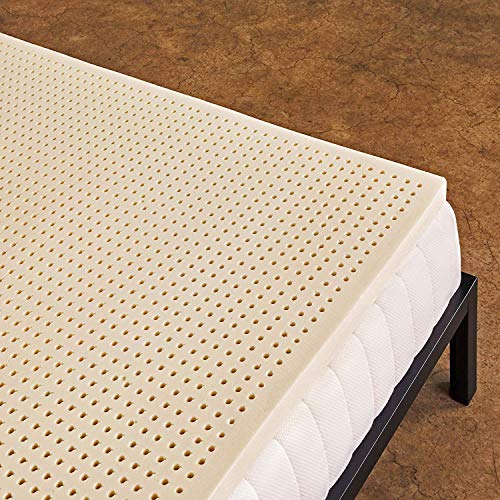
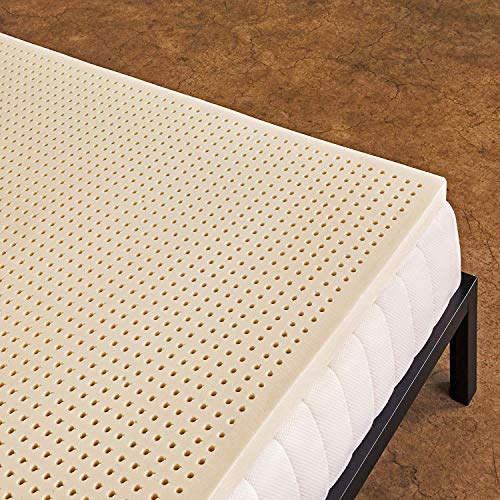
Badge: The measured dose of a premium material. Two inches of soft natural latex is the connoisseur’s adjustment: enough to change a firm mattress’s character from resistant to responsive, to take the edge off a shoulder without rebuilding the bed’s geometry, and to introduce latex’s temperature manners to a sleeper testing the material for the first time. The listing’s certifications do the provenance work, and the depth does the restraint — this is the pick for the back-and-side combination sleeper whose mattress is sound and merely stern.
Spec box (verified listing facts only):
- Material: natural latex, GOLS certified organic
- Firmness stated by maker: soft
- Depth: 2 inches
- Size referenced: queen
Strengths
- Instant response — no sink, no stuck feeling, easy turning.
- Temperature-neutral sleep compared with any foam pick.
- Certified natural material with a multi-year character.
Trade-offs
- Premium tier pricing for a two-inch layer.
- Heavy for its size; awkward to move and rotate alone.
- Soft latex still firms a bed less than deep foam softens it — severe firmness cases need the 3-inch.
Best for: combination sleepers softening a sound, firm mattress. Not suited for: foam devotees, latex-sensitive sleepers, or the deepest pressure cases.
Sleep On Latex Pure Green, Soft, 3-Inch, Queen — the Deep-Dose Version
Badge: For shoulders that file formal complaints. The third inch is where latex stops adjusting and starts transforming: a committed side sleeper on a firm mattress gets pressure relief in the same league as deep memory foam, delivered with latex’s response and airflow instead of foam’s melt and warmth. It is also the pick for the lighter sleeper, whose weight barely dents a mattress’s comfort layer and who needs the topper to do the conforming work the body cannot. The price climbs with the depth, and so does the weight — this is furniture-grade material, and it handles like it.
Spec box (verified listing facts only):
- Material: natural latex, GOLS certified organic
- Firmness stated by maker: soft
- Depth: 3 inches
- Size referenced: queen
Strengths
- Deepest pressure relief available in a natural material.
- Buoyant support keeps hips from bottoming out.
- Breathability survives the depth, unlike deep foam.
Trade-offs
- The guide’s highest topper price tier and heaviest handling.
- Too much change for a mattress that was nearly right.
- Stomach sleepers should look to firmer, thinner options instead.
Best for: side sleepers and light sleepers on firm mattresses. Not suited for: stomach sleepers or minor adjustments.
The Firmness Question This Guide Could Not Link
Honesty requires a section most roundups would skip. Latex toppers are sold across a firmness range — soft, medium, and firm in most makers’ vocabularies — and the right firmness is a genuine variable: medium suits back sleepers who want contour without cradle, firm can add buoyant support to a mattress that feels vague, and soft, the firmness verified and linked above, serves the pressure-relief brief that brings most shoppers to the category. On the day this guide was written, repeated attempts to verify the additional variants through the retailer’s catalog interface failed, and the guide’s rule — link only what has been verified, name only what the listing supports — means those variants appear here as a shopping direction rather than as links. A reader whose diagnosis points to medium or firm latex should start from the maker’s own storefront, confirm the exact listing’s title, depth, and certification before ordering, and apply every test in this guide’s how-to-choose section to whatever they find there. The method travels even where the links could not.
How to Choose: Latex Against the Alternatives
The decision that matters is rarely which latex, but whether latex. Choose it over memory foam if turning is effortful in foam, if heat has ended previous foam experiments, or if the purchase is meant to serve for many years on a primary bed — the contexts where latex’s response, airflow, and durability repay its price. Choose foam instead if the budget is the brief, if the bed is a guest or temporary one, or if the sleeper loves the held, molded stillness that latex deliberately refuses to provide; this site’s foam coverage, cheap mattress toppers and soft mattress toppers, serves those briefs directly. Choose a quilted pad instead if the need is surface breathability alone, per cooling mattress pads. And if the mattress underneath is failing structurally, no material at any price is the answer — the diagnosis discipline from toppers for heavier sleepers applies with full force: toppers tune sound mattresses, in latex as in foam.
Setup, Handling, and Care
Latex arrives dense and dignified, and its handling rules differ from foam’s in ways worth knowing before the box opens. There is no expansion wait and essentially no off-gassing ceremony — the material is what it is from the first hour, with a natural, faintly sweet rubber scent that most sleepers stop noticing within days. The weight is the real adjustment: a queen latex topper is a two-person carry, it should be lifted rather than dragged (latex can tear at a gripped edge under its own weight), and it should never be folded sharply. On the bed it needs no straps for most sleepers — its own mass keeps it planted — and a breathable protector preserves both its surface and its airflow, which is the whole point of the purchase. Rotation head-to-foot a few times a year spreads the wear map. Kept from prolonged direct sun and from heat storage, a natural latex topper’s service is measured in the same years as a good mattress’s, which reframes its price more honestly than any sale banner: cost per year, latex is frequently the cheapest topper a household ever buys.
Common Mistakes in the Latex Aisle
The first is buying a blend at a natural price: the aisle’s labels blur synthetic and blended latex into the same vocabulary, and the certification in the listing title — present in both picks here — is the shopper’s only reliable sorting tool. The second is firmness by guesswork, ordering soft for a back sleeper who needed buoyant support and concluding that latex itself disappointed. The third is expecting foam’s behavior from a material whose entire identity is different — the sleeper who wants to be held should not buy the material that pushes back. The fourth is ignoring sensitivity: latex allergy is uncommon but real, and it is an absolute rather than a preference. The fifth is depth by appetite — three inches bought for a bed that needed two, converting a fine mattress into a tall, buoyant one the household then has to forgive nightly.
Dunlop, Talalay, and the Vocabulary of Latex
Two process words govern the latex aisle, and a buyer deserves them in plain English. Dunlop, the older method, pours the latex once and produces a denser, firmer-leaning material whose character is consistency and durability; it is the process behind most natural toppers in this price conversation, including the firm, even feel shoppers describe as supportive. Talalay, the more elaborate method, vacuum-seals and flash-freezes the latex before curing, producing a more uniform, airier cell structure that reads as plusher and more consistent across the slab, at a higher cost. Neither is a synonym for quality — both produce excellent and mediocre toppers — but they predict character: Dunlop for the sleeper who wants buoyant support with a spine, Talalay for the sleeper who wants latex’s response with foam-adjacent softness. A third vocabulary word matters as much: blended, which mixes natural with synthetic latex and is legitimate at a blended price and misleading at a natural one. The certified listings in this guide exist to cut through all three vocabularies at once — the certification states the material’s provenance regardless of the process words around it.
Latex and the Life Stages of a Mattress
A latex topper interacts with a mattress’s age differently from foam, and the interaction is worth understanding before the purchase. On a young, firm mattress, latex is a character adjustment — the scenario both picks here are built for. On a middle-aged mattress whose comfort layer has tired while its support remains sound, latex’s durability makes it the rare topper that can plausibly out-serve the bed it sits on, which argues for buying the household’s preferred firmness with the next mattress in mind, since the topper will likely migrate. On an old mattress with structural sag, latex’s honesty becomes a liability in the buyer’s eyes: a buoyant, resilient material bridges less and reveals more than a deep foam, so the dip announces itself through latex that foam might have masked for a season. The guide’s verdict follows: latex is the topper for sound mattresses and long horizons, and the household shopping for an end-of-life bed should spend the latex money on the mattress itself, then revisit this page when the new bed’s character needs tuning.
Three Sleepers Who Chose Latex, and One Who Correctly Did Not
A restless combination sleeper, fleeing a memory foam topper that held her like a setting mold, bought the 2-inch Pure Green for its pushback and reported the first week in the vocabulary this material always earns: the bed felt awake. Turning became a non-event, the surface stayed neutral through a warm spell, and her only adjustment was a thinner pillow, because buoyant support holds the head higher than sinking foam does — a pairing detail worth any switcher’s attention.
A light side sleeper on a firm innerspring, whose shoulder had been filing complaints that foam answered too warmly, took the 3-inch and got foam-league pressure relief with a surface that never stored the night’s heat. His case is the material’s ideal brief: maximum conforming need, maximum heat sensitivity, long horizon — the three conditions under which latex’s price converts most completely into sleep.
A back sleeper with a sound medium mattress and a curiosity about natural materials bought the 2-inch as a deliberate experiment in provenance — he wanted to know what was in his bed — and kept it for the least dramatic of reasons: the bed felt better and the question was answered. Not every purchase needs a pain to justify it; some are improvements, honestly labeled.
And the sleeper who correctly did not buy: a devoted foam lover who adored being held by her mattress, tried a friend’s latex bed on a visit, and recognized within an hour that buoyancy was not her language. She bought a premium foam topper instead, from this wave’s other guides, and both sleepers are right — which is the entire argument for the material-preference honesty this guide has pressed from its first section.
The Economics of a Material That Refuses to Wear Out
Latex’s price frightens shoppers who annualize it incorrectly, so the guide will do the arithmetic in the open, in tiers rather than in figures that would date on publication. A budget foam topper is a consumable with a fuse of a few seasons; a household that replaces it across a decade buys it several times, in money and in shopping effort and in the weeks of declining performance before each replacement. A natural latex topper bought once for the same bed serves the decade in a single purchase, with a character that fades slowly enough to be tracked in years. The crossover is not subtle, and it arrives sooner for primary beds than for any other use — which is why this guide steers guest beds and temporary beds firmly toward the cheaper materials and reserves its latex enthusiasm for the bed the household actually lives on. Add the disposal ledger, several foam toppers landfilled against one latex topper still in service, and the material’s case completes itself on grounds a purely comfort-driven shopper might never have considered. Premium is a price; expensive is a pattern of replacement, and latex is premium without being expensive for the sleeper whose horizon is long.
The Evidence Basis of This Guide
The guide’s claims rest on catalog verification and on the material science of natural latex, not on a testing program, and the distinction is kept visible throughout. Both products were confirmed in Amazon’s catalog through the retailer’s own interface in this wave’s verification batches, and their spec boxes quote listing facts — material, certification, depth, firmness — rather than impressions. Statements about response, airflow, and durability describe the settled behavior of natural latex as a material class. The guide also records, in its sources, a failed attempt to verify additional variants on the day of writing, because a verification standard that hides its own gaps is not a standard. No prices, ratings, or review counts appear, by the standing rule of this wave: they move, and a durable guide to a durable material should be built from facts with a longer half-life.
Latex in the Wider Bedroom: Pillows, Mattresses, and the House Style
A topper is often a household’s first latex purchase rather than its last, and the guide should map the territory beyond it. Latex pillows share the topper’s virtues in miniature — response, airflow, a character measured in years — and this wave’s pillow coverage, including the solid latex options, lets a household standardize on the material where it earns its keep. Full latex mattresses, including the same maker’s Pure Green mattress reviewed elsewhere in this wave’s comparisons, extend the logic to the whole bed for households whose topper experiment converted them. The sensible sequence is the one this guide embodies: topper first, as the lowest-stakes trial of an expensive material’s character; pillow second, where the trial is cheaper still; mattress last, when the preference is proven rather than hoped. Households that reverse the sequence buy the mattress on a guess and spend years discovering whether the guess was right. The topper’s deepest function in the latex economy is epistemological — it is how a household learns, for the price of a layer, whether it speaks latex at all.
Reading a Latex Listing Like an Auditor
Because the aisle’s labeling is its weakest institution, the guide closes its analysis with the audit it applies to every latex listing, in the order the facts should be extracted. First, composition: does the title or the certified specifications state natural latex and its proportion, and does a recognized certification — GOLS for organic claims — stand behind the statement? A listing that says “latex” and nothing more has told the shopper the least it legally can. Second, process and firmness in the maker’s own terms, with the understanding that firmness vocabularies are not standardized across brands and a “medium” from one maker is a neighborhood, not a coordinate. Third, depth, stated plainly, against the guide’s dosage logic. Fourth, the cover and care facts, since a natural topper under a sealed synthetic protector is a sermon preached to a closed door. Fifth, the seller’s own consistency — a maker whose listings, storefront, and specifications agree with each other across products is exhibiting the same legibility this guide praised in the verified picks. A shopper who runs the five-point audit on any latex listing, linked here or found independently, will sort the aisle in minutes and will understand why this page’s list is short: the audit is strict, and most listings prefer it that way.
The Seasonal and Thermal Life of a Latex Topper
Latex’s temperature neutrality deserves one more precision, because it is the claim most often oversold by the aisle and undersold by foam’s partisans. A latex topper does not cool; it declines to warm. Across a night, the distinction compounds in the sleeper’s favor — the surface at 4 a.m. is close to the surface at midnight, where a foam surface has been storing the sleeper’s output for hours — and in warm rooms the difference is the difference between a bed that participates in the problem and one that abstains. In cold rooms the same neutrality reads as honesty rather than chill, because latex does not hold the cold the way a dense foam slab can on first contact in a winter bedroom. Seasonal rotation, the strategy earlier guides in this wave applied to foam, is largely unnecessary with latex — one of the quiet dividends of a material whose character is stable across the calendar — and households in strongly seasonal climates may find that the latex purchase retires an entire category of twice-yearly bedding labor.
Couples, Motion, and the Buoyant Bed
Partners experience latex’s character as a negotiation, and the guide should report the terms honestly. Motion travels through latex differently than through foam — quicker and springier, less damped at the source, more quickly settled — and couples divide on whether the liveliness is a feature or a disturbance, with the verdict usually tracking how much each partner moves. The buoyant surface also changes the bed’s social physics: sitting up to read, climbing in and out, and the general sense of the bed as furniture all improve, because the surface behaves like a sprung thing rather than a swallowing one. For couples split between foam and latex loyalties, the split-topper maneuver described elsewhere in this wave — one material on each half of a king, under a shared sheet — works with latex exactly as with foam, and the weight of a latex half makes it the more stable tenant of its side. None of this decides a purchase alone; all of it belongs in the household’s deliberation before a premium material is committed to a shared bed.
The Midnight Summary for the Latex-Curious
Compressed for the reader deciding late: if the mattress is sound and firm and the sleeper turns often, runs warm, or is tired of foam’s melt, buy the 2-inch Soft Pure Green and learn the material at its most measured dose. If the sleeper lives on one side and the shoulder keeps the household’s minutes, buy the 3-inch and take the deep dose. If the diagnosis points to a firmer latex than the soft verified here, take the audit in this guide to the maker’s own listings and verify before ordering, because the guide’s links stop where its verification stopped. If the sleeper loves being held by foam, close this page with the guide’s blessing and buy foam. And if the mattress underneath is sagging, buy no topper at all — the most valuable sentence in any of these guides is the one that keeps the money in the household until the real problem is addressed.
Envoi: the Topper as a Ten-Year Decision
Most bedding purchases are weather; a latex topper is climate. It will be on the bed through mattress rotations, household moves, seasons of health and seasons of complaint, and its character — buoyant, neutral, unhurried — will become part of the room’s permanent furniture of sensation. That permanence is the argument for the deliberation this guide has demanded: the audit, the firmness honesty, the allergy check, the diagnosis of the mattress beneath. A household that buys latex the way this page teaches is not really purchasing two or three inches of rubber-tree foam. It is choosing the surface character of its next decade of nights, in a material that will still be itself when the decade ends — and few purchases in the home repay a long guide as completely as that one does.
A Note on This Guide’s Shelf Life
Latex lines change more slowly than foam lines — a material with a decade’s service does not reinvent itself each season — but listings are revised, certifications are renewed, and variants come and go, so this guide’s product facts rest on the verification recorded in its sources, with the live listing governing on the day of purchase. Its reasoning rests on slower ground still: natural latex responds, breathes, and endures by its physical nature; certification is the shopper’s evidence of composition; depth is dosage and firmness is a match to position. A reader who finds a pick here revised has lost nothing essential, because the audit in these pages will identify the successor product on any future shelf. The guide is content to be judged by that standard — durable method over dated detail — since it is the same standard by which it recommends the material itself.
The Last Practical Checklist
Five checks before ordering, in the order they protect a premium purchase. Confirm the mattress underneath is structurally sound, because latex reveals rather than masks a failing bed. Confirm no household sleeper has a latex sensitivity, because that fact outranks every other consideration on this page. Match firmness to sleep position honestly — soft for the pressure brief, with firmer variants investigated through the maker’s own listings under the audit — rather than to the word that sounds most luxurious. Measure the stack and the sheets, since two or three dense inches change the bed’s geometry and its dressing. And arrange the delivery day like the furniture event it is: two people, a clear path, and time to place a heavy slab carefully rather than drag it. Run those five, and the topper that arrives will be given the fair trial its price deserves.
One constituency remains unaddressed, and it is the one that most often writes to guides like this: the sleeper who bought latex elsewhere, without an audit, and is deciding whether the material failed or the purchase did. The diagnostic is quick. If the topper is a blend sold as natural, the purchase failed and the material is owed an apology. If the firmness mismatches the position — firm under a side sleeper’s shoulder, soft under a back sleeper’s hips — the purchase failed in its matching, not its material. If the mattress beneath was already sagging, the diagnosis failed upstream of both. Only when a certified natural topper, correctly matched, on a sound bed, still sleeps wrong for a given body has the material itself been honestly tried and honestly declined — and that sleeper has this guide’s respect and its directions to the foam aisle, where their correct product genuinely waits.
And a word, before the verdict, about the smell of a forest that arrives in a box — because new natural latex carries a faint, sweet, unmistakably organic scent that surprises shoppers raised on foam’s chemical newness. It is the material’s signature rather than a defect, it fades across the first days of airing, and most households come to read it the way one reads the smell of a leather chair: as evidence that the thing is made of something. Air the topper while the bed is made up the first time, keep the room ventilated for a day, and let no one seal it under bedding in a closed room and then indict it. The scent, like the weight and the bounce, is the material being itself in the open — which is, in the end, the entire reason to buy it.
Postscript: the Household Log, Latex Edition
The household log this wave keeps recommending takes a particular form for a material built to outlast its paperwork: record the purchase date, the depth, the firmness, and the mattress it went onto, and then — the discipline that matters — a line a year later noting whether the surface still feels like itself. Latex’s promise is precisely that the line will be boring, year after year, and a household that keeps the record owns the evidence with which to judge every future bedding claim it meets. When the mattress beneath is eventually replaced, the log will also answer the migration question — the topper’s next assignment — from experience rather than from hope. Few products justify record-keeping; the ones that serve a decade do, and the record is part of what the premium buys.
Let the guide also concede, in its closing movements, the aesthetic truth about latex that no specification captures: a bed topped with it feels finished. The surface is calm, level, and quietly expensive under the hand, the way a well-made chair is calm under the sitter, and households consistently describe the change in the vocabulary of quality rather than of comfort — the bed feels like a better bed, not merely a softer one. That impression is the material’s centuries-old reputation arriving intact in a modern bedroom, and while no one should buy a topper for an impression, no one should be surprised that the impression, once slept on, becomes the reason the purchase is never regretted.
Finally, to the reader who reached this page from the foam guides with a suspicion that the upgrade is a luxury: the guide’s honest answer is that it depends entirely on the bed’s place in the household’s life. For the primary bed of a settled household, latex is not the luxury option but the durable one, and the luxury framing belongs to the purchase that must be repeated. For every other bed — the guest room, the dorm, the season between leases — the luxury framing is accurate, and the cheaper materials are not a compromise but the correct engineering. Knowing which bed one is buying for is, as in every guide in this wave, the decision that contains all the others.
The two inches or three, then, is the last fork, and it resolves the way this guide resolves everything: by the body’s evidence rather than by appetite. Lie on the current bed in the usual position and let a partner — or a honest mirror of attention — observe where the body protests: a shoulder that cannot sink argues for three; a general sternness across the surface argues for two; a hip that already sits deep argues for neither until the mattress itself is examined. The fork is small because the material is consistent: both depths deliver latex’s response, neutrality, and longevity, and they differ only in dosage. Choose the dose the body ordered, and the decade will take care of itself.
And when the slab is on the bed and the first night has been slept, resist the verdict for a week — not because latex changes, for it changes least of all materials, but because the sleeper does: a body habituated to foam’s embrace needs several nights to stop expecting the melt and start enjoying the answer. Judge at the week’s end by the measures that matter — the ease of turning, the shoulder’s morning report, the surface’s temperature at the bad hour — and the material will have made its case in its own unhurried way. Durability, in the end, includes the durability of a decision, and latex asks only for the patience its own lifespan exemplifies.
A closing courtesy to the material itself, which has been discussed for pages as a set of properties and deserves a sentence as a substance: latex begins as sap, tapped from a tree that goes on living, and arrives in a bedroom carrying that biography in its resilience — a renewable material whose performance is its nature rather than its engineering. In an aisle of petrochemical foams and marketing infusions, that biography is part of what the premium purchases, and households that value it are not being sentimental. They are buying the rare product whose story and whose specification are the same thing.
So the guide ends where its method began: with verification as a form of respect — for the reader’s money, for the material’s reputation, and for the difference between a recommendation and an advertisement. Two products are linked because two products were confirmed, with their certifications, in the retailer’s own catalog; the rest of the aisle is mapped, audited, and left for the reader’s own verification to complete. A shorter list, honestly arrived at, is worth more than a long one assembled on faith — and a household that buys by that rule will find, as this one did, that the products which survive scrutiny are usually the ones that survive the decade too.
One more practical grace for the household that proceeds: photograph the listing’s title and certification at purchase and keep them with the household log, because a product built to serve a decade will outlive the webpage that sold it, and the record of what was bought — natural, certified, this depth, this firmness — is the household’s title deed to its own decision. If the topper ever needs a sibling for another bed, the photograph answers in seconds what memory will have blurred. Durability, again, is a system: material, record, and the patience to judge across years rather than across evenings.
The guide’s last word is for the sleeper reading at the bad hour, on the firm bed, with the shoulder awake: the fix exists, it is made of a tree’s patience, and it asks only that the purchase be as deliberate as the material is durable. Two inches for the measured transformation, three for the deep one, an audit for everything beyond — and then a decade of nights in which the topper is never thought of at all, which is the fate of every truly successful household purchase and the highest verdict this page can imagine for its picks.
There remains only the acknowledgment that a two-product guide is an unusual artifact in an aisle of fifty-item roundups, and that its brevity of list is its thesis rather than its failure. The latex category does not need more recommendations; it needs stricter ones, because its failure mode is not scarcity but fog — blends in natural clothing, firmnesses without coordinates, certifications implied rather than held. Against that fog, this page offers the strongest instrument it has: a short list, a long audit, and a material whose verified specimens justify both. Buy the verified, audit the rest, and sleep on the difference.
And if the decade passes as promised — the topper unaged on a mattress replaced beneath it, the log’s yearly line repeating its boring verdict — the household will own a small, durable proof that some purchases still reward patience over appetite. In a category built on replacement cycles, that proof is the real product. The latex was merely its delivery mechanism, two or three inches thick, smelling faintly of a forest, answering every night with the same unhurried pushback it offered on the first.
Buy once, then — that is the shortest honest summary of everything above, and it is a sentence the foam aisle cannot print about itself. Buy once, with the audit run and the firmness matched and the mattress beneath certified sound by the household’s own hands, and let the purchase recede into the background of a life, surfacing only in the log’s yearly line and in the mornings that no longer begin with a shoulder’s complaint. The guide can offer no higher ambition for a topper, and latex, alone among materials, can honestly accept it.
The tree, it turns out, had the design brief all along: a material that yields without collapsing, recovers without memory, breathes without machinery, and lasts without complaint. Engineers spent a century of foam chemistry approaching that specification from the far side. The shopper’s task is merely to verify that the slab in the box is the genuine article — certified, natural, correctly dosed — and then to get out of its way for a decade. This guide has supplied the verification and the dosage. The decade is the reader’s.
Postscript for the household that buys both depths across two beds, as some readers of this wave’s guides have done with other categories: keep the log’s lines separate, because the two slabs will age on different mattresses under different bodies, and their comparison across years is the closest thing to a controlled experiment a home can run. The result will not settle the material’s reputation — the material settled that long ago — but it will settle the household’s, which is the only jurisdiction in which any of these guides finally has authority.
And so, with the audit taught, the doses named, the allergy flagged, the economics annualized, and the decade invoked perhaps once too often, the guide relinquishes its reader to the two verified listings and the maker’s wider shelf. What happens next is the oldest transaction in bedding: a household deciding what its nights are made of. Make them of something that lasts.
A truly final note, addressed to the future editor of this page: when the listings are next verified, extend the list only as far as the verification extends, and let the shortness stand as the guide’s signature. The temptation of every roundup is abundance; the discipline of this one is evidence, and the readers who found their decade of sleep through two honest links will not be improved by twenty unverified ones.
Sleep, then, on the tree’s own terms: yielded to, answered back, neither held nor dropped, in a bed whose surface will be recognizably itself on the ten-thousandth night as on the first. Few promises in the modern bedroom are kept that long. This one, verified and dosed and honestly bought, is among them.
The slab goes on the bed with two people’s hands, the sheet stretches over it, and the room smells faintly of a forest for a day. Then the years begin, unremarkable and uninterrupted, which is the whole review — written in advance, as this guide has written everything, from the material’s known and verified nature.
Enough. The bed is waiting, the material is verified, the dose is a decision the body has already made and only the order remains to express it. Buy the depth the shoulder ordered, or the depth the stern bed ordered, and let the next decade’s mornings file the only review that was ever going to matter.
One line more, for the log’s first entry, offered ready-made: bought the verified latex, at the body’s chosen depth, on a sound mattress, with the audit run and the allergy checked — and the bed, at last, feels like itself, only kinder. Date it, and let the years annotate.
The forest scent fades by the weekend. The pushback does not. That asymmetry — everything superficial departing, everything essential remaining — is the material in miniature, and the guide can think of no better final evidence to lay before its reader.
Final Recommendation
For most shoppers the 2-inch Soft Pure Green is the correct first latex purchase: a measured, certified, temperature-neutral transformation of a sound firm mattress, at the shallow end of the material’s price and the deep end of its virtues. Committed side sleepers and light sleepers on firm beds should take the 3-inch and enjoy pressure relief without foam’s warmth or wait. Everyone else in the latex-curious population should do what this guide did — verify before buying, match firmness to position, and let the material’s known character, rather than any listing’s adjectives, set the expectation. Latex rewards the deliberate buyer more reliably than any other topper material, which is why this short list is a feature rather than a limitation.
Frequently Asked Questions
Is a latex topper better than a memory foam topper?
Different rather than better. Latex responds instantly, sleeps cooler, and lasts longer; memory foam cradles more deeply, costs less, and suits sleepers who love its held feeling. The choice is a preference between buoyancy and melt, and this guide’s how-to-choose section sorts the cases.
Does a latex topper sleep cool?
Latex’s open, pincore structure moves air as the sleeper moves, so it sleeps close to temperature-neutral — noticeably cooler than memory foam for most sleepers, though no topper can cool a hot room. Hot sleepers should still audit sheets and duvet, as the cooling-pad guide in this wave explains.
How long does a natural latex topper last?
Natural latex is among the most durable bedding materials, and a topper’s character is typically measured in many years rather than the few seasons of budget foam. Rotation, a protector, and protection from sun and heat storage are the habits that deliver that lifespan.
What does GOLS certified mean?
GOLS is the Global Organic Latex Standard, a certification covering the latex’s organic provenance and processing. In an aisle where “latex” can mean blends of varying composition, the certification in a listing’s title is the verifiable evidence of what the material actually is.
Can I use a latex topper if I have a latex allergy?
No topper is worth an allergic reaction. Latex sensitivity rules the material out regardless of a product’s quality, and affected sleepers should choose the foam or fiberfill alternatives covered elsewhere in this wave and, where the allergy is significant, take their clinician’s guidance on bedding materials.
Why does this guide link only one brand?
Because verification, not variety, is the guide’s standard. The Pure Green line was confirmed in the retailer’s catalog on the day of writing, certifications included; an attempt to verify additional variants failed repeatedly that day, so they are discussed as directions to investigate rather than linked as recommendations.
Should I rotate a latex topper, and does it need flipping?
Rotating head-to-foot every few months is worthwhile even though latex resists body impressions better than most foams: the shoulder and hip zones still do the most work, and rotation spreads that duty across the whole surface over the topper’s long life. Flipping is a different question — a single-firmness slab can be turned over, but the sleeping feel is not always identical on both faces, and a topper used under bedding is awkward to flip alone. Treat rotation as the routine habit, enlist help for any flip, and never fold the slab sharply to move it; roll it loosely instead, as the care section describes.