Disclosure: As an Amazon Associate, dailyhomedecorating.com earns from qualifying purchases. Links on this page are affiliate links; they cost you nothing extra. Prices and availability change often, so check the current Amazon listing before you buy.
The best cheap mattress toppers solve a specific and honorable problem: a mattress that is structurally sound but wrong at the surface — too firm for a shoulder, too tired to feel kind, too thin in a dorm or a rental — needs two or three inches of well-chosen material, not a replacement. This guide reviews five toppers, every one verified in the Amazon catalog on 23 November 2026, and it is honest about the category’s boundaries from the first page: a topper can change how a bed feels, it cannot resurrect a bed whose support has failed, and the cheapest topper is the one bought once, against a correct diagnosis. Prices are never printed here, by standing rule; “cheap” is treated as a tier — the accessible end of each material family — and the live figure lives on the listing where it belongs.
In this guide
Quick Picks
| Topper | Best job | Character |
|---|---|---|
| Lucid 3-Inch Gel Memory Foam | Softening a firm bed for side sleepers | Deep plush sink |
| Linenspa 2-Inch Gel Memory Foam | The thinnest, cheapest honest adjustment | Gentle plush |
| Sleep Innovations Dual Layer 4-Inch | Maximum transformation on a budget | Foam plus quilted pillow-top |
| Subrtex 3-Inch Memory Foam with Cover | Everyday softening with a washable cover | Balanced memory foam |
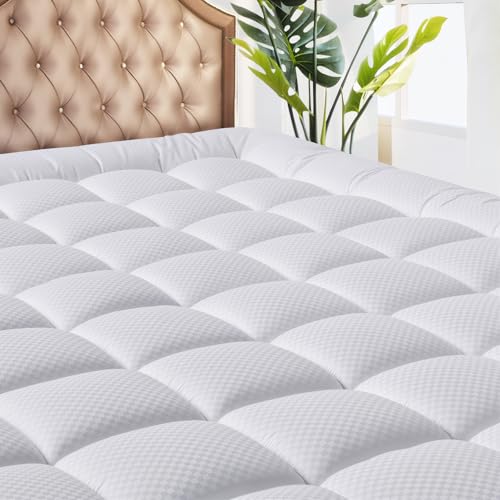
| Niagara Sleep Solution Pillow Top | Softness without foam’s sink or heat | Fluffy down-alternative fill |
How These Picks Were Chosen
Each pick had to satisfy three tests. It had to be verified in the catalog on the date stated, with its listing title recorded in this article’s sources. It had to own a distinct job in the guide — depth, thinness, maximum change, covered practicality, or foam-free softness — so that the five together cover the reasons people actually buy cheap toppers rather than duplicating one another. And it had to come from the accessible tier of its family, because a cheap-toppers guide that drifts into premium latex has stopped answering its own search. What the tests exclude matters too: no topper here is recommended as a cure for a sagging mattress, none is credited with treating pain, and none is described with a price, a rating, or a review count, because those numbers move and this page intends to stay true.
First, the Diagnostic: Will a Topper Even Help You?
Run this test before spending anything. Strip the bed and press both hands into its middle, then lie on it and notice where the wrongness lives. If the surface is even and supportive but simply hard — if your shoulder and hip are asking for cushion the support underneath could happily carry — a topper is the correct and economical answer, and this guide is your page. If the middle dips, if you roll toward a partner or a valley, if the bed’s support has become a hammock, a topper will follow the failure downward and the money is better saved toward a mattress; the most expensive cheap topper is the one bought to postpone a replacement by six miserable months. If the wrongness is heat alone, choose from this guide with the temperature section open, because some of these materials moderate warmth and one of them — the fiberfill — sidesteps foam’s insulation almost entirely. Diagnosis first is the whole ethic of the cheap purchase: the less money in play, the more the thinking has to do.
Best Cheap Mattress Toppers: the Lucid 3-Inch Gel Memory Foam, Queen
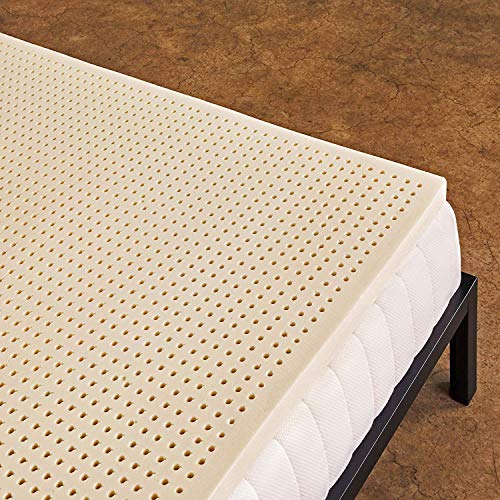
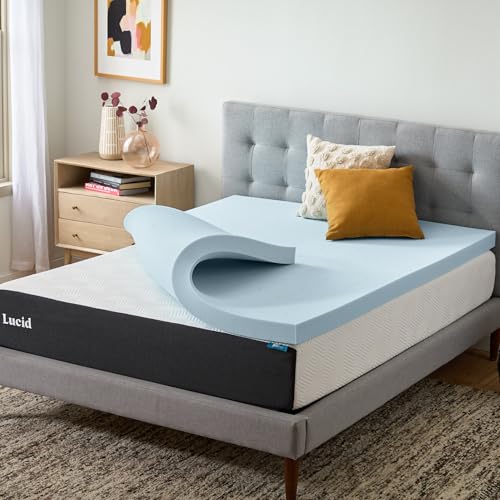
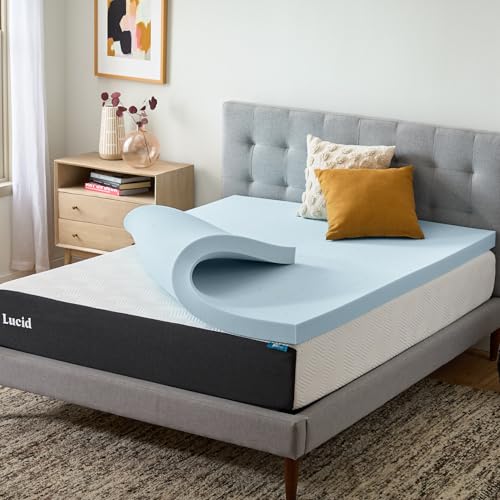
Badge: The default recommendation. Three inches is the depth at which a topper stops being a gesture and becomes a change of feel, and Lucid’s gel memory foam version is the category’s reference point: a plush, ventilated foam whose listing states its depth and feel plainly. On a firm mattress it gives a side sleeper’s shoulder somewhere real to go; on a merely tired mattress it restores the sense that the surface is participating. The gel story moderates the first part of the night, and the ventilation in the foam’s design is the maker’s answer to the same complaint.
Facts from the verified listing title:
- Depth: 3 inches
- Material: gel memory foam, ventilated
- Feel stated by maker: plush
- Size referenced: queen
Strengths
- Genuine depth of pressure relief at a budget tier.
- Plush character suits the classic too-firm-bed complaint.
- From a maker whose foam listings are consistently legible.
Trade-offs
- Memory foam sleeps warmer than the fiberfill pick below.
- Three inches of sink can oversoften a bed that was only slightly firm.
- No cover included in the basic configuration — budget for one or a protector.
Best for: side sleepers softening a firm, sound mattress. Not suited for: stomach sleepers or beds already soft.

Linenspa 2-Inch Gel Memory Foam, Queen — the Minimum Effective Dose
Badge: For dorms, rentals, and slight adjustments. Two inches will not transform a bed, and this pick’s honesty about that is its charm: it takes the edge off a hard dorm mattress, civilizes a rental’s tired surface, and adjusts a guest bed’s firmness by exactly the increment most guests need. The gel infusion and the maker’s CertiPUR-US note appear in the listing, and the tier is the friendliest in this guide — the topper to buy when the problem is small or the tenancy is short.
Facts from the verified listing title:
- Depth: 2 inches
- Material: gel memory foam
- Feel stated by maker: plush, cooling
- Certification noted in listing: CertiPUR-US
- Size referenced: queen
Strengths
- The gentlest, cheapest honest change in the guide.
- Thin enough to store, move, and hand on easily.
- Kind to sheets: most standard pockets still fit over it.
Trade-offs
- Limited pressure relief for demanding shoulders or heavy bodies.
- Will not rescue a bed whose problem is depth of discomfort.
- Foam warmth, moderated but present.
Best for: dorms, rentals, guest beds, and slight firmness corrections. Not suited for: significant pressure complaints.
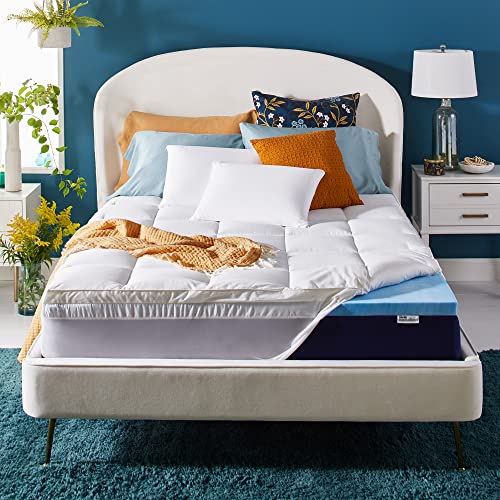
Sleep Innovations Dual Layer 4-Inch, Queen — Maximum Change
Badge: The transformation pick. Four inches split between a memory foam base and a quilted fiberfill top, per the listing’s description — two materials doing two jobs, the foam relieving pressure while the quilted layer keeps the surface feeling like bedding rather than like foam. This is the pick for the hardest sound mattress in the house, the one whose firmness is a genuine nightly grievance, and its total height should be planned for: sheets, and the climb into bed, both change.
Facts from the verified listing title:
- Depth: 4 inches total, dual layer
- Construction: memory foam base with quilted top layer
- Support described in listing: medium support
- Size referenced: queen
Strengths
- The deepest change of feel in this guide.
- Quilted top keeps the surface breathable and bed-like.
- Layered design serves side sleepers with real pressure complaints.
Trade-offs
- Four inches can oversoften all but genuinely firm bases.
- Deep-pocket sheets become necessary rather than optional.
- Heaviest, bulkiest pick to move or store.
Best for: very firm mattresses and committed side sleepers. Not suited for: stomach sleepers, soft beds, or minimalists.

Subrtex 3-Inch Memory Foam with Cover, Queen — the Practical Middle
Badge: The covered, washable, everyday choice. Subrtex’s three-inch memory foam topper arrives with a cover in the listing’s description, a small feature with outsized household value: the cover protects the foam, washes when life happens, and gives the topper a finished feel that bare foam lacks. The depth matches the Lucid’s working range while the character reads a touch more balanced, which suits back-and-side combination sleepers who found pure plush too much of a commitment.
Facts from the verified listing title:
- Depth: 3 inches
- Material: memory foam with cover
- Color referenced in listing: white
- Size referenced: queen
Strengths
- Included cover adds protection and washability at a budget tier.
- Balanced depth and feel for combination sleepers.
- Finished presentation suits beds that double as seating.
Trade-offs
- Memory foam warmth remains, cover notwithstanding.
- Less deep sink than the plushest pick for strict side sleepers.
- Cover quality at this tier is functional rather than luxurious.
Best for: everyday softening in lived-in rooms, especially with kids or pets. Not suited for: heat-first shoppers.

Niagara Sleep Solution Pillow Top, Queen — Softness Without Foam
Badge: The fiberfill alternative. Not every cheap topper is foam. Niagara’s pillow-top design — a thick, quilted layer of down-alternative fill over a rayon-from-bamboo cover story in the listing — softens by loft rather than by sink, which changes the feel in a different direction: the bed becomes plusher at first contact while its support character stays almost exactly itself. For sleepers who dislike foam’s embrace and its warmth, and for stomach sleepers who need kindness without depth, this is the guide’s essential fifth door.
Facts from the verified listing title:
- Construction: quilted pillow-top, down-alternative style fill
- Cover material in listing: rayon derived from bamboo
- Positioning in listing: ultra soft
- Size referenced: queen
Strengths
- Softens without changing the bed’s support or adding foam’s heat.
- Loft suits stomach and back sleepers who fear sink.
- Machine-washable category convenience in most households’ routines.
Trade-offs
- Fill compresses with use and needs fluffing to keep its loft.
- Pressure relief is gentler than foam’s — demanding shoulders may want more.
- Loft diminishes across years faster than foam’s character changes.
Best for: foam-averse softeners, warm sleepers, and stomach sleepers. Not suited for: deep pressure-relief cases.
How to Choose: Depth, Material, and the Body on the Bed
Depth is the first decision and it is a dosage decision. Two inches adjusts; three inches changes; four inches transforms — and each step up the ladder multiplies both the benefit and the risk of oversoftening. Match the dose to the diagnosis: a bed that is slightly too firm wants two inches, a bed that is honestly hard wants three, and only a bed whose firmness is a nightly grievance earns four, because a topper cannot be un-sunk and a stomach sleeper on four inches of plush is a cautionary tale this guide declines to sell. Body weight scales the dose’s effect — a heavy sleeper compresses a two-inch topper to a rumor and should start at three — while a light sleeper may find two inches of plush deeper in effect than a heavy sleeper finds three.
Material is the second decision. Memory foam relieves pressure by cradling, and pays for it in warmth and in a slower response when turning. Gel infusions moderate the warmth at the surface without changing the family’s character. Fiberfill softens by loft, keeps the bed’s own support personality, breathes better, and gives up some pressure relief and some years of loft in exchange. The sleeper’s history is the best guide: a body that has loved foam should buy foam, a body that has felt trapped by it should buy the pillow top, and a body with no history should buy the middle pick — the covered Subrtex — and learn its allegiance at the lowest tuition the category offers.
Setup: Getting a Cheap Topper to Behave Like a Good One
Unroll the topper on the bed and give it its expansion time — foam toppers, like foam mattresses, arrive compressed and reach their true depth across hours, faster in a warm room. Let it air with the windows open if the new-foam smell is present; it fades on its own schedule. Anchor it properly: a fitted sheet with adequate pocket depth, drawn over topper and mattress together, is the minimum, and a mattress protector over the whole stack both anchors and protects, which matters doubly at this tier because a stain can void what protections the purchase carries. If the topper migrates — the commonest household complaint in the category — a non-slip mat or rug-grip layer between topper and mattress solves it for pennies, and corner straps, where the design allows them, solve it permanently. Then sleep a week before judging, because the surface and the sleeper negotiate slowly, and keep the old bedding for the first nights so the topper is the only new variable. Readers layering for specific bodies can continue with toppers for heavier sleepers and toppers chosen for hip comfort, while anyone whose diagnosis failed the sag test should redirect to mattresses for apartment living and soft queen mattresses before spending topper money on a mattress problem.
Temperature: the Honest Paragraph
Foam toppers warm a bed. The gel stories in two of these picks moderate the surface’s first hours; the ventilation in the Lucid’s design helps at the same scale; neither repeals the physics of a body sinking into an insulating material. The fiberfill pick is the guide’s genuine temperature answer, because loft holds air rather than body heat and the support beneath stays the bed’s own. Beyond the product, the household levers dominate as always: breathable sheets — this wave’s sheet guides exist for exactly this — a lighter duvet than habit suggests, and a room cooled to the sleeper rather than to the thermostat’s default. A hot sleeper whose bed is also too firm should buy the pillow top or the thinnest gel foam, in that order, and should not let a four-inch foam transformation anywhere near an August.
Common Mistakes in the Cheap-Topper Aisle
Buying depth by optimism — four inches for a bed that needed two — is the aisle’s signature error, and it manufactures the hammock the buyer was fleeing. Buying foam for a sagging bed is the second, and the diagnostic section exists to prevent it. Buying without a protector is the third, because at this tier the topper often costs less than the bedding that should have protected it. Judging on night one is the fourth, in a category where foam’s first week is its firmest and least representative. And forgetting the sheets is the fifth: a three or four-inch topper silently demands deeper pockets, and the household that discovers this at bedtime will sleep the first night on a sheet that pops its corners like a fitted sail. None of these mistakes is expensive in the way a wrong mattress is expensive, which is the category’s mercy — but each is avoidable at the price of one careful reading, which is the category’s bargain.
The Topper as a Household Tool: Five Jobs Beyond the Primary Bed
The cheap topper’s versatility is its quiet glory, and a guide that confined it to the master bedroom would undersell the object. In the guest room, a two-inch topper is the difference between a bed guests describe as fine and one they describe as surprisingly good, at a cost that rounds to nothing against the room’s furniture. In the college dorm, where the mattress is an institutional fact that cannot be replaced, the topper is not an accessory but the entire sleep strategy, and the thin Linenspa-class pick exists precisely for a bed its owner does not own. In the rental, the same logic applies with a longer horizon: the topper civilizes a landlord’s mattress for the length of a lease and then rolls up and leaves with the tenant, the only piece of bedroom furniture that behaves that way. In the camper, the RV, and the boat, cut-to-size foam toppers perform their least glamorous and most appreciated work, turning a cushion into a bed. And in the sick room and the recovery month — the spare bed where a household member sleeps through an illness, an injury’s careful weeks, a new baby’s first season — a topper’s ability to change a surface overnight, without a delivery or a decision, is a form of domestic mercy that premium mattresses, for all their virtues, cannot improvise. A household buying one topper well is often buying for three of these jobs across the object’s life, which is the deepest sense in which the category earns the word cheap: not the price, but the cost per use, spread across rooms and years.
Foam Density and the Cheap Topper’s Honest Limits
One technical idea governs this entire shelf and deserves plain statement, because it explains both the prices and the lifespans. Foam’s durability and richness track its density — the weight of material in a given volume — and density is what budget foam economizes on. A cheap topper’s foam will feel pleasant on arrival and will soften on a schedule that density sets and body weight accelerates; the picks in this guide were chosen from makers whose budget foams hold their character at the respectable end of that schedule, but no pick repeals it. The practical consequences are three. Heavy sleepers should buy depth, because a deeper stack of modest foam outlasts a thin one under load. All sleepers should rotate the topper head-to-foot on the same schedule as the mattress, because the wear map of a body is not symmetrical and rotation spreads it. And every buyer should set the expectation correctly at purchase: a cheap topper is a consumable with a multi-year fuse, not a fixture, and judged as a consumable — against the nightly comfort it delivers per season of service — the good ones in this guide are bargains rather than compromises.
Three Buyers, Three Correct Toppers
A side-sleeping nurse in a rented house, sleeping days on a landlord’s firm mattress, needed pressure relief she could take with her at the lease’s end. Her diagnosis was the guide’s classic — sound bed, hard surface, demanding shoulder — and her pick was the Lucid 3-inch, rolled into the lease’s life and out of it again, with a set of blackout curtains doing the day-sleep work no topper can. Her case is the category at its best: a targeted, portable, fully reversible intervention.
A couple furnishing a first guest room on a whole-house budget needed the bed to stop apologizing. The mattress was a hand-me-down of unknown age but sound support; the complaint was pure surface. They bought the Niagara pillow top for its loft and its indifference to foam’s controversies, spent the difference on pillows, and collected the review every host wants — slept great — from a brother-in-law not known for diplomacy. Their case is the allocation argument: in a guest room, surface is the product, and loft is the cheapest surface there is.
A heavy back sleeper in a dorm-adjacent studio, on a thin institutional mattress over a platform, needed depth more than softness. He bought the Sleep Innovations dual layer for its four inches of total material, accepted the deep-pocket sheets it demanded, and treated the purchase as what it was — the construction of a bed where none had been provided. His case marks the guide’s boundary: at four inches over a cushion, a topper stops adjusting a mattress and starts replacing one, which is sometimes exactly the job.
Care and Feeding: Making a Cheap Topper Last Like an Expensive One
The difference between a cheap topper that serves four years and one that disappoints in eighteen months is mostly a routine, and the routine is short enough to print in full. Protect it from the first night: a mattress protector over the whole stack keeps moisture — foam’s long enemy — out of the material, and at this tier the protector is also the topper’s insurance policy, since stains end return and warranty conversations before they begin. Rotate it head-to-foot every few months, on the same day you rotate the mattress, so the body’s wear map is spread across the whole surface rather than engraved into one postal district. Air it when the bedding is stripped for washing, an hour of daylight-side ventilation that costs nothing and repays in freshness. Keep it out of prolonged compression in storage — rolled loosely, never folded sharply, never used as the bottom of a heavy stack in a closet — because budget foam takes a set more willingly than premium foam does. Wash what is washable: the Subrtex’s cover, the pillow top’s quilted body where its care label allows, the protector on schedule. None of this is onerous, and all of it together is the entire secret by which some households’ cheap toppers acquire expensive reputations.
The Topper and the Seasons
A topper is the one sleep product a household can legitimately own seasonally, and the idea deserves more respect than it gets. Foam that feels like mercy in January can feel like a duvet’s accomplice in July, and a household in a strongly seasonal climate is entitled to treat its topper the way it treats its bedding: the three-inch foam in the cold months, the fiberfill or nothing at all in the hot ones, each stored loosely in the other’s season. The strategy costs one extra purchase across years and buys a bed that is never wrong for the weather — a flexibility no mattress at any price can imitate, since mattresses cannot be swapped with the equinox. It also reframes the cheap tier’s economics: two modest toppers in rotation, each resting half the year, will outlast and out-serve one premium topper used through every season, which is the kind of arithmetic the word cheap was invented to reward.
Reading Topper Listings Without Being Played
Topper listings are the category’s most inflated documents, and three habits of reading will protect a shopper better than any single review. First, translate every comfort claim into a construction: “cloud-like” means fiberfill loft, “orthopedic” means the seller hopes you will not ask, “cooling” means an infusion or a cover story over an insulating material, and the only numbers that cannot be inflated are the depth, the material family, and the size — which is why this guide’s spec boxes quote exactly those. Second, interrogate the photographs: a topper photographed at a dramatic angle on a stripped bed is selling loft it may not keep, while a listing that shows the product compressed, rolled, and mid-expansion is at least confessing the object’s real nature. Third, mine the owner reviews for the two data points that predict your experience — the firmness of the mattress the reviewer put it on, and the reviewer’s own build — and discard every verdict, rapturous or furious, that omits both, because a topper’s performance is a relationship between three things (topper, mattress, body) and a review that names only one of them is weather, not climate. A shopper who reads this way will find the five picks here unusually legible, which is not an accident: they were chosen, in part, because their listings survive the treatment.
The Guest-Room Calculus, Priced in Sleepovers
Because so many cheap toppers are bought for guests, the guest room deserves its own arithmetic. A guest bed’s quality is experienced in single nights by rested travelers and in week-long stretches by the relatives who matter most, and its failures are reported, if at all, through the diplomacy filter of gratitude. The host’s correct target is therefore not luxury but the absence of a story: no guest should leave with a back anecdote. Against that target, the topper’s competition is not other toppers but the room’s other claims on the same money — and the topper usually wins, because a sound mattress with a fresh two-inch surface and good pillows outperforms, in guest testimony, a new budget mattress with tired pillows every time. Buy the topper, buy the pillows, wash everything the day before the visit, and let the mattress underneath — if it passed the diagnostic — serve another decade of occasional nights. Hospitality is a surface science, and the cheap topper is its fundamental particle.
When Cheap Is the Wrong Word: the Cases for Climbing
A cheap-toppers guide earns its authority by naming the shoppers it should lose. The heavy sleeper whose nightly load will take a budget foam’s character within two years should hear, from this page, that the premium latex and high-density foam toppers elsewhere in this site’s coverage are not indulgences but arithmetic — their cost per year of service under load beats the cheap pick’s, and the honest cheap move at high weight is depth in a durable material, bought once. The sleeper whose complaint is heat in an uncooled room should likewise climb past every foam pick here toward latex or toward the fiberfill’s modest mercy, because no infusion in this tier will negotiate with August. And the household furnishing a primary bed for a decade should weigh whether the topper is a solution or a deferral: on a sound mattress it is a solution at any tier, but on a mattress entering its last years, the premium topper will outlive its host and the cheap one will expire with it, which argues for matching the topper’s ambition to the mattress’s remaining life rather than to the household’s hopes. Cheap is a strategy, not a identity, and the strategy’s first rule is knowing which purchases it governs.
The Couple’s Topper: a Negotiation in Two Inches
Couples buy toppers for a reason mattresses cannot serve: the bed is shared, the complaint is not. One partner’s shoulder needs softening the other’s back would resent, and the topper — unlike the mattress — can be deployed asymmetrically in spirit if not in manufacture. The honest options deserve a listing. A full-width topper at the thinner end adjusts the whole bed by the increment the firmer partner can tolerate, which is why two inches is the couples’ diplomacy depth. A twin-size topper on one half of a king, under a shared fitted sheet, creates two genuinely different surfaces in one bed — a maneuver that looks like a hack and sleeps like a custom order, provided the sheet’s tension is managed and the seam’s geography is accepted. And the seasonal rotation described above can be run per partner rather than per household, with the foam living on one side in winter. None of these arrangements is elegant in a catalog photograph, and all of them are how real households actually solve the two-body problem at topper prices. The couple that treats the topper as a negotiable layer rather than a compromise object will get more sleep out of this guide than any single sleeper in it.
A Brief Defense of the Humble Topper
The mattress industry regards the topper as an accessory, and its reviewers mostly follow, but the object’s actual position in domestic life is more honorable than its billing. The topper is the only sleep product that respects the household’s existing capital — the sound mattress, the good frame, the fitted sheets — and improves the one variable that is actually wrong, at a price that leaves the rest of the room’s budget alive. It is reversible in a way no mattress purchase is: it can be tried, moved to another room, lent to a dorm, stored for a season, and retired without a disposal problem, which makes it the category’s lowest-regret experiment and often its smartest first move. It is also, not incidentally, the product that teaches a household its own preferences at the lowest tuition available — a family that has learned, from a three-inch foam topper, that it loves cradle or hates sink owns knowledge that will govern every later mattress decision it makes. Guides like this one exist because that humble object, bought with a correct diagnosis and a week’s patience, delivers more sleep per dollar than anything else in the bedroom. The premium mattress has its place, and this wave has reviewed it at length; the topper’s place is everywhere else, which is most of life.
The Evidence Basis of This Guide, for the Record
This page claims no laboratory and no hands-on testing program, and its authority rests on a stated method rather than on implied experience. Every product was confirmed in the Amazon catalog through the retailer’s own product interface on 23 November 2026, and the spec boxes quote only facts the verified listing titles carry. The characterizations of feel and lifespan rest on the construction of each pick and on the settled behavior of its material family — how memory foam cradles and warms, how fiberfill lofts and fades, how density schedules a foam’s softening — which is the strongest evidence available without sleeping on the products, and is labeled as reasoning rather than as measurement wherever the distinction matters. No price, rating, or review count appears, because those figures move and an article that prints them becomes misinformation on a schedule. The reader who wants the remaining certainty — how a given topper behaves under their shoulder, on their mattress, in their room — has exactly one instrument for it, the return-protected trial of an actual purchase, and the guide’s setup section exists to help them run that instrument cleanly.
One More Job: the Topper as a Diagnostic Instrument
There is a use for a cheap topper that no product page will ever advertise, and it may be the most valuable one in this guide: as a diagnostic probe for a future mattress purchase. A household that knows its mattress is ending but does not know its own preferences — cradle or level, deep or shallow, warm-tolerant or heat-fleeing — faces an expensive guess at the premium tier. A three-inch foam topper on the current bed, slept on for a season, answers the material question at a tenth of the stakes: the shoulder that finally sleeps through the night has voted for pressure relief in the next mattress’s brief; the back that finds the topped bed a swamp has voted for support and air. The topper then retires to the guest room with its dignity intact, and the mattress purchase that follows is the rare one made from evidence rather than from reviews. Households in the diagnosis stage should therefore buy the guide’s middle pick without overthinking its longevity — its job is information, and information, in this category, is the scarcest material of all.
Housekeeping and the Honest Shelf Life of This Guide
Budget product lines churn faster than any other shelf in this wave — a topper is renamed, a depth is discontinued, a listing’s cover changes — and this guide’s product descriptions rest on the listings verified on the date recorded in its sources, with the live listing as the authority on any day a reader orders. The reasoning, by contrast, is built to survive the churn, because it rests on the stable facts of the category: depth is dosage, density is destiny, a topper follows its mattress, foam warms and fiberfill breathes, and a correct diagnosis is worth more than a premium material bought blind. A reader who finds a pick here superseded has lost a link and kept a method, and the method will nominate the successor pick from whatever shelf the season is selling. That is the correct ratio for a guide to a fast shelf, and it is offered without apology.
The Midnight Summary
For the reader comparing with tired eyes, the guide compresses to this. If the bed is sound and too firm and a shoulder is complaining, buy three inches of gel memory foam — the Lucid — and be done. If the problem is small, the room is temporary, or the sleeper is a student, buy two inches — the Linenspa — and be done sooner. If the bed is a plank and the sleeper is committed to its side, buy the four-inch dual layer and the deep sheets it needs. If life is messy and laundry is real, buy the covered Subrtex. If foam itself is the objection, buy the fluffy Niagara and keep the bed’s own character. And if the bed sags, buy nothing here at all — the guide’s most valuable sentence is the one that sends you, money intact, toward a mattress. Everything above is the evidence; this paragraph is the shopping list; and the difference between a cheap topper and a costly mistake was never the product, only the diagnosis.
And a Word About the Word “Cheap” Itself
The guide has used its title’s adjective all the way through without examining it, and the examination is a fitting place to end the analysis. Cheap, in a topper, can mean three things that shoppers constantly confuse: a low price, a short life, and a low regard from the industry that sells it. The picks here are cheap only in the first sense by design — accessible tiers from legible makers — and the guide has been frank that the second sense is partly inseparable from the first where foam density is concerned, which is why its care section works so hard to stretch the span. The third sense it rejects outright. A household that softens a sound bed for a season of good sleep, at a price that leaves the rest of its life funded, has not bought a lesser thing; it has bought the right-sized thing, which is the definition of value in every category this site covers. The premium mattress, the luxury topper, and the white-glove delivery all have their readers, and this wave has served them at length. This guide’s reader is the one the rest of the industry condescends to, and the record should show that their purchase, correctly diagnosed, is the most rational one on the entire shelf.
The Last Practical Checklist
Before any order in this guide, five checks, in the order they save money. Confirm the diagnosis with the press test, and write down which of the three wrongnesses — hardness, sag, heat — you are actually treating. Measure the mattress and choose the topper’s size to match it exactly, because an overhanging or undersized topper migrates and bunches in ways no strap fully forgives. Measure the total stack the topper will create and confirm the sheets’ pocket depth against it, ordering deeper sheets in the same basket if the number demands it. Plan the protector — over the whole stack, from the first night — as part of the purchase rather than as an afterthought. And set the judgment date now, a week out for the first impression and a month out for the verdict, so the topper is evaluated like the experiment it is rather than absorbed like a rumor. A household that runs those five checks will extract from a cheap topper everything its engineers put into it, which — as this guide has argued at perhaps excessive length — is considerably more than its price suggests.
Envoi: the Small Purchase, Taken Seriously
It is fitting to end a long guide to a small purchase by noting what the purchase represents. A topper is bought in the middle of a life — a lease, a semester, a recovery, a guest’s impending arrival — and it is judged not against an ideal but against a specific night’s discomfort that it either relieves or does not. The households that buy it well share a temperament this guide has tried to teach: they diagnose before they spend, they dose before they deepen, they protect what they buy, and they judge across weeks rather than across first impressions. That temperament, applied to a thirty-dollar decision or a three-thousand-dollar one, is the whole of consumer wisdom in the bedroom, and it is why a guide to cheap toppers can run long without embarrassment. The object is small. The sleep is not.
A genuinely final note belongs to the reader who has scrolled the whole guide and still cannot choose, because indecision at this tier has a specific and curable cause: the differences among the five picks are smaller than the difference between a correct and an incorrect diagnosis, and a reader who has run the press test honestly already holds the deciding fact. If the bed is hard and sound, the Lucid is waiting; if it is hard and the sleeper is heavy, the dual layer is waiting; if it is merely unwelcoming, the Niagara is waiting; and every one of those purchases is reversible, portable, and cheap enough to be a lesson rather than a loss. Choose the one your diagnosis names, tonight, and let the week’s sleep — not another evening of comparison — cast the deciding vote.
A Footnote on Smell, Because Someone Always Asks
New foam has a smell, and cheap foam has a candid one, and the guide would be incomplete without the calm facts. The odor is the foam’s manufacturing signature leaving the material, it is strongest in the first day, and it fades across a ventilated week in the overwhelming majority of cases; certifications such as the CertiPUR-US mark noted in several listings here speak to the foam’s emissions profile and are the buyer’s checkable reassurance. Air the topper before dressing the bed if the household includes a sensitive nose, keep the room’s windows open for the first day, and do not seal a new topper under a protector and bedding in a closed room and then indict it for the atmosphere that results. Fiberfill, for the record, arrives essentially neutral, which is one more small entry in its column for the smell-sensitive. None of this should decide a purchase; all of it should be known before the box is opened, because a surprise is a defect in an article’s preparation even when it is not a defect in the product.
Final Recommendation
For the classic case — a sound, too-firm bed and a side sleeper’s shoulder — buy the Lucid 3-inch and stop researching. For a slight case, a short tenancy, or a dorm, buy the Linenspa 2-inch. For the hardest bed in the house, buy the Sleep Innovations dual layer and the deep-pocket sheets it demands. For everyday life with kids, pets, and laundry, buy the covered Subrtex. For softness without foam, buy the Niagara pillow top. And for a sagging bed, buy none of them: save the money toward the mattress, because the cheapest topper in this guide is the one whose diagnosis was right, and the most expensive is the one whose was not.
Frequently Asked Questions
Will a cheap topper fix my sagging mattress?
No. A topper follows the surface beneath it, so it softens a sound bed and merely upholsters a sagging one. If your mattress dips in the middle, the money belongs toward a replacement mattress; a topper bought against a sag is the category’s most common wasted purchase.
Is 2 inches or 3 inches of topper better?
It depends on the dose the bed needs. Two inches adjusts a slightly firm surface and suits dorms, rentals, and light sleepers. Three inches genuinely changes a firm bed’s feel and is the default for side sleepers with pressure complaints. Four inches is for genuinely hard beds only.
Do gel memory foam toppers sleep cool?
Cooler than plain memory foam at the surface, for the first part of the night — but foam remains an insulating material, and no infusion makes it breathe like fiberfill, latex, or a coil bed. Hot sleepers should start with the pillow-top pick or the thinnest gel option.
How long does a cheap topper last?
Foam toppers at this tier typically serve a few years of nightly use before softening noticeably, with heavier bodies shortening the span; fiberfill loses loft gradually and benefits from fluffing and rotation. A protector and regular rotation extend every pick’s useful life.
Can a topper help with hip or shoulder discomfort?
A topper can relieve surface pressure, which is a comfort question — deeper foam for shoulders and hips on a sound, firm base is the classic prescription in this guide. It does not treat any medical condition, and persistent pain deserves professional assessment rather than a thicker topper.
Will my sheets fit over a topper?
Over a 2-inch topper, most standard pockets manage. Over 3 or 4 inches, deep-pocket sheets become necessary in most cases. Measure the total stack — mattress plus topper — and buy sheets for that number, not for the mattress alone.