Disclosure: As an Amazon Associate, dailyhomedecorating.com earns from qualifying purchases. Links to Amazon on this page are affiliate links; they cost you nothing extra. Prices and availability change often, so check the current Amazon listing before you buy.
The best cleaner for bath tubs depends on a question most product labels hope you will not ask: what is your tub actually made of? A cleaner that is perfect for enamel-over-steel can dull acrylic; a gentle acrylic spray will barely touch the ground-in grime of an old porcelain surface; and the “all-purpose bathroom cleaner” on the supermarket shelf is formulated for the hardest surface in the room, which is rarely the tub. This guide works through cleaner selection by material — steel enamel, acrylic, and fiberglass-reinforced surfaces — and reviews six tubs from the verified pool as worked examples, because the right cleaner is always a property of a specific surface, not a universal bottle.
One transparency note applies here as it does across this series: the verified pool for this topic contains bathtubs, not bottled cleaners, so the cleaner guidance is prose-only — real product types, chemistries, and techniques, with no invented brands or specifications — while the linked picks are the tubs themselves, each reviewed with its correct cleaning regime spelled out. Plastic and acrylic surfaces get their own dedicated treatment in Best Bathtub Cleaner For Plastic Tubs; this guide is the general map, and stain-specific problems have their own in Best Rust Stain Remover For Tubs.
Where to Buy
The six tubs reviewed below are sold on Amazon, where you can check the current price, delivery options, and listing details before you buy. Tub cleaners of every type discussed are also widely sold on Amazon; match the type to your surface using the guidance here, since we link only the verified tub picks.
- KINGSTON BRASS 60-Inch Alcove Acrylic Bathtub — Check on Amazon
- BOOTZ INDUSTRIES Steel Bathtub with Right-Hand Drain — Check on Amazon
- Kohler Underscore 60″ Soaking Bathtub — Check on Amazon
- WOODBRIDGE Acrylic Freestanding Soaking Tub — Check on Amazon
- Empava 59 Inch Freestanding Bathtub — Check on Amazon
- Vanity Art 67 Inch Freestanding Bathtub — Check on Amazon
In this guide
Quick Picks
| Pick | Badge | Why it earns its place |
|---|---|---|
| KINGSTON BRASS 60-Inch Alcove Acrylic Bathtub | Best Overall | The standard family tub, with an acrylic surface that suits the commonest cleaning routine. |
| BOOTZ INDUSTRIES Steel Bathtub | Best for Steel and Enamel Care | Enamel-over-steel tolerates stronger cleaners — and shows why material decides everything. |
| Kohler Underscore 60″ Soaking Bathtub | Best for Large Tubs | 68 gallons of surface area with cleaning access designed into an alcove format. |
| WOODBRIDGE Acrylic Freestanding Soaking Tub | Best Stain Resistance | Lucite surface engineered to resist the staining that drives harsh cleaning. |
| Empava 59 Inch Freestanding Bathtub | Best Non-Porous Surface | Soil sits on the surface instead of in it — the easiest weekly clean here. |
| Vanity Art 67 Inch Freestanding Bathtub | Best for Big Bathrooms | Generous acrylic that rewards a systematic, section-by-section cleaning method. |
Key Takeaways
- Identify your tub material first: enamel steel, acrylic, and fiberglass each have a different safe-cleaner list.
- Soap scum, mineral scale, and biological film are three different soils needing three different chemistries.
- Dwell time is the safe substitute for scrubbing force on every surface.
- Rinsing and drying are part of cleaning — residue and standing water manufacture the next round of grime.
- The gentlest effective product, used on schedule, beats the strongest product used in desperation.
- When buying a new tub, its surface specification is a cleaning decision you will live with for a decade.
How These Picks Were Chosen
Because the pool holds tubs rather than cleaners, we selected the six picks to span the material range a general cleaner guide must cover: enamel-over-steel for the traditional bathroom, standard alcove acrylic for the commonest modern case, a large-capacity alcove acrylic, and three freestanding acrylics whose surfaces — stain-resistant Lucite, non-porous gloss, and large-format standard acrylic — represent the main acrylic care profiles. Each review states the correct cleaner types and tools for that tub’s surface, the soils it will actually face, and the products to keep away from it. The cleaner guidance itself is drawn from manufacturer care consensus across the industry: mild liquids for routine soil, mild acids for mineral scale on surfaces that tolerate them, targeted treatments for biological film, and abrasives confined to the hardest surfaces and used sparingly even there.
Excluded from this guide: the plastic-specific deep dive, which lives in its own article to avoid duplicating it; the walk-in jetted tub, whose plumbing lines require a distinct cleaning regime; and a faucet trim kit present in the pool data, which is not a tub and is flagged in the sources file. Specifications in the mini boxes are the verified pool figures only. Where a capacity or depth appears in prose, it comes from the same verified data.
A note on honesty in cleaner advice generally: no cleaner restores a destroyed surface, and any guide promising that is selling something. What the right cleaner does is remove soil without becoming the next problem — and keep a sound surface sound for its full service life. That is the standard applied throughout.
The 6 Best Cleaner for Bath Tubs — Reviewed

KINGSTON BRASS 60-Inch Alcove Acrylic Bathtub
Our badge: Best Overall
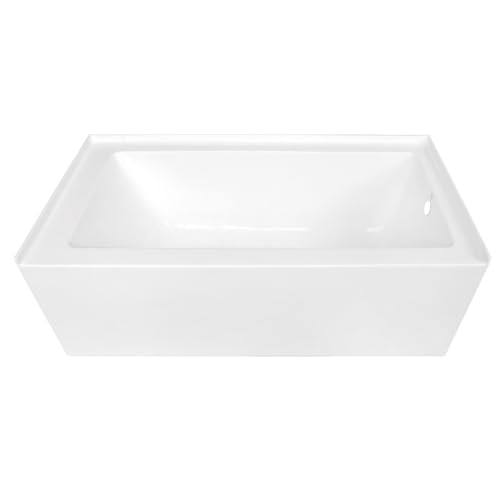
The KINGSTON BRASS 60-Inch Alcove Acrylic Bathtub is the reference case for this guide: the standard three-wall alcove tub, in acrylic with fiberglass and resin reinforcement, that anchors millions of family bathrooms. Its cleaning regime is the modal one — a mild liquid cleaner, a soft cloth, a weekly rhythm — and its 58.2-gallon capacity and apron-front alcove shape define the typical cleaning map: walls take the splash, the ledge takes the bottles, the waterline takes the film.
Strengths
- Standard acrylic surface suits the widest range of readily available mild cleaners.
- Alcove format contains splash and cleaning runoff against three walls.
- Tile flange keeps cleaning water out of the wall cavity.
Trade-offs
- Drain kit not included — irrelevant to cleaning, relevant to installation budgets.
- Standard gloss acrylic will dull if a household member uses scouring powder.
- Alcove corners concentrate seal-line maintenance at the wall joins.
| Color | Glossy White |
| Size | 60 inch (L) x 30-11/16 inch (W) x 22-1/16 inch (H) |
| Dimensions | 60 x 30.69 x 22.06 inches |
| Weight | 95 pounds |
The family-bathroom soil profile is the full trio at once: soap scum from daily showers-over-the-tub, toothpaste and product residue at the ledge, and mineral film wherever the water is hard. The correct response is a rota, not a battle: a mild all-surface bathroom liquid for the weekly clean, a monthly pass with an acrylic-safe mild-acid product at the waterline if roughness appears, and a soft-cloth rule enforced for every cleaner in the house — in a family bathroom, the biggest cleaning risk is not the product you choose but the pad a teenager grabs. Label the tub’s sponge and store it at the tub; households that make the right tool the nearest tool rarely have scratch stories.
The alcove shape earns a specific technique: clean the wall tiles and the tub as one system, top-down, so tile cleaner rinses into the tub and the tub is cleaned last, once, rather than splashed repeatedly. The apron front wipes in seconds and is where drips from wet bathers land, so it rewards the same weekly pass. The seal lines at the three wall joins are this format’s one recurring duty — keep them dry where possible, treat early darkening promptly, and renew sealant on the schedule discussed in Best Sealant For Tubs rather than after it fails.
As the guide’s overall pick, the Kingston represents the default advice: if your bathroom is a standard alcove and your tub is acrylic, a mild liquid cleaner, soft tools, and a weekly habit are the entire answer — everything else in this article is a variation for other materials and shapes.
Best for: Standard family bathrooms wanting one simple, safe cleaning routine / Not suited for: Households that will not retire scouring powders from the bathroom
Choose it as your reference if your tub is a conventional alcove acrylic. Skip the generalities if your tub is steel — the next pick’s regime is yours.

BOOTZ INDUSTRIES Steel Bathtub with Right-Hand Drain
Our badge: Best for Steel and Enamel Care
The BOOTZ INDUSTRIES Steel Bathtub with Right-Hand Drain represents the material that built the last century’s bathrooms: steel with a porcelain enamel surface. Enamel is glass fused to metal — hard, glossy, and chemically tougher than acrylic — so its cleaner list is broader, including products that would be forbidden on plastic. But enamel has its own mortal enemy: the chip. Everything in steel-tub care is organized around enjoying the surface’s toughness while never giving corrosion a doorway.
Strengths
- Enamel surface tolerates stronger bathroom cleaners than acrylic allows.
- Rigid steel shell does not flex, so enamel is not stressed by movement.
- Standard alcove format with decades of proven household service behind the type.
Trade-offs
- A chip through the enamel exposes steel that will rust if not touched up promptly.
- Strong acids left sitting can etch enamel gloss — broader list, not an unlimited one.
- Steel sheds heat quickly, and a cold surface condenses more moisture between uses.
| Color | White |
| Dimensions | 61 x 31 x 18 inches |
| Weight | 50 pounds |
The steel regime inverts some acrylic rules. Abrasive cleansers — forbidden on plastic — are permitted on enamel in their milder forms for stubborn soil, though even here the modern advice is restraint: enamel gloss is a finite resource, and liquid cleaners with dwell time handle most soil without spending it. Acidic scale removers work well on enamel’s mineral film but must be rinsed on schedule rather than left to soak indefinitely. The surface’s real vulnerability is mechanical: a dropped shampoo bottle with a metal cap, a tool during a faucet repair — any hard strike can chip the glass layer, and the chip, not the cleaning, is where steel tubs begin to die.
Chip discipline is therefore the core skill. Inspect the floor and rim seasonally; a chip found early is a ten-minute touch-up with an enamel repair product, while a chip found late is a rust bloom that needs the full removal routine in Best Rust Remover For Tubs before repair. Keep a touch-up kit in the house from the day the tub is installed — it is the steel owner’s equivalent of the acrylic owner’s soft sponge. Between inspections, the weekly clean is the same mild-liquid rhythm as any tub, because enamel’s toughness is a reserve for bad days, not a daily requirement.
Households with an older steel tub should also know its diagnostic: a surface that cleans easily but shows fine rust freckling at the drain or overflow is telling you the enamel is thinning or the fittings are weeping — a maintenance conversation, not a cleaner conversation. No product fixes hardware. Within its terms, though, a sound steel tub is the most forgiving cleaning surface in this guide.
Best for: Owners of steel or enamel tubs who want the broadest safe-cleaner list and a repairable surface / Not suited for: Households that drop heavy objects in tubs and skip inspections
Choose steel’s regime if your tub rings when tapped and feels cold and hard. Skip it if the enamel is already broadly chipped — that is refinishing territory.

Kohler Underscore 60″ Soaking Bathtub
Our badge: Best for Large Tubs
The Kohler Underscore 60″ Soaking Bathtub brings the capacity problem to a cleaning guide: at 68 gallons in a 60 x 32-inch alcove footprint, it has more interior surface, a deeper waterline zone (helped by its slotted overflow), and more water per soak depositing more film per bath than standard tubs. Large tubs do not need different chemistry; they need a method — section-by-section work, a rinse-as-you-go discipline, and a squeegee habit — because their scale turns a casual wipe into an incomplete one.
Strengths
- Integral apron and flange give a clean, sealed alcove perimeter with few grime traps.
- Molded lumbar support has no seams or joints to harbor film.
- Deep capacity rewards the rinse-while-draining habit with visibly slower film buildup.
Trade-offs
- More surface per clean than any standard tub in this guide.
- Deep waterline zone is a larger mineral-film target in hard-water homes.
- At 128 pounds, a replacement is a bigger project — another reason to protect the surface.
| Color | White |
| Dimensions | 60 x 32 x 19 inches |
| Weight | 128 pounds |
The method for a tub this size: divide it mentally into the two ends and the floor. Spray or apply the mild cleaner to one end and the back wall, let it dwell while you do the ledges and fixtures, wipe and rinse that section, then move on. Working in sections keeps cleaner from drying on the first area while you finish the last — dried cleaner is residue, and residue is tomorrow’s film. The slotted overflow that enables the deep soak also raises the waterline, so the mineral band forms higher and wider; in hard-water homes, the monthly mild-acid pass matters more here than on any other pick, and drying the band after long soaks is worth the ten seconds it costs.
The molded lumbar support is a cleaning asset disguised as comfort: because it is formed in the same continuous surface, there are no applied cushions, seams, or jets to trap soil. Compare a jetted tub’s cleaning map — a dozen jet faces, each a film colony — and the Underscore’s smooth interior is a deliberate simplicity. For a household that soaks deeply and often, that smoothness is the difference between a five-minute weekly clean and a detailing session.
One more scale consideration: 68 gallons of bathwater carries more soap, oil, and product into the drain and onto the surfaces per use, so the rinse-while-draining habit is not optional garnish here — it is the routine that keeps a big tub’s film proportional to a small one’s. Build it into the soak’s end and the Underscore stays the easiest large tub in the guide to live with.
Best for: Deep-soak households that will adopt a section method and rinse-while-draining habit / Not suited for: Owners wanting the absolute minimum cleaning area
Choose it if capacity is your joy and method is acceptable. Skip it if cleaning time is already resented — a standard tub asks less.
WOODBRIDGE Acrylic Freestanding Soaking Tub
Our badge: Best Stain Resistance
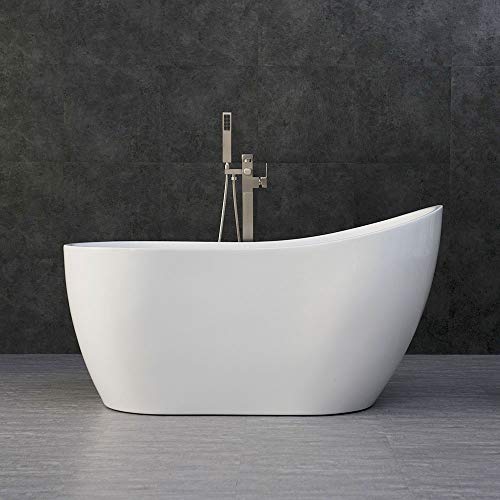
The WOODBRIDGE Acrylic Freestanding Soaking Tub appears in this general guide for the same reason it led the plastic-specific one: stain resistance is a general virtue. Its Lucite acrylic surface, reinforced with resin and fiberglass, is specified as stain-resistant and scratch-resistant with an easy-clean, easy-maintenance character — which translates, in a general cleaner guide, to the widest margin for error of any acrylic here when a household’s routine is imperfect.
Strengths
- Stain-resistant surface shrinks the list of soils that need targeted treatment.
- Non-slip floor meets ASTM standards and cleans with the same mild routine.
- High-gloss finish shows soil early, when it is easiest to remove.
Trade-offs
- Freestanding format adds an exterior and a rear floor gap to the cleaning map.
- Still acrylic: the non-abrasive rule applies in full.
- 29-inch height makes the interior far wall a reach during cleaning.
| Color | Brushed Nickel |
| Size | 54 inches long |
| Dimensions | 54 x 29 x 29 inches |
| Weight | 75 pounds |
Stain resistance changes the psychology of cleaning, and psychology is half the battle in real bathrooms. On a surface that stains readily, every colored product — a bath bomb, a tinted bubble bath, a child’s bath crayon — is a small gamble, and the cleaning response tends toward pre-emptive harshness. On a resistant surface, the same events are wipe-and-forget, and the household’s default cleaner stays mild because mild keeps working. That is how surfaces and habits reinforce each other, and why this guide treats surface specification as a cleaner decision.
The freestanding format adds two zones the alcove picks do not have: the exterior shell and the floor gap behind the tub. The exterior wants a dust-and-splash wipe on the same weekly pass — the same mild spray, its own cloth. The rear gap, especially against a wall, collects the bathroom’s dust and hair; a slim crevice tool monthly keeps it from becoming the room’s neglected corner. Neither duty is onerous, but both are real, and buyers comparing formats should count them, as the placement discussion in Best Place For Hot Tubs also notes for soaking spaces generally.
Within the tub, the routine is the acrylic standard — mild liquid, soft cloth, dwell, rinse, dry the waterline — with the non-slip floor getting a soft-brush pass. Do that and this surface should hold its gloss for the long term its construction promises.
Best for: Product-and-color-loving bathers who want maximum stain forgiveness / Not suited for: Owners who will not add the exterior and rear-gap wipe to their routine
Choose it if your baths come with color and your cleaning is gentle. Skip it if a freestanding format’s extra zones annoy you.

Empava 59 Inch Freestanding Bathtub
Our badge: Best Non-Porous Surface
The Empava 59 Inch Freestanding Bathtub is the general guide’s easiest weekly clean, because non-porous is the property that decides how much of cleaning is chemistry and how much is merely wiping. On its high-gloss, non-porous surface, soap film and body oils have no purchase; a soft cloth and a mild cleaner remove what a porous or dulled surface would hold through three scrubbings. Its double-wall build and complete drainage finish the profile: what drains fully cannot dry into deposits.
Strengths
- Non-porous surface releases soil with minimal chemistry and no force.
- Leveling feet allow complete drainage — no residue puddles between baths.
- cUPC certified with included drain and overflow: fewer fittings to source and seal.
Trade-offs
- Textured anti-slip floor needs a cloth pass rather than a rinse alone.
- Gloss shows hard-water spotting between cleans.
- External faucet’s finish needs the same gentle products as the tub.
| Color | White |
| Size | 59 Inch |
| Dimensions | 59.1 x 29.5 x 26.8 inches |
| Weight | 66.1 pounds |
The Empava is the pick to cite when someone insists their tub “just gets dirty fast.” In most such cases the surface is the story: microscopic texture from age or abrasion gives film a mechanical grip that no cleaner fully overcomes. A new non-porous surface resets that equation, and the owner’s job shrinks to not damaging it — soft tools, mild products, no heroic measures. The anti-slip floor is the one textured zone, molded rather than applied, and it cleans with a soft brush in the same pass.
Drainage completeness deserves repeating as a general principle, because it is the most under-bought cleaning feature in the category: a tub that empties to the last film of water denies mineral scale its evaporation site and denies mildew its standing moisture. When installing any tub, freestanding or alcove, verify the drain-down with a jug of water before the installer leaves. It is a thirty-second test with a decade of returns.
For multi-generational households — the tub cleaned by whoever is available, with whatever is under the sink — the Empava’s tolerance is also practical: a non-porous gloss surface forgives a too-strong product once in a way a tired gelcoat never will, though the household rule should still be the mild shelf described here and in the seniors-focused guidance in Best Tubs For Seniors.
Best for: Anyone whose current tub “gets dirty fast” and who wants the surface itself to solve it / Not suited for: Owners in very hard water who will not dry the waterline
Choose it if surface-driven cleanability tops your list. Skip it only if the freestanding format itself does not fit the room.

Vanity Art 67 Inch Freestanding Bathtub
Our badge: Best for Big Bathrooms
The Vanity Art 67 Inch Freestanding Bathtub closes the guide with the large-format freestanding case: 67 inches of durable, stain- and scratch-resistant acrylic that a big bathroom can walk around — which is its cleaning superpower. Full perimeter access turns the freestanding exterior from a chore into a circuit, and the interior’s gentle slopes have no corners for film to colonize.
Strengths
- Stain- and scratch-resistant acrylic across a large, corner-free interior.
- Walk-around placement in a big bathroom makes every surface reachable.
- All mounting hardware included; UPC certified for installation confidence.
Trade-offs
- The largest cleaning circuit in this guide, interior and exterior combined.
- 178.2 pounds — protect the finish during installation, when most damage happens.
- Its scale makes the rear-gap problem a rear-room feature to plan, not ignore.
| Color | Pure White |
| Size | L (67″) |
| Dimensions | 67 x 31.5 x 23.6 inches |
| Weight | 178.2 pounds |
Method is everything at this size. Work the interior in the section system described for the Kohler, then walk the exterior with a second cloth, then finish with the floor perimeter — a fixed circuit prevents the half-cleaned state large tubs drift into, where the visible front is glossy and the back wall of the tub quietly films over. Because the bather can reach everything, there is no excuse zone; because the surface is resistant acrylic, the circuit is a wipe, not a scrub. Ten unhurried minutes, weekly, is the realistic budget.
Installation-day care is the other lesson this pick teaches a general audience: most acrylic damage across the industry happens before the first bath — grit on a installer’s glove, a tool set down in the tub, construction dust ground under a boot. Protect the interior with its packaging or a blanket until the room is finished, and make the first clean a gentle flood-and-wipe to float away construction dust rather than wiping it dry across the gloss. A tub that starts un-scratched is a tub that stays easy.
In a big bathroom — the setting this guide’s badge assumes — the Vanity Art is the complete package: presence, capacity, and a surface that asks only for method. In a small bathroom, its circuit cannot be walked and its rear becomes a trap; choose the room first, then the tub.
Best for: Large primary bathrooms with walk-around space and a methodical cleaner / Not suited for: Tight bathrooms where the tub’s back cannot be reached
Choose it if the room gives you the circuit. Skip it if access will be partial — unreachable surfaces are un-cleaned surfaces.
Comparison Table
| Pick | Material | Dimensions | Cleaning profile | Check price on Amazon |
|---|---|---|---|---|
| KINGSTON BRASS Alcove | Acrylic, fiberglass/resin reinforced | 60 x 30.69 x 22.06 inches | Standard mild-liquid weekly routine | Check price on Amazon |
| BOOTZ Steel | Enamel over steel | 61 x 31 x 18 inches | Broader cleaner list; chip vigilance | Check price on Amazon |
| Kohler Underscore | Acrylic | 60 x 32 x 19 inches | Section method for a large interior | Check price on Amazon |
| WOODBRIDGE 54 Inch | Lucite acrylic | 54 x 29 x 29 inches | Stain-resistant; gentle products suffice | Check price on Amazon |
| Empava 59 Inch | Non-porous acrylic | 59.1 x 29.5 x 26.8 inches | Easiest weekly wipe; full drainage | Check price on Amazon |
| Vanity Art 67 Inch | Acrylic, reinforced | 67 x 31.5 x 23.6 inches | Walk-around circuit in big rooms | Check price on Amazon |
How to Choose the Best Cleaner for Bath Tubs
Step one: identify the material with certainty
Tap and touch tell most of the story: enamel steel is cold, hard, and rings; acrylic is warmer, slightly giving, and sounds duller; fiberglass gelcoat sits between and often shows its age in chalkiness. If the home’s documents or the tub’s maker marks are available, trust them over touch. Every later decision — product family, tool hardness, acid tolerance — hangs on this identification, and guessing wrong in the aggressive direction is the classic way a sound tub gets ruined by its own cleaning shelf.
Step two: name the soil before choosing the chemistry
Soap scum (dull, waxy, at the waterline and walls) wants a mild alkaline or degreasing cleaner. Mineral scale (rough, white-gray, at waterline and fixtures) wants a mild acid appropriate to the surface. Biological film (pink, gray, or black, at seals and drains) wants a targeted treatment and better drying. Rust staining (orange-brown, under fixtures or at chips) wants its own removal process, not a general cleaner. A single mystery product aimed at all four usually serves none and endangers the surface; four matched, gentle responses serve all.
Step three: set the tool rules for the household
Products are chosen once; tools are grabbed daily. Issue the tub a soft cloth and a non-scratch sponge that live at the tub, and remove scouring pads from the bathroom entirely if the surface is acrylic or gelcoat. For enamel, keep abrasives in the “rare and mild” category. Households run on convenience: the correct tool within reach beats the correct rule in a document.
Step four: build the schedule, not the emergency
Weekly mild cleans, monthly inspections, seasonal seal and chip checks. The economics are lopsided: ten minutes weekly prevents the half-day restorations and the refinishing quotes. If your household genuinely cannot sustain weekly, choose products with longer dwell efficiency and surfaces — non-porous, stain-resistant — that forgive the interval, rather than stronger chemistry that punishes the surface for the schedule.
Step five: protect the fittings as well as the tub
Drains, overflows, and faucet finishes have their own tolerances, generally stricter than the tub’s: acids and abrasives that a surface tolerates can mark chrome and brushed finishes. Clean fittings last with the mildest product, rinse them first, and never let a descaler pool on metal. A tub is a system; the cleaner must be safe for its most delicate component, not its toughest.
Step six: plan for the hands that are not yours
Your routine only protects the tub when you are the one holding the cloth. Cleaning services, partners, teenagers, and helpful guests all reach for whatever sits under the sink, and a single visit from an abrasive pad or a toilet-grade acid undoes a year of discipline. Make the safe choice the easy choice: keep the tub’s own mild cleaner and soft sponge together at the tub, store the strong and the abrasive products somewhere else entirely, and leave a short note where a cleaning service will find it — acrylic and gelcoat owners should treat this as essential, not fussy. In rental and guest bathrooms, assume the strongest product in the building will eventually meet the tub, and stock the bathroom so that the strongest product within reach is one the surface can survive.
How Often Should You Clean a Bath Tub? A Schedule That Works
After every use, a hot rinse while the tub drains — ten seconds that remove the day’s film before it sets. Weekly, the full mild clean: walls, floor, ledges, apron or exterior, fittings last, rinse throughout, dry the waterline. Monthly, an inspection pass: seal lines, drain surround, chip watch on enamel, mineral roughness check at the waterline, with targeted treatments as found. Seasonally, the deep review: sealant condition, fitting weep, exterior and rear areas of freestanding tubs, and the floor perimeter where splash lands.
The schedule’s secret is that each tier prevents the next tier’s problems. Owners who keep it describe their tubs as “easy to clean” and credit the product; owners who skip to the seasonal tier describe the same tubs as ” impossible to keep clean” and blame the product. The variable was never the bottle.
Problem: White roughness at the waterline that wiping won’t shift — Mineral scale. Use a mild-acid cleaner appropriate to your surface with dwell time; repeat short applications rather than scraping.
Problem: A slippery film returns within days — Either cleaner residue is being left unrinsed, or the surface is micro-textured with age. Rinse exhaustively for two cleans; if the film persists, the surface, not the product, is the cause.
Problem: Orange staining under the faucet — Iron in the water or a weeping fitting. Treat as a rust stain with the dedicated process, and fix any drip — staining returns while the source flows.
Problem: Black or pink film at the seal line — Biological growth in the sealant zone. Treat the seal specifically, improve drying and ventilation, and renew sealant that has been penetrated.
A tub that is new to you deserves one deliberate reset clean before the schedule begins, because you are inheriting the previous household’s soils and habits. Start with the mild alkaline clean everywhere, then walk the surface slowly with a hand and a low light: roughness means scale, tackiness means residue or biofilm, and color at the seals means growth. Treat each finding with its matched response from the steps above, renew any sealant that has failed, and only then start the weekly rhythm. The reset converts an unknown surface into a known baseline, and every later change — a new roughness, a returning ring — becomes information instead of mystery.
Problem: Gray film on the tub floor that only shows when dry — Dried surfactant residue or the first stage of scale. Rinse the floor with the hottest water the surface tolerates, dry it fully, and re-check; residue disappears with rinsing, scale does not, and the difference tells you which treatment to use.
Problem: The tub smells musty between uses — Standing moisture: an incompletely draining tub, a damp seal line, or a clogged overflow path. Find the water first; fragrance is not a fix.
Cleaner Chemistries, Translated: What the Shelf Is Actually Selling
Bathroom cleaners cluster into a few chemistries wearing many labels. Mild alkaline liquids — the largest family — saponify and lift fatty soap scum; they are the routine workhorse and the safest default. Acidic descalers, built on citric or similar mild acids in consumer strengths, dissolve mineral scale; their power is real and so is their ability to mark acid-sensitive surfaces and metal finishes when misused. Bleach-based products disinfect and whiten biological staining but are hard on seals, finishes, and some surfaces with repeated use. Solvent-bearing spot products target specific stains and are the family most likely to damage acrylic — the type to keep away from plastic tubs entirely. Abrasive products, powdered or creamed, clean mechanically by wearing soil — and a little surface — away; they are a rationed tool for hard surfaces, not a routine.
Reading a label with this map in mind turns marketing into information: find the chemistry family, check the approved-surfaces list against your material, note the dwell time, and the product has told you its proper job. The household that stocks one mild alkaline liquid, one surface-appropriate descaler, and one targeted seal treatment owns a complete system; the household with nine half-used bottles owns a museum of good intentions.
Cleaning the Whole Bathing Zone, Not Just the Tub
A tub does not get dirty alone. The shower head rains the same water onto the walls; the fixtures drip the same minerals; the floor takes the same splash. A cleaner strategy that treats the zone — walls wiped on the tub’s schedule, fixtures dried before scale sets, floor perimeter mopped before splash becomes grime — keeps the whole system at the easy end of every soil curve. It also protects the tub itself: most “tub stains” under fixtures begin as fixture drips, and most seal-line failures begin as wall-side water management. Even the garden side of a home follows the same logic of small regular care, as owners of features like those in Best Solar Bird Bath Water Pumps know — water plus neglect is the universal formula, and its antidote is always a rhythm, never a rescue.
The objects stored in the zone deserve a line in the strategy too. Shampoo and conditioner bottles standing in a puddle print rings on ledges and tub rims; razors left on the edge rust-print enamel and acrylic alike; bar soap resting directly on the surface welds itself into a scum deposit that outlasts the soap. A small caddy that drains, a razor that lives dry outside the splash zone, and a soap dish with drainage remove three recurring “stains” that no cleaner should have been blamed for. Audit what lives in the wet zone monthly, and evict anything that stores water against the surface.
Ventilation is the zone’s silent partner.
A bathroom that dries fully between uses starves mildew, slows seal degradation, and lets cleaned surfaces stay clean longer. Run the fan through and after baths, and the entire schedule above gets easier without a single product change.
Common Buying Mistakes
Buying the strongest cleaner on the shelf
Strength is not a virtue independent of surface. The strongest descalers and abrasives solve today’s soil by spending the surface’s future. Match chemistry to soil and material; escalation is for diagnosed problems, briefly.
Using one product for tub, tiles, and toilet
These are three different surfaces with three different tolerances — toilet chemistry in particular has no business on acrylic or enamel gloss. The consequence ranges from dull tubs to damaged seals. Stock by surface, not by room.
Neglecting dwell time and scrubbing instead
Force is the most expensive cleaning input because surfaces pay for it. Give products their minutes; if soil survives a correct dwell, the diagnosis — not the pressure — is what should change.
Forgetting to rinse and dry
Residue attracts film and standing water feeds scale and mildew. Owners who skip the last two minutes of every clean re-clean sooner and blame the bottle. Rinse and dry are steps, not suggestions.
Ignoring the drain and overflow in the routine
These fittings collect hair, product, and biological film, and they perfume the whole tub when neglected. Include them in the weekly pass and the monthly inspection; a clean tub with a foul drain reads as a dirty bathroom.
Final Recommendation
The best cleaner for bath tubs is the mild product matched to your material, used on a weekly rhythm with soft tools — and the tub that best embodies that system for most homes is our top pick, the KINGSTON BRASS 60-Inch Alcove Acrylic Bathtub, whose standard acrylic surface suits the commonest safe routine in the standard family format. For the easiest surface chemistry of all, the runner-up is the Empava: Check on Amazon for its non-porous finish. Steel owners should follow the BOOTZ regime, deep soakers the Kohler method, and everyone should retire the scouring pad from acrylic forever. Identify the material, name the soil, keep the rhythm — that is the whole guide in one sentence.
Frequently Asked Questions
What is the best all-around cleaner for a bath tub?
For most modern tubs, a mild, non-abrasive liquid bathroom cleaner used weekly with a soft cloth. It handles routine soap scum on acrylic, fiberglass, and enamel without risking the surface. Add a surface-appropriate descaler for mineral film and a targeted treatment for seal-line growth, and the system is complete.
Can I use the same cleaner on acrylic and enamel tubs?
A mild non-abrasive liquid is safe on both, which makes it the right household default. The reverse is not true: products formulated for enamel’s toughness, especially abrasives and strong descalers, can damage acrylic. When one product must serve both, choose by the more delicate surface.
How do I get rid of the rough white ring at the waterline?
That is mineral scale. Use a mild-acid descaler approved for your tub’s surface, let it dwell, wipe, and rinse; repeat short applications rather than scraping. Prevent recurrence by rinsing and drying the waterline after baths.
Is vinegar a good tub cleaner?
Diluted vinegar is a mild acid that can help with light mineral film on tolerant surfaces, but it is unbuffered, easy to misuse on metal finishes and natural stone surrounds, and weaker than purpose-made descalers. If you use it, dilute it, limit contact time, keep it off fittings, and rinse thoroughly.
Why does my tub feel slimy even after cleaning?
Usually cleaner residue left unrinsed, or biological film in a perpetually damp zone such as the seal line or overflow. Rinse exhaustively, dry the tub, and inspect the seals; treat targeted growth specifically rather than soaking the whole tub in stronger product.
How often should a tub be cleaned?
A rinse after each use, a full mild clean weekly, and an inspection monthly. That rhythm keeps every soil type in its easy stage; longer intervals let mineral and biological soils mature into projects.
Can I mix two bathroom cleaners to make a stronger one?
Never. Mixing products is the one cleaning shortcut that can genuinely hurt people: bleach combined with acids or ammonia releases dangerous gases, and even benign-seeming combinations can neutralize each other or damage the surface in ways neither product would alone. If a soil survives the correct product used at its full dwell time, the answer is a second, separate application after a complete rinse — or a different product on a different day — never a blend in the same session. Sequential and rinsed is the strongest combination a home cleaner is allowed to be.


