Disclosure: As an Amazon Associate, dailyhomedecorating.com earns from qualifying purchases. Links to Amazon on this page are affiliate links; they cost you nothing extra. Prices and availability change often, so check the current Amazon listing before you buy.
The best bathtub cleaner for plastic tubs is a gentler product than most people reach for, because plastic-family tub surfaces — acrylic, fiberglass, and plastic composites — fail in the opposite way from porcelain or enamel. They do not rust and they rarely chip; they scratch, dull, and cloud when cleaned with the abrasive powders and scouring pads that other surfaces tolerate. Once the gloss is scratched away, soap scum grips the micro-texture and every subsequent cleaning gets harder, which tempts owners into scrubbing harder still. Choosing the right cleaner is how you break that cycle, and this guide treats the question from both ends: the cleaner types that suit plastic tubs, covered as prose guidance, and the plastic tubs themselves, reviewed for how their surfaces behave under real cleaning routines.
A transparency note first: the verified product pool for this topic contains bathtubs, not bottled cleaners, so no cleaner brand is linked or given invented specifications here. The cleaner guidance is qualitative and type-based — what to use, what to avoid, and why — while the six linked picks are the pool’s acrylic tubs, each assessed for surface durability, cleanability, and how forgiving it is of an imperfect cleaning routine. If your tub is steel or enamel rather than plastic, the companion guide to the Best Cleaner For Bath Tubs covers those surfaces, and rust-specific problems belong to Best Rust Stain Remover For Tubs.
Where to Buy
The six acrylic tubs reviewed below are sold on Amazon, where you can check the current price, delivery options, and listing details before you buy. Plastic-safe cleaners are also widely sold on Amazon; choose them by the type guidance in this article, since we link only the verified tub picks.
- WOODBRIDGE Acrylic Freestanding Soaking Tub — Check on Amazon
- Empava 59 Inch Freestanding Bathtub — Check on Amazon
- FerdY Tahiti 55″ Acrylic Freestanding Bathtub — Check on Amazon
- DeerValley 55″ Acrylic Freestanding Bathtub — Check on Amazon
- Fine Fixtures Acrylic Alcove Soaking Bathtub — Check on Amazon
- OVE Decors Sofia 67 Inch Freestanding Bathtub — Check on Amazon
In this guide
Quick Picks
| Pick | Badge | Why it earns its place |
|---|---|---|
| WOODBRIDGE Acrylic Freestanding Soaking Tub | Best Overall | EnduraClean-style stain- and scratch-resistant Lucite surface that keeps its gloss. |
| Empava 59 Inch Freestanding Bathtub | Best Easy-Clean Surface | Non-porous high-gloss finish that releases soap film with a soft cloth. |
| FerdY Tahiti 55″ Acrylic Freestanding Bathtub | Best for Hard Water Areas | Smooth cast acrylic that wipes mineral film away before it can build. |
| DeerValley 55″ Acrylic Freestanding Bathtub | Best Compact | Stain-resistant acrylic in a 55-inch footprint — less surface, less cleaning. |
| Fine Fixtures Acrylic Alcove Soaking Bathtub | Best for Bath Salts Users | Acrylic surface described as safe against salts and oils. |
| OVE Decors Sofia 67 Inch Freestanding Bathtub | Best Premium | Lucite acrylic with a hand-painted exterior that needs — and rewards — gentle care. |
Key Takeaways
- On plastic and acrylic tubs, the cleaner must be non-abrasive: no scouring powders, no gritty pads, no stiff brushes.
- The right product types are mild liquid bathroom cleaners, acrylic-safe sprays, and plain dish-soap solutions for routine cleaning.
- Scratches are forever: a dulled surface holds scum faster, so gentle cleaning is also the fastest cleaning in the long run.
- Rinse and dry after cleaning — cleaner residue left on acrylic attracts the next layer of film.
- Heat and harsh solvents are the other enemies: avoid acetone, paint thinner, and undiluted bleach on acrylic.
- The easiest tub to keep clean is a smooth, non-porous, stain-resistant one — surface choice matters more than cleaner choice.
How These Picks Were Chosen
The pool for this topic contains thirteen bathtubs and no cleaning products, so the selection method had two tracks. For the cleaner guidance, we worked from established surface-care principles for acrylic and fiberglass: which cleaner chemistries are safe, which tools scratch, and which habits preserve gloss. That guidance is deliberately brand-free and specification-free. For the linked picks, we chose the pool’s acrylic tubs — the plastic-family surfaces this keyword is about — and ranked them on cleanability evidence in their verified details: non-porous and stain-resistant surfaces first, scratch resistance where stated, and shapes without dirt-trapping complexity.
Excluded: the steel tub in the pool, because steel enamel is a different cleaning conversation covered in the general cleaner guide; the alcove Kingston and Kohler models were held for that guide as well, to keep this one focused on freestanding acrylic care; and a faucet trim kit in the pool data is not a tub and is flagged in the sources file. The walk-in combo was excluded because its jetted system needs a dedicated line-cleaning routine that deserves its own discussion rather than a paragraph here.
Every specification in the spec boxes comes from the verified pool. Where a surface claim appears — stain resistant, scratch resistant, non-porous — it is quoted from the manufacturer’s own verified feature list, not extrapolated. Cleaning advice is general category knowledge, the same guidance acrylic manufacturers print in their care manuals, and it is framed as types and techniques rather than as promises about any specific bottled product.
The 6 Best Bathtub Cleaner for Plastic Tubs — Reviewed
WOODBRIDGE Acrylic Freestanding Soaking Tub
Our badge: Best Overall
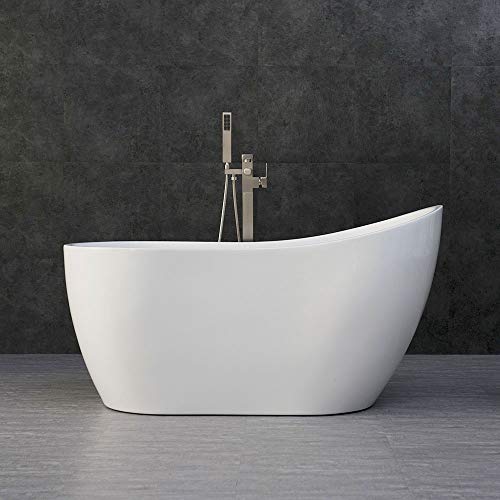
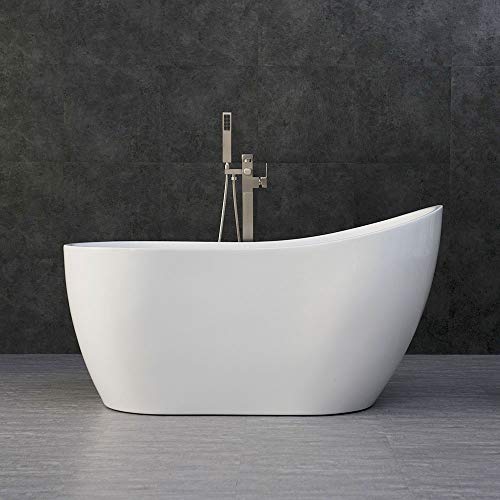
The WOODBRIDGE Acrylic Freestanding Soaking Tub leads a cleaning-focused guide because its surface is engineered for exactly this keyword: 100% high-gloss Lucite acrylic, reinforced with resin and fiberglass, with a stain-resistant, scratch-resistant finish the maker describes as keeping the tub bright and clean as new over long use. A plastic tub that resists staining and scratching is a tub on which the gentlest cleaners actually suffice — the virtuous cycle this whole article is about.
Strengths
- Stain- and scratch-resistant Lucite surface preserves gloss under gentle cleaning.
- Non-slip floor meets ASTM standards and wipes clean like the rest of the tub.
- Double-walled construction and 55-gallon capacity in a compact 54-inch size.
Trade-offs
- Premium acrylic still demands non-abrasive products — resistant is not immune.
- 29-inch walls make the far side a reach during cleaning for shorter owners.
- Freestanding gap behind the tub collects dust that needs periodic attention.
| Color | Brushed Nickel |
| Size | 54 inches long |
| Dimensions | 54 x 29 x 29 inches |
| Weight | 75 pounds |
The cleaning routine this tub rewards is almost disappointingly simple: warm water, a soft cloth or sponge, and a mild liquid cleaner, worked over the surface after draining, then rinsed and left to dry. Soap scum on fresh Lucite acrylic releases because the surface is non-porous — there is nothing for the film to key into. The problems begin only when an owner, facing a neglected tub, reaches for a scouring powder and trades a removable film for permanent micro-scratches. On this surface, patience plus the right chemistry always beats force: let a mild cleaner dwell for several minutes on a stubborn ring rather than scrubbing for one.
Two care details are specific to this design. The non-slip floor texture — a safety asset — holds film slightly more than the glossy walls, so give the floor an extra pass with the cloth rather than extra pressure. And the double wall’s heat retention means the tub surface stays warm longer after draining, which speeds drying and discourages the mildew that colonizes perpetually damp acrylic seams in cooler tubs. Owners in hard-water homes will still see mineral film eventually; the fix is a soft cloth with a mild acid-based bathroom cleaner rated safe for acrylic, used occasionally — never a pumice or a gritty eraser pad, which is where gloss goes to die, as the mistakes section below details.
As the guide’s overall pick, the WOODBRIDGE represents the target state: a plastic tub whose surface makes the “best cleaner” question easy, because nearly any gentle product works on it. Readers choosing a new tub with cleaning in mind should weight surface specifications like these as heavily as size.
Best for: Owners who want a plastic tub that stays glossy with the gentlest possible routine / Not suited for: Households committed to abrasive cleaners — no acrylic will forgive them for long
Choose it if easy care is a top-three criterion in your tub purchase. Skip it if your bathroom cannot fit a freestanding format — the alcove pick below keeps similar acrylic virtues in a standard slot.

Empava 59 Inch Freestanding Bathtub
Our badge: Best Easy-Clean Surface
The Empava 59 Inch Freestanding Bathtub earns its badge on a phrase in its verified details: a high-gloss, non-porous surface. Non-porous is the single most valuable word in acrylic care — it means soap, oils, and pigments sit on the surface rather than in it, and what sits on a surface wipes off it. Combined with the double-wall build and the anti-slip floor, this is the tub for owners who clean often and lightly rather than rarely and hard.
Strengths
- Non-porous high-gloss surface releases soap film with a soft cloth and mild cleaner.
- Textured anti-slip bottom is molded in, not a coating that cleaning can wear away.
- Adjustable feet ensure complete drainage — no standing residue to dry into film.
Trade-offs
- The textured floor needs a cloth pass, not a rinse alone, to stay film-free.
- High gloss shows water spots in hard-water homes between cleanings.
- External faucet required, and its fixtures need the same gentle treatment.
| Color | White |
| Size | 59 Inch |
| Dimensions | 59.1 x 29.5 x 26.8 inches |
| Weight | 66.1 pounds |
Drainage is this tub’s hidden cleaning feature. The adjustable leveling feet exist so the installer can set the tub to drain fully to its center outlet; a tub that empties completely leaves no shallow puddle at the low end to evaporate into a mineral-and-soap deposit. Owners should verify at installation that the tub drains dry — it is a two-minute check that pays back at every cleaning for the life of the fixture. If an existing installation pools slightly, a squeegee pass after the bath achieves the same end manually.
The anti-slip texture deserves precise discussion, because textured floors are where plastic-tub cleaning advice usually goes wrong. The texture is part of the molded surface; it cannot be scrubbed off, but it can be dulled by abrasives and it does hold film in its pattern. The correct tool is a soft cloth or a soft-bristle brush with a mild cleaner, worked in small circles — time and chemistry, again, instead of pressure. Bleach-based mold removers, if ever needed at the drain area, should be the acrylic-safe, diluted kind and rinsed thoroughly; the care-manual consensus for acrylic is to keep harsh chemistry brief and rare.
For households whose cleaning style is a quick wipe after each use — the single most effective habit in this entire guide — the Empava is the most cooperative surface here. Its gloss rewards the habit visibly, which is how habits survive.
Best for: Wipe-after-use households who want a surface that rewards light, frequent cleaning / Not suited for: Owners who prefer infrequent deep cleans with strong products
Choose it if your routine is little and often. Skip it if hard-water spotting will bother you daily — a matte-finish surface hides spots better, though none is in this pool.

FerdY Tahiti 55″ Acrylic Freestanding Bathtub
Our badge: Best for Hard Water Areas
The FerdY Tahiti 55″ Acrylic Freestanding Bathtub is cast from glossy, pure-white 100% acrylic resin, described by its maker as lightweight, durable, and easy to care for. Hard water is the plastic-tub owner’s slow enemy — mineral film builds invisibly, then suddenly the tub looks permanently gray — and a smooth cast-acrylic surface is the right defense, because mineral film on a glossy non-porous surface wipes away in the stage before it crusts.
Strengths
- Smooth cast acrylic releases mineral film while it is still a wipe, not a crust.
- Glossy finish makes buildup visible early, when it is easiest to remove.
- Double-walled insulation keeps surfaces warmer and drier between uses.
Trade-offs
- Pure white gloss shows every stage of hard-water film — vigilance is the deal.
- 14-inch depth means a larger waterline area relative to volume.
- Toe-tap drain mechanism should be kept free of gritty cleaners that foul its seal.
| Color | Brushed Nickel Drain |
| Size | Tahiti 55″ |
| Dimensions | 55.31485 x 30.90545 x 23.42515 inches |
| Weight | 72.84 pounds |
The hard-water routine for a tub like this has three tempos. Daily, a rinse and a quick squeegee or towel of the waterline zone prevents the evaporation deposits that start the cycle. Weekly, a mild liquid cleaner on a soft cloth resets the surface. Monthly — or whenever a faint roughness appears at the waterline — an acrylic-safe, mildly acidic bathroom cleaner dissolves the young mineral film chemically, which is the only safe way to remove it: the unsafe way, mechanical scraping or abrasive pads, is how hard-water owners destroy acrylic while trying to save it. Readers whose water also carries iron should read Best Rust Remover For Tubs before treating orange staining with anything stronger.
The Tahiti’s shape helps its own care: an oval interior with sloped lumbar support has no sharp internal corners, and corners are where film and mildew establish first. The integrated slotted overflow removes another crevice from the cleaning map. What remains is a smooth, continuous surface that a cloth can cover in a couple of minutes — a genuine consideration for a tub used daily by two bathers, since this model is sized for one or two.
One caution specific to its fittings: the toe-tap drain and the brushed nickel finish want the same non-abrasive discipline as the acrylic. Gritty cleaners shed particles that work into the drain’s moving seal, and acidic products left sitting on metal finishes can mark them. Clean the drain area last, rinse it first — a small choreography that keeps both materials happy.
Best for: Hard-water households willing to wipe little and often to keep gloss perfect / Not suited for: Owners who let mineral film build for months between cleanings
Choose it if your water is hard and your habits are regular. Skip it if cleaning is a quarterly event — choose the most forgiving surface and the softest routine you will actually keep.
DeerValley 55″ Acrylic Freestanding Bathtub
Our badge: Best Compact
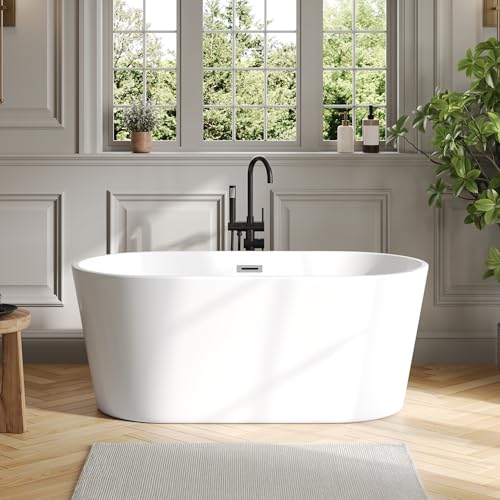
The DeerValley 55″ Acrylic Freestanding Bathtub makes the compact case in a cleaning guide: less surface is less cleaning. Its premium acrylic is described as smooth, easy to clean, stain-resistant, and scratch-resistant, holding its bright white appearance over time — in a 55-inch footprint aimed at apartments and smaller bathrooms, where the tub is also often the most visible object in the room and its cleanliness is on display.
Strengths
- Stain- and scratch-resistant acrylic keeps the gentle-cleaner routine sufficient.
- Small surface area: a full clean is a few minutes’ work.
- Center drain placement means even drainage and no neglected low corner.
Trade-offs
- No weight figure in the verified pool data — confirm on the listing if needed.
- Compact size concentrates bath oils and products on less surface per soak.
- Freestanding rear gap in a small bathroom is tight to reach for dusting.
| Color | White |
| Size | 55 Inch |
| Dimensions | 55.12 x 29.53 x 22.05 inches |
Small tubs change cleaning chemistry in one subtle way: concentration. The same bath oil or bubble product in 55 inches of water contacts proportionally more surface per gallon, so product-heavy bathers should rinse the surface as the tub drains rather than letting a concentrated film dry in place. That single habit — rinse while draining — is worth more than any product upgrade for compact tubs. The DeerValley’s center drain supports it: the water leaves evenly, carrying the loosened film with it, instead of stranding residue at a far end.
The scratch-resistance claim matters in rentals and family bathrooms, where cleaning tools are not always chosen by the owner. A surface that tolerates an occasional wrong sponge without visible damage is a surface that survives real households. It is still not a license for scouring powder — resistance buys forgiveness for accidents, not immunity to habits — and the care guidance elsewhere in this article applies in full. But as a practical matter, this is one of the more abuse-tolerant acrylics in the pool.
Apartment owners should also note the exterior: a freestanding tub in a small bathroom gets dusted and wiped as furniture, and the same mild spray used inside works outside. One product, both surfaces, no drama — the compact bathroom’s whole cleaning philosophy in one bottle, and a natural companion to a small-space refresh like the storage ideas in Best Wall Shelves For Apartments Under $100.
Best for: Apartments and small bathrooms where the tub must stay visibly clean with minimal effort / Not suited for: Product-heavy bathers who will not rinse as the tub drains
Choose it if space is tight and appearances matter. Skip it if you are tall or soak in pairs — its virtues are compact ones.

Fine Fixtures Acrylic Alcove Soaking Bathtub
Our badge: Best for Bath Salts Users
The Fine Fixtures Acrylic Alcove Soaking Bathtub is the alcove representative in a freestanding-heavy list, included for a specific verified trait: its acrylic-and-fiberglass construction is described as safe against salts and oils. Bath salts and oil-based soaks are where plastic tubs suffer quietly — residues bake onto warm acrylic and some salt blends stain — so a surface rated by its maker for exactly that exposure earns its badge honestly.
Strengths
- Surface described as safe against salts and oils — the two hardest residues for acrylic.
- Alcove format keeps cleaning contained: three walls, one apron, no rear gap.
- Pre-fixed tile flange keeps water (and cleaner) out of the wall cavity.
Trade-offs
- Left-hand configuration in this listing; confirm your drain side.
- Salt tolerance is not stain immunity — pigmented salts should still be rinsed promptly.
- Alcove corners at the wall joins need sealant-line attention; see Best Sealant For Tubs.
| Color | White |
| Size | 60″ x 30″ – Left Hand |
| Dimensions | 30 x 60 x 21.5 inches |
| Weight | 65 pounds |
Salt and oil care has its own technique. Dissolve salts fully in the running fill before entering — undissolved crystals settling on warm acrylic are the staining scenario — and rinse the surface as the tub drains, while the residue is still suspended and mobile. Oil-based products should be wiped from the waterline zone the same day; oil left to dry on acrylic oxidizes into a tacky film that then requires a degreasing cleaner and real patience. On this surface, a mild dish-soap solution is the right degreaser: dish soap is formulated to lift oils without solvents that trouble acrylic, and it is already in most kitchens.
The alcove format changes the cleaning map in the owner’s favor. There is no freestanding gap, the walls take the splash, and the ledge that holds toiletries also concentrates the soap-scum zone in one wipeable strip. The one alcove-specific duty is the sealant line where tub meets wall: keep it clean and dry-ish, inspect it seasonally, and renew it when it darkens or lifts — a small job with its own guide in this series. A tub whose flange is pre-fixed starts life with that line properly founded, which is why this model ages gracefully in family bathrooms.
For the salts-and-oils bather, this is the low-anxiety choice: a surface chosen for your habit, in the format that contains the mess your habit makes.
Best for: Regular bath-salt and bath-oil users in a standard alcove bathroom / Not suited for: Right-hand drain bathrooms or freestanding layouts
Choose it if your soaks come with salts and your bathroom is a left-hand alcove. Skip it if either condition fails.

OVE Decors Sofia 67 Inch Freestanding Bathtub
Our badge: Best Premium
The OVE Decors Sofia 67 Inch Freestanding Bathtub closes the list as the connoisseur’s cleaning problem: a fiberglass-reinforced Lucite acrylic interior — the same easy-care family as the WOODBRIDGE — wrapped in a hand-painted Carrara marble finish exterior. The interior cleans like premium acrylic because it is premium acrylic; the exterior is a painted finish that must never meet an abrasive or a solvent, making this the tub that most rewards a disciplined, gentle routine.
Strengths
- Lucite acrylic interior: non-porous, glossy, and wipe-clean like the best here.
- Hand-painted marble-look exterior delivers the stone aesthetic without stone’s sealing burden.
- Standard drain and integrated overflow keep the interior surface uninterrupted.
Trade-offs
- Painted exterior can be marked by harsh cleaners — interior products must be kept off it.
- 67 inches of surface is the most cleaning area in this guide.
- Premium positioning means care mistakes are expensive ones.
| Color | Carrara Marble |
| Size | 67 in |
| Dimensions | 66.93 x 30.31 x 23.62 inches |
| Weight | 92.6 pounds |
Two-material care is the skill this tub teaches. Inside: the standard gentle acrylic routine, unchanged. Outside: dust with a dry or barely damp cloth, treat splashes promptly with water alone, and never let a bathroom spray — especially anything acidic, bleaching, or solvent-bearing — sit on the painted finish. The practical method is to clean the interior with the bathroom door routine you already have, then wipe the exterior separately with its own cloth, so no product migrates. Owners who keep that separation will find the exterior nearly maintenance-free; the marble look, unlike real marble, needs no sealing and does not etch from a stray acidic splash wiped up in time.
The size deserves a cleaning note: at 67 inches with a continuous oval silhouette, a full clean is a longer circuit, and the far rim of a freestanding tub this size is a stretch from any one position. Work in sections, rinse the cloth often, and let the mild cleaner dwell rather than extending your reach with pressure. The reward is a centerpiece that photographs like stone and maintains like acrylic — the premium proposition in full.
For readers drawn to statement tubs, this pick demonstrates the guide’s thesis at the top of the range: the best cleaner for a plastic tub is partly a product choice and partly a surface choice, and at the premium end you are buying a surface that makes gentle products sufficient forever.
Best for: Design-led bathrooms wanting a marble look with acrylic’s easy interior care / Not suited for: Households that clean everything with one strong spray
Choose it if the exterior will be treated as a finish, not a fixture. Skip it if your household’s cleaning style is uniform and aggressive.
Comparison Table
| Pick | Surface | Dimensions | Care highlight | Check price on Amazon |
|---|---|---|---|---|
| WOODBRIDGE 54 Inch | Lucite acrylic, stain/scratch resistant | 54 x 29 x 29 inches | Gloss preserved under gentle cleaning | Check price on Amazon |
| Empava 59 Inch | Non-porous high-gloss acrylic | 59.1 x 29.5 x 26.8 inches | Complete drainage prevents residue | Check price on Amazon |
| FerdY Tahiti 55″ | Cast acrylic, glossy | 55.31485 x 30.90545 x 23.42515 inches | Hard-water film wipes early | Check price on Amazon |
| DeerValley 55″ | Acrylic, stain/scratch resistant | 55.12 x 29.53 x 22.05 inches | Smallest surface to maintain | Check price on Amazon |
| Fine Fixtures Alcove | Acrylic with fiberglass reinforcement | 30 x 60 x 21.5 inches | Rated safe against salts and oils | Check price on Amazon |
| OVE Sofia 67 Inch | Lucite acrylic interior, painted exterior | 66.93 x 30.31 x 23.62 inches | Two-material care routine | Check price on Amazon |
How to Choose the Best Bathtub Cleaner for Plastic Tubs
Read the label for the words that matter
For acrylic and plastic-family surfaces, the label should say non-abrasive and safe for acrylic — or at minimum list acrylic among its approved surfaces. Mild liquid bathroom cleaners and acrylic-specific sprays are the correct shelf. The words to avoid are equally clear: scouring, grit, powdered cleansers with abrasive minerals, and any product whose directions involve a scouring pad. When in doubt, the dish-soap test applies: if a product is gentler than dish soap and rinses clean, it is in the right family for routine use.
Match the cleaner to the soil, not the other way round
Soap scum is a fatty film: it wants a mild alkaline cleaner or a degreasing dish-soap solution and dwell time. Mineral scale is a calcium deposit: it wants a mild acid, in an acrylic-safe formulation, used occasionally. Mildew at seals is a biological film: it wants a targeted treatment at the seal line, not a whole-tub harsh soak. Using one aggressive product for all three soils is how acrylic gets damaged — the chemistry that dissolves scale can dull gloss if left sitting, and the scrubbing that removes scum is what scratches. Diagnose the soil first; the product choice follows.
Choose tools as carefully as chemistry
The approved toolkit is short: soft cloths, non-scratch sponges (the kind sold as safe for non-stick cookware), and soft-bristle brushes for textured floors and drain details. Retire scouring pads, stiff brushes, and melamine foam erasers from tub duty — melamine foam is a fine abrasive whatever its marketing says, and on gloss acrylic it leaves exactly the micro-dulling this guide exists to prevent. A squeegee, used for ten seconds after each bath, outperforms every tool on this list.
Respect dwell time and dilution
Gentle cleaners work by chemistry over minutes, not force over seconds. Spray, wait the label’s dwell time, then wipe — the film should release without pressure. Concentrates must be diluted as directed; a double-strength mix is not twice as clean, it is twice as likely to dull the surface or leave a residue that attracts the next film. Rinse thoroughly and dry with a soft cloth: the rinse is part of the clean, because dried cleaner residue is itself a soil magnet.
Know the absolute exclusions for acrylic
Never use acetone, paint thinner, or undiluted bleach on acrylic; keep abrasive powders and pumice for porcelain and enamel only (and even there, sparingly). Window cleaners with ammonia are a gray area best avoided on gloss acrylic. When a stain defeats gentle chemistry — a dye stain from hair color, for instance — the answer is a purpose-made acrylic-safe stain product used exactly as directed, tested in an inconspicuous spot, not an escalation to solvents. The stain guidance in Best Rust Stain Remover For Tubs follows the same test-first discipline.
How Often Should You Clean a Plastic Tub, and How?
The schedule that keeps acrylic glossy is front-loaded with tiny efforts. After each use: a hot rinse of the surfaces while the tub drains, which carries away the day’s film before it sets. Weekly: a full wipe with a mild liquid cleaner on a soft cloth, including the floor texture and the waterline zone, then rinse and dry. Monthly: inspect the seal lines, the drain surround, and any point where water lingers; treat early mineral roughness with an acrylic-safe mild-acid cleaner before it crusts. Quarterly: check the exterior and the floor around a freestanding tub, where dust and splash combine into a grime that is easier to prevent than to remove.
Technique in one pass: work top-down so loosened soil rinses toward the drain; let the cleaner dwell; use cloth pressure no greater than you would use on a stovetop’s glass panel; rinse with the shower head or a jug; dry the waterline band with a towel to deny mineral film its evaporation site. The whole weekly routine on a cooperative surface takes under ten minutes, which is precisely the point — plastic tubs punish rare, heroic cleaning and reward small, boring consistency.
Problem: The tub looks dull even after cleaning — The gloss has been micro-scratched, usually by past abrasive use. Gentle cleaning will keep it clean but cannot restore gloss; avoid further abrasives, and know that the dullness is cosmetic — the tub remains sound.
Problem: A gray film keeps returning at the waterline — That is mineral film from hard water, not dirt. Add the monthly acrylic-safe mild-acid step and dry the waterline after baths to slow its return.
Problem: Pink or black staining at the seal line — Biological film colonizing the sealant, not the acrylic. Treat the seal specifically, keep the line as dry as the room allows, and plan seal renewal if it penetrates — the sealant itself has a service life.
Problem: A dye stain from hair color or bath products — Act immediately with a mild cleaner and dwell time; older dye stains need an acrylic-safe stain product, tested first. Never escalate to bleach concentrate or solvents on acrylic.
Problem: White residue appears after bath salts or bath oils — Undissolved salts and oil droplets settle on the surface as the water drains and dry into a film that looks like scale but is not. Dissolve salts fully under the running tap before stepping in, and give the tub its hot rinse while it drains — residue removed wet is a rinse; residue left to dry is a cleaning session.
Problem: Cleaner leaves the surface feeling tacky — Residue from over-concentration or under-rinsing. Re-rinse with plain hot water and a clean cloth, and dilute correctly next time.
Acrylic, Fiberglass, and Plastic Composites: Why the Surface Decides the Cleaner
“Plastic tub” covers a family with real differences. Sheet acrylic — the material of every pick in this guide — is colored through its thickness, glossy, non-porous, and the most forgiving of the family: light surface damage can even be polished by specialists because the color goes all the way down. Fiberglass tubs wear a gelcoat over a structural shell; the gelcoat is thinner than acrylic sheet, chalks and dulls faster under abrasives and UV, and is the surface most often ruined by scouring powders in older homes. Molded plastic composites vary widest of all, which is why the universal rule — non-abrasive, mild, tested — exists: it is the only advice safe across the whole family without knowing the exact resin.
The practical consequence for cleaner shopping is that “safe for acrylic” is the label to trust, because acrylic’s requirements are the family’s strictest mainstream standard; a product gentle enough for gloss acrylic is gentle enough for gelcoat and composites. The reverse is not true: products sold for enamel or porcelain may carry abrasives or alkalinity that plastic surfaces cannot take. When a household has both a plastic tub and an enamel one, the safe system is two products, labeled and stored separately — the small shelf cost prevents the large refinishing one. And when buying a new plastic tub, the surface specifications in this guide’s comparison table — non-porous, stain-resistant, scratch-resistant — are the features that will decide your cleaning life for the next decade, long after the shape is familiar.
Two finishes inside the family deserve their own cleaner notes. Matte and low-sheen acrylic, increasingly common on modern freestanding tubs, hides light film better than gloss but shows oily marks more, and it should never be polished or buffed — the matte texture is the finish, and a glossy cleaner routine that adds shine is quietly changing the product you bought. Painted exteriors, like the marble-effect finish on one pick in this guide, split the tub into two care zones: the interior follows the acrylic rules above, while the painted exterior wants only a damp soft cloth and mild soap, with no bathroom spray allowed to sit on the paint. Owners who treat a two-finish tub as one surface usually discover the distinction at the first mark on the paint, which is the expensive way to learn it.
Restoring a Neglected Plastic Tub Without Destroying It
If you have inherited a dull, filmed, or stained plastic tub — a rental, a new home, a guest bathroom ignored for a season — the restoration sequence matters more than any product. Start with the gentlest full clean: hot water, dish-soap solution, soft cloth, generous dwell time, thorough rinse. Assess what remains by type: fatty scum responds to a second pass with a mild alkaline bathroom cleaner; mineral roughness to an acrylic-safe mild-acid treatment; localized stains to targeted, tested products. Between each escalation, rinse and dry fully, because judging a wet surface misleads — water temporarily restores gloss and hides film.
What restoration cannot do is un-scratch a surface or un-yellow aged gelcoat, and honest expectations prevent the destructive spiral: owners who believe the right chemical must exist scrub harder and compound the damage. If a tub cleans up functionally — hygienic, smooth, merely less glossy than new — it is restored in every way that matters for use. The remaining decision is cosmetic and financial, and it belongs to a refinishing or replacement conversation, not to a stronger bottle. The tubs reviewed above exist for the day that conversation concludes; until then, gentle chemistry and patience will get a neglected plastic tub most of the way back.
Common Buying Mistakes
Using scouring powder “just once” on a bad ring
One abrasive session can micro-scratch a gloss surface permanently, and the scratched zone then holds film faster forever. The consequence is a tub that needs cleaning twice as often because of the cleaning. Dwell time with a mild cleaner removes the same ring safely.
Assuming “bathroom cleaner” means safe for every surface
Bathroom cleaners are formulated for the hardest common surfaces — glazed ceramic and porcelain — not for acrylic. The fix is reading the approved-surfaces list, not the front label claims. Keep an acrylic-safe product as the tub’s dedicated cleaner.
Scrubbing textured non-slip floors with stiff brushes
Stiff bristles dull the texture’s peaks and can polish away the very grip the floor provides. Use a soft brush and chemistry; the texture is a safety feature with a maintenance method, not a challenge.
Leaving cleaner to “soak” far beyond its dwell time
Extended contact with even mild acids or alkalis can dull gloss or mark metal fittings. Set a timer, rinse on schedule, and repeat a short application if needed rather than stretching one long one.
Buying a tub on shape alone and discovering its care demands later
Painted exteriors, intricate shapes, and matte finishes all carry care rules. The mistake is learning them after installation. Read the surface specifications before purchase — they are printed in this guide’s table for exactly that reason.
Final Recommendation
The best bathtub cleaner for plastic tubs is a non-abrasive, acrylic-safe liquid used little and often — and the tub that makes that answer easiest is our top pick, the WOODBRIDGE Acrylic Freestanding Soaking Tub, whose stain- and scratch-resistant Lucite surface keeps gentle cleaning sufficient for years. The runner-up for wipe-after-use households is the Empava: Check on Amazon for the non-porous finish that releases film on contact with a cloth. Salts users should take the Fine Fixtures, hard-water homes the FerdY, and design-led bathrooms the OVE with its two-material discipline. Choose the cleaner by the surface, the surface by the routine you will actually keep — and never let a scouring pad near either.
Related guides
Frequently Asked Questions
What type of cleaner is safest for acrylic and plastic tubs?
A non-abrasive liquid bathroom cleaner labeled safe for acrylic, or a plain dish-soap solution for routine cleaning. Both lift soap film without scratching. Avoid scouring powders, gritty creams, and any product that directs you to a scouring pad.
Can I use bleach on a plastic tub?
Only in diluted, acrylic-safe formulations, briefly, and rinsed thoroughly — and only for a specific biological staining problem at seals or drains. Undiluted bleach and long bleach soaks can dull and damage acrylic. For routine cleaning, bleach is unnecessary.
How do I remove hard-water film from an acrylic tub?
With a mild-acid bathroom cleaner rated safe for acrylic, applied occasionally with dwell time and wiped, never scraped. Prevent recurrence by rinsing and drying the waterline after baths, which denies the film its evaporation site.
Why does my plastic tub get dirty again so quickly?
Usually because the surface has been micro-scratched by past abrasive cleaning, giving film a texture to grip — or because cleaner residue is being left unrinsed. Switch to gentle products, rinse fully, dry the waterline, and the interval between cleanings should lengthen noticeably.
Are melamine foam sponges safe on acrylic?
No. Melamine foam is a micro-abrasive; it cleans by wearing the surface, and on gloss acrylic it leaves dulling that becomes visible with repetition. Use soft cloths and non-scratch sponges instead.
What should I use on a textured non-slip tub floor?
A soft-bristle brush with a mild liquid cleaner, worked in small circles with dwell time rather than pressure. The texture is molded into the surface; gentle chemistry keeps it clean without polishing away its grip.
Can I use a steam cleaner on a plastic tub?
Only with real caution, and most households should not. Steam concentrates heat on a small area, and sustained heat can soften, warp, or craze some plastics and stress the adhesives and sealants around fittings — the risk rises on thin molded composites and older gelcoat. If a tub maker approves steam for your specific model, keep the nozzle moving, hold the distance the manual specifies, and never park it on one spot or on the seal line. For every soil this guide covers, dwell time with a mild cleaner achieves the same result without putting heat stress into a surface that cannot complain until it cracks.


