Disclosure: As an Amazon Associate, dailyhomedecorating.com earns from qualifying purchases. Links to Amazon on this page are affiliate links; they cost you nothing extra. Prices and availability change often, so check the current Amazon listing before you buy.
The best mattresses for lumbar support are built around a single anatomical fact: when you lie down, your lower back does not touch the bed the way the rest of you does. The lumbar spine curves inward, away from the mattress, and in that gap the whole question of lumbar support lives. A mattress that ignores the gap leaves your lower back’s muscles to hold the curve’s shape all night, and they present the bill as morning stiffness. A mattress that addresses it — by filling the gap with contouring foam, by firming the zone beneath the pelvis so the curve keeps its natural shape, or by placing a dedicated support layer exactly there — lets those muscles actually rest. Lumbar support is not a firmness level or a marketing badge; it is a specific mechanical job done at a specific address on the bed.
This guide grades six mattresses on that job and explains the mechanisms honestly, in comfort terms: no mattress here is a medical device, none treats a spinal condition, and persistent or radiating back pain belongs in a professional’s office. What the right mattress can do is stop adding a nightly eight-hour strain to whatever else your back deals with — and for the large group of people whose lower backs are stiff in the morning and fine by lunch, that subtraction is the whole game. Readers whose discomfort is broader should compare Best Mattresses For Back Issues for the long-term support view, and Best Mattresses For Bad Lower Backs for the version of this guide written entirely around the lower back’s morning report.
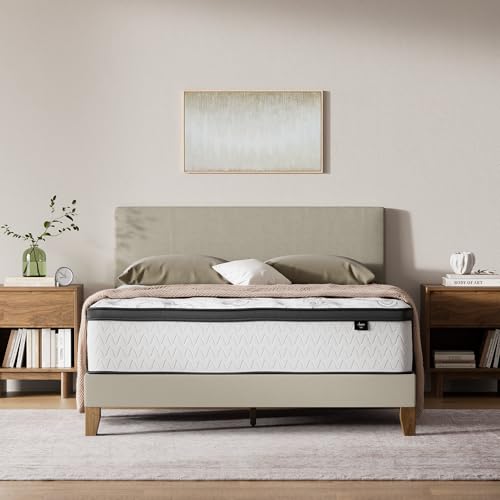
Where to Buy
Every pick in this guide is sold on Amazon, where you can check the current price, size availability, trial terms, and delivery options on the listing itself. Start with our top pick, the Signature Design by Ashley Chime 12 Inch Hybrid Full Size Mattress in a Box | Medium Firm — Check on Amazon. The other five picks are the Casper Sleep Original — Check on Amazon; the Serta Perfect Sleeper Ultimate — Check on Amazon; the Nectar 12” Memory Foam Mattress — Check on Amazon; the Sealy Dreamlife 12” Hybrid — Check on Amazon; and the Sweetnight CoolNest — Check on Amazon. Prices move with size and promotions, so treat the listing, not any roundup, as the final word.
In this guide
Quick Picks
| Pick | Badge | Why it earns its place |
|---|---|---|
| Signature Design by Ashley Chime 12 Inch Hybrid Full Size Mattress in a Box | Medium Firm | Best Overall | The pool’s only dedicated lumbar layer: high-density gel memory foam aimed at the lower back, over pocketed coils. |
| Casper Sleep Original 11″ Memory Foam Queen Mattress – Medium Firm Feel | Breathable Mem | Best Zoned Foam | Zoned Support places firmer foam under the hips, waist, and lower back — the lumbar zone, engineered in foam. |
| Serta Perfect Sleeper Ultimate 14.5″ Queen Mattress – Medium Pillow Top | CertiPUR-US cert | Best Zoned Coils | A zoned coil system targets support to the lower back and hips beneath a cushioned pillow top. |
| Nectar 12” Memory Foam Mattress | Best Contouring Support | Firm-leaning memory foam fills the lumbar gap while the support layer holds the pelvis level. |
| Sealy Dreamlife 12” Hybrid Mattress-in-a-Box | Best Durable Support | Encased coils deliver proportional lumbar support that does not soften the way foam zones can. |
| Sweetnight CoolNest Queen Mattress | Best for Side Sleepers | A 5-zone ergo design supports the waist’s line while cushioning the hip that side sleepers load. |
Key Takeaways
- Lumbar support is a location, not a firmness: the mattress must fill or hold the lower back’s natural inward curve.
- Three mechanisms do the job — a dedicated lumbar layer, zoned firmness, and contouring over a level pelvis — and this guide has verified examples of each.
- The pelvis is the lever: if the hips sink, the lumbar curve flattens or arches, and no surface feature compensates. Support the pelvis first.
- Medium-firm is the reliable center for lumbar comfort; extremes either flatten the curve or grind the hip.
- Judge by mornings over three weeks, and audit the frame and pillow before blaming the mattress — both bend the same spine.
How These Picks Were Chosen
Every pick had to demonstrate a lumbar mechanism in its verified listing, not merely a comfortable feel. The Ashley Chime’s dedicated gel lumbar layer is the most literal entry in the pool. The Casper’s Zoned Support and the Serta’s zoned coil system engineer firmness at the torso’s span from two different materials. The Nectar represents contour-based support — foam filling the gap over a pelvis held level — and the Sealy represents proportional coil support, where the lumbar zone’s coils respond to the load actually placed on them. The Sweetnight’s 5-zone design extends the zoning idea to the side sleeper’s waist-and-hip geometry.
What was filtered out: plush mattresses whose comfort layers let the pelvis sink deepest — the hammock is the lumbar’s enemy in any material; uniform extra-firm slabs that support by refusing everything, lumbar curve included; and thin light-duty builds without the material to hold a pelvis nightly. Language stays at the comfort level throughout this guide: we describe support, alignment, and morning feel, and we make no medical claims. Specifications come only from the verified pool entries, and no static prices are printed — the listing confirms the number for your size on the day you shop.
The 6 Best Mattresses for Lumbar Support — Reviewed

Signature Design by Ashley Chime 12 Inch Hybrid Full Size Mattress in a Box | Medium Firm
Our badge: Best Overall
The Signature Design by Ashley Chime 12 Inch Hybrid leads this guide because it is the only pool mattress with a layer whose stated job is the lumbar zone itself: a high-density gel memory foam layer targeting the lower back, over 9-inch 13-gauge pocketed coils. Its maker describes that layer as delivering enhanced restorative support for the lower back — we cite the design, in comfort terms — and the construction logic is sound: densified support at the curve, durable coils beneath it, and reinforced perimeter rows holding the edges.
Strengths
- A dedicated lumbar layer concentrates support exactly where this keyword lives
- Sturdy-gauge pocketed coils hold the pelvis level without foam’s long-term softening
- Adjustable-base compatible, so knee elevation — a classic lumbar comfort position — is available
Trade-offs
- Medium-firm, support-first feel offers limited plushness for dedicated side sleepers
- Verified size is full; queen and king shoppers confirm their size on the listing
- The lumbar focus assumes your torso rests in the designed zone, as with all zoned builds
| Color | White |
| Size | Full |
| Dimensions | 74.4 x 53.3 x 12 inches |
| Weight | 62 pounds |
The Chime’s lumbar layer matters beyond its first impression because of where foam ages. The pelvis is the body’s heaviest section and it rests in the bed’s center span; ordinary comfort foam softens there first, and as it softens, the pelvis drops and the lumbar support quietly resigns. A layer densified for that zone, backed by steel that does not soften at all, is a durability argument wearing a comfort feature’s clothes. Back sleepers feel the design as a platform that stays present under the lower back instead of politely disappearing; stomach sleepers get hips held level, which is the same support viewed from the other side.
It is CertiPUR-US certified with a 10-year warranty in its listing, arrives as a bed in a box, and fits most frames including adjustable bases. For the shopper whose entire search is the phrase “lower back,” this is the pool’s most direct answer — the mattress that put the lumbar zone on its spec sheet rather than in its adjectives.
Best for: Back and stomach sleepers whose lower back is the whole complaint / Not suited for: Side sleepers who need a soft, deep shoulder-and-hip cradle
Choose it for targeted lumbar engineering. Skip it for plush contour. Check on Amazon

Casper Sleep Original 11″ Memory Foam Queen Mattress – Medium Firm Feel | Breathable Mem
Our badge: Best Zoned Foam
The Casper Sleep Original engineers the lumbar job into foam geometry: its Zoned Support system uses firmer foam under the hips, waist, and lower back, with a more giving feel elsewhere, in a breathable medium-firm build. Where the Chime adds a layer, the Casper varies the map — support rises exactly along the torso’s span and relaxes at the shoulders and legs, which is the support profile a spine would draw for itself.
Strengths
- Zoned firmness under the lumbar span holds the pelvis and fills the curve’s support needs simultaneously
- Breathable open-cell foam avoids the warm, stagnant feel of traditional memory foam
- Motion isolation keeps a partner’s movements out of a sensitive back’s night
Trade-offs
- Zones are fixed; sleepers who rest far off-center get a diluted version of the design
- Foam zoning softens gradually over years, unlike the coil-backed picks
- Medium-firm may read firm to light side sleepers during break-in
| Color | Light Gray |
| Size | Queen |
| Dimensions | 80 x 60 x 11 inches |
For side sleepers, the Casper’s zoning solves the lumbar problem in its side-lying form: the waist. On your side, the spine’s vulnerable span is the waist’s downward sag between ribcage and pelvis; a zoned mattress firms exactly there, holding the line straight while the shoulder and hip zones give. Back sleepers feel the same map as pelvic support with surface contour. That dual citizenship is why zoned foam is the most recommended architecture in lumbar conversations, and the Casper is its reference implementation in this pool.
The listing’s 100-night trial and 10-year limited warranty, CertiPUR-US foams, and the maker’s durability positioning all support a fair home test. If your lumbar discomfort arrives with side sleeping, or alternates positions nightly, the Casper’s map is the one drawn for you — a point our Best Mattresses For Combination Sleepers guide also makes from the movement angle.
Best for: Side and back sleepers who want lumbar zoning in an all-foam, isolating bed / Not suited for: Sleepers who rest far from the mattress’s central zones
Choose it for the smartest foam map here. Skip it for coil durability. Check on Amazon

Serta Perfect Sleeper Ultimate 14.5″ Queen Mattress – Medium Pillow Top | CertiPUR-US cert
Our badge: Best Zoned Coils
The Serta Perfect Sleeper Ultimate performs the lumbar job with a high-density zoned coil system — support zones engineered for the lower back and hips — beneath a medium pillow top with PillowSoft Aire foam and Cool Twist gel memory foam. It is the plushest route to lumbar support in this guide: the surface greets you softly while the coil map underneath does the structural work, a combination traditional-bed loyalists have trusted for decades.
Strengths
- Zoned coils target the lower back and hips with firmer support where the load concentrates
- The pillow top cushions the surface so support does not feel like hardness
- BestEdge foam encasement keeps edges firm for the sitting and standing transitions backs notice
Trade-offs
- At 14.5 inches it is tall; total bed height needs arithmetic before ordering
- Pillow tops soften gradually over the years
- At over 82 pounds, setup and rotation are two-person jobs
| Color | Dark Blue |
| Size | Queen |
| Dimensions | 79.5 x 60 x 14.5 inches |
| Weight | 82.26 pounds |
Coil zoning has a property foam zoning cannot match: it does not fatigue at the same rate. The center-third coils that hold your pelvis in year one are steel in year seven, while a foam zone is a promise that slowly renegotiates. For a lumbar shopper who has already watched one mattress soften into a hammock, that permanence is the argument. The Serta’s compatibility list — traditional frames, box springs, platforms, slats, bunky boards, adjustable frames — also makes it the easiest pick to install on furniture you already own, provided the base is flat and honest.
The edge encasement deserves its line in a lumbar guide: backs are loaded most awkwardly not while lying but while getting in and out, and a firm, full-height edge turns those transitions from a roll-and-heave into a sit, pivot, and stand. If your mornings begin with a negotiation at the bed’s edge, the Serta’s perimeter is a feature aimed at your actual life.
Best for: Traditional-bed loyalists who want zoned lumbar support under a plush surface / Not suited for: Low-profile setups and solo movers
Choose it for permanent coil zoning with a soft greeting. Skip it for a low, minimalist bed. Check on Amazon

Nectar 12” Memory Foam Mattress
Our badge: Best Contouring Support
The Nectar 12” Memory Foam Mattress supports the lumbar by the oldest foam method: contour deeply enough to fill the curve, over a support layer firm enough to keep the pelvis from sinking through the fill. Its maker describes the contouring layer as relieving pressure and reducing stress on high-tension areas like the hips and back, with the adaptive support layer promoting proper spinal alignment — the two halves of the lumbar job, stated in the maker’s comfort terms.
Strengths
- Memory foam physically fills the lumbar gap instead of bridging over it
- Firm-leaning support layer holds the pelvis level, the precondition for all lumbar comfort
- A cooling top layer moderates the warmth deep contour can trap
Trade-offs
- Slow foam response makes position changes effortful
- Light side sleepers may not sink enough to engage the contour fully
- At 78 pounds in queen, it is a two-person installation
| Color | White |
| Size | Queen |
| Dimensions | 80 x 60 x 12 inches |
| Weight | 78 pounds |
Contour-based support has one advantage no zoning can claim: it is personal. Zones are drawn for an average torso; memory foam molds to your torso, filling your lumbar curve at your height and your weight’s depth. Back sleepers with a pronounced curve — the ones who can slide a hand under their lower back on a firm floor — feel the difference immediately: contact where there was air, support where there was a gap asking muscles to work. The firm support layer underneath is what separates this from a merely soft mattress; the pelvis stays up, so the filled curve keeps its shape instead of collapsing into it.
The listing’s long trial positioning suits the lumbar experiment, which needs weeks: your back’s morning report across ordinary life is the data, and it accumulates slowly. Paired with a flat frame and a pillow that keeps the neck’s segment of the same spine equally honest, the Nectar is the contour route to lumbar comfort, fully realized.
Best for: Back sleepers with a pronounced lumbar curve who want foam that fills it / Not suited for: Restless movers and very light side sleepers
Choose it for personalized contour support. Skip it for instant response. Check on Amazon

Sealy Dreamlife 12” Hybrid Mattress-in-a-Box
Our badge: Best Durable Support
The Sealy Dreamlife 12” Hybrid supports the lumbar proportionally: its 7 inches of individually encased coils compress in response to the load on each coil, so the pelvis — the heaviest load in the lumbar neighborhood — receives the deepest support response, while the waist’s lighter span is met by taller, filling coils. Gel memory foam and a 2.25-inch transition layer finish the surface, so the support arrives cushioned rather than announced.
Strengths
- Proportional coil support scales with load exactly where the lumbar needs it most
- Steel support does not take the compression set that erodes foam lumbar zones over years
- The transition layer keeps the support feeling like a platform, not a row of springs
Trade-offs
- The heaviest pick here at just over 80 pounds in queen
- Surface contour is shallower than the deep foam picks
- Coils require a flat, rigid base to stay level and quiet
| Color | Dreamlife |
| Size | Queen |
| Dimensions | 80 x 60 x 12 inches |
| Weight | 80.604164 pounds |
The Dreamlife is the pick for the lumbar shopper whose history includes a mattress that started supportive and faded. That fade is foam physics, and the honest counter is a support core that is not foam. Encased coils also isolate the lumbar zone’s experience from a partner’s: your support does not dip when your partner rolls, because your coils are yours. For couples where one back is the household’s sensitive instrument, that independence protects both sleep and diplomacy.
CertiPUR-US foams and Surface-Guard antimicrobial technology support long, fresh service. Put the Dreamlife on the best flat base in your budget — its engineering assumes one — and it is the lumbar pick most likely to feel identical in year five, which for a back that notices everything is the highest praise available. The fuller hybrid context lives in Best Hybrid Mattresses Under $1000.
Best for: Lumbar shoppers burned by softening foam, and couples with one sensitive back / Not suited for: Anyone who must move the mattress single-handedly
Choose it for support that lasts. Skip it for the deepest contour. Check on Amazon
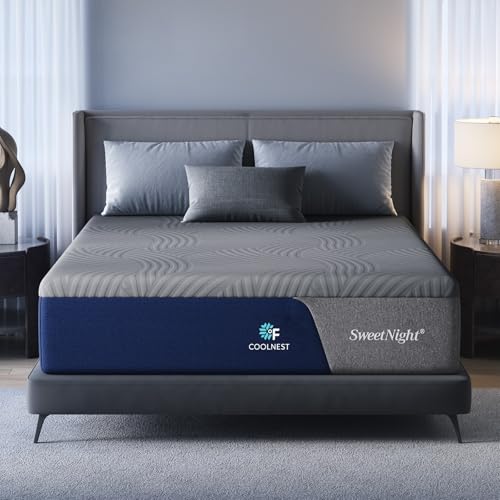
Sweetnight CoolNest Queen Mattress
Our badge: Best for Side Sleepers
The Sweetnight CoolNest closes the guide with the side sleeper’s lumbar answer: a 5-zone ergo support design in a 14-inch cooling build. On your side, lumbar support is really waist support — the span between ribcage and pelvis must be held so the spine runs straight instead of sagging toward the mattress — and a five-zone map firms that span while letting the shoulder and hip sink into their own zones.
Strengths
- Five zones give the waist its own support assignment, the side sleeper’s lumbar key
- The deepest stack in the guide lets the hip sink without the waist following it down
- The CoolNest cooling system suits side sleepers, who bury more surface area in the bed
Trade-offs
- Medium feel may under-support a heavier stomach sleeper’s pelvis
- The 14-inch profile needs deep-pocket sheets and a higher bed setup
- Full expansion is listed at up to 72 hours
| Color | Grey & Blue |
| Size | Queen (U.S. Standard) |
| Dimensions | 80 x 60 x 14 inches |
| Weight | 68.67 pounds |
The CoolNest’s maker notes American Chiropractic Association recognition for its 5-zone design — cited here as the maker’s claim — and the comfort logic is visible without it: more zones mean the support map approximates the body’s actual load map more closely, and the waist is where coarse zoning fails side sleepers first. Add the PCM and gel cooling layers, which matter because side sleepers present the mattress with a large, warm contact area, and the CoolNest is the most completely side-optimized lumbar pick in the pool.
Its motion isolation also serves this audience: a side sleeper whose waist alignment is finally right should not have it disturbed by a partner’s schedule. If your lumbar story is written on your side — sore waist-side mornings, a hip that joins the complaint — start here and with the Casper, whose three zones make the same argument in a slimmer profile.
Best for: Side sleepers whose lower back and waist complain together / Not suited for: Stomach sleepers and low bed frames
Choose it for five-zone side support. Skip it for a firm, flat feel. Check on Amazon
Comparison Table
| Pick | Lumbar mechanism | Construction | Profile | Check price on Amazon |
|---|---|---|---|---|
| Signature Design by Ashley Chime | Dedicated gel lumbar layer | Foam over pocketed coils | 12 inches | Check price on Amazon |
| Casper Sleep Original | Zoned firmness in foam | All-foam, zoned | 11 inches | Check price on Amazon |
| Serta Perfect Sleeper Ultimate | Zoned coil system | Coils + pillow top | 14.5 inches | Check price on Amazon |
| Nectar 12” Memory Foam Mattress | Contour fill + firm base | All-foam | 12 inches | Check price on Amazon |
| Sealy Dreamlife 12” Hybrid | Proportional encased coils | Foam over encased coils | 12 inches | Check price on Amazon |
| Sweetnight CoolNest | 5-zone ergo support | All-foam, zoned, cooling | 14 inches | Check price on Amazon |
How to Choose the Best Mattress for Lumbar Support
Test the Pelvis Before the Surface
Lie on the mattress — or judge the trial’s first week — by one question: does your pelvis feel held at the same height as your ribcage? If the hips sink below the line, the lumbar curve is being flattened or arched no matter how pleasant the surface feels, and no lumbar feature downstream can repair it. Pelvis height is the gate; everything else is refinement.
Choose Your Mechanism: Layer, Zones, Contour, or Coils
A dedicated lumbar layer (Ashley) concentrates support in one engineered band. Zoning (Casper, Serta, Sweetnight) varies firmness along the bed’s length. Contour (Nectar) fills the curve personally. Proportional coils (Sealy) let physics assign support by load. All four work; choose by your history — softened foam argues for coils, a pronounced curve argues for contour, side sleeping argues for zones.
Keep Firmness in the Supportive Middle
As general guidance, medium-firm is the lumbar center of gravity: firm enough to hold the pelvis, giving enough to fill the curve. Very soft mattresses hammock the pelvis; very firm ones bridge over the curve and press the hip. Let your position lean the choice — stomach sleepers firmer, side sleepers zoned or a touch softer — and let the trial decide the rest.
Consider an Adjustable Base as a Lumbar Tool
Raising the knees slightly on an adjustable base flattens the lumbar curve gently and lets the lower back rest against full support — a position many back sleepers describe as their most comfortable. Two picks here document adjustable compatibility. It is an upgrade, not a requirement, but for a lumbar-focused bedroom it is the upgrade with a mechanism, not a gimmick. Frame fundamentals come first either way, as Best Bed Frames For Tempurpedic Mattresses details for heavy foam beds.
Audit the Pillow and the Frame
The spine is one structure: a pillow that props the head high bends the top of it while the mattress straightens the bottom, and a frame that sags in the middle manufactures the exact pelvic drop you paid to eliminate. Fix both before concluding any mattress failed your lumbar — the cheapest experiments in this guide are a lower pillow and a center leg that actually touches the floor.
How Do You Know If a Mattress Is Supporting Your Lumbar?
Use the morning test across three weeks. A supported lumbar wakes up neutral: the first movements of the day feel ordinary, stiffness — if your body carries any — loosens at its usual pace rather than dominating the first hour, and you are not aware of your back as a topic before breakfast. Track it in a line a day, because single mornings lie and trends do not. Two in-bed checks help too: lying on your back, a hand should slide under your lumbar with gentle resistance — no contact at all means the curve is bridged and unsupported, and no room to slide means the pelvis has sunk and flattened it. On your side, a partner or a mirror should see a spine that runs straight from neck to tailbone, with the waist neither sagging nor propped.
Problem: Your hand slides freely under your lower back — The surface is bridging your curve; you need contour fill or a softer surface over the same support, not more firmness.
Problem: Your hand cannot slide under your back at all — The pelvis has sunk and flattened the curve; the support layer is too soft or the frame is flexing beneath it.
Problem: Support felt right in month one and wrong in month four — Check the frame’s center first, then the mattress’s rotation schedule; early lumbar fade is often a base going soft, not the mattress.
Problem: Your waist sags when side sleeping — You need zoning at the waist or a firmer midsection; a uniform soft foam cannot hold that span.
Problem: Mornings are fine but evenings at your desk are not — Believe the pattern: your chair and work posture are the variable, and the mattress has already given its verdict.
Lumbar Support on Your Back Versus Your Side
The lumbar job changes with position, which is why this guide refuses to crown a single mechanism. On your back, the task is gap-filling: the curve arcs away from the bed, and support means contact — foam that molds into the arc, or a pelvis held so precisely that the arc keeps its shape against the surface. On your side, the task is line-keeping: the curve disappears as a gap and reappears as a sag risk at the waist, and support means a midsection that refuses to let the spine bow downward. Stomach sleeping inverts the problem again — the pelvis must be held up so the lumbar does not arch into extension all night. A mattress that serves all three — zoned maps and proportional coils come closest — is the combination sleeper’s lumbar answer, and the reason the Casper and Sealy appear in both this guide and the movement-focused ones. Buy for the position you actually occupy most, and let the trial audit the others.
The Sitting Edge: Lumbar Support’s Forgotten Half
Backs are rarely injured lying down; they are loaded getting up. The sit-to-stand transition — rolling to the edge, sitting with feet planted, rising with the spine under load — is the most mechanically demanding moment of a back’s day, and it happens on the mattress’s edge, not its center. A lumbar guide that ignores edges is grading the wrong exam. Firm, full-height edges — the Serta’s encasement, the Ashley’s perimeter coil rows — turn the transition into a controlled sit and stand; collapsing foam edges turn it into a slide and a heave that a sensitive lumbar notices immediately. Test the edge during the trial’s first week with the same seriousness as the sleep surface: sit, dress, stand, and grade the bed on how ordinary it all felt. Ordinary is the goal — for the edge, for the mornings, for the whole lumbar project.
Lumbar Support Over Years: Why Mattresses Lose It and How These Picks Resist
Ask a back sleeper when their mattress stopped working and the answer is rarely a date — it is a season, a gradual return of the morning stiffness the mattress once abolished. The mechanism is almost always the same: the material under the pelvis fatigues first, because the pelvis is the heaviest load and it never moves house. Foam cells in the center span collapse microscopically with every night; the pelvis settles a few millimeters lower each season; the lumbar curve, exquisitely sensitive to geometry, notices millimeters. This is why the lumbar conversation is secretly a durability conversation, and why this guide’s picks divide by their resistance strategy. The coil-backed designs — Ashley’s pocketed coils, Serta’s zoned coil system, Sealy’s encased coils — put steel under the pelvis, and steel’s fatigue curve is measured in decades. The foam designs counter with density and zoning: Casper’s maker emphasizes foams that resist sinking and sagging, Nectar’s support layer is its structural argument, and Sweetnight’s zones distribute the pelvis’s load across a engineered map rather than a uniform slab.
The owner’s half of durability is rotation and foundation. Rotating head-to-foot trades the pelvis’s address with the legs’ lighter one, doubling the surface’s working life in the zone that matters. A rigid frame keeps the mattress’s own geometry honest — a lumbar layer cannot support a curve from inside a hammock the frame created. And a protector keeps moisture, foam’s slow solvent, out of the comfort layers. Do those three things and the lumbar support you buy is the lumbar support you keep; skip them and even the best-engineered zone is negotiating with physics unarmed. Households replacing a whole sleep setup at once — mattress, bedding, the works — often stage the purchases around Black Friday Bedding Deals 2026 so the support budget stays intact.
Desk Workers, Drivers, and Lifters: Daytime Loads, Nighttime Support
The lumbar does not arrive at the mattress fresh; it arrives with a day’s history. Desk workers bring a spine that has sat in flexion for hours and muscles that have forgotten their length. Drivers bring vibration and a fixed posture. Lifters and carers bring honest fatigue. Each history changes what the night’s support should do, which is why lumbar shoppers with identical bodies can honestly choose different picks from this guide. The sitter’s lumbar often wants the contour fill of the Nectar or the Casper’s map — a surface that meets a curve accustomed to being unsupported and teaches it rest. The lifter’s lumbar often wants the Ashley’s or Sealy’s structural certainty — support that does not negotiate with a heavy, tired frame. The driver’s often wants the Serta’s combination: coil certainty below, a forgiving pillow top above, and an edge that makes the morning’s first stand an ordinary event.
None of this replaces the daytime fixes — a chair that fits, breaks that move, loads lifted with legs — and this guide will not pretend a mattress can out-support a sixteen-hour day. But the night is the recovery shift, eight hours in which the lumbar either rests in alignment or works in compensation, and the compounding is real: small nightly deficits are how a manageable back becomes a keyword search. Choose the pick that matches your day as well as your body, test it by mornings for three weeks, and let the trend — not any single night — grade the experiment. If the trend refuses to improve, the information is clinical, and the next appointment should be with a professional rather than another listing — the same conclusion our sleeper-sofa guests reach in miniature when a folding bed defeats them, in Best Mattresses For Sleeper Sofas.
Rotating and Maintaining Your Lumbar Support
Lumbar support is a perishable good, and maintenance is how its shelf life is extended. Rotation comes first: head-to-foot every three months in the first year, twice a year after, so the pelvis zone’s foam or coils share their labor with the leg zone’s. On two-sided designs, flipping joins the rotation. Second, protect the support layer’s environment: a waterproof protector keeps sweat and spills out of the exact foam that holds your curve, and a base inspection twice a year catches the sagging slat or tired center leg that quietly rewrites the support map from beneath. Third, measure rather than guess: a straightedge across the surface each rotation shows impressions while they are still warranty-relevant data. The sleeper who maintains on schedule typically gets the support they bought for the mattress’s full life; the one who does not is shopping again in four years, wondering why this category never works for them.
Lumbar Support Away From Home: Travel and Second Beds
A supported home bed raises the standard every other bed is judged by, and travel exposes the gap. The portable countermeasures are modest but real: a small lumbar roll or a folded towel placed in the curve during back-sleeping in a soft hotel bed restores contact the mattress omits; a pillow under the knees flattens the demand on the lumbar span; and choosing the floor-side of a sagging bed — or, in extremis, the floor itself with a pad — beats a hammock for a back that knows what support feels like. For second homes and guest rooms you control, the lesson of this guide applies at lower stakes: a medium-firm, mechanically sound bed serves visiting backs better than the retired plush mattress that guest rooms traditionally inherit. Your own back, visiting your own guest room during a home renovation, will file the report that proves it.
Lumbar Support and Mattress Toppers: A Warning and a Use
The topper question arrives in every lumbar household: can two inches of foam fix a support problem? The honest answer divides by diagnosis. If the mattress’s support core is sound and only its surface has firmed with age, a quality topper can restore comfort without touching the lumbar geometry — a legitimate, modest use. If the core itself has dipped, a topper conforms to the dip and the pelvis follows it down; the lumbar curve cannot be rescued from above a failing foundation. And if the mattress is new and inside its trial, a topper purchased to correct it is the wrong tool entirely — the trial exists so the mattress itself can be exchanged for the zoned or layered design the back actually needs. Toppers are bridges and bandages; lumbar support is architecture. Buy architecture.
A Final Calibration: The Two-Week Re-Check
Two weeks after the trial’s verdict, run one deliberate re-check before the mattress becomes furniture in your mind: repeat the hand test, re-read the morning log’s first week against its third, and confirm the frame audit still passes. Lumbar support succeeds quietly, and quiet success invites the complacency that lets a shifted slat or a settled protector undo it unnoticed. The re-check takes ten minutes and converts a purchase into a maintained system — which is, in the end, the only form in which lumbar support actually exists.
Common Buying Mistakes
Equating Firm With Supportive
A hard mattress can bridge the lumbar curve entirely, supporting everything except the one place you bought it for. Support means contact and alignment, not resistance.
Buying a Lumbar Feature on a Sagging Frame
The frame decides the pelvis’s height before the mattress gets a vote. Audit the base — center legs, slat condition, flatness — before spending on lumbar engineering.
Ignoring Where Your Torso Actually Lands
Zoned and layered support lives at a designed address. Very tall sleepers and edge sleepers may rest outside it; check your sleeping position against the design, or choose contour and coils, which follow you.
Judging by the First Night’s Back
Your muscles are calibrated to the old bed’s failures. Three weeks of mornings is the lumbar verdict; anything sooner measures the transition.
Expecting a Mattress to Treat a Spine
Mattresses support and align; they do not diagnose or treat. Pain that radiates, worsens, or persists through a well-chosen mattress deserves professional evaluation.
Final Recommendation
Start with the Signature Design by Ashley Chime 12 Inch Hybrid: the dedicated lumbar layer over durable pocketed coils is the most direct expression of this keyword in the pool, and its adjustable compatibility adds the knee-elevated position to your options. The runner-up is the Casper Sleep Original — Check on Amazon — whose zoned foam makes the same argument for side and combination sleepers in an isolating all-foam bed. Audit your frame, test your pelvis height in week one, and judge by three weeks of mornings.
Frequently Asked Questions
What type of mattress is best for lumbar support?
The best designs use one of four mechanisms: a dedicated lumbar layer, zoned firmness, deep contour over a firm base, or proportional pocketed coils. This guide has a verified example of each. The mechanism matters more than the material category printed on the label.
Is a firm mattress better for the lower back?
Medium-firm is the reliable center: it holds the pelvis level while still filling the lumbar curve. Very firm mattresses can bridge the curve and leave it unsupported; very soft ones let the pelvis sink and flatten it. Let your position and your trial mornings arbitrate.
How can I tell if my mattress supports my lumbar at home?
Use the hand test described in this guide — on your back, a hand should slide under your lower back with gentle resistance — and the three-week morning test. Together they measure contact and consequence, which is all lumbar support ever is.
Do zoned mattresses really work?
Zoning works when it is real — measurably firmer support under the torso’s span — and when your body actually rests in the zones. The Casper, Serta, and Sweetnight here implement it in foam, coils, and a five-zone map respectively. Sleepers who rest far off-center benefit less.
Can an adjustable base help lumbar comfort?
A slight knee elevation lets the lower back rest flatter against the mattress, a position many back sleepers find most comfortable. It requires an adjustable-compatible mattress — the Ashley and Serta here document it — and it is an enhancement, not a substitute for support.
When is back pain not a mattress problem?
When it radiates below the knee, follows an injury, comes with numbness, weakness, or fever, or persists unchanged through a well-chosen mattress and a fair trial. Those patterns deserve a clinician, promptly — support is a comfort intervention, not a diagnosis.


