Disclosure: As an Amazon Associate, dailyhomedecorating.com earns from qualifying purchases. Links to Amazon on this page are affiliate links; they cost you nothing extra. Prices and availability change often, so check the current Amazon listing before you buy.
If you are researching the best mattresses for insomnia, some care with words matters before any product talk: insomnia is a medical condition with many causes, and no mattress treats it. What a mattress can do — and it is not nothing — is remove itself from the list of things keeping you awake. A bed that runs hot, presses on your hip until you roll over, broadcasts your partner’s every move, or sags so your back negotiates all night is a nightly obstacle placed exactly where you are trying to fall asleep. People whose sleep is already fragile feel those obstacles more, because there is less margin for them. This guide is about eliminating the mattress as an obstacle: comfort, temperature, stillness, and consistency, chosen carefully and tested honestly.
It is equally important to say what this guide is not. It is not medical advice, and none of the picks below is presented as a remedy. If sleeplessness persists for weeks, follows a pattern you cannot explain, or affects your days — your mood, your safety, your work — that is a conversation for a clinician or a sleep specialist, who can look for causes no product page can see. Think of the mattress as one chapter of sleep hygiene, alongside light, routine, and temperature: worth getting right, and not the whole book. Readers whose wakefulness is really about a partner’s motion or a hot room will find the mechanics explored in Best Mattresses For Staying Cool and Best Mattresses For Combination Sleepers, where the same physical problems are the whole topic.
Where to Buy
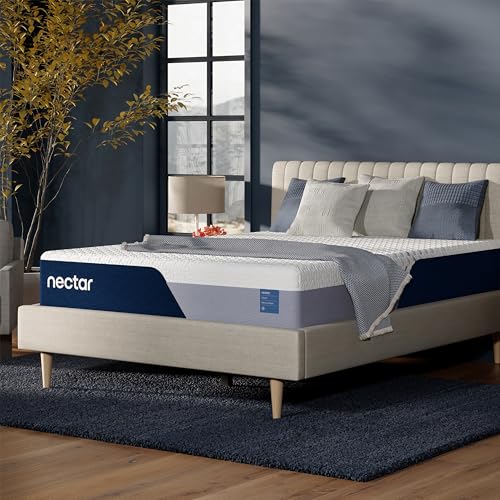
Every pick in this guide is sold on Amazon, where you can check the current price, size availability, trial terms, and delivery options on the listing itself. Start with our top pick, the Nectar 12” Memory Foam Mattress — Check on Amazon. The other five picks are the Casper Sleep Original — Check on Amazon; the Layla Copper Infused Memory Foam Mattress — Check on Amazon; the Tuft & Needle Original — Check on Amazon; the Novilla Bliss — Check on Amazon; and the GhostBed Classic — Check on Amazon. Because comfort at this level of sensitivity is personal, weigh the trial terms on each listing as heavily as the materials — they are part of the product.
In this guide
Quick Picks
| Pick | Badge | Why it earns its place |
|---|---|---|
| Nectar 12” Memory Foam Mattress | Best Overall | Firm contour, a cooling top layer, deep motion absorption — and the longest trial positioning here to judge it fairly. |
| Casper Sleep Original 11″ Memory Foam Queen Mattress – Medium Firm Feel | Breathable Mem | Best for Restless Sleepers | Zoned support and breathable foam for sleepers whose wakefulness starts with discomfort and heat. |
| Layla 10” Copper Infused Memory Foam Mattress | Best Adjustable Feel | Flippable soft/medium-firm: if the first feel is wrong for your nights, the second is already in the room. |
| Tuft & Needle Original Legacy Medium Firm Gel Foam Queen Mattress in a Box | CertiPUR-US c | Best for Light Sleepers | Responsive, cooling, and quiet — a surface that does not trap you or comment when you move. |
| Novilla Bliss Queen Size Mattress | Best for Couples | Triple-layer motion isolation: your partner’s night stops arriving in yours. |
| GhostBed Classic 11 Inch Queen Memory Foam Mattress | Medium-Firm Feel | Best Balanced Comfort | A medium-firm, springy, durable middle path — nothing extreme to adapt to or rebel against. |
Key Takeaways
- No mattress treats insomnia; the right mattress removes physical obstacles — heat, pressure, motion, sag — from a fragile night’s path.
- Temperature and motion are the two mattress variables light sleepers feel most; every pick here addresses at least one directly.
- Trial length is a genuine feature for this keyword: sensitive sleepers need weeks of real nights to judge a bed.
- Consistency matters: a mattress that feels the same at hour six as at hour one gives a wakeful mind less to monitor.
- Persistent sleeplessness deserves professional evaluation. Use this guide for the comfort layer of the problem, and a clinician for the rest.
How These Picks Were Chosen
Selection started from the physical obstacles a mattress can actually control. Heat: picks needed a credible cooling design — gel infusions, copper, breathable open-cell foam, or charcoal — because overheating is the most common mattress complaint among light sleepers. Motion: picks needed genuine isolation, which favors foam constructions and rules this guide toward them. Pressure: picks needed contouring or zoning sufficient that a hip or shoulder does not become a reason to surface from light sleep. Consistency: picks needed support layers that hold their feel across the night and across months, because a mattress that changes character at 4 a.m. is a mattress that wakes people at 4 a.m.
What was filtered out: hybrids with lively coil surfaces for this particular guide — excellent mattresses, but their responsiveness transmits more sensation to a light sleeper, and our hybrid guide covers them on their own terms; ultra-plush models whose deep sink can trap and warm a restless sleeper; and any product whose marketing promised sleep outcomes we cannot verify. On language, this guide deliberately uses comfort framing only. Where makers describe their designs in wellness terms, we describe the design and the physical sensation it targets — coolness, stillness, support — and we make no claims about sleep disorders. Every specification below traces to the verified pool entry for that model; prices are never printed.
The 6 Best Mattresses for Insomnia — Reviewed

Nectar 12” Memory Foam Mattress
Our badge: Best Overall
The Nectar 12” Memory Foam Mattress leads this guide for a reason specific to fragile sleep: it is the most set-and-forget mattress here. Its system — breathable cooling fabric, contouring memory foam, dynamic support foam — produces a firm-leaning, deeply isolating surface that feels the same in every position and at every hour, and its listing’s long trial positioning gives a sensitive sleeper the one thing this purchase genuinely requires: unhurried time to find out.
Strengths
- Deep foam isolation: a partner’s movements are absorbed at the source, not delivered to you
- A cooling top layer over contouring foam addresses heat and pressure together
- Firm support holds alignment so the body is not renegotiating posture all night
Trade-offs
- Slow foam response means position changes take effort — restless sleepers should weigh this
- The firm feel may under-cushion very light side sleepers
- At 78 pounds in queen, setup needs two people
| Color | White |
| Size | Queen |
| Dimensions | 80 x 60 x 12 inches |
| Weight | 78 pounds |
The Nectar’s comfort argument for this audience is subtraction. The contouring foam removes pressure as a reason to wake: hips and shoulders rest in shaped support rather than on a resistant surface. The support foam removes sag as a reason to wake: the pelvis stays level, so the back does not spend the night micro-adjusting. The cooling layer removes the slow heat build-up that dense foam is known for and that light sleepers reliably notice at the night’s midpoint. None of this is a treatment for anything; it is a bed declining to participate in your wakefulness, which is the most any mattress can honestly offer.
The trial deserves its emphasis. A sleeper with fragile sleep cannot judge a mattress in a week — the first nights carry novelty, the second week carries adjustment, and only the third week onward shows the bed’s true effect on an ordinary night. A long trial converts this purchase from a gamble into an observation period. Give it that period, keep your routine otherwise steady so the mattress is the only changed variable, and let your own log of mornings — not hope, not marketing — decide.
Best for: Light sleepers in shared beds who want maximum stillness and a long, unhurried trial / Not suited for: Very restless sleepers who need an instantly responsive surface
Choose it for the calmest, most consistent foam night here. Skip it if you change position constantly. Check on Amazon

Casper Sleep Original 11″ Memory Foam Queen Mattress – Medium Firm Feel | Breathable Mem
Our badge: Best for Restless Sleepers
The Casper Sleep Original is the pick for sleepers whose nights are broken by physical restlessness: the shoulder that aches into a roll, the hip that demands the other side, the warmth that builds wherever the body rests. Its Zoned Support firms the foam under the hips, waist, and lower back, while its breathable open-cell Flex Foam keeps air moving through the mattress instead of letting it stagnate the way traditional memory foam does.
Strengths
- Zoned support reduces the discomfort signals that trigger position changes
- Breathable foam construction targets the heat build-up restless sleepers generate
- Advanced motion isolation keeps a partner’s night separate from yours
Trade-offs
- Medium-firm foam still responds more slowly than a grid or latex surface
- Zoning benefits sleepers whose torso lands near the designed zones
- At 11 inches it is mid-profile; heavier sleepers get less margin than the 12-inch picks
| Color | Light Gray |
| Size | Queen |
| Dimensions | 80 x 60 x 11 inches |
The logic connecting zoning to restlessness is simple: many position changes are not random — they are the body fleeing a pressure point or a sagging posture. A mattress that supports the pelvis properly and cushions the shoulder genuinely reduces the number of those signals per night, and fewer signals means fewer climbs toward wakefulness. The Casper cannot promise you will move less; it can remove some of the physical reasons you move, which is the honest version of the same hope.
Its listing includes a 100-night trial and a 10-year limited warranty, with CertiPUR-US certified foams that its maker says resist sinking and sagging — the durability that keeps the zoning honest over years. For the sleeper whose partner reports “you were restless all night” as a nightly review, the Casper is the most mechanically thoughtful answer in this guide.
Best for: Restless sleepers whose wakefulness starts in the body — pressure, posture, warmth / Not suited for: Sleepers who want a deep, slow, enveloping foam feel
Choose it to remove reasons to move. Skip it if stillness, not movement, is your whole story. Check on Amazon

Layla 10” Copper Infused Memory Foam Mattress
Our badge: Best Adjustable Feel
The Layla Memory Foam Mattress offers this audience something no other pick can: a second chance built into the product. It is flippable — soft on one side, medium-firm on the other — so if the feel you chose turns out to be wrong for your nights, the alternative is a flip away rather than a return, a refund, and a new search conducted while tired. Its copper-infused memory foam adds a cooling mechanism — copper-gel particles conducting heat away from the body — and a load-responsive support character.
Strengths
- Two firmness levels in one mattress hedge the sensitive sleeper’s biggest risk: choosing wrong
- Copper infusion targets the heat build-up that fragments light sleep
- The listing’s long trial positioning and included pillows support a genuine home experiment
Trade-offs
- Flipping a queen mattress is a two-person task, so the second feel is an option, not a dial
- Both sides are memory foam; the slow-response character is present either way up
- At 10.5 inches deep it is a mid-profile build
| Color | Natural |
| Size | Queen |
| Dimensions | 80 x 60 x 10.5 inches |
| Weight | 69 pounds |
Sensitive sleepers often know their current bed is wrong without knowing which direction right lies — softer or firmer, warmer or cooler. The Layla converts that uncertainty into a sequence: start with the side your instincts choose, sleep three honest weeks, and if the mornings say no, flip and repeat, all inside one purchase and one trial. That structure respects something real about this audience, which is that the cost of a wrong mattress is not only money; it is another month of bad nights spent exchanging it.
The copper story is the supporting act: heat conducted away from the surface, and particles that firm under load to support where the body presses. Made in the USA to order per its listing, the Layla is the experiment-friendly pick — the one that assumes you may not know your own preference yet and refuses to punish you for it.
Best for: Sensitive sleepers unsure whether softer or firmer will suit their nights / Not suited for: Anyone who will never actually flip a mattress
Choose it for the built-in plan B. Skip it if your firmness preference is settled. Check on Amazon

Tuft & Needle Original Legacy Medium Firm Gel Foam Queen Mattress in a Box | CertiPUR-US c
Our badge: Best for Light Sleepers
The Tuft & Needle Original is engineered around responsiveness and air: T&N Adaptive foam — open-cell, infused with cooling gel and heat-conducting graphite — provides contouring pressure relief with bounce-back support, and a ventilated release layer enhances pressure relief while a Flex layer firms progressively as you settle. For the light sleeper, the sum is a surface that neither traps you in a foam crater nor stores your heat — the two sensations most likely to pull a light sleeper up through the surface of sleep.
Strengths
- Responsive foam lets you change position without the effort that wakes light sleepers fully
- Gel, graphite, and ventilation layers form the most deliberate cooling stack among the foam picks
- A soft cooling cover completes a surface designed to feel neutral rather than noticeable
Trade-offs
- The maker suggests a two-week break-in before judging — the first impression is not the product
- Less deep contour than classic memory foam for pressure-point devotees
- Medium feel may under-cushion very light side sleepers
| Color | White |
| Size | Queen |
| Dimensions | 80 x 60 x 10 inches |
| Weight | 72 pounds |
There is a particular 3 a.m. experience this mattress is designed to prevent: you surface slightly, decide to roll over, and the effort of climbing out of your own body-shaped dent in slow foam wakes you completely. A responsive surface removes the effort, and with it the awakening — you move the way you move in the first hour of the night, half-asleep and unbothered. The cooling stack does similar work on the thermal side, wicking and conducting heat so the surface you return to after a bathroom trip is not a warm puddle shaped like you.
Assembled in the USA, CertiPUR-US and GREENGUARD Gold certified per its listing, with a 100-night trial and 10-year limited warranty, the Tuft & Needle is the engineer’s answer to light sleep: nothing dramatic, every layer aimed at not being noticed. For sleepers whose complaint is “everything wakes me,” a mattress whose ambition is invisibility is exactly the right ambition.
Best for: Light sleepers who wake during position changes or from warmth / Not suited for: Sleepers who love the deep, slow memory foam embrace
Choose it for a surface that stays out of your way. Skip it for maximum contour. Check on Amazon

Novilla Bliss Queen Size Mattress
Our badge: Best for Couples
The Novilla Bliss is this guide’s couples pick because its triple-layer foam construction is built around one job: absorbing motion at every level so a partner’s night does not become yours. Its NanoGel memory foam contours for pressure relief, its support layers hold spinal alignment, its gel foam dissipates heat, and its reinforced edges keep both sleepers on their own territory — the complete list of ways a shared bed can disturb a fragile sleeper, each addressed in the design.
Strengths
- Motion isolation across three foam layers — the deepest in this guide
- Gel memory foam and a breathable knitted cover moderate shared-body heat
- Reinforced edges prevent the roll-together that turns two sleepers into one problem
Trade-offs
- Full expansion can take up to 72 hours per the listing
- Contouring foam feel will not suit a partner who prefers a springy surface
- No mattress solves a partner’s snoring — that variable lives outside this guide
| Color | Bliss |
| Size | Queen (U.S. Standard) |
| Dimensions | 80 x 60 x 12 inches |
| Weight | 61.5 pounds |
For the partner of a light sleeper, this mattress is also a kindness: the guilt of waking someone by existing in the same bed is its own relationship stress, and genuine isolation dissolves it. Different schedules stop being negotiations. The early riser’s exit compresses foam in one postal code of the bed; the night owl’s late arrival likewise. What remains shared is the bed itself, which is the part both people actually wanted to share.
The Novilla is CertiPUR-US certified, arrives as a bed in a box that fits standard frames, and its listing includes a trial and 10-year protection — confirm current terms when you shop. If your sleeplessness has a co-author who sleeps beside you, start the shortlist here and with the Nectar, and let isolation be the first specification you test during the trial.
Best for: Light sleepers sharing a bed, especially with a restless or differently scheduled partner / Not suited for: Solo sleepers, who can spend the isolation budget on other features
Choose it when the disturbance has a name and sleeps next to you. Skip it for a solo bed. Check on Amazon

GhostBed Classic 11 Inch Queen Memory Foam Mattress | Medium-Firm Feel
Our badge: Best Balanced Comfort
The GhostBed Classic closes the guide with the case for moderation: four layers — cooling gel memory foam, aerated latex, high-density support foam — tuned to a balanced medium-firm that its maker designs for stomach, back, side, and combo sleepers alike. For a sensitive sleeper, a mattress with no extremes is a mattress with fewer surprises, and its springy, low-motion character keeps the surface feeling calm and predictable night after night.
Strengths
- Balanced tuning avoids the too-soft and too-firm failure modes sensitive sleepers cycle between
- Aerated latex adds airflow and gentle responsiveness over a durable dense core
- A high-density core holds the feel consistent across months, so the bed you adapted to stays the bed you have
Trade-offs
- Balance means no single feature is best-in-guide — isolation, cooling, and contour all rank second somewhere
- Medium-firm may feel firm to light side sleepers in the first weeks
- Less enveloping than the Nectar or Layla for contour seekers
| Color | White |
| Size | Queen |
| Dimensions | 80 x 60 x 11 inches |
| Weight | 50 pounds |
Consistency is the GhostBed’s under-sold virtue for this audience. A wakeful mind monitors novelty; a mattress whose feel drifts — softening here, warming there, changing with the seasons — gives that mind a subscription of small things to notice. A dense-cored, balanced mattress simply repeats itself, and repetition is what lets a nervous system stop auditing the bed. Made in the USA and Canada with CertiPUR-US certified materials, and the lightest full build in this guide at 50 pounds in queen, it is also the easiest pick to rotate on schedule — and rotation is part of how consistency is maintained.
If your mattress history is a pendulum — too firm, then too soft, then too hot — the GhostBed is the deliberate stop in the middle, engineered to be unremarkable in every dimension except durability. For fragile sleep, unremarkable is a compliment.
Best for: Sensitive sleepers who want one balanced, predictable, durable bed / Not suited for: Sleepers chasing a specific extreme of feel
Choose it for calm consistency. Skip it if you know exactly which specialty you need. Check on Amazon
Comparison Table
| Pick | Primary obstacle removed | Cooling design | Feel | Check price on Amazon |
|---|---|---|---|---|
| Nectar 12” Memory Foam Mattress | Partner motion + sag | Cooling top layer | Firm-leaning contour | Check price on Amazon |
| Casper Sleep Original | Pressure-triggered restlessness | Breathable open-cell foam | Medium-firm, zoned | Check price on Amazon |
| Layla Memory Foam Mattress | Wrong firmness choice | Copper-infused foam | Soft / medium-firm flippable | Check price on Amazon |
| Tuft & Needle Original | Effortful position changes + heat | Gel + graphite + ventilation | Medium, responsive | Check price on Amazon |
| Novilla Bliss | Partner motion | Gel foam + breathable cover | Medium contour | Check price on Amazon |
| GhostBed Classic | Inconsistency and extremes | Gel foam + aerated latex | Medium-firm, balanced | Check price on Amazon |
How to Choose a Mattress When Your Sleep Is Fragile
Name the Obstacle Before Shopping
Keep a week’s honest log: when you wake, what do you notice first — heat, a sore hip, your partner moving, a mind already racing? The first three are mattress-addressable; the fourth is information for a clinician, not a shopping cart. Shopping against a named obstacle converts this purchase from superstition into engineering, and it tells you which of this guide’s badges is yours.
Weight Trial Length Like a Material
Sensitive sleepers adapt slowly and judge fairly only across ordinary weeks — work stress, weekends, weather. A long trial is therefore not a perk but a specification, as real as foam density. Confirm the exact trial terms for your size on the listing, calendar the decision date on delivery day, and protect the experiment: change nothing else about your routine during the first month if you can help it.
Build the Room Around the Bed
The mattress is one layer of a sleep environment: darkness, cool room temperature, breathable bedding, a pillow matched to the new mattress’s height, and a frame that does not creak are the others. A wakeful sleeper should audit all of them before concluding a mattress failed — and hosts assembling a restful guest room can borrow the same checklist, along with the beds in Best Portable Mattresses For Guests. Seasonal bedding refreshes for the full system often appear in Black Friday Bedding Deals 2026.
Prefer Boring Consistency
For this audience, the best mattress is the one you stop thinking about. Dense cores, balanced feels, and proven constructions repeat themselves nightly; novelty materials and extreme feels give a monitoring mind fresh material. When two finalists remain, choose the one whose description sounds less exciting. That instinct is correct more often than marketing would like.
Know When the Mattress Is Not the Project
If sleeplessness persists through a well-chosen mattress and a disciplined month, the mattress has given you valuable information: the obstacle is elsewhere. Take it to a professional. Sleep has medical dimensions — breathing, hormones, mood, medication — that no bedding purchase can reach, and addressing them is not a consolation prize; it is the main road, with the mattress as a well-built side street.
How Should You Test a New Mattress When You Sleep Lightly?
Run the trial like an observation, not a hope. Keep your bedtime, wake time, caffeine, and evening routine as steady as life allows, so the mattress is the main changed variable. Log three things each morning, in one line: how long falling asleep felt, how many awakenings you remember, and how the first hour of the day felt. Judge at week three and week four, not before — novelty inflates week one in both directions. If a partner shares the bed, log their report too; isolation improvements often show up in the partner’s account before your own. And if the verdict is no, use the return while the trial is alive: a mattress that keeps a light sleeper awake is data, not a life sentence.
Problem: You lie awake cataloguing the new mattress’s feel — Normal for the first nights; novelty fades. If it persists past two weeks, the feel is genuinely wrong for you — that is what the trial is for.
Problem: You wake hot at the same hour nightly — Audit bedding and room temperature before the mattress; then weigh the cooling-led picks (Tuft & Needle, Layla, Casper) at exchange time.
Problem: Your partner’s alarm-side exit wakes you daily — Isolation is insufficient or the frame is broadcasting motion; confirm base rigidity, then prioritize the deep-isolation picks (Nectar, Novilla).
Problem: You fall asleep fine but wake at 4 a.m. on the new bed — Note what you notice first — heat, hip, back, mind — and treat that as the diagnosis; one variable at a time beats a new mattress bought in the dark.
Problem: Nothing about the bed explains your wakefulness — Believe the data. The mattress chapter is closed; take the log to a clinician, who will find it genuinely useful.
The Bedroom Environment: The Mattress’s Supporting Cast
A mattress does its work inside a system. Light is the system’s loudest input: blackout curtains or a sleep mask matter more than any foam. Temperature is next: most sleepers rest best in a cool room, and the mattress’s cooling design can only cooperate with the room, not overrule it — a gel mattress under a winter duvet in a warm room is a cool mattress in a sauna of your own making. Sound follows: a creaking frame, a rattling protector, a partner’s phone buzzing on a hard nightstand are all small alarms. And routine is the frame around everything: consistent sleep and wake times give any mattress a fairer test and any sleeper a steadier night. None of this diminishes the mattress decision — a bad bed defeats a good room — but fragile sleep deserves the whole checklist, worked in order of cost: routine and darkness first, bedding second, mattress third, and professional help whenever the pattern persists.
Couples, Schedules, and the Diplomacy of Shared Sleep
When one partner sleeps lightly and the other sleeps like the dead, the bed becomes a negotiation neither of them chose. The mattress terms of that negotiation are isolation and edges: isolation so the sound sleeper’s freedom does not tax the light sleeper’s night, and edges firm enough that both can claim territory without roll-together. Beyond the mattress, the diplomacy is scheduling and staging — the late partner prepares in another room, the early partner’s clothes wait outside the bedroom — small kindnesses that cost nothing and buy real sleep. If schedules diverge completely for a season, there is no shame in a household that sleeps apart on work nights and together on weekends; the goal is two rested people, not a photograph of a shared bed. The guest setups in Best Mattresses For Sleeper Sofas have hosted more diplomatic arrangements than any marriage counselor.
Shift Work and Irregular Schedules: Sleeping When the World Is Awake
A significant share of fragile sleepers are not sleeping at night at all: nurses, drivers, warehouse and emergency workers, new parents, and carers keep hours the sun does not endorse. For them, the mattress’s job description gains two clauses. First, isolation must work in reverse and at full strength — the household is awake, moving, cooking, and living around the day sleeper, so motion and vibration isolation stop being about a partner and become about a building. Foam’s deep absorption, led here by the Nectar and Novilla, is the right physics. Second, the surface must perform in a warm, bright world: cooling designs and blackout discipline do together what neither does alone, and a day sleeper should treat the bedroom’s darkness and temperature with the seriousness a night sleeper reserves for the mattress itself.
Routine anchoring matters more for shift sleepers than for anyone: the same pre-sleep sequence, the same wake time discipline on workdays, and a bed that feels identical every time it is used. That is the deep argument for the consistency picks in this guide — a mattress whose feel never surprises is a cue the body can learn. And the standing caveat applies with extra force: shift-work sleep problems have a medical literature and professional guidance of their own, and a worker whose sleep is collapsing should use it rather than a product guide.
The First Fortnight: What Adjustment Actually Feels Like
Nobody warns buyers that a better mattress often sleeps worse for the first several nights, so let this guide do it. Your body has calibrated itself to the old bed — its dips are your map, your muscles brace in the places it taught them to brace — and a new surface invalidates that map overnight. Light sleepers feel the invalidation most: unfamiliar pressure distribution, a different thermal character, a surface that responds at a new speed. Nights two through five are typically the strangest. By the end of the first week the map redraws itself; by the end of the second, the mattress stops being an event and becomes furniture, which is the state in which it can finally be judged.
Two practices protect the fortnight. The first is the log described earlier: three lines each morning, no more, because data collected tired is still better than impressions revised by hope. The second is restraint — no topper added in week one, no pillow swap in week two, no verdict at all until the map has redrawn. If, after three to four honest weeks, the log shows no improvement in the obstacle you named before shopping, the trial return is not a failure; it is the experiment completing, with the Layla’s flip or the runner-up pick as the next hypothesis. Fragile sleep rewards methodical people, and a mattress trial run methodically is one of the few sleep experiments a person can conduct entirely at home.
The Partner Protocol: Protecting Two Sleeps at Once
Insomnia in a shared bed is a two-person condition with a one-person diagnosis, and the mattress decisions change when both sleepers are counted. The partner of a light, wakeful sleeper becomes a source of micro-disturbances they never chose to be; the wakeful sleeper becomes a source of guilt they never chose to carry. The bed can defuse both roles: isolation that erases the partner’s turns, edges firm enough that a careful exit does not tilt the whole surface, and — the underrated one — a size that gives each sleeper a territory the other’s restlessness does not annex. Where the relationship and the room allow it, the honest escalation is two separate sleep surfaces in one frame or one room, a solution couples resist for symbolism and then praise for results. Sleep is not a team sport unless both players are rested.
When the Bed Is Fine but the Night Isn’t: A Checklist Beyond the Mattress
This guide’s honesty requires a closing checklist for the reader who buys well and still lies awake. Work it before blaming the mattress: caffeine after midday, including the tea and the chocolate; alcohol’s false promise, which sedates the first half of the night and fragments the second; the bedroom’s light leaks, from hallway spill to the charger’s LED; a room that is warm at bedtime and cold at 4 a.m., or the reverse; the phone’s last scroll, which is rarely about the phone and usually about the day’s unfinished business following you horizontal. And the meta-item: the effort to sleep, which is itself wakeful — the clinical approaches to insomnia spend much of their craft dismantling exactly that effort. Readers whose wakefulness is partly a position problem in disguise will also find the movement analysis in Best Mattresses For All Sleeping Positions worth an evening. A good mattress removes the bed from the list of suspects. If the nights remain broken with the bed acquitted, that is valuable information to carry to a professional, not a failed purchase to regret.
Naps and the Insomnia Bed: Daytime Rules for the Same Mattress
The new mattress will be tested by daytime as well as by night, and insomnia has opinions about naps that the sleeper should hear before the habits form. Sleep clinicians commonly advise people with insomnia to protect the night’s sleep pressure: long or late naps spend the very tiredness the night needs, and the bed itself is often reserved for sleep so the brain’s association stays clean — a principle the clinical approaches return to repeatedly. The practical translation for a mattress owner: if you nap, nap short and early, ideally in the chair or the guest bed rather than the new mattress; keep the bedroom’s daytime life — reading, scrolling, worrying — in other rooms where possible, so the bed remains a single-purpose signal. None of this is a treatment and none of it replaces professional guidance for persistent insomnia; it is the etiquette that lets a well-chosen mattress do its one job — being the place where sleep, and only sleep, is expected — with the fewest mixed messages a household can manage.
The Bedroom Door: Sound, Household, and the Last Disturbance
The final disturbance audit is architectural. A bedroom door that does not latch softly, a hallway that carries the television’s dialogue to the pillow, a household whose night owls and early risers share a thin wall with the light sleeper — these are sleep inputs as real as any mattress layer. The remedies are unglamorous and effective: a door sweep and soft-close hardware, a white-noise source placed at the door rather than the bedside so it masks at the border, and household agreements about the last hour’s volume that are negotiated in daylight and kept in the dark. The mattress remains the largest single variable in the room, but the room finishes the sentence the mattress starts.
Common Buying Mistakes
Expecting a Mattress to Cure Insomnia
It cannot, and believing it can delays the help that works. Buy the mattress to remove physical obstacles; take persistent sleeplessness to a professional.
Changing Everything at Once
New mattress, new pillow, new routine, new supplements in the same week teaches you nothing about any of them. One variable at a time, with a log, is how fragile sleepers actually learn what helps them.
Judging in the First Week
Novelty inflates and deflates first impressions in both directions. Three to four weeks of ordinary nights is the minimum honest trial for this audience.
Buying Maximum Plush for Maximum Comfort
Deep sink traps heat and movement, and light sleepers often sleep worse in a cloud than on a calm, balanced surface. Comfort for this audience means unnoticeable, not enveloping.
Ignoring the Partner Variable
If the disturbance sleeps beside you, isolation is the specification. Solo-sleeper logic applied to a shared bed buys the wrong mattress beautifully.
Final Recommendation
Start with the Nectar 12” Memory Foam Mattress: the calmest combination here of isolation, support consistency, and surface cooling, backed by trial positioning long enough for a sensitive sleeper to judge honestly. The runner-up is the Novilla Bliss — Check on Amazon — when a partner’s motion is the named obstacle, with the Tuft & Needle for light sleepers who wake on warmth and effort. Whichever you choose, run the trial as an experiment, keep the log, fix the room’s cheap variables first — and if sleeplessness persists through all of it, take the log to a clinician. That sequence respects both the mattress’s real power and its honest limits.
Frequently Asked Questions
Can a mattress help with insomnia?
A mattress cannot treat insomnia, which is a medical condition. It can remove physical obstacles to sleep — heat, pressure points, partner motion, sagging support — and for sleepers whose wakefulness is triggered by those obstacles, removing them can make nights noticeably easier. Persistent insomnia should be evaluated by a clinician.
What mattress features matter most for light sleepers?
Motion isolation, temperature moderation, pressure relief without deep sink, and consistency of feel across the night. Every pick in this guide was selected against those four, in roughly that order.
Is memory foam or a hybrid better for fragile sleep?
Foam generally isolates motion better and feels calmer to light sleepers, which is why this guide leans foam. Hybrids answer with airflow and responsiveness; our hybrid guide covers them. If heat is your main obstacle and motion is not, a hybrid remains a rational choice.
How long should I trial a mattress if I sleep badly?
Longer than most shoppers: three to four weeks minimum before judging, using the full trial window the listing allows. Keep a one-line morning log; memory alone is an unreliable witness at this level of tiredness.
What else should I fix besides the mattress?
Darkness, room temperature, breathable bedding, pillow height matched to the new mattress, a quiet frame, and consistent sleep and wake times. Work them in that cost order — and treat persistent sleeplessness as a medical conversation, not a shopping problem.
When should I see a doctor about my sleep?
If sleeplessness persists for weeks, worsens, involves loud snoring or breathing pauses, or is affecting your daytime safety, mood, or work, book the appointment. A mattress guide is the wrong tool for those patterns, and a clinician will want exactly the kind of log this guide suggests keeping.


