Disclosure: As an Amazon Associate, dailyhomedecorating.com earns from qualifying purchases. Links to Amazon on this page are affiliate links; they cost you nothing extra. Prices and availability change often, so check the current Amazon listing before you buy.
The best chairs for back posture treat posture not as a position you hold, but as a relationship between your body and your chair that renews itself every time you shift, reach, lean, and settle. The chairs that fail posture are the ones that demand a single correct position and punish every departure from it — the rigid seat that feels virtuous for twenty minutes and unbearable by lunch. The best chairs for back posture work the other way: they meet your spine where it naturally curves, support the lower back without shoving it, let your pelvis find its neutral angle, and keep supporting you through the dozen postures a real workday actually contains.
This guide reviews six chairs chosen on posture mechanics — lumbar systems that adjust or follow, tilt mechanisms that move with the body, seat edges that keep circulation free, and backrests shaped to the spine rather than to a style. The framing is comfort and support throughout: a chair supports posture; it does not correct medical conditions, and persistent pain belongs in professional care. Readers whose posture has already collapsed into habit will find the rehabilitation-minded companion in Best Chairs For Bad Posture, and the desk setup that surrounds the chair is covered in Best Work Chairs For Lower Back Pain.
Where to Buy
Every pick below is sold on Amazon, where you can check the current price, configuration options, and availability before you buy.
- Herman Miller Classic Aeron Task Chair — Check on Amazon
- Steelcase Series 1 Ergonomic Office Chair — Check on Amazon
- HON Ignition 2.0 Ergonomic Office Chair — Check on Amazon
- FLEXISPOT ErgoX Premium Ergonomic Office Chair — Check on Amazon
- Ticova Ergonomic Office Chair — Check on Amazon
- SIHOO M18 Ergonomic Office Chair — Check on Amazon
In this guide
Quick Picks
| Pick | Badge | Why it earns its place |
|---|---|---|
| Herman Miller Classic Aeron Task Chair | Best Overall | Pellicle suspension, a Kinemat tilt that pivots with your body, an adjustable lumbar pad, and a waterfall seat edge — the posture benchmark. |
| Steelcase Series 1 Ergonomic Office Chair | Best Self-Adjusting | Weight-activated controls set support automatically as you move — posture help with zero lever-fiddling. |
| FLEXISPOT ErgoX Premium Ergonomic Office Chair | Best Adjustable | Seat depth, five-level back, dynamic lumbar, and a 3D headrest — posture tuned dimension by dimension. |
| HON Ignition 2.0 Ergonomic Office Chair | Best for Shared Desks | Adjustable lumbar and arms, breathable mesh, and a 300 lb rating — posture support that resets for the next sitter. |
| Ticova Ergonomic Office Chair | Best Budget | Lumbar adjustable in height and depth, a W-shaped waterfall seat, and 3D armrests at an entry price. |
| SIHOO M18 Ergonomic Office Chair | Best Mesh Value | Four support points, adjustable lumbar and headrest, and a wide cushion rated to 330 lb — posture value in mesh. |
Key Takeaways
- Good posture support is dynamic: the chair should follow your spine through movement, not freeze you in one approved position.
- The lumbar system is the heart of it — adjustable in height and depth, dynamic, or self-setting — because lower backs differ and migrate.
- Seat design matters as much as back design: a waterfall front edge and the right depth keep your pelvis neutral and your circulation free.
- Tilt is a posture feature, not a luxury: a mechanism that pivots naturally lets your whole body change angle without losing support.
- These chairs support comfortable posture; they do not treat conditions. Persistent pain deserves a professional’s assessment.
How These Picks Were Chosen
Every chair in the pool with an ergonomic claim was audited against four posture mechanisms: how its lumbar support works (fixed, adjustable, dynamic, or self-adjusting), how its tilt behaves (locked, simple, or body-following), how its seat treats the pelvis and thighs (depth, edge shape, cushion design), and how its backrest is shaped (flat, curved, or suspended). Chairs whose posture story was a single fixed curve were excluded, because a fixed curve fits the population average and almost no individual in it.
The six survivors represent four distinct philosophies of posture support: suspension (the Aeron’s Pellicle), self-adjustment (Steelcase), full manual adjustment (FLEXISPOT and Ticova), and adaptable value (HON and SIHOO). That spread is deliberate — posture needs differ by body and by temperament, and the right philosophy is the one whose adjustments you will actually use, or that needs none from you at all.
Specifications come from the verified pool. Two pool entries list package-style dimensions; where that occurs, the spec boxes below use the verified fields only and the omission is flagged in each article’s sources file, as program standard requires.
The 6 Best Best Chairs for Back Posture — Reviewed

Herman Miller Classic Aeron Task Chair
Our badge: Best Overall
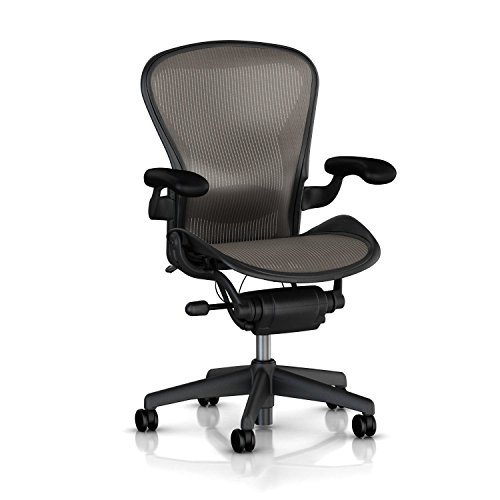
The Herman Miller Classic Aeron Task Chair is the chair that taught the industry what posture support means, and this highly adjustable configuration shows why: a lumbar pad you position against your own curve, a tilt limiter with seat-angle adjustment, fully adjustable arms, and the patented Kinemat tilt that lets your neck, shoulders, hips, knees, and ankles pivot naturally as you move. The breathable Pellicle suspension distributes your weight across the seat and back instead of concentrating it, dissipating heat as it supports, and the waterfall front edge takes pressure off your thighs so circulation keeps you alert. It carries a 12-year Herman Miller warranty.
Strengths
- Suspension support that follows the body instead of cushioning against it.
- Kinemat tilt pivots the whole body naturally — posture through movement.
- Adjustable lumbar pad, tilt limiter, and seat angle for a personal fit.
Trade-offs
- Premium position — the benchmark costs benchmark money.
- Suspension feel divides sitters; foam devotees should sit in one first if they can.
- This configuration uses carpet casters; hard floors need the right caster choice.
| Color | Graphite Frame/Lead Classic Pellicle |
| Size | Size B (Medium) |
| Dimensions | 17 x 27 x 42 inches |
| Weight | 48 pounds |
The Aeron’s posture argument is distribution. A foam chair supports you at the points where you compress it, and those points migrate and heat up; the Pellicle supports you everywhere at once, tensioned like a drum skin shaped to the human back, so the spine’s curves are met by a surface that was designed around them. Size B fits the broad middle of the population; the honest caveat is that Aeron sizing matters more than most chairs’ — a sitter at the edges of the size range should verify their fit against the maker’s sizing guidance before ordering.
For posture purists, this remains the reference: the chair against which every other entry in this guide is, knowingly or not, measured.
Choose the Aeron if you want the benchmark and your body fits its sizing. Skip it if your budget is mid-range — the Ticova and SIHOO deliver the adjustable essentials for far less.
Best for: Posture-first sitters who want the industry benchmark / Not suited for: Budget buyers or foam-only loyalists

Steelcase Series 1 Ergonomic Office Chair
Our badge: Best Self-Adjusting
The Steelcase Series 1 Ergonomic Office Chair supports posture for the sitter who never adjusts anything: its weight-activated controls read your body and set the recline tension automatically, so when you lean back to think, the chair gives the right resistance, and when you lean in to work, it follows — no levers, no settings, no forgotten configurations. Adaptive bolstering and flexible edges keep the sit pressure-free, and the compact frame assembles in under two minutes without tools. This configuration is the carpet-caster build.
Strengths
- Automatic support that is always set correctly because it sets itself.
- Pressure-free edges suit long, still, focused sessions.
- Compact footprint and two-minute assembly for home offices.
Trade-offs
- Less manual control for sitters who enjoy dialing in a precise setup.
- Carpet casters on this configuration.
- A task-chair silhouette without footrest or deep recline.
| Color | Graphite |
| Size | Carpet (Pack of 1) |
| Dimensions | 23.75 x 27 x 41.25 inches |
| Weight | 29 pounds |
The posture insight inside the Series 1 is behavioral: most sitters adjust a new chair for a week and never touch it again, which means most adjustable chairs spend their lives set for the body and mood of one forgotten Tuesday. A self-adjusting chair cannot be left wrong. Its support is re-derived from your weight and movement every time you sit, which makes it the most consistently correct posture chair in this guide for the majority of real humans — and the natural recommendation for shared desks, where the “previous sitter’s settings” problem disappears entirely.
Choose the Steelcase if you want posture support without a relationship with your chair’s levers. Skip it if you are a dedicated adjuster — the FLEXISPOT below is your playground.
Best for: Set-and-forget sitters and shared desks / Not suited for: Manual-adjustment enthusiasts

FLEXISPOT ErgoX Premium Ergonomic Office Chair
Our badge: Best Adjustable
The FLEXISPOT ErgoX Premium Ergonomic Office Chair is the manual adjuster’s masterpiece: seat depth adjustable from 17 to 20 inches — the posture specification most chairs omit entirely — seat height from 20.1 to 22.4 inches, a five-level adjustable back, dynamic lumbar support that responds as you move, a 3D headrest, 3D armrests, a nap footrest, and tilt, fitted for users 5’1″ to 6’2″ and rated to 400 lb. Seat depth is where posture is won: too deep and the edge presses your calves while your back leaves the lumbar; too shallow and your thighs lose support. The ErgoX lets you set it exactly.
Strengths
- Adjustable seat depth aligns the lumbar, the edge, and your legs simultaneously.
- Dynamic lumbar plus a five-level back: support that fits and follows.
- 400 lb rating and the widest fit range in this guide.
Trade-offs
- Premium pricing among this guide’s adjustable chairs.
- The pool lists package-style dimensions for this model; plan by its fit ranges.
- Full adjustment means a real setup session on day one.
| Color | Black |
| Size | Overall Depth 44″ |
| Weight | 38 pounds |
The ErgoX rewards the sitter who treats setup as a one-time investment: twenty minutes with its adjustments, following the sequence in this guide’s how-to section, produces a chair fitted to one body with unusual precision — and its dynamic lumbar then maintains that fit through the day’s movement. The nap footrest is a posture feature too, in disguise: the midday reset, legs up and spine unloaded for fifteen minutes, is worth more to afternoon posture than any single adjustment.
Choose the FLEXISPOT if you want posture tuned dimension by dimension. Skip it if setup sessions are your idea of a bad evening — that is the Steelcase’s whole reason to exist. Its headrest system also competes in Best Chairs For Neck Support, where the upper spine gets its own hearing.
Best for: Precise, personal posture tuning / Not suited for: Buyers who skip setup

HON Ignition 2.0 Ergonomic Office Chair
Our badge: Best for Shared Desks
The HON Ignition 2.0 Ergonomic Office Chair brings professional posture support to the desks that change sitters: a mid-back mesh design that promotes airflow, lumbar support that encourages alignment, arms adjustable in height and width, a standard tilt that encourages movement, and a frame rated to 300 lb under the HON Full Warranty. Mesh matters for posture more than it gets credit for — a back that stays cool stays in contact with the backrest, while a hot back leans, perches, and migrates away from its support.
Strengths
- Adjustable lumbar and two-way arms reset quickly between sitters.
- Breathable mesh keeps the back in supported contact all day.
- 300 lb rating and a full manufacturer warranty.
Trade-offs
- The pool lists no weight for this model; plan placement by its dimensions.
- Mid-back height gives less upper-back contact than the high-back picks.
- Tilt is standard rather than body-following.
| Color | Black |
| Size | Oversized |
| Dimensions | 28.5 x 27 x 44.5 inches |
The Ignition’s posture philosophy is the professional standard: support the curve, ventilate the back, adjust the arms so shoulders can drop, and let the tilt keep the sitter’s micro-movements alive. In offices and shared home workspaces — the desk that serves a parent by day and a student by evening — its quick, obvious adjustments actually get used, which is the only kind of adjustment that helps posture. HON’s contract-furniture heritage shows in the build: this is a chair specified by facilities managers who cannot afford callbacks.
Choose the HON if the desk has multiple sitters or you want warranty-backed professional support. Skip it if you want a high-back, headrest-equipped chair — the Ticova and SIHOO below include headrests at lower prices.
Best for: Shared desks and professional home offices / Not suited for: Headrest seekers

Ticova Ergonomic Office Chair
Our badge: Best Budget
The Ticova Ergonomic Office Chair packs the posture essentials into an entry price with unusual completeness: lumbar support adjustable in both height and depth — the two adjustments that decide whether a lumbar meets your curve or merely exists near it — a headrest adjustable in height and angle, 3D armrests with thick PU padding, a 130-degree rocking function, breathable mesh, and a seat of 3.4-inch high-density foam in a W shape with a waterfall edge, dispersing hip and thigh pressure. It has passed BIFMA testing.
Strengths
- Two-axis lumbar adjustment at a budget price — the posture feature that matters most.
- W-shaped waterfall seat protects circulation and pelvic position.
- 3D armrests and an adjustable headrest complete the fit.
Trade-offs
- The pool’s dimension figures for this model appear to be package measurements; fit by its adjustment ranges.
- Foam seat warms more than the full-mesh alternatives.
- Rocking to 130 degrees is a tilt, not a lounge recline.
| Color | Black |
| Size | 70D x 26W x 54H cm |
| Weight | 17.5 Kilograms |
The Ticova’s backrest is shaped to fit the spine’s curve and its headrest is a genuinely large, curved foam piece — neck support that many premium chairs treat as an afterthought. For the posture-conscious buyer on a budget, the decision is simple: this chair adjusts the three things that matter (lumbar position, seat comfort, arm height) and passes the industry’s standard tests while doing it. Long-session sitters comparing workstations will find its natural habitat described in Best Chairs For Computer Programmers, where it also competes.
Choose the Ticova if posture essentials at an entry price is the brief. Skip it if you prefer suspension or full-mesh seating.
Best for: Budget posture support with real lumbar adjustment / Not suited for: Mesh-seat loyalists

SIHOO M18 Ergonomic Office Chair
Our badge: Best Mesh Value
The SIHOO M18 Ergonomic Office Chair closes the guide with mesh value: four support points (head, back, hips, hands), adjustable lumbar support, an adjustable headrest, 2D armrests, a wide cushion, a breathable mesh back, tilt lock, and a tested capacity of 330 lb, for sitters roughly 5’6″ to 6’2″. Its posture style is supportive simplicity — the lumbar adjusts to your curve, the mesh keeps you in contact with it, and the wide seat lets your pelvis settle at its natural width.
Strengths
- Adjustable lumbar and headrest with a 330 lb tested rating.
- Mesh back keeps posture contact comfortable in warm rooms.
- Wide cushion suits broader sitters and cross-legged chapters.
Trade-offs
- Sized for average-to-tall sitters.
- 2D armrests adjust less than 3D sets.
- No seat-depth adjustment.
| Color | Charcoal |
| Size | Pack of 1 |
| Dimensions | 27.5 x 21 x 11 inches |
| Weight | 31.526103466 pounds |
The M18 is the chair this guide recommends when the budget is firm and the sitting is long: its essentials are the right ones, its build testing is documented, and its mesh makes it the warm-room choice among the value picks. Paired with the setup sequence in the how-to section below, it delivers posture support that sitters consistently underestimate from its price — the guide’s value verdict, offered without hedging.
Choose the SIHOO if you want mesh, support, and capacity on a budget. Skip it if you are petite or need seat-depth adjustment.
Best for: Long sitting on a budget, in mesh / Not suited for: Petite sitters
Comparison Table
| Pick | Color | Dimensions | Weight | Check price on Amazon |
|---|---|---|---|---|
| Herman Miller Classic Aeron Task Chair | Graphite Frame/Lead Classic Pellicle | 17 x 27 x 42 inches | 48 pounds | Check price on Amazon |
| Steelcase Series 1 Ergonomic Office Chair | Graphite | 23.75 x 27 x 41.25 inches | 29 pounds | Check price on Amazon |
| FLEXISPOT ErgoX Premium Ergonomic Office Chair | Black | — | 38 pounds | Check price on Amazon |
| HON Ignition 2.0 Ergonomic Office Chair | Black | 28.5 x 27 x 44.5 inches | — | Check price on Amazon |
| Ticova Ergonomic Office Chair | Black | — | 17.5 Kilograms | Check price on Amazon |
| SIHOO M18 Ergonomic Office Chair | Charcoal | 27.5 x 21 x 11 inches | 31.526103466 pounds | Check price on Amazon |
How to Choose the Best Chairs for Back Posture
Interrogate the lumbar system first
Ask three questions of any chair: does the lumbar adjust in height, does it adjust in depth or pressure, and does it stay with you when you move? One yes makes a chair adequate; two make it good; the dynamic and self-adjusting systems in this guide answer the third question by design. A fixed lumbar bump is a guess about your spine’s shape made by a stranger; treat it accordingly, and never let a chair’s other features outvote a lumbar mismatch — you will feel the lumbar in hour three of every day you own the chair.
Get the seat depth and edge right
Sit fully back and measure the gap between the seat’s front edge and the back of your knees: two to three fingers is the target. Less, and the edge presses where circulation runs; more, and you will perch forward, abandoning the backrest and its lumbar entirely. A waterfall edge softens the equation, and adjustable depth — the FLEXISPOT’s specialty — solves it outright. Pelvic position follows seat depth: the right depth lets your pelvis sit neutral, which is the foundation every back curve above it builds on.
Treat tilt as a posture mechanism
A chair that cannot tilt teaches its sitter to slump forward over the desk, because the forward hunch is the only geometry change available. A good tilt — ideally one that pivots the body as a unit, like the Aeron’s Kinemat — lets you open the hip angle, shift the load, and return, with the backrest supporting every degree of the journey. When you test chairs, test the recline as carefully as the upright; your posture lives in both.
Set the arms so your shoulders can drop
Shoulders held high by too-tall arms, or dragged down by absent ones, pull the whole spine’s posture with them. Armrests should meet your forearms with your shoulders relaxed and your elbows near ninety degrees — adjustable in height at minimum, in width and angle ideally. The 3D sets on the FLEXISPOT and Ticova exist because arms, like backs, are not population-average shaped.
Match the philosophy to your temperament
Adjusters should buy adjustment (FLEXISPOT, Ticova); forgetters should buy automation (Steelcase, Aeron’s set-once precision); sharers should buy quick resets (HON). The best posture chair is not the one with the finest mechanism in the abstract — it is the one whose mechanism matches how you will actually treat it across five years of Tuesdays.
How Do You Set Up a Chair for Your Best Posture?
Work in a fixed order, because each setting changes the ones after it. First, seat height: feet flat on the floor, knees at or just below hip level — use a footrest if the desk’s height forces the chair higher. Second, seat depth if you have it: the two-to-three-finger gap at the knee. Third, the lumbar: raise or lower it until its fullest pressure meets the small of your back, then set its depth so the contact feels like support, not a shove. Fourth, the backrest tension: you should be able to lean back with gentle pressure and be held, not launched or locked. Fifth, the arms: shoulders down, elbows soft, forearms level. Last, the headrest if fitted: it should meet your head when you lean back, not push it forward when you sit up.
Then work for a day and re-check in the evening, because posture setup is iterative — the settings that feel right at 9 a.m. announce their errors by 4 p.m., and one refinement pass catches most of them. The surrounding desk matters too, and Best Work From Home Chairs For Back Pain covers the home-office version of the full station.
Problem: You slide forward and slump within the hour — Your seat is likely too deep or tilted wrong. Reduce depth, check that the seat pan is level or angled slightly to settle you back, and confirm the lumbar is actually contacting your back.
Problem: The lumbar feels like a fist in your back — Too much depth or pressure. Back it off until the contact is a presence, not a push; support should be felt when you lean into it, not when you sit neutrally.
Problem: Your shoulders ache by afternoon — Check the arms first, then the desk: arms too high shrug you, a desk too high does the same, and a monitor too low pulls the whole chain forward.
Problem: Your legs tingle during long sits — The seat edge is compressing your thighs. Verify the knee gap, lower the chair slightly if your feet still plant, and prefer waterfall edges in your next chair.
Problem: You only use the chair’s upright position — Your tilt tension is probably set too stiff to invite use. Soften it until leaning back feels easy; a tilt you use is a posture tool, and one you don’t is furniture sculpture.
Posture Is a Day, Not a Pose
The deepest misunderstanding in chair shopping is the photograph: one perfect position, held. Real posture is a day’s average across dozens of positions, and the chairs in this guide were chosen for the average, not the photograph. That is why their tilts move, their lumbars follow, and their seats tolerate migration — and why the best advice after buying one is to use its range shamelessly: lean in for the sprint, back for the call, sideways for the thinking, up for the stretch. A chair that supports the whole day is doing posture work no rigid chair can, and a sitter who moves within good support will end the day straighter than a sitter frozen in a “correct” pose by ten in the morning.
The Desk Around the Chair
No chair out-postures a bad desk. The monitor’s top should sit near eye level so your head balances rather than hangs; the keyboard should let your elbows rest at the angle your chair’s arms were set for; and your feet need the floor or a rest, always, because dangling feet drag the pelvis out from under the spine the chair is trying to support. Arrange these once, with the chair’s setup, and the station holds its geometry for months. The full workstation treatment — including the sit-stand question — lives in this program’s desk-chair guides, and the chair you choose here will thank you for reading them by performing exactly as its designers intended.
Posture Beyond the Desk Chair
The desk chair carries your posture for the working block, but the day’s other seats vote too, and their ballots accumulate. The car seat set too reclined or too low teaches the spine a slump it brings back to the desk. The sofa’s deep evening sprawl is a pleasure that posture can afford — provided the desk hours are well supported, variety is the spine’s friend rather than its enemy. The dining chair, the kitchen stool, the bleacher: each asks its own geometry, and the sitter who has learned what support feels like in a good desk chair starts recognizing its absence everywhere, which is the real education a chair like the Aeron or the FLEXISPOT provides. Posture, in other words, is a literacy. The desk chair is where you learn to read; the rest of the day is where you practice.
Movement is the other half of that literacy, and it deserves the same emphasis here as in the movement-first philosophy of Best Chairs For Adhd: the best-supported sitter still stiffens in stillness, and the walk to the printer, the stairs taken standing tall, the stretch at the top of the hour are not breaks from posture work — they are posture work, in its dynamic form. A chair supports the sitting chapters; the sitter’s own motion writes the rest, and the two together are the complete answer this keyword can honestly offer.
The Long View: Posture Across a Career and a Lifetime
Chairs are bought in an afternoon and lived with for a decade, so it is worth asking what ten years of a good one compounds into. The daily differences are small — a back that ends the day tired rather than sore, a neck that does not need the evening’s heat pack, shoulders that stay down where they belong. Compounded across thousands of working days, those differences are the difference between a body that reaches its fifties still comfortable at a desk and one that negotiates with every chair it meets. This is why the warranty lengths in this guide matter beyond their repair value: a maker who guarantees a chair for twelve years is underwriting a decade of your sitting, and pricing the chair against that decade — rather than against this quarter’s budget — is the arithmetic that makes the benchmark chairs look, correctly, like the economical choice.
The same long view counsels buying for the body you will have, within reason: fit ranges that include the sitter you are becoming, adjustments you will not outgrow, and a chair whose support does not depend on your remembering to be young. Posture is a lifetime’s practice conducted largely in chairs. Choose the chairs like the practice matters, maintain them like the decade depends on it, and let the small daily correctness of a well-supported spine accumulate into the largest comfort a working life can buy.
How to Test a Posture Chair in the First Two Weeks
A posture chair should be auditioned like a colleague on probation: with real work, over real days, against written criteria. Day one is setup, in this guide’s sequence, with the settings recorded — photograph the lever positions if your chair allows it, because you will want the baseline when you start experimenting. Days two through five are the evidence days: note, at the end of each, three things only — where you are aware of your body, when the awareness started, and what position you were in. Posture problems announce themselves in that log with diagnostic clarity: the 3 p.m. shoulder ache that indicts the armrests, the thigh tingle that indicts the seat edge, the lower-back murmur that means the lumbar is a centimeter from home.
Week two is the refinement pass: one adjustment at a time, each given a full day to testify. Lumbar depth first, since it governs the chain; then arm height; then tilt tension; then, if your chair offers it, seat depth. Resist the urge to change two things on the same morning — you will never know which one testified. By day fourteen, the log should show the awareness arriving later and quieter, and the positions that produce it narrowing to the ones you can simply stop using. If it does not — if the same complaint survives every honest adjustment — the chair is the wrong shape for your spine, and the return window, still open because you planned it that way, is the correct next step. That is not a failed purchase; it is a successful test, and it is exactly what the window exists for.
This discipline matters more for posture chairs than for any other furniture, because their entire promise is personal fit — and personal fit cannot be read off a specification sheet, only off your own two weeks. The makers in this guide who publish fit ranges, adjustment ranges, and long warranties are telling you they expect the test and welcome it. Take them at their word, run the fortnight properly, and keep the chair that passes in your body rather than the one that merely impressed you in the abstract. Posture is the most intimate specification in furniture; the audition should be equally intimate, equally honest, and entirely yours.
Posture for the Rest of the Household
A final consideration belongs to the households where one good chair must serve several spines — the shared home office, the family desk, the student who inherits the chair next. Shared sitting is where posture chairs go to be defeated, because a chair fitted to one body is a misfit to the next, and the second sitter rarely re-fits it before the damage of a week is done. The defenses are the ones this guide has favored in its shared-desk picks: adjustments that are quick, obvious, and tool-free, so that re-fitting becomes a ten-second ritual rather than a project — or, better still for truly communal chairs, the self-adjusting designs that derive their support from each new sitter automatically and make the whole problem disappear. Households buying one chair for many backs should also agree the social rule that makes any system work: settings are personal, resetting them is expected, and no one’s configuration is sacred. With the rule in place and a chair that honors it mechanically, the shared desk stops being posture’s Bermuda Triangle. Without them, even a benchmark chair spends its life fitted to whoever adjusted it last — which is to say, fitted to no one — and the household concludes, wrongly, that expensive chairs do not work. They do work. They work for the body they are set for, and the whole art of the shared chair is making the setting effortless enough to happen every single time.
A Word on Evidence and Expectations
It is worth closing the analysis with candor about what chairs can and cannot claim, because posture is a topic where marketing routinely outruns mechanics. No chair in this guide — or anywhere — has been shown to cure a condition, reverse a diagnosis, or substitute for movement, strength, and medical care where those are needed. What the best of them demonstrably do, by the ordinary physics of support, is distribute load, maintain contact with the spine’s curves, permit position variety, and remove the small hourly insults that accumulate into end-of-day misery. Sitters consistently report that as transformation, and this guide believes them — while insisting on the honest label: it is comfort, engineered well, compounded daily.
Hold your purchase to that standard and you will judge it fairly. Do not ask the chair whether your posture is “fixed” at month one; ask whether the afternoon ache arrives later, whether the fidget cycle has lengthened, whether you leave the desk as tall as you arrived at it. Those are the metrics furniture can move, and they are not small ones — they are, compounded across a working life, most of what sitting comfortably means. Buy the chair whose mechanisms address your body’s actual geometry, set it up with the seriousness this guide prescribes, keep moving inside its support all day, and let the professionals handle everything beyond the furniture’s honest remit. That division of labor — chair, sitter, and clinician each doing their own part — is the complete and truthful answer this keyword has.
And when the chair is chosen, fitted, and proven across its two weeks, protect the investment the way its makers quietly assume you will: keep the adjustment ritual quarterly, the bolts snug, the casters clean, and the settings sacred against helpful rearrangers. A posture chair is a tuned instrument, and like every tuned instrument it drifts — foam settles, knobs loosen, bodies change with seasons and years. The sitters who still love their chairs at year five are not the ones who bought best; they are the ones who maintained the fit they bought, ten minutes at a time, four times a year. That is the whole secret, and it was never really a secret: support is not a purchase but a practice, and the chair is simply where the practice lives.
Common Buying Mistakes
Buying a fixed lumbar and hoping your spine matches
It will not, quite, and “quite” is the distance between support and a daily annoyance. Adjustable, dynamic, or self-setting lumbar systems exist at every price in this guide; choose one.
Judging the chair in a three-minute sit
Posture reveals itself at hour three. If you cannot test long, buy from listings with sane return terms and run the full-day test at home before the window closes.
Ignoring seat depth entirely
It is the specification nobody reads and everybody feels. Measure your legs, check the depth or its adjustability, and respect the knee-gap rule.
Setting the chair once and never again
Bodies change — shoes, seasons, fitness, the desk itself. A quarterly five-minute re-setup keeps the chair fitted to the sitter you currently are.
Confusing firm with supportive
Support is contact in the right places with pressure distributed; firmness is just hardness. Suspension and shaped foam both support softly. Your spine cannot tell the chair’s price or hardness — only its geometry.
Final Recommendation
For the posture benchmark, the Herman Miller Classic Aeron Task Chair remains the reference — suspension support, a body-following tilt, and an adjustable lumbar in one proven design. For posture without the fiddling, the Steelcase sets itself; for posture tuned by hand, the FLEXISPOT — start from its Check on Amazon listing and budget the setup session it deserves. On a budget, the Ticova’s two-axis lumbar is the essential purchase. Whichever you choose, set it up in order, use its full range all day, and let posture be what it actually is: a relationship with a chair that meets you where you sit.
Frequently Asked Questions
What chair features matter most for posture?
In order: a lumbar system that adjusts or follows, correct seat depth with a kind front edge, a tilt that moves with your body, and armrests that let your shoulders rest at their natural height. Get those four right and the chair supports posture; miss the first two and no other feature compensates.
Is a mesh chair or a foam chair better for posture?
Both can support well. Mesh and suspension distribute pressure and breathe, keeping you in contact with the support; shaped foam cushions and can offer a more sculpted fit. The deciding factors are the lumbar system and the seat geometry, not the material — choose the material your climate and preference prefer.
How do I know if my lumbar support is positioned correctly?
Sit back fully: the support’s fullest contact should meet the natural inward curve above your belt line, felt as a presence when you lean into it rather than a push when you sit neutrally. If you feel it in your mid-back or your pelvis, it is too high or too low — adjust in small steps across a day.
Can the right chair fix my posture habits?
A chair supports the posture you bring to it and makes good posture easier to keep — it removes the friction that pushes you into slumps. Habits themselves change through awareness and movement, and the chair’s contribution is to stop punishing the better positions. Persistent pain or visible postural changes deserve professional assessment beyond furniture.
How often should I re-adjust my chair?
Run the full setup when the chair arrives, refine it after the first full day, and re-check quarterly or whenever something changes — new shoes with different heel height, a new desk, a new role with different tasks. Shared chairs should be re-set at every change of sitter, which is why quick-adjust and self-adjust models suit them.
Does a headrest matter for back posture?
Indirectly: a headrest that meets your head in recline lets your whole spine unload during thinking and call postures, and one that pushes your head forward while upright harms the chain. It is a supporting actor — valuable in the FLEXISPOT and Ticova’s adjustable implementations, and no substitute for the lumbar lead.


